CHEMICAL BONDS
Matter is made of combinations of elements—substances such as hydrogen or carbon that cannot be broken down or interconverted by chemical means. The smallest particle of an element that still retains its distinctive chemical properties is an atom. The characteristics of substances other than pure elements—including the materials from which living cells are made—depend on which atoms they contain and the way that these atoms are linked together in groups to form molecules. To understand living organisms, therefore, it is crucial to know how the chemical bonds that hold atoms together in molecules are formed.
Cells Are Made of Relatively Few Types of Atoms
Each atom has at its center a dense, positively charged nucleus, which is surrounded at some distance by a cloud of negatively charged electrons, held in orbit by electrostatic attraction to the nucleus (Figure 2–1). The nucleus consists of two kinds of subatomic particles: protons, which are positively charged, and neutrons, which are electrically neutral. The atomic number of an element is determined by the number of protons present in its atom’s nucleus. An atom of hydrogen has a nucleus composed of a single proton; so hydrogen, with an atomic number of 1, is the lightest element. An atom of carbon has six protons in its nucleus and an atomic number of 6 (Figure 2–2).
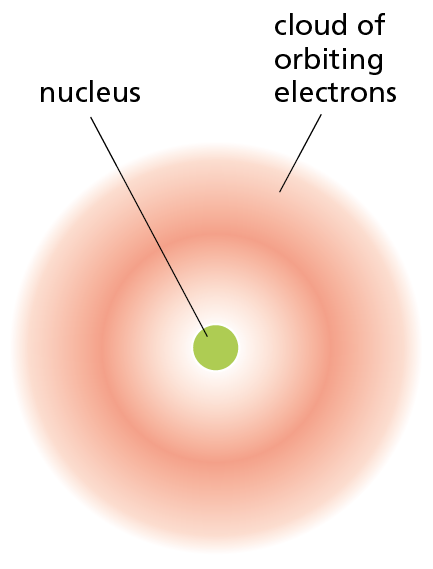
Figure 2–1 An atom consists of a nucleus surrounded by an electron cloud. The dense, positively charged nucleus contains nearly all of the atom’s mass. The much lighter and negatively charged electrons occupy space around the nucleus, as governed by the laws of quantum mechanics. The electrons are depicted as a continuous cloud, because there is no way of predicting exactly where an electron is at any given instant. The density of shading of the cloud is an indication of the probability that electrons will be found there.
The diameter of the electron cloud ranges from about 0.1 nm (for hydrogen) to about 0.4 nm (for atoms of high atomic number). The nucleus is very much smaller: about 5 × 10⁻⁶ nm for carbon, for example. If this diagram were drawn to scale, the nucleus would not be visible.
The electric charge carried by each proton is exactly equal and opposite to the charge carried by a single electron. Because the whole atom is electrically neutral, the number of negatively charged electrons surrounding the nucleus is therefore equal to the number of positively charged protons that the nucleus contains; thus the number of electrons in an atom also equals the atomic number. All atoms of a given element have the same atomic number, and we will see shortly that it is this number that dictates each element’s chemical behavior.
Neutrons have essentially the same mass as protons. They contribute to the structural stability of the nucleus: if there are too many or too few, the nucleus may disintegrate by radioactive decay. However, neutrons do not alter the chemical properties of the atom. Thus an element can exist in several physically distinguishable but chemically identical forms, called isotopes, each having a different number of neutrons but the same number of protons. Multiple isotopes of almost all the elements occur naturally, including some that are unstable—and thus radioactive. For example, while most carbon on Earth exists as carbon 12, a stable isotope with six protons and six neutrons, also present are small amounts of an unstable isotope, carbon 14, which has six protons and eight neutrons. Carbon 14 undergoes radioactive decay at a slow but steady rate, a property that allows archaeologists to estimate the age of organic material.
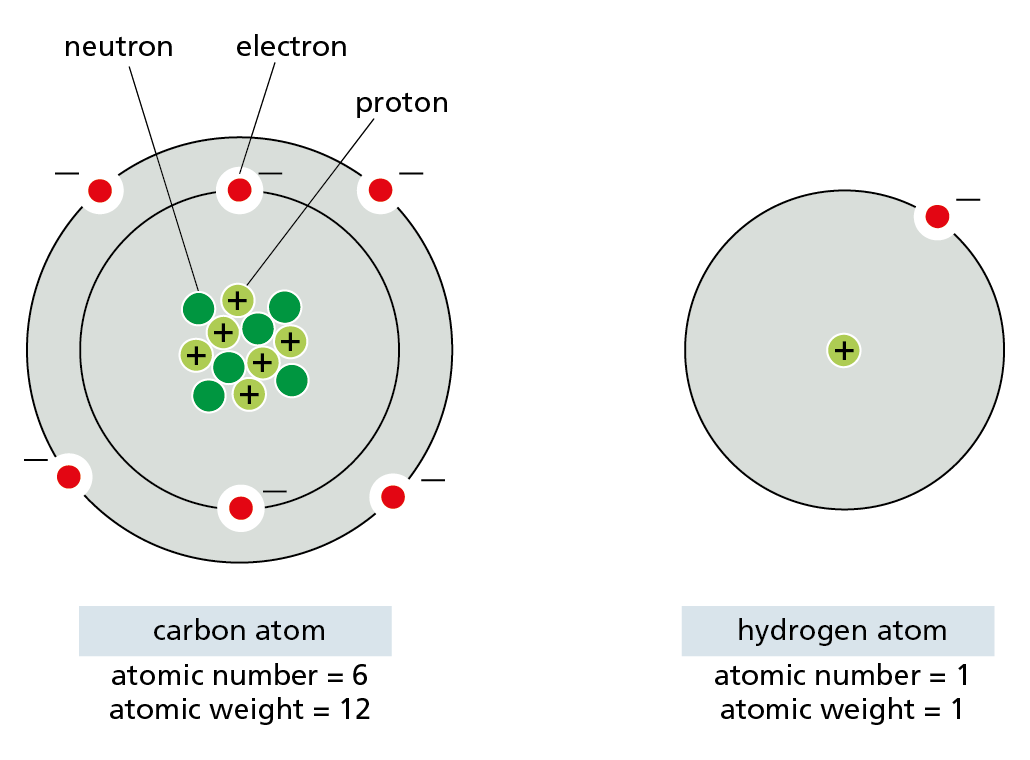
Figure 2–2 The number of protons in an atom determines its atomic number. Schematic representations of an atom of carbon and an atom of hydrogen are shown. The nucleus of every atom except hydrogen consists of both positively charged protons and electrically neutral neutrons; the atomic weight equals the number of protons plus neutrons. The number of electrons in an atom is equal to the number of protons, so that the atom has no net charge.
In contrast to Figure 2–1, the electrons are shown here as individual particles. The concentric black circles represent in a highly schematic form the “orbits” (that is, the different distributions) of the electrons. The neutrons, protons, and electrons are in reality minuscule in relation to the atom as a whole; their size is greatly exaggerated here.
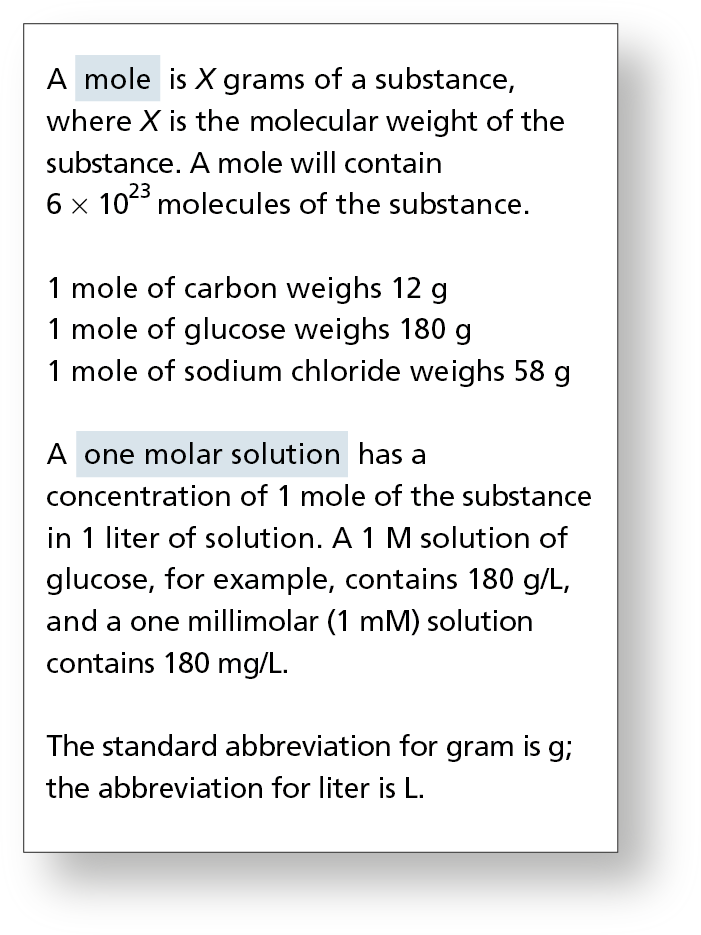
Figure 2–3 What’s a mole? Some simple examples of moles and molar solutions.
The atomic weight of an atom, or the molecular weight of a molecule, is its mass relative to the mass of a hydrogen atom. This value is equal to the number of protons plus the number of neutrons that the atom or molecule contains; because electrons are so light, they contribute almost nothing to the total mass. Thus the major isotope of carbon has an atomic weight of 12 and is written as 12C. The unstable carbon isotope just mentioned has an atomic weight of 14 and is written as 14C. The mass of an atom or a molecule is generally specified in daltons, one dalton being an atomic mass unit essentially equal to the mass of a hydrogen atom.
Atoms are so small that it is hard to imagine their size. An individual carbon atom is roughly 0.2 nm in diameter, so it would take about 5 million of them, laid out in a straight line, to span a millimeter. One proton or neutron weighs approximately 1/(6 × 1023) gram. As hydrogen has only one proton—thus an atomic weight of 1—1 gram of hydrogen contains 6 × 10²³ atoms. For carbon—which has six protons and six neutrons, and an atomic weight of 12—12 grams contain 6 × 10²³ atoms. This huge number, called Avogadro’s number, allows us to relate everyday quantities of chemicals to numbers of individual atoms or molecules. If a substance has a molecular weight of X, X grams of the substance will contain 6 × 10²³ molecules. This quantity is called one mole of the substance (Figure 2–3). The concept of mole is used widely in chemistry as a way to represent the number of molecules that are available to participate in chemical reactions.
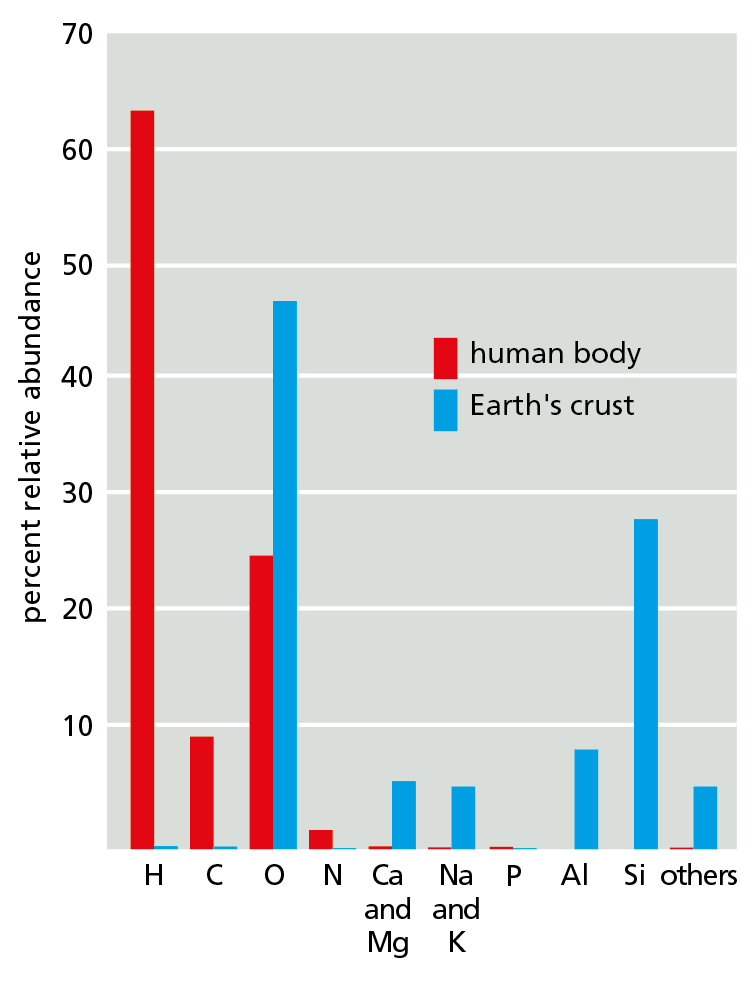
Figure 2–4 The distribution of elements in the Earth’s crust differs radically from that in the human body. The abundance of each element is expressed here as a percentage of the total number of atoms present in a biological or geological sample (water included). Thus, for example, more than 60% of the atoms in the human body are hydrogen atoms, and nearly 30% of the atoms in the Earth’s crust are silicon atoms (Si). The relative abundance of elements is similar in all living things.
There are about 90 naturally occurring elements, each differing from the others in the number of protons and electrons in its atoms. Living things, however, are made of only a small selection of these elements, four of which—carbon (C), hydrogen (H), nitrogen (N), and oxygen (O)—constitute 96% of any organism’s weight. This composition differs markedly from that of the nonliving, inorganic environment on Earth (Figure 2–4) and is evidence that a distinctive type of chemistry operates in biological systems.
The Outermost Electrons Determine How Atoms Interact
To understand how atoms come together to form the molecules that make up living organisms, we have to pay special attention to each atom’s electrons. Protons and neutrons are welded tightly to one another in an atom’s nucleus, and they change partners only under extreme conditions—during radioactive decay, for example, or in the interior of the sun or a nuclear reactor. In living tissues, only the electrons of an atom undergo rearrangements. They form the accessible part of the atom and specify the chemical rules by which atoms combine to form molecules.
Electrons are in continuous motion around the nucleus, but motions on this submicroscopic scale obey different laws from those we are familiar with in everyday life. These laws dictate that electrons in an atom can exist only in certain discrete regions of movement—very roughly speaking, in distinct orbits. Moreover, there is a strict limit to the number of electrons that can be accommodated in an orbit of a given type, a so-called electron shell. The electrons closest on average to the positively charged nucleus are attracted most strongly to it and occupy the inner, most tightly bound shell. This innermost shell can hold a maximum of two electrons. The second shell is farther away from the nucleus, and can hold up to eight electrons. The third shell can also hold up to eight electrons, which are even less tightly bound. The fourth and fifth shells can hold 18 electrons each. Atoms with more than four shells are very rare in biological molecules.
Question 2–1
A cup containing exactly 18 g, or 1 mole, of water was emptied into the Aegean Sea 3000 years ago. What are the chances that the same quantity of water, scooped today from the Pacific Ocean, would include at least one of these ancient water molecules? Assume perfect mixing and an approximate volume for the world’s oceans of 1.5 billion cubic kilometers (1.5 × 10⁹ km3).
The arrangement of electrons in an atom is most stable when all the electrons are in the most tightly bound states that are possible for them—that is, when they occupy the innermost shells, closest to the nucleus. Therefore, with certain exceptions in the larger atoms, the electrons of an atom fill the shells in order—the first before the second, the second before the third, and so on. An atom whose outermost shell is entirely filled with electrons is especially stable and therefore chemically unreactive. Examples are helium with 2 electrons (atomic number 2), neon with 2 + 8 electrons (atomic number 10), and argon with 2 + 8 + 8 electrons (atomic number 18); these are all inert gases. Hydrogen, by contrast, has only one electron, which leaves its outermost shell half-filled, so it is highly reactive. The atoms found in living organisms all have outermost shells that are incompletely filled, and they are therefore able to react with one another to form molecules (Figure 2–5).
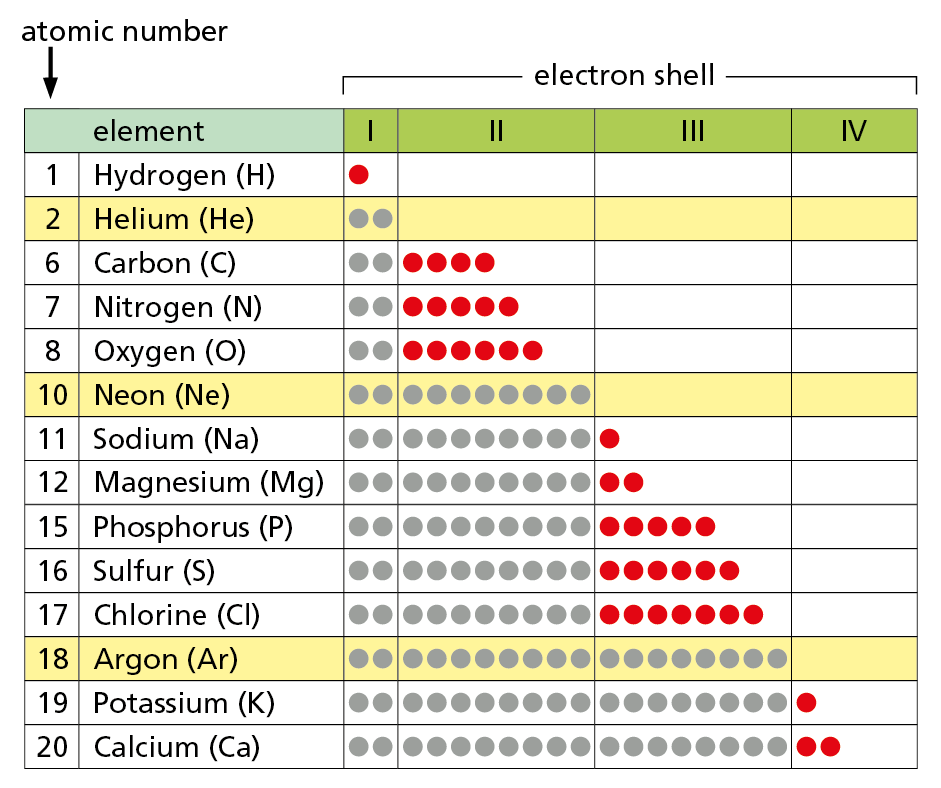
Figure 2–5 An element’s chemical reactivity depends on the degree to which its outermost electron shell is filled. All of the elements commonly found in living organisms have outermost shells that are not completely filled. The electrons in these incomplete shells (here shown in red) can participate in chemical reactions with other atoms. Inert gases (yellow), in contrast, have completely filled outermost shells (gray) and are thus chemically unreactive.
Because an incompletely filled electron shell is less stable than one that is completely filled, atoms with incomplete outer shells have a strong tendency to interact with other atoms so as to either gain or lose enough electrons to fill the outermost shell. This electron exchange can be achieved either by transferring electrons from one atom to another or by sharing electrons between two atoms. These two strategies generate the two types of chemical bonds that can bind atoms strongly to one another: an ionic bond is formed when electrons are donated by one atom to another, whereas a covalent bond is formed when two atoms share a pair of electrons (Figure 2–6).
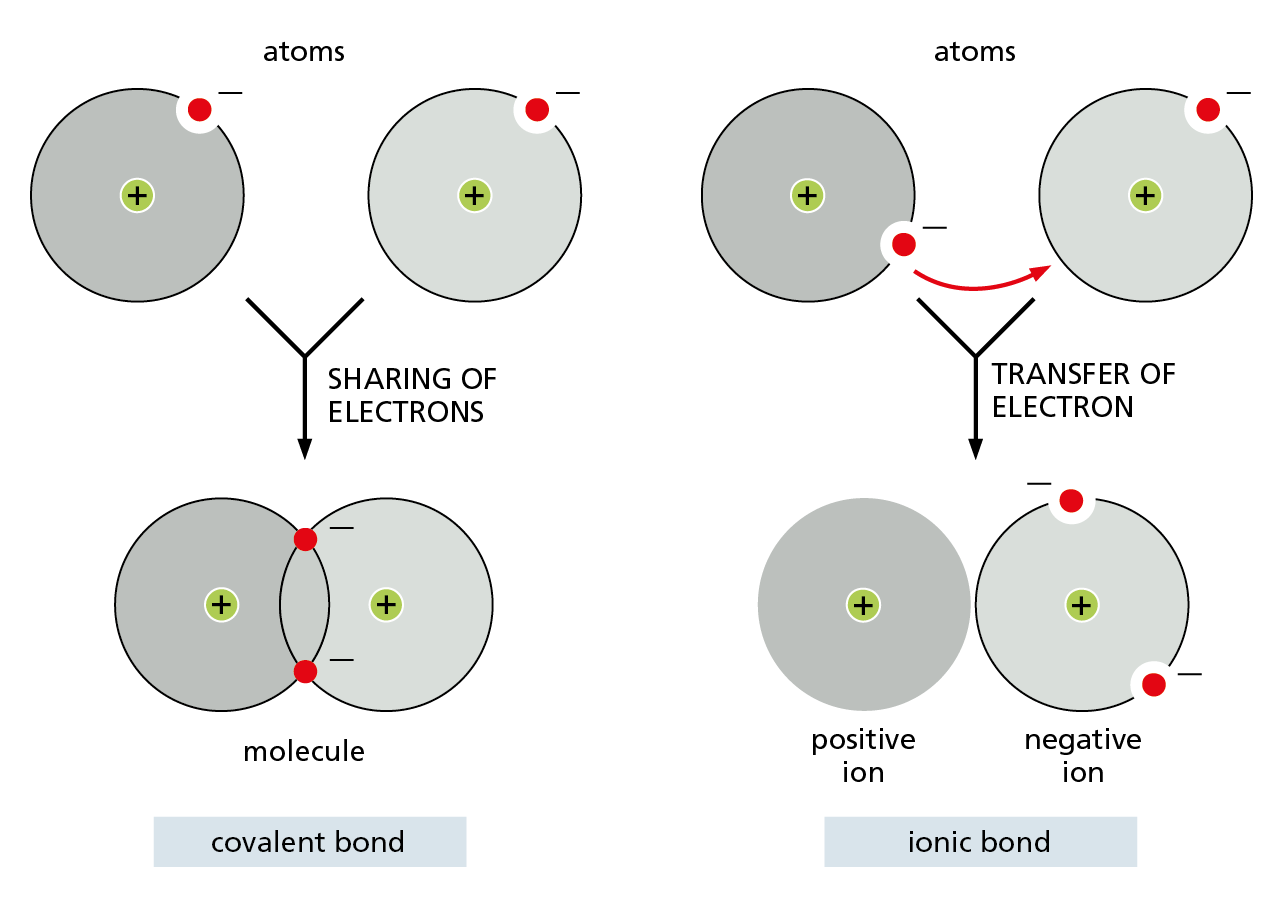
Figure 2–6 Atoms can attain a more stable arrangement of electrons in their outermost shell by interacting with one another. A covalent bond is formed when electrons are shared between atoms. An ionic bond is formed when electrons are transferred from one atom to the other. The two cases shown represent extremes; often, covalent bonds form with a partial transfer (unequal sharing of electrons), resulting in a polar covalent bond, as we discuss shortly.
An H atom, which needs only one more electron to fill its only shell, generally acquires this electron by sharing—forming one covalent bond with another atom. The other most common elements in living cells—C, N, and O, which have an incomplete second shell, and P and S, which have an incomplete third shell (see Figure 2–5)—also tend to share electrons; these elements thus fill their outer shells by forming several covalent bonds. The number of electrons an atom must acquire or lose (either by sharing or by transfer) to attain a filled outer shell determines the number of bonds that the atom can make.
Question 2–2
A carbon atom contains six protons and six neutrons.
A. What are its atomic number and atomic weight?
B. How many electrons does it have?
C. How many additional electrons must it add to fill its outermost shell? How does this affect carbon’s chemical behavior?
D. Carbon with an atomic weight of 14 is radioactive. How does it differ in structure from nonradioactive carbon? How does this difference affect its chemical behavior?
Because the state of the outer electron shell determines the chemical properties of an element, when the elements are listed in order of their atomic number we see a periodic recurrence of elements that have similar properties. For example, an element with an incomplete second shell containing one electron will behave in a similar way as an element that has filled its second shell and has an incomplete third shell containing one electron. The metals, for example, have incomplete outer shells with just one or a few electrons, whereas, as we have just seen, the inert gases have full outer shells. This arrangement gives rise to the periodic table of the elements, outlined in Figure 2–7, in which the elements found in living organisms are highlighted in color.
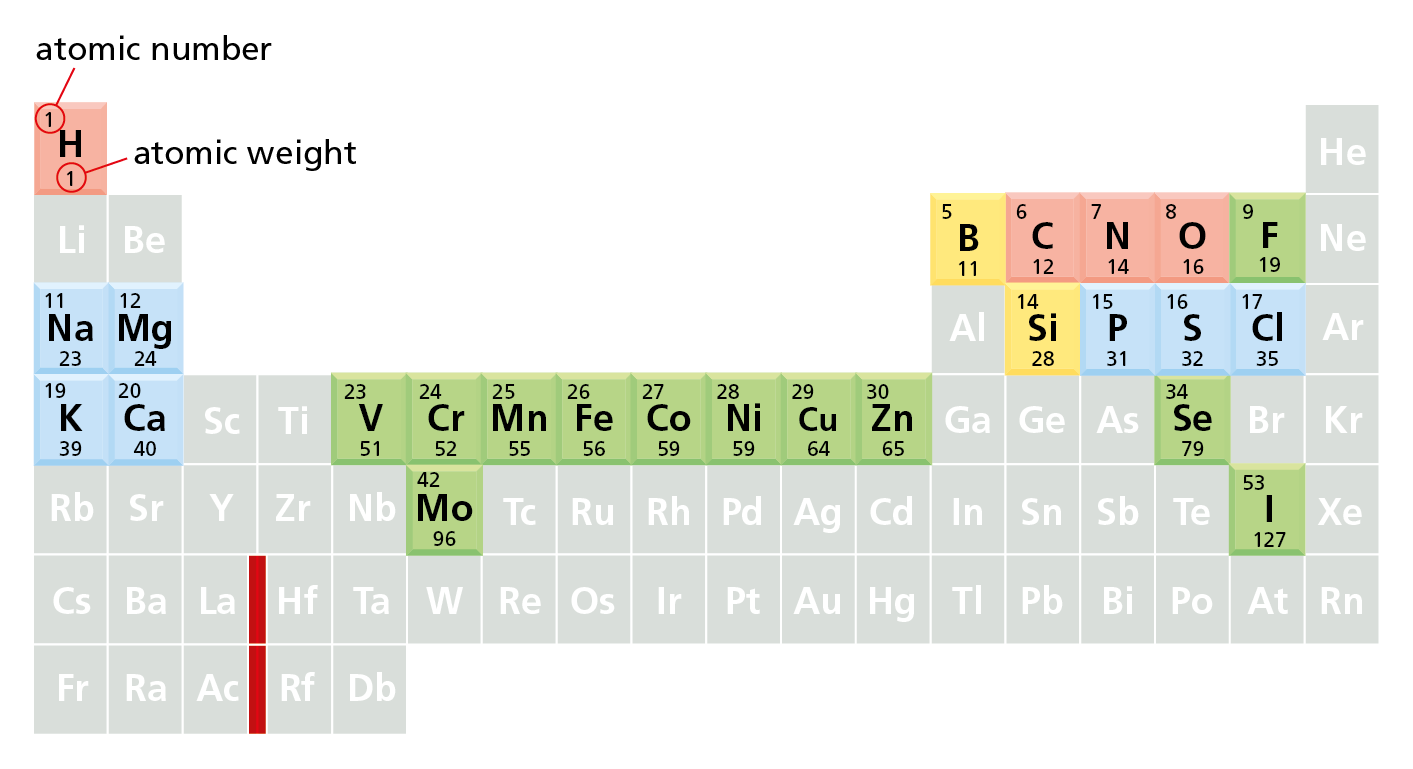
Figure 2–7 When ordered by their atomic number into the periodic table, the elements fall into vertical columns in which the atoms have similar properties. This is because the atoms in the same vertical column must gain or lose the same number of electrons to attain a filled outer shell, and they therefore behave similarly when forming bonds with other atoms. Thus, for example, both magnesium (Mg) and calcium (Ca) tend to give away the two electrons in their outer shells to form ionic bonds with atoms such as chlorine (Cl), which need extra electrons to complete their outer shells.
The chemistry of life is dominated by lighter elements. The four elements highlighted in red constitute 99% of the total number of atoms present in the human body and about 96% of our total weight. An additional seven elements, highlighted in blue, together represent about 0.9% of our total number of atoms. Other elements, shown in green, are required in trace amounts by humans. It remains unclear whether those elements shown in yellow are essential in humans or not.
The atomic weights shown here are those of the most common isotope of each element. The vertical red line represents a break in the periodic table where a group of large atoms with similar chemical properties has been removed.
Covalent Bonds Form by the Sharing of Electrons
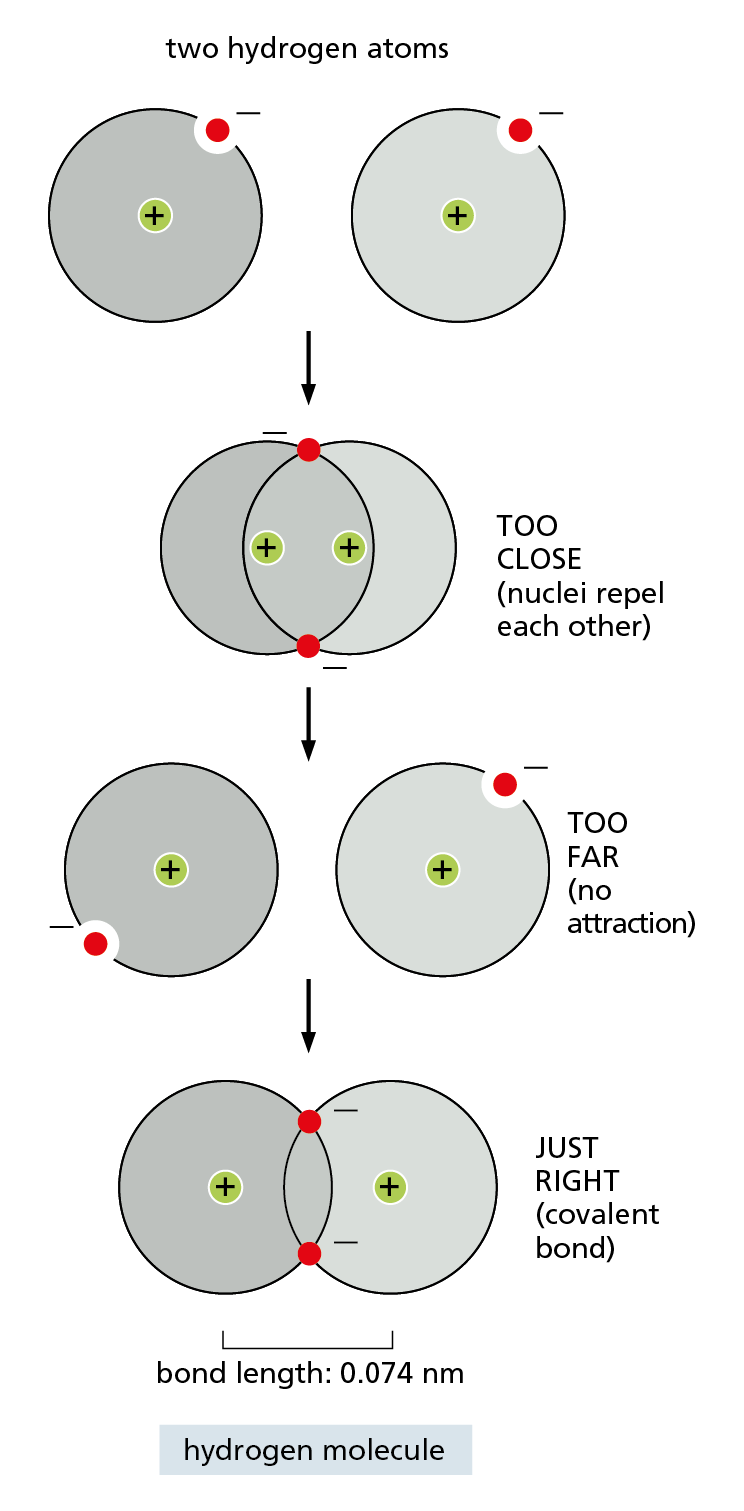
Figure 2–8 The hydrogen molecule is held together by a covalent bond. Each hydrogen atom in isolation has a single electron, which means that its first (and only) electron shell is incompletely filled. By coming together to form a hydrogen molecule (H2, or hydrogen gas), the two atoms are able to share their electrons, so that each obtains a completely filled first shell, with the shared electrons adopting modified orbits around the two nuclei. The covalent bond between the two atoms has a defined length—0.074 nm, which is the distance between the two nuclei. If the atoms were closer together, the positively charged nuclei would repel each other; if they were farther apart, they would not be able to share electrons as effectively.
All of the characteristics of a cell depend on the molecules it contains. A molecule is a cluster of atoms held together by covalent bonds, in which electrons are shared rather than transferred between atoms. The shared electrons complete the outer shells of the interacting atoms. In the simplest possible molecule—a molecule of hydrogen (H2)—two H atoms, each with a single electron, share their electrons, thus filling their outermost shells. The shared electrons form a cloud of negative charge that is densest between the two positively charged nuclei. This electron density helps to hold the nuclei together by opposing the mutual repulsion between the positive charges of the nuclei, which would otherwise force them apart. The attractive and repulsive forces are precisely in balance when these nuclei are separated by a characteristic distance, called the bond length (Figure 2–8).
Whereas an H atom can form only a single covalent bond, the other common atoms that form covalent bonds in cells—O, N, S, and P, as well as the all-important C—can form more than one. The outermost shells of these atoms, as we have seen, can accommodate up to eight electrons, and they form covalent bonds with as many other atoms as necessary to reach this number. Oxygen, with six electrons in its outer shell, is most stable when it acquires two extra electrons by sharing with other atoms, and it therefore forms up to two covalent bonds. Nitrogen, with five outer electrons, forms a maximum of three covalent bonds, while carbon, with four outer electrons, forms up to four covalent bonds—thus sharing four pairs of electrons (see Figure 2–5).
When one atom forms covalent bonds with several others, these multiple bonds have definite orientations in space relative to one another, reflecting the orientations of the orbits of the shared electrons. Covalent bonds between multiple atoms are therefore characterized by specific bond angles, as well as by specific bond lengths and bond energies (Figure 2–9). The four covalent bonds that can form around a carbon atom, for example, are arranged as if pointing to the four corners of a regular tetrahedron. The precise orientation of the covalent bonds around carbon dictates the three-dimensional geometry of all organic molecules.
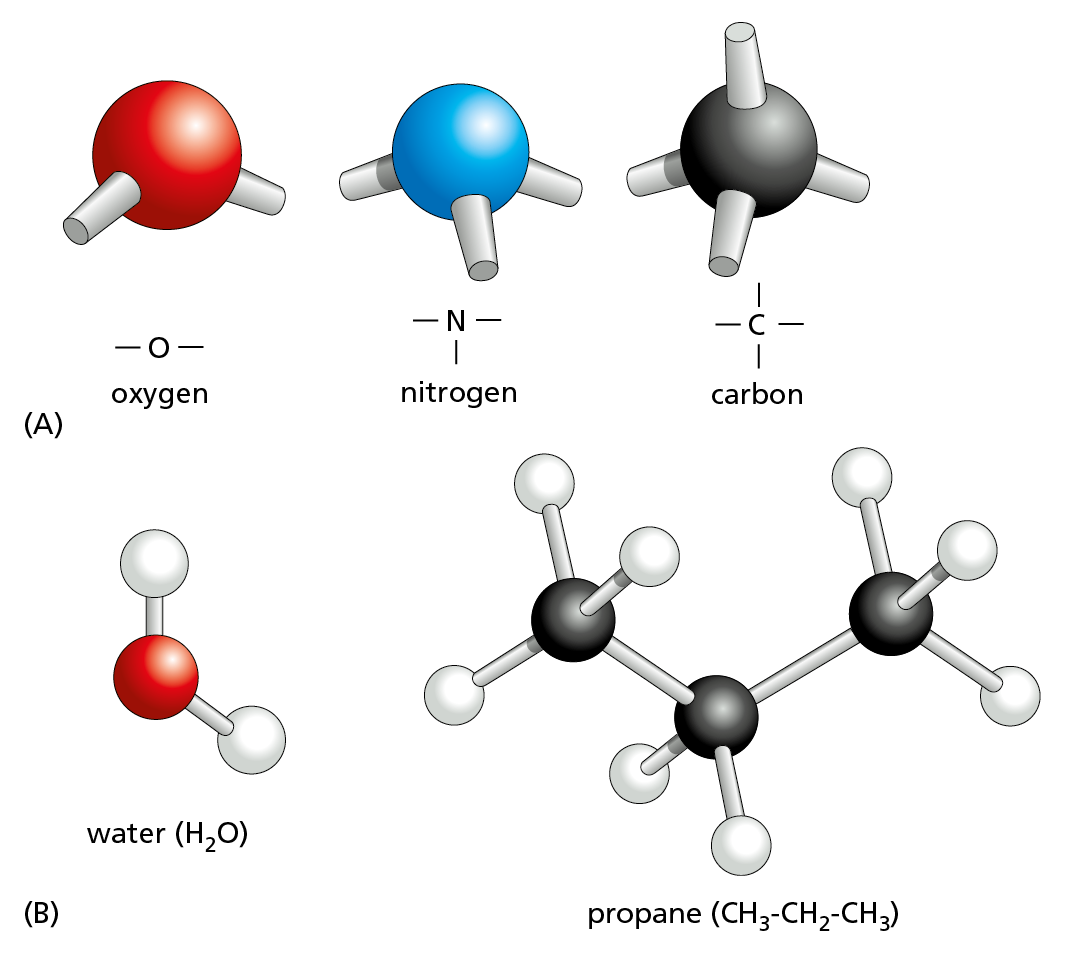
Figure 2–9 Covalent bonds are characterized by particular geometries. (A) The spatial arrangement of the covalent bonds that can be formed by oxygen, nitrogen, and carbon. (B) Molecules formed from these atoms therefore have precise three-dimensional structures defined by the bond angles and bond lengths for each covalent linkage. A water molecule, for example, forms a “V” shape with an angle close to 109°.
In these ball-and-stick models, the different colored balls represent different atoms, and the sticks represent the covalent bonds. The colors traditionally used to represent the different atoms—black (or dark gray) for carbon, white for hydrogen, blue for nitrogen, and red for oxygen—were established by the chemist August Wilhelm Hofmann in 1865, when he used a set of colored croquet balls to build molecular models for a public lecture on “the combining power of atoms.”
Some Covalent Bonds Involve More Than One Electron Pair
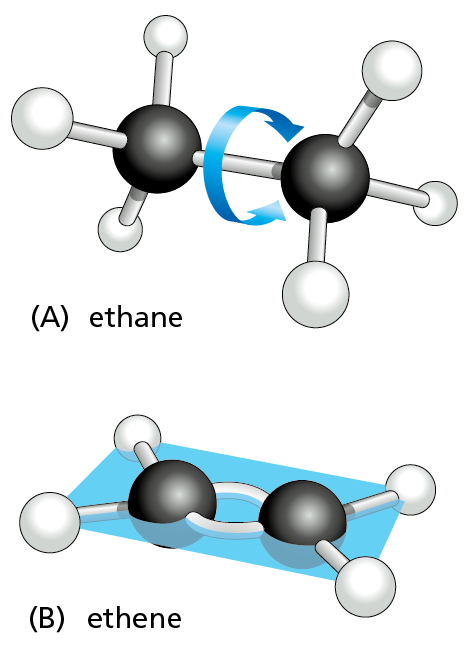
Figure 2–10 Carbon–carbon double bonds are shorter and more rigid than carbon–carbon single bonds. (A) The ethane molecule, with a single covalent bond between the two carbon atoms, shows the tetrahedral arrangement of the three single covalent bonds between each carbon atom and its three attached H atoms. The CH3 groups, joined by a covalent C–C bond, can rotate relative to one another around the bond axis. (B) The double bond between the two carbon atoms in a molecule of ethene (ethylene) alters the bond geometry of the carbon atoms and brings all the atoms into the same plane; the double bond prevents the rotation of one CH2 group relative to the other.
Most covalent bonds involve the sharing of two electrons, one donated by each participating atom; these are called single bonds. Some covalent bonds, however, involve the sharing of more than one pair of electrons. Four electrons can be shared, for example, two coming from each participating atom; such a bond is called a double bond. Double bonds are shorter and stronger than single bonds and have a characteristic effect on the geometry of molecules containing them. A single covalent bond between two atoms generally allows the rotation of one part of a molecule relative to the other around the bond axis. A double bond prevents such rotation, producing a more rigid and less flexible arrangement of atoms (Figure 2–10). This restriction has a major influence on the three-dimensional shape of many macromolecules.
Some molecules contain atoms that share electrons in a way that produces bonds that are intermediate in character between single and double bonds. The highly stable benzene molecule, for example, is made up of a ring of six carbon atoms in which the bonding electrons are evenly distributed, although the arrangement is sometimes depicted as an alternating sequence of single and double bonds. Panel 2–1 (pp. 66–67) reviews the covalent bonds commonly encountered in biological molecules.
Electrons in Covalent Bonds Are Often Shared Unequally
When the atoms joined by a single covalent bond belong to different elements, the two atoms usually attract the shared electrons to different degrees. Covalent bonds in which the electrons are shared unequally in this way are known as polar covalent bonds. A polar structure (in the electrical sense) is one in which the positive charge is concentrated toward one atom in the molecule (the positive pole) and the negative charge is concentrated toward another atom (the negative pole). The tendency of an atom to attract electrons is called its electronegativity, a property that was first described by the chemist Linus Pauling.
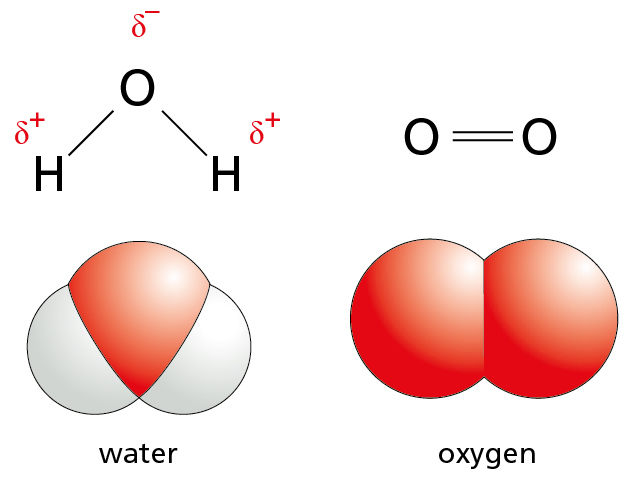
Figure 2–11 In polar covalent bonds, the electrons are shared unequally. Comparison of electron distributions in the polar covalent bonds in a molecule of water (H2O) and the nonpolar covalent bonds in a molecule of oxygen (O2). In H2O, electrons are more strongly attracted to the oxygen nucleus than to the H nucleus, as indicated by the distributions of the partial negative (δ–) and partial positive (δ+) charges.
Knowing the electronegativity of atoms allows one to predict the nature of the bonds that will form between them. For example, when atoms with different electronegativities are covalently linked, their bonds will be polarized. Among the atoms typically found in biological molecules, oxygen and nitrogen (with electronegativities of 3.4 and 3.0, respectively) attract electrons relatively strongly, whereas an H atom (with an electronegativity of 2.1) attracts electrons relatively weakly. Thus the covalent bonds between O and H (O–H) and between N and H (N–H) are polar (Figure 2–11). An atom of C and an atom of H, by contrast, have similar electronegativities (carbon is 2.6, hydrogen 2.1) and attract electrons more equally. Thus the bond between carbon and hydrogen, C–H, is relatively nonpolar.
Covalent Bonds Are Strong Enough to Survive the Conditions Inside Cells
We have already seen that the covalent bond between two atoms has a characteristic length that depends on the atoms involved (see Figure 2–10). A further crucial property of any chemical bond is its strength. Bond strength is measured by the amount of energy that must be supplied to break the bond, usually expressed in units of either kilocalories per mole (kcal/mole) or kilojoules per mole (kJ/mole). A kilocalorie is the amount of energy needed to raise the temperature of 1 liter of water by 1°C. Thus, if 1 kilocalorie of energy must be supplied to break 6 × 10²³ bonds of a specific type (that is, 1 mole of these bonds), then the strength of that bond is 1 kcal/mole. One kilocalorie is equal to about 4.2 kJ, which is the unit of energy universally employed by physical scientists and, increasingly, by cell biologists as well.
Question 2–3
Discuss whether the following statement is correct: “An ionic bond can, in principle, be thought of as a very polar covalent bond. Polar covalent bonds, then, fall somewhere between ionic bonds at one end of the spectrum and nonpolar covalent bonds at the other end.”
To get an idea of what bond strengths mean, it is helpful to compare them with the average energies of the impacts that molecules continually undergo owing to collisions with other molecules in their environment—their thermal, or heat, energy. Typical covalent bonds are stronger than these thermal energies by a factor of 100, so they are resistant to being pulled apart by thermal motions. In living organisms, covalent bonds are normally broken only during specific chemical reactions that are carefully controlled by highly specialized protein catalysts called enzymes.
Ionic Bonds Form by the Gain and Loss of Electrons
In some substances, the participating atoms are so different in electronegativity that their electrons are not shared at all—they are transferred completely to the more electronegative partner. The resulting bonds, called ionic bonds, are usually formed between atoms that can attain a completely filled outer shell most easily by donating electrons to—or accepting electrons from—another atom, rather than by sharing them. For example, returning to Figure 2–5, we see that a sodium (Na) atom can achieve a filled outer shell by giving up the single electron in its third shell. By contrast, a chlorine (Cl) atom can complete its outer shell by gaining just one electron. Consequently, if a Na atom encounters a Cl atom, an electron can jump from the Na to the Cl, leaving both atoms with filled outer shells. The offspring of this marriage between sodium, a soft and intensely reactive metal, and chlorine, a toxic green gas, is table salt (NaCl).
When an electron jumps from Na to Cl, both atoms become electrically charged ions. The Na atom that lost an electron now has one less electron than it has protons in its nucleus; it therefore has a net single positive charge (Na+). The Cl atom that gained an electron now has one more electron than it has protons and has a net single negative charge (Cl–). Because of their opposite charges, the Na+ and Cl– ions are attracted to each other and are thereby held together by an ionic bond (Figure 2–12A). Ions held together solely by ionic bonds are generally called salts rather than molecules. A NaCl crystal contains astronomical numbers of Na+ and Cl– ions packed together in a precise, three-dimensional array with their opposite charges exactly balanced: a crystal only 1 mm across contains about 2 × 10¹⁹ ions of each type (Figure 2–12B and C).
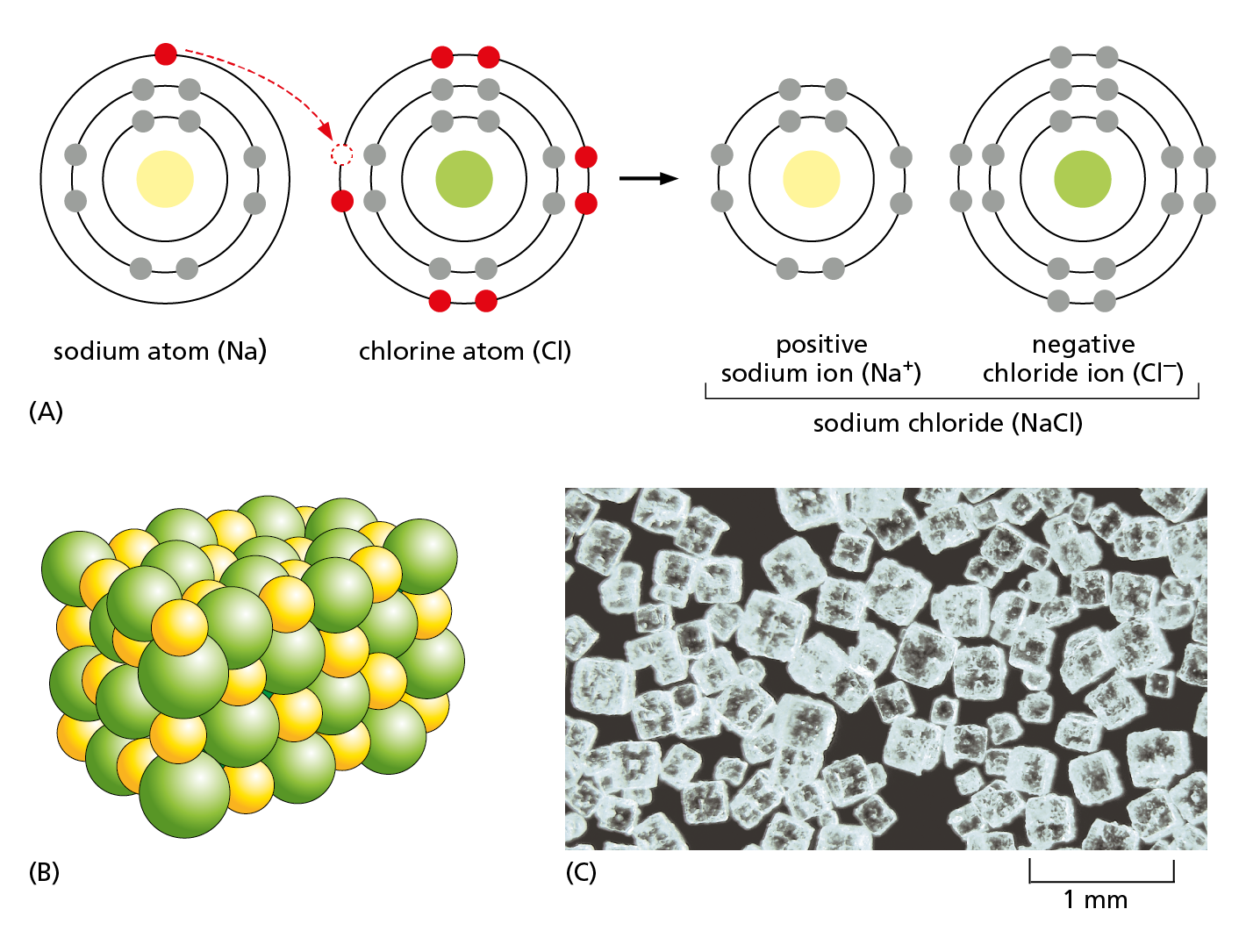
Figure 2–12 Sodium chloride is held together by ionic bonds. (A) An atom of sodium (Na) reacts with an atom of chlorine (Cl). Electrons of each atom are shown in their different shells; electrons in the chemically reactive (incompletely filled) outermost shells are shown in red. The reaction takes place with transfer of a single electron from sodium to chlorine, forming two electrically charged atoms, or ions, each with complete sets of electrons in their outermost shells. The two ions have opposite charge and are held together by electrostatic attraction. (B) The product of the reaction between sodium and chlorine, crystalline sodium chloride, contains sodium and chloride ions packed closely together in a regular array in which the charges are exactly balanced. (C) Color photograph of crystals of sodium chloride.
Because of the favorable interaction between ions and water molecules (which are polar), many salts (including NaCl) are highly soluble in water. They dissociate into individual ions (such as Na+ and Cl–), each surrounded by a group of water molecules. Positive ions are called cations and negative ions are called anions. Small inorganic ions such as Na+, Cl–, K+, and Ca2+ play important parts in many biological processes, including the electrical activity of nerve cells, as we discuss in Chapter 12.
In aqueous solution, ionic bonds are 10–100 times weaker than the covalent bonds that hold atoms together in molecules. But, as we will see, such weak interactions nevertheless play an important role in the chemistry of living things.
Hydrogen Bonds Are Important Noncovalent Bonds for Many Biological Molecules
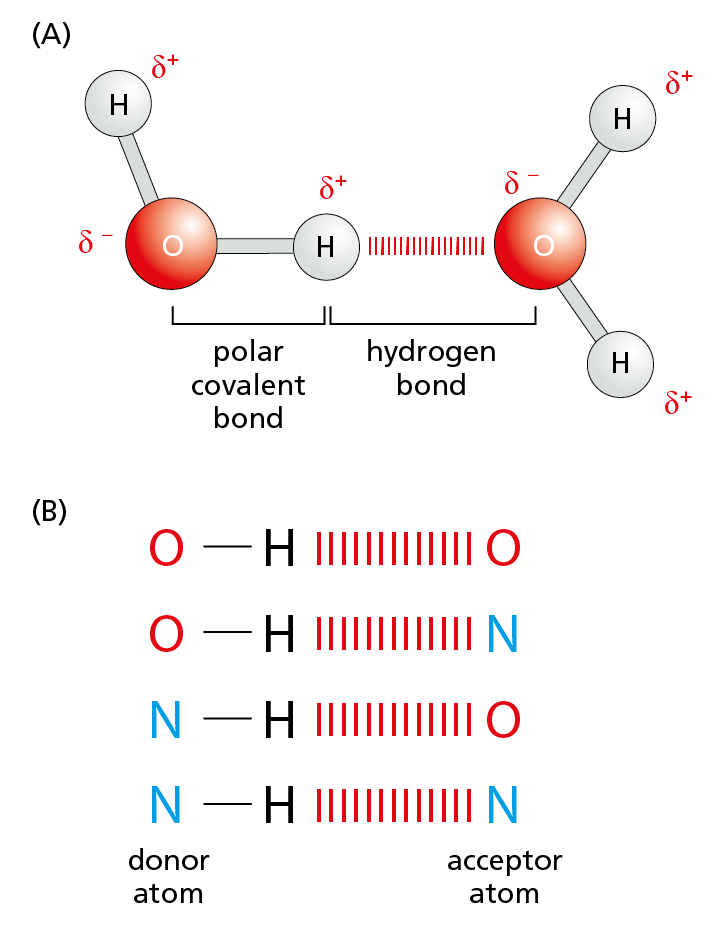
Figure 2–13 Noncovalent hydrogen bonds form between water molecules and between many other polar molecules. (A) A hydrogen bond forms between two water molecules. The slight positive charge associated with the hydrogen atom is electrically attracted to the slight negative charge of the oxygen atom. (B) In cells, hydrogen bonds commonly form between molecules that contain an oxygen or nitrogen. The atom bearing the hydrogen is considered the H-bond donor and the atom that interacts with the hydrogen is the H-bond acceptor.
Water accounts for about 70% of a cell’s weight, and most intracellular reactions occur in an aqueous environment. Thus the properties of water have put a permanent stamp on the chemistry of living things. In each molecule of water (H2O), the two covalent H–O bonds are highly polar because the O is strongly attractive for electrons whereas the H is only weakly attractive. Consequently, in each water molecule, there is a preponderance of positive charge on the two H atoms and negative charge on the O. When a positively charged region of one water molecule (that is, one of its H atoms) comes close to a negatively charged region (that is, the O) of a second water molecule, the electrical attraction between them can establish a weak bond called a hydrogen bond (Figure 2–13A).
These bonds are much weaker than covalent bonds and are easily broken by random thermal motions. Thus each bond lasts only an exceedingly short time. But the combined effect of many weak bonds is far from trivial. Each water molecule can form hydrogen bonds through its two H atoms to two other water molecules, producing a network in which hydrogen bonds are being continually broken and formed (see Panel 2–3, pp. 70–71). It is because of these interlocking hydrogen bonds that water at room temperature is a liquid—with a high boiling point and high surface tension—and not a gas. Without hydrogen bonds, life as we know it could not exist.
Hydrogen bonds are not limited to water. In general, a hydrogen bond can form whenever a positively charged H atom held in one molecule by a polar covalent linkage comes close to a negatively charged atom—typically an oxygen or a nitrogen—belonging to another molecule (Figure 2–13B). Hydrogen bonds can also occur between different parts of a single large molecule, where they often help the molecule fold into a particular shape.
Question 2–4
True or false? “When NaCl is dissolved in water, the water molecules closest to the ions will tend to preferentially orient themselves so that their oxygen atoms face the sodium ions and face away from the chloride ions.” Explain your answer.
Like molecules (or salts) that carry positive or negative charges, substances that contain polar bonds and can form hydrogen bonds also mix well with water. Such substances are termed hydrophilic, meaning that they are “water-loving.” A large proportion of the molecules in the aqueous environment of a cell fall into this category, including sugars, DNA, RNA, and a majority of proteins. Hydrophobic (“water-fearing”) molecules, by contrast, are uncharged and form few or no hydrogen bonds, and they do not dissolve in water. These and other properties of water are reviewed in Panel 2–2 (pp. 68–69).
Four Types of Weak Interactions Help Bring Molecules Together in Cells
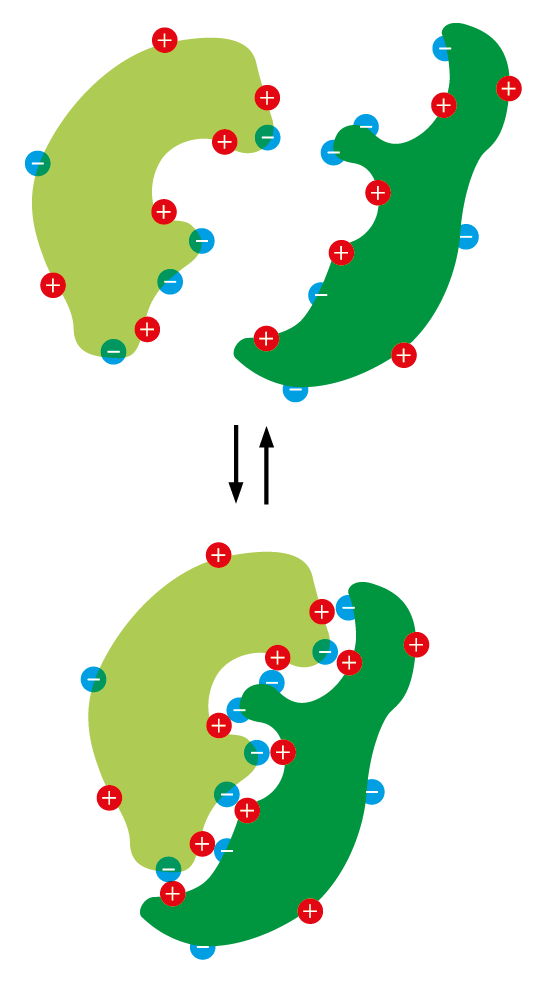
Figure 2–14 A large molecule, such as a protein, can bind to another protein through noncovalent interactions on the surface of each molecule. In the aqueous environment of a cell, many individual weak interactions could cause the two proteins to recognize each other specifically and form a tight complex. Shown here is a set of electrostatic attractions between complementary positive and negative charges.
Much of biology depends on specific but transient interactions between one molecule and another. These associations are mediated by noncovalent bonds, such as the hydrogen bonds just discussed. Although these noncovalent bonds are individually quite weak, their energies can sum to create an effective force between two molecules.
The ionic bonds that hold together the Na+ and Cl– ions in a salt crystal (see Figure 2–12) represent a second form of noncovalent bond called an electrostatic attraction. Electrostatic attractions are strongest when the atoms involved are fully charged, as are Na+ and Cl– ions. But a weaker electrostatic attraction can occur between molecules that contain polar covalent bonds (see Figure 2–11). Like hydrogen bonds, electrostatic attractions are extremely important in biology. For example, any large molecule with many polar groups will have a pattern of partial positive and negative charges on its surface. When such a molecule encounters a second molecule with a complementary set of charges, the two will be drawn to each other by electrostatic attraction. Even though water greatly reduces the strength of these attractions in most biological settings, the large number of weak noncovalent bonds that form on the surfaces of large molecules can nevertheless promote strong and specific binding (Figure 2–14).
A third type of noncovalent bond, called a van der Waals attraction, comes into play when any two atoms approach each other closely. These nonspecific interactions spring from fluctuations in the distribution of electrons in every atom, which can generate a transient attraction when the atoms are in very close proximity. These weak attractions occur in all types of molecules, even those that are nonpolar and cannot form ionic or hydrogen bonds. The relative lengths and strengths of these three types of noncovalent bonds are compared to the length and strength of covalent bonds in Table 2–1.
|
Table 2–1 Length and strength of some chemical bonds |
|||
|
Bond Type |
Length* (nm) |
Strength (kJ/mole) |
|
|
In Vacuum |
In Water |
||
|
Covalent |
0.10 |
377 [90]** |
377 [90] |
|
Noncovalent: ionic bond |
0.25 |
335 [80] |
12.6 [3] |
|
Noncovalent: hydrogen bond |
0.17 |
16.7 [4] |
4.2 [1] |
|
Noncovalent: van der Waals attraction (per atom) |
0.35 |
0.4 [0.1] |
0.4 [0.1] |
|
*The bond lengths and strengths listed are approximate, because the exact values will depend on the atoms involved. **Values in brackets are kcal/mole. 1 kJ = 0.239 kcal and 1 kcal = 4.184 kJ. |
|||
The fourth effect that often brings molecules together is not, strictly speaking, a bond at all. In an aqueous environment, a hydrophobic force is generated by a pushing of nonpolar surfaces out of the hydrogen-bonded water network, where they would otherwise physically interfere with the highly favorable interactions between water molecules. Hydrophobic forces play an important part in promoting molecular interactions—in particular, in building cell membranes, which are constructed largely from lipid molecules with long hydrocarbon tails. In these molecules, the H atoms are covalently linked to C atoms by nonpolar bonds (see Panel 2–1, pp. 66–67). Because the H atoms have almost no net positive charge, they cannot form effective hydrogen bonds to other molecules, including water. As a result, lipids can form the thin membrane barriers that keep the aqueous interior of the cell separate from the surrounding aqueous environment.
All four types of weak chemical interactions important in biology are reviewed in Panel 2−3 (pp. 70–71).
Some Polar Molecules Form Acids and Bases in Water
One of the simplest kinds of chemical reaction, and one that has profound significance for cells, takes place when a molecule with a highly polar covalent bond between a hydrogen and another atom dissolves in water. The hydrogen atom in such a bond has given up its electron almost entirely to the companion atom, so it exists as an almost naked positively charged hydrogen nucleus—in other words, a proton (H+). When the polar molecule becomes surrounded by water molecules, the proton will be attracted to the partial negative charge on the oxygen atom of an adjacent water molecule (see Figure 2–11); this proton can thus dissociate from its original partner and associate instead with the oxygen atom of the water molecule, generating a hydronium ion (H3O+) (Figure 2–15A). The reverse reaction—in which a hydronium ion releases a proton—also takes place very readily, so in an aqueous solution, billions of protons are constantly flitting to and fro between one molecule and another.
Substances that release protons when they dissolve in water, thus forming H3O+, are termed acids. The higher the concentration of H3O+, the more acidic the solution. Even in pure water, H3O+ is present at a concentration of 10–7 M, as a result of the movement of protons from one water molecule to another (Figure 2–15B). By tradition, the H3O+ concentration is usually referred to as the H+ concentration, even though most protons in an aqueous solution are present as H3O+. To avoid the use of unwieldy numbers, the concentration of H+ is expressed using a logarithmic scale called the pH scale. Pure water has a pH of 7.0 and is thus neutral—that is, neither acidic (pH <7) nor basic (pH >7).
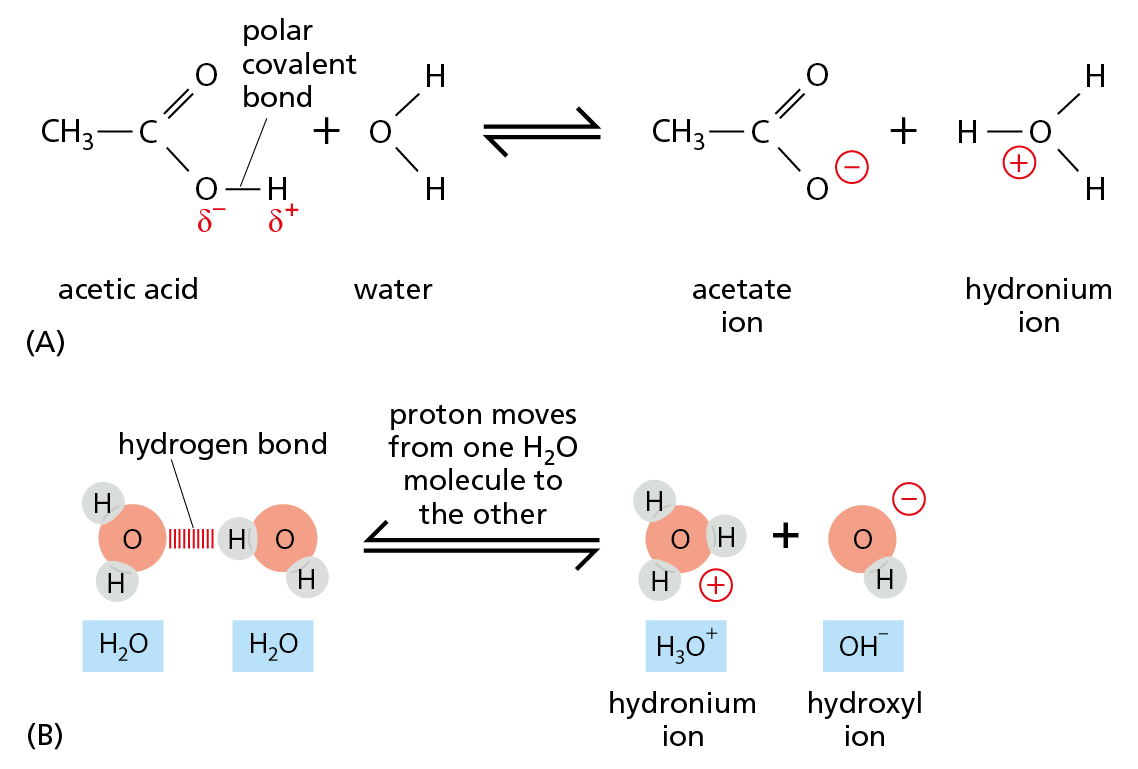
Figure 2–15 Protons move continuously from one molecule to another in aqueous solutions. (A) The reaction that takes place when a molecule of acetic acid dissolves in water. At pH 7, nearly all of the acetic acid molecules are present as acetate ions. (B) Water molecules are continually exchanging protons with each other to form hydronium and hydroxyl ions. These ions in turn rapidly recombine to form water molecules.
Acids are characterized as being strong or weak, depending on how readily they give up their protons to water. Strong acids, such as hydrochloric acid (HCl), lose their protons easily. Acetic acid, on the other hand, is a weak acid because it holds on to its proton fairly tightly when dissolved in water. Many of the acids important in the cell—such as molecules containing a carboxyl (COOH) group—are weak acids (see Panel 2–2, pp. 68–69). Their tendency to give up a proton with some reluctance is exploited in a variety of cellular reactions.
Because protons can be passed readily to many types of molecules in cells, thus altering the molecules’ characters, the H+ concentration inside a cell—its pH—must be closely controlled. Acids will give up their protons more readily if the H+ concentration is low (and the pH is high) and will hold onto their protons (or accept them back) when the H+ concentration is high (and the pH is low).
Molecules that accept protons when dissolved in water are called bases. Just as the defining property of an acid is that it raises the concentration of H3O+ ions by donating a proton to a water molecule, so the defining property of a base is that it raises the concentration of hydroxyl (OH–) ions by removing a proton from a water molecule. Sodium hydroxide (NaOH) is basic (the term alkaline is also used). NaOH is considered a strong base because it readily dissociates in aqueous solution to form Na+ ions and OH– ions. Weak bases—which have a weak tendency to accept a proton from water—however, are more important in cells. Many biologically important weak bases contain an amino (NH2) group, which can generate OH– by taking a proton from water: –NH2 + H2O → –NH3+ + OH– (see Panel 2–2, pp. 68–69).
Question 2–5
A. Are there H3O+ ions present in pure water at neutral pH (i.e., at pH = 7.0)? If so, how are they formed?
B. If they exist, what is the ratio of H3O+ ions to H2O molecules at neutral pH? (Hint: the molecular weight of water is 18, and 1 liter of water weighs 1 kg.)
Because an OH– ion combines with a proton to form a water molecule, an increase in the OH– concentration forces a decrease in the H+ concentration, and vice versa (Figure 2–16). A pure solution of water contains an equal concentration (10–7 M) of both ions, rendering it neutral (pH 7). The interior of a cell is kept close to neutral by the presence of buffers: mixtures of weak acids and bases that will adjust proton concentrations around pH 7 by releasing protons (acids) or taking them up (bases) whenever the pH changes. This give-and-take keeps the pH of the cell relatively constant under a variety of conditions.
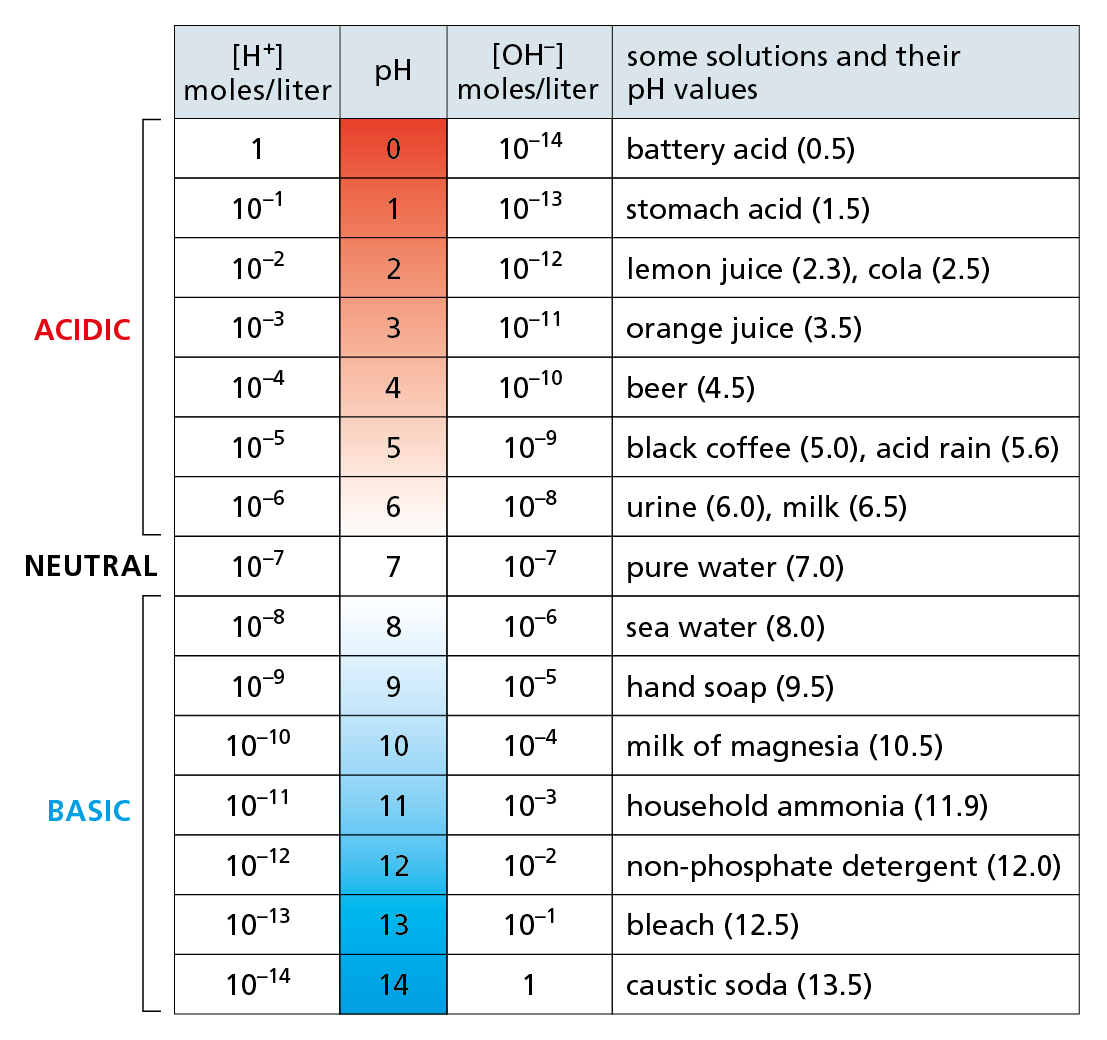
Figure 2–16 In aqueous solutions, the concentration of hydroxyl (OH–) ions increases as the concentration of H3O+ (or H+ ) ions decreases. The product of the two values, [OH–] x [H+], is always 10–14 (moles/liter)2. At neutral pH, [OH–] = [H+], and both ions are present at 10–7 M. Also shown are examples of common solutions along with their approximate pH values.
- atom
The smallest particle of an element that still retains its distinctive chemical properties; consists of a positively charged nucleus surrounded by a cloud of negatively charged electrons.
- electron
Negatively charged subatomic particle that occupies space around an atomic nucleus (e–).
- proton
Positively charged particle found in the nucleus of every atom; also, another name for a hydrogen ion (H+).
- atomic weight
The mass of an atom relative to the mass of a hydrogen atom; equal to the number of protons plus the number of neutrons that the atom contains.
- molecular weight
Sum of the atomic weights of the atoms in a molecule; as a ratio of molecular masses, it is a number without units.
- Avogadro’s number
The number of molecules in a mole, the quantity of a substance equal to its molecular weight in grams; approximately 6 × 10²³.
- chemical bond
A sharing or transfer of electrons that holds two atoms together. (See also covalent bond and noncovalent bond.)
- molecule
Group of atoms joined together by covalent bonds.
- covalent bond
Stable chemical link between two atoms produced by sharing one or more pairs of electrons.
- polar
In chemistry, describes a molecule or bond in which electrons are distributed unevenly.
- electronegativity
The tendency of an atom to attract electrons.
- ionic bond
Interaction formed when one atom donates electrons to another; this transfer of electrons causes both atoms to become electrically charged.
- ion
An atom carrying an electrical charge, either positive or negative.
- hydrogen bond
A weak noncovalent interaction between a positively charged hydrogen atom in one molecule and a negatively charged atom, such as nitrogen or oxygen, in another; hydrogen bonds are key to the structure and properties of water.
- hydrophilic
Molecule or part of a molecule that readily forms hydrogen bonds with water, allowing it to readily dissolve; literally, “water loving.”
- hydrophobic
Nonpolar, uncharged molecule or part of a molecule that forms no hydrogen bonds with water molecules and therefore does not dissolve; literally, “water fearing.”
- noncovalent bond
Chemical association that does not involve the sharing of electrons; singly they are relatively weak, but they can sum together to produce strong, highly specific interactions between molecules. Examples are hydrogen bonds and van der Waals attractions.
- electrostatic attraction
Force that draws together oppositely charged atoms. Examples include ionic bonds and the attractions between molecules containing polar covalent bonds.
- van der Waals attraction
Weak noncovalent interaction, due to fluctuating electrical charges, that comes into play between two atoms within a short distance of each other.
- hydrophobic force
A noncovalent interaction that forces together the hydrophobic portions of dissolved molecules to minimize their disruption of the hydrogen-bonded network of water; causes membrane phospholipids to self-assemble into a bilayer and helps to fold proteins into a compact, globular shape.
- hydronium ion
The form taken by a proton (H+) in aqueous solution.
- acid
A molecule that releases a proton when dissolved in water; this dissociation generates hydronium (H3O+) ions, thereby lowering the pH.
- pH scale
Concentration of hydrogen ions in a solution, expressed as a logarithm. An acidic solution with pH 3 will contain 10–3 M hydrogen ions.
- base
Molecule that accepts a proton when dissolved in water; also used to refer to the nitrogen-containing purines or pyrimidines in DNA and RNA.
- buffer
Mixture of weak acids and bases that maintains the pH of a solution by releasing and taking up protons.