Through What Lenses Do Anthropologists Gain a Comprehensive View of Human Cultures?
One of the unique characteristics of anthropology in the United States is that it has developed four “lenses” for examining humanity. Constituting the four-field approach, these interrelated fields are biological anthropology, archaeology, linguistic anthropology, and cultural anthropology. Taken together, these represent a holistic approach for examining the complexity of human origins and human culture, past and present.
Holism refers to anthropology’s commitment to look at the whole picture of human life—culture, biology, history, and language—across space and time. Anthropologists conduct research on the contemporary world and also look deep into human history.
Because we analyze both human culture and biology, anthropologists are in a unique position to offer insights into debates about the roles of “nature” and “nurture.” How do biology, culture, and the environment interact to shape who we are as humans, individually and as groups? The four-field approach is key to implementing this holistic perspective within anthropology.
BIOLOGICAL ANTHROPOLOGY
Biological anthropology, sometimes called physical anthropology, is the study of humans from a biological perspective—in particular, how they have evolved over time and have adapted to their environments. Both the fossil record and genetic evidence suggest that the evolutionary line leading to modern humans split, between five and six million years ago, from the one leading to modern African apes. Modern humans thus share a common ancestor with other primates such as chimpanzees, apes, and monkeys. In fact, genetic studies reveal that humans share 97.7 percent of DNA with gorillas and 98.7 percent with chimpanzees. Through a complex evolutionary process that we are learning more about every day, Homo sapiens (the group of modern humans to which you and I belong) evolved in Africa fairly recently in the grand scheme of things—probably less than 200,000 years ago—and gradually spread across the planet (Larsen 2018).
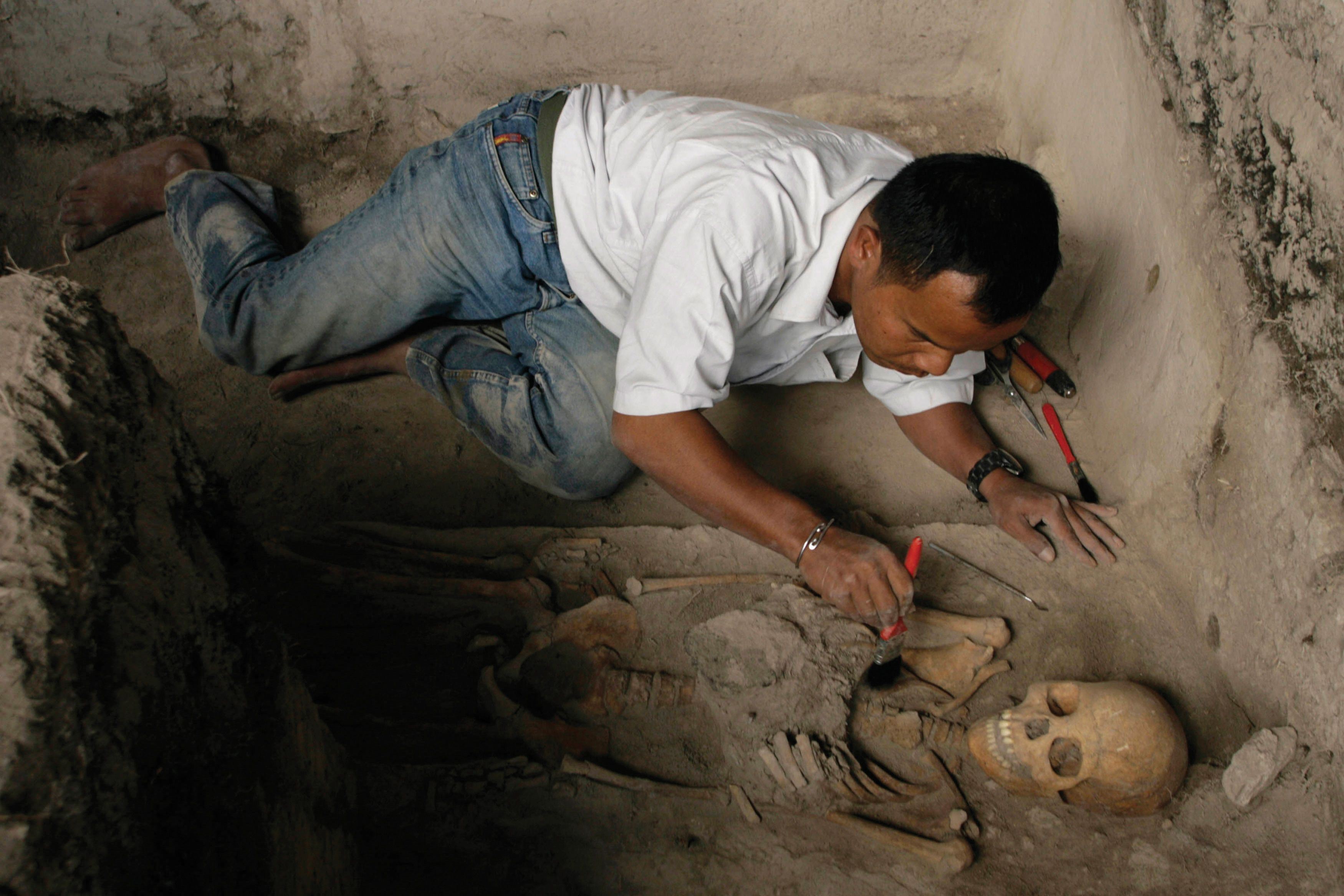
Biological anthropology has several areas of specialization. Paleoanthropology traces the history of human evolution by reconstructing the human fossil record. Thus, paleoanthropologists excavate the teeth, skulls, and other bones of our human ancestors and analyze them to track changes in human physical form over time. From these fossils they map changes in key categories such as overall body size, cranial capacity, hand structure, head shape, and pelvic position. Such changes reveal developments in walking, diet, intelligence, and capacity for cultural adaptation. Since the late 1970s, paleoanthropologists have also used molecular genetics to trace changes in human ancestors over time. The sequencing of DNA allows us to measure how closely humans are related to other primates and even to follow the movement of groups of people through the flow of genes. For instance, mitochondrial DNA (passed on from mother to daughter) indicates that modern Homo sapiens first appeared in Africa around 150,000 years ago and migrated out of Africa 100,000 years ago. This DNA evidence generally matches the findings of the archaeological record.
More information
Paleoanthropologists trace the history of human evolution by reconstructing the human fossil record. Here, Ketut Wiradyana unearths a fossilized human skeleton buried in a cave in Indonesia’s Aceh province.
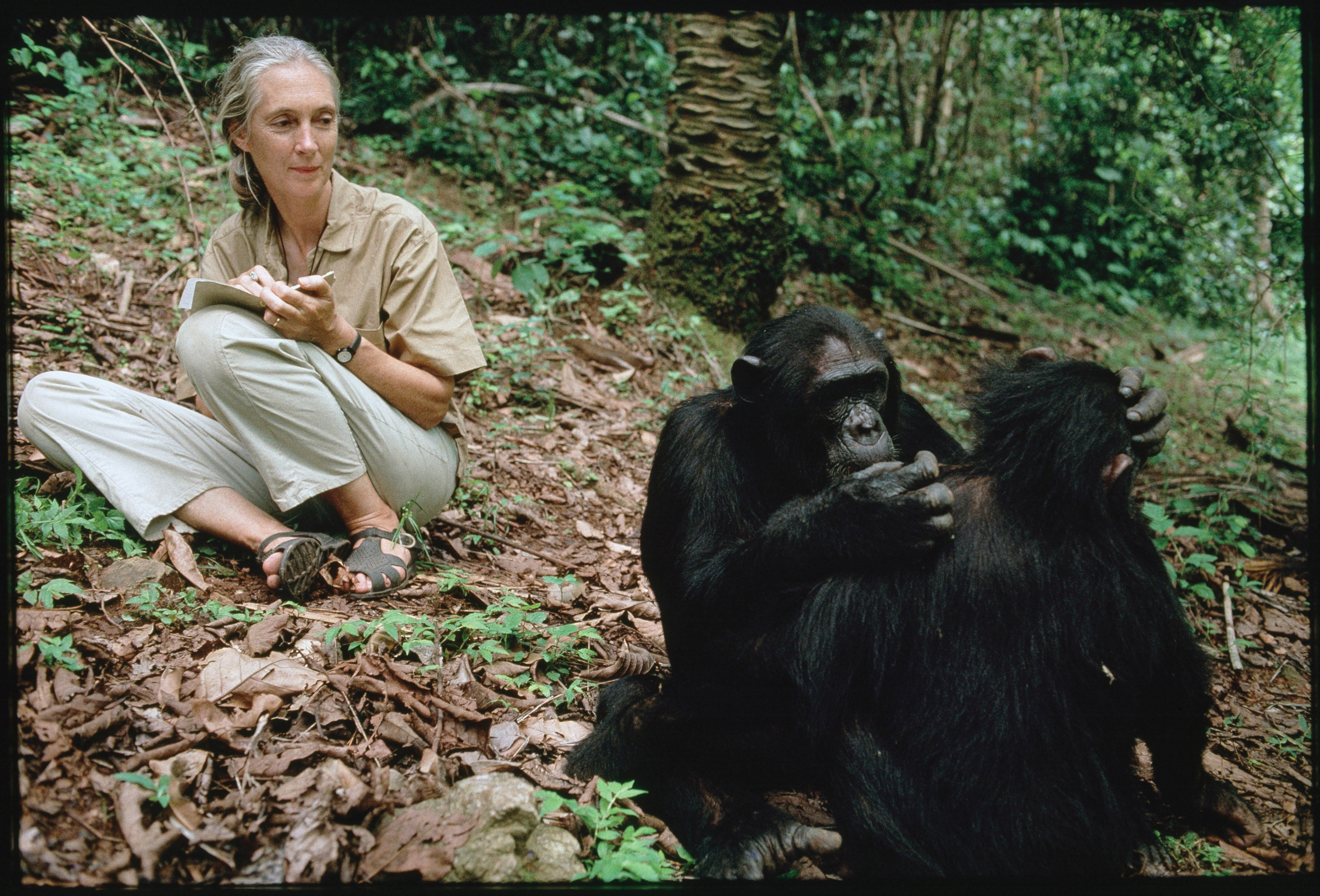
Primatology is another specialization within physical anthropology. Primatologists study living, nonhuman primates and primate fossils—including monkeys, apes, chimpanzees, and gorillas—to see what clues their biology, evolution behavior, and social life might provide about our own, particularly our early human behavior. Careful observation of primates in their natural habitats and in captivity has offered significant insights into sexuality, parenting, male/female differences, cooperation, intergroup conflict, aggression, and problem solving.
More information
Primatologist Jane Goodall studies chimpanzee behavior in an African nature preserve.
Biological anthropologists also study the diversity of human physical forms that have evolved over time. Humans come in all shapes and sizes. Our differences range from body size and facial shape to skin color, height, blood chemistry, and susceptibility to certain diseases. Biological anthropologists attribute general patterns of human physical variation to adaptation to different physical environments as humans spread from Africa across the other continents. Variations in skin color, for instance, can be traced to the need to adapt to different levels of ultraviolet light as humans migrated away from the equator.
However, studies of human biology show that the physical similarities among the world’s people far outweigh the differences. In fact, there is more variation within what are assumed to be “groups” than between groups. This is clearly evident in terms of the thorny concept of race (see Chapter 5). A biologically distinct race would include people in a group who share a greater statistical frequency of genes and physical traits than people outside the group. Biological anthropologists find no evidence of distinct, fixed, biological races. Rather, there is only one human race. Attempts to identify distinct biological races are flawed and arbitrary, as no clear biological lines exist to define different races. Racial categories, which vary significantly from culture to culture, are loosely based on a few visible physical characteristics such as skin color, but they have no firm basis in genetics (Larsen 2014; Mukhopadhyay, Henze, and Moses 2007). We will return to this discussion of the biological and social dimensions of race in Chapter 5.
ARCHAEOLOGY
Archaeology involves the investigation of the human past by means of excavating and analyzing material remains (artifacts). Some archaeologists study the emergence of early states in places such as Egypt, India, China, and Mexico. They have unearthed grand sites such as the pyramids of Egypt and Mexico and the terra-cotta warriors guarding the tomb of China’s Qin Dynasty emperor. Others focus on the histories of less spectacular sites that shed light on the everyday lives of people in local villages and households.
Archaeology is our only source of information about human societies before writing began (around 5,500 years ago). Because we are unable to travel back through time to observe human behavior, prehistoric archaeology seeks to reconstruct human behavior in the distant past (before written records) from artifacts that give significant clues about our ancestors’ lives. Campsites, hunting grounds, buildings, burials, and garbage dumps are rich sources of material. There, archaeologists find tools, weapons, pottery, human and animal bones, jewelry, seeds, charcoal, ritual items, building foundations, and even coprolites (fossilized fecal matter). Through excavation and analysis of these material remains, archaeologists reconstruct family and work life. What animals did the people eat? What seeds did they plant? What tools and crafts did they make? Coprolites reveal a great deal about the local diet. Burial sites provide significant data about how people treated their elders and their dead, what rituals they may have practiced, and their ideas about the afterlife. Archaeological evidence can suggest trade patterns, consumption habits, gender roles, and power stratification.
Unlike prehistoric archaeology, which looks at the time before writing, historic archaeology explores the more recent past and often combines the examination of physical remains and artifacts with that of written or oral records. Historic archaeologists excavate houses, stores, factories, sunken slave ships, and even polar ice caps to better understand recent human history and the impact of humans on the environment. For example, recent excavations of former slave plantations in the southern United States, combined with historical records such as deeds, census forms, personal letters, and diaries, have provided rich insight into the lives of African slaves in the seventeenth and eighteenth centuries. Students in the North Atlantic Biocultural Organisation’s international field school conduct excavations in Iceland that reveal not only historical information about the settling of the North Atlantic but also data on major changes in the contemporary global climate. Core samples from borings drilled through the glaciers reveal sediments deposited from the air over thousands of years as the glaciers formed; such samples allow archaeologists to track global warming and the impact of greenhouse gases on climate change.

More information
Prehistoric garbage dumps provide rich sources of material for understanding the cultural practices of human ancestors. Today, “garbologists” also learn about contemporary culture by examining what people throw away, including in large trash landfills like the one pictured here. What might an anthropologist 200 years from now learn about your community by studying its garbage?
LINGUISTIC ANTHROPOLOGY
Linguistic anthropology involves the study of human language in the past and the present. Languages are complex, vibrant, and constantly changing systems of symbols through which people communicate with one another. Languages are very flexible and inventive. (Consider how English has adapted to the rise of the Internet to include such new words and concepts as spam, instant messages, texting, Googling, Skyping, snapchat, and FaceTime.) A language clearly reflects a people’s ideas of and experiences with the world. But linguistic anthropologists suggest that language may also limit and constrain a people’s views of the world. In other words, can we think clearly about something if we don’t have an adequately sophisticated language?
Language is perhaps the most distinctive feature of being human. It is the key to our ability to learn and share culture from generation to generation, to cooperate in groups, and to adapt to our environment. While some animals—including dolphins and whales, bees, and ravens—have a limited range of communication, human language is more complex, creative, and extensively used.
Linguistic anthropology includes three main areas of specialization. Descriptive linguists carefully describe spoken languages and work to preserve them as written languages. For example, some descriptive linguists spend years in rural areas helping local people construct a written language from their spoken language. Historic linguists study how language changes over time within a culture and as it moves across cultures. Sociolinguists study language in its social and cultural contexts. They examine how different speakers use language in different situations or with different people. They explore how language is affected by factors such as race, gender, age, class, or other relationships of power. Consider the current changes in American English as speakers increasingly use a gender-neutral third person singular pronoun, they, when referring to a person when the sex or social gender of that person is unknown or fluid. This is a distinct shift from past language norms that required using he or she rather than the plural they. Sociolinguists would explore these changes: How is it changing? Who uses it? Who resists using it? How do these changes reflect changing American norms of gender and sexuality? We will explore sociolinguistic issues like these further in Chapter 4.
CULTURAL ANTHROPOLOGY
Cultural anthropology is the study of people’s everyday lives and their communities—their behaviors, beliefs, and institutions. Cultural anthropologists explore all aspects of human culture, such as war and violence, love and sexuality, child rearing and death. They examine what people do and how they live, work, and play together. But they also search for patterns of meaning embedded within each culture, and they develop theories about how cultures work. Cultural anthropologists examine the ways in which local communities interact with global forces.
Ethnographic fieldwork is at the heart of cultural anthropology. Through participant observation—living and working with people on a daily basis, often for a year or more—the cultural anthropologist strives to see the world through the eyes of others. Intensive fieldwork has the power to educate the anthropologist by (1) making something that may at first seem very unfamiliar into something that is ultimately quite familiar, and (2) taking what has been very familiar and making it seem very strange. Through fieldwork, anthropologists look beyond the taken-for-granted, everyday experience of life to discover the complex systems of power and meaning that all people construct. These include the many systems we will cover throughout this book: gender, sexuality, race, ethnicity, religion, kinship, class, and economic and political systems.
Cultural anthropologists analyze and compare ethnographic data across cultures in a process called ethnology. This process looks beyond specific local realities to see more general patterns of human behavior and to explore how local experiences intersect with global dynamics. Ultimately, through intensive ethnographic fieldwork and cross-cultural comparison, cultural anthropologists seek to help people better understand one another and the way the world works.
Glossary
- four-field approach
- The use of four interrelated disciplines to study humanity: biological anthropology, archaeology, linguistic anthropology, and cultural anthropology.
- holism
- The anthropological commitment to look at the whole picture of human life—culture, biology, history, and language—across space and time.
- paleoanthropology
- The study of the history of human evolution through the fossil record.
- biological anthropology
- The study of humans from a biological perspective, particularly how they have evolved over time and adapted to their environments.
- primatology
- The study of living nonhuman primates as well as primate fossils to better understand human evolution and early human behavior.
- archaeology
- The investigation of the human past by means of excavating and analyzing artifacts.
- prehistoric archaeology
- The reconstruction of human behavior in the distant past (before written records) through the examination of artifacts.
- historic archaeology
- The exploration of the more recent past through an examination of physical remains and artifacts as well as written or oral records.
- linguistic anthropology
- The study of human language in the past and the present.
- descriptive linguists
- Those who analyze languages and their component parts.
- historic linguists
- Those who study how language changes over time within a culture and how languages travel across cultures.
- sociolinguists
- Those who study language in its social and cultural contexts.
- cultural anthropology
- The study of people’s communities, behaviors, beliefs, and institutions, including how people make meaning as they live, work, and play together.
- participant observation
- A key anthropological research strategy involving both participation in and observation of the daily life of the people being studied.
- ethnology
- The analysis and comparison of ethnographic data across cultures.