What Is Culture?
When people hear the word culture, they often think about the material goods or artistic forms produced by distinct groups of people—Chinese food, Middle Eastern music, Indian clothing, Greek architecture, African dances. Sometimes people assume that culture means elite art forms such as those displayed in museums, operas, or ballets. But for anthropologists, culture is much more: It encompasses people’s entire way of life.
Culture is a system of knowledge, beliefs, patterns of behavior, artifacts, and institutions that are created, learned, shared, and contested by a group of people. Culture is our guide for understanding and interacting with the people and the world around us. It includes shared norms, values, symbols, mental maps of reality, and material objects as well as structures of power—including the media, education, religion, and politics—in which our understanding of the world is shaped and negotiated. A cultural group may be large or small, and it may have within it significant diversity of region, religion, race, gender, sexuality, class, generation, and ethnic identity. It may not be accepted by everyone, even those living in a particular place or time. But ultimately, the culture that we learn has the potential to shape our ideas of what is normal and natural, what we can say and do, and even what we can think.
More information
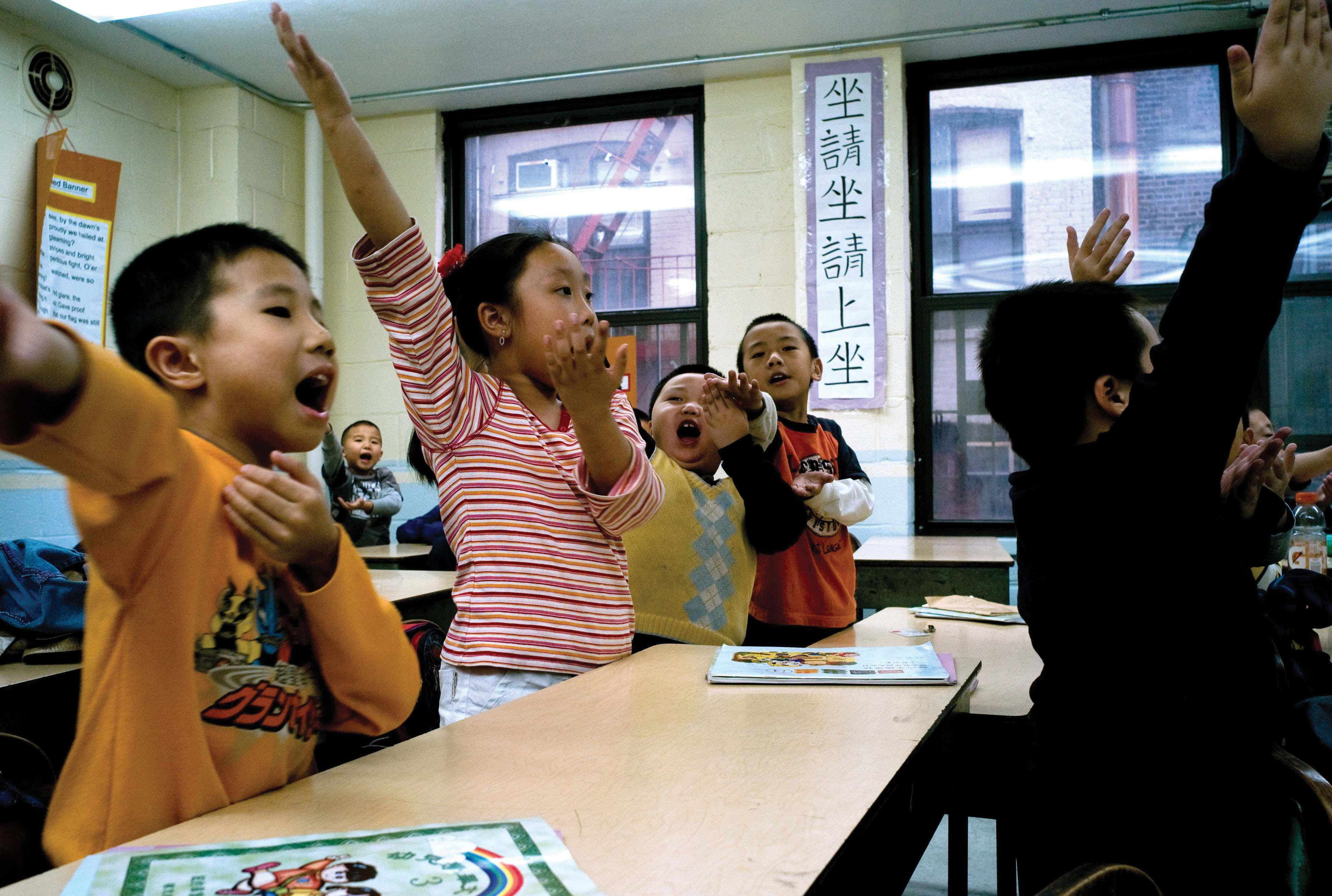
How is culture learned and taught? Here, kindergartners learn Mandarin Chinese at the New York Chinese School.
CULTURE IS LEARNED AND TAUGHT
Humans do not genetically inherit culture. We learn culture throughout our lives from the people and organizations that surround us. Anthropologists call the process of learning culture enculturation. Some aspects of culture we learn through formal instruction: English classes in school, religious instruction, visits to the doctor, history lessons, dance classes. Other processes of enculturation are informal and even unconscious as we absorb culture from family, friends, and the media. All humans are equally capable of learning culture and of learning any culture they are exposed to. And while the process of social learning and passing information across generations is not unique to humans, humans have developed a unique capacity for culture.
Culture is taught and learned. Humans establish cultural institutions as mechanisms for enculturating their members. Schools, medical and legal systems, media, and religious institutions promote the ideas and concepts that are considered appropriate behavior and thinking.
CULTURE IS SHARED YET CONTESTED
No individual has his or her own culture. Culture is a shared experience developed as a result of living as a member of a group. Through enculturation, humans learn how to communicate and establish patterns of behavior that allow us to live in community, often in close proximity and sometimes with limited resources. Cultures may be shared by groups, large and small. For example, anthropologists may speak of Indian culture (1.3 billion people), of U.S. culture (320 million people) or of the culture of the Yanomami tribe (several thousand people) living in the Amazonian rainforest. There may be smaller cultures within larger cultures. For instance, your college classroom has a culture, one that you must learn in order to succeed academically. A classroom culture includes shared understandings of what to wear, how to sit, when to arrive or leave, how to communicate with classmates and the instructor, and how to challenge authority, as well as formal and informal processes of enculturation.
More information
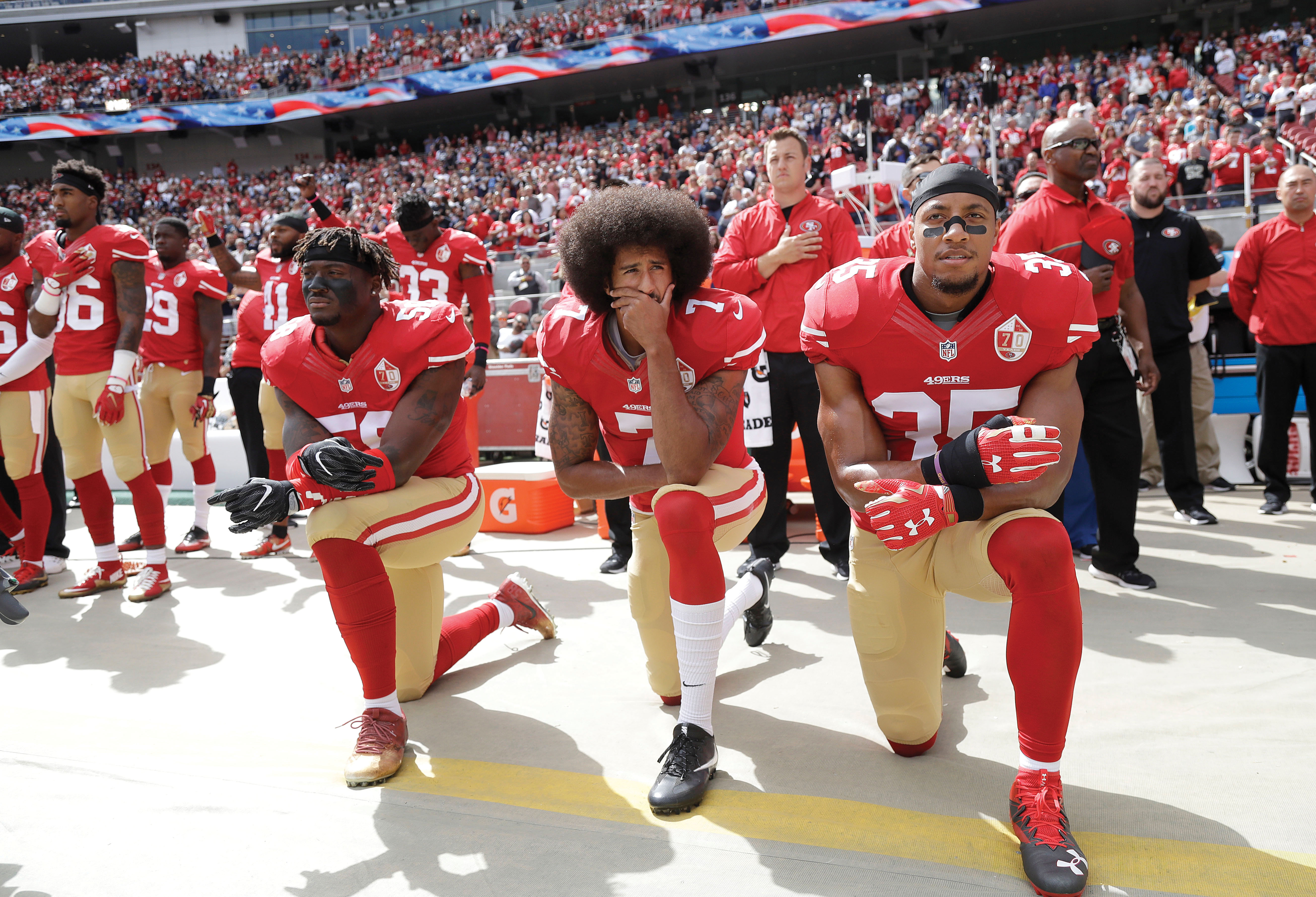
How is culture shared and contested? National Football League players Eli Harold, Colin Kaepernick, and Eric Reid spark controversy by kneeling during the shared singing of the national anthem to contest police violence against African Americans.
Although culture is shared by members of groups, it is also constantly changing. Just as cultural institutions serve as structures for promoting enculturation, they also serve as arenas for debating and challenging core cultural beliefs and behaviors. Intense debates erupt over school curriculums, medical practices, media content, religious practices, and government policies as members of a culture engage in sometimes dramatic confrontations about their collective purpose and direction.
CULTURE IS SYMBOLIC AND MATERIAL
Through enculturation, the members of a culture develop a shared body of cultural knowledge and patterns of behavior. The elements of a culture powerfully frame what its participants say, what they do, and even what they think is possible and impossible, real or unreal. Though anthropologists no longer think of culture as a completely separate, unique possession of a specific group of people, most argue that a common cultural core exists, at least among certain more dominant groups within the culture. Norms, values, symbols, and mental maps of reality are four elements that an anthropologist may consider in attempting to understand the complex workings of a culture.
Norms. Norms are ideas or rules about how people should behave in particular situations or toward certain other people—what is considered “normal” and appropriate behavior. Norms may include what to wear on certain occasions; what you can say in polite company; how younger people should treat older people; and who you can date or, as the opening story in this chapter demonstrated, what levels and tools of violence a group is willing to tolerate. Many norms are assumed, not written down. We learn them—consciously and unconsciously—and incorporate them into our patterns of daily living. Other norms are formalized in writing and made publicly available, such as a country’s laws, a system of medical or business ethics, or the code of academic integrity in your college or university. Norms may vary for segments of the population, imposing different expectations on men and women, for instance, or children and adults. Cultural norms may be widely accepted, but they may also be debated, challenged, and changed, particularly when norms enforced by a dominant group disadvantage or oppress a minority within the population.
Consider the question of whom you can marry. Cultures have clear norms, based on ideas of age, kinship, sexuality, race, religion, class, and legal status, that specify what is normal and what is not. Let’s consider some extreme cases. In Nazi Germany, the Nuremburg Laws passed in 1935 banned marriage or sexual relations between German Jews and persons with German or related blood. From 1949 to 1985, South Africa’s apartheid government, dominated by white lawmakers, declared marriage and sex between whites and “coloreds” (people of mixed race), Asians, and blacks to be a crime under the Prohibition of Mixed Marriages Act and the Immorality Act. In the history of the United States, as many as forty states passed anti-miscegenation laws—that is, laws barring interracial marriage and sex. Such laws targeted marriages between whites and nonwhites—primarily blacks, but also Asians and Native Americans. Only in 1967 did the U.S. Supreme Court unanimously rule (in Loving v. Virginia) that these laws were unconstitutional, thereby striking down statutes that were then still on the books in sixteen states (all the former slave states plus Oklahoma).
Cultural norms may discourage exogamy (marriage outside one’s “group”) and encourage endogamy (marriage within one’s “group”). Think about your own family. Who could you bring home to your parents? Could you cross boundaries of race, ethnicity, nationality, religion, class, or gender? Although U.S. culture has very few formal rules about whom one can marry—with some exclusions around age, sexuality, and certain kinship relations—cultural norms still powerfully inform and enforce our behavior.
Most people, though not all, accept and follow a culture’s norms. If they choose to challenge the norms, other members of the culture have means for enforcing its standards, whether through shunning, institutionalized punishment such as fines or imprisonment, or, in more extreme cases, violence and threats of violence. For example, in 1958 Richard and Mildred Loving married in Washington, D.C. but were arrested when they returned to Virginia. During their trial the judge gave them a choice of prison, divorcing, or moving from the state.
Values. Cultures promote and cultivate a core set of values—fundamental beliefs about what is important, what makes a good life, and what is true, right, and beautiful. Values reflect shared ultimate standards that should guide people’s behavior, as well as goals that people feel are important for themselves, their families, and their community. What would you identify as the core values of U.S. culture? Individualism? Independence? Care for the most vulnerable? Freedom of speech, press, and religion? Equal access to social mobility?
As with all elements of culture, cultural values are not fixed. They can be debated and contested. And they may have varying degrees of influence. For example, if you pick up a newspaper in any country you will find a deep debate about cultural values. Perhaps the debate focuses on modesty versus public displays of affection in India, economic growth versus environmental pollution in China, or land settlement versus peace in the Middle East. In the United States, while the value of privacy is held dear, so is the value of security. The proper balance of the two is constantly being contested and debated. Under what conditions should the U.S. government be able to breach your privacy by eavesdropping on telephone calls and emails, or unlocking your iPhone, in order to ensure your safety?
Ultimately, values are not simply platitudes about people’s ideals about the good life. Values are powerful cultural tools for clarifying cultural goals and motivating people to action. When enshrined in law, values can become powerful political and economic tools. Values can be so potent that some people are willing to kill or die for them. In Pittsburgh in 2018, a white supremacist was so committed to his vision of a purely white nation that he entered The Tree of Life synagogue and slaughtered eleven people and injured seven more during a Saturday morning worship service.
Symbols. Cultures include complex systems of symbols and symbolic actions—in realms such as language, art, religion, politics, and economics—that convey meaning to other participants. In essence, a symbol is something that stands for something else. For example, language enables humans to communicate abstract ideas through the symbols of written and spoken words, as well as unspoken sounds and gestures (see Chapter 4). People shake hands, wave, whistle, nod, smile, give two thumbs up, give thumbs down, give someone the middle finger. These symbols are not universal, but within their particular cultural context they convey certain meanings.

More information
Money is symbolic, and only 10 percent of the world’s money exists in tangible form. Here traders move money electronically at Euronext stock exchange in Amsterdam, the Netherlands.
Much symbolic communication is nonverbal, action-based, and unconscious. Religions include powerful systems of symbols that represent deeper meanings to their adherents. Consider mandalas, the Koran, the Torah, the Christian cross, holy water, statues of the Buddha—all carry greater meanings and value than the physical material they are constructed of. National flags, which are mere pieces of colored cloth, are symbols that stir deep political emotions. Even money is simply a symbolic representation of value guaranteed by the sponsoring government. It has no value, except in its symbolism. Estimates suggest that only about 10 percent of money today exists in physical form. The rest moves electronically through banks, stock markets, and credit accounts (Graeber 2011). Symbols change in meaning over time and from culture to culture. Not understanding another culture’s collective understandings—sets of symbolic actions—can lead to embarrassing misunderstandings and cross-cultural miscues.
Mental Maps of Reality. Along with norms, values, and symbols, another key component of culture is mental maps of reality. These are “maps” that humans construct of what kinds of people and what kinds of things exist. Because the world presents overwhelming quantities of data to our senses, our brains create shortcuts—maps—to navigate our experience and organize all the data that come our way. A roadmap condenses a large world into a manageable format (one that you can hold in your hands or view on your portable GPS system) and helps us navigate the territory. Likewise, our mental maps organize the world into categories that help us sort out our experiences and what they mean. We do not want all the details all the time. We could not handle them anyway. From our general mental maps we can then dig deeper as required.
Our mental maps are shaped through enculturation, but they are not fixed. Like other elements of culture, they can be challenged and redrawn. Today, globalization continues to put pressure on mental maps of reality as people on the planet are drawn into closer contact with the world’s diversity. We will examine these transformations throughout this book, especially in chapters on language, race, ethnicity, gender, sexuality, and kinship.
Mental maps have two important functions. First, mental maps classify reality. Starting in the eighteenth century, European naturalists such as Carolus Linnaeus (1707–1778) began creating systems of classification for the natural world. These systems included five kingdoms subdivided into phylum, class, order, family, genus, and species. Through observation (this was before genetics), these naturalists sought to organize a logical framework to divide the world into kinds of things and kinds of people. In a similar way, our cultures’ mental maps seek to classify reality—everything from units of time to what is considered to be food to who is considered a relative—though often a culture’s mental maps are drawn from the distinct vantage point of those in power.
A culture creates a concept such as time. Then we arbitrarily divide it into millennia, centuries, decades, years, seasons, months, weeks, hours, morning, afternoon, evening, minutes, seconds. Categories of time are assumed to be scientific, universal, and “natural.” But mostly they are cultural constructs. The current Gregorian calendar, which is used in much of the world, was introduced in 1582 by the Catholic Church, but its adoption occurred gradually; it was accepted in the United States in 1756, replacing the earlier Julian calendar, and in China in 1949. Until 1949 and still today, much of China relies on a lunar calendar in which months and days align with the waxing and waning of the moon. New Year’s Day shifts each year. So do Chinese holidays and festivals. Even in the Gregorian calendar, the length of the year is modified to fit into a neat mental map of reality. A year (how long it takes Earth to orbit the sun) is approximately 365.2425 days long, so every four years the Gregorian calendar must add a day, creating a leap year of 366 days rather than 365. As these examples demonstrate, categories that seem completely fixed and “natural” are in reality flexible and variable, showing the potential role of culture in defining our fundamental notions of reality.
Mental maps of reality become problematic when people treat cultural notions of difference as being scientifically or biologically “natural.” Race is a key example. As we will see in Chapter 5, the notion of race is assumed in popular culture and conversation to have a biological basis. There is, however, no scientific basis for this assumption. The particular racial categories in any given culture do not correlate directly to any biological differences. Although most people in the United States would name whites, blacks, Hispanics, Asians, and perhaps Native Americans as distinct races, no genetic line marks clear differences among these categories. The classifications are created by our culture and are specific to our culture. Other cultures draw different mental maps of the reality of human physical variation. The Japanese use different racial categories than we do in the United States. Brazilians have more than 500 racial classifications.

More information
More information
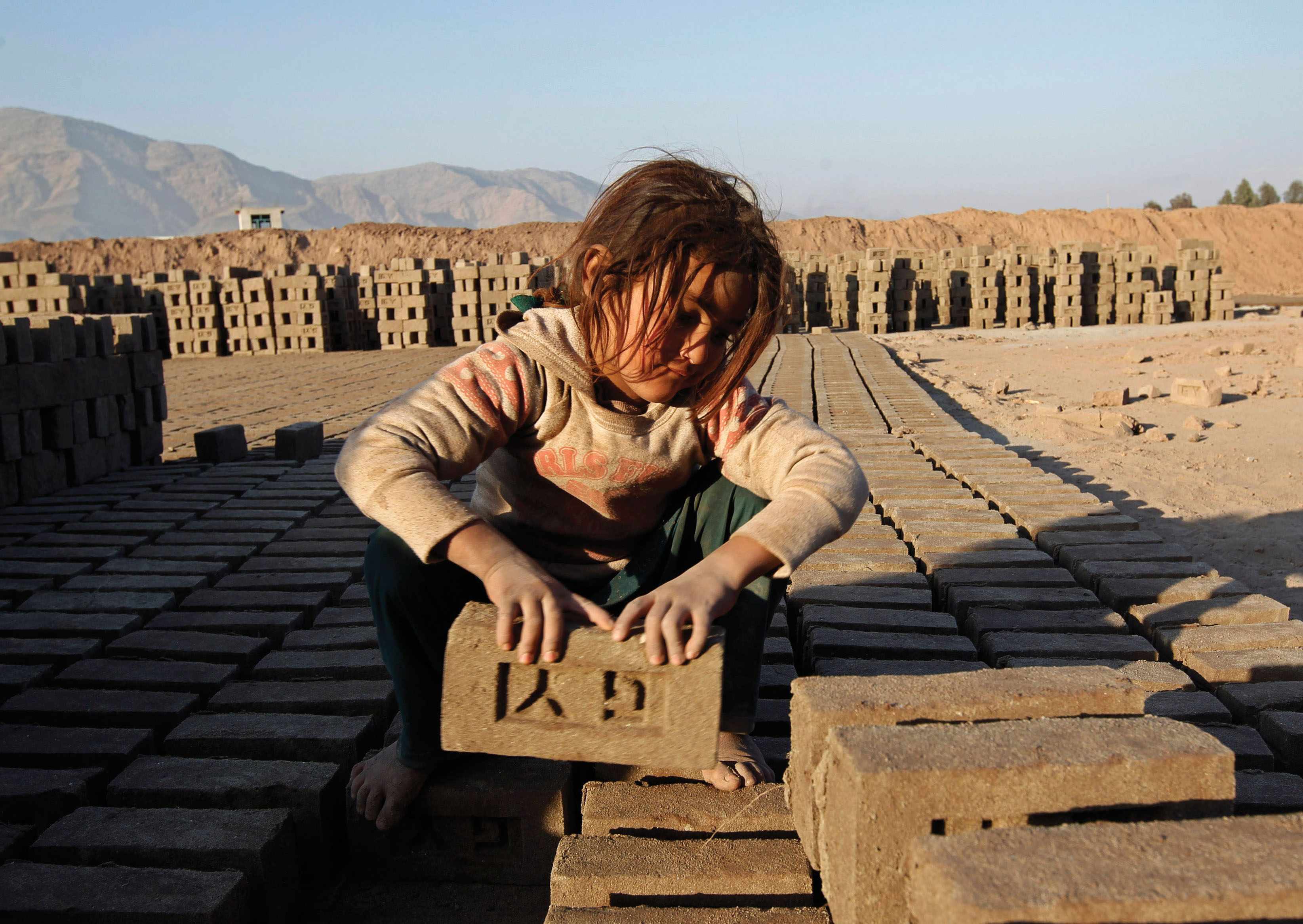
What does it mean to be a child laborer in your culture? (Left) a boy in Dhaka, Bangladesh, makes balloons for export; (Right) a girl in Nangarhar province, Afghanistan, works at a brick-making factory.
Second, mental maps assign meaning to what has been classified. Not only do people in a culture develop mental maps of things and people, they also place values and meanings on those maps. For example, we divide the life span into categories—infants, children, adolescents, teenagers, young adults, adults, and seniors—but then we give different values to different ages. Some carry more respect, more protection, and more rights, privileges, and responsibilities. In the United States, these categories determine at what age you can marry, have sex, drink alcohol, drive, vote, go to war, stand trial, retire, or collect Social Security and Medicare benefits. Anthropologists warn that by assuming our mental maps of reality are natural, fixed, and universal, we risk misunderstanding and disregarding others’ cultural values.
Glossary
- culture
- A system of knowledge, beliefs, patterns of behavior, artifacts, and institutions that are created, learned, shared, and contested by a group of people.
- enculturation
- The process of learning culture.
- norms
- Ideas or rules about how people should behave in particular situations or toward certain other people.
- values
- Fundamental beliefs about what is important, what makes a good life, and what is true, right, and beautiful.
- mental maps of reality
- Cultural classifications of what kinds of people and things exist, and the assignment of meaning to those classifications.
- symbol
- Anything that represents something else.