What Is Racism?
Having considered the ways concepts of race are constructed in the United States and globally, we now turn to consider the ways ideas of race are used to construct and maintain systems of power that we call racism. Racism draws on the culturally constructed categories of race to rank people as superior or inferior and to allocate access to power, privilege, resources, and opportunities differentially.
TYPES OF RACISM
Racism has multiple aspects that include individual and institutional components as well as the set of ideas—the ideology—that acts like glue to hold them together.
Individual Racism. Individual racism is expressed through prejudiced beliefs and discriminatory actions. Being prejudiced involves making negative assumptions about a person’s abilities or intentions based on the person’s perceived race. Discriminating involves taking negative actions toward a person on the basis of his or her perceived race. Individual racism may be expressed through a lack of respect or through suspicion, scapegoating, and violence ranging from police brutality to hate crimes (Jones 2000). Individual, personally mediated acts of racism may be intentional or unintentional. They may be acts of commission (things that are done) or acts of omission (things that are left undone).
Individual racism can also be expressed through microaggressions. Microaggressions refer to common, everyday verbal or behavioral indignities and slights that communicate hostile, derogatory, and negative messages about someone’s race, gender, sexual orientation, or religion. Racial microaggressions in the U.S. context include subtle slights, snubs, or insults directed toward people of color, often by whites who are unaware that they have transgressed against someone: clutching a handbag, checking a wallet, locking a car door, changing seats, commenting, “You speak English well,” or asking, “Where do you come from?” These actions and comments may communicate that someone is considered prone to criminality, not to be trusted, is different, or is considered a stranger. Underlying these acts is a hidden cultural curriculum through which people have been taught certain biases associated with race, gender, sexual orientation, or religion, which are then acted out intentionally or unintentionally. Research has shown that the cumulative and recurring experience of microaggressions over a lifetime can create intense psychological dilemmas ranging from frustration to depression and rage (Sue 2010, 2015).
Institutional Racism. Racism is more than individual prejudiced beliefs or discriminatory acts. It also includes institutional racism, sometimes called structural racism—patterns by which racial inequality is structured through key cultural institutions, policies, and systems. These include education, health, housing, employment, the legal system (legislatures, courts, and prison systems), law enforcement, and the media. Institutional racism originates in historical events and legal sanctions. But, even when outlawed, it can persist through contemporary patterns of institutional behavior that perpetuate the historical injustices (Cazenave 2011; Feagin and Feagin 2011; Jones 2000; Neubeck and Cazenave 2001).
In the United States, stratification along racial lines is a legacy of discrete historical events that include slavery, Jim Crow legal segregation, expropriation of indigenous lands, and immigration restrictions. Through these legal forms of institutional racism, the political, economic, and educational systems were organized to privilege whiteness. Today, despite the elimination of legal racial discrimination and segregation, patterns of inequality still break along color lines as a result of continuing individual and institutional racism. Such racism is evident in employment rates, income and wealth differentials, home ownership, residential patterns, criminal sentencing patterns, incarceration rates, application of the death penalty, infant mortality, access to health care, life expectancy, investments in public education, college enrollments, and access to the vote (Alexander 2012).
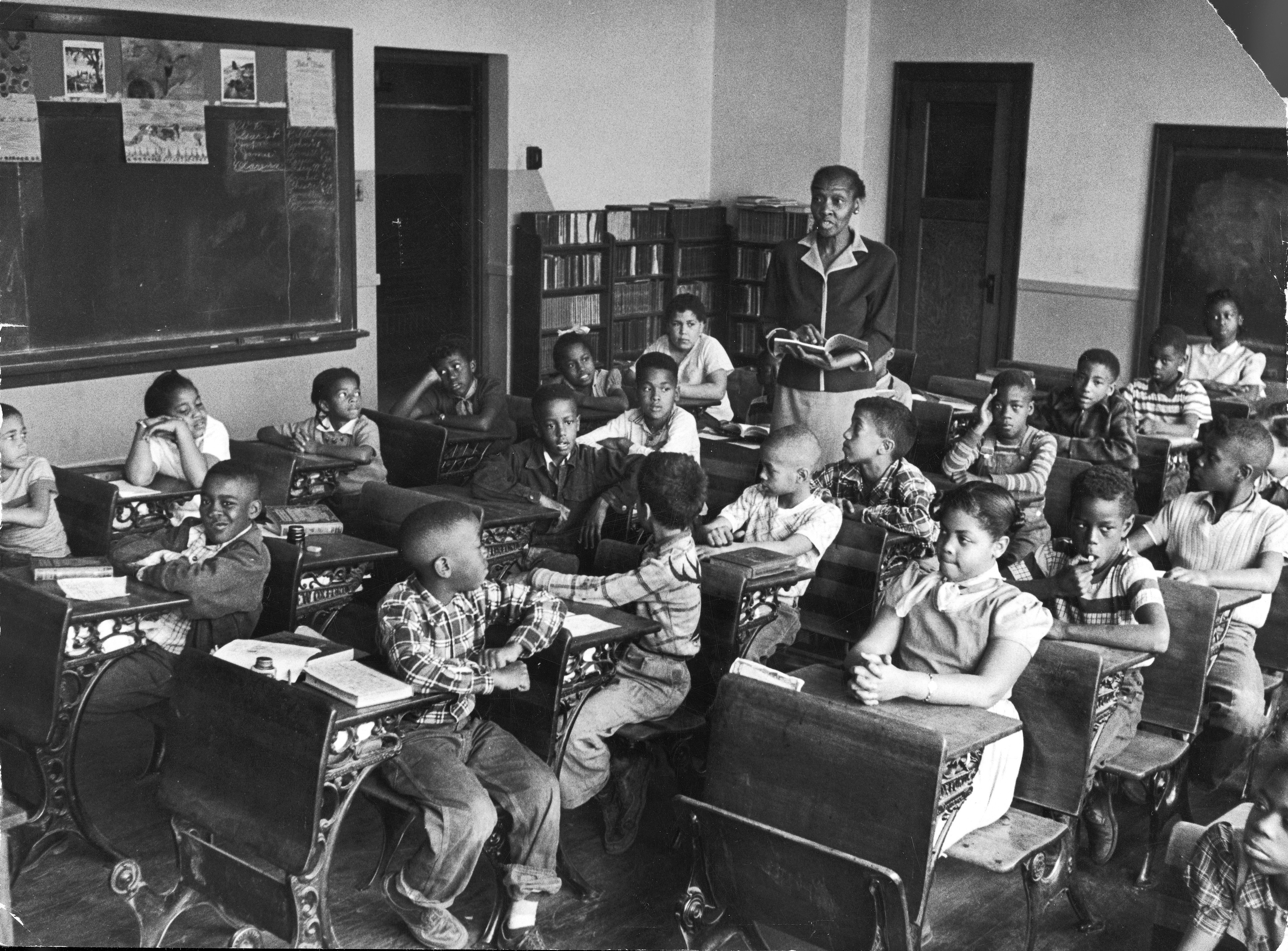
For example, the U.S. educational system has been a site for intense contestation over race and racism. In 1896—three decades after the end of slavery—the Supreme Court ruled in Plessy v. Ferguson that state-sponsored segregation, including in public schools, was constitutional as long as the separate facilities for separate races were equal. Across the South, individual white school administrators often refused, on overtly racist grounds, to allow children of color—black, Hispanic, Asian American—entrance to school buildings. But these individual actions alone did not constitute the total system of racism at work. They were systematically supported and enforced by government institutions: local boards of education, legislators, local police with guns and dogs, and court systems—including the U.S. Supreme Court.
Only in 1954 did the Supreme Court reverse itself in the case of Brown v. Board of Education, declaring unanimously that state laws establishing separate public schools for black and white students were unconstitutional and that separate educational facilities were inherently unequal. At the time, seventeen states, primarily across the South, required racial segregation. Sixteen prohibited it. Even after the Supreme Court ruling banned segregated schools, the federal government was forced to intervene in states like Mississippi and Arkansas, sending national guard troops to escort students to classes in order to end racist practices and protect student safety.
More information
A racially segregated classroom in Monroe Elementary School, Topeka, Kansas, March 1953. Students Linda Brown (front right) and her sister Terry Lynn (far left, second row back), along with their parents, initiated the landmark civil rights lawsuit Brown v. Board of Education.
Contemporary racial disparities in school funding reveal how historical patterns of institutional racism can continue long after discrimination has been declared illegal (Miller and Epstein 2011). In 2003, the New York Court of Appeals, the state’s highest court, found a long-standing disparity in state funding of public schools in New York City and suburban areas. New York City public schools, with high proportions of students of color, received an average of $10,469 per student, whereas schools in more affluent, predominantly white New York suburbs received $13,760 per student. The courts ordered New York State to increase its annual education budget by up to $5.6 billion to cover the costs of redressing this inequality while also providing $9.2 billion for capital improvement of New York City school buildings. The State of New York has yet to fully comply with these requirements.
Racial Ideology. Racism relies on a third component—a set of popular ideas about race, or a racial ideology—that allows the discriminatory behaviors of individuals and institutions to seem reasonable, rational, and normal. Ideas about the superiority of one race over another—shaped and reinforced in the school system, religious institutions, government, and the media—caused people in the United States to believe that slavery was natural, that the European settlers had a God-given right to “civilize” and “tame” the American West, and that segregation in school was a reasonable approach to providing public education. As these ideas became ingrained in day-to-day relationships and institutional patterns of behavior, they ultimately provided the ideological glue that held racial stratification in place.
Today, social scientists note that contemporary racial ideologies are much more subtle, often drawing on core U.S. values of individualism, social mobility, meritocracy, and color blindness to make their case. In his book Racism without Racists (2010), sociologist Eduardo Bonilla-Silva critiques the contemporary calls in U.S. culture for color blindness—the elimination of race as a consideration in a wide range of institutional processes, from college admissions to the reporting of arrests by police. The ideology of color blindness suggests that the best way to end discrimination in the post–civil rights era is to treat individuals as equally as possible without regard to race. Bonilla-Silva warns that while the desire to transcend race by adopting a stance of color blindness appears reasonable and fair, the approach ignores the uneven playing field created by centuries of legal racism in areas such as wealth, property ownership, education, health, and employment. A color-blind ideology, Bonilla-Silva suggests, may actually perpetuate racial inequality by obscuring the historical effects of racism, the continuing legacy of racial discrimination, and the entrenched patterns of institutional behavior that undergird racism today.
In a country like the United States, which prides itself on being a meritocracy (a system that views people as a product of their own efforts and in which equal opportunity is available to all), the continuing existence of racism and skin-color privilege in the twenty-first century is difficult for many people to acknowledge. When the dominant culture celebrates the ideals of individualism and equal access to social mobility, it is ironic that for many people, success depends not only on hard work, intelligence, and creativity but also on the often unrecognized and unearned assets—cultural, political, and economic—that have accrued over hundreds of years of discrimination and unequal opportunity based on race.
Intersections of Race and Other Systems of Power. It is important to note the powerful intersection of race and other systems of power. Intersectionality provides a framework for analyzing the many factors—especially class and gender—that determine how race is lived and how all three systems of power and stratification build on and shape one another (Feagin and Sikes 1994).
In the 1990s anthropologist Leith Mullings led a study, The Harlem Birth Right Project, on the impact of race, class, and gender on women’s health and infant mortality. The study focused on central Harlem, at that time a vibrant, primarily African American community in northern Manhattan, New York City (Mullings 2005b; Mullings and Wali 2001). Of particular concern, infant mortality rates in Harlem were twice the rate of New York City’s overall. Previous studies (e.g., Schoendorf, Hogue, and Kleinman 1992) had demonstrated that at all class levels African American women in the United States have more problematic birth outcomes than white women of similar class. Even college-educated African American women experienced infant mortality at twice the rate of college-educated white women. This observation suggested that factors other than education and social status were at work.
Mullings’s research team examined how the underlying conditions of housing, employment, childcare, and environmental factors, as well as the quality of public spaces, parks, and even grocery and retail stores, might affect the health outcomes being reported in Harlem, where both working-class and middle-class women lived. Since the early 1990s, Harlem has been hard hit by dramatic changes in New York City’s economy. Manufacturing jobs with middle-class wages have been lost to flexible accumulation (see Chapters 1 and 10), as New York City–based companies relocate production overseas. Meanwhile, job growth in the metropolitan area has occurred in the high-wage financial sector and in the low-wage service sector. Throughout the 1990s, government social services were cut back while public housing and transportation were allowed to deteriorate.
The effects on working-class and middle-class women in Mullings’s study were notable, with increased physical and mental stress, especially for pregnant women. For working-class women, inadequate, overpriced, and poorly maintained private and public housing forced many mothers and their children to be constantly on the move, searching for affordable housing and sharing living spaces with friends and relatives to make ends meet. The need to fight regularly for needed repairs drained time and energy from hardworking women holding multiple low-wage jobs while juggling work and childcare. A shortage of steady, well-paying jobs meant that women had very little income security or benefits, so they often pieced together a living from multiple sources. Middle-class women, many of whom were employed in the public sector, were also increasingly subject to layoffs as local governments downsized. The study also found that heavy pollution in the Harlem area, including airborne pollutants from a sewage treatment plant and six bus depots, contributed to elevating the child asthma rate to four times the national average (Mullings 2005b; Mullings and Wali 2001).
The Harlem Birth Right Project illustrates a powerful application of the intersectional approach. It reveals how inequality of resources (class), institutional racism, and gender discrimination combine to affect opportunities for employment, housing, and health care in the Harlem community. It also shows how these factors link to elevated health problems and infant mortality.
More information
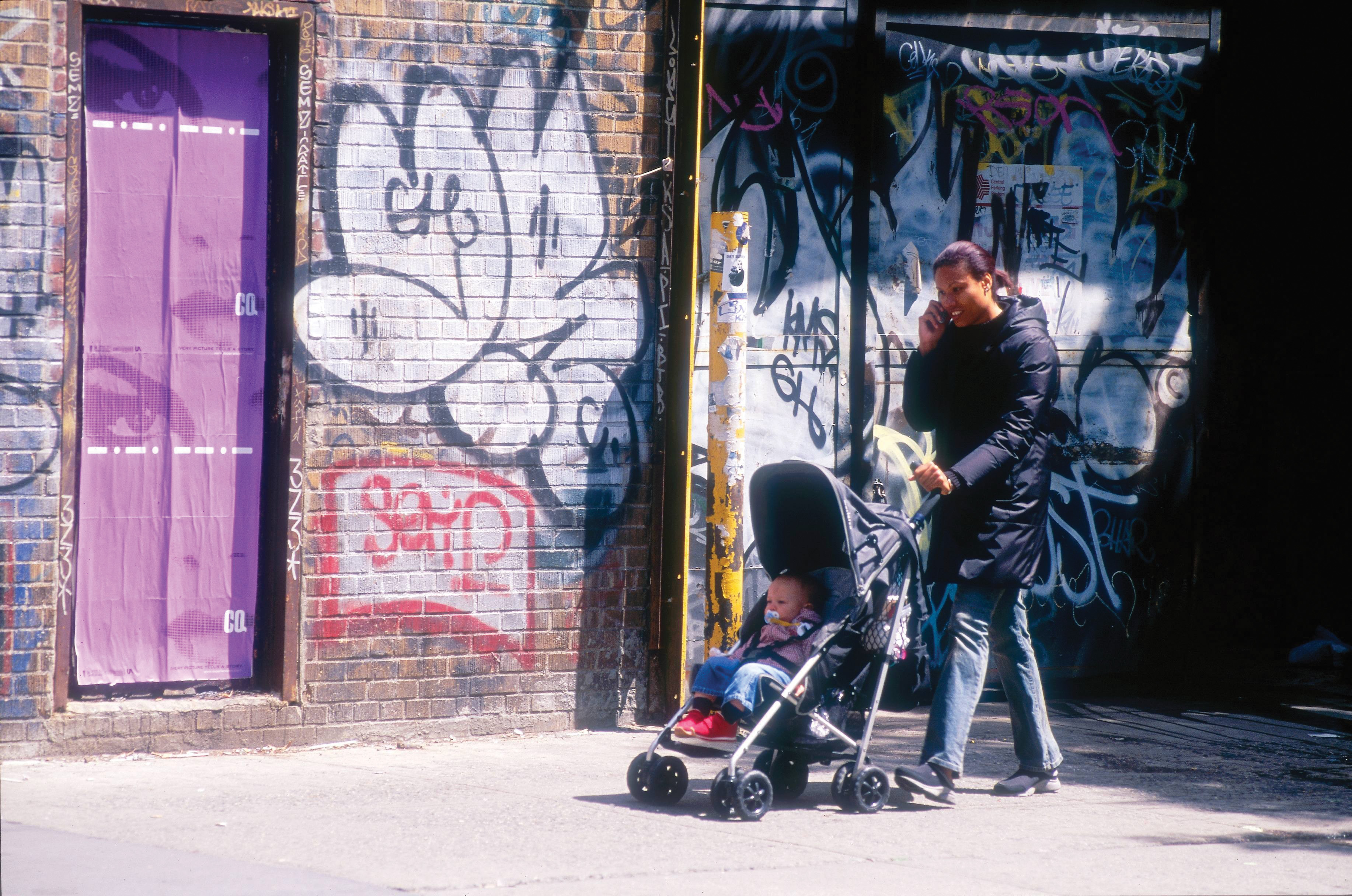
Mother and child, Harlem, New York. How do class, race, and gender intersect to affect people’s life chances?
Mullings points out the many forms of collaboration that women in Harlem use to resist these structures of inequality and survive in their chosen community. Calling this the Sojourner syndrome, she links the agency of contemporary African American women to the life story of Sojourner Truth. Truth was born into slavery in the late 1790s and was emancipated in 1827 after experiencing physical abuse and rape and watching many of her children be sold away from her. Subsequently she became an itinerant preacher for the abolition of slavery, building coalitions with white abolitionists and later participating in the early women’s rights movement. The stories of the women in Harlem today, like Sojourner Truth’s, reflect the determination and creativity required to overcome interlocking constraints of racism, sexism, and class inequality.
RESISTING RACISM
More information
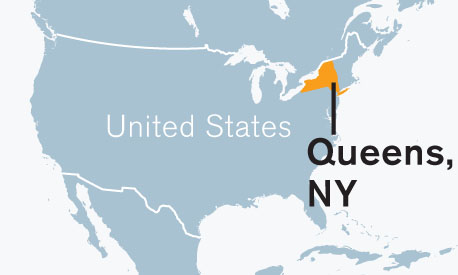
MAP 5.3
Queens, New York City
Along with the history of individual and institutional racism, it is important to acknowledge also the long tradition of work against racism that continues today. Anthropologist Steven Gregory’s ethnography Black Corona (1998) tells the story of the organized political resistance by a predominantly African American community in Corona, Queens, in New York City, when confronted by attitudes and policy expressions of racial discrimination. The African American community in Corona dates back to the 1820s, and it expanded under an influx of middle-class residents from Harlem in the first half of the twentieth century. By the 1970s, however, Corona, like many other urban U.S. communities, began to feel the devastating impact of globalization, particularly flexible accumulation, as New York City’s economy deindustrialized (Baker 1995; Harvey 1990). As New York lost thousands of manufacturing jobs and billions of dollars in tax revenue and federal funds, residents of Corona struggled.
In the face of drastic government cutbacks to basic community services such as housing, education, and public safety, residents of Corona’s LeFrak City—a public housing complex containing 6,000 rental apartments—mobilized to demand sustained public investment in the maintenance and security of the property from their landlord, the City of New York. Confronting stereotypes of the apartment complex as a site of crime, welfare dependency, and family disorganization, African American parents in LeFrak City founded Concerned Community Adults (CCA), a community-based civic association, to engage in neighborhood improvement projects and strengthen relationships with the city’s politicians and agencies. The CCA’s Youth Forum organized neighborhood young people for social activities and leadership formation; together with the CCA, it worked to improve relations with the local police, who regularly harassed youth in the area. Through community-based action, LeFrak City residents worked with churches, community groups, and informal associations to establish their position as political actors, assert control over the neighborhood’s physical condition, and insist on self-definition rather than accept the stereotypes held by surrounding communities and city leaders.
More information
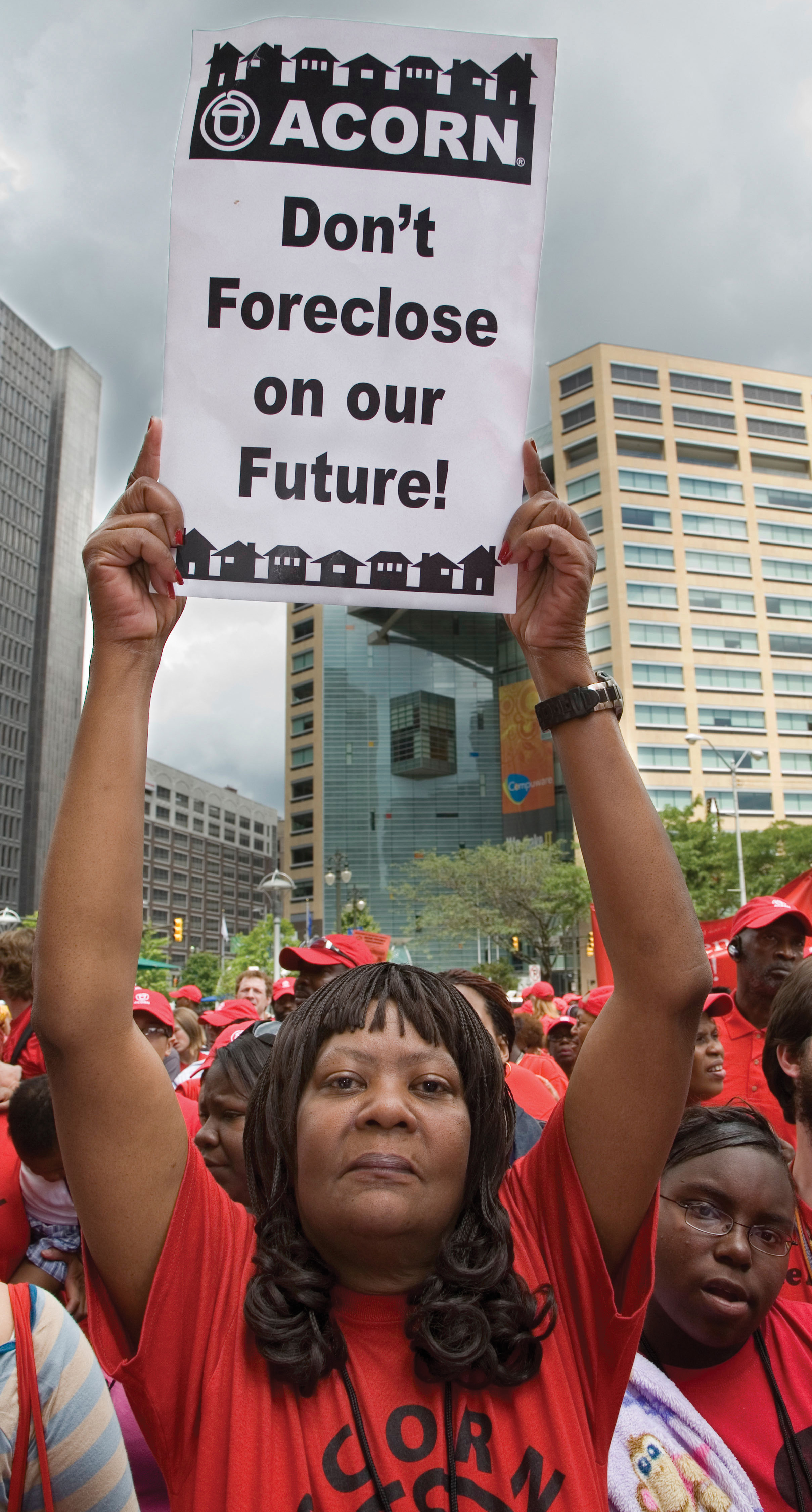
The history of race in the United States includes a strong tradition of resistance to individual and institutional racism. Here, demonstrators protest against unfair lending practices and mortgage foreclosures.
In the early 1990s, the Port Authority of New York and New Jersey—which controls the area’s airports, bridges, and port facilities—announced plans to build an elevated light rail train between Manhattan’s central business district and LaGuardia Airport that would cut directly through the heart of Corona’s African American community. Residents had battled the city over earlier plans to expand LaGuardia, which abuts Corona, which involved the loss of waterfront properties to the construction of runways, highway access, and exposure to the pollution of adjacent Flushing Bay. In its new plan, the Port Authority, representing the City of New York, argued that the city needed improved public transportation between Manhattan and LaGuardia to compete in the global economy and in the burgeoning global financial services industry. The elevated rail line through Corona, the argument went, would be good for the city’s economy.
Corona residents warned that construction of this major infrastructure project through their community would not have any local benefit but instead would generate severe environmental consequences, lower the quality of life in the neighborhood, and divide and isolate portions of the community. They demanded that the rail line be built underground on property already owned by New York City between Corona and the airport that had been carved out to build the Grand Central Parkway years earlier. Local residents formed neighborhood committees and alliances with existing civic organizations, community groups, and churches. They engaged the city’s public planning process and established alternative political forums outside the government’s control to press for their case. They also created multicultural alliances with concerned groups in neighboring communities. Eventually, the Port Authority abandoned the planned elevated train.
Gregory’s ethnographic study of Corona’s African American community reveals the power of local communities of color to mobilize and engage in political activism. It also demonstrates how such groups can contest the stereotypes of urban black communities and the practices of racial discrimination and exclusion, whether those involve housing, policing, or the environmental and community impacts of public infrastructure projects.
In this chapter, we have begun our work as budding anthropologists to unmask the structures of power, starting with race and racism. We have seen how flawed ideas of “race” serve as a rationale for very real systems of power built around racial stratification both in the United States and around the world. As globalization, particularly global migration, brings cultural systems of meaning and stratification into closer contact, your ability to analyze and engage dynamics of race and racism will prove to be increasingly important. In the following chapters we will consider other systems of power—including ethnicity, gender, sexuality, kinship, and class—and their points of mutual intersection with race.
Glossary
- individual racism
- Personal prejudiced beliefs and discriminatory actions based on race.
- microaggressions
- Common, everyday verbal or behavioral indignities and slights that communicate hostile, derogatory, and negative messages about someone’s race, gender, sexual orientation, or religion.
- institutional racism
- Patterns by which racial inequality is structured through key cultural institutions, policies, and systems.
- racial ideology
- A set of popular ideas about race that allows the discriminatory behaviors of individuals and institutions to seem reasonable, rational, and normal.
- intersectionality
- An analytic framework for assessing how factors such as race, gender, and class interact to shape individual life chances and societal patterns of stratification.