Chapter 1
Anthropology in a Global Age
More information
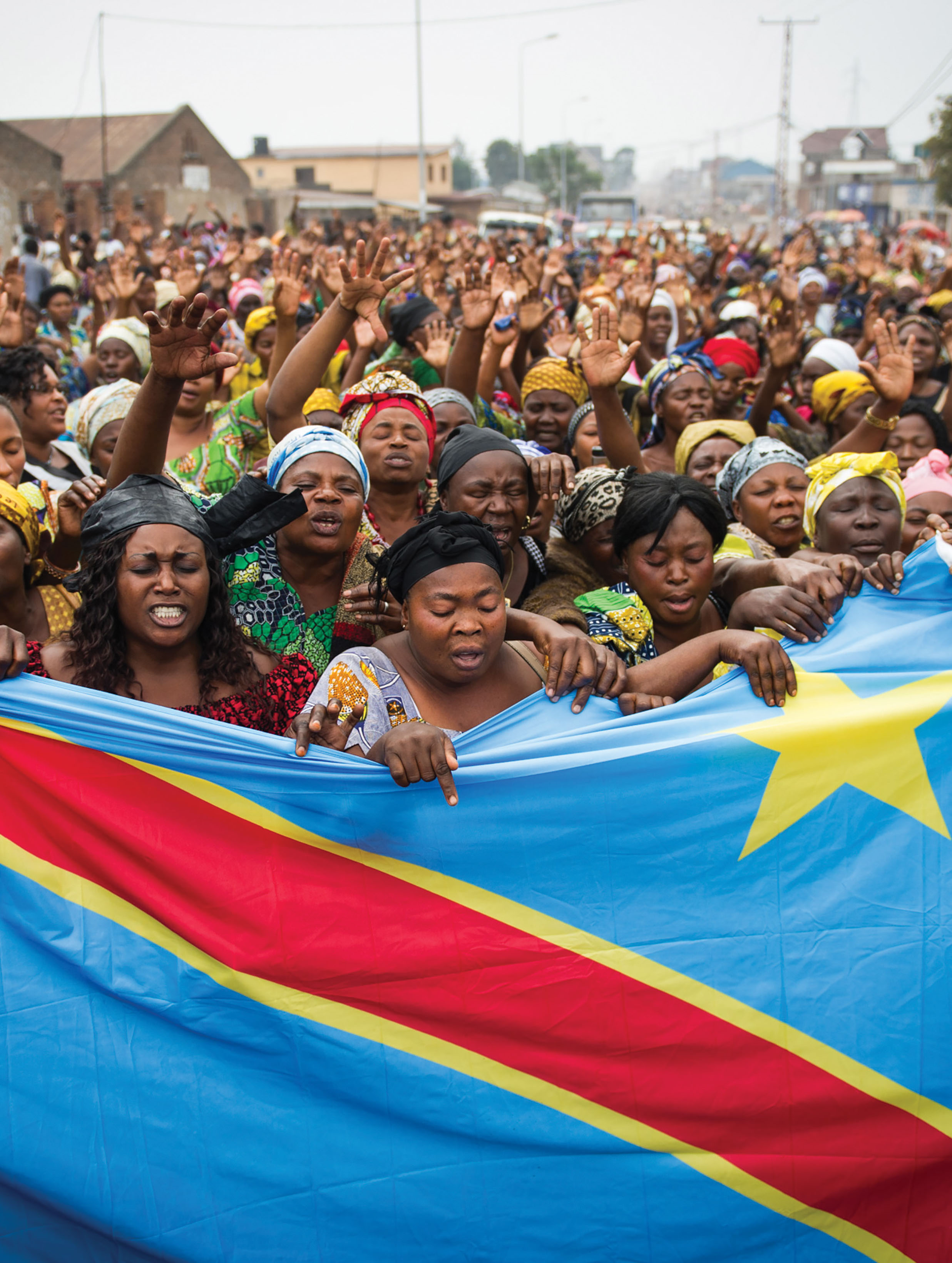
Congolese woman march and pray for peace outside a church in Goma, Democratic Republic of the Congo, a nation whose conflicts have been fueled by global demand for its digital minerals.
The next time you pick up your iPhone or other mobile device to text a friend, take a moment to consider the many hands this powerful tool and its components passed through before reaching you. Miners, buyers, traders, truck drivers, factory workers, designers, and sales clerks in more than 200 companies and dozens of countries make up a global assembly line spanning tens of thousands of miles. Apple engineers design the iPhone in California. Tech workers make its memory chips in the United States, video processors in Korea, LCD screens in Japan, touch screen displays in Germany, Bluetooth chips in the United Kingdom, and camera lenses and battery chargers in Taiwan. Finally, Chinese workers assemble the iPhone, along with iPods, iPads, Mac Minis, and many other digital devices.
More information
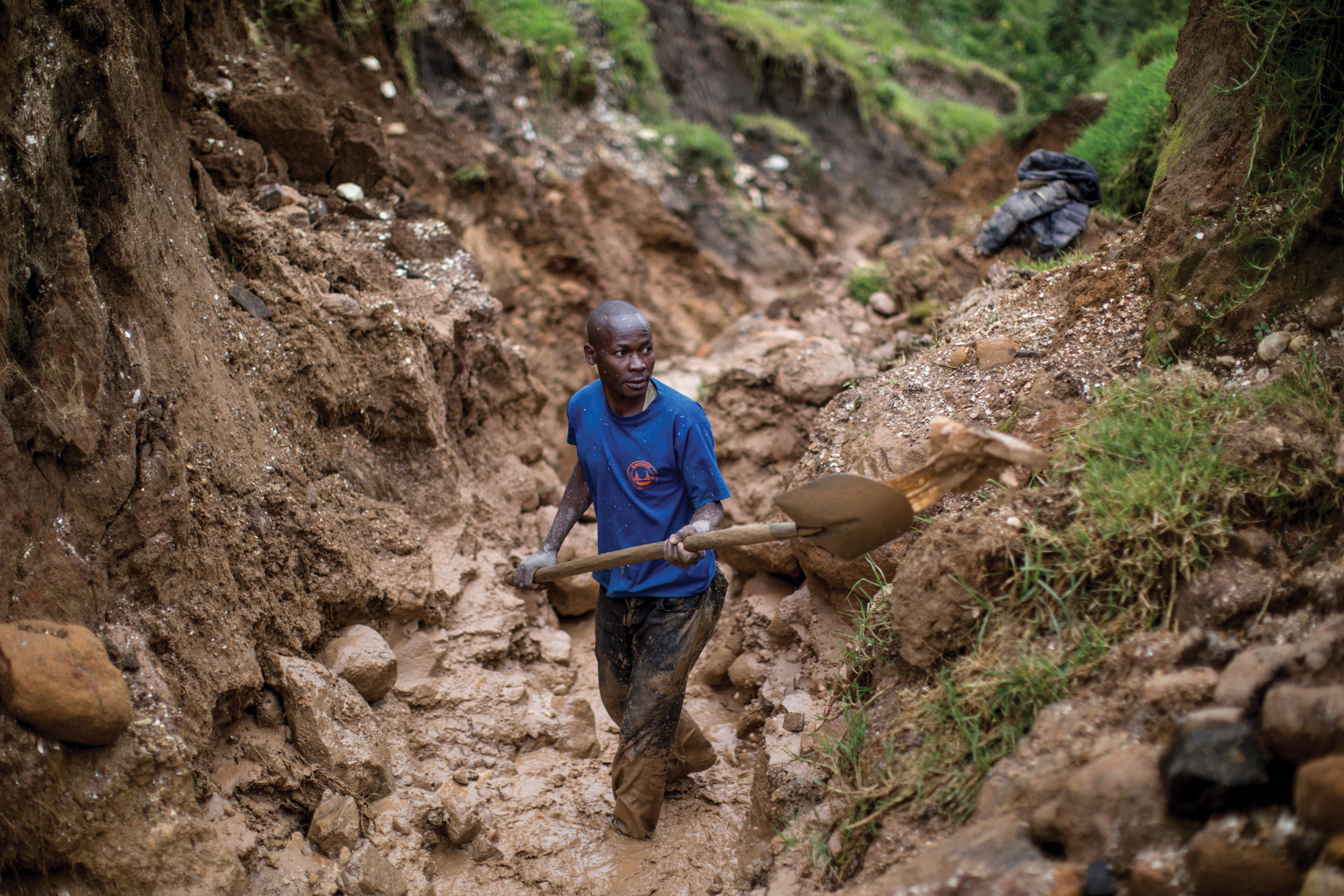
Salomon Kahizia digs for coltan in eastern Democratic Republic of the Congo. Living conditions for miners like Salomon have worsened considerably despite the high global demand for coltan, which is used in cellphones and other electronic devices.
In the forests of eastern Congo in central Africa, young men and women, many your age and younger, labor in open pits and shallow mines to gather a rare material called coltan. Chances are that you have some Congolese coltan in your phone. A rare, dull, black, tarlike substance, coltan—short for columbite-tantalite—and its extract tantalum are essential for storing and conducting electricity in nearly every digital device sold around the world. Eighty percent of the world’s coltan supply is mined in the Congo.
Like you, people in the Congo rely on coltan-enabled electronics. Coltan traders transfer money from towns to forest mines via cell phone. Miners send money home, transferring credit from one kiosk cell phone to another. Buyers determine coltan’s quality and price by phone. Militia leaders instruct troops who control coltan extraction. Grassroots human rights organizations use the internet to publicize exploitative conditions on the ground.
More information
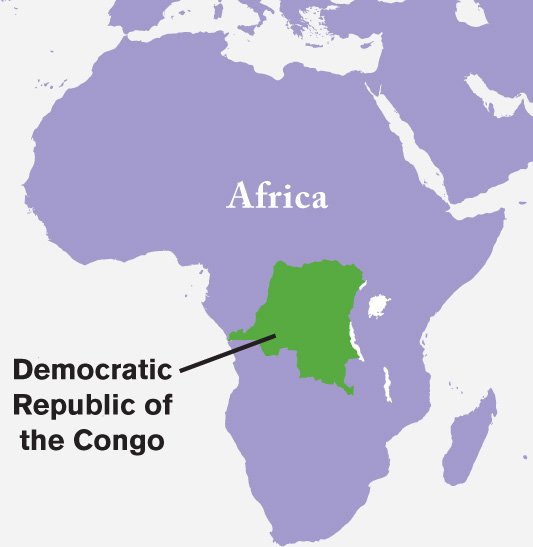
MAP 1.1
Democratic Republic of the Congo
The rapidly expanding global digital revolution demands inexpensive digital minerals. Tragically, the scramble for coltan has led to a violent fifteen-year conflict in the Congo, replete with invading foreign armies, local warlords and militias, child soldiers, and child miners. The governments of neighboring Rwanda, Uganda, and Burundi have been complicit in creating these conflict zones. Militias active in the Congo move easily across their borders and multinational corporations purchase minerals illegally transported out of the Congo. In the conflict zone, the most basic elements of daily life—family, farming, education, and health care—have been destabilized.
In the face of this crisis, local Congolese community organizations have partnered with global human rights groups, students, and other local activists in Europe and the United States to fight for fair wages, safe working conditions, an end to violence, and protection of the environment. Recently, some global digital corporations like Apple have established codes of conduct for acquiring conflict-free minerals like coltan, cobalt, and tin. Some have posted online lists of mines and mining operations certified as conflict free. Despite these limited successes, soaring demand continues to exacerbate precarious conditions of Congolese throughout the region.
For those of us who rely daily on our cellphones and other devices, the story of the young miners in eastern Congo offers a perhaps uncomfortable challenge to consider how our lives connect to theirs. But it also offers an opportunity to understand one another more fully and perhaps explore new strategies for living together in this global age.
Today, we encounter and interact with people, ideas and systems around the world in ways that would have been almost unimaginable to previous generations. The iPhone, Facebook, video streaming, and other communication technologies link people instantaneously across the globe. Transnational corporations, international banking, cryptocurrencies, and other economic activities challenge national boundaries. Business elites, low wageworkers and refugees are on the move within countries and among them. Violence, terrorism, and cyberwarfare disrupt lives and political processes. Humans have had remarkable success at feeding much of a growing world population, yet extreme income inequality continues to increase—among nations and also within them. And increasing human diversity on our doorstep opens possibilities for both deeper understanding and greater misunderstanding. Clearly, the human community in the twenty-first century is being drawn further into an intense global web of interaction.
More information
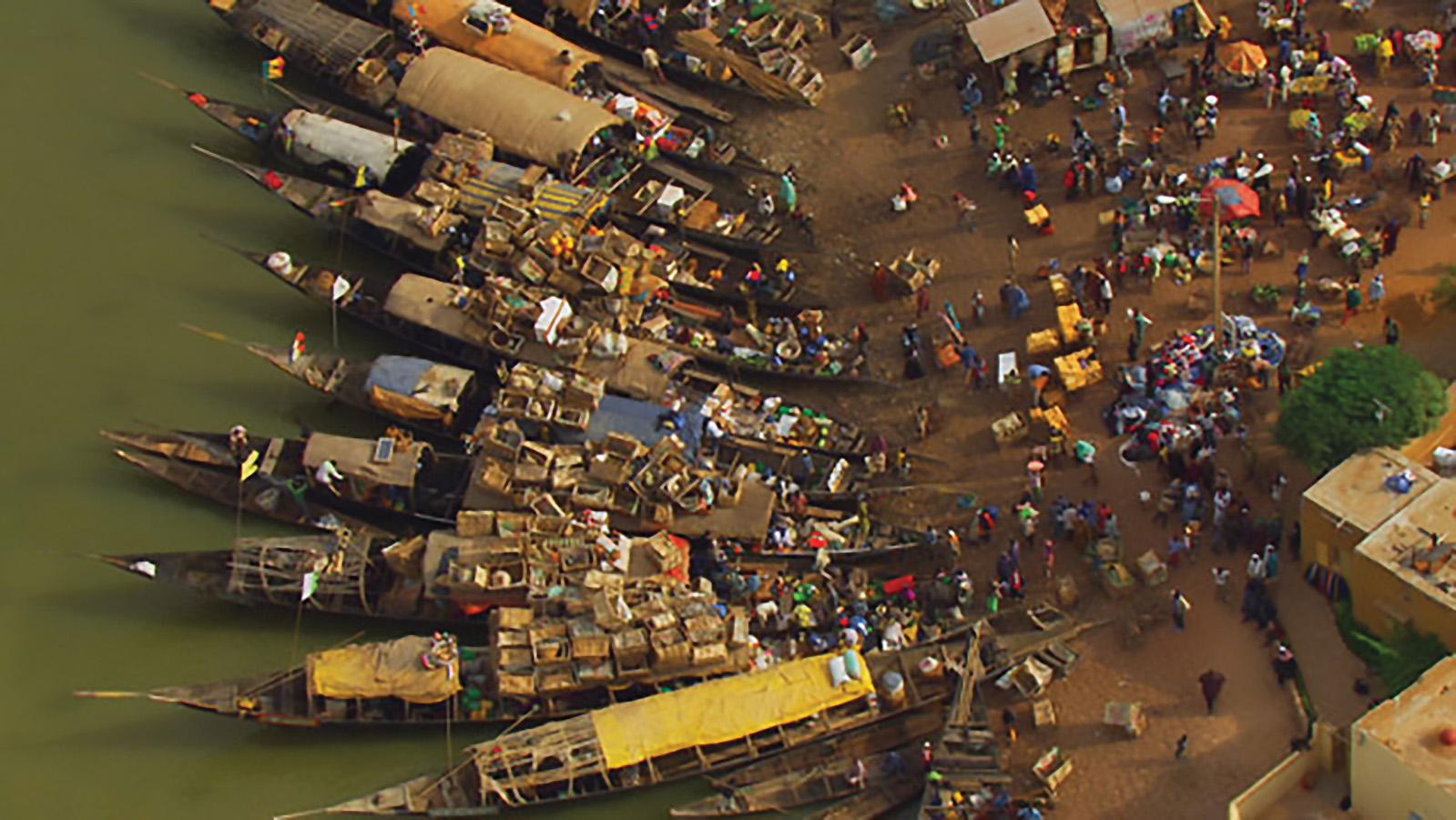
In the twenty-first century, people are experiencing unprecedented levels of interaction, encounter, movement, and exchange. Here, traders gather at the port of Mopti, Mali, the region’s most important commercial center at the confluence of the Niger and Bani rivers.
For today’s college student, every day can be a cross-cultural experience. This may manifest itself in the most familiar places: the news you see on television, the music you listen to, the foods and beverages you consume, the women or men you date, the classmates you study with, the religious communities you attend. Today you can realistically imagine contacting any of our 7.6 billion co-inhabitants on the planet. You can read their posts on Facebook and watch their videos on YouTube. You can visit them. You can wear clothes that they make. You can make movies that they view. You can learn from them. You can affect their lives. How do you meet this challenge of deepening interaction and interdependence?
Anthropology provides a unique set of tools, including strategies and perspectives, for understanding our rapidly changing, globalizing world. Most of you are already budding cultural anthropologists without realizing it. Wherever you may live or go to school, you are probably experiencing a deepening encounter with the world’s diversity.
Whether our field is business or education, medicine or politics, we all need a skill set for analyzing and engaging a multicultural and increasingly interconnected world and workplace. Essentials of Cultural Anthropology: A Toolkit for a Global Age introduces the anthropologist’s tools of the trade to help you to better understand and engage the world as you move through it and, if you so choose, to apply those strategies to the challenges confronting us and our neighbors around the world. To begin our exploration of anthropology, we’ll consider four key questions: