How Has the Culture Concept Developed in Anthropology?
Outline the historical development of the culture concept.
The concept of culture has been central to anthropology ever since the English anthropologist Edward Burnett Tylor (1832–1917) crafted his definition in the opening paragraph of his 1871 book Primitive Culture: “Culture or Civilization, taken in its wide ethnographic sense, is that complex whole which includes knowledge, belief, art, morals, law, custom and any other capabilities and habits acquired by man as a member of society.”
Tylor understood culture to be a unified and complex system of ideas and behavior learned over time, passed down from generation to generation, and shared by members of a particular group. Over the past century and a half, culture has become more than a definition; it is now a key theoretical framework for anthropologists attempting to understand humans and their interactions.
EARLY EVOLUTIONARY FRAMEWORKS
Edward Burnett Tylor and James Frazer (1854–1941) of England and Lewis Henry Morgan (1818–1881) of the United States were among the leading early anthropologists who worked to professionalize a field long dominated by wealthy collectors of artifacts. They sought to organize the vast quantities of data about the diversity of cultures worldwide that were being accumulated through colonial and missionary enterprises during the nineteenth century. These anthropologists were influenced by Charles Darwin’s theory of biological evolution, which maintains that the diversity of biological species resulted from gradual change over time in response to environmental pressures. Thus, they suggested that the vast diversity of cultures represented different stages in the evolution of human culture.

More information
A grayscale photo Edward Burnett Tylor, a white man with a long, white beard sitting at a desk covered with books.
Early anthropologists suggested that all cultures would naturally evolve through the same sequence of stages, a concept known as unilineal cultural evolution. They set about plotting the world’s cultures along a continuum from most simple to most complex using the terms savage, barbarian, and civilized. Western cultures were, perhaps too predictably, considered the most evolved or civilized. By arranging cultures along this continuum, early anthropologists believed that they could trace the path of human cultural evolution, understand where some cultures had come from, and predict where other cultures were headed.
Tylor and others developed the theory of unilineal cultural evolution at least in part to combat the prevalent racist belief that many non-Europeans were of a different species. Today, however, the theory has been criticized as racist itself for ranking different cultural expressions in a hierarchy, with European culture, considered the ideal, at the apex (Stocking 1968). Franz Boas, a key figure in American anthropology, and Bronisław Malinowski, a Polish anthropologist who spent most of his life teaching in England, represent two main schools of anthropology that moved beyond the evolutionary framework for viewing cultural differences.
AMERICAN HISTORICAL PARTICULARISM
Franz Boas (1858–1942) conducted fieldwork among the Kwakiutl Indigenous people of the Pacific Northwest of the United States and Canada before becoming a professor of anthropology at Columbia University in New York and a curator of the American Museum of Natural History. Boas rejected unilineal cultural evolution, its generalizations, and its comparative method. Instead, he advocated for an approach that today we call historical particularism. He claimed that cultures arise from different causes, not uniform processes. According to Boas, anthropologists could not rely on an evolutionary formula to explain differences among cultures and instead must study the particular history of each culture to see how it developed. Evolutionists such as Tylor, Frazer, and Morgan argued that similarities among cultures emerged through independent invention as different cultures independently arrived at similar solutions to similar problems. Boas, in contrast, while not ruling out some independent invention, turned to the idea of diffusion—the borrowing of cultural traits and patterns from other cultures—to explain apparent similarities.
Boas’s belief in the powerful role of culture in shaping human life is evident in his early twentieth-century studies of immigrants. His research with the children of immigrants from Europe revealed the remarkable effects of culture and environment on their physical forms, challenging the role of biology as a tool for discrimination. As a Jewish immigrant himself, Boas was particularly sensitive to the dangers of racial stereotyping, and his work throughout his career served to challenge White supremacy, the inferior ranking of non-European people, and other expressions of racism.
More information
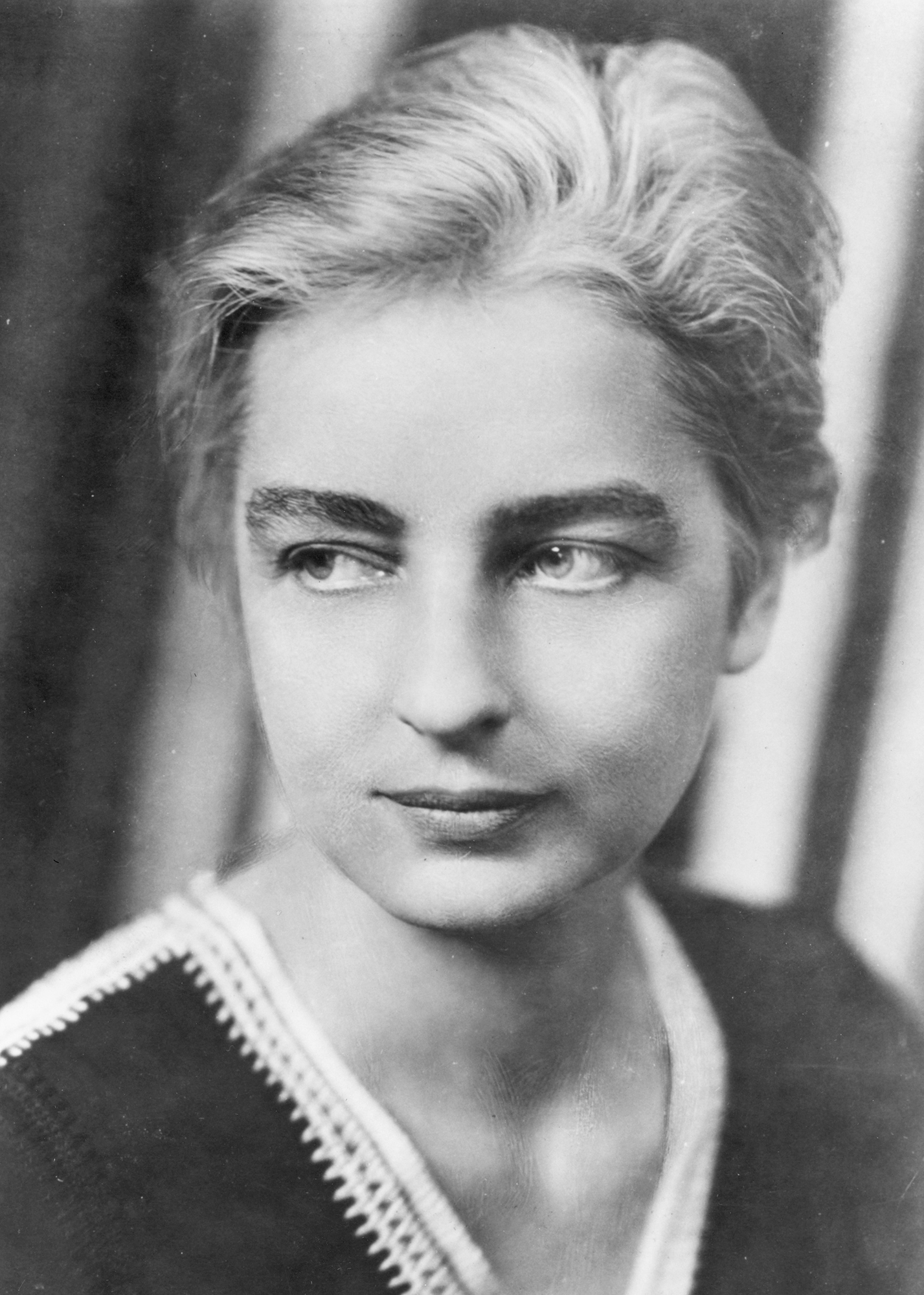
A grayscale photo of a Ruth Benedict, a white woman looking off to the side.
Boas’s students Ruth Benedict (1887–1948) and Margaret Mead (1901–1978) continued his emphasis on the powerful role of culture in shaping human life and the need to explore the unique development of each culture. Benedict’s popular studies Patterns of Culture (1934) and The Chrysanthemum and the Sword (1946) explored how cultural traits and entire cultures are uniquely patterned and integrated. Mead conducted research in Samoa, Bali, and Papua New Guinea and became perhaps the most famous anthropologist of the twentieth century, promoting her findings and the unique tools of anthropology to the general American public.
Mead turned her attention particularly to enculturation and its powerful effects on cultural patterns and personality types. In her book Coming of Age in Samoa (1928), she explored the seeming sexual freedom and experimentation of Samoan young people and compared it with the repressed sexuality of young people in the United States, suggesting the important role of enculturation in shaping behavior—even behavior that is imagined to have powerful biological origins. Mead’s controversial research and findings throughout her career challenged biological assumptions about gender, demonstrating cross-cultural variations in expressions of what it meant to be male or female and contributing to heated debates about the roles of women and men in U.S. culture in the twentieth century.
BRITISH STRUCTURAL FUNCTIONALISM
Between the 1920s and 1960s, in a rejection of unilineal cultural evolution, many British social anthropologists viewed anthropology more as a science and fieldwork more as a science experiment that could focus on the specific details of a local society. These anthropologists viewed human societies as living organisms, and through fieldwork they sought to analyze each part of the “body.” Each aspect of society—including kinship, religious, political, and economic structures—fit together and had its unique function within the larger structure. Like a living organism, a society worked to maintain an internal balance, or equilibrium, that kept the system working. Under this conceptual framework, called structural functionalism, British social anthropologists employed a synchronic approach in order to control their science experiments—analyzing contemporary societies at a fixed point in time without regard to historical context. By isolating as many variables as possible, especially by excluding history and outside influences such as neighboring groups or larger national or global dynamics, these anthropologists sought to focus narrowly on the culture at hand.
Early practitioners of this approach included Alfred Radcliffe-Brown (1881–1955), who drew on his own work among the Indigenous people of the Andaman Islands of India (1922) and of Australia (1930), and E. E. Evans-Pritchard (1902–1973) and his classic ethnography of the Sudan, The Nuer (1940), which we will consider further in Chapters 3 and 10. Bronisław Malinowski (1884–1942) used an early form of functionalism in his ethnography of the Trobriand Islands, Argonauts of the Western Pacific (1922), discussed in more detail in Chapter 3. Later, British anthropologists, including Max Gluckman (1911–1975) in his work on rituals of rebellion and Victor Turner (1920–1983) in his work on religious symbols and rituals, critiqued earlier structural functionalists for ignoring the dynamics of conflict, tension, and change within the societies they studied. Their intervention marked a significant turn in the study of society and culture by British anthropologists.
CULTURE AND MEANING
One predominant view within anthropology in recent decades sees culture primarily as a set of ideas or knowledge shared by a group of people that provides a common body of information about how to behave, why to behave that way, and what that behavior means. The anthropologist Clifford Geertz (1926–2006), a key figure in this interpretivist approach, urged anthropologists to explore culture primarily as a symbolic system in which even simple, seemingly straightforward actions can convey deep meanings.
In a classic example, Geertz (1973c) examines the difference between a wink and a twitch of the eye. Both involve the same movement of eye muscles, but a wink carries a meaning, which can change depending on the context in which it occurs—it may imply flirting, including a friend in a secret, or slyly signaling agreement. Deciphering a wink’s meaning requires a complex, collective (shared) understanding of unspoken communication in a specific cultural context. Collective understandings of symbols and symbolic actions enable people to interact with one another in subtle yet complex ways without constantly stopping to explain themselves.
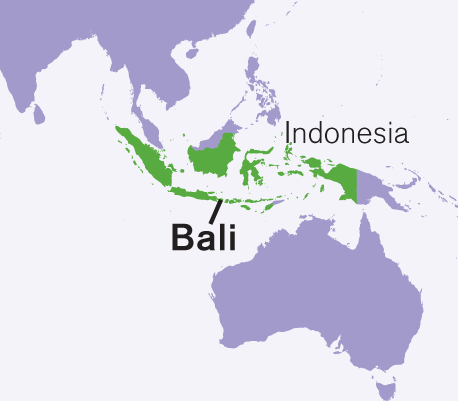
Geertz’s essay “Deep Play: Notes on the Balinese Cockfight” (1973a) describes in intricate detail a cockfight—a common activity even today in local communities across Bali, a small island in the South Pacific. Geertz describes the elaborate breeding, raising, and training of the roosters; the scene of bedlam at the fight; the careful selection of the birds; the rituals of the knife man, who provides the razors for the birds’ feet; the fight itself; the raucous betting before and during the fight; and the aftermath, with the cutting up of the losing cock and the dividing of its parts among participants in the fight.
More information
Indonesia is highlighted. Bali is labeled within Indonesia.
Geertz argues that such careful description of cultural activity is an essential part of understanding Balinese culture. But it is not enough. He claims that we must engage in thick description, looking beneath the surface activities to see the layers of deep cultural meaning in which those activities are embedded. The cockfight is not simply a cockfight. It also represents generations of competition among the village families for prestige, power, and resources within the community. It symbolizes the negotiation of those families’ prestige status and standing within the larger groups. For Geertz, all activities of the cockfight reflect these profound webs of meaning, and their analysis requires extensive description that uncovers those meanings. Indeed, according to Geertz, every cultural action is more than the action itself; it is also a symbol of deeper meaning.
Geertz’s culture concept has provided a key theoretical framework for anthropological research. But, as we will see in the following section, it has also been criticized for not adequately considering the relations of power within cultures and the contested processes by which cultural meanings—norms, values, symbols, mental maps of reality—are established.
Glossary
- unilineal cultural evolution The theory proposed by nineteenth-century anthropologists that all cultures naturally evolve through the same sequence of stages from simple to complex.
- historical particularism The idea, attributed to Franz Boas, that cultures develop in specific ways because of their unique histories.
- society The focus of early British anthropological research whose structure and function could be isolated and studied scientifically.
- structural functionalism A conceptual framework positing that each element of society serves a particular function to keep the entire system in equilibrium.
- interpretivist approach A conceptual framework that sees culture primarily as a symbolic system of deep meaning.
- thick description A research strategy that combines detailed description of cultural activity with an analysis of the layers of deep cultural meaning in which those activities are embedded.