2.8Problems with Darwin’s Theory
In science, no grand theory is without its problems, especially in its early stages. The important issue is whether scientists acknowledge such problems and generate new hypotheses or simply ignore any inconsistencies. In On the Origin of Species, Darwin was not afraid to discuss many of the problems associated with his theory of evolution by natural selection.
Here we briefly touch on three of the major challenges that Darwin faced, and we provide pointers to where we will discuss some of these problems in greater detail in later chapters. Although not all of these challenges were resolved within Darwin’s lifetime, today we have a good understanding of how to account for each of them. In Chapters 6 and 7, we will also show how another challenge Darwin faced—understanding how inheritance operated—was finally resolved.
Problem 1: Accounting for Complex Structures with Multiple Intricate Parts
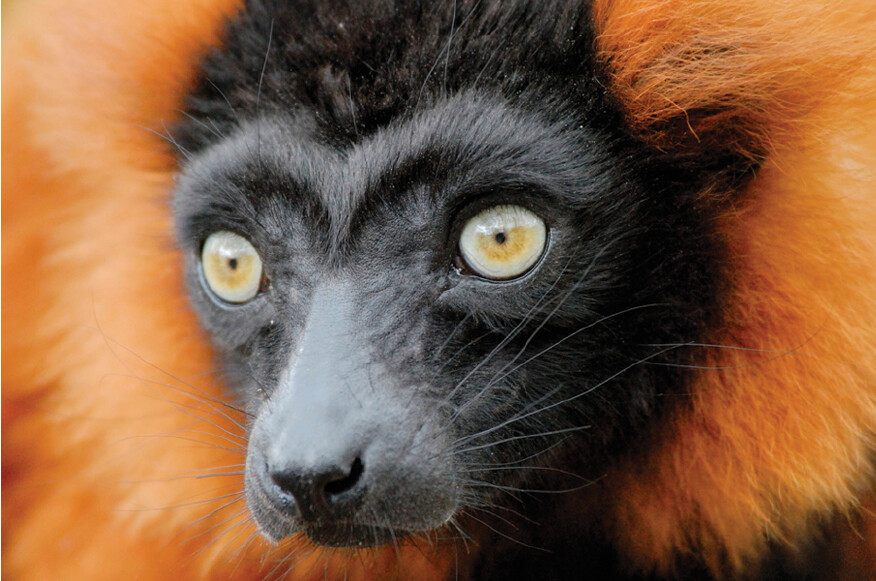
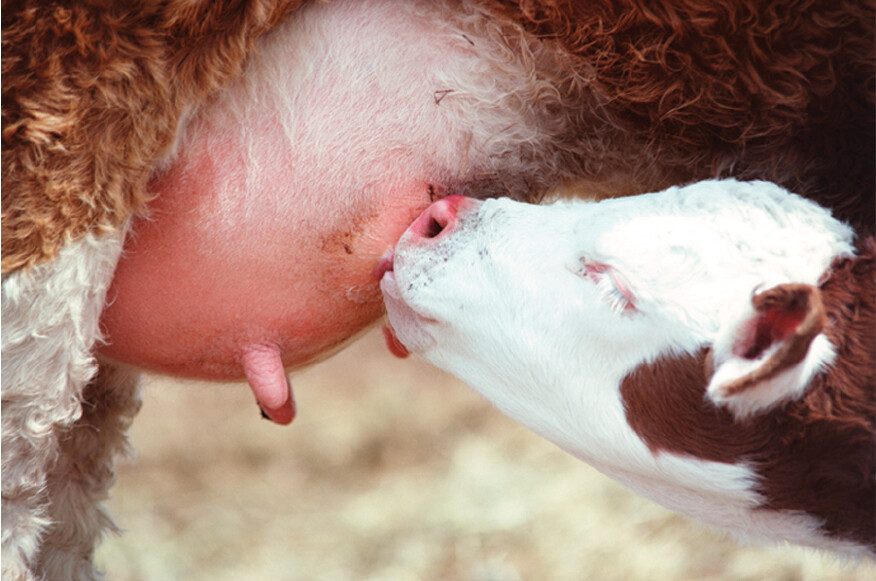
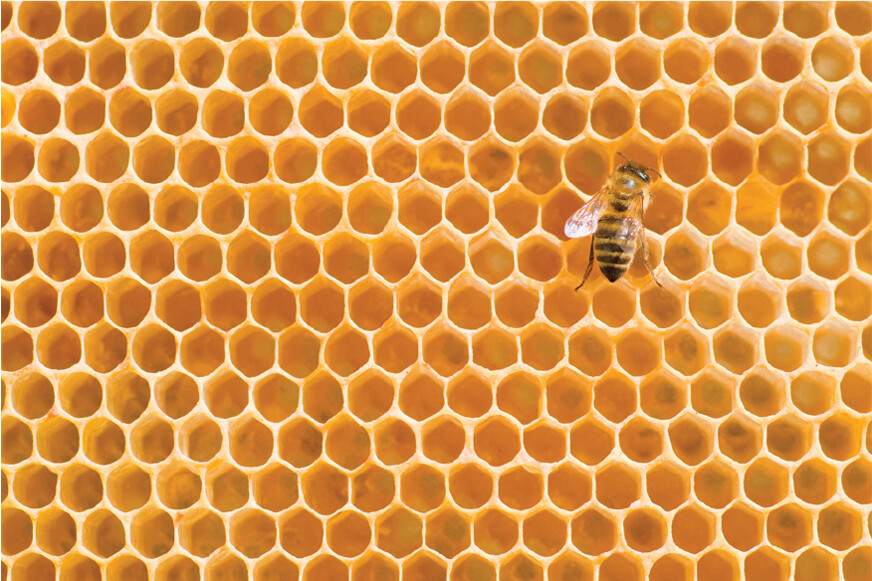
Darwin generally portrayed natural selection as a slow process acting on very small differences between individuals. It is relatively straightforward to see how this process could lead to gradual adjustments in the thickness of an otter’s fur or the length of a badger’s forelimb. But how might natural selection generate complex structures such as the eye, the mammary gland, or the instincts needed to construct the hexagonal cells of a honeycomb (Figure 2.16)?
More information
A lemur is staring intently at something in the distance. It has a black pointed face, yellow circular eyes, and an orange mane.
More information
A calf drinking from a cow’s udder. The calf is suckling with its eyes closed.
More information
A single bee is walking across an expanse of golden honey comb. Each hexagonal hole is filled with honey.
Darwin’s critics seized on this issue. If natural selection operates by gradual increments, they reasoned, the eye must be preceded by a quarter of an eye, then half of an eye, and so forth—and what good is half of an eye? These critics argued that complex traits would have no selective value until fully formed, and thus natural selection would not favor the intermediate steps necessary along the way. Darwin responded to this challenge with confidence and characteristic brilliance; we will explore his explanation in depth in Chapter 3.
Problem 2: Explaining Traits and Organs of Seemingly Little Importance
At the opposite extreme, Darwin wondered how his theory could explain traits that appear to lack any biological function. If a trait does not contribute to either survival or reproductive success, it will not be favored by natural selection, and yet it seemed as though such traits existed. Snakes have “limb buds” that appear to have no function, ruminants have incisor teeth that never break through their gums, and so on. How can these things be explained? We explore the answers in Chapter 4 (where we treat vestigial traits) and Chapter 8 (where we consider the neutral theory of evolution).
Problem 3: Why Does Variation Persist in the Face of Natural Selection?
As we saw earlier in this chapter, Darwin’s theory relied on a variational process of evolution rather than a transformational one. This posed a problem: In order for natural selection to operate, it must have variation to sort on—but the action of natural selection itself reduces the amount of variation in a population as less-fit variants are eliminated from that population. Thus, the fire of natural selection threatens to consume the variation that fuels it. How can we explain the persistence of variation? Why doesn’t evolution just come to a halt as variation is exhausted?
Adding to the scope of the problem, when Darwin wrote On the Origin of Species, biologists did not understand the basic principles of heredity. Darwin did not know Mendel’s laws; instead, like most of his contemporaries, Darwin envisioned inheritance as a blending of the hereditary elements from each parent. Such a blending process also consumes variation. In Chapters 6 and 7, we will explore the sources of new variation, and in Chapter 9, we will see how scientists in the early part of the twentieth century reconciled the process of inheritance with Darwin’s ideas about natural selection.