RENÉ DESCARTES AND THE MIND-BODY DISTINCTION
René Descartes (1596–1650) was born near the small town of La Haye in northeastern France. As an intellectually precocious 10-year-old he was sent by his father, a prosperous lawyer, to the best and most progressive school in France, the College at La Flèche. The curriculum there included the traditional “scholastic” doctrines on theology and philosophy, with heavy emphasis on Aristotle as reinterpreted by Aquinas and Avicenna (see Chapter 1). But pupils also studied literature, languages, algebraic mathematics, and some science which probably included Alhazen’s theories of light and vision. Often the science was strongly tinged with theology, as when the astonishing discovery, by Italian scientist Galileo Galilei (1564–1642), of previously unknown moons revolving around the planet Jupiter was duly noted but explained as the miraculous creation by God of new “stars” to mark the recent death of France’s King Henri IV.
Descartes absorbed all of this while becoming the top student at his school. According to legend, he convinced his teachers that he did his best thinking while meditating in bed, earning the extraordinary privilege of resting there during the early mornings while other students were already doing chores. This story may be mythical, but in later life Descartes actually did a good deal of serious thinking while in bed, jotting down notes on paper kept on his bedside table.2 In any case, when Descartes left La Flèche at age 16 he was a top graduate from the best school in the country, and he exaggerated only slightly when claiming to have learned everything that could be learned from the books existing at the time.
Independently wealthy and without adult supervision, he migrated to Paris where at first he gambled and engaged in other mild forms of misbehavior. He gradually came under the wholesome influence of Marin Mersenne, an older La Flèche alumnus and a Franciscan monk. With broad contacts throughout the scholarly world, Mersenne took Descartes under his wing and provided both intellectual and personal support. Too soon, however, Mersenne had to leave Paris, and an unmoored Descartes retreated to St. Germain. Under circumstances that remain unknown, he decided in 1618 to end his self-imposed isolation and see whether the “real world” could offer more satisfying knowledge than the academic ivory tower: he would become a soldier.
Europe was on the brink of the Thirty Years War, which pitted Catholic against Protestant armies in an outgrowth of the Lutheran Reformation. Although a Catholic, Descartes first joined the Protestant forces billeted in the Dutch city of Breda. Fighting had not yet begun, and after a few months of boredom Descartes found “nothing there to satisfy me. . . . just about as much difference of opinion as I had previously remarked among scholars.”3 Things changed after a chance meeting with an expert mathematician named Isaac Beeckman who was visiting Breda. Surprised to find a soldier who knew mathematics, Beeckman befriended young Descartes, and like Mersenne in Paris, became a mentor. With his encouragement Descartes wrote his first serious scholarly work, an essay on music.
When Beeckman had to leave Breda, Descartes had no strong reason to remain there either. With little personal commitment to the Protestant cause, he decided to try life with the Catholic forces then gathered in southern Germany. His renewed intellectual interests remained strong, however, and on his meandering journey south he had two major insights.
The first occurred while he was meditating in bed at his inn one morning and noticed a fly buzzing in the corner of his room. In a flash of inspiration he realized that the fly’s position at any instant could be precisely defined by three numbers, representing the fly’s perpendicular distances from the two walls and the ceiling.4 Generalizing from this, he recognized that any point in space could similarly be defined by its numerical distances from arbitrarily defined lines or planes, and further that the shape of a moving point’s course could be defined by a sequence of such numbers. Here was a potential method for integrating geometry (the study of shapes) with algebra (numerical calculations)—the founding idea for a new discipline of analytic geometry, which has since become a standard part of the mathematical curriculum. In Descartes’s honor the distances of a point from the perpendicular x- and y-axes (the abcissa and ordinate) of the standard graph are known as the Cartesian coordinates.
Although pleased with this new expansion of mathematical applications, Descartes still strongly doubted that mathematical-like certainty could ever be achieved in other areas of inquiry. His doubts became oppressive as he proceeded south to the German city of Ulm, where he rented a heated room. There, on a November evening when most of the city’s residents celebrated a holiday, Descartes had a second surprising insight. It obsessed him for several hours until he collapsed exhausted on his bed, and proceeded to have a series of vivid dreams. Initially they were violent and panic-filled, until a terrific lightning flash filled the room with sparks and then his sleep and dreams became calm. He dreamed of an engraved book of poetry containing the line “What path in life shall I follow?” The book vanished, and then reappeared, decorated with new and better engravings. Descartes woke up with the feeling that the improved book at the end of his dream symbolized a benediction on his new insight: the idea for a new method of obtaining true knowledge.
Descartes’s Method and “Simple Natures”
Fittingly, the inspirational idea behind Descartes’s new method enabled him to make a virtue out of precisely the attitude that had plagued him so much—his propensity for skepticism and doubt. Now his “first rule” for acquiring knowledge would be “never to accept anything as true unless . . . . it presented itself so clearly and distinctly in my mind that there was no reason or occasion to doubt.”5 He would now doubt everything— including the pronouncements of authorities and presumed “experts”—deliberately and systematically until hitting a bedrock of absolutely unchallengeable ideas.
Descartes believed that after discovering a set of clear, distinct, and unquestionably real entities he could use them as the starting points in a geometry-like mode of reasoning in many different fields of knowledge. Geometry starts with a small number of self-evident and certainly true axioms, such as the assertion that a straight line is the shortest distance between two points. It then links them together in small but logically correct steps to arrive at complex but also certainly true conclusions or theorems. Descartes now planned to use systematic doubt to arrive at foundational concepts that, like geometrical axioms, would be the starting points for deductive reasoning in all sorts of nonmathematical fields.
With this inspiration, Descartes gave up the idea of being a soldier and began applying his method to a host of important intellectual questions. Previously a reclusive and personally troubled young man drifting aimlessly through life, he now became a man with a mission. Because of his independent wealth, he was able to work privately and in obscurity for nine years following his inspiration in Ulm. During this time he wrote, but did not publish, “Rules for the Direction of the Mind,” an early attempt to apply his method to the analysis of the physical world.
He started by arguing that the most elementary and fundamental properties of physical phenomena, which he called simple natures, had to be those whose existence could not be analyzed or doubted. The vast majority of our sensory impressions may seem vivid and obvious, he noted, but they may be misleading. For example, a stick partially immersed in clear water appears to be bent, but when removed it is actually straight. As had been noted by Alhazen and other ancients, there are many compelling optical illusions in which a vivid and convincing visual impression is inaccurate.
After systematically doubting all of his sensory experiences, Descartes concluded that just two physical properties qualified as simple natures: extension, the space occupied by a physical particle or body, and motion, the movement of an extended particle or body throughout space. All physical phenomena, he believed, could be explained in terms of just these two properties. Light, heat, sound, and all other sensory impressions presumably resulted from the motions and interactions of extremely small but still extended material bodies or particles.
As Descartes was developing these ideas, he may have known that Galileo in Italy had proposed something very similar when he distinguished between what he called the primary and secondary qualities of physical matter. For Galileo, physical reality depended ultimately on the interactions of material particles having the three primary qualities of shape, quantity, and motion. Everything in the universe arises from these qualities, including not only the objects we perceive but also our sensory organs that do the perceiving. And when the primary qualities of the perceived objects interact with the primary qualities constituting the sensory organs, the result is the creation of secondary qualities, such as sights, sounds, smells, and feelings. In other words, our conscious experiences of the world are secondary to, and of a completely different order from, the elemental primary qualities that ultimately cause them. These “modern” theories of Descartes and Galileo, of course, represented a blending of the ancient atomic theory of indivisible atoms, or particles, in motion and the Platonic distinction between appearances and the ideal forms that underlie them (see Chapter 1).
The reclusive Descartes did not publicize his emerging ideas for many years, until he happened to attend a public lecture on chemistry and the lecturer failed to appreciate the concept of simple natures. Descartes spoke up to correct him, and strongly impressed an influential clergyman in the audience who befriended the shy philosopher and urged him to publish a systematic account of his views. Descartes decided to write a major book synthesizing his ideas on what he called “mechanics” and “medicine”: in today’s terms, physics and physiology. It took him five years to complete a long manuscript in French with two parts entitled Traité de la Lumière (Treatise of Light) and Traité de l’Homme (Treatise of Man).
Just as he was about to send the work to the printer, however, he was shocked to learn that Galileo had recently been condemned by the Catholic Church for supporting the Copernican theory that the Earth revolves around the sun, not vice-versa. The Church had previously tolerated this idea when labeled a hypothesis and not a fact, but now declared its very description to be a crime. Galileo had publicly recanted upon threat of torture. Descartes’s book also hypothesized a sun-centered universe, and even though he was living in Protestant Holland and out of personal danger, he wanted his work to be acceptable in the Catholic universities of France. He withdrew his book from the printer but fortunately preserved the manuscript, which his followers published soon after his death.
The first treatise, with a new and broader title Le Monde (The World) when first published, described Descartes’s basic conception of the physical makeup of the universe, before giving special attention to the subjects of light and vision. In published form the second treatise was simply called L’Homme (Man), and in it—momentously for the future of biology and psychology—Descartes applied his physical principles to an analysis of living bodies.
Descartes’s approach to physics resembled Democritus’s in that it accounted for the material world on the basis of extended particles in motion, but differed from it by denying that they move about in a void or vacuum. Descartes saw the entire universe as completely filled with three different kinds of material particles in different kinds of motion. When one particle moves, he argued, it leaves no empty space behind because that space is instantaneously refilled, the same way a moving fish’s space is refilled with water as it swims.
More specifically, Descartes hypothesized three kinds of particles corresponding to the classical elements of fire, air, and earth. He conceptualized the fire or heat particles as almost unimaginably tiny so that when aggregated they constituted “a virtually perfect fluid” capable of filling up space of any shape or size. These particles had presumably “sifted” through all the other larger particles in the universe, with most of them congregating in the exact center to form the sun. Here was his version of the now-forbidden Copernican theory.
Air particles, though larger than fire or heat particles, were still too small to be individually perceived. More numerous than all other particles, they completely filled the spaces between objects and, like the water in a fish pond, instantaneously moved into the spaces vacated by moving objects. All solid material objects, including the planets and comets as well as the earth and the things on it, were presumably composed of accretions of earth particles, the third and heaviest variety in Descartes’s hypothetical universe.
As its original title suggested, much of The World dealt with light and vision. Descartes proposed that between any two points there exists a perfectly straight column of air particles that form the material basis of light rays. When one looks at an object, a straight column of air particles extends directly between it and the eye and functions, he argued, similarly to a blind person’s stick: when the tip of the stick encounters an object, the jolt of its contact is transmitted back to its holder’s hand. Similarly with vision, vibrations from the particles in the looked-at object are transmitted along the column of air particles extending between it and the eye. The eye thus receives direct vibratory impressions of the looked-at object, which in turn can set off mechanistic responses in the physical structures of the eye.
Here Descartes’s physics intersected with his physiology. He conceptualized both the eye and the nervous system to which it was connected as physical mechanisms operating according to normal physical laws. This was but a part of his grand project in his second treatise devoted not just to the “man” of its title, but to living animals in general.
A few others before Descartes had begun to explain living bodies mechanistically. Galileo, for example, had analyzed the body’s bones and joints as if they were a system of physical levers, and the British physician William Harvey had described the heart as a physical pumping mechanism in support of his revolutionary theory that the blood constantly circulates throughout the body. Descartes’s unique contribution to this movement lay in the scope of the functions to which he applied mechanistic analysis, described in his treatise. He analyzed the digestion of food, the circulation of blood, the nourishment and growth of the body, breathing and respiration, sleeping and waking, sensation of the external world, imagination, memory, the appetites and emotions, and the movements of the body. All of these, he declared, occur mechanically, “no more nor less than do the movements of a clock or other automaton.”6
Descartes’s analyses relied on some primitive but pioneering anatomical studies. Human dissections being illegal, he haunted butcher shops for information about animal bodies and dissected some carcasses himself. He was particularly interested by the branching system of nerves, originating in the brain and spinal cord and terminating in the various muscles and glands of the body. He noted that the brain contained cavities, or ventricles, filled with a clear yellowish liquid he called animal spirits (today known as cerebrospinal fluid). In addition, on the basis of observations conducted without the benefit of a microscope, he convinced himself (falsely, we now know) that the long nerves were hollow, and contained within themselves extremely fine fibers or filaments.
Descartes speculated that the animal body, with a supply of liquid animal spirits and a network of hollow, fiber-containing nerves running throughout it, could be construed as a mechanism similar to a St. Germain statue. Sensory stimulation in the form of vibrations impacting on the sensory organs could initiate tugs and pulls on the filaments inside the nerves. Those tugs could then open valves in the brain, allowing animal spirits to flow back down the nerves and into muscles or glands, causing them to move or secrete. Figure 2.2 shows how he illustrated this sequence. Vibrations from a hot fire (A) stimulate sense receptors in the foot (B), thus pulling a fiber in the long nerve (cc), which tugs open a valve in the brain (de). Animal spirits contained in the brain cavity (F) then enter the long nerve and travel back down through it, resulting in the withdrawal of the foot from the fire.
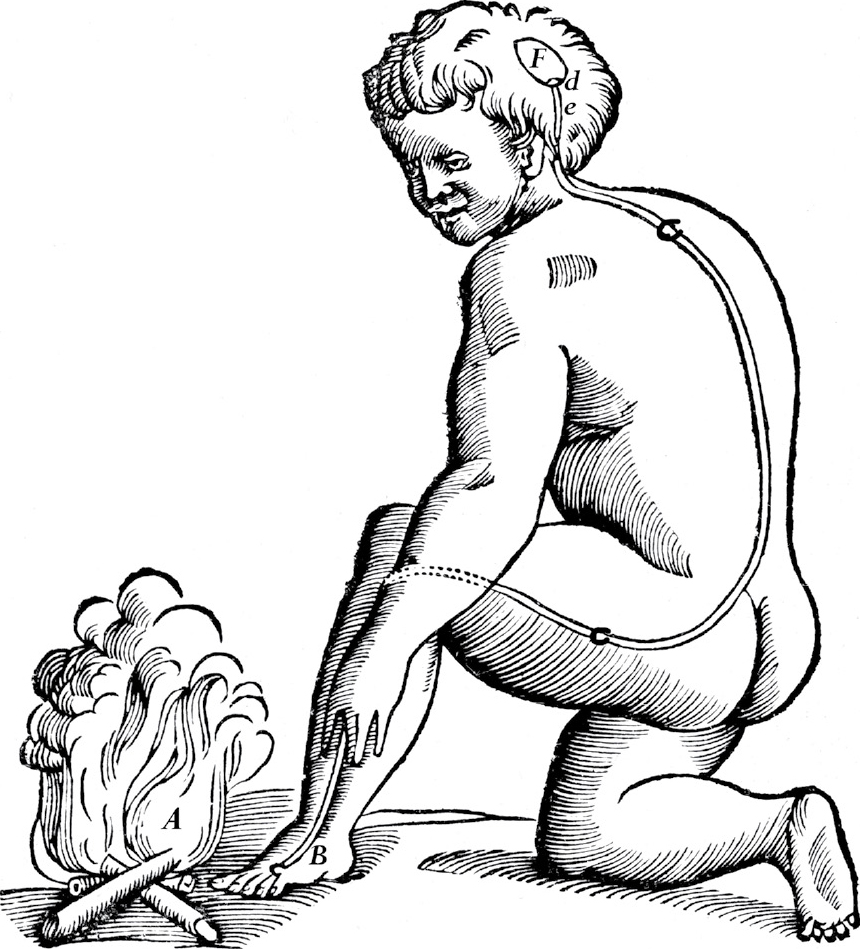
Figure 2.2 Descartes’s illustration of a reflex.
Figure 2.2 Descartes’s illustration of a reflex.
Although some of the anatomical assumptions were incorrect, Descartes’s general point of emphasizing the centrality of the brain and nervous system in the initiation and control of behavior marked the modern origin of the field of neuropsychology. Although he did not use the exact term, his diagram above illustrates a fundamental neurophysiological principle now known as a reflex—a sequence in which a specific stimulus from the external world (heat from the fire) automatically elicits a specific response (pulling away).
A reflex in which the response occurs involuntarily, and in the same organ that senses its stimulus, is referred to by psychologists today as an unconditioned reflex. Other examples are an eyeblink in response to a puff of wind, the extension of a knee when tapped by a doctor’s mallet, or salivation in response to food in the mouth. Descartes’s model also accounted for another, more complicated type of reflex, in which the stimulus elicits a different kind of acquired response as a product of experience and learning. He thought this was possible because nerves from all parts of the body terminated in the brain where they supposedly had openable “pores” exposed to the reservoir of animal spirits. Via a shunting mechanism Descartes did not specify, a stimulus arriving from one nerve might be transmitted to the valve opening the pore of a completely different one. For example, after repeated experience the auditory stimulus from a dinner bell may elicit an anticipatory mouthwatering response. In Chapter 9 we’ll see how, long after Descartes, the Russian physiologist Ivan Pavlov would make the study of these conditioned reflexes the foundation of a major chapter in psychology’s history.
Descartes recognized that behavioral responses may also be influenced by internal emotional factors, and these he explained as the result of localized “commotions”— currents or eddies—that arise in the pool of animal spirits in the brain. In anger, for example, the spirits become highly agitated and flow with particular force toward the nerve openings to result in violent responses; in anxiety or fear, the currents are weak and so are the responses. A body’s responses are therefore determined by a combination of external stimulation acting on it, and the internal, “emotional” preparedness of the animal spirits to respond in particular ways.
A related line of reasoning underlay Descartes’s account of the difference between wakefulness and sleep. In wakefulness the ventricle is maximally filled and expanded with animal spirits, stretching the surrounding brain tissue and exposed nerve fibers into a state of tautness and maximum sensitivity to external stimulation. In sleep the ventricle partially empties and the fibers become flaccid and incapable of transmitting signals. Only occasionally during sleep do random eddies in the depleted reservoir of spirits cause isolated parts of the brain to expand and stretch taut a few nerve fibers, giving rise to the isolated and disconnected experiences of dreams.
In sum, Descartes replaced the Aristotelian concepts of vegetative and sensitive souls with mechanistic explanations. Then in one of his most notoriously controversial pronouncements, he argued that all nonhuman animals could be completely understood in these mechanistic terms, as automata. Their mechanisms were vastly more complicated than those of humanly manufactured devices, containing more pipes more intricately interconnected with each other, but in principle they were the same. He summarized metaphorically to a friend, “The soul of beasts is nothing but their blood.”7
Turning to human beings, Descartes argued that we too have bodies operating like machines, but with additional capacities for rationality, consciousness, and free will—the functions of the traditional Aristotelian rational soul. It seemed obvious to him that his own actions often occurred because he wanted them to, or because he freely chose them following rational deliberation. He could imagine no mechanistic explanation for this supremely important, subjective side of human experience, and therefore attributed it to a qualitatively different and immaterial soul or mind,* which interacts with the bodily machine. His most important work in the later part of his career dealt with the features of this rational mind and its interactions with the mechanistic body.
Rational Qualities of the Mind
Even before he developed his ideas about the physical world and the mechanistic bodies within it, Descartes had given serious attention to the immaterial mind. In his most famous work, the semi-autobiographical Discourse on Method, he described how, when he first began to systematically doubt, everything seemed to be uncertain, including the most obvious and vivid of sensory impressions. It was always possible that these could be dreams, rather than actual experiences. But as he continued to doubt, he eventually came upon one idea that seemed absolutely unquestionable. After deciding to suppose that nothing he thought about was more real than a dream, “I soon noticed that while I thus wished to think everything false, it was necessarily true that I who thought so was something [real].”8
Although he could doubt the reality of his senses, or even the material existence of his body and the physical world, he could not doubt the subjective reality of his own doubting mind. He could not doubt that he was doubting, and so, paradoxically, the act of doubting provided Descartes with evidence of the certainty he desired. He summarized his conclusion with the simple statement “I think, therefore I am,” whose Latin version—Cogito ergo sum—has become one of the most famous catchphrases in the history of philosophy.
Descartes concluded that this thinking, rational soul or mind whose absolute reality could not be doubted “has no need of space nor of any material thing or body. . . . [It] is entirely distinct from the body and. . . . even if the body were not, the soul would not cease to be all that it is now.”9 Descartes reflected further that this soul—this sense of himself as a distinct entity or ego—never appeared directly or completely in consciousness, like a sensory experience. Although he was absolutely certain it existed, he never experienced its totality as an entity all at once.
This train of thought led him to identify other ideas that, while “real,” also seemed incapable of being represented by a single sensory experience: “perfection,” “unity,” “infinity,” and the geometrical axioms came to mind. Descartes concluded that these ideas, independent as they are of specific sensory experience (but capable of being suggested or alluded to by experience), must derive from the nature of the thinking soul itself. Accordingly, he called them the innate ideas of the mind. Although he tended not to acknowledge the work of his predecessors, his conception of an independent and self-aware rational mind showed clear echoes of Avicenna’s floating man and Plato’s notion of a psyche equipped with innate ideal forms (see Chapter 1), both of which he would have been exposed to in the course of his education.
Descartes’s belief in innate ideas provided a foundation for much of the rest of his philosophy. The presumably innate idea of “perfection,” combined with his certainty of the reality of his own mind, suggested to him that there must exist a God who embodies all aspects of perfection. Now certain of the existence of a perfect God as well as of his conscious soul, Descartes felt that properly acquired knowledge from his senses could be trusted. This was not because the knowledge was inherently certain itself, but because the integrity of the mind that perceived it, and the perfection of the God that created both matter and mind, were certainly real.
Because of his sharp distinction between the body and the mind, Descartes is referred to as a dualist. We have seen that philosophers had differentiated between a perishable body and an immortal soul, so this general idea of psychophysical dualism was already established. But Descartes added something new by emphasizing the extent to which important phenomena are the result of neither body nor mind acting alone, but rather of the many possible kinds of interactions between the two. Sometimes the two agencies work together harmoniously, as when rational thought guides the body in meeting its survival needs, or when certain bodily actions help promote rational thinking. But other times the two conflict with each other, as when emotions overcome rational restraint, or conscious thoughts and doubts impede the direct satisfaction of bodily needs. For this reason, Descartes’s position is commonly referred to as an interactive dualism.
Throughout the 1640s, Descartes developed his dualistic ideas in an extensive correspondence with a remarkable royal person, Princess Elizabeth of Bohemia (1618–1680; Figure 2.3). Elizabeth’s mother was the daughter of England’s King James I, and her father was Elector Frederick V, one of eight German princes entitled to elect the Holy Roman Emperor. Briefly the King of Bohemia, Frederick lost the throne in the political turmoil of the times and retreated to Holland. His large family included Elizabeth and her younger sister Princess Sophie (1630–1714), who would later help further the career of Descartes’s successor Gottfried Leibniz. Conveniently, Descartes had also moved to Holland in appreciation of the (relatively) liberal intellectual climate there.
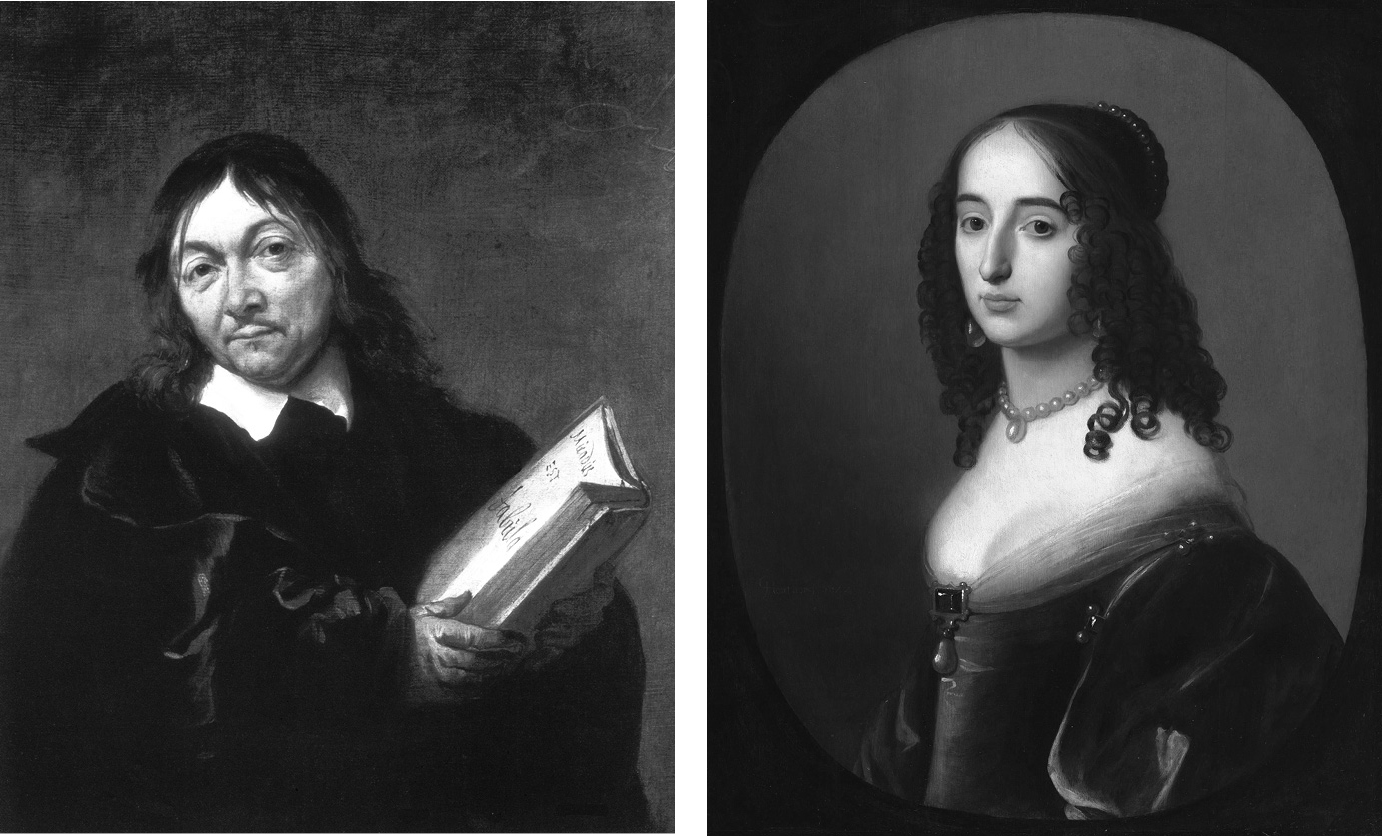
Figure 2.3 René Descartes (1596–1650) and Princess Elizabeth of Bohemia (1618–1680): philosophical correspondents.
Although women at that time were denied formal roles in scholarly affairs, the Elector’s daughters received excellent private education in mathematics, philosophy, and several languages. Elizabeth’s mastery of the classics led her to be nicknamed La Grecque (“The Greek”). She read philosophy avidly and came upon some of Descartes’s early writings. Living nearby, Descartes learned of her interest and arranged a meeting. This began a strong intellectual friendship, maintained by an extensive correspondence in which they discussed both personal and philosophical issues. Recent historical analysis of this correspondence has revealed Elizabeth as a significant philosopher in her own right. In particular, she posed important questions about how, specifically, a material body could interact with an immaterial mind or soul.10 Descartes’s letters to Elizabeth on the subject became the basis for his last important book, the 1649 Treatise on the Passions of the Soul.
Descartes’s responses repeated his argument that any body without a soul would be an automaton, completely under the mechanistic control of external stimuli and its internal hydraulic condition, and completely without consciousness. Conversely, a soul without a body would have consciousness, but (like Avicenna’s floating man) only of its own existence and its innate ideas. It would lack the sensory impressions and ideas of material things that occupy normal human consciousness most of the time. The body, therefore, adds richness and complexity to the contents of the mind’s consciousness, while the mind adds conscious rationality and volition to the causes of behavior.
From today’s perspective, some of Descartes’s strangest theorizing discussed how the mind gets information from the body’s senses. Aware of Alhazen’s discovery that the front-facing lenses of the eyes project miniature, upside-down images of external objects onto the retinas at the backs of the two eyeballs, he was troubled by the fact that the mind somehow manages to consciously experience a single, upright and full-sized object. Accordingly he believed there must be some specific location in the body where the double impressions from the eyes “unite before reaching the soul, and so prevent their representing to it two objects in place of one.”11
Descartes expected this location to be somewhere in the brain, but again was troubled because the brain was symmetrically divided into two distinct hemispheres. Then he learned about the pineal gland, a small, pinecone-shaped structure near the center of the brain and extending partially into a large ventricle. Because the pineal gland seemed to be undivided, Descartes speculated that here is where sensations from the divided body are reunified for presentation to the soul. Figure 2.4 shows his diagram of how this process supposedly worked. The upright arrow (ABC) in the outside world is represented first by miniature, inverted images of itself on the retinas of the two eyes, which in turn excite nerves to project an upright and merged single image (abc) onto the pineal gland (P). There the soul can perceive and bring to consciousness a unified and accurate image of the arrow. At this point the soul may also exercise its free will and cause the pineal gland to move about within its strategic location in the pool of animal spirits. This response results in enhancing, inhibiting, redirecting, or otherwise modifying the flow of fluids toward or away from particular nerves, and thereby influencing reflexive behavioral responses with reason.
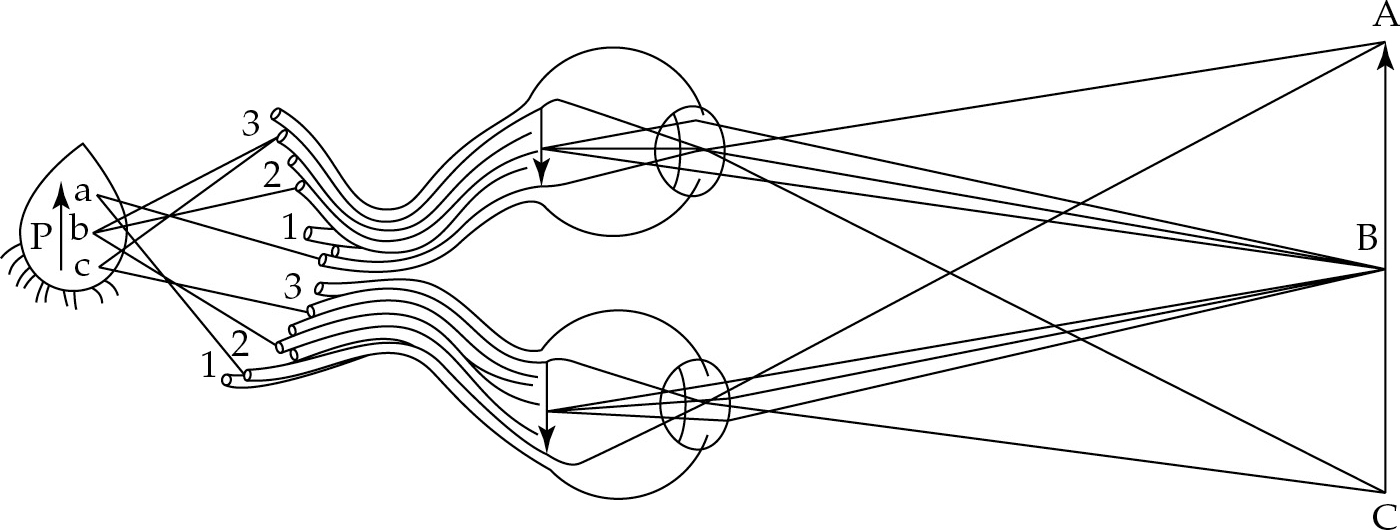
Figure 2.4 Descartes’s conception of visual perception.
The pineal gland’s strategic location within the spirit-filled ventricle also meant that it was ideally placed to sense the commotions, or eddies, of the animal spirits that he presumed were the cause of emotions. Descartes called the mind’s conscious experiences of these commotions the passions—the conscious awareness of feelings such as love, anger, fear, or desire. Following such awareness, the mind may then attempt to influence the emotion’s effect by initiating movements in the pineal gland that enhance, inhibit, or redirect the flow of animal spirits—such as splashing even more spirits into the nerves initiating anger responses, or tempering such responses by moving the gland in a way that partially blocks the flow of spirits.
The specifics of this theory bewildered many of Descartes’s friends and admirers. Princess Elizabeth was skeptical about the very notion of an immaterial agency such as the soul having a direct mechanistic impact on the material body. She wrote: “It would be easier for me to concede matter and extension to the soul, than the capacity of moving a body, and of being moved, to an immaterial being.”12 Her puzzlement has continued to resonate with many to the present day. As we shall see repeatedly throughout this book, questions about what consciousness, subjectivity and volition are, and how they relate to the physical functioning of the brain and nervous system, have continued to be hotly debated. In the view of most, the answers remain inconclusive.
Descartes’s life in the 1640s was marked by conflict, change, and tragic irony. He was devastated when two of his books elaborating on ideas from Discourse on Method were banned by some religious authorities. A man of sincere if unorthodox religious faith, Descartes subsequently sent only the short Passions of the Soul to the printer and confined the rest of his written thought to unpublished manuscripts and discursive letters to a few trusted individuals, such as Princess Elizabeth.
In 1649 another, more powerful royal figure, Queen Christina of Sweden, invited him to move north and become philosopher-in-residence at her court. Improbably and ultimately tragically, the shy philosopher agreed to give up his Dutch anonymity in favor of the fashionable life of a nordic courtier. At the royal court he was required to spend part of his valuable time writing frivolous verses to celebrate Christina’s accomplishments. Worst of all, the queen scheduled her philosophy lessons from Descartes at 5:00 in the morning. Forced to abandon his meditational bed long before sunrise during the bitter Swedish winter, Descartes contracted pneumonia. On February 11, 1650, just four months after arriving in Sweden, he died at the age of 53.
Like several other mental philosophers, including the two we’ll meet next, Descartes never married. He fathered and briefly provided for one illegitimate daughter, but she died in childhood so he had no biological descendants. Few people, however, have ever left a greater intellectual legacy. Besides his contributions to mathematics, philosophy, and the physical sciences, he provided many inspirational ideas for a new science of psychology. Although his mechanistic analyses of the body were wrong in many specifics, his general approach was both correct and productive. The nervous system and brain truly are the control centers that regulate behavior, and they operate according to specifiable physical laws. The general concept of the reflex as a stimulus-response sequence performed by the nervous system remains a fundamental neurophysiological principle. In recognizing the importance of emotions and passions as internal influencing factors that interact with both external stimulation and the constraints of reason, Descartes anticipated an important tenet of modern psychologists such as Sigmund Freud, who emphasized the importance of intrapsychic conflict as an inevitable aspect of human psychology (see Chapter 11).
Descartes’s more general philosophy of mind, with its diverse aspects of nativism, rationalism, and interactive dualism, has been just as influential, inspiring his successors to react in a variety of creative ways. Two of the most important of these, Locke and Leibniz, established strongly contrasting psychological traditions that continue to the present day.