CHAPTER 01
Five Foundations of Economics
More information
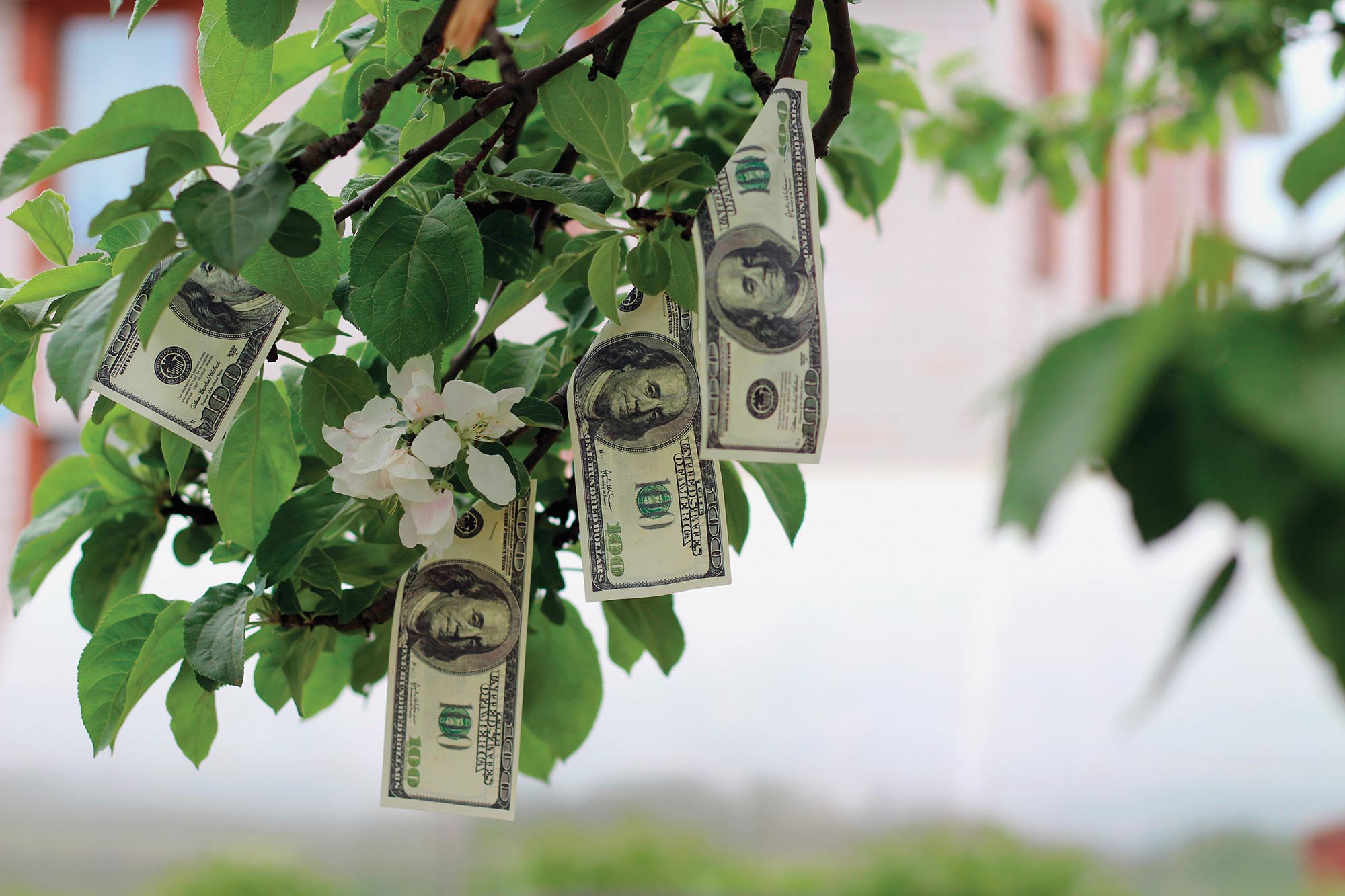
A tree growing hundred dollar bills.
Economics Is About More Than Money.
Have you ever thought about what it would be like to have a money tree in your backyard? Imagine walking outside, picking cash off the branches, and using it to buy whatever you desired. If that sounds too good to be true, it is—and not just because money doesn’t grow on trees. The problem is, if money did grow on trees, it wouldn’t be scarce. Everyone would have their own money tree, and therefore they wouldn’t have any reason to give you something in return for the greenbacks you waved in front of them. You’d have all the money you could possibly want, and yet in practical terms it would be worthless. You couldn’t give it away.
But is money what we really care about, anyway? No. What we care about is what we can use money to acquire: the actual goods and services that make our lives more enjoyable. Economist Carol Graham, who studies “the economics of happiness,” makes the point that happiness is about a lot more than just how much people earn.
For starters, predictability of income matters. Many people regularly go through periods of unemployment. Even when these folks are working, uncertainty about the future subtracts from their happiness. Other people’s incomes are on a smoother track: these folks are relatively poor when young, earn more and build up savings during middle age, and then draw down those savings once they retire. For the most part, these people avoid the happiness-undermining effects of financial uncertainty.
Then there’s the matter of where you live. New York City is way more expensive than Charlottesville, Virginia, or Austin, Texas (where your authors live). On the other hand, New York has cultural opportunities that for some people justify the high cost of living. The moral? Clearly there is more to human happiness than simply how much money you make.
This textbook provides the tools you need to fill in more of the picture and make your own assessments about the economy. What other discipline helps you discover how the world works, how to be an informed citizen, and how to make day-to-day decisions? Economics can improve your understanding of the stock market and help you make better decisions. If you are concerned about the future of Social Security, this textbook explains how it works. If you are interested in learning more about the economics of health care and some of the challenges it faces, the answers are here.

More information
An outdoor view of homes in Greenwich Village.
In this chapter, you will learn about five foundations of economics—incentives, trade-offs, opportunity cost, marginal thinking, and the principle that trade creates value. You will find that many of the more complex problems presented later in the text are based on these foundations, either singly or in combination. Think of this chapter as a road map that provides a broad overview of your first journey into economics.