Feminism: Riding the Waves

What are the “waves” of the feminist movement, and what characterizes each one?

In order to understand the present, it’s important to understand the past. Therefore, we can say that an understanding of the history of the feminist movement is key to understanding feminist psychology today (see the timeline on pp. 20–21). Some scholars view the history of the feminist movement as progressing through a series of waves—or enhanced periods of activism. Others claim that activism is ongoing, flowing more like a river. In the sections below, we’ll review the waves of feminism and examine critiques of the wave metaphor.

The First Wave

Historians think that the first wave of feminism in the United States formally began in 1848 at the Seneca Falls Convention when over 200 women and 40 men (including the famous Black abolitionist Frederick Douglass) met to create a list of priorities for advancing women’s rights (Rampton, 2015). There were many priorities because women had few rights in the 19th century. For example, they didn’t have legal authority over their children, and they weren’t allowed to own land, keep their wages, or refuse to have sex with their husbands. The top priority, though, was gaining women’s right to vote—something that didn’t happen until 1920, when the 19th Amendment was passed. At the time, feminist activists thought that winning the right to vote would end the unequal treatment of women in the United States—especially since they were making other legal gains too. For example, they were granted shared guardianship of their children and were allowed to file for divorce. Some even felt that little remained to be done, but in retrospect there was still a significant need for change.

The Second Wave

Winning the right to vote and other legal rights didn’t end discrimination against women, so a second wave emerged in the 1960s. Second wave feminists were primarily interested in changing the day-to-day lives of women, including creating more equitable access to the paid labor force and re-defining a woman’s role as wife and mother (Rampton, 2015). This was also around the time when the civil rights movement began and the sexual revolution was in full swing. Historians believe the second wave gained momentum following protests at the Miss America pageant in 1968 and 1969 (Rampton, 2015). A group called the Redstockings staged a counter-pageant while marching around a “freedom trash can” filled with items that they saw as symbols of female oppression (Gibson, 2011, p. 3). These included high heels, makeup, and bras. The stereotype of the bra-burning feminist comes from this event, although it’s a myth that the protesters set the trash can on fire (Gibson, 2011). The protesters were particularly frustrated by the ways in which they felt women were being confined by unrealistic standards of beauty.

Timeline of Key Events for Feminism in the United States

1848

The Seneca Falls Convention, the first U.S. women’s rights convention, is held in New York.
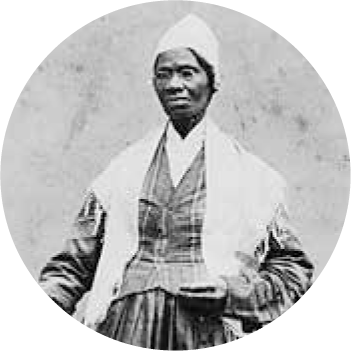
A photo of Sojourner Truth.

1851

Sojurner Truth gives her famous “Ain’t I a Woman” speech in which she critiques the idea that opposition to women’s suffrage was grounded in a desire to protect women by highlighting that no one was trying to protect her—a Black woman—from physical or emotional pain.

A photo of Sojourner Truth.

1920

Ratification of 19th Amendment to the U.S. Constitution gives women the right to vote.
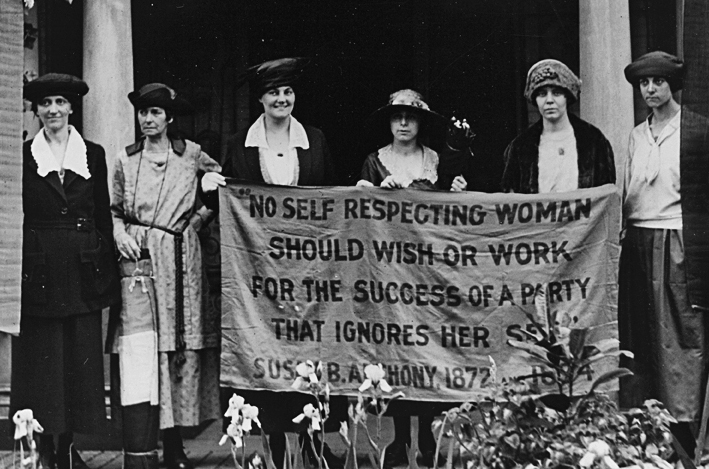
A photo shows Kenyon Hayden Rector, Mary Dubrow, and Alice Paul holding a banner outside the 1920 Republican Convention in Chicago.
Image Description
The banner reads “No self respecting woman should wish or work for the success of a party that ignores her self. Susan B. Anthony, 1872.” The three women are also flanked by three other women.

1923

The Equal Rights Amendment (ERA), originally drafted by Alice Paul and Crystal Eastman, is first introduced in Congress.

A photo shows Kenyon Hayden Rector, Mary Dubrow, and Alice Paul holding a banner outside the 1920 Republican Convention in Chicago.
Image Description
The banner reads “No self respecting woman should wish or work for the success of a party that ignores her self. Susan B. Anthony, 1872.” The three women are also flanked by three other women.

1925

American Indian suffrage, which grants citizenship to all Native Americans born in the United States, is passed by an act of Congress.

1952

Christine Jorgensen is the first American whose sex reassignment surgery becomes public.

1964

Title VII of the Civil Rights Act is enacted, prohibiting employment discrimination on the basis of race, color, religion, national origin, or sex.
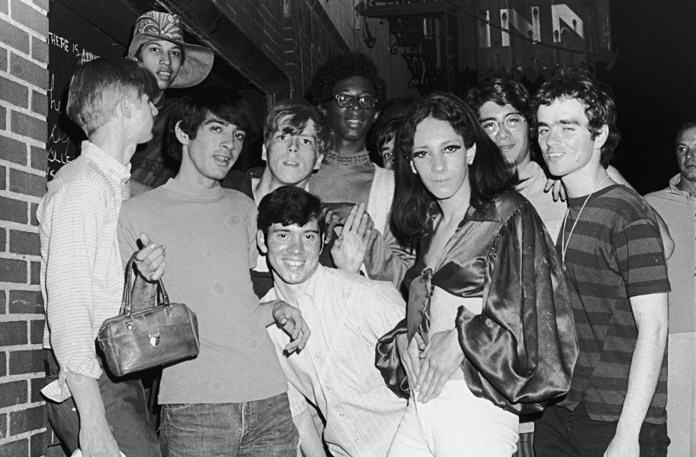
A photo shows a group of young people posing in front of the Stonewall Inn.

1969

Transgender and gender non-conforming people are some of the first to resist arrest at the Stonewall Inn in New York, an event credited with igniting the modern LGBTQ rights movement.

A photo shows a group of young people posing in front of the Stonewall Inn.

1972

Title IX is enacted, prohibiting sex discrimination in all aspects of education programs that receive federal support.
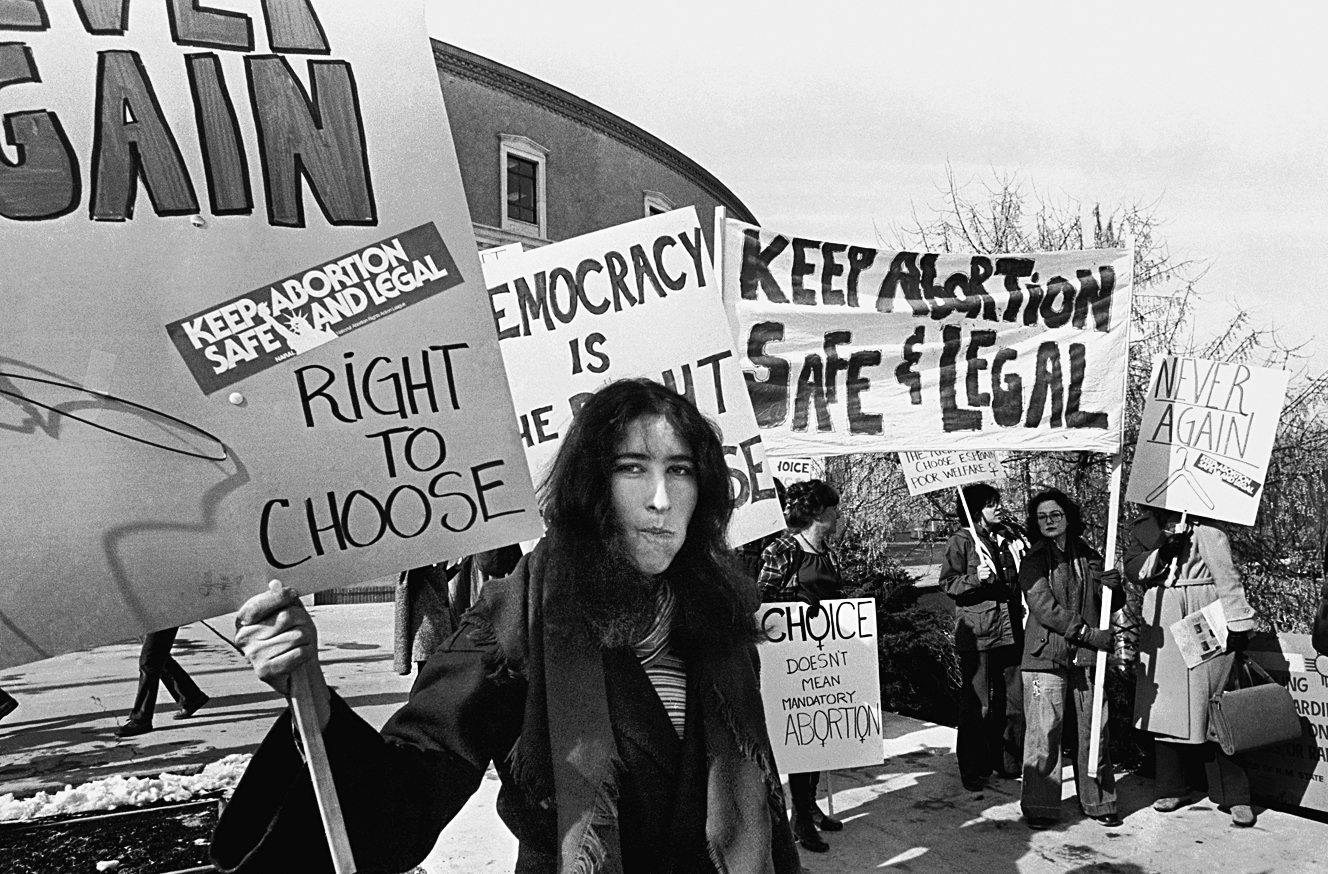
A photo shows a group of women protesting in support of legal abortion. They hold banners and placards that read “Keep abortion safe and legal,” “Choice doesn’t mean mandatory abortion,” and “Never Again.”

1972

The ERA is passed by both houses of Congress, after being re-introduced in 1971, and is submitted to the states for ratification. It has not yet been ratified by 38 states as required to amend the Constitution.

1973

The U.S. Supreme Court decision in Roe v. Wade declares it legal for a woman to terminate an early pregnancy.

A photo shows a group of women protesting in support of legal abortion. They hold banners and placards that read “Keep abortion safe and legal,” “Choice doesn’t mean mandatory abortion,” and “Never Again.”

1974

The Combahee River Collective, a Black feminist lesbian organization that emphasizes the need to understand interlocking aspects of oppression, holds its first meeting.

1978

The Pregnancy Discrimination Act bans employment discrimination against pregnant women.

1990

The Americans with Disabilities Act prohibits discrimination against individuals with disabilities in all areas of public life.

1994

The Violence against Women Act funds services for victims of rape and domestic violence.
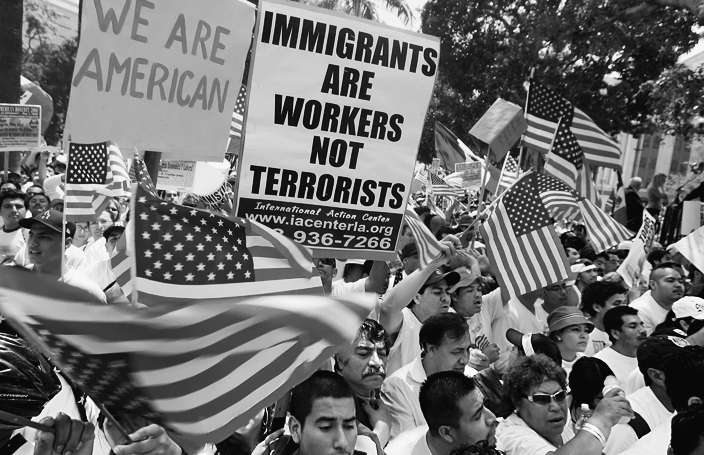
A photo shows a crowd of protesters waving American flags and holding signs in favor of immigration. Signs read “We are American” and “Immigrants are workers not terrorists, International Action Center.”

2006

Thousands of Latinx immigrants and others boycott work, school, and shopping as part of the Day without Immigrants to highlight the contributions immigrants make to the economy.

A photo shows a crowd of protesters waving American flags and holding signs in favor of immigration. Signs read “We are American” and “Immigrants are workers not terrorists, International Action Center.”

2009

The Lilly Ledbetter Fair Pay Restoration Act allows employees, usually women, to file pay discrimination complaints within 180 days of their last paycheck.

2013

Restriction of same-sex marriage is deemed unconstitutional by the Supreme Court decision in United States v. Windsor.

2017

The Women’s March on Washington, the largest single-day protest in U.S. history, is held. It has sparked some renewed interest in the ERA, with Nevada becoming the 36th state to ratify it.

The Third Wave

Following the second wave, there was again some complacency and a sense that, because many women had entered the workforce, there was no more work to be done. But again, a lot still needed to be done, especially within the feminist movement itself. The third wave of feminism began in the mid-1990s and is best described as a struggle to change mainstream ideas of feminism by rejecting the idea that everyone’s experience of being a woman is the same (Rampton, 2015). Third wave feminism emerged in reaction to previous feminist movements that largely ignored diversity among women and primarily focused on the interests of White, wealthy, heterosexual, educated women from Western parts of the world.

Black feminists critiqued the lack of diversity in the feminist movement and introduced the importance of intersectionality (Crenshaw, 1993). This framework describes the ways in which different types of oppression (e.g., racism, classism, homophobia, transphobia, ableism, sexism) are interconnected and, therefore, cannot be examined separately (Crenshaw, 1993). Although we’ll explore this concept in more detail in Chapter 2, it’s important to remember that, in this view, no woman is just a woman. She also has an age, a cultural identity, a race ethnicity, a religion, and many other social identity characteristics. Because these other aspects of her identity influence how she experiences being a woman, there can be no universal experience of womanhood.

Among feminists, one contentious aspect of third wave feminism is the revival of feminine aesthetics (e.g., lipstick, high heels) and raunch culture (i.e., female sexualization). Many women associated with the first two waves would have considered these things as evidence of oppression by a male-dominated society, but many third wave feminists have reclaimed them as a means of female empowerment (Rampton, 2015). We’ll revisit this tension in Chapter 7 because it continues to be a source of debate among feminists. Another important feature of third wave feminism is use of the Internet to build social connections and political movements (Rampton, 2015).

A Fourth Wave?

Although the wave metaphor is often used to describe aspects of women’s history, it has been criticized. A wave suggests that there are direct connections between movements and that activism peaks at certain points and retracts at others (Nicholson, 2013). In fact, feminists have been active even when there has been no definable wave. Some would say we’re currently in a retraction between waves; others claim we’re in a fourth wave characterized by more sophisticated use of social media to promote activism (e.g., tweets, memes). Still others reject the notion of waves altogether and say that the fight for equity is a constant and continual process.

your turn

Do you feel that there is a need for a feminist movement? If so, what do you think are the most pressing priorities feminism should address? What is the best way to make gains on those priorities? Talk to four other people with different social backgrounds. What are their thoughts on this? How do their thoughts align with yours? Where do their perspectives differ from one another?

Glossary

    • intersectionality
      The ways in which different types of oppression (e.g., racism, classism, homophobia, transphobia, ableism, sexism) are interconnected and, therefore, cannot be examined separately; also the way multiple social identity variables influence any psychological variable being studied.