What are common gender stereotypes, and how do they vary based on women’s other social characteristics?
The counter to privilege is subordination, and much like privilege, experiences of subordination are often difficult to notice. Sexism, or a bias based on the belief that men are superior to women, looks different today than it did in the past. In Chapter 1, we discussed the fact that sexism has changed forms over time and is now more difficult to see. This is one reason why many people think we live in a post-feminist era where the women’s movement has achieved its goals and, therefore, feminism is no longer needed. But sexism still permeates all societies worldwide. It has been said that a fish doesn’t know it’s swimming in water. We can think of sexism as water, and all of us as fish. We don’t notice sexism because it’s all around us—we’re swimming in it!
Sexism begins with stereotypes. A stereotype is a set of beliefs about the characteristics of a particular group that are generalized to all members of that group (Judd & Park, 1993). Since nothing can ever be true of all group members, stereotypes are inherently problematic, and they influence not only what we expect from people but also how we interact with them. Some stereotypes are based on gender roles, or the behaviors within a culture that are generally considered acceptable or desirable for a person based on that individual’s actual or perceived gender. Feminist psychologists consider rigid gender role beliefs to be a source of control over girls and women because of the ways in which people are socialized to adhere to stereotypes.
Gender stereotype research has often focused on two major dimensions: communion and agency (Bakan, 1966; Fiske, Cuddy, Glick, & Xu, 2002). In the past, men were likely to be considered agentic—that is, assertive, dominant, competitive, and acting to get things done (Newport, 2001). In contrast, women were likely to be considered communal—that is, warm, friendly, concerned with others, and emotionally expressive. These traits were considered fundamental to what it meant to be a woman and a man. For example, when study participants were asked to list traits associated with the terms feminine and masculine, the vast majority of responses fell on the communal/agentic dimension (Deaux & Lewis, 1984). But these stereotypes don’t strictly reflect today’s reality. Other research has shown that women and men are equally assertive and agentic (Twenge, 1997, 2001; Twenge, Campbell, & Gentile, 2012). However, the association of men with agentic traits and women with communal traits continues to this day (Abele, & Wojciszke, 2014; Conway & Vartanian, 2000).
Traditionally, communal or feminine traits are considered “nice,” but they don’t confer power or status. Being seen as nice but incompetent is characteristic of other lower-status groups. For example, people over age 65 or people with disabilities are often seen as “nice” and “sweet,” but they’re considered less competent than younger or able-bodied and neurotypical people (Fiske, 2010b). In contrast, traditionally agentic or masculine traits confer a sense of competence and power. In fact, participants in one study described low-status people as having communal traits and high-status people as having agentic traits (Conway & Vartanian, 2000). Some scholars believe that boys are socialized to take on characteristics associated with masculinity (e.g., strength, ambition, restricted emotion, aggression) because these characteristics convey power and status, which ultimately maintain patriarchy (Levant & Richmond, 2016).
Although, in general, women are stereotyped as communal, there are within-group differences. In one study that examined the intersection of class and gender, primarily White midwestern college students described poor women in ways that matched both masculine (e.g., hardworking, responsible) and feminine (e.g., friendly, loving, family-oriented) stereotypes (Cozzarelli, Tagler, & Wilkinson, 2002). A similar finding emerged for lesbian women, who were stereotyped by undergraduate German students as having more masculine attributes than heterosexual women (Niedlich & Steffens, 2015). In contrast, transgender women were stereotyped by a sample of primarily White American university students as being communal and having a high degree of attentiveness to feminine appearance (e.g., wearing makeup and wigs; Gazzola & Morrison, 2014). In this regard, they were seen as stereotypically feminine in similar ways to cisgender women.
try it for yourself
Describe a typical woman on a piece of paper. Now flip it over and describe a typical man. What characteristics did you list for each? Do they fall on the dimensions of agency and communality? Would you classify your attributions as positive or negative? What characteristics would you assign to yourself? Does your self-description look more like the one you gave for one of the “typical” groups? If so, how? If not, why not? This activity assumes a gender binary. How does that assumption limit how we think about people and their characteristics?
Racialized Sexist Stereotypes
What are some specific ways in which gender stereotypes can be impacted by racism?
Gender stereotypes can also be influenced by racial/ethnic identity. In one study, researchers asked primarily White college students to assess the communal and agentic characteristics of 20 people who were described differently in terms of gender (female, male), race (Black, White), and age (adolescent, young adult, middle-aged, young-old, and old-old; Andreoletti, Leszczynski & Disch, 2015). Responses showed that while gender stereotypes about agency and communion generally held up across the life span, they were more applicable to White people than Black people. In particular, Black women were less likely to be perceived in traditional gender-stereotypic ways across the life span.
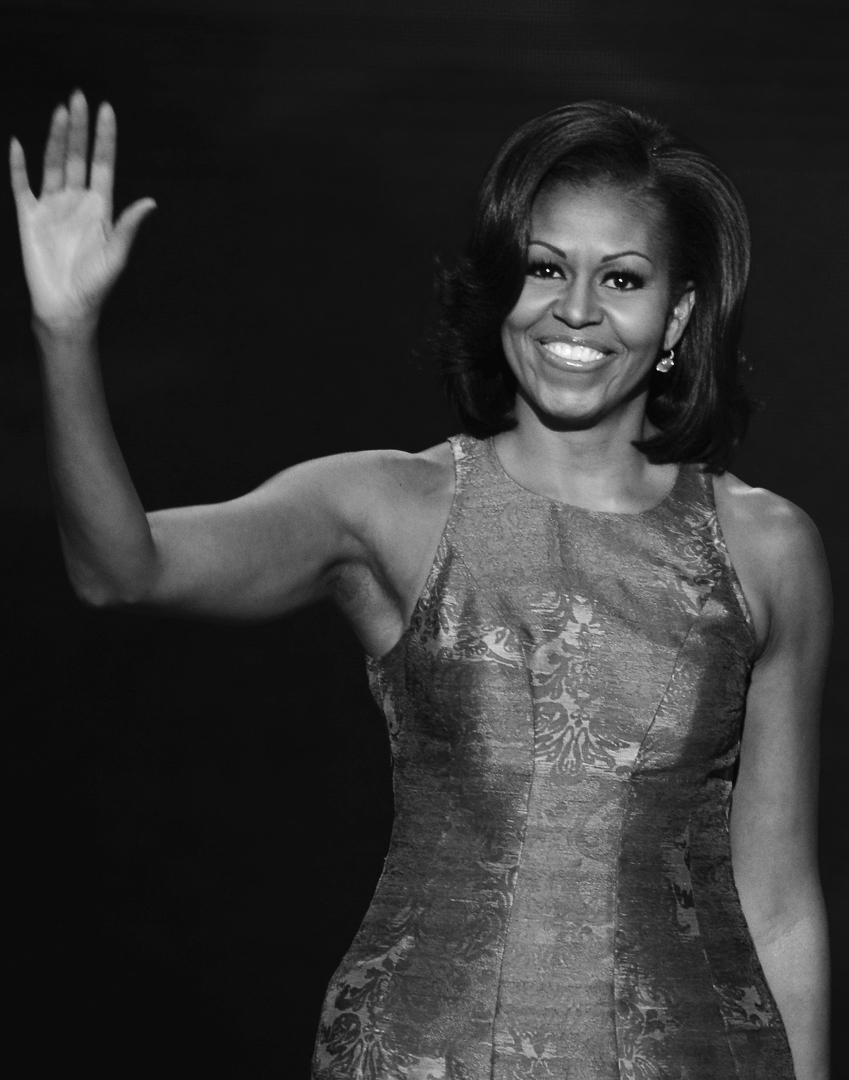
Inspired by a speech given by Michelle Obama, CaShawn Thompson created the hashtag #blackgirlmagic to celebrate the resiliency of Black girls and women. While many people found the hashtag empowering, others were concerned that this effort might reinforce the strong Black woman stereotype. What do you think?
In another study, researchers asked American undergraduate students to generate attributes of different groupings of people based solely on race/ethnicity or gender (e.g., Asian Americans, Black Americans, Latinx Americans, Middle Eastern Americans, or White Americans; men or women), or by groupings based on race/ethnicity-by-gender pairings (e.g., Black men or Latinx women; Ghavami & Peplau, 2013). As shown in Table 2.3, the researchers found many stereotypes that differed by both race/ethnicity and gender as well as by the interaction of the two. In the race/ethnicity-by-gender condition, participants generated different and unique attributes that weren’t generated when students worked with groupings focusing on only race or gender. For example, Middle Eastern women were described as family oriented, quiet, and housewives, but these attributes weren’t offered when participants were asked about Middle Eastern people in general or Middle Eastern men. Attributes associated with ethnic groups when no gender was specified were more similar to those given for men than for women in each group. Also, when participants were asked to list attributes of women and men with no race/ethnicity specified, their descriptions were most similar to those provided for White women and White men as compared to ethnic minority women and ethnic minority men. Black women in particular, who were described as “loud, assertive, and having an attitude,” were found to share few attributes with White women (p. 118).
The prominent stereotype of the strong Black woman (SBW) combines two central and overlapping concepts: caregiving (feminine) and strength (masculine; Donovan & West, 2015). This stereotype perpetuates the idea that Black women are tough, naturally strong, self-sacrificing, and communal (Collins, 2004; Wallace, 1990). In her description of the SBW stereotype, writer Tamara Winfrey Harris said, “We are the mothers who make a way out of no way. On TV, we are the no-nonsense police chiefs and judges. We are the First Ladies with the impressive biceps” (Winfrey Harris, 2014, p. 1).
TABLE 2.3 Attributes Associated with Women and Men of Different Racial/Ethnic Groups
Black People
Black Men
Black Women
Ghetto/unrefined
Athletic
Have an attitude
Criminals
Dark-skinned*
Loud
Athletic
Loud
Big butt*
Loud
Quick to anger*
Overweight*
Gangsters
Tall
Confident*
Middle Eastern People
Middle Eastern Men
Middle Eastern Women
Terrorists
Bearded
Quiet*
Dark-skinned
Dark-skinned
Religious
Oppress women
Terrorists
Covered*
Muslim
Sexist
Oppressed
Hairy
Speak English with accent
Conservative
Latinx People
Latinx Men
Latinx Women
Poor
Macho
Feisty*
Have many children
Poor
Curvy*
Illegal immigrants
Dark-skinned
Loud
Dark-skinned
Day laborers
Attractive
Uneducated
Promiscuous*
Good cooks*
White People
White Men
White Women
High status
Rich
Arrogant
Rich
Tall
Blond
Intelligent
Intelligent
Rich
Arrogant
Assertive*
Attractive
Privileged
Arrogant
Small build/petite
Asian American People
Asian American Men
Asian American Women
Intelligent
Intelligent
Intelligent
Bad drivers
Short
Quiet
Good at math
Nerdy
Short
Nerdy
Quiet
Bad drivers
Shy
Good at math
Shy
Note. Content drawn from Ghavami & Peplau (2013). Additional attributes are listed in the source. *Attributes participants used to describe only one gender are designated with an asterisk.
Historians believe that the concept of the strong Black woman arose as a means to cope with the violence of slavery and that it has been passed down intergenerationally, particularly from mothers to daughters (Thomas & King, 2007). When Black women endorse the SBW stereotype, they see it as a positive way to promote pride (Abrams, Maxwell, Pope, & Belgrave, 2014; Romero, 2000). However, this stereotype emphasizes self-sacrifice, and in response, Black women may de-prioritize self-care and be less willing to ask for help. In fact, endorsing the idea of constant resiliency in the face of serious hardship is associated with negative mental and physical health outcomes. For example, embracing the SBW stereotype has been related to depression, obesity, and cardiovascular disease among Black women (Donovan & West, 2015; Harrington, Crowther, & Shipherd, 2010; Watson & Hunter, 2015). In addition to the SBW stereotype, there is another, more pejorative stereotype of an angry Black woman, which depicts Black women as hostile, irrational, and overbearing (Ashley, 2014). This stereotype can serve to silence Black women who are afraid that if they express any negative emotion they will be characterized as an angry Black woman and, consequently, dismissed.
Other pervasive and influential stereotypes depict female sexuality in heteronormative and racialized ways. The historical image of the Jezebel—a hypersexual, aggressive, and uncaring Black woman—is another stereotype stemming from slavery when White men used it to justify their sexual abuse and rape of Black women (Brown, White-Johnson, Griffen-Fennell, 2013; Lack, 2015). Contemporary media examples of the Jezebel, like those often depicted in music videos, create a framework for how some Black girls and women internalize and subsequently think about Black female sexuality (Stephens & Phillips, 2003). In one study, for example, Black women who were primed with a three-minute video clip featuring the Jezebel stereotype, compared to participants who viewed a neutral clip, were likely to perceive a Black female job candidate as more sexual and to recommend she seek employment as a cocktail waitress or exotic dancer (Givens & Monahan, 2005).
The frequent representation of Asian women as submissive, sexy, and in need of rescuing stems from the china doll stereotype. One example is Miss Saigon, a highly successful Broadway musical, based on the Vietnam War, which has been criticized for its gendered racism (Mok, 1998). In a review of its 2017 revival, a theater critic noted that the lead Asian female character, Kim, has no story line, doesn’t make her own decisions, and is continuously victimized (Teeman, 2017). In addition, the colonial constructs of the Native American princess and the squaw have remained influential in contemporary stereotypes of Native American women (Bird, 1999). Both were deemed highly sexual, but the princess was considered exotic and self-sacrificing, while the squaw was seen as a servant who had sex frequently and indiscriminately, often resulting in multiple pregnancies (Merskin, 2010). The tendency to see women of color as sexually promiscuous simultaneously reinforces racism and sexism and also perpetuates an image of White womanhood that is based on sexual purity (Stephens & Phillips, 2003). This can be considered an example of how stereotypes reinforce social stratification by setting different expectations for women based on their gender and race/ethnicity.
your turn
Think of the images of women of color in the media. How do they fit the stereotypes described here? Do you think other representations are starting to show up as well? If so, what are they? What are the implications of having limited images of women of color?
One reason stereotypes of women of color are problematic is that there are so few positive images of them in popular media (Rios & Stewart, 2016). For example, Black and Latinx women are often portrayed as criminals or villains (Rios & Stewart, 2016). One privilege of being a member of a dominant group is having a diverse array of representations of your group present in the media (Schug, Alt, Lu, Gosin, & Fay, 2017). Therefore, even though White women are often sexualized and stereotyped in the media, there are many more images of them, so any one stereotypical or sexualized image carries less weight. Women of color, women with disabilities, and LGBTQ women are less visible. Because the few images that exist are largely negative, people may develop discriminatory attitudes and behaviors based on that limited information (Rios & Stewart, 2016).
How Stereotypes Shape Behavior
How do stereotypes shape behavior in relation to both the self and others?
In addition to influencing how people are likely to view girls and women, gender stereotypes convey how they should behave. As we’ll discuss in Chapter 5, children learn rules about gender very quickly, and they can apply rigid stereotypes to both themselves and others. Although adults are less rigid in their beliefs about gender, knowledge of gender stereotypes continues to affect the way people view themselves and how they choose to act. This is called self-stereotyping. In other words, individuals can act in ways that confirm stereotypes because that’s how they think they’re supposed to act. For example, if a woman believes that it’s more important to be nice than academically successful, she may attempt to present herself as nice but not work as hard at presenting herself as intelligent. Alternatively, a man who is very caring and considerate may choose to present himself in a more dominant or assertive manner because he has internalized that masculine stereotype.
Of course, the more that people act in ways that confirm gender stereotypes the more the stereotypes continue. This reflects a circular process in which social expectations influence the performance of gender, which in turn influences social interactions. This is known as doing gender (West & Zimmerman, 1987). There is also tremendous pressure to adhere to traditional stereotypes. Many people notice and react when stereotypes are violated. When individuals violate gender stereotypes, they often experience some degree of social and economic penalties, known as backlash effects (Rudman, 1998; Rudman & Fairchild, 2004). For example, as we’ll discuss in Chapter 10, when women in leadership positions act in traditionally masculine ways, they’re more likely than other female leaders to be criticized and seen as unlikeable (Eagly & Carli, 2007). For this reason, stereotypes are quite resistant to change. Despite considerable advancement for women in all domains of public life, many people continue to hold the same beliefs about strong stereotypical differences between women and men that they did in the 1980s (Haines, Deaux, & LoFaro, 2016).