1A Feminist Psychology of Women

EVERY YEAR, the Super Bowl draws one of the largest audiences of any event in the world. A little over half of the 100 million people who watch actually prefer the commercials to the football game (Russo, 2015). In many ways, the Super Bowl ads in 2015 should have been considered a victory for girls and women. Commercials that typically would showcase motherhood actually featured fathers doing housework and taking care of children. Female comedians were hilarious in ads that normally would spotlight men. One Proctor & Gamble commercial—which didn’t even mention the Always menstrual products it was selling—focused on girls and sports. Female and male adults and a young boy were asked to run, throw, and fight “like a girl.” In response, each person enacted a similar bouncy motion. The message was clear: to them, running like a girl was weak—almost silly. However, when pre-adolescent girls were asked the same question, they responded differently because they were simply being asked to run, throw, and fight as they normally would. They ran hard and fast, and they threw a ball with their full bodies. The screen then displayed this statement: “A girl’s confidence plummets during puberty.” The commercial ended with a woman explaining that young girls shouldn’t listen when they’re put down for doing something “like a girl.” The last screenshot directed viewers to “rewrite the rules.”
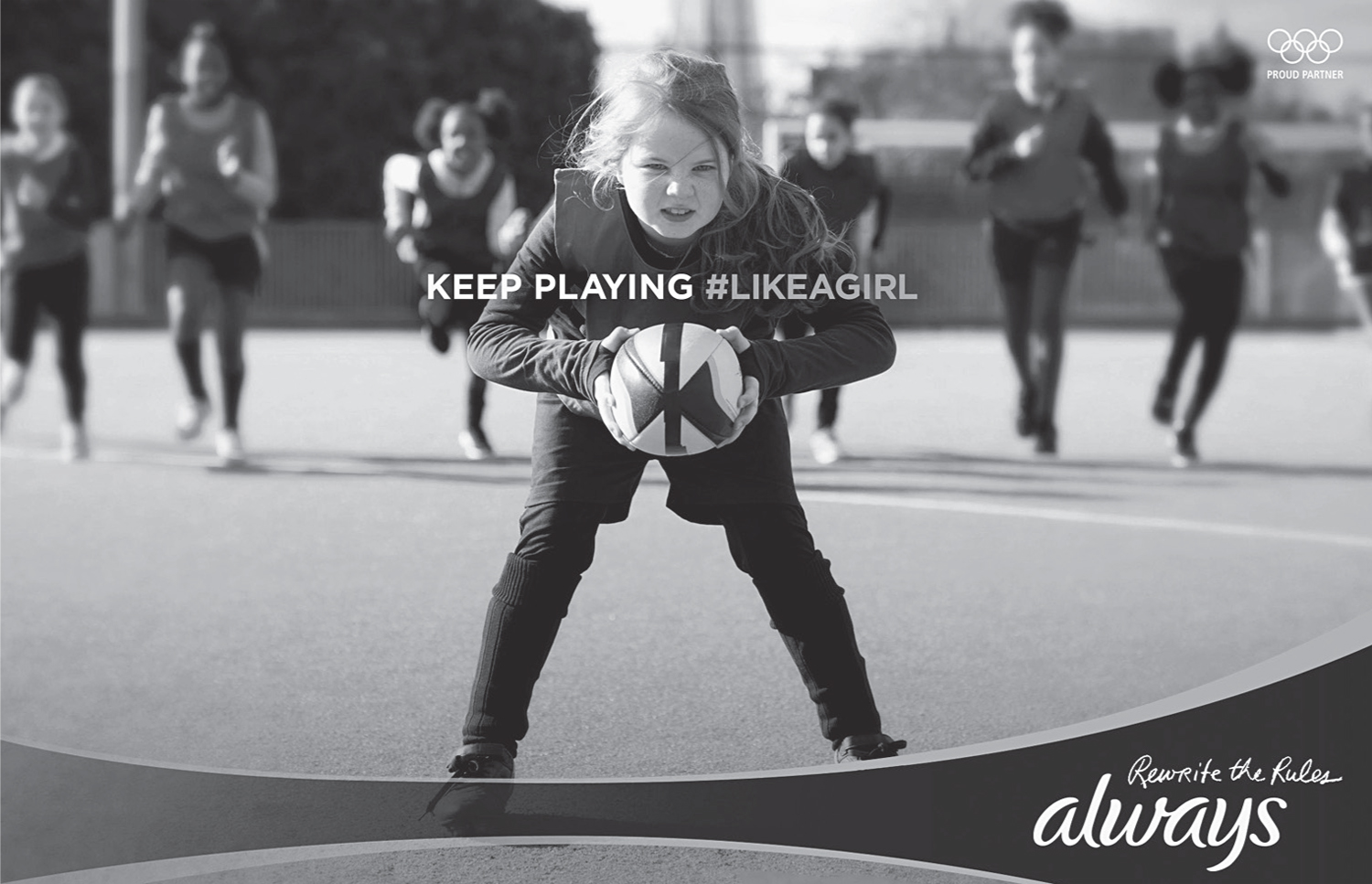
Image Description
The “Like a Girl” advertising campaign encouraged girls to “rewrite the rules.” What does it mean to “rewrite the rules,” and who has the power to do this?
Almost immediately, social media exploded. Women posted the Always commercial on Facebook, and the #likeagirl hashtag began trending on Twitter, surging YouTube viewership to over 80 million worldwide (Vagianos, 2015). Salon.com declared it “positively feminist” (Williams, 2015, para. 1), and Huffington Post congratulated Proctor & Gamble for being “groundbreaking” and “inspiring” (Berman, 2015, para. 1). Certainly, the messaging appeared to be positive, but was the ad truly a victory for girls and women?
This commercial brought up many complicated issues that aren’t easy to resolve. On a positive note, it acknowledged that unfair societal beliefs and expectations probably contribute to decreased self-esteem among girls during adolescence. However, the message about how viewers could address this was too simplistic. According to the commercial, girls should ignore sexist messages and “rewrite the rules” to maintain their self-esteem. But what does it mean to “rewrite the rules,” and who has the power to do this? Further, why should the burden of societal change fall on the shoulders of pre-adolescent girls?
The commercial didn’t offer realistic solutions. Although viewers might have felt good at the end of it, the message didn’t help them take steps toward social change. The phenomenon in advertising that generates a strong emotional response—one that feels empowering—but that doesn’t offer solutions has been called empowertising (Zeisler, 2014). In this case, although the ad took a positive step to address adolescent female athletes (and the biased expectations they face), it probably didn’t create widespread change. For example, it didn’t call for changing policies on sex segregation in sports. It also didn’t question why female professional athletes are paid less than their male counterparts. But the ad did succeed in raising an issue—and it’s one that forms one of the bases of this textbook about the psychology of women and gender: In society today, how can girls and women deal with many unequitable social realities that might contribute to their low confidence and decreased psychological well-being?
This chapter will introduce you to the field of psychology of women and to feminism. We begin by identifying several contemporary issues related to girls and women, and then we explore the history of feminism and several types of feminism. Next, we focus on what it means to consider oneself a feminist and the psychological and social implications of identifying as a feminist. Then, we explain how feminism has influenced the field of psychology. Finally, we describe the research process and give you tools for evaluating research and identifying how a scientific study can have a hidden bias against girls and women.