What are the “waves” of the feminist movement, and what characterizes each one?
In order to understand the present, it’s important to understand the past. Therefore, an understanding of the history of the feminist movement is key to understanding feminist psychology today (see the timeline on pp. 22–23). Some scholars view the history of the feminist movement as progressing through a series of waves—or enhanced periods of activism. Others claim that activism is ongoing, flowing more like a river. Still others prefer to move away from water-based metaphors and instead use the metaphor of a kaleidoscope (Nicholson, 2010). In the sections below, we’ll review the waves of feminism and examine critiques of the wave metaphor.
The First Wave
Historians generally believe that the first wave of feminism in the United States formally began in 1848 at the Seneca Falls Convention, when more than 200 women and 40 men (including the famous Black abolitionist Frederick Douglass) met to create a list of priorities for advancing women’s rights (Rampton, 2015). In reality, this first wave was much more expansive and gained momentum from the 1820s through the 1850s, when many women—including Native American/American Indian women,1 Black women, and Mexican American women—were advocating for increased authority over their own lives (Hewitt, 2010). The largest coalition was made up of radical Quakers and Black women who were devoted abolitionists (Hewitt, 2010). These activists had many priorities because women had few rights in the 19th century. For example, they didn’t have legal authority over their children; they weren’t allowed to own land; and they couldn’t give sermons at church, keep their wages, or refuse to have sex with their husbands. A top priority, though, was gaining women’s right to vote—something that didn’t happen until 1920, when the 19th Amendment was passed.
Voting rights in America have always been, and continue to be, a struggle (Jones, 2020). The passage of the 19th Amendment did not guarantee any woman the right to a vote; it simply guaranteed that a ballot would not be denied based on sex/gender (Grady, 2018). Women would still have to overcome restrictive state laws based on other factors such as their ability to read or pay a polling tax (Grady, 2018). Furthermore, Jim Crow laws, which mandated segregation in many states, as well as allowing outright intimidation and violence, including widespread lynching, made it impossible for Black people, including Black women, to safely vote (Jones, 2020). This violence continued into the civil rights movements of the 1960s (Jones, 2020). Today, historians see the Voting Rights Act of 1965, signed into law almost 45 years after the passage of the 19th Amendment, as a marker for when voting became accessible to people of color (Crowley, 2013). In 2013, however, the Supreme Court rejected certain aspects of the Voting Rights Act, making voting rights a continued concern among activists—including feminists (Liptak, 2013). After the 2020 elections, many states passed laws further limiting access to voting, some of which consolidated polling places and limited both mail-in voting and early voting on Sundays. These laws have been found to specifically restrict voting in communities of color (Brennan Center for Justice, 2022).
Timeline of Key Events for Feminism in the United States
1848
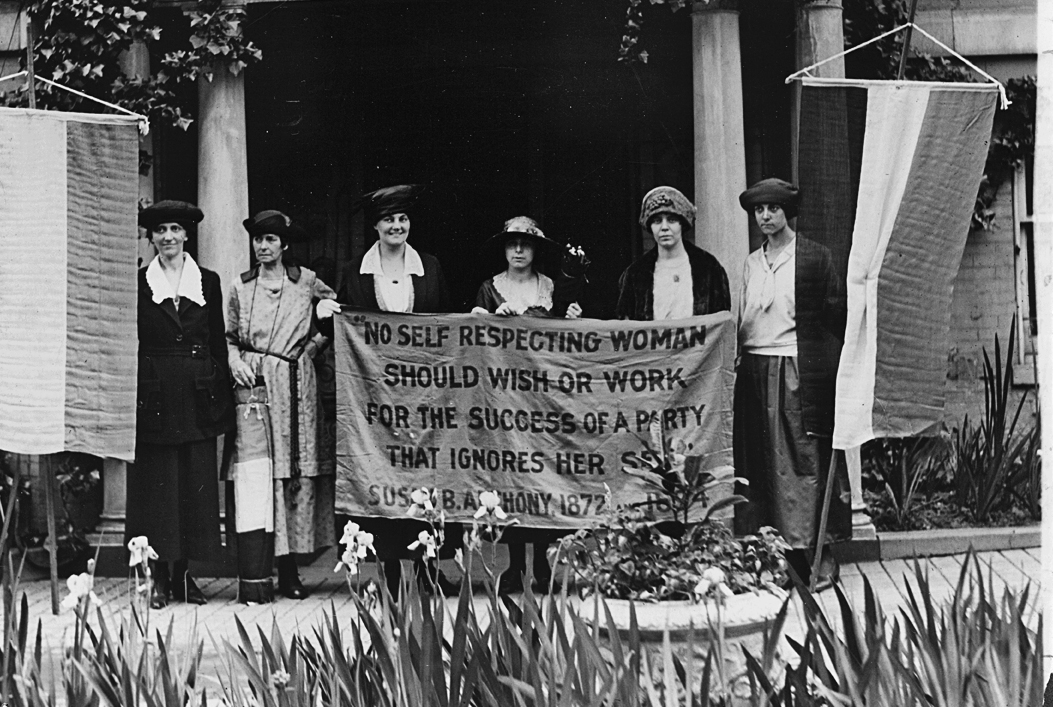
The first U.S. women’s rights convention, the Seneca Falls Convention, is held in New York.
More information
A black and white photo shows Kenyon Hayden Rector, Mary Dubrow, and Alice Paul holding a banner outside the 1920 Republican Convention in Chicago. The banner reads “No self respecting woman should wish or work for the success of a party that ignores her self. Susan B. Anthony, 1872.” The three women are also flanked by three other women.
1851
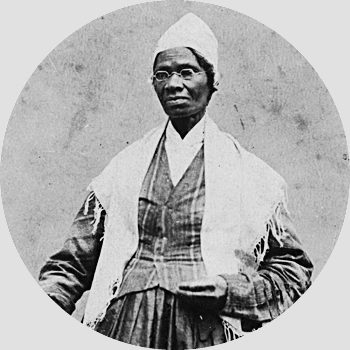
Sojourner Truth gives her famous “Ain’t I a Woman” speech, in which she critiques the idea that opposition to women’s suffrage is grounded in a desire to protect women; the central point of her argument is that no one has tried to protect her—a Black woman—from physical or emotional pain.
More information
A black and white photo shows Sojourner Truth.
1920
Ratification of 19th Amendment to the U.S. Constitution gives women the right to vote.
1923
The Equal Rights Amendment (ERA), originally drafted by Alice Paul and Crystal Eastman, is first introduced in Congress.
1924
The Snyder Act, which grants full U.S. citizenship (and voting rights) to all Native Americans born in the United States, is passed by an act of Congress.
1952
Christine Jorgensen is the first American whose gender affirming surgery, then referred to as sex reassignment, becomes public.
1964
Title VII of the Civil Rights Act is enacted, prohibiting employment discrimination on the basis of race, color, religion, national origin, or sex.
More information
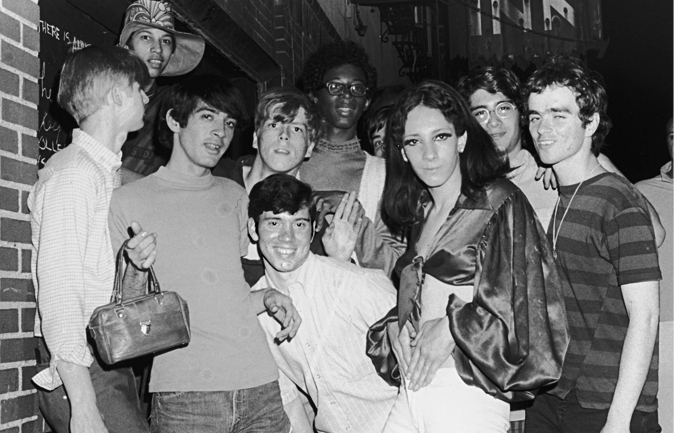
A black and white photo shows a group of young people posing in front of the Stonewall Inn.
1969
Trans and/or gender nonbinary people are some of the first to resist arrest at the Stonewall Inn in New York, an event credited with igniting the modern LGBTQ+ rights movement.
1972
Title IX is enacted, prohibiting sex discrimination in all aspects of education programs that receive federal support.
1972
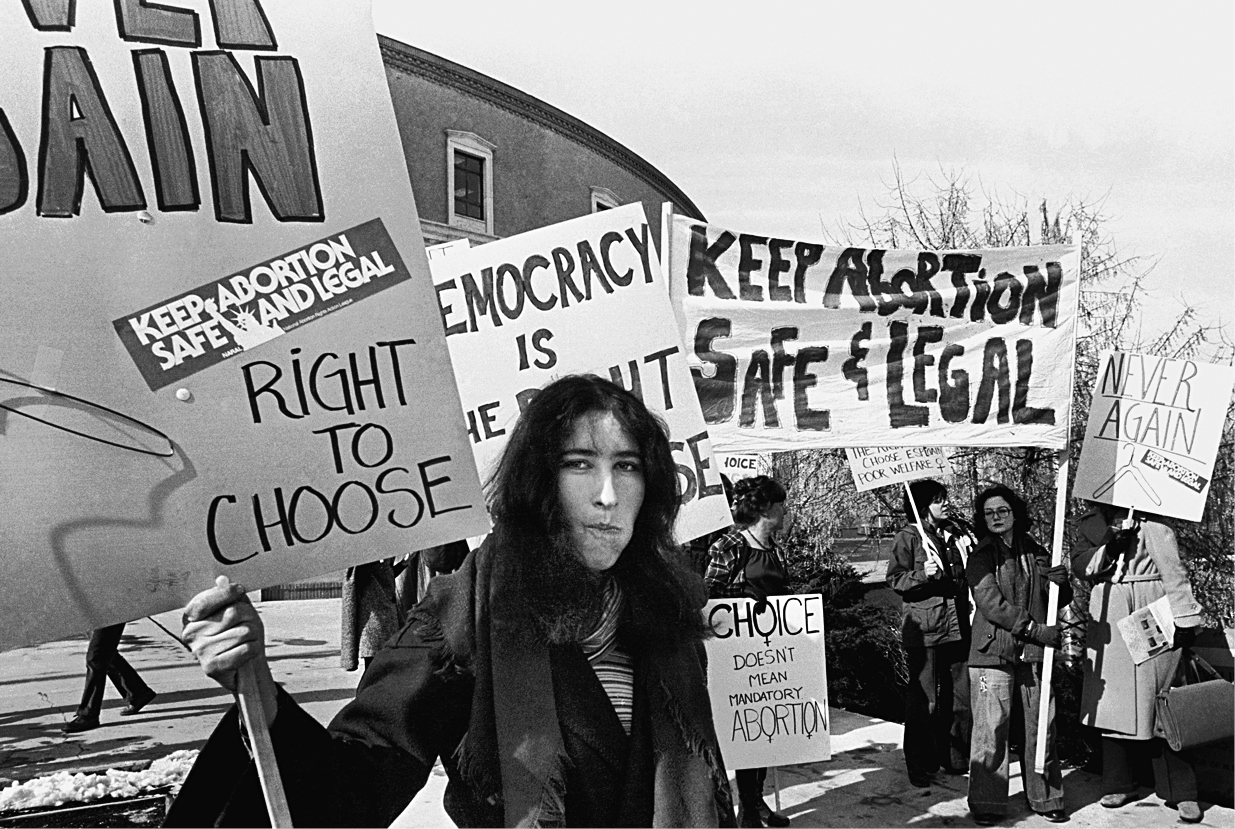
The ERA is passed by both houses of Congress, after being reintroduced in 1971, and is submitted to the states for ratification. The required 38 states didn’t ratify the ERA within the specified 7-year period, but legal and political scholars continue to debate whether that deadline can be changed, as 38 states had ratified the ERA by 2020.
More information
A black and white photo shows a group of women protesting in support of legal abortion. They hold banners and placards that read “Keep abortion safe and legal,” “Choice doesn’t mean mandatory abortion,” “Never Again,” and “Right to Choose.”
1973
The U.S. Supreme Court decision in Roe v. Wade declares it legal for a woman to terminate an early pregnancy.
1974
The Combahee River Collective, a Black feminist lesbian organization focusing on intersectionality, holds its first meeting.
1978
The Pregnancy Discrimination Act bans employment discrimination against pregnant women.
1990
The Americans with Disabilities Act prohibits discrimination against individuals with disabilities in all areas of public life.
1994
The Violence against Women Act funds services for victims of rape and domestic violence.
More information
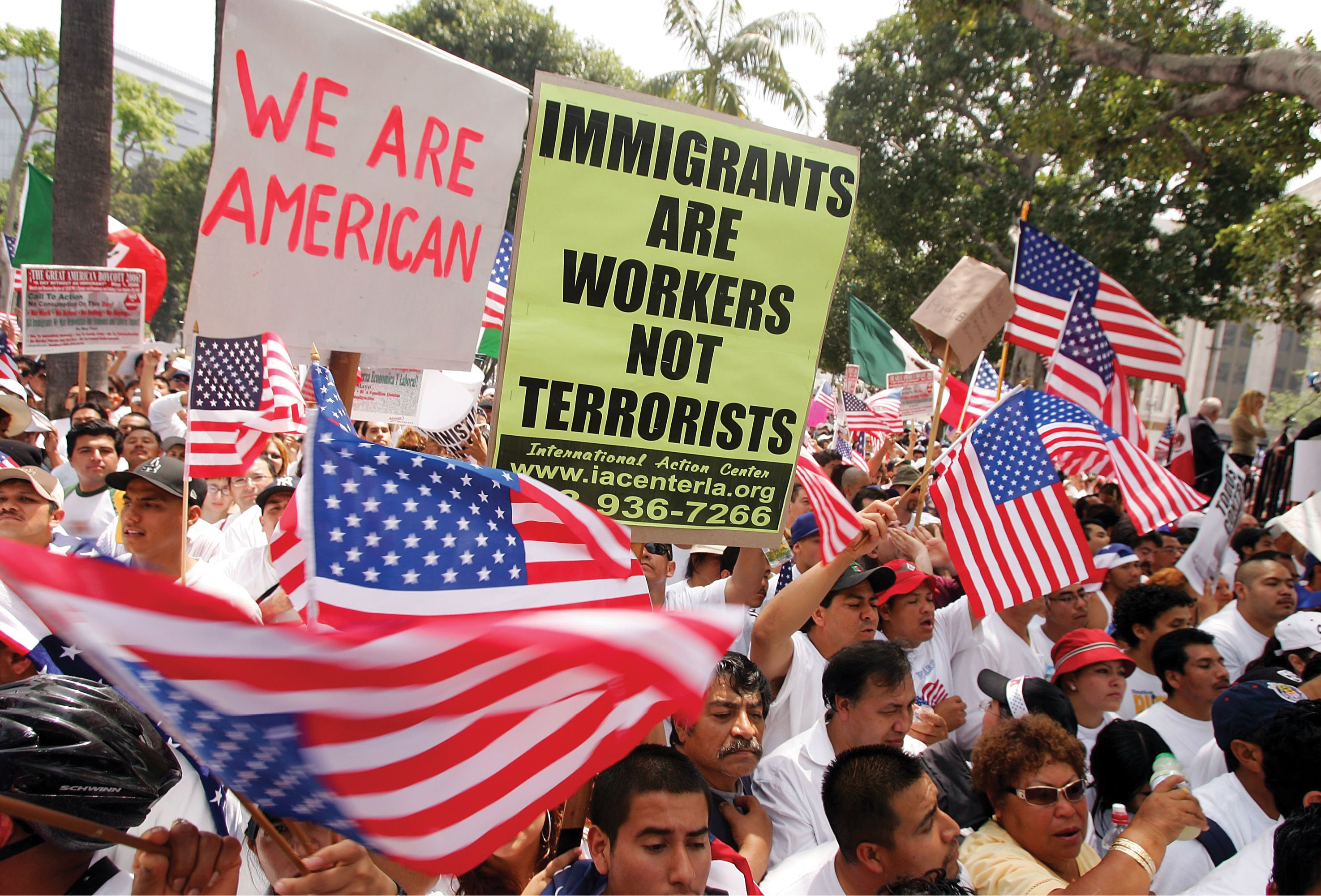
A black and white photo shows a crowd of protesters waving American flags and holding signs in favor of immigration. Signs read “We are American” and “Immigrants are workers not terrorists, International Action Center.”
2006
Thousands of Latine immigrants and others boycott work, school, and shopping as part of the Day Without Immigrants to highlight the contributions immigrants make to the economy.
2009
The Lilly Ledbetter Fair Pay Restoration Act allows employees, usually women, to file pay discrimination complaints within 180 days of their last paycheck.
2013
Restriction of same-sex marriage is deemed unconstitutional by the Supreme Court decision in United States v. Windsor.
2017
The Women’s March on Washington, the largest single-day protest in U.S. history, is held. It sparked some renewed interest in the ERA, and Nevada became the 36th state to ratify it.
2022
The U.S. Supreme Court decision in Dobbs v. Jackson Women’s Health Organization overturns Roe v. Wade, returning decisions about regulation of abortion to individual states.
The Second Wave
A second wave of feminism emerged in the 1960s, when feminists were primarily interested in changing the day-to-day lives of women by, for example, creating more equitable access to the paid labor force and redefining women’s roles in families (Rampton, 2015). This wave began around the same time as the civil rights and antiwar movements and when the sexual revolution was in full swing. Many people characterize, and some critique, the second wave as being largely defined by the struggles of white, middle-class women who wished to enter the workforce (B. Thompson, 2010). However, historian Becky Thompson (2010) points to a competing historical narrative that is not commonly associated with second-wave feminist accounts but is critical to understanding the massive amount of organizing spearheaded by women of color in the 1970s. At that time, women of color had a three-front approach to feminist activism, in which they (a) worked in collaboration with white-dominated women’s groups, (b) organized women’s caucuses in mixed-gender organizations, and (c) developed autonomous Black, Latine, Native American, and Asian American feminist organizations. For example, in 1974, one influential group of Black feminist lesbian activists, the Combahee River Collective, took up the task of defining a feminism that prioritized the lives of women of color. They built on a diverse and inclusive coalition to reach this goal. Named after the Combahee River Raid of 1863, which was led by Harriet Tubman and resulted in the freeing of hundreds of people who were enslaved, the collective focused on addressing all racial, gender, sexual, and class oppressions (Napikoski, 2017). In 1977, the group issued the Combahee River Collective Statement, which is credited as recognizing the often-overlooked contributions of women of color, including Harriet Tubman, and ushering in a focus on intersectionality.
Another notable marker of the second wave was overt rejection of body restrictions. These included unrealistic beauty ideals as well as restrictions on reproductive freedom. The rejection of beauty ideals gained momentum following protests at the Miss America pageants in 1968 and 1969 (Rampton, 2015) by a group called the Redstockings, who were particularly frustrated by the ways in which they felt women’s bodies were being confined and controlled. The Redstockings staged a counter-pageant while marching around a “freedom trash can” filled with items that they saw as symbols of female oppression (Gibson, 2011, p. 3 ), including high heels, makeup, and bras. The stereotype of the bra-burning feminist comes from this event, although it’s a myth that the protesters set the trash can on fire (Gibson, 2011).
The Third Wave
The third wave of feminism began in the mid-1990s and is best described as a struggle to change mainstream ideas of feminism by rejecting the notion that everyone’s experience of being a woman is the same (Rampton, 2015). Black feminists, taking up the mission of the Combahee River Collective, critiqued the lack of diversity in mainstream feminist movements, and the importance of intersectionality became recognized by many feminist scholars and activists (Crenshaw, 1993) (Figure 1.5). Third-wave feminism challenged previous historical accounts of feminist activism and brought the contributions of women of color, immigrants, and working-class women into focus (Fernandes, 2010).
More information
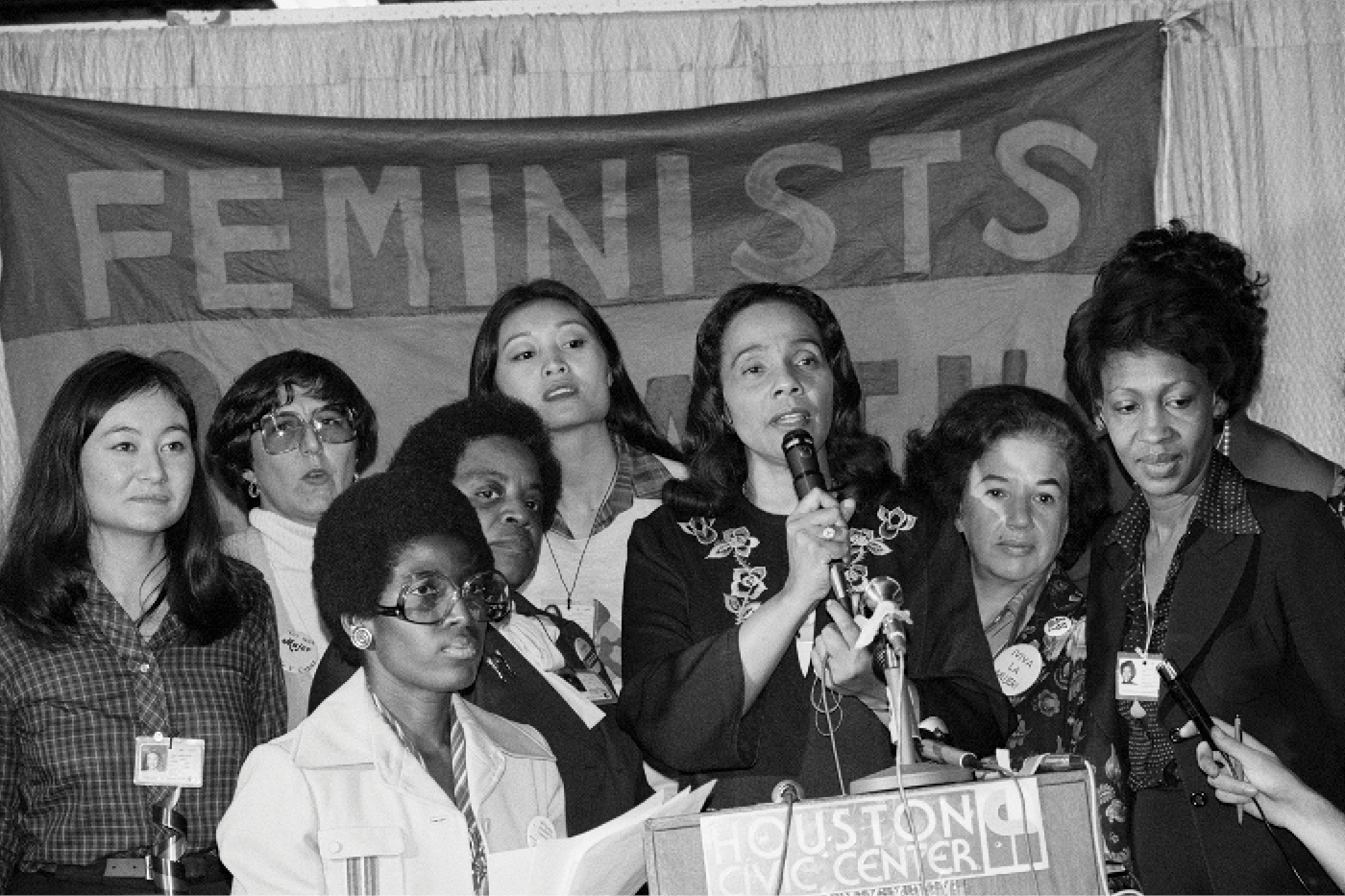
A black and white photo shows a woman speaking at a podium with a group of female activists standing with her.
Figure 1.5 Combahee River Collective
The members of the Combahee River Collective, shown here with Coretta Scott King, saw “Black feminism as the logical political movement to combat the manifold and simultaneous oppressions that all women of color face” and believed that “the most profound and potentially most radical politics come directly out of our own identity.” Their work in the 1970s set the stage for today’s intersectional feminist approaches, but the collective didn’t receive mainstream recognition for their influential ideas at that time. (The Combahee River Collective, 1977, para 1, para 10)
Another important feature of third-wave feminism was the use of technologies to build social connections and political movements (Rampton, 2015). Grrl, a term coined by singer Bikini Kill and activist Kathleen Hanna, reclaimed the word girl and was most associated with Riot Grrrl, an alternative feminist movement that arose from the punk scene and gained momentum via the internet (Garrison, 2010). It represented the activism of youth (sub)cultures, who used technology to resist misogyny and to build supportive networks and coalitions (Garrison, 2010).
Among feminists, one contentious aspect of third-wave feminism was the revival of feminine aesthetics (e.g., lipstick, high heels) and raunch culture (i.e., female self-sexualization). Many women associated with the first two waves would have considered these things evidence of oppression by a male-dominated society, but many third-wave feminists reclaimed them as a means of female empowerment (Rampton, 2015). Even today, women of color, especially, may utilize feminine aesthetics to combat racism (Cole, 2009). For example, researchers found that Black feminists placed a high value on wearing feminine clothing to counter stereotypes of Black women being sexually promiscuous, aggressive, and bad mothers (Cole & Zucker, 2007). We’ll revisit this tension in Chapter 7 because it continues to be a subject of debate among feminists.
Another aspect of third-wave feminism was the increase in male participation. Pro-feminist men recognize social inequities and, compared with men who don’t engage with feminism, are more likely to report incidents of gender bias and less likely to use sexist language (Drury & Kaiser, 2014). Perhaps most interesting, research shows that men are more likely to be believed and experience fewer personal costs than women do when they confront instances of sexism (Kutlaca et al., 2020; Radke et al., 2020). These findings underscore the vital role that boys and men can play when they become engaged in the feminist movement.
One challenge faced by third-wave feminists was a cultural resistance to feminism and feminists. For example, many women in the late 1990s and early 2000s chose not to call themselves feminists even though they endorsed many feminist beliefs (Liss et al., 2001). These women may have considered themselves postfeminists (Anderson, 2015). Postfeminists believed that the women’s movement had reached its goals and that feminism was no longer needed. Aiding this postfeminist sentiment was the stigma that feminists were radical, angry, anti-male, and lacking a sense of humor (Roy et al., 2007).
A Fourth Wave?
In the mid-2010s, there was a revival of feminist self-identification, and many celebrities associated themselves publicly with feminism. In 2014, Beyoncé danced at the MTV music awards with a huge sign displaying the word Feminist behind her. Many corporations started to use feminist ideas in their marketing. (Some of their campaigns are described in the opening section of this chapter.) Some scholars have argued that postfeminism came to an end after the 2016 election of Donald Trump, which provoked women’s marches around the country, coupled with the resistance associated with the #MeToo movement (Chira, 2020).
Whether or not these events constituted a fourth wave of feminism is up for debate. However, this feminist movement has been criticized as being too focused on celebrities and hashtags. Even the #MeToo movement largely focused on the experience of celebrities (Faludi, 2022). Some have argued that social media influence and celebrity connection came at the expense of grassroots organizing and collective action. Whether the future of feminism will involve a renewed focus on collective action and influencing policy changes remains to be seen.
Breaking the Waves and Becoming a Kaleidoscope
Although the wave metaphor is often used to describe aspects of women’s history, it has been criticized. A wave suggests that there are direct connections between movements and that activism peaks at certain points and retracts at others (Hewitt, 2010). In fact, feminists have been active even when there has been no definable wave. The metaphor also implies that there was one unified set of ideas, organized around feminism, that united sex/gender activism in the history of the United States. In fact, feminism has often been connected with other social movements, such as civil rights, that influenced its goals. The wave metaphor also promotes stereotypes by delineating sharp divisions between generations. People have always worked on the sidelines throughout all periods and across generations; they just weren’t receiving widespread public attention at certain moments in time (Grady, 2018).
The historian Linda Nicholson (2010) believes that a more useful way of thinking about the history of sex/gender activism in the United States is to use the metaphor of a kaleidoscope. The view in a kaleidoscope is complex and dynamic. When you turn it, the colors and patterns shift, showing a new constellation of colors. This metaphor, as a way to think of activism within the United States, takes into consideration the fact that we choose what to focus on and how those choices influence what we see. It also reminds us that all those colors are always there, just like feminist activism, even if we do not immediately see them.
Your Turn
Do you feel that there is a need for a feminist movement? If so, what do you think are the most pressing priorities feminism should address? What is the best way to make gains on those priorities? Talk to four other people with different social backgrounds. What are their thoughts on these questions? How do their thoughts align with yours? Where do their perspectives differ from one another?
Endnotes
Authors’ note: Throughout the book, the language used to refer to people who identify as part of groups indigenous to North America varies (e.g., Native Americans, American Indians, First Peoples, First Nations). Since chosen language differs within regions, groups, and individual people, we used the language of the source we cited. Return to reference 1