What are seven major feminist perspectives, and what is the focus of each perspective?
What does it mean to be feminist? This question has been with us for more than a century. In 1913, the journalist Rebecca West captured some of the ambivalence associated with feminism when she said, “I, myself, have never been able to find out what feminism is: I only know that people call me a feminist whenever I express sentiments that differentiate me from a doormat” (Vandiver, 2010, p. 1).
SPOTLIGHT ON . . .
SHOWHIDE
The Equal Rights Amendment (ERA)
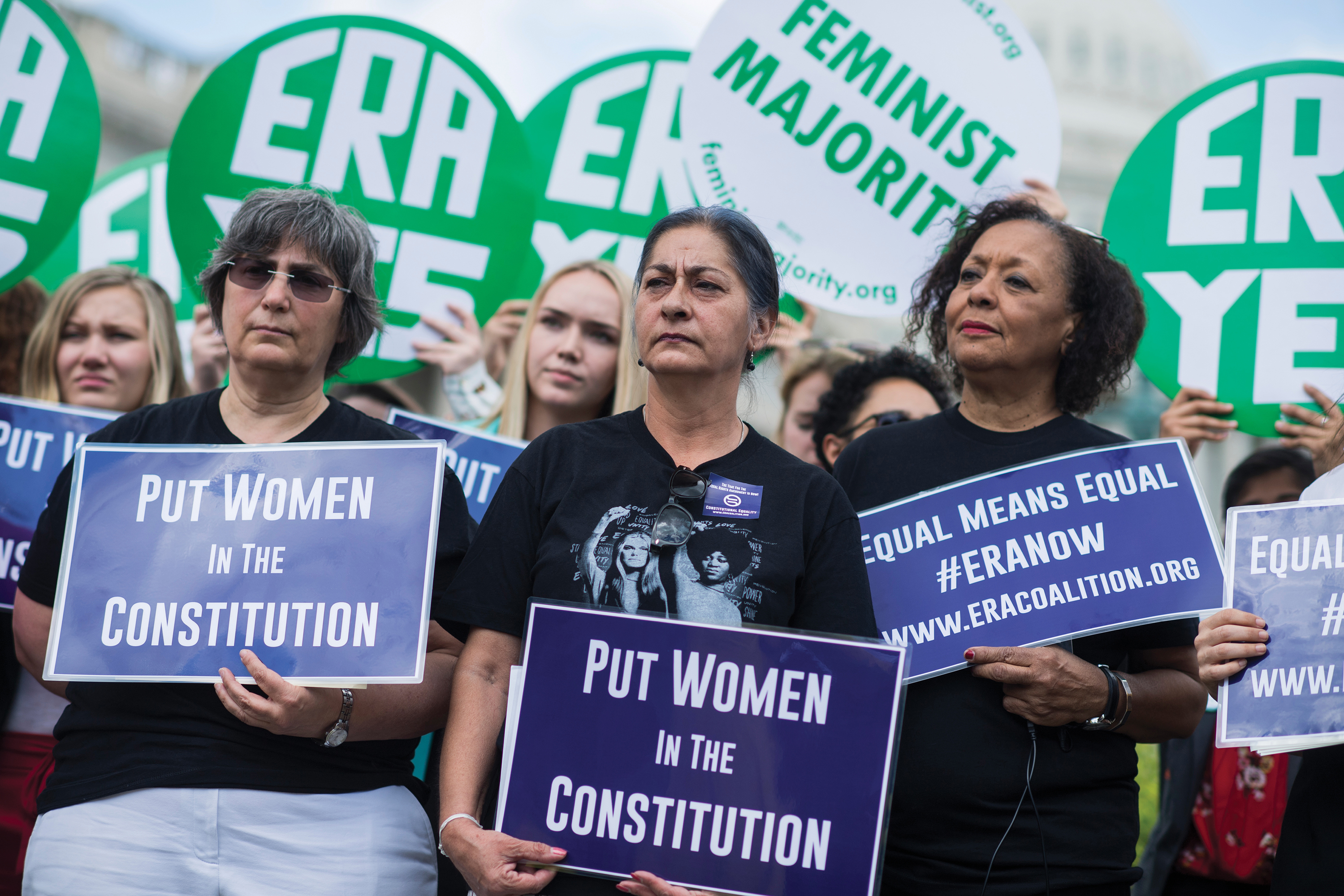
The Equal Rights Amendment (ERA) is a proposed amendment to the U.S. Constitution that states, “Equality of rights under the law shall not be denied or abridged by the United States or by any state on account of sex.” This amendment was originally proposed in 1923 and passed both houses of Congress in 1972. The amendment was then sent to the states and given a seven-year deadline for ratification. Although 30 states immediately ratified it, support did not reach the 38-state threshold that ratification required. Conservative activists at the time warned that ratifying the ERA could lead to the erosion of gender roles, the allowing of gay marriage, and the presence of women in the military. Although the deadline was extended to 1982, progress on the ERA stalled until 2017, when Nevada ratified it after 20 years of inactivity (Figure 1.6). In 2020, Virginia became the 38th state to ratify the ERA. However, it still did not become a constitutional amendment because the deadline had passed. Further, many states that had previously ratified it have started working toward rescinding their support, largely out of concern that the ERA may become a tool used to stop states from limiting a woman’s right to an abortion (Cohen & Codrington, 2020; Wegman, 2022).
More information
A photo shows women participating in a rally holding signs that say “put women in the constitution”
Figure 1.6 The Equal Rights Amendment
Interest in passing the ERA was revitalized after more than 30 years of relative inactivity. In 2018, these women participated in a rally supporting the ratification of the ERA.
A common misperception is that feminists are all the same. In fact, there is wide variety among feminists, and the beliefs of one group of feminists may even conflict with those of other feminists (Enns, 2004). For example, some feminists believe that in order to achieve gender equality, people should be treated in exactly the same way; others argue that people should be valued for their differences and treated according to need.
Liberal Feminism
The late Supreme Court justice Ruth Bader Ginsburg said:
If I could choose an amendment to add to the Constitution, it would be the Equal Rights Amendment. I think we have achieved that through legislation, but that can be repealed, it can be altered. So, I would like my granddaughters, when they pick up the Constitution, to see the notion—that women and men are persons of equal stature—I’d like to see that as a basic principle of our society. (Schwab, 2014, p. 1)
This quote exemplifies liberal feminism, a form of feminism that focuses on the similarities between women and men and on using government policies to eliminate barriers that keep women from achieving their potential. Despite Ginsburg’s hopes, the ERA has not yet been added to the Constitution.
Even in the absence of the ERA, liberal feminists continue to work to change laws and policies that give men (and members of other privileged groups) more resources and advantages than women (and members of less privileged groups). Such structural inequalities exist within organizations, institutions, and governments. For example, as mentioned previously, employers in the United States are not required to offer paid parental leave. Because birthing requires, at a minimum, some leave away from the workforce, liberal feminists argue that anyone who births a child is disproportionately harmed by this policy through lost wages and possible opportunities for promotion. The outcome is vastly different in other countries, such as Norway and Sweden, that provide financial support following the birth of a child. Additionally, within the United States, before the Affordable Care Act (ACA), only 62% of health-care plans in the private market covered prenatal care—another core policy concern of liberal feminists (Franke-Ruta, 2013; Rosenthal, 2013).
Liberal feminism also focuses on equal education and the belief that at their core, women and men are more similar than different. According to liberal feminists, when girls and women have access to equal educational opportunities, they will develop and behave similarly to men (Enns, 2004). Contemporary liberal feminists are especially interested in making sure that girls and women have access to resources that help them compete in the global economy. Psychologists who hold a liberal feminist perspective tend to believe that even when research finds differences between women and men, they’re generally the result of girls’ and boys’ different experiences rather than innate biological differences. This is a topic we’ll explore in Chapter 3.
In the United States, most people hold liberal feminist attitudes even if they don’t identify as feminists (Liss & Erchull, 2010). Data from 2018 show that only 38% of women and 22% of men considered themselves to be feminists (Ballard, 2018). However, 77% of millennials in the United States believe that women and men should be equal both in the workplace and at home (compared with 69% of Gen Xers, 68% of Baby Boomers, and 48% of those born before 1946; Scarborough et al., 2019). An additional 18% of millennials believe that women should be equal either at work or at home but not in both domains. Thus, many more people hold liberal feminist beliefs than actually call themselves feminists.
Radical Feminism
In contrast to liberal feminism, radical feminism claims that it’s naïve to think that women can achieve equal treatment through attaining legal rights. Therefore, radical feminists advocate for separatism. They believe that the unjust treatment of women is the most fundamental and widespread form of oppression (Donovan, 2012). In this view, changing laws and policies doesn’t go far enough because gender biases are embedded in all aspects of everyday interactions. According to radical feminism, patriarchy, a social system in which men hold positions of authority and power, is so normative that most people see men’s authority as natural and inevitable.
Radical feminists argue that in order to achieve equity, women must develop new ways of thinking separate from androcentric, or male-centered, ways of thinking. Some radical feminists have advocated for cultural separatism as a way to achieve this goal. For instance, counselors at some domestic violence shelters refuse refuge for male survivors because their presence might undermine the safety of the women-only space (Haaken & Yragui, 2003).
Some radical feminists believe that it is so important to create women-only spaces that they exclude trans women and/or gender nonbinary individuals. However, many feminists, including some radical feminists, argue that excluding trans women fundamentally opposes one of the goals of feminism, which is to eliminate discrimination based on sexist oppression, including discrimination against trans and/or gender nonbinary individuals (Hines, 2019).
One type of radical feminism is lesbian feminism, which focuses on sexuality and reproduction as a central place of oppression (Enns, 2004). A significant contribution of radical feminism is the concept of compulsory heterosexuality, the idea that sexual preferences are formed through the social ideal of heterosexuality. In other words, according to radical feminists, sexuality is learned, and the dominant message is that heterosexual romantic love is ideal. People therefore learn to prioritize the sexual desires of men, and the ultimate sign of success for a woman is to marry a man. For example, consider that almost every Disney princess story ends in a marriage between a woman and a man. We’ll return to the topic of compulsory heterosexuality in Chapters 7 and 8.
Misperceptions of radical feminists have fueled negative stereotypes of all feminists. Many people who are suspicious of or object to feminism tend to conflate feminism with an extreme and inaccurate view of radical feminism, seeing feminists as man-haters or advocating for female supremacy (Swirsky & Angelone, 2016). In fact, even self-identified feminists tend to see the typical feminist as having more radical feminist beliefs than they do (Liss et al., 2000). Radical feminists are also criticized by advocates for trans and nonbinary people’s rights (Heyes, 2003). Even though this branch of feminism is labeled “radical,” in many ways it upholds traditional beliefs in aiming to maintain the gender binary (Hines, 2019). Historically, however, some radical feminist leaders were trans inclusive, and trans exclusionary beliefs are not representative of all radical feminist ideals (Williams, 2016).
Socialist Feminism
Another perspective, socialist feminism, links gender oppression with capitalism, an economic system in which power is constructed through work and production (Enns, 2004). In the United States, there is a perception that anyone who works hard can attain economic mobility and improve their financial position. This view is called the myth of meritocracy because it suggests that merit—or being talented and working hard—is primarily responsible for accumulating wealth. However, contemporary research shows a widening gap between the upper-middle class and everyone else that appears to be more a factor of inherited wealth than merit (Reeves, 2017). In one study, researchers found that since 1980, U.S. workers who are not upper-middle class are less likely than before to move up the financial ladder (Carr & Wiemers, 2016). It appears that those at the top are more effective at passing down their status and wealth to their children, and this tendency reduces social mobility for everyone else (Reeves, 2017).
According to socialist feminists, merit alone is not responsible for the accumulation of wealth. Other factors, such as class, sex/gender, and race, not only influence earning potential but also affect the perceived value of what a person does. For example, socialist feminists have claimed that in capitalist societies men are primarily defined as workers and women are primarily defined as caregivers (Bianchi et al., 2012; Fillo et al., 2015). The fact that care work is generally unpaid or underpaid is an important reason that women have been unable to achieve equality in the workplace (Ferrant et al., 2014); a socialist feminist would point out that our capitalist society relies on this underpaid labor.
Another example of how class is vitally important to our understanding of gender dynamics is the fact that many wealthy white women are able to dedicate time to high-profile jobs because of their reliance on women of color for domestic and childcare support (Prattes, 2020). In fact, fertility rates of upper-class U.S.-born women are higher in areas where there is a larger population of female immigrants (Furtado, 2016). Only 10 states and three cities in the United States have legislation that protects the rights of domestic workers as of January 2023, so immigrant domestic workers often are not provided a minimum wage, overtime pay, or protection from harassment (DC domestic workers, 2022; DeVaan, 2022). Such an arrangement means that some women, primarily immigrant women and women of color, provide poorly compensated labor by taking on the vast majority of domestic and caretaking responsibilities so that other, primarily white, women can pursue more lucrative professional opportunities. In other words, upper-class women may be advancing in the workforce—achieving a liberal feminist goal of “equality”—but a socialist feminist would point out that they often are doing so on the backs of the immigrant women who take care of their children. Socialist feminists would argue that changing the way domestic and care work are compensated and valued would promote greater equality (Saris & Johnston-Robledo, 2000).
Another concern of socialist feminists is that living as a girl or a woman is more expensive than living as a boy or man. The term pink tax refers to the additional cost of a product because it is marketed to women (Figure 1.7). It’s estimated that on average, girls and women spend $1,400 more each year than men when buying the same products, such as razors, toothbrushes, and even pens, which cost more if they appear feminine (Duesterhaus et al., 2011). This practice is outlawed in California, New York City, and Miami-Dade County in Florida, but it’s legal elsewhere (Duesterhaus et al., 2011; Fried, 2016). Further, some products that are used primarily by women, such as makeup, bras, and tampons, can quickly add up in cost. According to a poll by Huffington Post and YouGov, women in the United States spend over $426 billion on beauty products every year, and Black women in particular spend nine times more on beauty products than other consumers (Adams, 2013; Lambert, 2020). For many trans woman, the high costs of makeup, clothing, and hair products are necessary in order to protect against misgendering, and they can be an expensive, yet important, expression of one’s sense of self (VanDerWerff, 2020).
More information
A photo shows a razor product for women priced at 9.99 dollars.
More information
A photo shows a razor product for men priced at 5.99 dollars.
Figure 1.7 Pink Tax
On average, girls and women spend $1,400 more each year than men when buying the same products because the “women’s” version usually costs more. This pricing practice is referred to as the pink tax.
This financial burden is particularly problematic because women, in general, are paid less than men, and women of color receive some of the lowest compensation in the American labor force (American Association of University Women, 2017). Attending to appearance also requires time: One survey showed that the average woman spends 55 minutes doing hair and makeup each day—approximately 335 hours per year (Mazzone, 2014)! It appears that this investment serves a purpose, because research shows that women who wear makeup are seen as more reliable, capable, and trustworthy in the workplace than women who don’t, and trans people who can pass are less likely to experience violence (Etcoff et al, 2011; Jauk, 2013).
Cultural Feminism
Cultural feminism is a perspective that focuses on the differences between women and men and that views women’s inequality as related to a lack of value placed on the unique experiences, perspectives, and qualities of women (Donovan, 2012). Underlying cultural feminism is a belief in gender essentialism, the idea that women and men are fundamentally different because of deep and unchanging properties that are generally due to biology or genetics. For example, cultural feminists view girls and women as having certain innate characteristics, such as intuition and emotionality, that are complementary to the characteristics of boys and men, such as competitiveness and being analytical. As a result, unlike liberal feminists, who focus on similarity, cultural feminists focus on difference. In some ways, their philosophical belief is more like that of radical feminism, although they do not advocate separatism. Instead, they would like to see women use their feminine characteristics to advance gender equity, and they argue for a societal shift in which traditionally feminine characteristics, such as being caring and nurturing, carry the same value as traditional masculine characteristics.
A contemporary example of cultural feminism is the rise of mompreneurs. Between 2007 and 2016, women-owned businesses increased by 45%, compared with just a 9% increase among all businesses (Becker-Medina, 2016), and a 2017 Nielsen study showed that the fastest-growing group of entrepreneurs are African American women (Grace et al., 2017). Many of these businesses focus on traditionally feminine skills, such as cooking and crafting, or on female-dominated professions, such as education. According to cultural feminists, these businesses promote the valuing of women’s unique capabilities and are successful because women are disproportionately more talented in these areas than men.
Women of Color Feminism
Women of color feminism sees women’s inequality as deeply linked to white supremacy, a form of racism in which white people are considered superior to people of color (Moon, 2020). In fact, women of color feminism developed because many mainstream feminist organizations outright dismissed the concerns of women who were members of socially marginalized racial/ethnic groups and instead reflected ethnocentrism—the tendency to judge other groups according to the values of one’s own group. Activist and writer Alice Walker (1983) coined the term womanist, an identity label that stems from the experiences of Black women and other women of color. The term encompasses feminism, but it also differs because it doesn’t prioritize sexism over other forms of oppression (e.g., racism, classism; Phillips, 2006). There is evidence that women of color are more likely to identify with womanist beliefs rather than those associated with other types of feminism (Boisnier, 2003). Several researchers have found that among women of color, holding womanist beliefs was associated with higher self-esteem (Ossana et al., 1992; Poindexter-Cameron & Robinson, 1997).
EMPOWERING OR OPPRESSING?
SHOWHIDE
Cultural Feminism
Whether taking a cultural feminist perspective is truly empowering for women has been debated. In other words, does the valuing of traditionally feminine activities promote equity between women and men? Before we discuss the debate, take a moment to explore your own beliefs. What do you think about activities that are traditionally associated with women (e.g., domestic work, childcare)? Do you think our society values these activities? Why or why not?
Those who argue that cultural feminism is positive claim that girls and women are superior in areas that require empathy, care, and compassion. They’re especially critical of the ways in which female empowerment has often been linked to success in traditionally masculine domains (e.g., the workforce) and the adoption of traditionally masculine characteristics (e.g., being tough/dominant). They prefer to see women achieve power and success in traditionally female domains. In other words, they aren’t interested in seeing women become more masculine; instead, they argue that female empowerment occurs when women honor their feminine side (Figure 1.8). For example, some proponents claim that women are powerful when they birth and breastfeed their children (Heidari et al., 2017). In fact, attachment parenting—a practice that includes co-sleeping, babywearing, and breastfeeding on demand—has been referred to as “cultural feminist theory in practice” (Bobel, 2008, p. 116).
More information
A photo shows a mother and daughter decorating a cupcake.
Figure 1.8 Cultural Feminism
When you see pictures like this one, do you tend to think that the people in them are feminists? Why or why not? Cultural feminists seek to reclaim and enhance the value of traditionally feminine activities and roles, so it’s quite possible that women such as the one pictured here do identify as feminists.
However, opponents argue that cultural feminism cannot promote equity because it encourages women to maintain traditional and restrictive roles. Furthermore, the focus on gender essentialism equates womanhood with bodies, which is not inclusive of trans and/or gender nonbinary individuals. According to this argument, it’s unreasonable to expect all women to have talents in traditionally feminine domains. Further, work associated with femininity is often less “valuable,” bringing no monetary gain. In the United States, childbirth and breastfeeding are not paid forms of labor. In France, in contrast, women are given incentives to have children and to breastfeed them (Bryant, 2008). For example, women are offered tax breaks, childcare and health-care benefits, paid leave, subsidized daycare, housekeeping services, and even cash payments.
What are your thoughts on this debate? Do you think a cultural feminist perspective is empowering or oppressing? Why or why not? Can you see both sides of the argument? Would certain aspects of society need to change in order to promote a cultural feminist perspective? What are they, and whom would they benefit most?
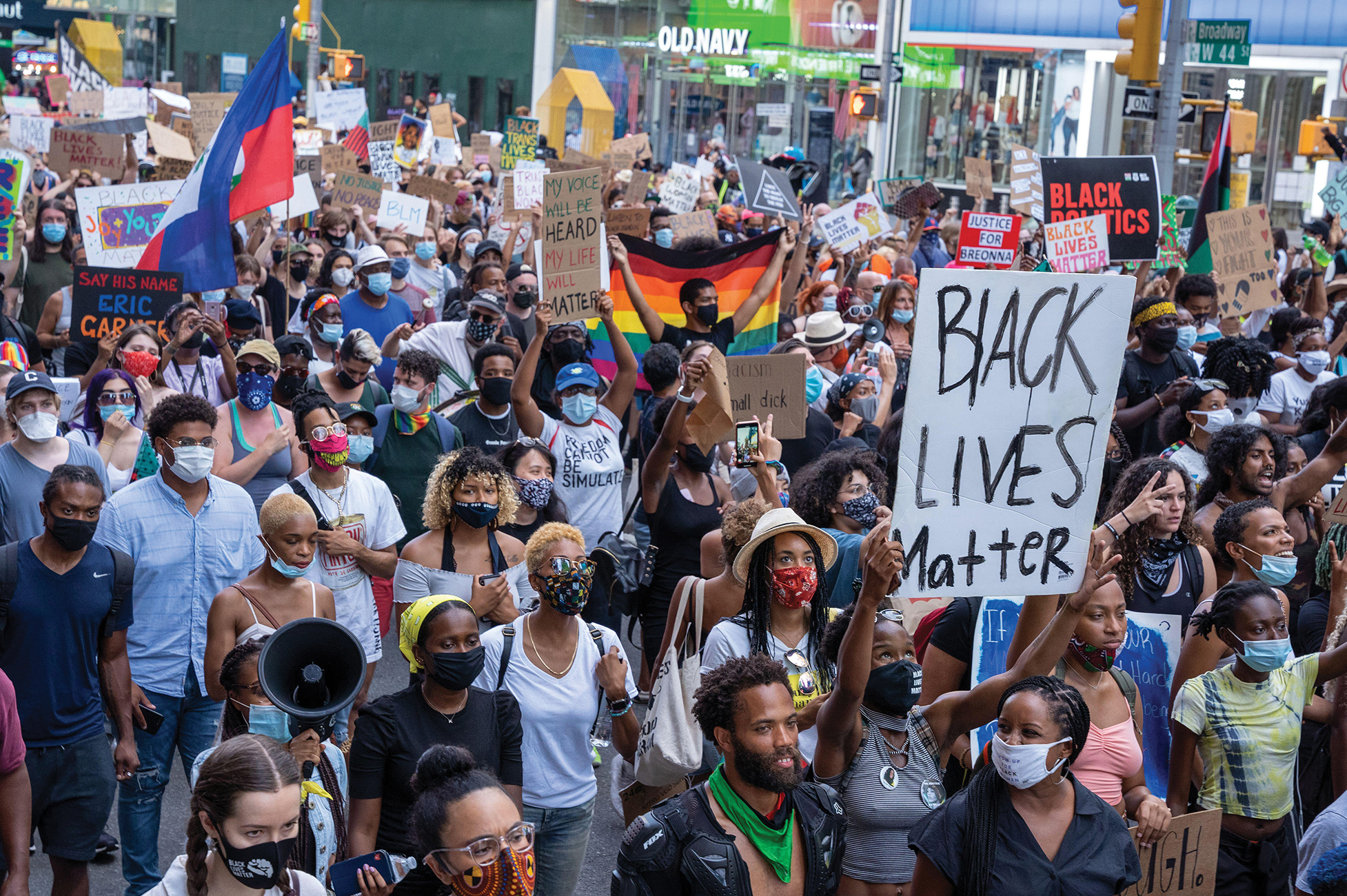
Women of color feminisms have a long history of addressing the prevalence of sexual assault, and such activism continues to be highly influential today (Roberts, 2021). Communication scholars identify the #MeToo movement as the largest digital feminist movement to date (Mendes et al., 2018). It has its origin in 2006, when activist Tarana Burke, herself a sexual assault survivor, coined the phrase me too in an effort to “bring resources, support, and pathways to healing where none existed before” (Burke, n.d.). Consistent with women of color feminist principles, Burke sees the #MeToo movement as inclusive of all people, although when it gained popularity in 2016 public attention largely focused on white women. As Barbara Smith, a prominent activist in Black feminism stated, “One of the signs to me that feminist-of-color politics are influencing this moment is the multiracial, multiethnic diversity—and not just racial and ethnic, but every kind of diversity—of the people who are in the streets now. That’s right out of the Black feminist playbook” (Taylor, 2020, para. 10).
More information
A photo shows masked and unmasked protestors at a protest in 2020, some holding signs that read “Black Lives Matter.”
Figure 1.9 #BlackLivesMatter
Three queer Black women—Alicia Garza, Patrisse Cullors, and Opal Tometi—organized around the hashtag #blacklivesmatter, spurring a national movement against the systematic oppression of Black people and members of other marginalized communities. The movement increased momentum after the murder of George Floyd in 2020.
Women of color feminisms are more likely to address concerns that have been of lesser focus for other types of feminisms (Figure 1.9), such as environmental concerns, access to affordable housing, and prison reform, while also organizing around distinctively feminist concerns, including reproductive justice, a topic we’ll revisit in Chapter 9. There has been substantial grassroots activism in the reproductive justice movement. For example, in 2001 the Asian Community for Reproductive Justice (2005) worked with environmental advocacy groups to close a toxic waste plant in Oakland, California, and also advocated to decrease the amount of toxins that workers are exposed to as nail salon staff. The Mother’s Milk Project has worked with Native American women to reduce environmental toxins that can make their way into breastmilk (Silliman et al., 2004). Another group, Forward Together, sponsored the Strong Families movement, which is dedicated to helping families thrive and has worked to document the negative effects of incarceration on families. They have also started a collection of art projects focusing on the rights of trans women of color.
Queer Feminism
Queer feminism claims that inequality is related to the ways in which the categories of woman and man have been constructed, studied, and used to organize society. The focus of queer feminists is not to ensure that women are equal to men but to question what is considered female and male in the first place. Queer feminism critiques the concept of heteronormativity, the idea that people fall into a binary (something made up of only two parts) of two distinct sex categories—either F or M; that those categories have aligning gender roles (female or male); and that sexual desire is most naturally linked to the other sex. Queer feminists argue that sex, gender, and sexual orientation are not always aligned in a predictable way (Browne & Nash, 2010). For example, some people have a cisgender identity, meaning that their gender identification aligns with the sex they were assigned at birth, but other people may identify as trans, reflecting a gender identity (e.g., woman, man) and/or a gender expression (e.g., feminine, masculine, androgynous) that doesn’t conform to societal expectations for the sex they were assigned at birth. Some people identify as nonbinary, an identity that is neither male nor female. Because nonbinary is an umbrella that includes many expressions of identity, nonbinary communities are quite diverse and include people with many different gender identities.
Queer feminism is particularly interested in gender performances—how people express gender through their actions (Butler, 1990). For example, the clothes we put on every day, the hairstyles we favor, and the way we sit all communicate gender. Actor and television host RuPaul distills queer theory in the following quote: “We’re born naked, and the rest is drag” (RuPaul, 1995, p. 11). Queer feminists believe that over time, gendered behaviors become so much a part of daily life that they seem to be core parts of who we are, but in fact they’re simply behaviors that have the potential to change.
Because of its focus on how certain bodies and identities are considered “normal,” queer theory often interconnects with disability studies (McRuer, 2006). Crip theory recognizes the importance of disability as an identity variable that intersects with other aspects of identity (e.g., race, gender, sexuality) and larger social systems that prioritize able-bodied people. It also rejects the supposed legitimacy of some disabilities (e.g., visible ones) over others (e.g., invisible ones; McRuer & Cassabaum, 2021). It emerged as a way to defiantly reclaim language (i.e., crip) and to instead create a sense of representation and pride (Williams, 2019).
Postcolonial/Transnational Feminism
Postcolonial/transnational feminism connects women’s inequality to the legacy of colonialism, or the practice of political domination whereby one group of people subjugate another group of people. Postcolonial/transnational feminism critiques the belief that women in Western countries are the most liberated in the world (Else-Quest & Grabe, 2012). According to postcolonial feminists, a problematic dynamic occurs when women in Western countries think that women in non-Western countries are oppressed and need Western women to save them (Mohanty, 2003).
More information
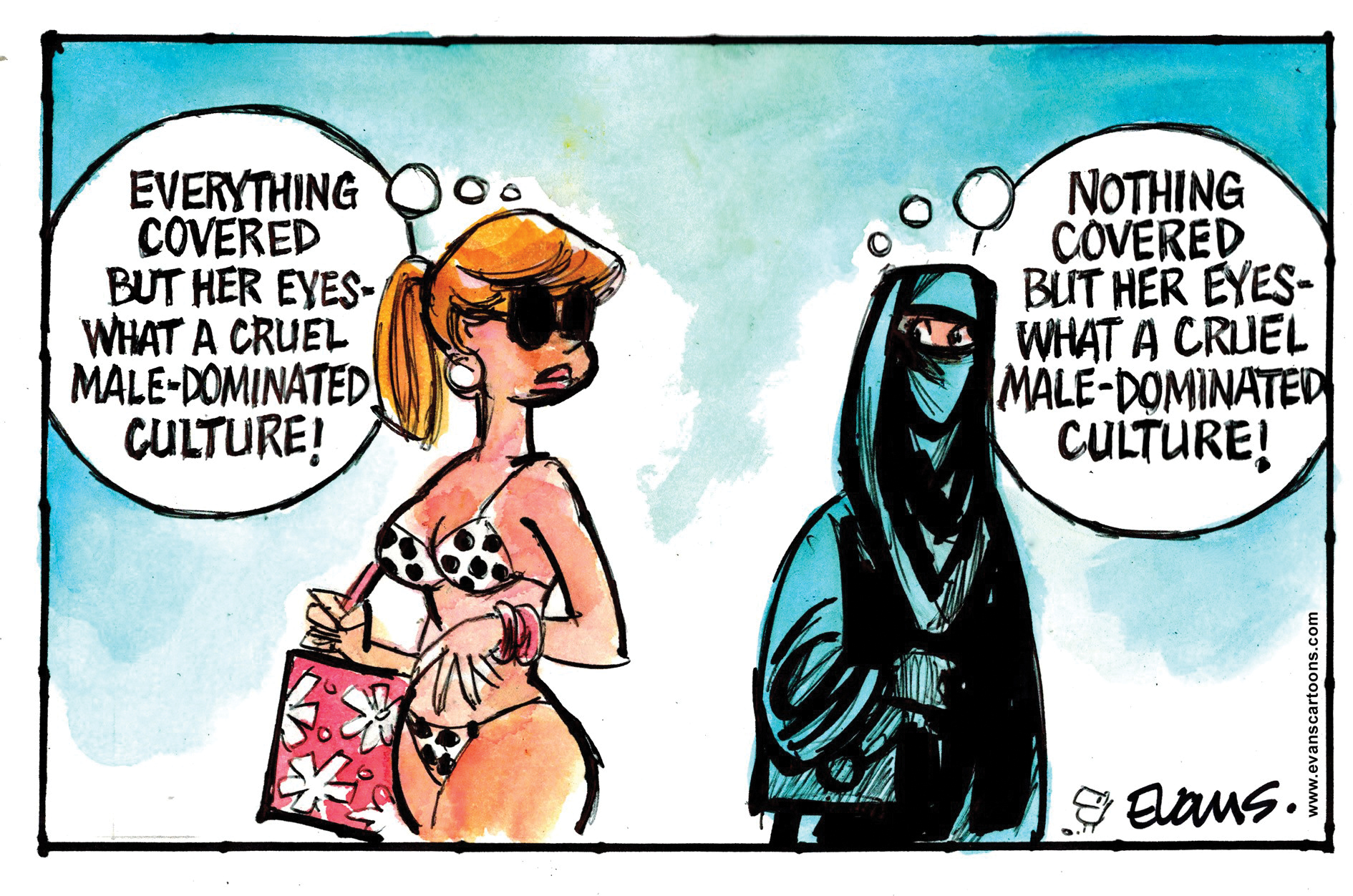
A cartoon of a woman wearing sunglasses and a bikini and a woman in a niqab walking past each other. The woman in the bikini is glancing at the woman in the niqab thinking, “everything covered but her eyes, what a cruel male-dominated culture!” The woman in the niqab is glancing at the woman in the sunglasses and bikini thinking, “nothing covered but her eyes, what a cruel male-dominated culture!”
Figure 1.10 Culture Shapes Perspective
What we see as oppressive is influenced by our culture.
An example of this occurred when some Western feminist women, mainly in European countries, called for a ban on the hijab, a headscarf worn primarily by Muslim women (Weaver, 2017). These Western women saw the hijab as a symbol of male dominance and female subservience. But, by suggesting a ban, they weren’t seeing that they were imposing their own belief system on another group of women. A similarly problematic dynamic would occur if non-Western women were to call for a ban on bikinis, claiming they’re a symbol of male dominance and female subservience in Western countries (Figure 1.10).
Beliefs about clothing are complicated, and it’s important to realize that within a global context, women can have very different reactions to requirements and restrictions. For example, in 2022 some Iranian women rose in opposition to government standards requiring the wearing of the hijab after Iran’s “morality police” arrested and beat Mahsa Amini for allegedly not wearing the hijab (Taub, 2022, para. 3). She later died in a hospital, and many believe her death was due to police brutality. While these protests aligned with the beliefs of some Western feminists that the hijab is a symbol and tool of male dominance, not all Muslim women wish to stop wearing the hijab. In fact, around the same time protests were happening in Iran, Muslim women in India sued the government for their right to wear the hijab after it was banned in schools (Frayer, 2022).
These examples reflect how all women struggle with patriarchy and how its manifestations, and protests for personal autonomy, can vary by context (Harcourt, 2012). A core aspect of postcolonial feminism is that Western women shouldn’t impose their values on women from other cultures and should be respectful of the complicated ways in which patriarchy can manifest.
A particular type of postcolonial feminism, known as third world feminism, claims that feminism should not focus on commonalities among women (Herr, 2013); instead, it should address issues from multiple perspectives and not assume one unified position. This outlook promotes a wider view of feminism that respects the distinct, but interconnected, lives of girls and women in different parts of the world. Third world feminists have been especially critical of organizations that attempt to apply a liberal feminist perspective in other places in the world. These feminists argue that it’s inappropriate for women from powerful countries like the United States to come into an area and start planning ways to end sex/gender discrimination there without acknowledging how local women have already theorized and organized as part of that particular community.
Another branch of transnational feminism focuses on the experiences of Latine women. Gloria Anzaldúa (2021), a Chicana feminist scholar, introduced the term mestizaje, meaning a state of living beyond geographic borders. Because of her experience living at the Mexico-Texas border, she understood the isolation and ambivalence that can come from living at the crossroads of two different cultures. She rejected the pressures to identify solely with one or the other and instead suggested meshing identities and moving beyond an either/or binary. She further claimed that rigid adherence to a gender binary stemmed from colonialism and was therefore oppressive and harmful. Latine feminists later coined the term mujerista (from the Spanish word mujer, meaning woman; Isasi-Diaz, 1992, 1996) to prioritize Latin American liberation theory and cultural theology (Gabara, 1988) and to advance the idea of living at the crossroads (Anzaldúa, 2021).
See Table 1.1 for a summary of the main characteristics of the seven types of feminist theory discussed in this section. The Sample Survey Item column shows statements that feminists in each category would agree with.
TABLE 1.1
Feminist Perspectives
Feminist Theory
Description
Sample Survey Item
Liberal feminism
Focuses on gaining equal rights and prioritizes changing laws and promoting education.
The government is responsible for making sure that all women receive an equal chance at education and employment.
Radical feminism
Focuses on transforming women’s thinking since women are conditioned to prioritize men and to consider heterosexuality as the social ideal.
Pornography exploits female sexuality and degrades all women.
Socialist feminism
Highlights the ways in which money and capitalism are interconnected with gender inequities.
Making women economically dependent on men is capitalism’s subtle way of encouraging heterosexual relationships.
Cultural feminism
Perceives gender inequity as being related to a lack of appreciation for women’s unique feminine qualities.
Traditional notions of romantic love should be replaced with ideas based on feminine values of kindness and concern for all people.
Women of color feminism
Connects gender inequity to other structures of oppression, especially, but not limited to, racism.
Racism and sexism double the oppression of women in the work environment.
Queer feminism
Calls for the elimination of binary gender categories since they are at the core of gender inequality.
It is important to challenge the idea that “woman” and “man” represent stable and fixed categories.
Postcolonial/transnational feminism
Connects women’s inequality to the continued legacy of colonialism.
It is important to remember that Western ideals of liberation are not universal.
Note: Sample survey items for queer feminism and postcolonial/transnational feminism were written by the authors. The other items are all from the Feminist Perspective Scale (Henley et al., 1998).
The Power of Feminist Theory
Each of these perspectives has made lasting contributions to feminism, and their proponents seek to provide a framework for understanding gender inequities. In this effort, theory aims to provide an explanation for why inequities exist and how to create a path forward for change. Understanding theory is critical for consciousness raising, a form of activism that tries to promote awareness through knowledge. Many women experience discrimination or find themselves in situations that make them uncomfortable, but they often lack the language to talk about how they feel or to understand that their experiences are part of a larger problem. As a result, they may unnecessarily blame themselves. Understanding feminist perspectives and the fact that personal struggles often represent larger sociopolitical problems can give all people a sense that they aren’t alone. It can also help explain the basis for certain inequalities. In this way, theory can have multiple benefits (hooks, 1994).
Understanding feminist perspectives can also help people identify the best ways to bring about changes, but these perspectives are complicated. You may notice, for example, that some theories overlap with one another while others are quite distinct, even contradictory. For example, some feminists want to focus on issues that affect all women, while other feminists reject that idea and emphasize that different people have different experiences and needs. Feminist theory provides the tools to discuss society’s problems and ways to deal with them, but as we will continue to highlight in this book, not everyone agrees on the causes and/or solutions. This is one reason it is so critical to understand and articulate theory. By learning feminist theories, you can understand and speak across perspectives. If you find yourself disagreeing with someone, it’s useful to think about whether they are coming from a different theoretical perspective. Each feminist perspective has advantages and disadvantages, and there are no easy answers or one-size solutions. However, understanding theory is key so you can better understand psychological research in this field and think about how and why you may wish to engage in activism.
A type of feminism that focuses on the similarities between women and men and on using government policies to eliminate barriers that keep women from achieving their potential.
Specific laws and policies within organizations, institutions, and governments that give men (and members of other privileged groups) more resources and advantages than women (and members of other less privileged groups).
The idea that sexual preferences are formed through the social ideal of heterosexuality, ultimately leading girls and women to prioritize the sexual desires of men.
A type of feminism that focuses on the differences between women and men and views women’s inequality as related to the lack of value placed on the unique experiences, perspectives, and qualities of women.
A type of feminism that sees women’s inequality as deeply linked to white supremacy, a form of racism in which white people are considered superior to people of color.
An identity label that stems from the experiences of Black women and other women of color; the term encompasses feminism but differs because it doesn’t prioritize sexism over other forms of oppression (e.g., racism and classism).
A type of feminism that claims inequality is related to the ways in which the binary categories of woman and man have been constructed, studied, and used to organize society.
The idea that people fall into two distinct, or binary, sex categories (M or F), that those categories have aligning gender roles (male or female), and that sexual desires are most naturally linked to the other sex.
A gender identity (woman, man, or other gendered identity labels) and/or a gender expression (feminine, masculine, or other gendered expressive labels) that doesn’t conform to societal expectations for the sex a person was assigned at birth.
This theory, within disability studies, recognizes the importance of disability as an identity variable that intersects with other aspects of identity (e.g., race, gender, sexuality) and rejects the supposed legitimacy of some disabilities (e.g., visible ones) over others (e.g., invisible ones).
A type of feminism that connects women’s inequality to the legacy of colonization and critiques the belief that women in Western countries are the most liberated in the world.
A type of postcolonial feminism that claims feminism should not focus on commonalities among women but instead should address issues from multiple perspectives and not assume a unified position.

Socialist Feminism
Another perspective, socialist feminism, links gender oppression with capitalism, an economic system in which power is constructed through work and production (Enns, 2004). In the United States, there is a perception that anyone who works hard can attain economic mobility and improve their financial position. This view is called the myth of meritocracy because it suggests that merit—or being talented and working hard—is primarily responsible for accumulating wealth. However, contemporary research shows a widening gap between the upper-middle class and everyone else that appears to be more a factor of inherited wealth than merit (Reeves, 2017). In one study, researchers found that since 1980, U.S. workers who are not upper-middle class are less likely than before to move up the financial ladder (Carr & Wiemers, 2016). It appears that those at the top are more effective at passing down their status and wealth to their children, and this tendency reduces social mobility for everyone else (Reeves, 2017).
According to socialist feminists, merit alone is not responsible for the accumulation of wealth. Other factors, such as class, sex/gender, and race, not only influence earning potential but also affect the perceived value of what a person does. For example, socialist feminists have claimed that in capitalist societies men are primarily defined as workers and women are primarily defined as caregivers (Bianchi et al., 2012; Fillo et al., 2015). The fact that care work is generally unpaid or underpaid is an important reason that women have been unable to achieve equality in the workplace (Ferrant et al., 2014); a socialist feminist would point out that our capitalist society relies on this underpaid labor.
Another example of how class is vitally important to our understanding of gender dynamics is the fact that many wealthy white women are able to dedicate time to high-profile jobs because of their reliance on women of color for domestic and childcare support (Prattes, 2020). In fact, fertility rates of upper-class U.S.-born women are higher in areas where there is a larger population of female immigrants (Furtado, 2016). Only 10 states and three cities in the United States have legislation that protects the rights of domestic workers as of January 2023, so immigrant domestic workers often are not provided a minimum wage, overtime pay, or protection from harassment (DC domestic workers, 2022; DeVaan, 2022). Such an arrangement means that some women, primarily immigrant women and women of color, provide poorly compensated labor by taking on the vast majority of domestic and caretaking responsibilities so that other, primarily white, women can pursue more lucrative professional opportunities. In other words, upper-class women may be advancing in the workforce—achieving a liberal feminist goal of “equality”—but a socialist feminist would point out that they often are doing so on the backs of the immigrant women who take care of their children. Socialist feminists would argue that changing the way domestic and care work are compensated and valued would promote greater equality (Saris & Johnston-Robledo, 2000).
Another concern of socialist feminists is that living as a girl or a woman is more expensive than living as a boy or man. The term pink tax refers to the additional cost of a product because it is marketed to women (Figure 1.7). It’s estimated that on average, girls and women spend $1,400 more each year than men when buying the same products, such as razors, toothbrushes, and even pens, which cost more if they appear feminine (Duesterhaus et al., 2011). This practice is outlawed in California, New York City, and Miami-Dade County in Florida, but it’s legal elsewhere (Duesterhaus et al., 2011; Fried, 2016). Further, some products that are used primarily by women, such as makeup, bras, and tampons, can quickly add up in cost. According to a poll by Huffington Post and YouGov, women in the United States spend over $426 billion on beauty products every year, and Black women in particular spend nine times more on beauty products than other consumers (Adams, 2013; Lambert, 2020). For many trans woman, the high costs of makeup, clothing, and hair products are necessary in order to protect against misgendering, and they can be an expensive, yet important, expression of one’s sense of self (VanDerWerff, 2020).
More information
A photo shows a razor product for women priced at 9.99 dollars.
More information
A photo shows a razor product for men priced at 5.99 dollars.
Figure 1.7 Pink Tax
On average, girls and women spend $1,400 more each year than men when buying the same products because the “women’s” version usually costs more. This pricing practice is referred to as the pink tax.
This financial burden is particularly problematic because women, in general, are paid less than men, and women of color receive some of the lowest compensation in the American labor force (American Association of University Women, 2017). Attending to appearance also requires time: One survey showed that the average woman spends 55 minutes doing hair and makeup each day—approximately 335 hours per year (Mazzone, 2014)! It appears that this investment serves a purpose, because research shows that women who wear makeup are seen as more reliable, capable, and trustworthy in the workplace than women who don’t, and trans people who can pass are less likely to experience violence (Etcoff et al, 2011; Jauk, 2013).