THE SINGLE-TRAIT APPROACH
Some of the most influential research in personality has focused on the nature, origins, and consequences of single traits of special interest. Let’s begin by considering two of these. Each has been examined in hundreds of studies over several decades. Psychologists view them as important for different reasons. The first trait, self-monitoring, addresses fundamental issues concerning the relationship between one’s private inner reality and the external image one presents to others. The other trait, narcissism, describes a basic trait of people who may be charming, attractive, and even charismatic, but also have such a high degree of self-regard and neglect of concern for others that they cause problems for other people and for themselves. Some psychologists claim that narcissism has become especially prevalent recently. See if you agree.
Self-Monitoring
Mark Snyder, developer of the self-monitoring concept and test, has long been interested in the relationships and discrepancies between the inner and outer selves. For example, a person might drink beer at a party because the situation calls for being a beer drinker, but the same person might be studious, serious, and intelligent in a research seminar because that is the kind of person this academic situation calls for. And yet inside, in the heart of hearts, this individual might still be someone else entirely. Snyder theorized that the degree to which this is true varies across people. Some really are different between their inner and outer selves and in how they perform in different settings. Snyder called these individuals “high self-monitors.” Others are largely the same outside as they are inside and do not vary much from one setting to another. Snyder called these individuals “low self-monitors” (Snyder, 1974, 1987).
Consider Try for Yourself 5.1, which lists 18 items from a personality test that has been used widely for research purposes. Before reading beyond this paragraph, take a moment to respond True or False to these statements as they apply to you and see your score.
TRY FOR YOURSELF 5.1

The list of statements you have just responded to is the current standard measure of self-monitoring. In samples of college students, the average score falls between about 10 and 12. A score of 11 or more is interpreted as implying high self-monitoring; 10 or below implies low self-monitoring.
High self-monitors, according to Snyder, carefully survey every situation they enter looking for cues as to the appropriate way to act, and then adjust their behavior accordingly. Low self-monitors tend to be more consistent regardless of the situation, because their behavior is guided more by their inner personality. As a result, one would expect a low self-monitor to be more judgeable, in the sense discussed in Chapter 4, and a high self-monitor to be less judgeable (Colvin, 1993).
Snyder has been careful not to apply value judgments to high or low self-monitoring. One can say good or bad things about either. High self-monitors can reasonably be described as adaptable, flexible, popular, sensitive, and able to fit in wherever they go. They can be described just as reasonably as wishy-washy, two-faced, lacking integrity, and slick. Low self-monitors, for their part, can be regarded as being self-directed, having integrity, and being consistent and honest. Or they can be described as insensitive, inflexible, and stubborn.
One nice thing about the self-monitoring scale is that you probably got the score you wanted. If the description of high self-monitors sounded better to you than the description of low self-monitors, the odds are very good that you are a high self-monitor. If you preferred the description of the low self-monitor, then don’t worry, you probably are one. Don’t you wish all tests were like this?
More information
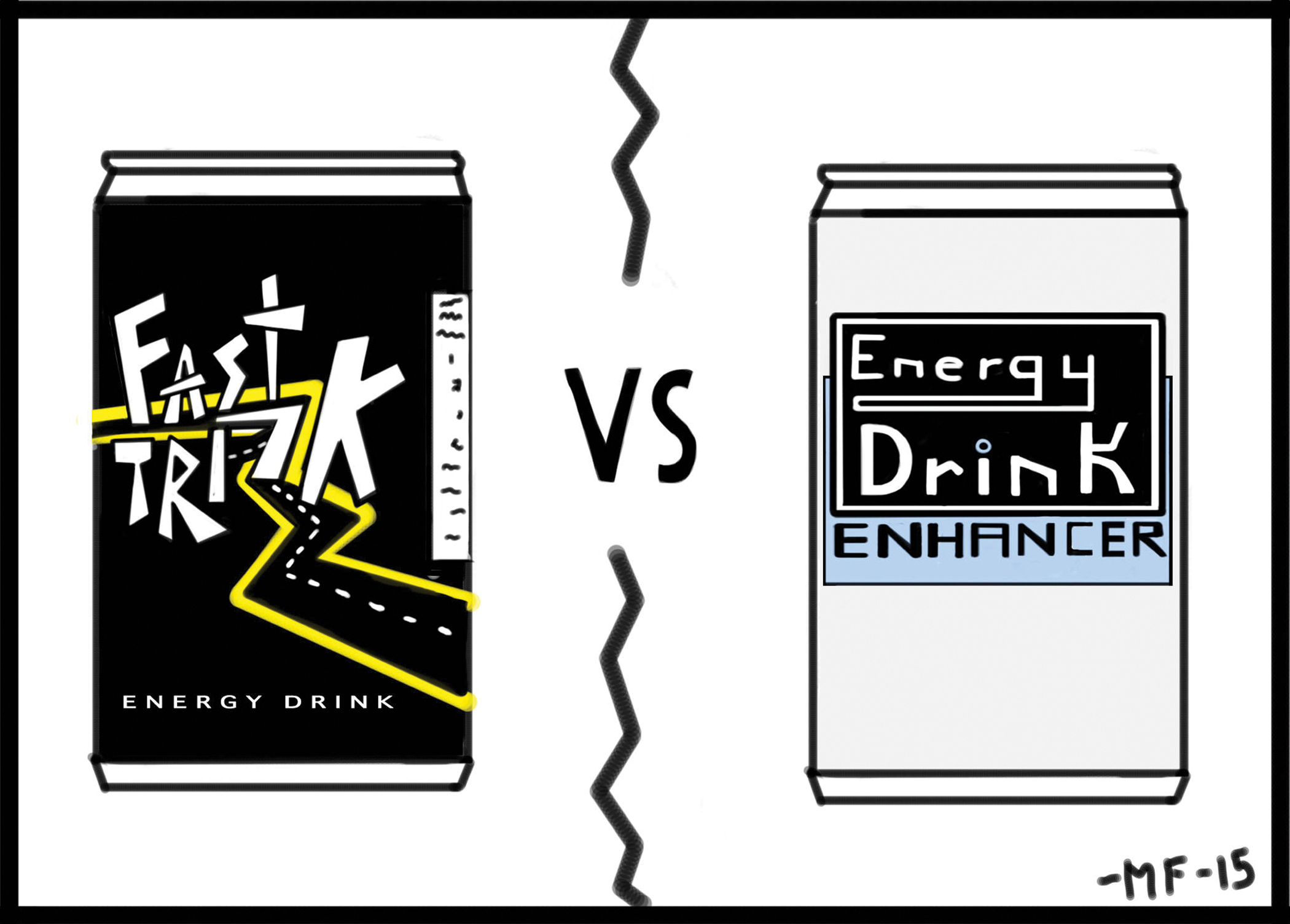
A cartoon shows two energy drinks with different label designs, “Fast Trick Energy Drink” versus “Energy Drink Enhancer”.
In one illustrative experiment, Snyder asked his participants to read the following passage into a tape recorder: “I’m going out now; I won’t be back all day. If anyone comes by, just tell them I’m not here.” Each participant had to read this passage six times, each time trying to project a specific emotion—either happiness, sadness, anger, fear, disgust, or remorse—by using tone of voice, pitch, speed of talking, and so forth. (Try it yourself, right now—unless you are reading at the library.) It turns out to be easier to figure out which emotion is being projected when the reader is a high self-monitor (Snyder, 1974).
Self-monitoring scores are related to numerous other behaviors. Compared to low self-monitors, high self-monitors perform better in job interviews (Osborn et al., 1998), place themselves in central positions in social networks (Mehra et al., 2001), make more new friends (Sasovova et al., 2010), and are willing to lie in order to get a date (Rowatt et al., 1998). Specifically, on online dating apps, they are more likely to misrepresent their wealth, relationship goals, weight, and age (Hall et al., 2010). They also respond differently to advertising. High self-monitors will prefer an energy drink if it has an image-oriented name such as Fast Track compared with something more descriptive (and bland) like Energy Drink Enhancer; low self-monitors have the reverse preference (Smidt & DeBono, 2011). Why do you think this is?
Narcissism
In the ancient Greek myth, a youth named Narcissus fell in love with his own beauty and pined away to nothing while staring at his reflection. In modern days, the term narcissism refers to excessive self-love, which can be so extreme as to be classified as a personality disorder (see Chapter 16). Short of that, individual differences in narcissism are still important and have been the subject of a great deal of research and even controversy (Trzesniewski & Donnellan, 2010; Twenge & Campbell, 2010).
Narcissists are the kind of people who, the longer you know them, the less you may like them.
People who score high in narcissism are often charming and make a good first impression (Paulhus, 1998; Robins & Beer, 2001), putting more effort into their hairstyle, clothing, and makeup (Holtzman & Strube, 2010). This can make them appear more likeable because they seem to have high self-esteem (Giacomin & Jordan, 2019) and even to be “sexy,” at least at first (Dufner et al., 2013). But over time they become seen as manipulative, overbearing, entitled, vain, arrogant, and exhibitionistic (Holtzman & Strube, 2010; Raskin & Terry, 1988). In other words, they are the kind of people who, the longer you know them, the less you may like them (Paulhus, 1998; Robins & Beer, 2001). They might not even like themselves very much! People with the strongest sense of superiority and need for admiration are the same ones who are most anxious underneath (Jauk et al., 2022).2
This is the central difference between narcissism and true self-esteem. People with high self-esteem feel good about themselves without necessarily feeling superior to anyone else; narcissists feel superior to others but, somewhat paradoxically, may still not feel good about themselves (Brummelman et al., 2016). What a sad way to be.
People who score high on narcissism may become aggressive when their positive view of themselves is threatened (Bushman & Baumeister, 1998; Rhodewalt & Morf, 1998), and when other people reject them they may take out their frustration on innocent individuals who weren’t even involved (Ang & Yusof, 2005; Twenge & Campbell, 2003). High scorers on narcissism don’t handle failure well (Zeigler-Hill et al., 2010), they argue and swear a lot (Holtzman et al., 2010), and they are rude behind the wheel (Schreer, 2002). In online games such as Minecraft, people who score high in narcissism kill more (virtual) people (Weiler et al., 2017)!

More information
A cartoon shows a group of kids in Rome receiving laurel wreaths. A woman nearby is depicted talking to a guard. The text at the bottom of the cartoon reads, “Every kid gets a laurel wreath? This is why Rome is falling.”
“Every kid gets a laurel wreath? This is why Rome is falling.”
Why do narcissists act like this? According to one widely accepted theory, narcissists follow an ill-advised strategy for dealing with life in which they seek to defend an unrealistically inflated self-concept through means, such as bragging, that are ultimately unsuccessful (Morf & Rhodewalt, 2001). Although they feel “puffed up,” they are highly sensitive to any sign of being rejected or excluded (Geukes et al., 2017).
Another root cause of narcissistic behavior may be a general failure to control impulses and delay gratification (Vazire & Funder, 2006). Narcissists crave feelings of power, prestige, success, and glory. Rather than take the slow and difficult route toward enjoying these feelings—such as by working hard or being courageous—they take the shortcut of expressing feelings of superiority whenever they feel the need, justified or not. The result, as is so often the case with impulsiveness, is short-term gain but long-term loss. They feel better in the moment but ultimately alienate others and so undermine the success and admiration that they crave.
Is narcissism on the upswing? Maybe so. Some psychologists argue that narcissism has increased in the U.S. population, slowly but surely, over the past few decades (Twenge, 2006; Twenge & Campbell, 2010). As the cause, they point to cultural trends such as awarding trophies to every participant in a race, giving presents to every child at a birthday party, telling everybody that they are “special” and other practices intended to enhance self-esteem. The result, they say, has been the emergence of a “generation me” with too much self-esteem for their own good (Twenge, 2006). Other psychologists respond that the trend, while perhaps real, is too small to be really important (Trzesniewski & Donnellan, 2010) or even that “today’s college students are less narcissistic than their predecessors and . . . there may never have been an epidemic of narcissism” (Wetzel et al., 2017, p. 13, emphasis added). These contrasting interpretations of the data are difficult to reconcile and I am not going to settle the argument here. So instead, I will ask, what do you think? You can look around at other people and see for yourself. You could also ask your parents whether you and your friends are more narcissistic than they were at your age, but beware: Every generation tends to think the one after them has gotten worse in some way, and I’m afraid my own is no exception.
Where do you score on narcissism? After reading the above, do you dare find out? If you do, see Try for Yourself 5.2. But before you add up your score, consider that not every aspect of narcissism is problematic. For one thing, narcissists do tend to be charming and good-looking and make a good (first) impression. For another thing, narcissism, like so many concepts in personality psychology, is multifaceted (Ackerman et al., 2011; see also Back et al., 2013). Part of narcissism stems from an attribute that has been named “entitlement/exploitativeness,” which is basically being obnoxious and arrogant. But narcissists may also be high on another subtrait, named “leadership/authority,” which is associated with self-confidence, charisma, popularity, and power. Adolescents and young adults (but not older adults) who score high on narcissism report being more satisfied with life (Hill & Roberts, 2012). Even the impulsiveness associated with narcissism may not be all bad. It can lead to a willingness to take the risks that are inevitably associated with making friends and influencing people (D. N. Jones & Paulhus, 2011). Remember Funder’s First Law (see Chapter 1), about advantages being disadvantages and vice versa? Narcissism may provide yet another example. But there is a limit. Narcissism in the normal range may have its pros and cons but, in some individuals (fortunately just a few), it reaches such an extreme that it has to be considered a personality disorder.3
TRY FOR YOURSELF 5.2
Endnotes
- Some writers have distinguished between “grandiose” and “vulnerable” narcissism but this study by Jauk et al. indicates that high levels of grandiosity and vulnerability generally are found together.Return to reference 2
- Narcissistic personality disorder is considered further in Chapter 16.Return to reference 3