NEW THEORETICAL APPROACHES
Because the three major schools of thought and their offshoots all have weaknesses as well as strengths, they will probably never fully explain the totality of social phenomena, even when taken together. And because society itself is always changing, there are always new phenomena to explain. So new perspectives will, and indeed must, continue to arise. In this section, we will consider two more contemporary approaches: postmodernism and midrange theory. Both approaches grew out of the deep groundwork established by the other major schools of thought within sociology, while also expanding beyond the confines of the discipline for inspiration. Each is a response to conditions both in the fast-changing social world around us and within the ongoing intellectual dialogues taking place among those continuing to study our times and ourselves.
Postmodern Theory
In the late twentieth century, some social thinkers looked at the proliferation of theories and data and began to question whether we could ever know society or ourselves with any certainty. What is truth, and who has the right to claim it? Or, for that matter, what is reality, and how can it be known? In an era of increasing doubt and cynicism, has meaning become meaningless? Postmodernism, a theory that encompasses a wide range of areas—from art and architecture, to music and film, to communications and technology—addresses these and other questions.
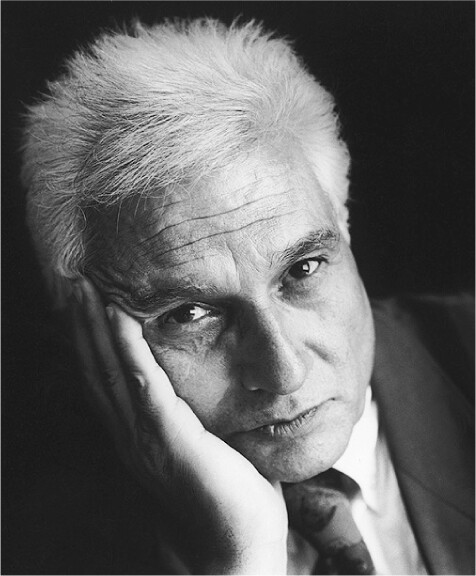
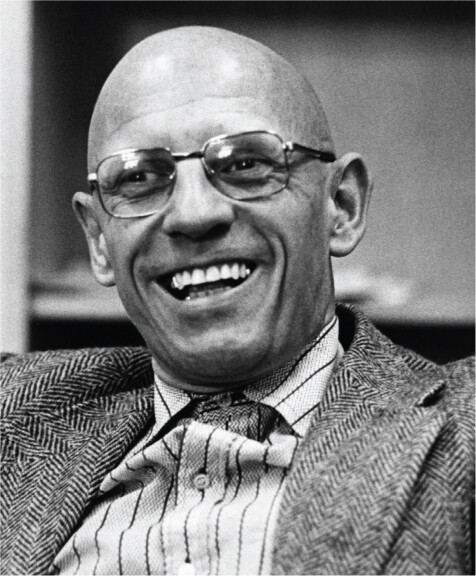
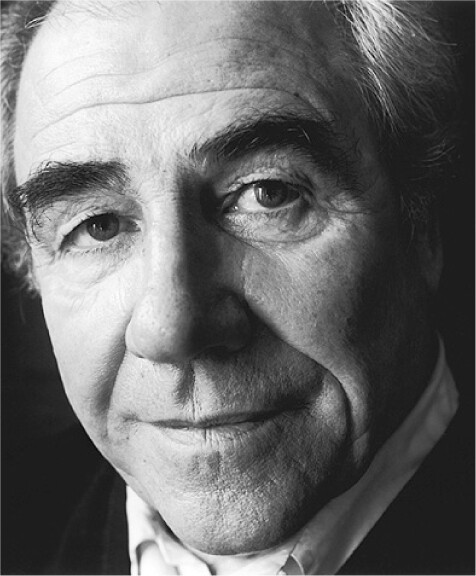
The postmodern perspective developed primarily out of the French intellectual scene in the second half of the twentieth century and is still associated with three of its most important proponents. It’s probably worth noting that postmodernists themselves don’t really like that label, but nonetheless Jacques Derrida (1930–2004), Jean Baudrillard (1929–2007), and Michel Foucault (1926–1984) are the major figures most often included in the group.
More information
Derrida is a White man with gray hair, wearing a suit. He poses with his head leaning on his hand as he looks at the camera.
More information
He is wearing a striped dress shirt and a gray jacket. Foucault is a White man with a bald head. He wears glasses. He smiles as he poses for the photograph.
More information
The photo shows a close-up view of his face. Baudrillard is a White man with dark brows and a relaxed face as he looks into the camera.
In order to understand postmodernism, we first need to juxtapose it with modernism, the movement against which it reacted. Modernism is both a historical period and an ideological stance that began with the eighteenth century Enlightenment, or Age of Reason. Modernist thought values scientific knowledge, a linear (or timeline-like) view of history, and a belief in the universality of human nature. In postmodernism, on the other hand, there are no absolutes—no claims to truth, reason, right, order, or stability. Everything is therefore relative—fragmented, temporary, and contingent. Postmodernists believe that certainty is illusory and prefer to play with the possibilities created by fluidity, complexity, multidimensionality, and even nonsense. They propose that there are no universal human truths from which we can interpret the meaning of existence. On one hand, postmodernism can be celebrated as a liberating influence that rescues us from the stifling effects of rationality and tradition. On the other hand, it can be condemned as a detrimental influence that imprisons us in a world of relativity, nihilism, and chaos.
Postmodernists are also critical of what they call “grand narratives,” overarching stories and theories that justify dominant beliefs and give a (false) sense of order and coherence to the world. Postmodernists are interested in deconstruction, or taking apart and examining these stories and theories. For example, they claim that “factual” accounts of history are no more accurate than those that might be found in fiction. They prefer the notion of mini-narratives, or small-scale stories, that describe individual or group practices rather than narratives that attempt to be universal or global. These mini-narratives can then be combined in a variety of ways, creating a collage of meaning.
One way of understanding what postmodernism looks like is to examine how it has crept into our popular culture. Hip-hop is an example of a postmodern art form. It is a hybrid that borrows from other established genres, from rhythm-and-blues to rock and reggae. Hip-hop also takes samples from existing songs, mixes these with new musical tracks, and overlays it all with rap lyrics, resulting in a unique new sound. Mash-ups are another postmodern twist in music. Take, for instance, The Grey Album by DJ Danger Mouse, which uses tracks from the Beatles’ classic White Album and combines them with Jay-Z’s The Black Album to create something wholly new yet borrowed.
Sociologists are quick to criticize postmodernism for discarding the scientific method and the knowledge they believe it has generated. Social leaders with a conservative agenda have been suspicious of the postmodern impulse to dismiss moral standards. While it is clear that many people criticize postmodernism, a much larger number are probably oblivious to it, which in itself may be more damning than any other response.
Although it is not a widely practiced perspective, postmodernism has nevertheless gained supporters. Those who challenge the status quo, whether in the arts, politics, or the academy, find attractive postmodernism’s ability to embrace a multiplicity of powerful and promising alternatives. At the very least, postmodernism allows us to question scientific ideals of clarity and coherence, revealing inherent shortcomings and weaknesses in our current arguments and providing a way toward a deeper, more nuanced understanding of social life. As one of the most contemporary of the theoretical perspectives, postmodernism corresponds to the Information Age and feels natural and intuitive for many students whose lives are immersed in this world. By focusing on individuals and small-scale activities in which change happens on a local, limited basis, postmodernism offers an alternative to such cultural trends as consumerism and globalization. However unwelcome the theory might be to some critics, it is likely that the postmodern shifts we have seen in society (in music and films, for example) will continue.
Midrange Theory
The second new theoretical approach is midrange theory. It shares some views with postmodernism, especially in its preference for mini-narratives over sweeping statements or “grand theories” made by the classical social theorists. Durkheim, Marx, and Weber all developed their ideas during a period dominated by what Robert Merton calls “total sociological systems” (1996, p. 46), which provided an overarching, comprehensive explanation of society as a whole.
Merton feared that an uncritical reverence for classical theory and an excessive attachment to tradition could impede the flow of new ideas and was just as likely to hold sociology back as to advance it. Because classical theories sought to develop large-scale theoretical systems that applied to the most macro level of society, they were often extremely difficult to test or research in any practical way. As one critic lamented, too “many sociological products can—effectively and unfortunately—be considered both bad science and bad literature” (Boudon 1991, p. 522).
To counter this tendency, Merton proposed that sociologists focus more on “theories of the middle range.” Midrange (or middle range) theory is not a theory of something in particular, but rather a style of theorizing. It is an attempt not so much to make the elusive micro-macro link, but to strike a balance somewhere between those polarities, shifting both the sights and the process of doing sociology. Work in this vein concentrates on incorporating research questions and empirical data into smaller-scale theories that eventually build into a more comprehensive body of sociological theory. Midrange theories are those “that lie between the minor but necessary working hypotheses that evolve in abundance during day-to-day research and the all-inclusive systematic efforts to develop a unified theory that will explain” the whole social world (Merton 1996, p. 41).
Since the 1990s and 2000s, a host of sociologists have taken up the call to midrange theory, from Annette Lareau’s study of the impact of parents’ social class on the lives of their children (2011), to Dalton Conley’s work on racial identity (2000) and his examination of what constitutes leisure in the digital age (2009), to Peter Bearman’s research on public health issues such as the rise of “vaccine refusers” (2010). Midrange theory connects specific research projects that generate empirical data with larger-scale theories about social structure. It aims to build knowledge cumulatively while offering a way to make sociology more effective as a science rather than just a way of thinking. With more sociologists appreciating such a stance, midrange theory is helping to push the discipline forward into the sociology of the future.
Glossary
- POSTMODERNISM
- a paradigm that suggests that social reality is diverse, pluralistic, and constantly in flux
- MODERNISM
- a paradigm that places trust in the power of science and technology to create progress, solve problems, and improve life
- MIDRANGE THEORY
- an approach that integrates empiricism and grand theory