We usually know what we mean—and whom we mean—when we use the word family. The clearest family connections are biological, as between parents and their children. Legal recognition binds people into families in the case of marriage or adoption. And emotional connections often rise to the level of family as well, as when people use the term “auntie” to refer to family friends who are not related by blood or marriage. In the simplest definition, then, families are groups of related people, bound by connections that are biological, legal, or emotional. As we will see, however, not everyone agrees about which biological, legal, and emotional connections create families.
Some family reunions are big enough to fill a city park pavilion, and few of those people know how everyone is related. But that is not the universal modern experience. For every sprawling family that includes hundreds of living relatives—distant cousins, stepfamilies, and in-laws—there are many others living as insular units of only a few people, either by choice or as a result of family dissolution, death, or isolation. Out of 249 million adults living in U.S. households, more than 1 in 5 (56 million) live alone or only with people to whom they are not related (U.S. Census Bureau 2018c).
Usually, the label family signals an expectation of care or commitment, which is partly how we know who counts as a member of the family. That’s why some people refer informally to a cherished babysitter as “part of the family.” Family relationships are the basis for a wide range of social obligations, both formal and informal. For example, an illness or death in the family is usually accepted as an excuse for missing work or class (with no proof of a blood relationship required). People are expected to sacrifice their personal time, energy, and money for the well-being of their family members. That means waking up at night for a crying baby and spending your own money to send your kids to college—which is why college financial aid is affected by how rich or poor a student’s parents are (Goldrick-Rab 2016). But caring is also the law, and failing to care for a family member—for example, by abandoning a child—may be a criminal offense. That differs from caring for members of society at large, a function that in the United States is mostly delegated to government and religious or charitable organizations.
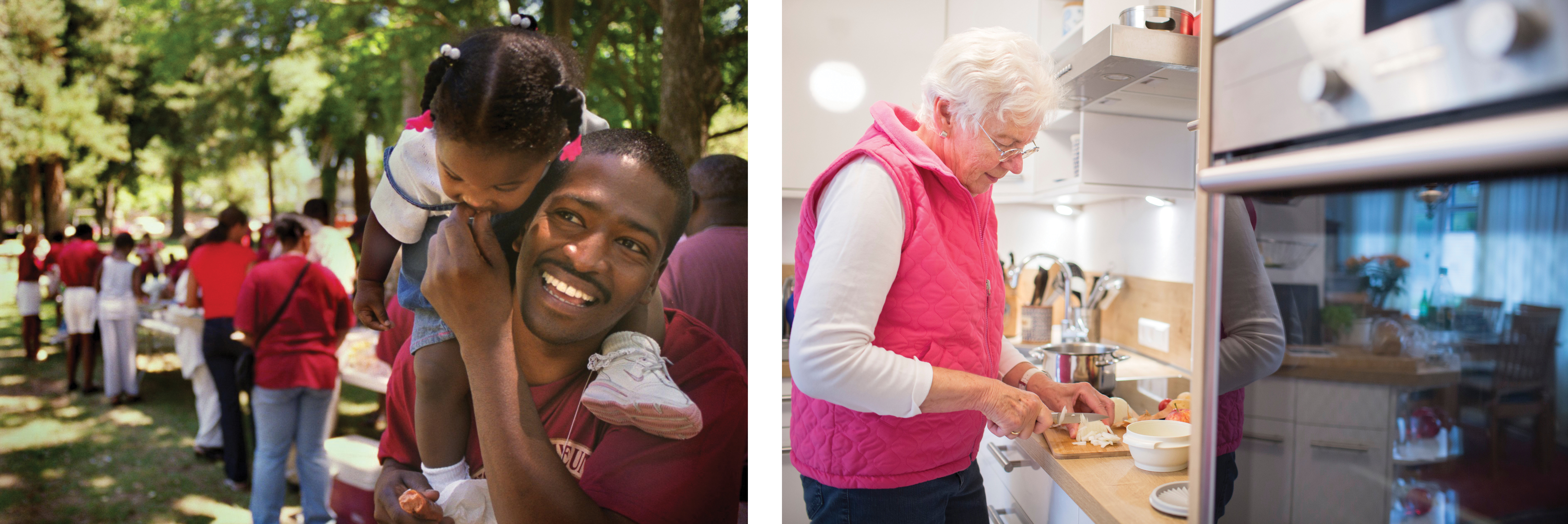
Some people have families large enough to have reunions in city parks, while others live alone. Almost a quarter of American adults live alone or with people to whom they are not related.
If family relations imply caring, they also carry with them lines of authority. Challenging such authority can have unpleasant or even dangerous consequences. In the United States, many parents (or other caregivers) use moderate physical force against their children for discipline, and this is usually tolerated as a reasonable exercise of family authority; almost half of parents say they at least sometimes spank their children (Pew Research Center 2015a). Parents don’t apply for a permit to spank their children; their discipline is informally approved based on common cultural understandings of family boundaries and relationships. Nonfamily authorities such as the police or social welfare agencies can also discipline children but only with legal permission, and generally not with violence (an exception is corporal punishment in some schools, where teachers and administrators are seen as extensions of parental authority). Thus, family authority is recognized both informally by common practice and formally by the law.
Biological or not biological, formal or informal—clearly, we don’t all agree on a single definition of families. And rather than insist on conformity on the issue, I find it helpful to think of several types of definition: the personal family, the legal family, and the family as an institutional arena. Each of these conceptions is useful for different circumstances, and together they identify the subject matter of this book—the sociological approach to families. Sociology is an academic discipline that studies the nature and development of human society, in our case specifically the family. Often, that means looking at the same phenomenon from different angles, as we do with defining families.
The Personal Family
Any attempt to create a single definition of family from all the different ways people use the term runs the risk of being overly vague. For that reason, I define the personal family simply as the people to whom we feel related and who we expect to define us as members of their family as well. By this definition, a group of people who mutually define themselves as a family are a family, based on their own understanding of the concept related. Whom people choose to include in these groups changes from time to time and differs from place to place. Thus, over time it has gradually become acceptable to consider stepchildren and stepparents as bona fide members of the same family (see the discussion of blended families in Chapter 10). Because definitions of personal families follow common patterns, they are partly a product of the larger culture in which we live. In China, for example, some girls have been informally adopted by families that do not have daughters, and this is culturally consistent with ancient practices of informal adoption in that country. So even if our family choices seem highly personal, they reflect the interaction of our own decisions with all the influences we face and the practices of those around us.
As you can see, this definition is quite vague, but a more specific definition inevitably would exclude families as many people see them. In fact, most of us learn to recognize members of our own family before we are old enough to understand how the term family is defined. This personal family as we experience it in our daily lives sets the boundaries for our most intimate interactions from an early age.
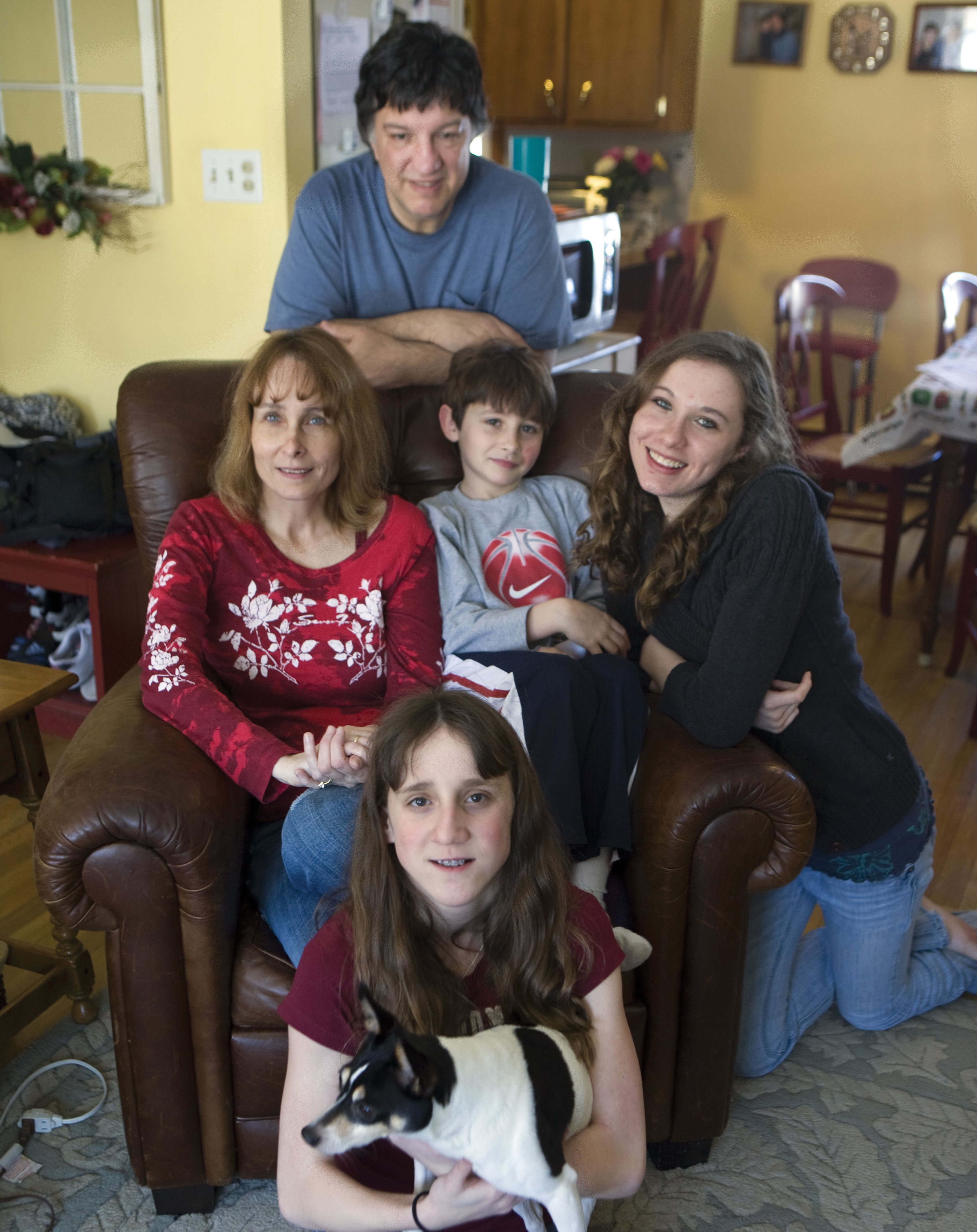
Hannah Rocklein was adopted as a toddler from a Russian orphanage. Her adoptive parents later divorced. She now lives with her adoptive mother and siblings, stepfather, and dog.
According to child psychologists, understanding the difference between family members and others is an important part of our development in early childhood. Young children who cannot form “selective attachments” or who lack appropriate restraint with strangers may be diagnosed with a psychological disorder that is usually associated with inadequate emotional or physical care (Ellis and Saadabadi 2019). Lack of family definition also causes many of the tensions in newly formed stepfamilies, which have difficulty establishing clear boundaries around units within the family or between the family and the outside world (Braithwaite et al. 2001). In short, defining our families is an important step in the construction of our personal identities, and the personal family is the definition we apply in that process.
The Legal Family
Most people don’t judge the definitions others apply to their own families. We don’t ask for proof that a student was emotionally close to her deceased grandfather before giving her permission to miss class for the funeral—that relationship is assumed. Increasingly, however, as families have become more diverse in their structure and as public rights and obligations have been tied to family relationships, the government’s definition of families has grown more complicated. It also has taken on greater social and political importance. There is no universal legal definition, but the legal family is generally defined as a group of individuals related by birth, marriage, or adoption. This appears to be a straightforward definition, but in law the meaning of almost every word may be contested and subject to change.
The most contentious term in this definition is marriage, which carries with it many rights and responsibilities overseen by the government. In fact, most debates over the definition of family in recent years have had to do with what marriage is (Powell et al. 2010). In 1996, when it first appeared that some states might start granting marriage licenses to same-sex couples, the U.S. Congress overwhelmingly passed, and President Bill Clinton signed, the Defense of Marriage Act (DOMA). The law specified that the federal government would not recognize same-sex married couples as “married,” even if their marriages were legally recognized by their home states. However, the Supreme Court ruled in United States v. Windsor (2013) that the federal government must recognize all marriages that are legally valid in the states, granting same-sex couples access to all federal benefits, from health coverage and Social Security pensions to the right to be buried in veterans’ cemeteries with their spouses. Then, in the 2015 decision known as Obergefell v. Hodges, the Court went further, finally guaranteeing same-sex couples the right to marriage in every state. (We will return to this issue in Chapter 8.)
In 2015 the Supreme Court made same-sex marriage legal in every state, helping to change the definition of family.
Such official definitions also have implications for government recognition in regard to citizenship. For example, in a case similar to that of the Bankses, mentioned earlier, the State Department refused citizenship to the child of a same-sex couple who were legally married in California and had a child (their genetic offspring) by surrogacy in Canada, ruling that the child was born “out of wedlock” because of the marital status of the surrogate mother (Bixby 2019). But many other aspects of life are affected as well. In New York State, for example, the official recognition of same-sex marriage affected some 1,300 statutes and regulations, “governing everything from joint filing of income tax returns to transferring fishing licenses between spouses” (Peters 2008:A1). The government’s definition also lends credibility—or legitimacy—to some families and contributes to a sense of isolation or exclusion for those whose families do not conform.
In some cases, a legal definition of family relationships is enforced nationally, as in the federal tax code, immigration rules, or Social Security and the Medicare health insurance program. But usually the states apply and enforce their own laws regulating family life. Local legal definitions underlie many conflicts, ranging from adoption (who can adopt?) to residential zoning (how many “unrelated” people can live in one household?). Further, because the laws contribute to our personal definitions, and because legal definitions are inherently subject to political debate, they have gained symbolic importance, which may explain why so many people care how other people define their families. Even though local laws and definitions vary, the U.S. Census Bureau, which gathers much of the data on American families that we will examine in this book, uses the federal government’s definition of the legal family (see Changing Law, “How the U.S. Census Counts Families”).
The Family as an Institutional Arena
Individuals define their own families. The state imposes a legal definition of families—“state” used in this way refers to the government at all levels. What about sociology? I can’t tell you that sociology resolves the different or conflicting definitions of a family. But by stepping back and thinking analytically, we may be able to usefully frame the way families are defined. To do that requires some terms and ideas that may seem abstract. But I hope that once we get over the hurdle of these abstractions, you will find that they help make your understanding of families more concrete.
Rather than identify certain groups of people as families or not, this sociological definition conceives of the family as the place where family matters take place. I will refer to that as an institutional arena, a social space in which relations between people in common positions are governed by accepted rules of interaction. In the family arena, for example, there are positions that people occupy (for example, father, mother, child, brother, sister). And there are rules of interaction, most of them informal, that govern how people in these positions interact. When a social position is accompanied by accepted patterns of behavior, it becomes a role. Family rules include obligations as well as privileges. For example, parents must feed, clothe, socialize, and otherwise care for their children in the most intimate ways. And children are usually expected to obey their parents. The family arena, then, is the institutional arena where people practice intimacy, childbearing and socialization, and caring work. Not everyone fits perfectly into these positions or follows these rules, but when they do not conform—for example, when parents abuse or neglect their children—it only serves to reinforce the importance of the rules (Martin 2004).
CHANGING LAW
How the U.S. Census Counts Families
SHOWHIDE
The history of the U.S. Census offers important lessons about the definition of families. It also serves as an example of the emergence of individuality in modern society and the “institutionalized individuality” referred to by the modernity theorists studied later in this chapter (Beck and Beck-Gernsheim 2004).
The U.S. Constitution in 1789 ordered an “actual enumeration” of the population every 10 years, for purposes of apportioning political representatives among the population. A nationwide census has been carried out every 10 years since 1790. But the idea of counting everyone in the population is at least as old as the story of the Jews wandering in the desert after fleeing Egypt, in which God commanded Moses to “take the sum of all the congregation of the children of Israel, by families following their fathers’ houses; a head count of every male according to the number of their names.”
In all modern societies, the census plays a crucial role in the development of public infrastructure and the administration of services. These data collection efforts are large government projects, conducted at great expense. Even with use of online forms and mobile technology, the 2020 U.S. Census was expected to cost more than $15 billion and employ hundreds of thousands of workers visiting American households. The census also is one of the government’s direct interventions into personal life, requiring the formal definition of all individuals’ relationships and family boundaries. So the definitions that government officials use are important for how commonly accepted roles and identities are developed (Coontz 2010).
Until 1840, the U.S. Census recorded only the name of the “head” of each household, with an anonymous count of other people present (slaves were counted as members of their owners’ families, though they only counted as three-fifths of a person for purposes of congressional representation). Starting in 1840, individuals were recorded separately, though still listed by household, under the “family head.” At that time, census forms were filled out by enumerators, who knocked on doors and recorded information by hand. In 1870, confronted for the first time with large urban buildings that did not separate families into distinct households, the census defined a household as a group of people who share a common dining table. That idea stuck, and some variation of the concept of “live and eat separately from others” has been used to define households ever since (Ruggles and Brower 2003).
What Is a Census Family?
Today, the Census Bureau uses the legal definition of the family presented in this chapter, but with one qualification: a family lives together in one household. By the personal or legal definitions I presented earlier, members of the same family could live in different households. In fact, one person could be a member of any number of families. When it comes to collecting statistical data, however, that is not practical. So the Census Bureau limits each family to one household, and each person can be counted in only one place. That is why students living in college dorms are not counted as part of their families’ households (which is also the case for military personnel abroad or on ships, prisoners, or people in nursing homes). With this definition—putting each person in only one household—the Census Bureau estimates there are 83 million families, or groups of people related by birth, marriage, or adoption who live together in one household; together these families include 261 million people (U.S. Census Bureau 2018c).
But how does the Census Bureau apply the legal definition of family? The task seemed simple at first. The 1880 census was the first to record information about each individual’s relationship within the family. After listing the “head” of each family (always the husband in the case of married couples), the enumerator made a list of all other individuals in the household and made a note of the “relationship of each person to the head of this family—whether wife, son, daughter, servant, boarder, or other” (Ruggles et al. 2013). Those six categories now serve as a quaint reminder of a simpler time in family life.
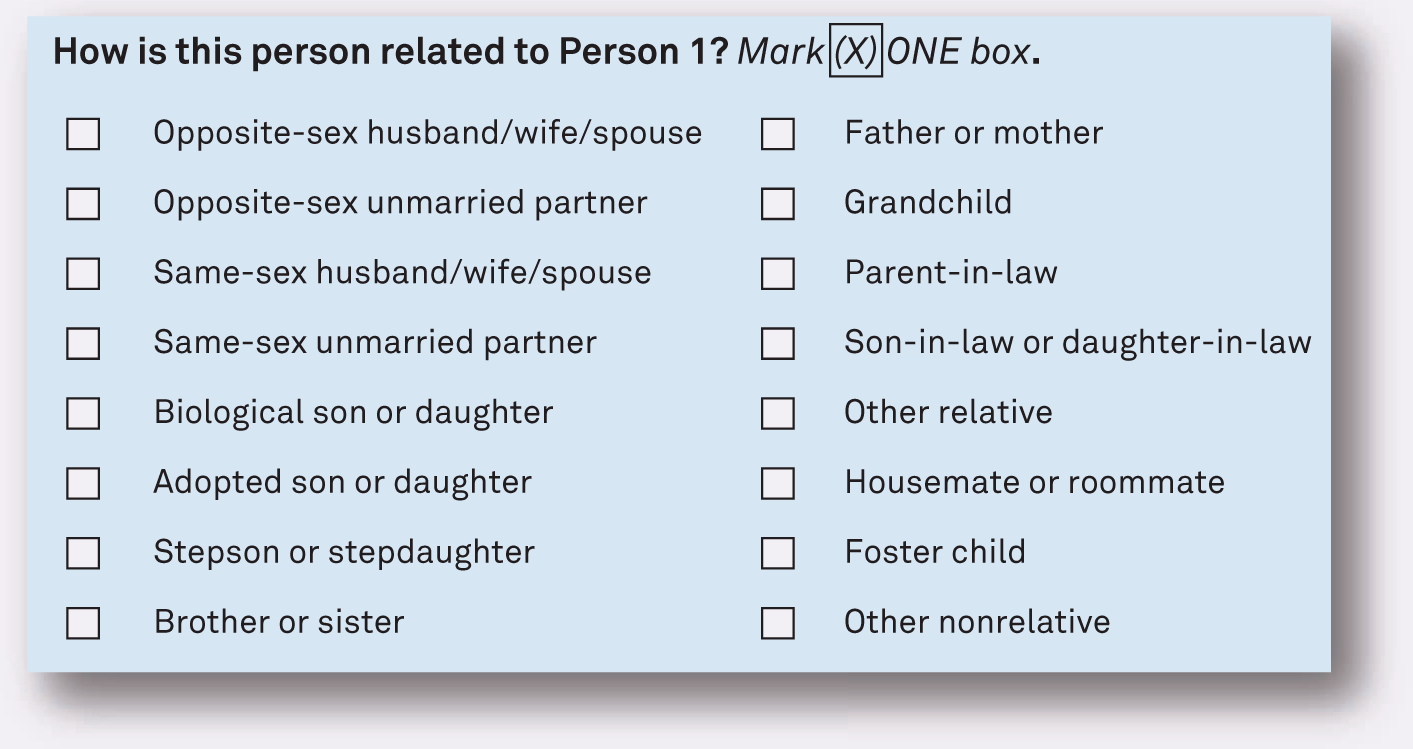
Starting in the 1960s, as families became more complicated, the categories on the census form proliferated, and now people usually fill out the forms without assistance, choosing the category for each person in the household themselves. The idea of a “household head” came under attack from feminists in the 1960s, because they didn’t like the presumption of male authority that it implied (Presser 1998). That pressure was successful, and by 1980, the census form dropped the category “household head” and now simply refers to a “householder,” defined as anyone who legally owns or rents the home. That was one of many changes that followed. Figure 1.1 shows the relationship categories used for the 2020 census, now including no fewer than 16 ways people can be associated with “Person 1,” the householder.
Figure 1.1“Relationship” question on the 2020 census
SOURCE: U.S. Census Bureau (2020).
The historical concept of a “man and his family” has clearly been supplanted by a long list of individual relationships and identities. The most important recent change to this list is asking couples directly whether they are same-sex or opposite-sex, a question the Census Bureau did not ask before same-sex marriage became legal nationally in 2015. They further ask couples to identify whether they are married or “unmarried partners.” Biological children are differentiated from adopted children, stepchildren, and foster children. In-laws and grandchildren are identified separately. You might notice another subtle distinction from the list in Figure 1.1. The categories “other relative” and “other nonrelative” appear toward the end. Although these are not defined on the form, their placement implies that the last two—housemate/roommate and foster child—are nonrelatives, while the rest are relatives. In fact, however, official statistics on families do not (yet) include those listed as unmarried partners as family members, even though many people in such relationships obviously think of themselves as being part of the same family. When society changes rapidly—as it is doing now with regard to family relationships—then laws, government policies, and cultural attitudes often contradict each other, which can provoke feelings of insecurity or conflict.
An institutional arena is not a physical space with a clear boundary, like a sports arena, but a social place where a set of interactions play out. If you think of a game like soccer, there may be an ideal place to play it—a soccer field—but you can sort of play it anywhere. The rules are a little bit different here and there, and many of them are informal. You don’t need lines on the ground or fixed goals. A great example of this is the common practice of widening or narrowing the space between the goal posts according to how many players are on the field. In the same way, the family is not a specific social arrangement or something that happens in one home or one type of home. Its rules and positions evolve over time and take place in the area of social interaction where intimacy, childbearing and socialization, and caring work are enacted.
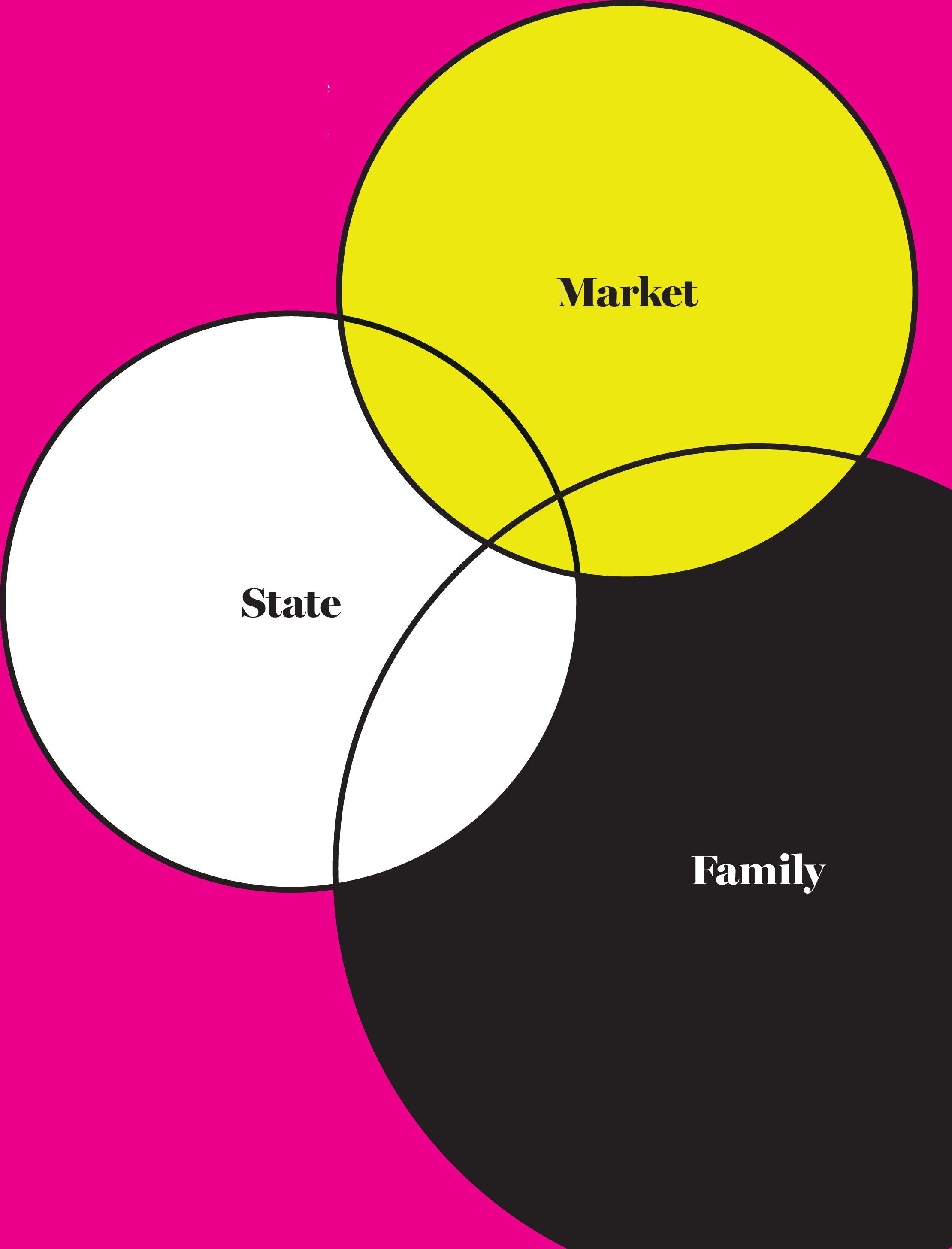
These aspects of family life consume much of our personal, social, and economic energy and passions. But they do not encompass the domains of two other important institutional arenas that have direct interactions with the family: the state and the market. To understand the family’s place in the society overall, we need to define these overlapping arenas.
The state includes many different organizations filled with people in many roles. But at its core, the state is the institutional arena where, through political means, behavior is legally regulated, violence is controlled, and resources are redistributed. The regulation of behavior is set out in laws and policies, and these are enforced with the threat or use of violence (from family court to the prison system to the armed forces). The state affects families directly through regulation, such as granting marriage licenses and facilitating divorces, and by redistributing resources according to family relationships. Redistribution takes place by taxing families and individuals and then spending tax money on education, health care, Social Security, welfare, and other programs.
The state also regulates the behavior of economic organizations and collects taxes and fees from them. In that way, the state has direct interactions with our third institutional arena, the market, which is the institutional arena where labor for pay, economic exchange, and wealth accumulation take place. All these activities are closely related to family life. For example, when parents decide whether to work for pay or stay home with their kids, they have to consider the jobs they can get and the costs of day care and other services. These decisions then affect family relationships and future decisions, such as how to divide labor within the family, how many children to have, whether to pursue advanced education—and maybe even whether to get divorced.
The key features of these three institutional arenas are shown in Table 1.1. Each arena signifies a certain type of social interaction, each is composed of organizational units, and each specifies certain roles for its members. Clearly, most people have roles in all of these arenas and take part in different organizational units. For example, a parent might care for his or her own children at home but also work as a nurse or day care provider in the market arena and act as a citizen on political questions, such as whether welfare programs should use tax money to pay for poor people’s day care services. One way to look at such overlapping roles is to see them as interactions between the institutional arenas.
Table 1.1Modern institutional arenas
STATE
MARKET
FAMILY
TYPE OF INTERACTION
Law, violence, and welfare
Labor, exchange, and wealth accumulation
Intimacy, childbearing and socialization, and caring work
ORGANIZATIONAL UNITS
Legislatures and agencies
Companies
Families
INDIVIDUAL ROLES
Citizens
Workers, owners, and consumers
Family members
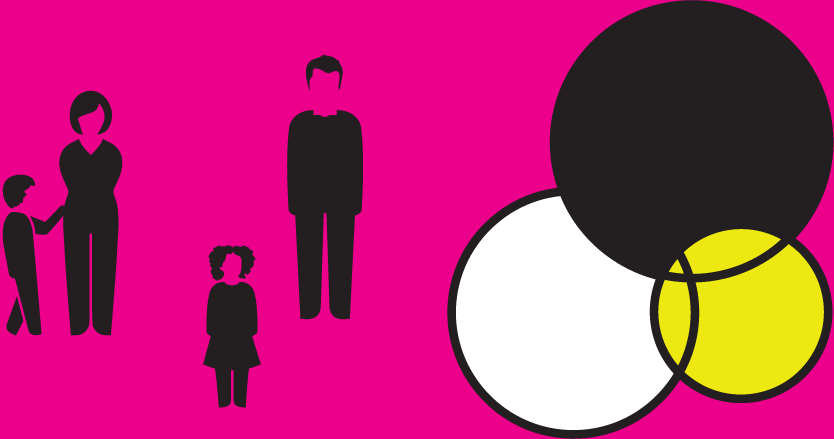
The interaction of institutional arenas is illustrated in the Story Behind the Numbers, which shows examples of overlapping roles. We can see the interaction of family and state arenas in the state licensing of marriages, and the interaction of family and market arenas in the role that commercial services such as day care providers make available to families. An additional interaction (not shown) is between state and market arenas, as when the state regulates the market by restricting companies’ behavior. For example, under the Family and Medical Leave Act, the federal government requires large companies to give most of their workers (unpaid) time off from work when a child or another family member is sick. Finally, the figure illustrates one area where all three arenas clearly overlap: welfare policy. As we will see, state support of the poor is based on certain conceptions of family relationships (thus regulating family life), and market forces affect the ability of families to support themselves with or without welfare—even as family decisions affect the market arena (such as poor single mothers entering the labor force).
The Story Behind the Numbers
The family is not an isolated entity.
People’s roles in the family arena are strongly influenced by the actions of the other major arenas we discuss in this book, the state and the market. As these examples show, the services available in the market, and the policies of the government, all affect the way people make the most important decisions about family life.
ANIMATION: The family is not an isolated entity.
Day Care
The market makes available—or not—the child-care services many parents need for their children.
Marriage Licenses
The laws and regulations of the state determine who can and cannot get married.
Welfare
All three arenas overlap in the welfare system, as poor families decide how to care for their children, with a mix of support from the government and income from their jobs.
As we will see in Chapter 2, thinking about institutional arenas can help tell the history of the family. For example, Andrew Cherlin has argued that the growth of individual choice in family relationships signifies a weakening of marriage as an institution as its rules become more flexible (Cherlin 2004). Family history is also a story of changes in how different arenas interact. Returning to the example of parents punishing their children, the state intervenes when its authorities enforce laws against child abuse or acts of violence. The history of change in these two arenas is partly the story of how the line between parental and state authority has been drawn. The state’s role also has evolved in the growth of public services in health care and education and in the changing state definitions of marriage, all of which alter the borders of the family arena and the roles of its members.
Throughout this book, we will use the idea of institutional arenas as a way to understand how larger forces interact with individuals and families to shape family life and how the family in turn contributes to larger social trends. Considering the relationship between individual experience and larger social forces is one of the main promises of sociology. And the family has been the subject of sociological scrutiny throughout the history of the discipline. Therefore, before going further into the main subject of this book—the family as a diverse, changing feature of our unequal society—we will need to establish some additional theoretical background.