2
The Family in History
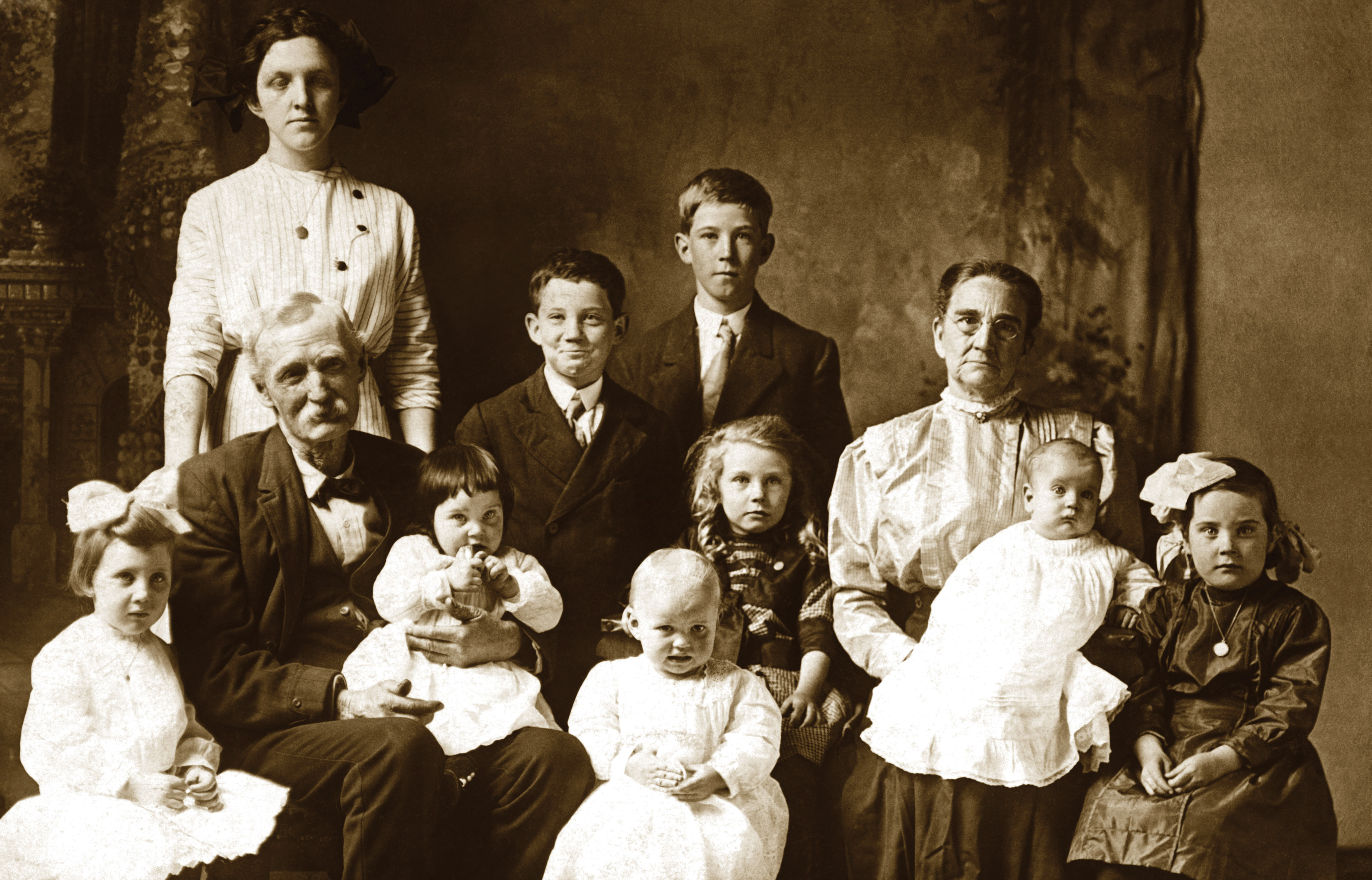
Families have been a part of human existence since the dawn of our species. But how people live in families has changed dramatically. This chapter will focus on the development of the family as an institutional arena—the social space where related people interact around commonly accepted roles and rules (see Chapter 1). The changes in family life discussed here must be understood in relation to four overarching historical trends:
- Most people today live much longer than in the past. In the Middle Ages, Europeans on average probably lived to about age 30, and as late as 1850 that had increased to only about 40 in the United States. At that time, an estimated 1 in 5 children died before reaching age 5 (J. R. Weeks 2015), but today more than three-quarters of Americans live to age 72 (Arias and Xu 2018). This increased longevity is the result of improvements in the standard of living, including better sanitation, medical care, and nutrition.
- People have many fewer children than they used to (see Chapter 9). A typical White woman in the United States in 1800 bore 7 children during her lifetime (Haines 2006). Today that number has fallen to 2 (IPUMS-CPS 2018).
- Family members perform fewer functional tasks at home (see Chapter 11). Such life-sustaining and nurturing activities as basic food and clothing production, education, and health care that often took place within families are now performed within newer institutional arenas: the state and the market. As work has moved out of the family, family relationships have come to rely more on emotional bonds than on economic necessity.
- In recent decades, families have become more diverse (see Chapter 13). The greatest change has been the decline of the two-parent nuclear family. That family type reached the peak of its dominance in the 1950s and is now found in less than half of all American households. In its place, we have seen the rise of single-parent families, unmarried couples, and people living alone or in nonfamily group situations.
Each of these trends has changed the character of family life and the place of families in the larger society. We will keep these changes in mind as we trace family history through time, beginning with a brief foray into ancient history.