PALEOLITHIC CULTURE
The word Paleolithic means “old stone age.” It began 2.6 million years ago with the first stone tools and ended about 13,000 years ago. For most of that time, cultural change came very slowly compared to that of more recent times. People were few in number and rarely experienced the challenges of meeting strangers with different ways. Great uncertainties cloud our understanding of Paleolithic society and culture. Most of what we know comes from the last 50,000 years of the Paleolithic.
THE HAZARDS OF DAILY LIFE
One advantage of those uncrowded times, it seems, was that early Homo sapiens did not often indulge in interpersonal violence: of the 6,000 skeletons available for examination from times before 20,000 years ago, only one betrays signs of death via weapons. One likely explanation for the sparse evidence of violence is that Paleolithic people didn’t lose much by running away from a fight. Aside from bands that settled around a reliable resource, like a shellfish bed, people were normally on the move in search of food. They rarely had to fight to preserve access to food, and they probably had a weaker sense of territorial possession than do modern chimps.
But Paleolithic life had its hazards. Hunting big animals, probably exclusively a man’s job, involved routine, if small, risks of injury or death. Childbirth brought larger, if less frequent, dangers for women. Anyone too big to carry and too feeble or injured to walk when it was time to move on was an encumbrance to a mobile group—and was presumably abandoned to a solitary and probably short life on his or her own. Small children, if too numerous or troublesome, often met the same fate, as they do in modern mobile hunting and foraging societies. But it’s noteworthy that archeologists have found in what is now Pakistan the remains of one young woman with severe birth defects who could only have survived to young adulthood with constant care from others.
A LATE PALEOLITHIC CULTURAL REVOLUTION
At some point late in the Paleolithic, technology and culture began to change a little faster. The sparse archeological remains found so far can support different conclusions, but it looks like the process began in Africa about 90,000 years ago and in Eurasia maybe 50,000 years ago.
DEMOGRAPHIC CHANGE Part of the reason for the technological and cultural revolution was likely demographic. Paleolithic people before about 50,000 years ago didn’t live long by today’s standards. Scanty evidence suggests the odds of making it to age 15 were about 60 percent. Judging from the evidence contained in fossil teeth, it seems that over the long haul, hominin and human populations lived longer, meaning that they contained larger proportions of people who survived to age 30 or so. But then about 50,000 to 15,000 years ago, the proportion of older people increased more than fourfold. With more “old” people (age 30 and up) around to help look after small children, women could bear more children and more babies survived, bringing a surge in population. Human population grew rapidly in the late Paleolithic, and perhaps an unprecedented abundance of helpful grandparents was part of the reason. At a guess, the world contained some half a million people as of 50,000 years ago, but perhaps 2 to 6 million people by 15,000 years ago. It remained an uncrowded world.
The lengthening of life expectancy added to the cultural dynamism of Paleolithic society. With more grandparents around to help teach the young, the efficiency of communication and learning increased, helping to account for the accelerated technological and cultural change evident in the archeological record.
Population growth had a similar effect. The mental horizons of people expanded through more frequent contacts with strangers. Living one’s entire life within the same group of 20 to 80 people wasn’t as stimulating as occasionally meeting up with other bands. The frequency of such encounters climbed with population growth. When people got the chance to learn from a wider array of strangers, new ideas were hatched at a faster rate. This helps to explain a pattern we saw earlier: the long conservatism in toolmaking followed by the sudden emergence of new styles of tool manufacture.
TECHNOLOGY AND ART After 50,000 years ago, not only did tools evolve more quickly than before, but entirely new inventions appeared faster. By 39,000 years ago, Paleolithic people—at least, those living in one cave in Germany—had a musical instrument, a pipe carved from a swan’s bone. They sewed garments with needles by 30,000 years ago. The bow and arrow appeared about 30,000 to 25,000 years ago and spread almost everywhere by 20,000 years ago. People started making nets, probably for fishing, about 25,000 years ago. The first fishhooks, ropes, and knife blades appeared around the same time. People now made things out of bone and antler as well as of stone.
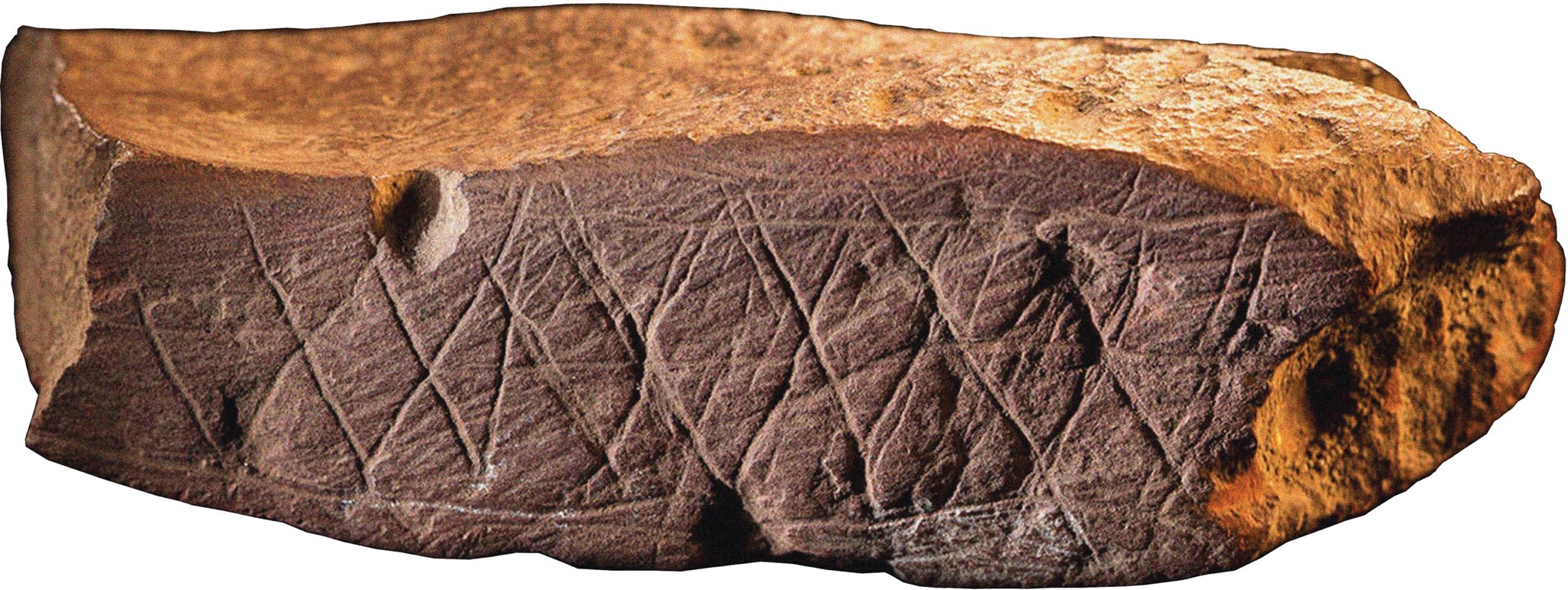
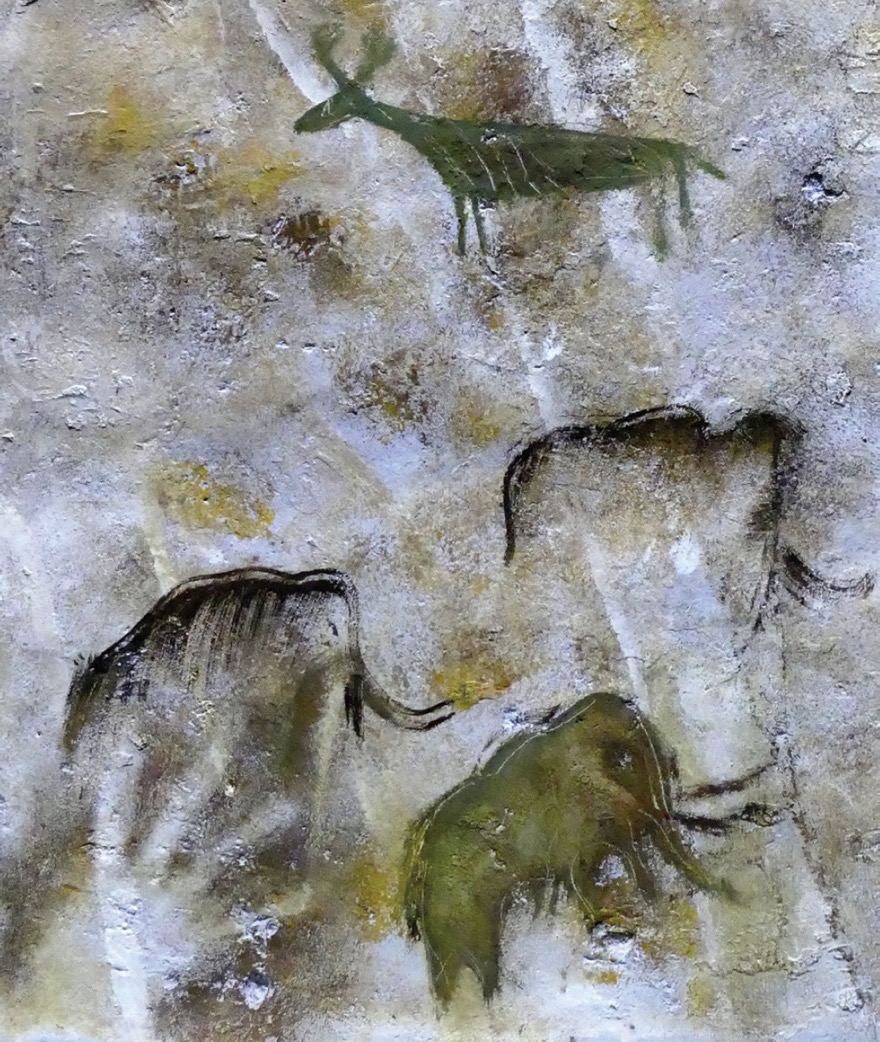
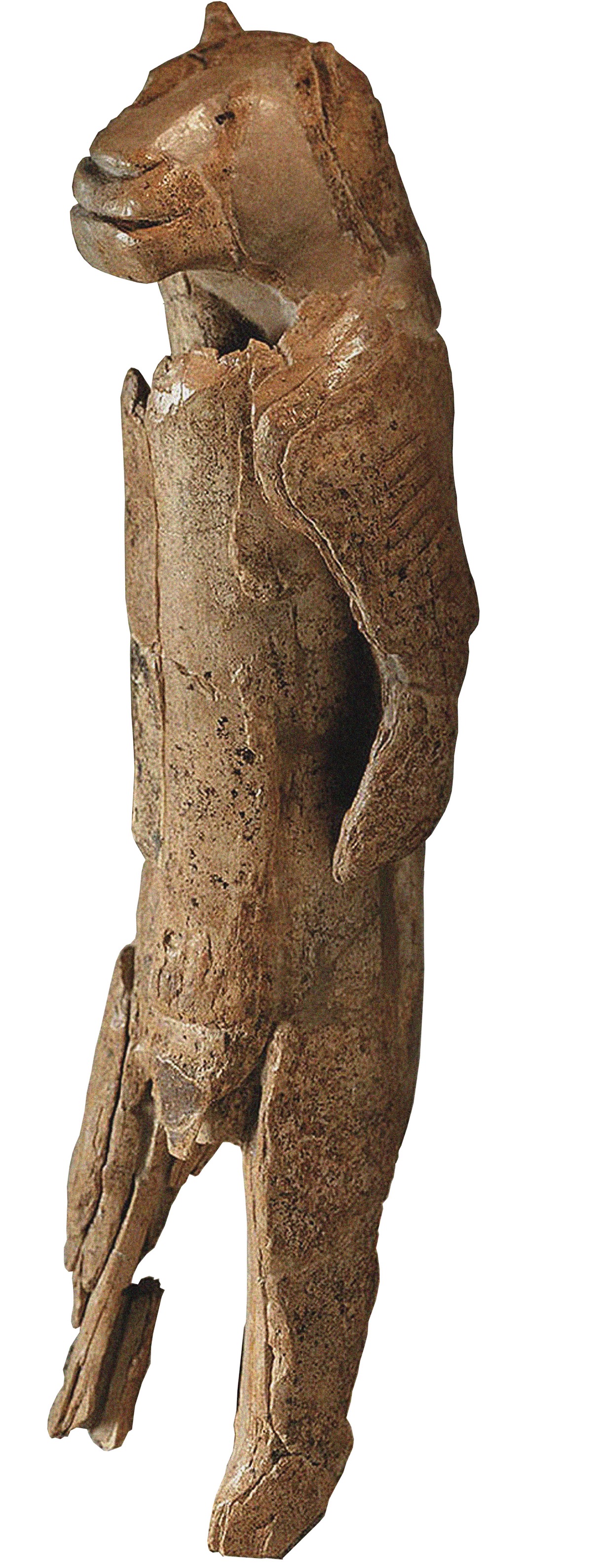
Further evidence for the idea of a cultural revolution at some point late in the Paleolithic comes from the world of art. In what is now South Africa, geometric patterns etched into a clay called ochre and beads made out of snail shells appeared at least 70,000 years ago. Some rock shelters in Namibia (in southern Africa) bear animal images that might be 30,000 years old. The first figurine of a human form with an animal’s head, the so-called Lion Human (Löwenmensch) found in a cave in Germany, dates from 35,000 to 40,000 years ago. In southern France and northern Spain over 38,000 years ago, artists started decorating more than a hundred caves with paintings, mainly of hunted animals. In Indonesia, there’s a stenciled image of a human hand that appears to be 40,000 years old. Paleolithic people seem to have engaged in cave and rock-shelter art in only a small part of the human realm in Europe, Africa, Indonesia, and Australia—although more might yet be found one day.
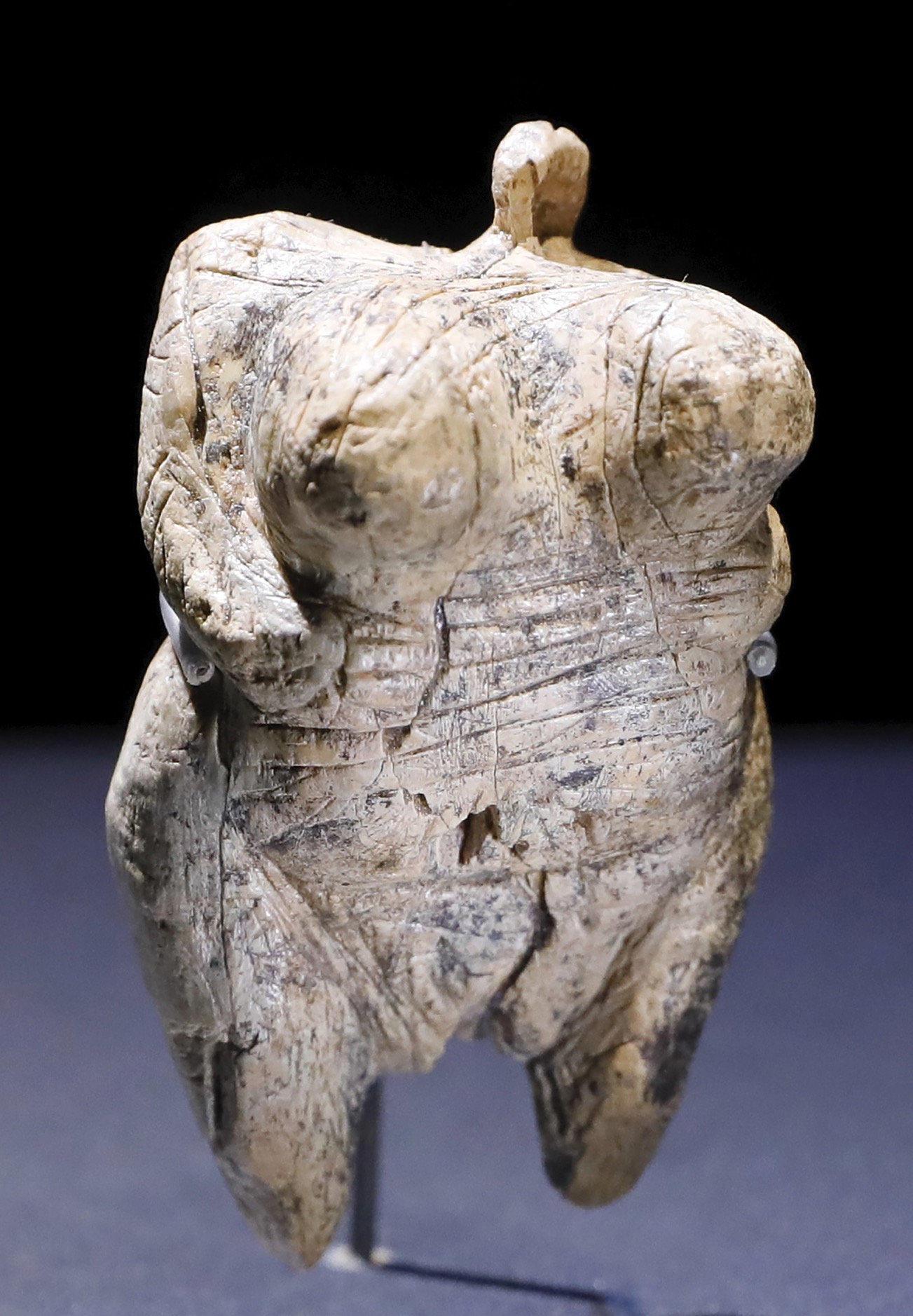
The first surviving evidence of humans depicting the human form, dug out of a cave in southern Germany in 2008, is a 40,000-year-old figurine of a woman carved from a mammoth tusk. These innovations in art—beads, painting, figurines—may signal big changes in human mental worlds: perhaps greater self-consciousness, greater abilities in language, a new sense of the supernatural.
All these changes—demographic, technological, and artistic—whenever and wherever they began, likely reinforced one another. Older and larger populations, organized in bigger groups, helped to bring more innovations to technology and art, while new technologies helped more people to live longer. The new art may have helped them to enjoy life more and may have reflected tighter social bonds formed around spiritual beliefs.
A SPIRIT WORLD: SHAMANISM The mental world of Paleolithic peoples is difficult to penetrate, but it’s possible that during the late Paleolithic people began to extend their notions of kinship and reciprocity into a spirit world. They envisioned supernatural power not as abstract but as specific, located in important objects around them—certain trees, animals, or rocks. People forged connections with these supernatural agents through various rituals that probably featured music, dance, trances, and possibly mind-altering drugs. They reached out to spirits through gifts offered in the form of sacrifices. They also believed the dead were transported to a spirit realm, a notion powerfully reinforced by dreams, in which one can, after all, see the departed. People began to bury the dead with objects that were intended to help them in the next world. This loose set of religious beliefs and practices is often called shamanism. In some societies, including isolated indigenous peoples in Amazonia and Siberia, shamanism survives today, making it by far the most durable variety of religion in history.

It is worth pondering what religion did for Paleolithic human society. There is evidence that groups with religion were likelier to grow, sustain larger-scale cooperation, and withstand the risks of Paleolithic life slightly better than others. Religion enhanced group solidarity: those human groups with religion generally found it easier to act together toward a common goal than those without it. This improved their odds of survival and reproduction. It’s even possible that over tens of thousands of years human brains adapted so as to become increasingly willing to believe in an unseen spirit world, just as our brains became adapted to enjoy group solidarity.
The emergence of religion also shows growing connections among people throughout Africa and Eurasia before 15,000 years ago—a modest tightening of the faint web binding all humankind. Shamanism existed in different forms, but many of its rituals and practices—dance, drugs, and sacrifices, for example—spread widely. The performance of such rituals held in common probably made it easier for strangers to mingle peacefully. So shamanistic religion both thickened the web of human interaction during the late Paleolithic and provides us with evidence of its workings.
One example of Paleolithic human connectivity in the spiritual realm comes from scholars who collect folk myths. Tales of hunters and animals turned into constellations of stars appear widely in Africa, Asia, and among Native Americans. There are at least 47 versions recorded featuring different animals and constellations but following the same storyline. As people migrated around the world with their myths and beliefs, they changed them gradually to make sense in new environments. Slowly, the myths diverged—as did languages, tool kits, and other forms of culture. Yet the basic form of these myths, linking people with the heavens, remained a common human heritage.
The late Paleolithic cultural revolution strongly suggests heightened levels of interaction among our ancestors by 50,000 and especially by 15,000 years ago. The pace of change in tool design, art, and religion is likely the result of more frequent encounters with strangers whose ways were slightly different and inspired people to rethink their habits.
ENVIRONMENTAL IMPACTS With improved technology, greater numbers, and stronger social solidarity owing to the late Paleolithic cultural revolution, our species acquired additional power over the plants and animals with which they shared the Earth. Despite their belief in the supernatural qualities of living things, Paleolithic people devastated parts of their environment. Their most important environmental impact came in altering vegetation through repeated burning of landscapes, which people did wherever conditions were suitably dry, as in East Africa and Australia. The goal of burning was to promote populations of useful plants and animals that would re-colonize burnt ground—grasses with edible seeds, for example, or tasty grazing animals such as gazelles. The “natural” vegetation that has prevailed in Australia over the past 50,000 years is actually made up of fire-tolerant species that can flourish amid frequent burning. Paleolithic Australians relied on these species, and on the animals, such as wallabies and kangaroos, that thrived on the vegetation that sprang up in the aftermath of a burn.
The second great environmental impact of Paleolithic peoples was a surge in extinctions. One of the less pleasant facts about our ancestors is that when they first reached new lands, mass extinctions among large mammals and birds soon followed. Around the world, between 50,000 and 12,000 years ago, about 65 percent of the genera (families) of big mammals were swept into the dustbin of natural history. The biggest wave of extinctions followed when humans first arrived in Australia, in the Americas, and on countless small islands. There were fewer extinctions in Eurasia, and fewer still in Africa. Most specialists think these extinctions resulted from human over-hunting: Paleolithic peoples were efficient hunters, and as they left Africa for different lands, they found many of the big mammals of Eurasia, Australia, and the Americas unsuspecting, easy prey. Climate change may also have contributed to some extinctions.
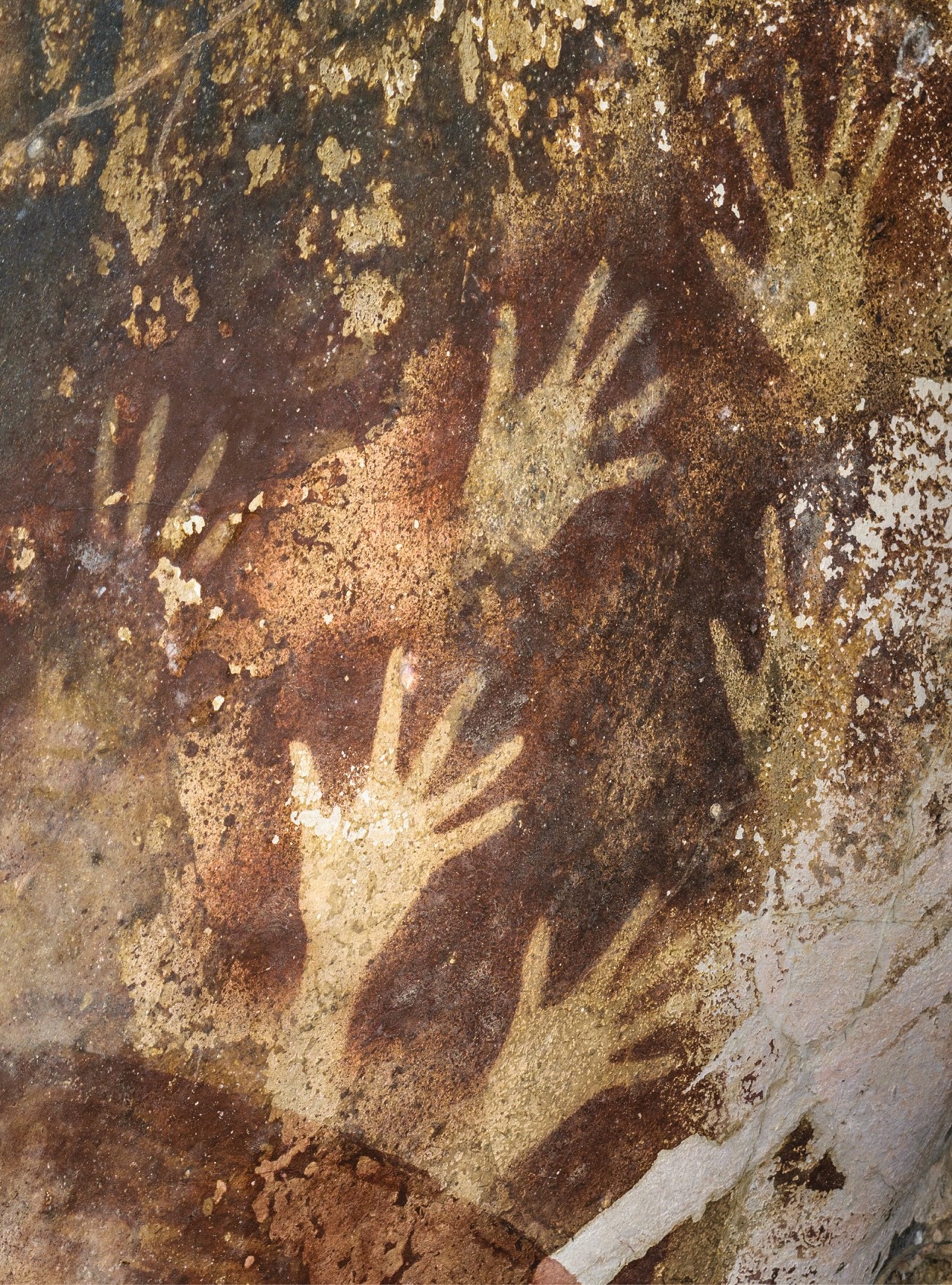
Mass extinctions had important long-term consequences, because in Australia and the Americas especially they reduced the number of potentially domesticable animals. With almost no wild animals that could be tamed, bred, and raised in captivity, the original human populations of Australia and the Americas had more limited food supplies and sources of muscle power than people elsewhere. As we will see in Chapters 3 and 4, peoples with domesticated animals such as horses, cattle, sheep, goats, and pigs enjoyed important advantages.
Glossary
- Paleolithic
- The period lasting from 2.6 million years ago to 13,000 years ago; the latter part, the late Paleolithic, saw a profusion of cultural change.
- shamanism [SHAH-mah-niz’m]
- A broad set of religious beliefs and practices, including direct communication with the supernatural realm and a belief in the existence of a spirit world where the dead live.
SOCIAL STRUCTURES
Paleolithic people lived in unstable bands of roughly 20 to 80 individuals, sometimes as many as 150—much larger than the social groups of chimpanzees or, in all probability, hominins of any other species but our own. These bands were composed of a few closely related families, and often a sprinkling of unrelated people as well. Groups could easily fragment as a result of quarrels. Stragglers normally would have wanted to join up with a band, especially in places where big-game hunting was the dominant way of life: it was much more efficient, and safer, to hunt in groups.
Like their hominin and probably pre-hominin ancestors, Paleolithic people had a very strong sense of who belonged to their group and who did not. Indeed, our species still has a powerful tendency to divide the human population into “us” and “them,” and to build strong bonds with one’s group—which helps explain the emotional satisfactions of activities such as team sports.
These small bands occasionally met up with other groups with whom they could swap goods, information, and young people of mating age. In this way, they created bonds of mutual obligation and kinship and also formed new families. Women tended to join their mates’ bands, to judge from DNA evidence. Within and among small bands, people cultivated one another’s good will by extending kindnesses, giving gifts, and doing favors. Individuals who did this cannily emerged as influential, and in this way they insured themselves against temporary misfortune. As one modern Inuit (Eskimo) put it, “The best place for [an Eskimo] to store his surplus is in someone else’s stomach.” The same attitudes and behaviors survive today; they can be observed in any workplace, residential neighborhood, or college dorm.
Late Paleolithic people lived a mobile but in many ways low-stress life. Those who roamed the grasslands of Eurasia or East Africa, thickly populated by large herbivores such as mammoths, deer, or gazelles, lived largely by hunting. People living by, or periodically visiting, seashores ate plenty of fish, mussels, crabs, clams, and seaweed. These groups were in the minority, however. In most places, Paleolithic people got most of their food by gathering fruits, berries, nuts, roots, and seeds, supplemented by hunting and scavenging. Everyone accumulated a refined understanding of their local ecosystems, learning the characteristics and habits of dozens of species of plants and animals. They generally didn’t have to work hard to acquire all the food they needed—probably about four to six hours per day on average. This left plenty of time for talk, instruction of the young, song and dance, and sleep. Paleolithic people also lived healthy lives (at least, by the standards of later populations), having few infectious diseases and getting plenty of exercise through their daily activities.