As we saw in Chapter 2, farming gradually spread from its several lands of origin. In most parts of the world, early farmers clustered together in villages. These weren’t entirely new: a few favored locations had supported villages of hunter-foragers or fisherfolk before farming. With farming, villages soon became the new norm, the basic cell of human society, and the typical human habitat. Most of your ancestors over the past 8,000 years probably lived in farming villages.
VILLAGE SOCIETY
Farm villages usually contained several dozen to several hundred people. As a rough rule, most adult men worked preparing fields, planting, tending, and harvesting crops. Adult women often tended and harvested crops too, and took primary responsibility for grinding grain, fetching water and fuelwood, and minding small children. Recent studies of bones of women from farming villages in central Europe after 5000 BCE imply a strenuous work load: they had upper-arm strength equal to today’s elite female rowers. Children by the age of five took part in farm routines, fetching wood and water, and weeding fields. These roles varied from place to place with the crops and technologies used and the prevailing cultural traditions and beliefs.
SOLIDARITY BEYOND KINFOLK Farm villages were made up partly of kinfolk. But some people lived close by others who weren’t their kin, and a new social category—neighbor—acquired importance. People in villages had to find ways to live harmoniously with others unrelated to them, which until then hadn’t been a large part of human experience. Forging bonds of solidarity with non-kin was especially important when big tasks needed doing, such as building a wall around one’s village. Villages that were subject to attack by strangers depended on solidarity among neighbors for survival.
The earliest farm villages, it seems, were composed of near equals. Old social hierarchies continued, based on age and gender and inherited ultimately from the deep hominin past. As in all societies, some people were held in higher esteem than others for their abilities. And settled farmers could own more than mobile people. But the opportunities for accumulation of wealth remained modest in early villages. Most families enjoyed roughly the same standard of living as their neighbors. This rough equality narrowed the scope for envy and jealousy, which are never far below the surface in human societies. Customs and rituals that emphasized community over individuals helped smooth over potential jealousies. Early villages developed festivals, often anchored by events in the agricultural calendar such as harvest time. Most villages today still have such celebrations.
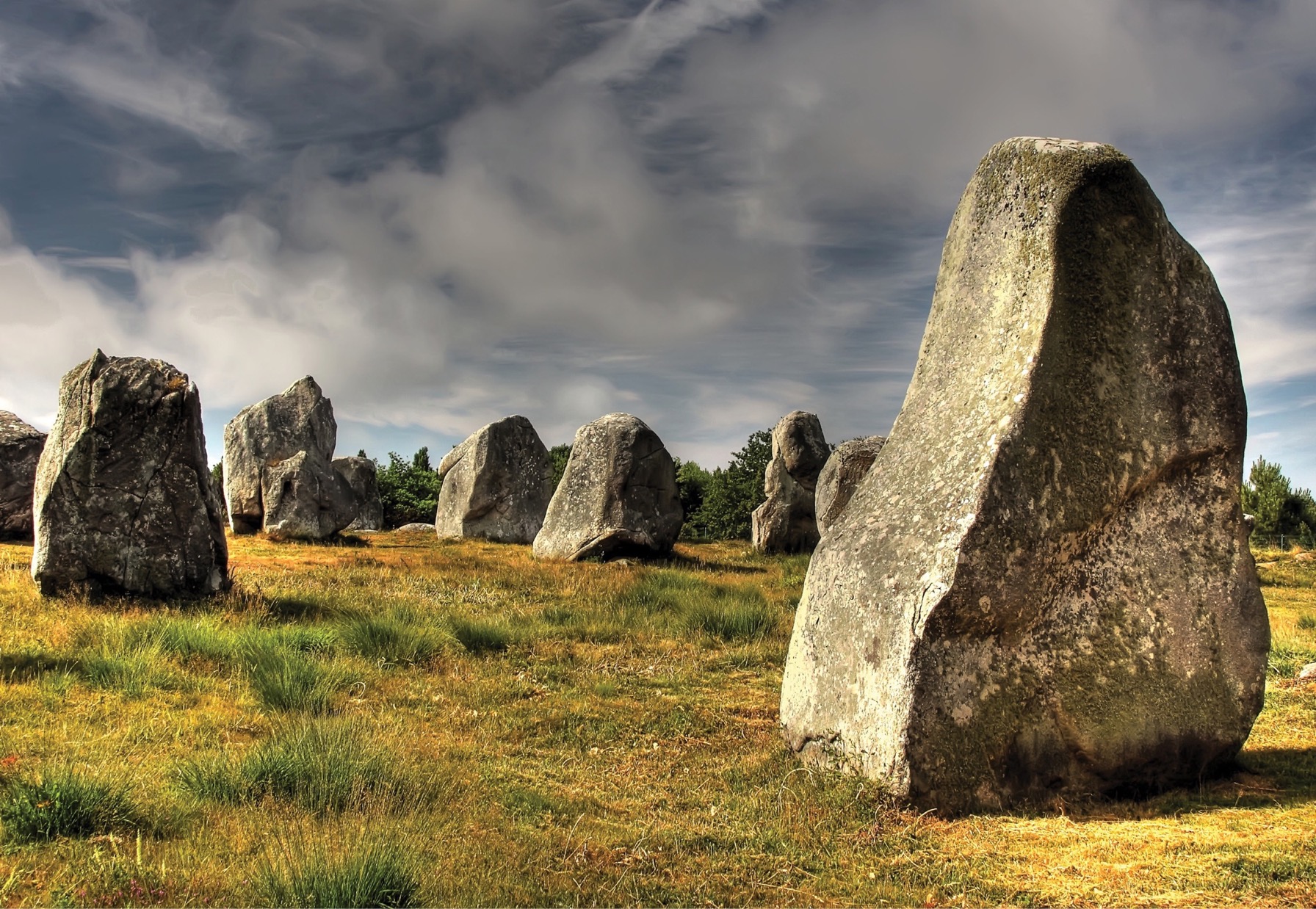
Carnac The standing stones of Carnac in Brittany date roughly from 4500 to 3300 BCE and indicate a level of social solidarity.
MAXIMIZING FERTILITY One feature of village life—noted in Chapter 2—was large numbers of children. Whereas hunter-foragers contrived to limit their fertility, farmers usually tried to maximize it. Roughly half of all babies died before their fifth birthday in farming villages. Parents wanted to be sure of having adult children to help out as they aged, so they eagerly welcomed births. Analysis of burials around the world suggests that women in early farming villages, on average, had two more babies in their lifetimes than did their forager ancestors. Just about all farming peoples scorned or pitied childless men and women. This cultural preference for lots of children remains strong today where village life prevails, although it tends to vanish within two generations in the context of city life.
POTTERY AND ITS USES Another characteristic of settled village life was pottery. Mobile people rarely used pottery because pots are heavy and break easily in transport. Typically made of clay and baked, at first in bonfires and later in small ovens called kilns, pots became essential household items in farm villages. As we saw in Chapter 2, the first pottery predated farming in a few places in East Asia, appearing as early as 18,000 BCE. Elsewhere, people generally settled down before taking up pottery. In the Fertile Crescent, for example, pottery appeared only around 7000 BCE, millennia after the first villages. It existed by 4500 BCE in North America, where the earliest finds are in Georgia and South Carolina, and by 3500 BCE in South America. Each of these inventions of pottery was independent of the others.
CONSIDERING THE EVIDENCE
Jomon Pots and Potters
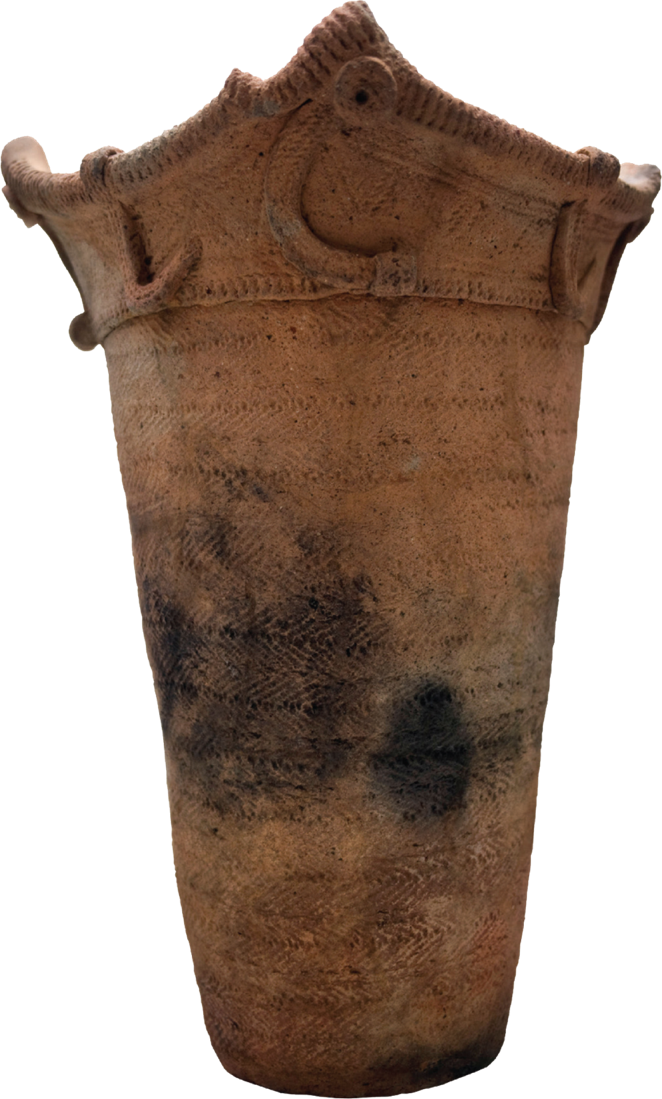
Pots, bowls, cups, and other vessels are so common today that it’s difficult to appreciate how revolutionary pottery was at first for storing and preparing food and liquids. Farmers produced most of the pottery that archeologists find, but some of the earliest pots yet found were made about 15,000 years ago in Japan by foraging and fishing people whom we call the Jomon. These people used at least some of their pots to cook salmon that passed along the northwestern shore of Japan to spawn. The pots were formed by hand without the aid of a potter’s wheel and were hardened in an open fire rather than inside a kiln. In later centuries, Jomon potters decorated their work with braided ropes (jomon in Japanese), but earlier vessels had more varied decorations, such as hatch marks, indentations, and bored holes. Most Jomon pots were left undecorated. Historians and archeologists often analyze variations in decoration, method of manufacture, and location of pottery fragments to trace movements of people and the expansion of material culture.
QUESTIONS FOR ANALYSIS
Like all tools, pottery improved humans’ ability to manipulate the environment. What could they do with pots that was difficult to accomplish with animal skins, stone tools, or baskets made from reeds? In what ways was pottery an energy technology?
Do you think the Jomon people might have used the vessel pictured here for cooking or storing? Why or why not?
How can pottery help reveal the migration or expansion of cultural groups?
Pottery answered villagers’ needs. Pots made it easier to store seeds, food, and liquids. They were useful for cooking, enabling people to make stews and soups with otherwise tough-to-digest foodstuffs. By boiling tough meat or fibrous beans all day, people could make meals that even toddlers and toothless elders could eat. So pottery expanded the range of potential foods, and in this way helped improve nutrition and life expectancy.
Pottery also served as a means of artistic expression. Although most pots were purpose-built and artistically bland, sometimes people lavished care on pottery. Certain styles were based on the shapes of objects, such as the rope-coiled pattern of Jomon pottery in Japan or the inverted bell-shaped pottery, called beakerware, in fashion in western Europe after 3000 BCE. Other styles became possible once pottery glaze was developed, allowing potters to use more colors and to paint designs on their pots.
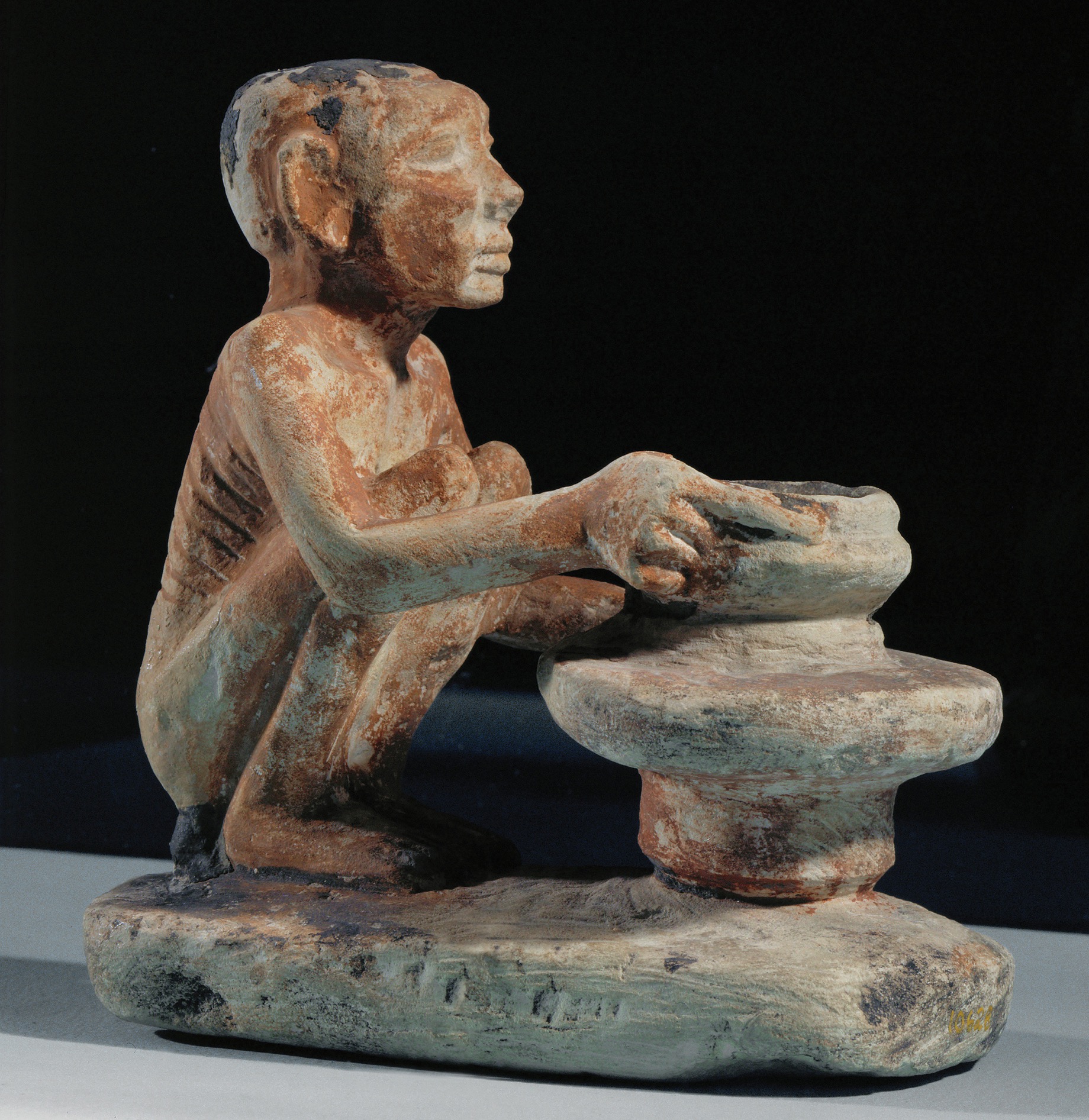
Potter’s Wheels An Egyptian statuette from around 2450 BCE shows a potter squatting in front of a wheel. This key technological advance had spread throughout many different cultures by this time.
Pots were extremely useful but hard to make in quantity until about 6000 BCE, when Mesopotamians developed the potter’s wheel. (Mesopotamia encompasses the basin of the Tigris and Euphrates Rivers in modern Iraq.) By spinning wet clay, one can quickly fashion it into desired shapes. The potter’s wheel was the Neolithic equivalent of the modern assembly line: using it, potters could make hundreds or thousands of nearly identical bowls.
THE RISKS OF VILLAGE LIFE
In Chapter 2, we saw that early farmers suffered from a handful of new diseases that were the result of settlement and farming. Village life, especially farming, also carried other risks, one of which was attack by strangers.
The core of the problem was that villagers, unlike foragers and hunters, had much to lose by running away from a fight. Farming folk used agricultural tools and storage vessels, usually pottery, and lived in carefully constructed dwellings. In some places, they had domesticated animals. They couldn’t flee at a moment’s notice without losing almost everything. So when raiders descended on them, they often chose to stand and fight. Many of the skeletons of men from early villages show fractures of the left forearm, an indication that they had parried blows from weapons such as clubs—although whether wielded by marauding strangers or irritated neighbors we cannot tell.
Fickle weather posed another risk. Village farmers couldn’t gather up everything they valued at a moment’s notice if floodwaters threatened to engulf them. Some of the early village walls—at Jericho in the Jordan River valley, for example—may have been built to deflect floods as much as to repel attackers.
In most locations, crop-killing drought was a more worrisome risk than flood. Villagers developed methods of ensuring water supplies when rains didn’t suffice, typically by irrigation—diverting water from lakes, streams, and rivers to their fields and gardens. In long droughts, however, even irrigation channels might run dry, leading to hunger and perhaps starvation.
The risks and concerns of village life, whether from one’s fellow humans or from the caprice of the weather, affected culture. To judge from art, architecture, burials, and other snippets of evidence, early villagers developed religious practices that emphasized fertility—of the soil, their animals, and themselves. In dry lands, rain deities became popular. Symbols of fertility—bulls or pregnant women, for example—decorated countless village homes. In a world where babies died so often, where crops withered without warning, it made sense to worship fertility in its various forms.
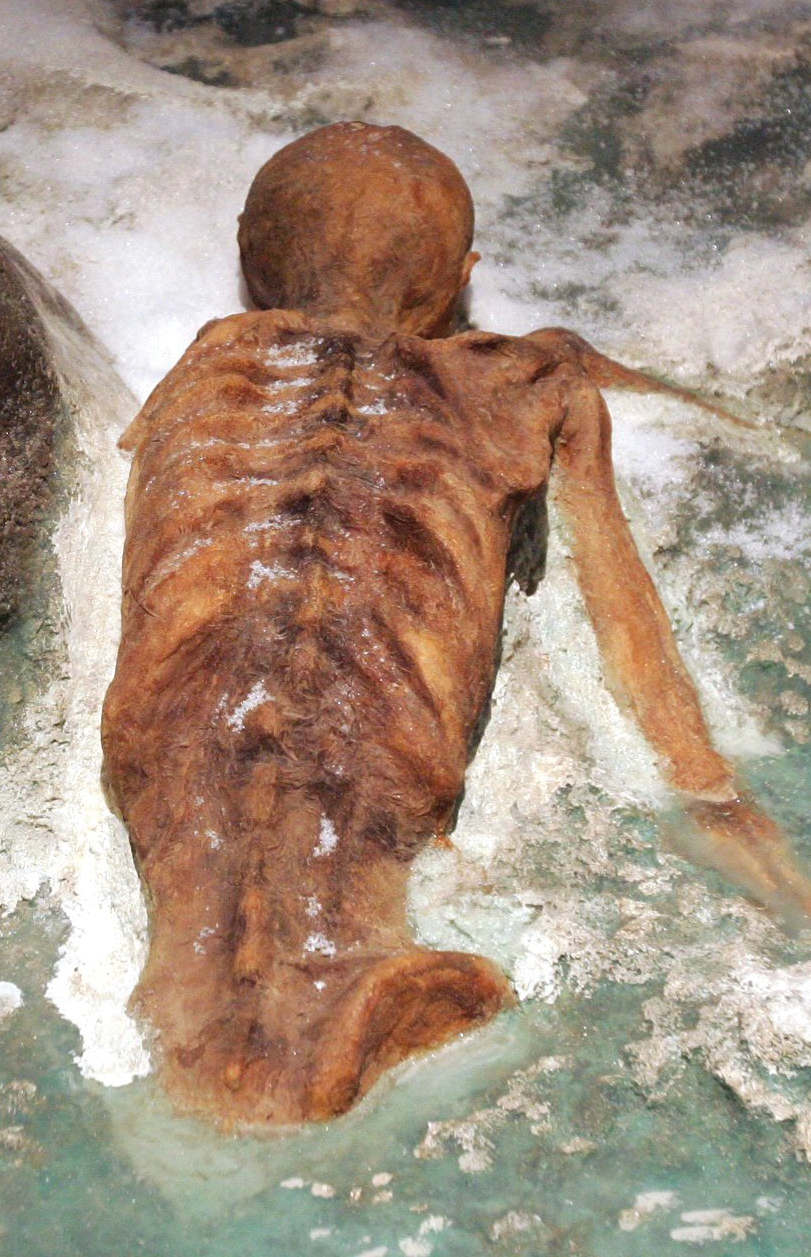
Death by Violence A reconstruction of the site in the Alps where Ötzi the Iceman was found. Not only was he carrying weapons, but his remains suggest that he had sustained battle wounds—evidence of the violence that could occur in farming villages.
Some villagers also developed ancestor cults, a widespread practice wherever people lived in the same place over many generations. Villagers hoped their departed ancestors could intervene with supernatural powers and protect them against the hazards of their world. Worship of ancestors and attachment to their places of burial made villagers even more reluctant to flee in the event of attack, drought, or flood.
THE ADVANTAGES OF VILLAGE LIFE
Despite these risks, and the toll of disease discussed in Chapter 2, the populations of farming villages grew faster than those of hunters and foragers. In favorable spots, the village way of life could feed 100 times as many people per acre as could hunting and foraging. Clusters of villages formed in favored places such as the soft alluvial soils of riverbanks or deltas, or the light, windblown loess soils (loamy with small-grain clay or silt) of northern China and central Europe. The distribution of people over the face of the Earth, always uneven, became more so with the spread of farming villages. At a rough guess, the world contained 6 million people at the dawn of agriculture (or the start of the Neolithic, ca. 10,000 BCE) and 20 million by the time the first cities appeared (ca. 3200 BCE), most of them living along rivers. The spread of village farming was the main innovation that allowed such population growth.
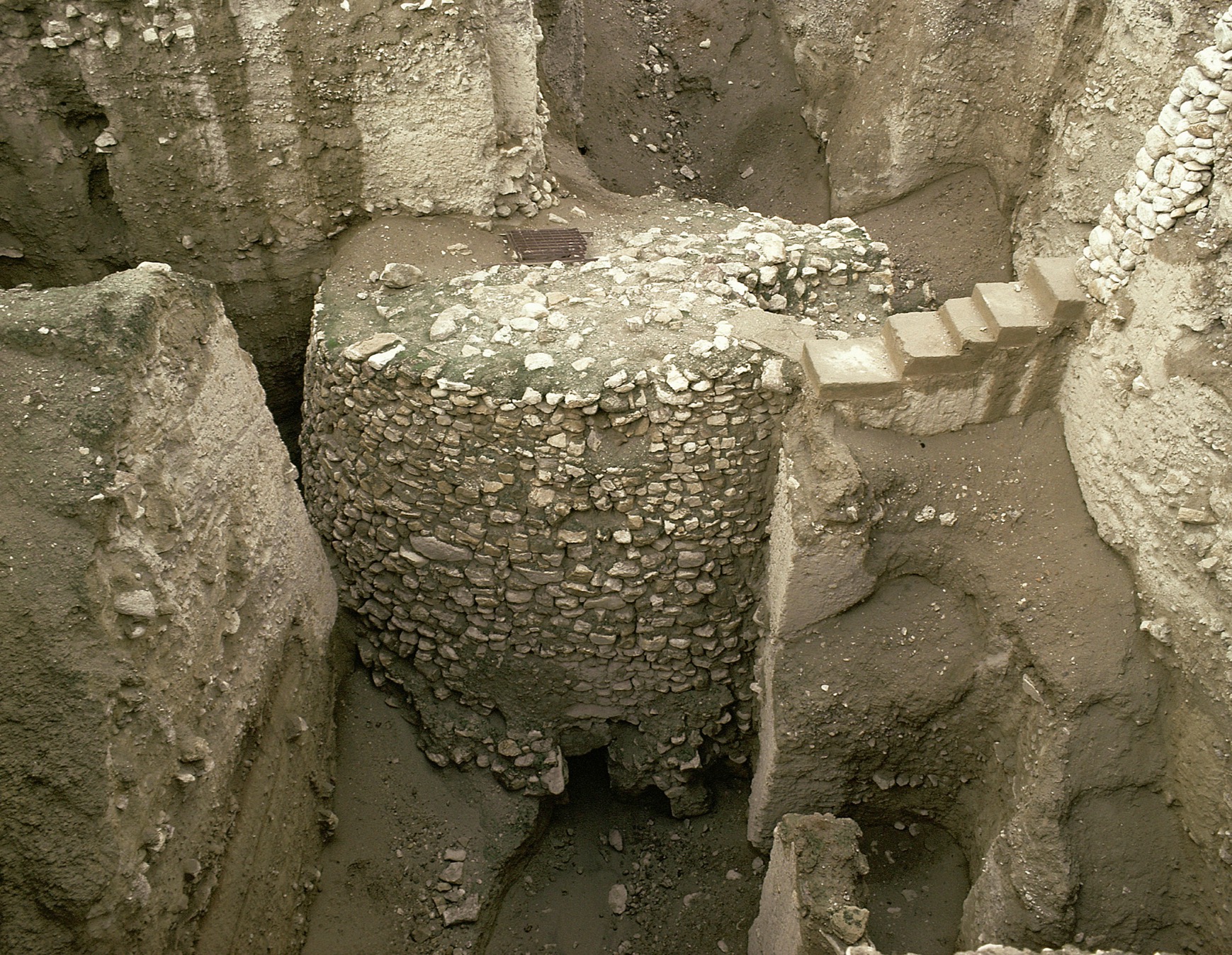
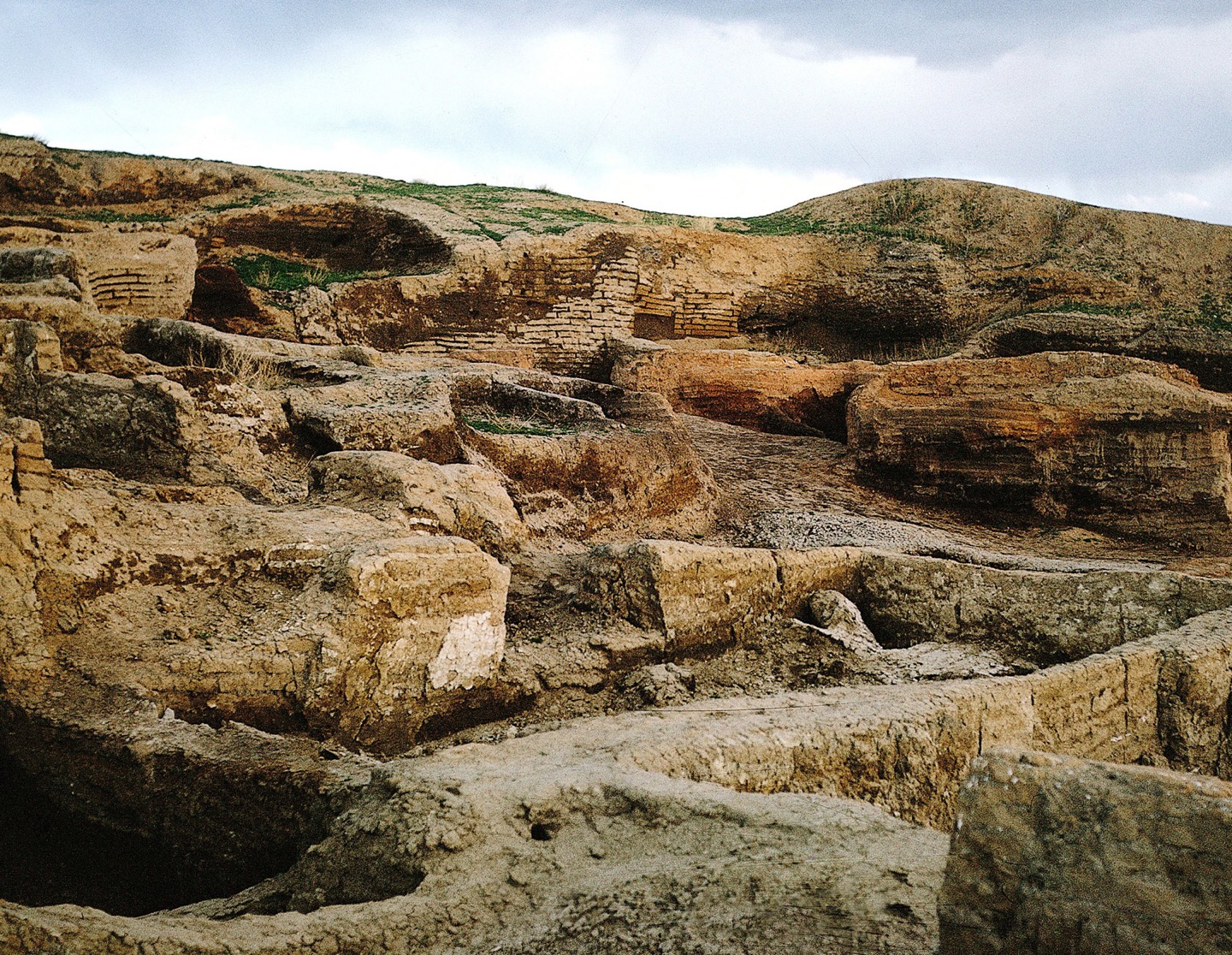
JERICHO AND ÇATALHÖYÜK In ideal locations, villages could contain a few thousand people. Jericho, for example, located near a series of freshwater springs and a supply of salt—a commodity in great demand as a food preservative—seems to have been home to some 2,000 people by 7000 BCE. Larger still was Çatalhöyük, a village in south-central Anatolia. Founded around 7500 BCE, it attained a size of perhaps 6,000 or 8,000 residents. It was a well-watered site, with rich alluvial soils and a supply of obsidian. A black volcanic glass, obsidian made good, sharp edges for tools and weapons. It was also a valuable trade commodity: exports of obsidian contributed to Çatalhöyük’s prosperity. The village houses were all similar, made of mud brick with no doors but with openings in their roofs, perhaps intended for better defense against enemies. Its people lived off their wheat and barley farming; sheep, goat, and cattle raising; and a little hunting. Men and women seem to have enjoyed similar nutrition, a sign of relative gender equality. Despite its size, Çatalhöyük was not a city: it had no public buildings or temples, no public spaces or plazas, and no signs of a ruling elite.
Architectural Advances Both of these sites are indicative of the new kinds of architecture embraced by settled agricultural communities: The Tower of Jericho (left) was built around 8000 BCE and measures 30 feet (9 m) in diameter and nearly 28 feet (8.5 m) high. The foundations of the 9000-year-old village of Çatalhöyük (right) reveal how thousands of residents lived in houses and farmed over a fairly sizable area
SHIFTING AGRICULTURE Most early farmers didn’t live in large villages like Çatalhöyük, and some didn’t live in settled villages at all. Especially in forest zones without good soils, shifting agriculture often made more sense than permanent village settlement. Shifting agriculture, also called slash-and-burn or swidden, involved cutting and burning a clearing, farming it for a few years (usually three to ten), and then moving on to start anew elsewhere. At first, swidden farmers obtained good yields because the ash from burned forest contained abundant nutrients for their crops. But as nutrient supplies dwindled and weeds grew up, it paid to head elsewhere and repeat the cycle. These people typically mixed their farming with a fair bit of hunting and foraging in surrounding forests. Shifting agriculture was the most practical way to farm in much of the world. In some places, it still is.
Once people became farming villagers, they tended not to change their ways. Dense populations required food production. The archeological record shows few cases in which farming communities reverted to hunting and foraging. In this respect, the history of early farming shows a clear tendency: many communities shifted from food collection to food production, and few shifted the other way, giving up farming. This did happen occasionally, though—probably more often in the forest zones of Africa and Southeast Asia than elsewhere—because farming in moist tropical forests with the crops available then was not clearly preferable to hunting and foraging.
A type of farming in which farmers cleared land, farmed it for a few years, and then moved to a new patch of land once soil was depleted; often used in forest zones with poor soils.