1
Early Civilizations
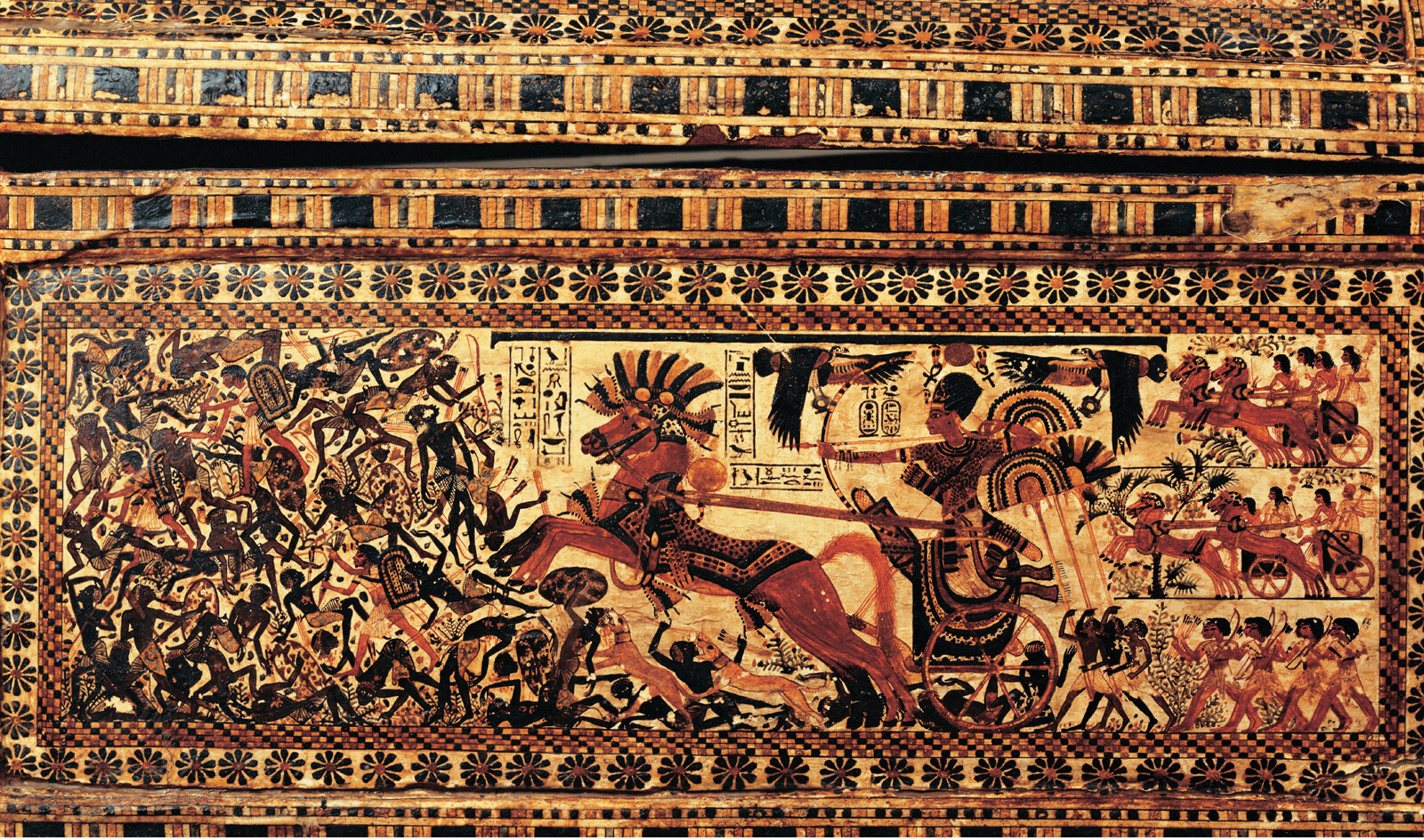
More information
The battle is a chaotic flood of bodies, all drawn at a smaller scale than the pharaoh is. Other Egyptian warriors and trained lions attack the enemies, who are drawn darker.

BEFORE YOU READ THIS CHAPTER |
 |
STORY LINES
- To study the earliest civilizations, historians interpret evidence from a diverse array of sources, many of them environmental, visual, and archaeological.
- All civilizations emerge as the result of complex historical processes specific to a time and place, yet share certain defining features.
- Prominent individuals can achieve power through the use of force, but maintaining power requires legitimacy.
- Those individuals wielding power in ancient Mesopotamia and Egypt responded in different ways to the challenge of establishing legitimacy.
CORE OBJECTIVES
- UNDERSTAND the challenges involved in studying the distant past and the crucial importance of interdisciplinary methods and unconventional sources.
- DEFINE the key characteristics of any civilization.
- IDENTIFY the factors that shaped the earliest cities.
- EXPLAIN Hammurabi’s tools for governing the cities of his empire.
- DESCRIBE the main differences between the Mesopotamian and Egyptian civilizations.
THERE WAS A TIME, the story goes, when all the peoples of the earth shared a common language and could accomplish great things. Together, they aspired to build a city with a tower reaching to the sky. But their god was troubled by this, so he destroyed their civilization by making it impossible for them to understand each other’s speech.
We know this as the legend of Babel. It was a story that probably circulated among peoples of the ancient world for thousands of years. It then became part of the Hebrew book we call by its Greek name, Genesis: “the beginning.” This story lets us glimpse some of the conditions in which early civilizations arose, and it also singles out the challenges that make it hard to study them. We no longer speak the same languages as those ancient peoples, just as we no longer have direct access to their experiences or beliefs.
Such foundational stories are usually called myths, and they are an early form of history. For the people who told them, these tales helped to make sense of the present by explaining the past. The fate of Babel conveyed the message that human beings are powerful when they share a common goal, and what enables that interaction is civilization. To the peoples of the ancient world, the benefits of civilization—stability, government, art, writing, technology—were usually products of sedentary city life. The very word civilization derives from the Latin word civis, “city.” Cities, however, became possible only as a result of innovations that began around the end of the last Ice Age, about 13,000 years ago, and that came to fruition some 8,000 years later. The history of civilization is therefore a short one. Within the study of humanity, which reaches back to the genus Homo in Africa some 1.7 million years ago, it is merely a blip on the radar screen. Even within the history of Homo sapiens, the species to which we belong and that evolved about 40,000 years ago, civilization is a very recent development.
The study of the earliest civilizations is both fascinating and difficult. Historians still do not understand why cities should have developed in the region between the Tigris and Euphrates Rivers, in what is now Iraq. Once developed, however, the basic patterns of urban life quickly spread and proliferated. A network of trading connections linked early cities and other seasonal settlements, but intense competition for resources made alliances fragile and warfare frequent. Then, around the middle of the second millennium B.C.E. (“Before the Common Era,” equivalent to the Christian dating system B.C., “Before Christ”), some rulers of independent cities started to make broader claims to power over their citizens and other states. How this happened—and how we know that it happened—is the subject of Chapter 1.