Western Christendom
No region suffered more from the Black Death than western Christendom, and no region made a more spectacular comeback. From 1100 to 1300, Europe had enjoyed a surge in population, economic growth, and significant technological and intellectual progress, only to see these achievements halted in the fourteenth century by famine and the Black Death. Europeans responded by creating new political and cultural forms. New dynasties arose, and a cultural flourishing called the Renaissance revived Europe’s connections with its Greek and Roman past and produced masterpieces in art, architecture, and other forms of thought.
The Catholic Church, Reactions, and Revolts
The Black Death brought with it social and economic disorder that challenged the political order. The massive death toll and the suddenness with which the disease struck also prompted survivors to ask questions about the major institution uniting Christendom, the Catholic Church. Even before the plague arrived, the late medieval western church had found itself divided at the top (at one point there were three popes) and challenged from below, both by individuals critical of the extravagant lifestyles of some clergymen and by increasing demands on the clergy and church administration. Now the Black Death raised questions about God’s relationship to humankind and the Catholic Church’s role as God’s appointed mediator on earth: Could sinful mortals ever find mercy from a vengeful God, and could an already overstretched and self-interested church lead them to salvation? Facing challenges to its right to define religious doctrine and practices, the church responded by demanding strict obedience to the true faith. This entailed the persecution of Jews, Muslims, “witches,” and those who engaged in sexual practices that the church considered deviant, and thus impermissible and heretical. But the church also reacted to society’s suffering during this period, expanding its charitable and bureaucratic functions, providing alms to the urban poor, and registering births, deaths, and economic transactions. Its responses reassured many that God—and the church—had not abandoned true Christians, and shored up the power of religious authorities.
Persecution and administration cost money. Indeed, the needs as well as the extravagances of the clergy spurred certain questionable money-making tactics. One was the selling of indulgences (certificates that reduced one’s time in purgatory, where souls continued the repentance that would eventually make them fit for heaven). This sort of unconventional fund-raising, and the growing gap between the church’s promises and its ability to bring Christianity into people’s everyday lives, more than the persecutions, eventually sparked the Protestant Reformation (see Chapter 12).
At the same time, the high death toll of the fourteenth and fifteenth centuries emboldened those who survived to seek higher wages or reductions in their feudal obligations. When landlords resisted or kings tried to impose new taxes, there were uprisings, including a 1358 peasant revolt in France that was dubbed the Jacquerie (the term derived from “Jacques Bonhomme,” a name that contemptuous “masters” used for all peasants). Armed with only knives and staves, the peasantry went on a rampage, killing hated nobles and clergy and burning and looting all the property they could get their hands on. At issue was the peasants’ insistence that they should no longer be tied to their land or have to pay for the tools they used in farming.
A better-organized uprising took place in England in 1381. Although the English Peasants’ Revolt began as a protest against a tax levied to raise money for a war on France, it was also fueled by postplague labor shortages: serfs demanded the freedom to move about, and free farmworkers called for higher wages and lower rents. When landlords balked at these demands, aggrieved peasants assembled at the gates of London. The protesters demanded abolition of the feudal order, but the king ruthlessly suppressed them. Nonetheless, in both France and England a free peasantry gradually emerged as labor shortages made it impossible to keep peasants bound to the soil.
State Building and Economic Recovery
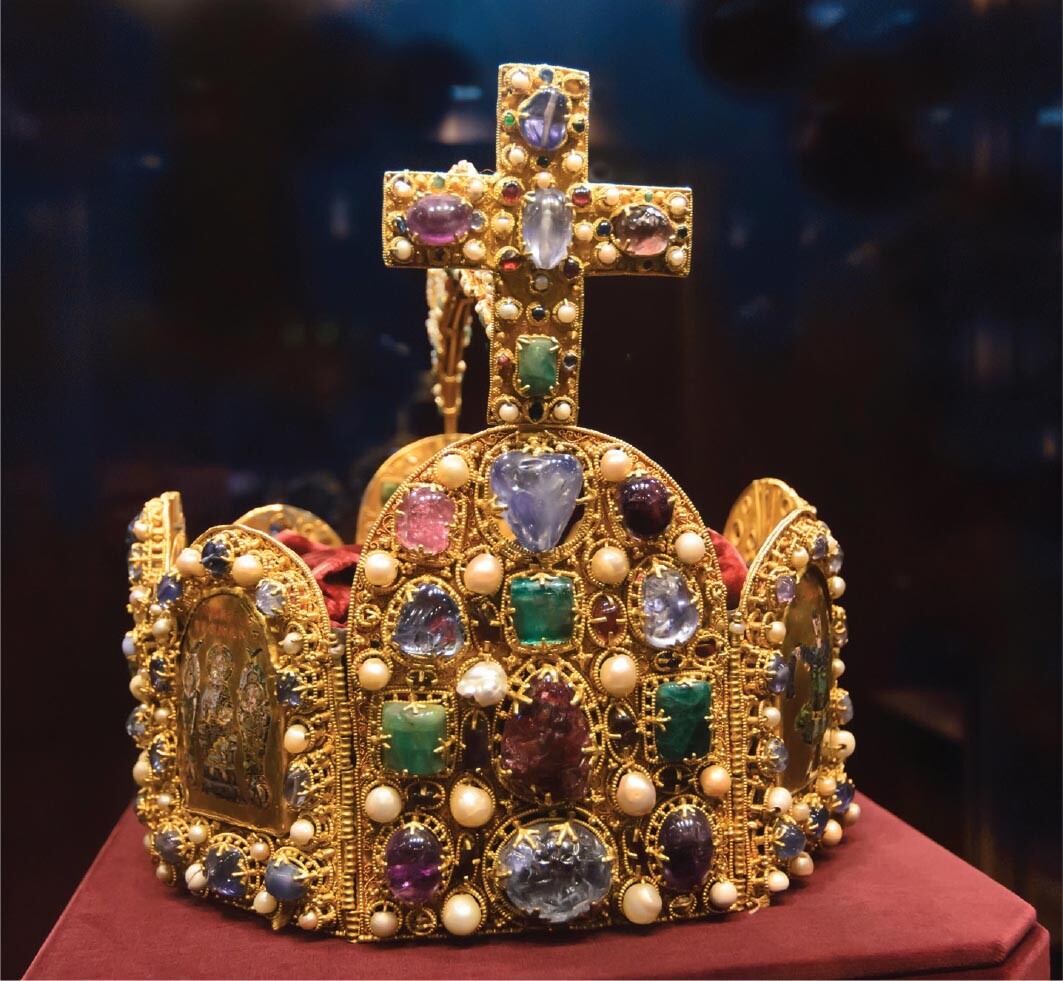
Out of the chaos of famine, disease, and warfare, the diverse peoples of Europe found a political way forward. This path involved the formation of centralized monarchies, much as the Ottomans, Safavids, Mughals, and Ming were accomplishing in Asia. (A monarchy is a political system in which one individual typically inherits supreme power.) Consolidation of these political systems occurred sometimes through strategic marriages but more often through warfare, both between local princely families and with local aristocratic allies and foreign mercenaries. Many of these dynasties fell as a result of civil war or conquest, but some, like the Tudors in England and the Valois in France, consolidated considerable power.
More information
The Imperial Crown of the Holy Roman Empire. The crown has an octagonal shape and is studded with pearls and precious stones. Its eight hinged plates are arched at the top. The crown has a single arch from the front to the back plate. Above the front plate and in front of the arch is a jeweled cross.
In central Europe, one family, the Habsburgs, established a powerful and long-lasting dynasty. This family provided continuous emperors for the Holy Roman Empire from 1445 to 1806. The Holy Roman Empire included territory that would later be divided into separate states such as the Netherlands, Germany, Austria, Belgium, and Croatia, and it also incorporated parts of present-day Italy, Poland, and Switzerland. Yet the Habsburg monarchs never succeeded in restoring an integrated empire to western Europe (as Chinese dynasts had done by claiming the mandate of heaven). Indeed, although hereditary monarchy was Europe’s dominant form of governance, there were also a number of oligarchic republics in which a handful of wealthy and influential voters selected their leaders, a sprinkling of political systems ruled by archbishops or other clergymen, and many “free” towns, surrounded by walls and protective of their special privileges.
Those who sought to rule the emerging states faced numerous obstacles. For example, rival claimants to the throne financed private armies. Also, the clergy demanded and received privileges and often meddled in politics. The church’s huge landholdings and exemptions from taxation made it, too, a formidable economic powerhouse. Towns—many of which had the right to rule themselves—refused to submit to rulers’ demands. And once the printing press became available in the 1460s, printers circulated anonymous pamphlets criticizing the court and the clergy. Some states had consultative bodies—such as the Estates-General in France, the Cortes in Spain, and Parliament in England—in which princes formally asked representatives of their people for advice and, in the case of the English Parliament, for consent to new forms of taxation. Such bodies gave no voice to most nonaristocratic men and no representation at all to women. They did, however, allow the collective expression of grievances against policies that the aristocracy found troubling.
If Europe in 1450 had no central government and no prospect of obtaining political unity, it also had no common language. In China, the written literary Chinese script remained a key administrative tool for the dynasts. And in the Islamic world, Arabic was the common language of faith, Persian the language of poetry, and Turkish the language of administration. But in Europe, Latin lost ground as rulers chose various regional dialects to be their official state language. For centuries afterward, Latin continued to be the language of the church and of scholarship. Poets, however, took advantage of the upgrading of vernacular languages such as Italian or English and composed sophisticated poetic masterpieces, such as Dante Alighieri’s The Divine Comedy or, later, Edmund Spenser’s The Faerie Queen.
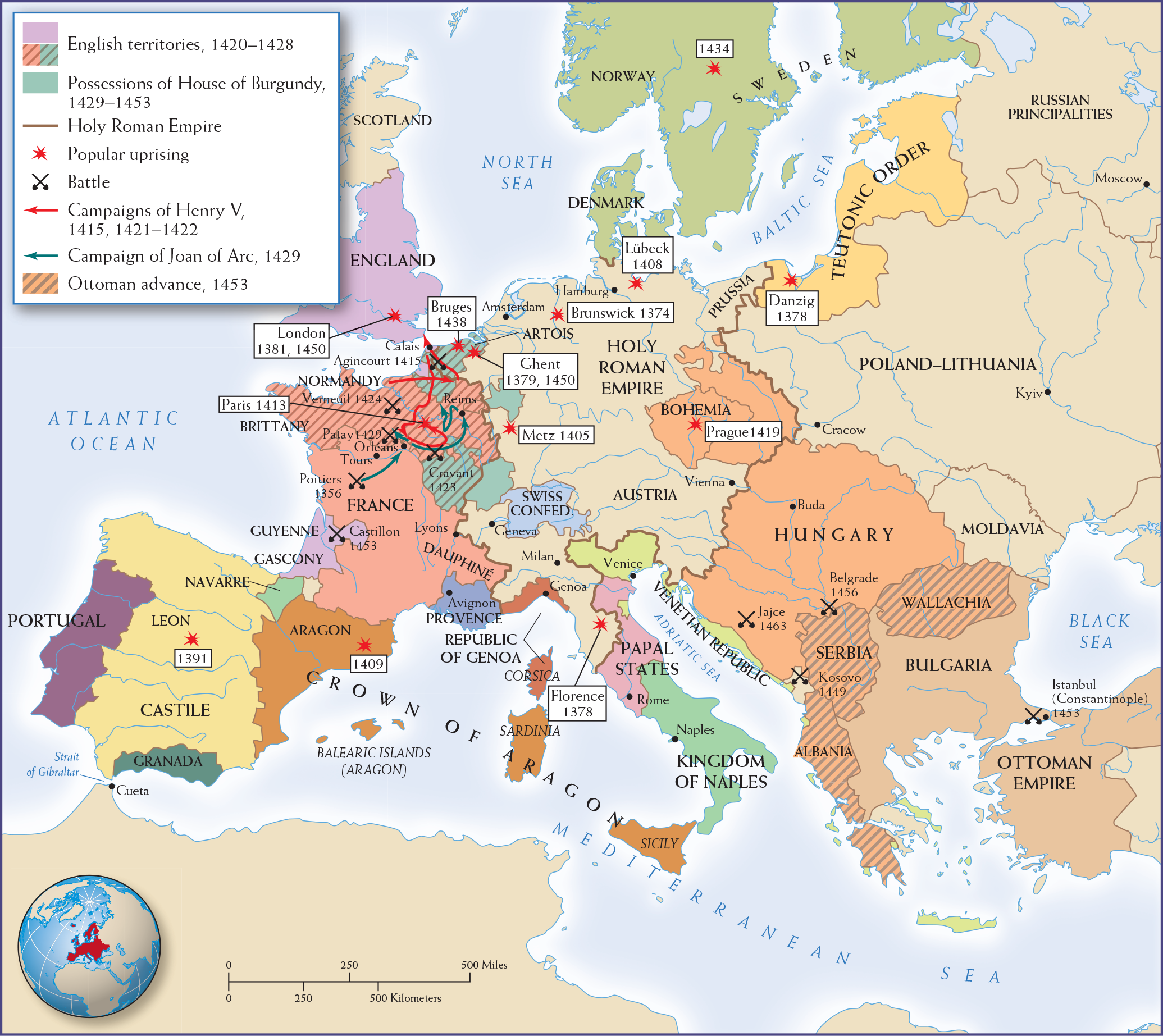
Despite, or perhaps because of, Europe’s political fragmentation, new economic initiatives began to take hold, as the English and Flemish competed to expand cloth production and German and Dutch merchants extended their trading networks in the North Sea. Economic recovery was swiftest in southern Europe, where trade with Southwest Asia enriched merchants and subsidized the flourishing of luxury industries, such as glass-making in Venice. Although they remained small compared with other Eurasian cities such as Istanbul or Beijing, Europe’s towns rebounded quickly from the Black Death, particularly in Italy, the Netherlands, and along the North Sea coast. (See Map 11.3.) New prosperity and the influx of Christian exiles from Istanbul into Italian city-states such as Venice and Florence led to a cultural flowering known as the Renaissance (discussed shortly). In northern and western Europe, the process took longer. In England and France, in particular, internal feuding, regional warfare, and religious fragmentation delayed recovery for decades (see Chapter 12).
Political Consolidation and Trade in Portugal
Portugal’s fortunes demonstrate how political stabilization and the emergence of a stronger state could be useful in the revival of trade. After the chaos of the fourteenth century, Spain, England, and France followed the Portuguese example and established national monarchies. In Spain and Portugal, warfare against Muslims would help unite Christian territories, and Mediterranean trade would add valuable income to state coffers.
Through the fourteenth century, Portuguese Christians devoted themselves to fighting the Moors, who were Muslim occupants of North Africa, the western Sahara, and the Iberian Peninsula. Decisive in this struggle was the Portuguese decision to cross the Strait of Gibraltar and seize the Moorish Moroccan fortresses at Ceuta, in North Africa: their ships could now sail between the Mediterranean and the Atlantic without Muslim interference. With that threat diminished, the Portuguese perceived their neighbor Castile (part of what is now Spain) as their chief foe. Under João I (r. 1385–1433) the Castilians were defeated, and the monarchy could seek new territories and trading opportunities in the North Atlantic and along the West African coast. João’s son Prince Henrique, known later as Henry the Navigator, further expanded the family’s domain by supporting expeditions down the coast of Africa and offshore to the Atlantic islands of the Madeiras and the Azores. The west and central coasts of Africa and the islands of the North and South Atlantic, including the Cape Verde Islands, São Tomé, Principe, and Fernando Po, soon became Portuguese ports of call.
The Portuguese monarchs granted these largely uninhabited Atlantic islands to nobles as hereditary possessions on condition that the grantees colonize them, and soon the colonizers were establishing lucrative sugar plantations. In gratitude, noble families and merchants threw their political weight behind the king. Subsequent monarchs continued to reduce local elites’ authority and to ensure smooth succession for members of the royal family. This political consolidation enabled Portugal to thrive in the wake of the Black Death.
Dynasty Building and Reconquest in Spain
The road to Spanish unity was arduous. Medieval Spain comprised rival kingdoms that quarreled ceaselessly. Spain also lacked religious homogeneity: Muslims, Jews, and Christians lived side by side in relative harmony, and Muslim armies still occupied strategic areas in the south. Over time, however, marriages and the formation of kinship ties among nobles and between royal lineages yielded a new political order. One by one, the major houses of the Spanish kingdoms intermarried, culminating in the fateful wedding of Isabella of Castile and Ferdinand of Aragon. Thus, Spain’s two most important provinces were joined, and Spain became a state with which to be reckoned.
More information
Map 11.3 is titled Western Christendom, 1400-1500. The map shows English territories from 1420 to 1428, possessions of House of Burgundy from 1429 to 1453, the Holy Roman Empire, popular uprisings, battles, the campaigns of Henry the Fifth in 1415 and 1421 to 1422, the campaign of Joan of Arc in 1429, and the Ottoman advance in 1453. Some of the countries and regions on the map are Portugal; Castile, which had a popular uprising in Leon in 1391; Granada; Navarre; and the Crown of Aragon with a popular uprising in 1409. Others include Provence, with the city Avignon; Guyenne; and Gascony. France is made up of the regions of Dauphine, Brittany, and Normandy. Joan of Arc went from Reims to Patay where there was a battle and from Poitiers to Orleans. English territories from 1420 to 1428 include the areas of Brittany, Artois, and Normandy and the cities of Patay, Verneuil which has a battle in 1424; Paris which has an uprising in 1413; Cravant which has a battle in 1423; Reims, Agincourt which had a battle in 1415; Calais; Bruges which has an uprising in 1438; and Ghent which had an uprising in 1379 and 1450. The Holy Roman Empire includes the cities of Metz, which had an uprising in 1405; Geneva; Milan; Florence, which had an uprising in 1378; Austria and Vienna; Brunswick, which had an uprising in 1374; Hamburg; Lubeck, which had an uprising in 1408; and Prussia. The Papal States includes the city of Rome. The Venetian republic includes the city of Venice. The Kingdom of Naples includes the city of Naples. Another country is the Swiss confederation. Hungary is made up of Serbia; Wallachia; Bohemia; and the cities of Prague, which had an uprising in 1419; Buda; Jajce, which had a battle in 1463; Belgrade with a battle in 1456; and Kosovo, which had a battle in 1449. The Ottomans advanced into Serbia and Wallachia in 1453. Other countries/regions include Moldavia; the Russian Principalities with the city of Moscow; the Teutonic order with the city of Danzig, which had an uprising in 1378; Denmark; Sweden, which had an uprising in 1434; and the Ottoman Empire, which includes Bulgaria and the city of Istanbul, which had a battle in 1453.
MAP 11.3 | Western Christendom, 1400–1500
Europe was a region divided by dynastic rivalries during the fifteenth century. Locate the most powerful regional dynasties on the map: Portugal, Castile, Aragon, France, Burgundy, England, and the Holy Roman Empire.
- Using the scale, contrast the sizes of political units in this map with those in Maps 11.2 (Ottoman Empire) and 11.4 (Ming China). Explain the significance of the differences.
- Where did popular uprisings take place? Based on your reading, why did those regions experience popular unrest?
- Based on the map, why might the Venetian Republic have been particularly engaged, both in trade and intermittent warfare, with the Ottomans?
THE UNION OF CASTILE AND ARAGON By the time Isabella and Ferdinand married in 1469, Spain was recovering from the miseries of the fourteenth century. This was more than a marriage of convenience. Castile was wealthy and populous; Aragon enjoyed an extended trading network in the Mediterranean. Together, the monarchs brought unruly nobles and distant towns under their domain. They topped off their achievements by marrying their children into other European royal families—especially the Habsburgs, central Europe’s most powerful dynasty.
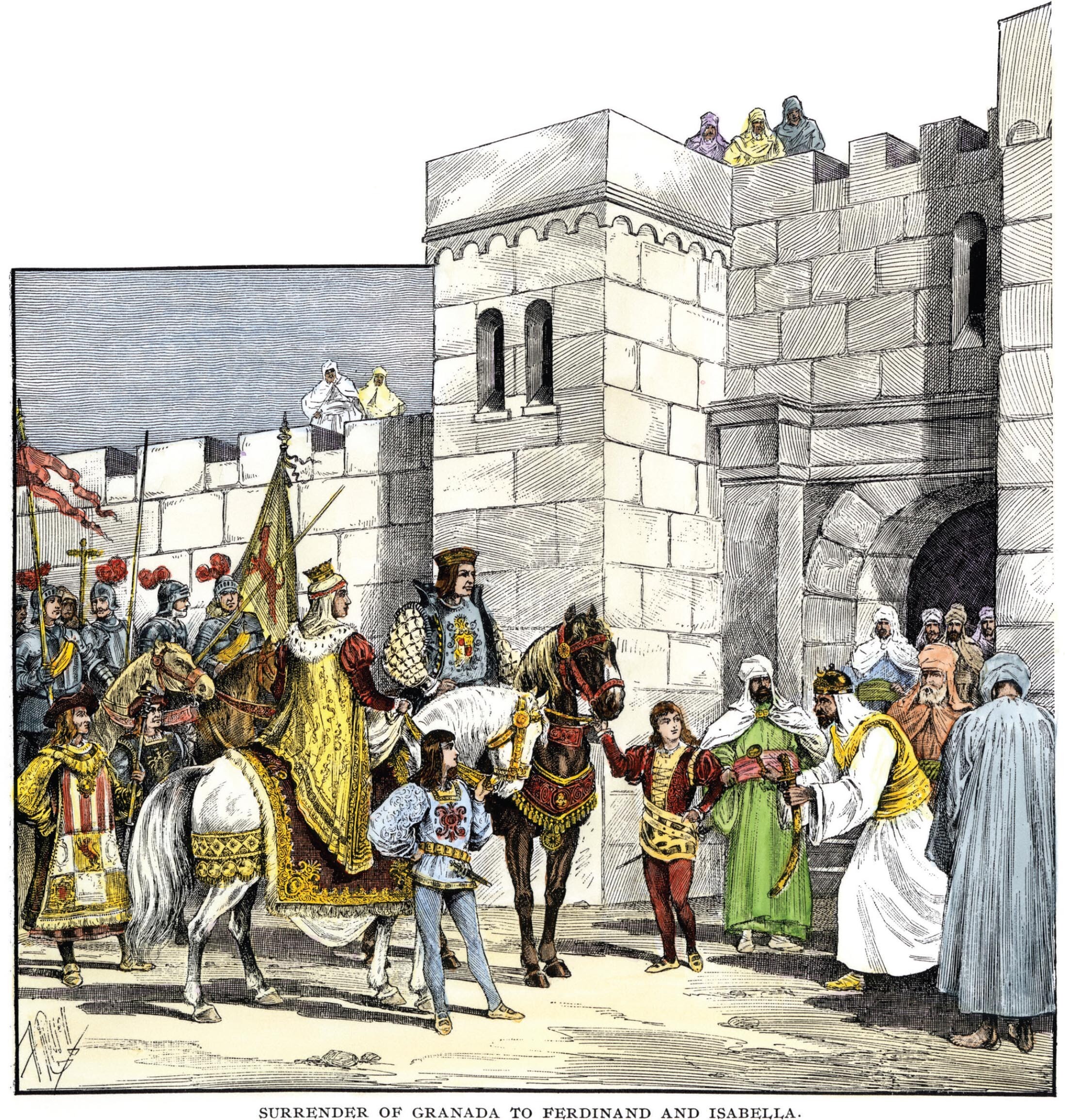
The new rulers also sent Christian armies south to push Muslim forces out of the Iberian Peninsula. By the mid-fifteenth century, only Granada, a strategic lynchpin overlooking the straits between the Mediterranean and the Atlantic, remained in Muslim hands. After a long and costly siege, Christian forces captured the fortress there in January 1492. This was a victory of enormous symbolic importance, as joyous as the fall of Constantinople was depressing for Christians. Many people in Spain thumped their chests in pride, unaware or unconcerned that at the same time Ottoman armies were conquering large sections of southeastern Europe.
THE INQUISITION AND WESTWARD EXPLORATION Just as the Safavid rulers had tried to stamp out all non-Shiite forms of Islam within their domains, so Isabella and Ferdinand sought to drive all non-Catholics out of Spain. Terrified by Ottoman incursions into Europe, they launched an Inquisition in 1481, taking aim especially against conversos—converted Jews and Muslims—whom they suspected were Christians only in name. When Granada fell, the crown ordered the expulsion of all Jews from Spain; after 1499, a more tolerant attempt to convert the Moors by persuasion gave way to forced conversion—or emigration. This lack of religious toleration meant that Spain, like other European states in this era, became increasingly homogenous. With fewer groups vying for influence within their territories, rulers turned their attention outward, fueling rivalries among the various European states.
More information
A colorized woodcut depicting Sultan Muhammad XII surrendering to King Ferdinand and Queen Isabella. The sultan stands in front of the king and queen who ride on horseback and holds his sword and key to the city out to them. A group of robed men stand behind the sultan and a group of armored men ride on horseback behind the king and queen. Two people hold the leads of the king and queen’s horses. There is a walled city entrance in the background with several robed figures atop it.
Confident in the stability of their state, the Spanish monarchs were willing by late 1491 to listen to a Genoese navigator whose pleas for patronage they had previously rejected. Christopher Columbus promised them unimaginable riches that could finance their military campaigns and bankroll a crusade to liberate Jerusalem from Muslim hands. Off he sailed into the Atlantic with a royal patent that guaranteed the monarchs a share of all he discovered. Soon the Spanish economy was reorienting itself toward the Atlantic, and Spain’s merchants, missionaries, and soldiers were preparing for conquest and profiteering in what the Spanish had perceived, just a few years before, as a blank space on the map.
The Struggles of France and England and the Success of Small States
Warfare and strategic marriages allowed the Portuguese and Spanish monarchies to consolidate state power and to lay the foundations for revived commerce. But by no means were all states immediately successful. In France and England, the great age of European monarchy had yet to dawn, so consolidation often came through warfare.
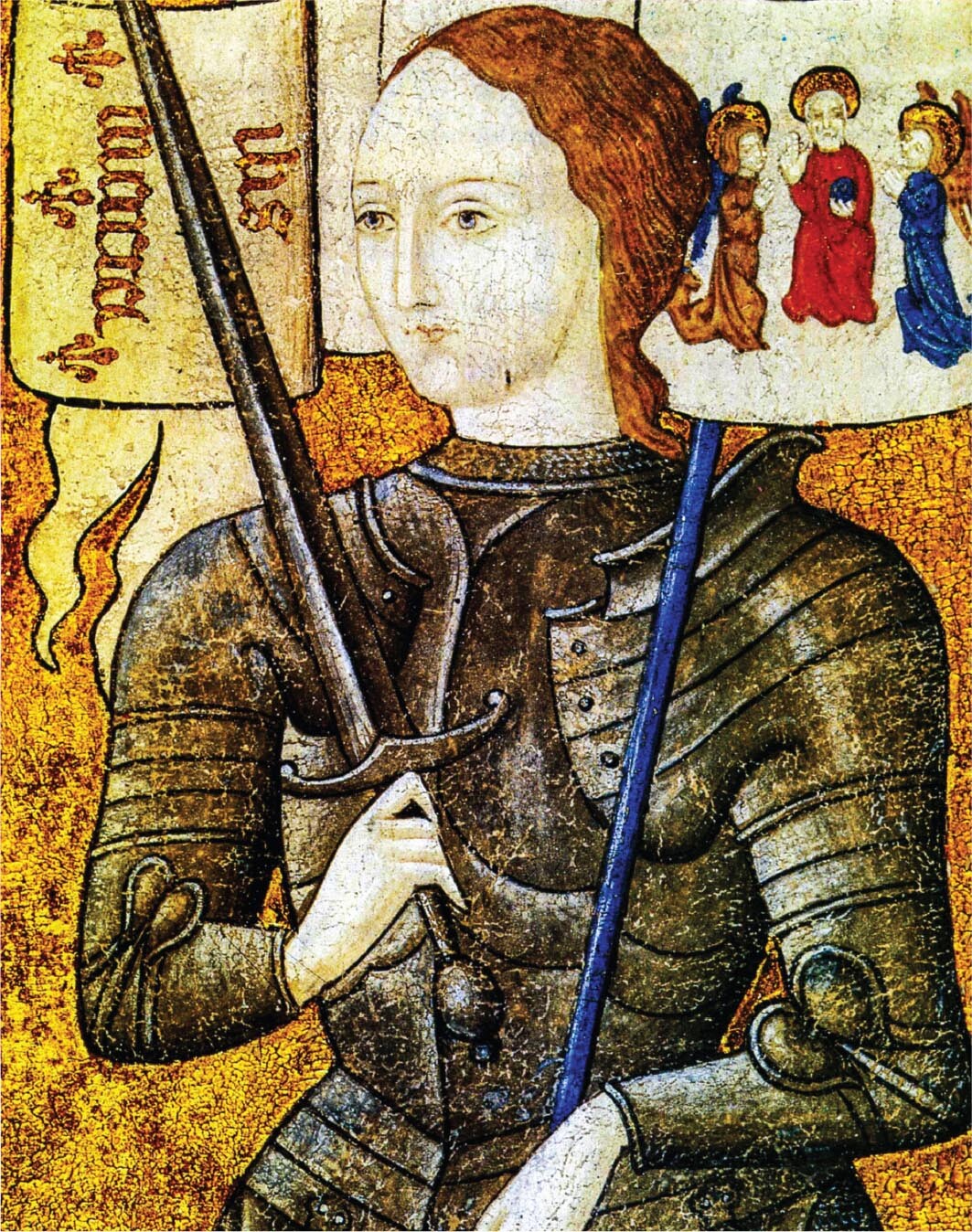
One striking example of this political turmoil was the Hundred Years’ War (1337–1453), in which the French sought to throw off English domination. The Black Death raged in the early years of this intermittent conflict. A central figure toward the end of the war was the peasant girl Joan of Arc, whose visions of various saints inspired her to support the French monarch Charles VII and see him crowned at Reims Cathedral. Dressing as a man in order to wear armor, Joan was a charismatic leader of troops, commanding as many as 8,000 at the decisive battle at Orléans, but eventually the French nobility turned on her, and she was captured by the English. Joan was tried for heresy, in part because she dressed as a man, and burned at the stake in Rouen in 1431. Joan’s brief, but remarkable, part in the Hundred Years’ War illustrates the role an exceptional woman, even a peasant girl, could play on the predominantly male, elite political stage.
More information
A portrait painting of Joan of Arc. She wears armor and holds a sword in one hand and a banner in the other. The banner has the image of three figures and some text with symbols on it.
When French forces finally pushed the English back across the English Channel in the Hundred Years’ War, the French House of Valois began a slow process of consolidating royal power. Although diplomatic marriages helped the French crown expand its domain, two more centuries of royal initiatives and civil war were required to tame the powerful nobility. In England, even thirty years of civil war between the houses of Lancaster and York did not settle which one would take the throne. Both families in this War of the Roses ultimately lost out to the Tudors, who seized the throne in 1485.
Even where stable states did arise, they were fairly small compared with the Ottoman and Ming Empires. In the mid-sixteenth century, Portugal and Spain, Europe’s two most expansionist states, had populations of 1 million and 9 million, respectively. England, excluding Wales, was a mere 3 million in 1550. Only France, with 17 million, had a population close to the Ottoman Empire’s 20 to 30 million. And these numbers paled in comparison with Ming China’s population of nearly 200 million in 1550 and Mughal India’s 110 million in 1600.
But in Europe, small was advantageous. Portugal’s relatively small population meant that the crown had fewer groups in which to cultivate loyalty. Also, in the world of finance, the most successful merchants were those inhabiting the smaller Italian city-states and, a bit later, the cities of the northern Netherlands. The Florentines developed sophisticated banking techniques, created extensive networks of agents throughout Europe and the Mediterranean, and served as bankers to the popes. Venetian merchants enjoyed a unique role in the exchange of silks and spices from East Asia. It was in these prosperous city-states that the Renaissance began.
The Renaissance
Just as the Ming harkened back to Han Chinese traditions and the Ottomans looked to Sunni Islam to point the way forward, so European elites looked to their own traditions for guidance as they rebuilt after the plague’s devastation. They found inspiration in ancient Greek and Roman ideas. Europe’s political and economic revival also included a powerful outpouring of cultural achievements, led by Italian scholars and artists and financed by bankers, churchmen, and nobles. Much later, scholars coined the word Renaissance (“rebirth”) to characterize the expanded cultural production of the Italian city-states, France, the Low Countries, England, and the Holy Roman Empire in the period 1430–1550. What was being “reborn” was ancient Greek and Roman art and learning—knowledge that could illuminate a world of expanding horizons and support the rights of people other than clergymen or kings to exert power in it. Although the Renaissance was largely funded by popes and Christian monarchs, it broke the medieval church’s monopoly on answers to the big questions and opened the way for secular forms of learning and a more human-centered understanding of the cosmos.
THE ITALIAN RENAISSANCE The Renaissance, ironically, was all about the new—new exposure, that is, to the old classical texts and ancient art and architectural forms. Although some Greek and Roman texts were known in Europe and the Islamic world, the fall of Constantinople and the invention of the printing press made others accessible to western scholars for the first time. Scholars now realized that the pre-Christian Greeks and Romans had known more: more about how to represent and care for the human body; more about geography, astronomy, and architecture; more about how to properly govern states and armies. It was no longer enough to understand Christian doctrine and to trust medieval authorities; one had to accurately retranslate the original sources, which required the learning of languages and of history. This dive backward into ancient Greece and Rome became known as humanism, the aspiration to know more about the human experience beyond what the Christian scriptures offered. Humanism was a powerful tool in the hands of those who knew how to use it. Several women, including the celebrated Italian humanist Laura Cereta (1469–1499), used their learning and rhetorical skills to defend the equality of male and female intellects at a time when both the church and society as a whole believed women scholars to be inappropriately stepping out of their assigned gender roles.
More information
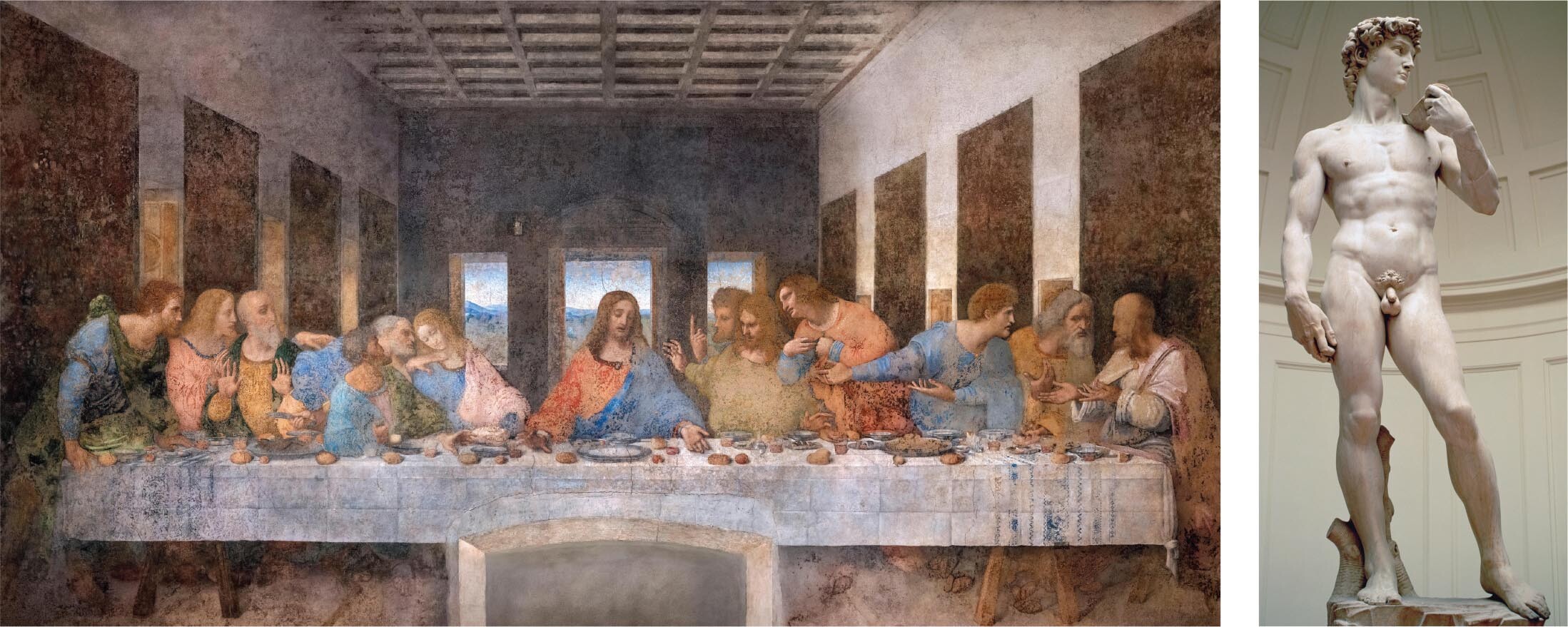
Leonardo da Vinci’s painting of The Last Supper. The painting shows Jesus at the center of a long table and the twelve Apostles to his left and right. Many of them look towards Jesus, one holds his hands up with the palms out in front of him, and three look as though they are arguing on the far right side of the painting. Food and dishware are scattered along the table. Several windows are visible in the background.
A photo of Michelangelo’s David statue. The statue depicts a nude muscular man holding a sling over his shoulder.
Wealthy families, powerful rulers, and the Catholic Church sponsored much Renaissance achievement. For example, by the 1480s the Medici family had been patronizing art based on ancient models for three generations. The Medicis were bankers but also influential political players in both Florence and Rome. The family greatly contributed to making Florence one of the showplaces of Renaissance art and architecture as well as the center stage for early Renaissance philosophy. Cosimo de’ Medici (1389–1464) funded the completion of the sumptuous duomo (cathedral) of Florence, topped by the architect Brunelleschi’s masterful dome, the largest built since antiquity. Cosimo’s grandson Lorenzo the Magnificent supported many of the great Renaissance artists, including Leonardo da Vinci, Sandro Botticelli, and Michelangelo Buonarroti. The Medici family’s wealth was sometimes also associated with religious power: Pope Leo X (r. 1513–1521) was the first of four Medici popes. In addition to Leo (whose name was Giovanni de’ Medici), Popes Clement VII (born Giulio de’ Medici; r. 1523–1534), Pius IV (born Giovanni Angelo de’ Medici, from a Milan branch of the family; r. 1539–1565), and Leo XI (born Alessandro Ottaviano de’ Medici; r. April 1605) all served in this highest of offices in Rome.
The artists who flourished in Florence, Rome, and Venice embraced a distinctive form of humanism. For them, the return to ancient sources meant reviving the principles of the Roman architect Vitruvius and the imitation of nude classical sculpture. Their masterpieces, like Leonardo da Vinci’s Last Supper or Michelangelo’s David, used the technique of perspective and classical treatments of the body to give vivacity and three-dimensionality to paintings and sculptures—even religious ones. Raphael’s Madonnas portrayed the Virgin Mary as a beautiful woman and not just as a symbol of chastity; similarly, Michelangelo’s Sistine Chapel ceiling gave Adam the beautiful body of a Greek god so that viewers could appreciate the glory of the Creation. Of course, these artists also hoped to draw attention to their own achievements, and they were not disappointed. Northern European princes soon sought out both ancient artifacts and the modern artists and humanists who could bring this inspiring new style to their courts.
THE RENAISSANCE SPREADS In the sixteenth century, a series of crises on the Italian Peninsula—including the sacking of Rome in 1527 by troops under the control of the Holy Roman Empire—and increasing economic prosperity in other parts of Europe helped spread Renaissance culture throughout Europe. Philip II of Spain, for example, purchased more than 1,000 paintings during his reign; Henry IV of France and his queen, Marie de’ Medici, invested a fortune in renovating the Louvre, building a new royal residence at Fontainebleau, and hiring Peter Paul Rubens to paint grand canvases. Courtiers built up-to-date palaces and invited scholars to live on their estates; Dutch, German, and French merchants also patronized the arts. All wanted their sons to be educated in the humanistic manner. Some families and religious institutions offered women access to the new learning, and some men encouraged their sisters, daughters, and wives to expand their horizons. The well-educated nun Caritas Pirckheimer (1467–1532), for example, exchanged learned letters and books with male humanists in the German states. Studying Greek, Latin, and ancient rhetoric did not make the commercial elite equal to the aristocrats, or women equal to men, but this sort of education did enable some non-nobles to obtain social influence and to criticize the ruling elites.
THE REPUBLIC OF LETTERS Since political and religious powers were not united in Europe (as they were in China and the Islamic world), scholars and artists could play one side against the other or, alternatively, could suffer both clerical and political persecution. Michelangelo completed commissions for the Medicis, for the Florentine Wool Guild, and for Pope Julius II. Peter Paul Rubens painted for the courts of France, Spain, England, and the Netherlands, as well as selling paintings on the open market. These two painters, renowned for showing a great deal of flesh, frequently offended conservative church officials, but their secular patrons kept them in oils. The Dutch scholar Desiderius Erasmus was able to ridicule the church because he had the patronage of English, Dutch, and French supporters. Other scholars used their learning to defend the older elites: for example, numerous lawyers and scholars continued to work for the popes, defending the papacy.
The search for patrons and the flight from persecution, especially after the Reformation, made Europe’s educated elite increasingly cosmopolitan. Scholars met one another in royal palaces and cultural centers such as Florence, Antwerp, and Amsterdam. Seeking specialized information or rare books, they formed what was known as “the republic of letters”—a network of correspondents who were more interested in individual knowledge or talent than in noble titles or clerical rank. In this way, the Renaissance knitted together the European elite. This did not mean, however, that a consensus emerged about who should rule.
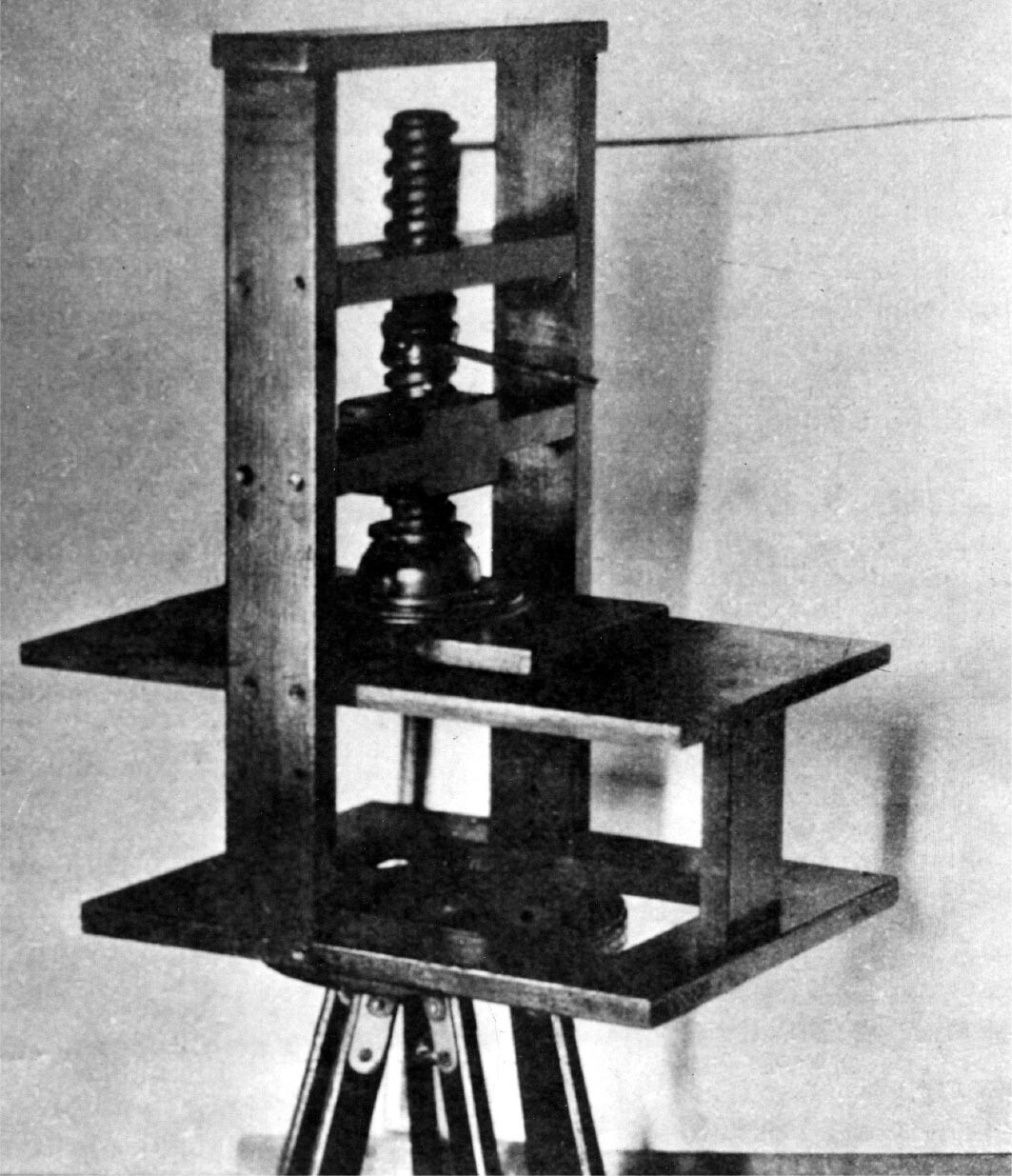
THE PRINTING PRESS Over time one major technological advance, the printing press, served to increase the spread of knowledge more than any other phenomenon. The earliest advances in printing were made in China, where woodblock printing first appeared around 220 CE, followed by movable type around 1040 CE, and then the first metal movable type was used in Korea in the 1300s. In the 1450s, Johannes Gutenberg, the son of a German goldsmith, applied a technology to printing that was similar to the technology used to stamp metal coins. The first printed newspapers, leaflets, pamphlets, and books were printed on large wood frame presses that used rows of movable type to stamp the ink on the printed pages. Now hundreds of copies could be made in a few hours, hundreds of hours faster than handwritten and hand-bound copies of books could be produced. A second key factor that made this communication revolution possible was readily available cheap paper, made from old rags turned into pulp at local mills. Rising literacy rates, which increased the demand for books, were a third factor.
More information
A black-and -white photo shows a Gutenberg printing press. The press has a large vertical screw to push two plates together.
Artistic and intellectual experiments, specifications for innovative weapons, and humanist writings were rapidly exported from Renaissance Italy to other parts of Europe. Major news like Columbus’s first voyage and the resulting encounters and conquests spread rapidly around Europe, as did major criticisms of this new form of European imperialism. Rulers also used this revolution in communication to expand and centralize their own power through widely distributed printed propaganda and the creation of standardized national languages. The powerful impact of printing was immediate, and the industry would continue to grow and evolve for the centuries ahead both in Europe and globally.
While the technology of the printing press made it easier to disseminate news, it had another—and more profound—impact on society; it directly led to increased literacy. For example, at the time of the printing press’s origin, only about 30 percent of Europeans were literate; most could not even write their own names. As more writing was published, the numbers increased slowly and consistently so that nearly 200 years after the invention of the Gutenberg press, literacy had increased in Europe to nearly 50 percent. But even for those who did not learn to read or write, the printing press provided greater opportunities for the dissemination of knowledge. For example, those who were literate could read books, pamphlets, and articles to those who were not literate in places where social and religious gatherings took place, like churches. Knowledge could thus diffuse through populations with exposure to printed material, which was often presented in vernacular languages, which people actually spoke. And as societies expanded outside their borders, knowledge was also translated and thus standardized so that it could be disseminated broadly—and across national frontiers. Even so, there were still many who could neither read nor write, especially girls, who attended school, if at all, far fewer hours than did boys. Over the very long run, however, the printing press proved to be instrumental in creating common cultural, political, and religious identities.
As people gained access to information, either through direct reading of the printed word or through being in a place where words on a page could be read to them, they began to form collective identities, which allowed them to see themselves as part of a group, like residents of a city or subjects of a particular ruler. These commonalities could then be further developed with regular communication from leaders, deepening the attachments. Indeed, such identifications could pass much more easily from one generation to the next, which, in turn, helped people think of themselves in new ways and enabled them to refer to themselves as members of specific groups. The printing press thus helped historians understand how identity was created and how it operated, and helped them make generalizations about states, empires, societies, and subgroups within each.
POWER AND THE RENAISSANCE: THEORIZING ABOUT WAR The Renaissance not only embraced the arts and sciences of this world, but also served as a vehicle that enabled the direct study of worldly power. Close reading of the ancient histories of Sallust, Livy, and Caesar emboldened scholars to address more forthrightly the conditions under which power could be maintained or undermined. New forms of governance were invented—and older forms buttressed. The Florentines pioneered a form of civic humanism under which all citizens were to devote themselves to defending the state against tyrants and foreign invaders; according to this view, the state would reward their civic virtue by ensuring their liberty. Yet it was also a Florentine, Niccolò Machiavelli, who wrote the most famous treatise on authoritarian power, The Prince (1513). Machiavelli argued that political leadership was not about obeying God’s rules but about mastering the amoral means of modern statecraft. Holding and exercising power were ends in themselves, he claimed; civic virtue was desirable but unnecessary if power was in danger of being lost.
In his own lifetime, Machiavelli was even more renowned for his essay The Art of War (1521). Here, the Florentine humanist argued that Roman military tactics, including the deploying of trained, armed citizens, would make for a more trustworthy army than the use of mercenary soldiers. The enrollment of a broadly based citizenry in the defense of the state, he insisted, would also make for political stability. His advice was hardly practicable in a Europe in which monarchs put little trust in their fellow nobles and even less in their subjects, but his ideas circulated widely (see the discussion of the printing press above) and would gradually catch on and inspire military reforms in the Dutch Republic and during the Thirty Years’ War (see Chapter 13). And he made little of the use of artillery, although cannons had been used in European siege warfare since at least the 1420s; the Portuguese had already mounted them on oceangoing ships and had begun to use them to blast open South Asian ports. Machiavelli’s fellow humanist Niccolò Tartaglia noticed the upsurge in cannon usage and produced an important treatise on ballistics, in which mathematics was first applied to the trajectory of projectiles. But neither of these humanists was as influential as a wave of publications devoted to proper fortification designs, written by specialized military engineers who, for the first time, advocated the construction of defenses not to be pleasing to the eye but to best absorb the force of modern cannons. Thus began a long-lasting battle between military architects seeking to construct invincible defense works and artillery makers seeking to destroy them.
Like artistic and early manufacturing techniques, European military technologies diffused across the continent through conflict between states. Europeans learned much by observing one another at close range, especially during the many wars that marked the fifteenth and sixteenth centuries. As princes began to orient themselves more and more to obtaining and preserving power in this world, they began to value subjects who could build sturdy fortifications or more effectively mix gunpowder (a Chinese invention in widespread use in Europe by 1400). By the sixteenth century, many had also formed what were essentially standing armies and had begun to invest heavily in improved fortifications, not only for their castles but for their cities of residence as well. But like the church’s new worldly activities, these princely activities also cost a great deal of money and demanded an expansion of state operations. By orienting the elite toward both ancient ideas and worldly power, the Renaissance revolutionized both European culture and politics—even if it could not unify the states and peoples who cultivated it.
Glossary
- monarchy
- Political system in which one individual holds supreme power and passes that power on to his or her next of kin.
- Inquisition
- General term for a tribunal of the Roman Catholic Church that enforced religious orthodoxy. Several inquisitions took place over centuries, seeking to punish heretics, witches, Jews, and those whose conversion to Christianity was called into doubt.
- Renaissance
- Term meaning “rebirth” used by historians to characterize the cultural flourishing of European nations between 1430 and 1550, which emphasized a break from the church-centered medieval world and a new concept of humankind as the center of the world.
- humanism
- The Renaissance aspiration to develop a greater understanding of the human experience than the Christian scriptures offered by reaching back into ancient Greek and Roman texts.
- printing press
- A machine used to print text or pictures from type or plates, dramatically increasing the speed at which information could be copied and disseminated. The spread of printing press technology in the 1450s created a revolution in communication around the world.