Core Objectives
COMPARE the organizational structures of the Abbasids, Tang China, and Christendom.
COMPARE the organizational structures of the Abbasids, Tang China, and Christendom.
The rise of the powerful Tang Empire (618–907 CE) in China paralleled Islam’s explosion out of Arabia and its impact throughout Afro-Eurasia. Once again the landmass had two centers of power, as Islam replaced the Roman Empire in counterbalancing the power and wealth of China. Like the Umayyads and the Abbasids, the Tang dynasty promoted a cosmopolitan culture. Under Tang rule Buddhism, medicine, and mathematics from India gave China’s chief cities an international flavor. China became a hub for East Asian integration and spread its influence to Korea and Japan.
The Tang dynasty expanded the boundaries of the Chinese state and reestablished its dominance in East and central Asia. After the fall of the Han, China had faced a long period of political fragmentation (see Chapter 1). As had happened several times before, yet another sudden change in the course of the Yellow River caused extensive flooding on the North China plain and set the stage for the emergence of the Tang dynasty. Revolts ensued as the population faced starvation. Li Yuan, the governor of a province under the short-lived Sui dynasty (589–618 CE) marched on Chang’an and took the throne in 618. He promptly established the Tang dynasty and began building a strong central government by increasing the number of provinces and doubling the number of government offices. By 624 CE, the initial steps of establishing the Tang dynasty were complete; but Li Yuan’s ambitious son, Li Shimin, forced his father to abdicate and took the throne in 627 CE.
An expanding Tang state required a large and professionally trained army, capable of defending far-flung frontiers and squelching rebellious populations. Toward these efforts the Tang built a military organization of aristocratic cavalry and peasant soldiers. The cavalry regularly clashed on the northern steppes with encroaching nomadic peoples, who also fought on horseback; at its height the Tang military had 700,000 horses. At the same time, between 1 and 2 million peasant soldiers garrisoned the south and toiled on public works projects.
Much like the Islamic forces, the Tang’s frontier armies increasingly relied on pastoral nomadic soldiers from the Inner Eurasian steppe. Notable were the Uighurs, Turkish-speaking peoples who had moved into western China and by 750 CE constituted the empire’s most potent military force. These warriors mobilized fearsome cavalries, fired longbows at distant range, and wielded steel swords and knives in hand-to-hand combat. The Tang military also pushed the state into Tibet, the Red River valley in northern Vietnam, Manchuria, and Bohai (near Korea).
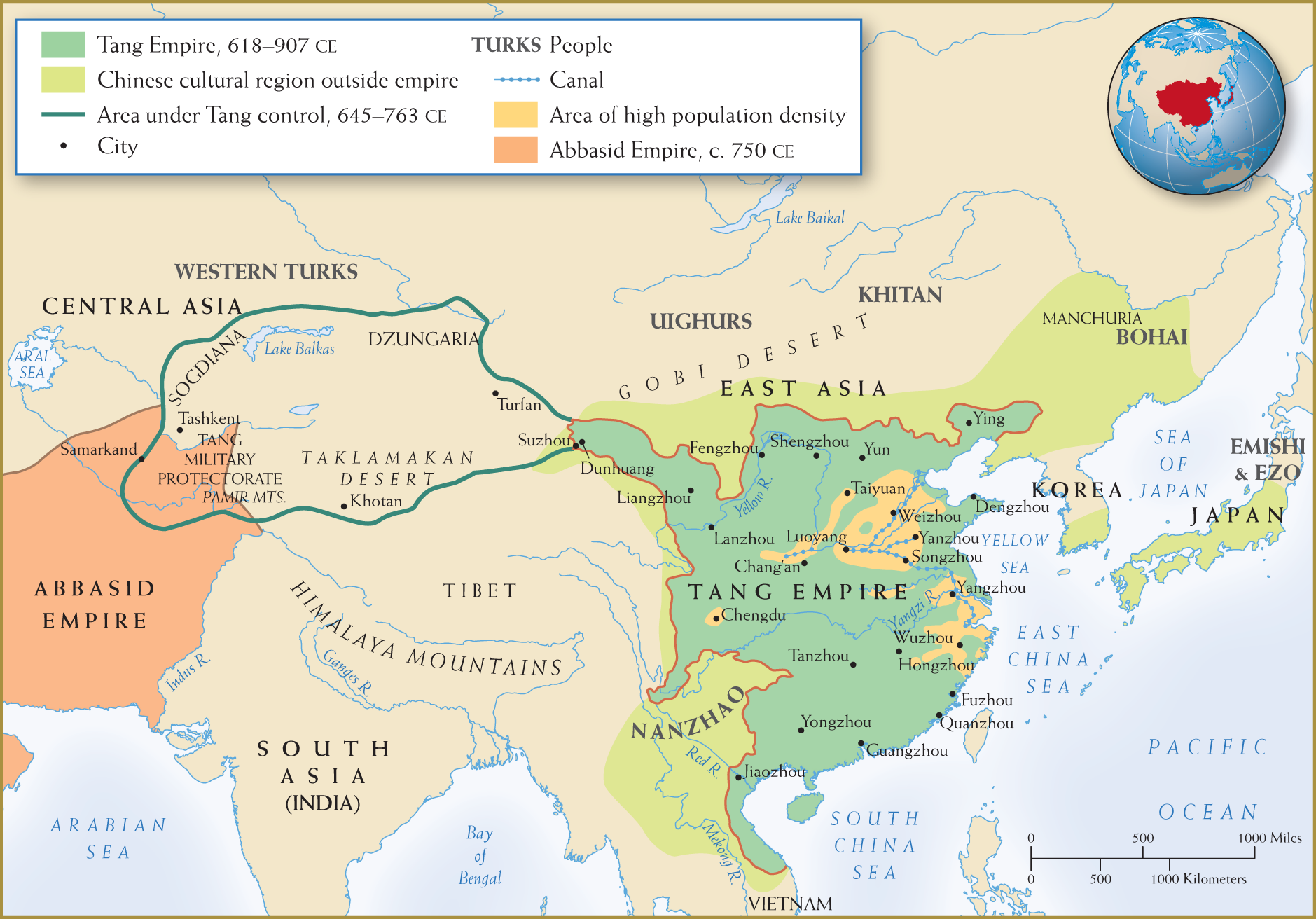
Map 2.5 The Tang State in East Asia, 750 CE
The Tang dynasty, at its territorial peak in 750 CE, controlled a state that extended from central Asia to the East China Sea.
At the empire’s height, Tang armies controlled more than 4 million square miles of territory (see Map 2.5)—an area as large as the entire Islamic world in the ninth and tenth centuries CE. Once the Tang administrators brought South China’s rich farmlands under cultivation (by draining swamps, building an intricate network of canals and channels, and connecting lakes and rivers to the rice lands), the state was able to collect taxes from roughly 10 million families, representing 57 million individuals. Most of these taxes took the form of agricultural labor, which propelled the expansion of cultivated frontiers throughout the south.
The Tang Empire emulated the Han in many ways, but its rulers also introduced new institutions. The heart of the agrarian-based Tang state was the magnificent capital city of Chang’an, the population of which reached 1 million, half of whom lived within its impressive city walls. The outer walls enclosed a 30-square-mile area. Internal security arrangements made it one of the safest urban locales for its age. Its more than 100 quarters were separated from each other by interior walls with gates that were closed at night, after which no one was permitted on the streets. Horsemen patrolled the streets until the gates reopened in the morning. Chang’an had a large foreign population, estimated at one-third of its total, and a diverse religious life. Zoroastrian fires burned as worshippers sacrificed animals and chanted temple hymns. Nestorian Christians from Syria found a welcoming community, and Buddhists could boast ninety-one of their own temples in Chang’an in 722 CE.
Confucian Administrators Despite the Tang’s reliance on the fruits of agriculture and a military force, the day-to-day control of the empire required an efficient and loyal civil service. Entry into the Tang ruling group required knowledge of Confucian ideas and all the commentaries on the Confucian classics. It also required skill in the intricate classical Chinese language, in which this literature was written.
The Tang state introduced the world’s first fully written civil service examinations, which tested sophisticated literary skills and knowledge of the Confucian classics. The Tang also allowed the use of Daoist classics as texts for the exams, believing that the early Daoists represented another important stream of ancient wisdom. Candidates for office, whom local elites recommended, gathered in the capital triennially to take qualifying exams. They had been trained since the age of three in the classics and histories, either by their families or in Buddhist temple schools. Most failed, but those who were successful underwent further trials to evaluate their character and determine the level of their appointments. New officials were selected from the pool of graduates on the basis of social conduct, eloquence, skill in calligraphy and mathematics, and legal knowledge.
CONTEXTUALIZATION Evaluate the extent to which Tang civil service examinations changed Chinese society.
Although official careers were in theory open to anyone of proven talent, in practice they were closed to certain groups. Women were not permitted to serve, nor were sons of merchants or those who could not afford a classical education. Over time, though, Tang civil examinations forced aristocrats to compete with commoner southern families, whose growing wealth gave them access to educational resources that made them the equals of the old elites. Through examinations, this new elite eventually outdistanced the sons of the northern aristocracy in the Tang government in effect by out-studying them.
The system underscored education as the primary avenue for success. Even impoverished families sought the best classical education they could afford for their sons. Although few succeeded in the civil examinations, many boys and even some girls learned the fundamentals of reading and writing. The Buddhists played a crucial role in extending education across society: as part of their charitable mission, their temple schools introduced many children to primers based on classical texts. Many Buddhist monks, in fact, entered the clergy only after not qualifying for or failing the civil examinations.
China’s Female Emperor Not all Tang power brokers were men. The wives and mothers of emperors wielded influence in the court—usually behind the scenes, but sometimes publicly. The most striking example is Empress Wu.
Born into a noble family, Wu Zhao played music and mastered the Chinese classics as a young girl. Because she was witty, intelligent, and beautiful, Wu was recruited before age thirteen to Li Shimin’s court and became his favorite concubine. When Li Shimin died, his son assumed power and became Emperor Gaozong. Wu became the new emperor’s favorite concubine and gave birth to the sons he required to succeed him. As the mother of the future emperor, Wu enjoyed heightened political power. Subsequently, she took the place of Gaozong’s empress, Wang, by accusing her of killing Wu’s newborn daughter.
CAUSATION Describe the factors that led Wu Zhao to declare herself empress, and describe the reasons for the changes she implemented during her reign.
After Gaozong suffered a stroke, Wu became administrator of the court, a position equal to the emperor’s. She created a secret police force to spy on her opposition, and she jailed or killed those who challenged her. Following her husband’s death, she made herself Empress Wu (r. 684–705 CE). She expanded the military and recruited her administrators from the civil examination candidates to oppose her enemies at court.
Wu ordered scholars to write biographies of famous women, and she empowered her mother’s clan by assigning high political posts to her relatives. Later, she moved her court from Chang’an to Luoyang, where she tried to establish a new “Zhou dynasty,” seeking to imitate the widely admired eraof Confucius. Empress Wu elevated Buddhism over Daoism as the favored state religion, invited the most gifted Buddhist scholars to her capital at Luoyang, built Buddhist temples, and subsidized spectacular cave sculptures. In fact, Chinese Buddhism achieved its highest officially sponsored development in this period.
CONTEXTUALIZATION Describe the reason the Tang Empire used eunuchs as a third pillar of government and the extent to which that policy was successful.
Eunuchs Tang rulers protected themselves, their possessions, and especially their women with loyal and well-compensated eunuchs (men surgically castrated as youths and thus sexually impotent). By the late eighth century CE, more than 4,500 eunuchs were fully entrenched in the Tang Empire’s institutions, wielding significant power not only within the imperial household but at the court and beyond. For instance, the Chief Eunuch controlled the military. Through him, the military power of court eunuchs extended to every province and garrison station in the empire, forming an all-encompassing network. This eunuch bureaucracy mediated between the emperor and the provincial governments.
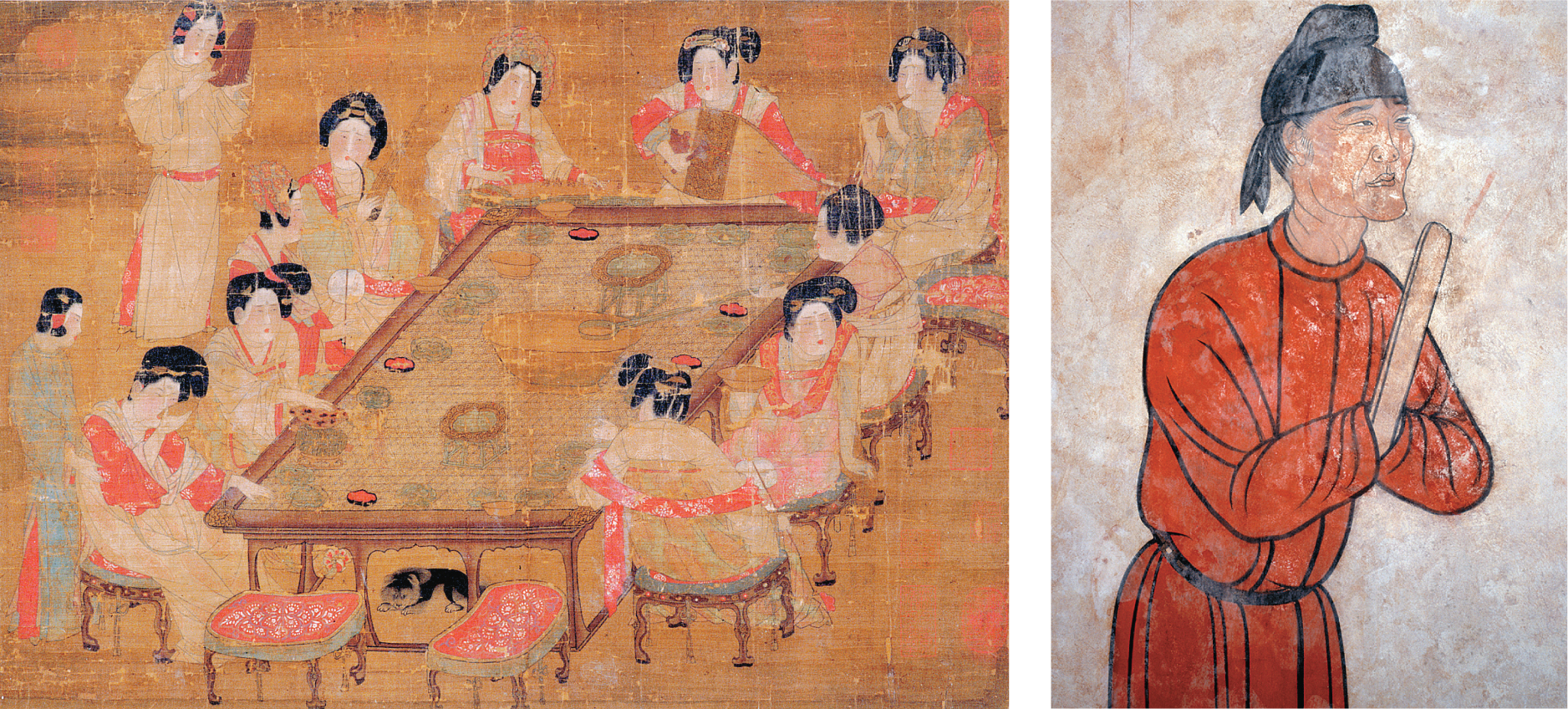
Under Emperor Xianzong (r. 806–820 CE), eunuchs acted as a third pillar of the government, working alongside the official bureaucracy and the imperial court. Yet by 838 CE, the delicate balance of power among throne, eunuchs, and civil officials had evaporated. Eunuchs became an unruly political force in late Tang politics, and their competition for influence produced political instability.
CONTINUITY AND CHANGE Describe the factors that spurred economic expansion during the Tang Dynasty.
At its height, Tang China’s economic achievements included agricultural production based on an egalitarian land allotment system, an increasingly fine handicrafts industry, a diverse commodity market, and a dynamic urban life. The earlier short-lived Sui dynasty had started this economic progress by reunifying China and building canals, especially the Grand Canal linking the north and south. The Tang continued by centering their efforts on the Grand Canal and the Yangzi River, which flows from west to east. These waterways aided communication and transport throughout the empire. The south grew richer, largely through the backbreaking labor of immigrants from the north. Fertile land along the Yangzi became China’s new granary, and areas south of the Yangzi became its demographic center.
Green Revolution in Tang China The same agricultural revolution that was sweeping through South Asia and the Muslim world also took East Asia by storm. China received the same crops that Muslim cultivators were carrying westward. Rice was critical. New varieties entered from the south, and groups migrating from the north (after the collapse of the Han Empire) eagerly took them up. Soon Chinese farmers became the world’s most intensive wet-field rice cultivators. Early- and late-ripening seeds supported two or three plantings a year. Champa rice, introduced from central Vietnam, was especially popular for its drought resistance and rapid ripening.
Because rice needs ample water, Chinese hydraulic engineers went into the fields to design water-lifting devices, which peasant farmers used to construct hillside rice paddies. This new rice cultivation was also the partial impetus for the canal building already mentioned. Engineers dug canals linking rivers and lakes, and they even drained swamps, alleviating the malaria that had long troubled the region. Their efforts yielded a booming and constantly moving rice frontier.
CONTEXTUALIZATION What did the Chinese hope to gain by participating in the Silk Roads?
Trade in Luxuries Chinese merchants took full advantage of the Silk Roads to trade with India and the Islamic world. When rebellions in northwest China and the rise of Islam in central Asia jeopardized the land route, the “silk road by the sea” became the avenue of choice. From all over Asia and Africa, merchant ships arrived in South China ports bearing spices, medicines, and jewelry in exchange for Chinese silks and porcelain. In the large cities of the Yangzi delta, workshops produced rich brocades (silk fabrics), fine paper, intricate woodblock prints, unique iron casts, and exquisite porcelains. Art collectors all across Afro-Eurasia especially valued Tang “tricolor pottery,” decorated with brilliant hues. Chinese artisans transformed locally grown cotton into highest-quality clothing. Painting and dyeing technology improved, and the resulting superb silk products generated significant tax revenue. These Chinese luxuries dominated the trading networks that reached Southwest Asia, Europe, and Africa via the Silk Roads and the Indian Ocean.
The early Tang emperors tolerated remarkable religious diversity. Nestorian Christianity, Zoroastrianism, and Manichaeanism (a radical Christian sect) had entered China from Persia during the time of the Sasanian Empire. Islam came later. These spiritual impulses—together with Buddhism and the indigenous teachings of Daoism and Confucianism—spread throughout the Tang Empire and at first were widely used to enhance state power.
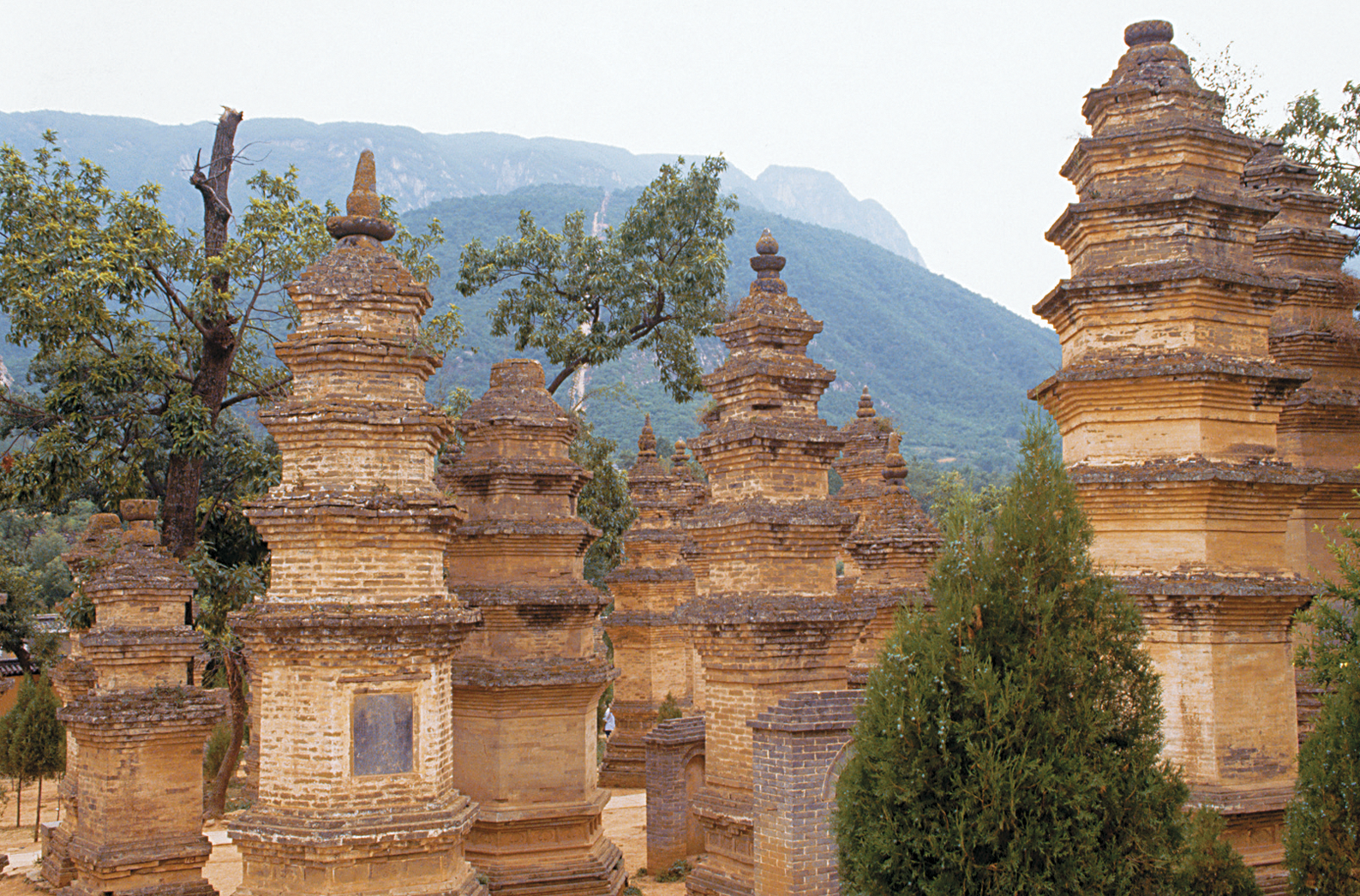
The Growth of Buddhism Buddhism, in particular, thrived under Tang rule. Initially, Emperor Li Shimin distrusted Buddhist monks because they avoided serving the government and paying taxes. Yet after Buddhism gained acceptance as one of the “three ways” of learning—joining Daoism and Confucianism—Li endowed huge monasteries, sent emissaries to India to collect texts and relics, and commissioned Buddhist paintings and statuary. Caves along the Silk Roads, such as those at Dunhuang, provided ideal venues for monks to paint the inside walls where religious rites and meditation took place.
CONTINUITY AND CHANGE Evaluate the degree to which the Tang Dynasty was successful in controlling Buddhism’s influence in China.
Anti-Buddhist Campaigns By the mid-ninth century CE, however, the growing influence of China’s hundreds of thousands of Buddhist monks and nuns threatened Confucian and Daoist leaders, who responded by arguing that Buddhism’s values conflicted with native traditions. One Confucian-trained scholar-official, Han Yu, even attacked Buddhism as a foreign doctrine of barbarian peoples who were different in language, culture, and knowledge. Although Han Yu was exiled for his objections, two decades later the state began suppressing Buddhist monasteries and confiscating their wealth, fearing that religious loyalties would undermine political ones. Increasingly intolerant Confucian scholar-administrators argued that the Buddhist monastic establishment threatened the imperial order.
By the mid-ninth century CE, the Tang state openly persecuted Buddhism. Emperor Wuzong (814–846 CE), for instance, closed more than 4,600 monasteries and destroyed 40,000 temples and shrines. More than 260,000 Buddhist monks and nuns endured a forced return to secular life, after which the state parceled out monastery lands to taxpaying landlords and peasant farmers. To expunge the cultural impact of Buddhism, classically trained literati revived ancient prose styles and the teachings of Confucius and his followers. Their efforts reversed some of the early Buddhist successes in China.
Although Buddhism remained important, the Tang era represented the triumph of homegrown ideologies (Confucianism and Daoism) over a foreign universalizing religion (Buddhism). In addition, by permanently dismantling huge monastic land holdings, the Tang ensured that no religion would rival its power. Successor dynasties continued to keep religious establishments weak and fragmented, although Confucianism maintained a more prominent role within society as the basis of the ruling classes’ ideology and as a quasi-religious belief system for a wider portion of the population. The result was persistent religious diversity within China.
While China was opening up to the cultures of its western regions, its own culture was reaching out to the east—to Korea and, eventually, to Japan. (See Map 2.6.) Chinese influence, both indirect and direct, had reached into Korea for more than a millennium, and later into Japan, but not without local resistance and the flourishing of entirely indigenous and independent political and religious developments.
COMPARISON Compare the influence of Tang politics and culture on both the Silla state in Korea and the Yamato state in Japan.
Early Korea Interactions with China played a fundamental role in the history of the Korean Peninsula. Unification in 668 CE under the Silla—one of three rival states in Korea—enabled Koreans to establish an autonomous government, but their opposition to the Chinese did not deter them from modeling their government on the Tang imperial state. The Silla rulers dispatched annual emissaries bearing tribute payments to the Chinese capital and regularly sent students and monks. As a result, literary Chinese—not their own dialect—became the written language of Korean elites. Chinese influence extended to the way in which the Silla state organized its court and bureaucracy and to the construction of the Silla capital city of Kumsong, which imitated the Tang capital of Chang’an. Silla’s fortunes became entwined with the Tang’s to such an extent, however, that once the Tang declined, Silla also began to fragment and ultimately surrendered to the Goryeo kingdom in 935 CE.
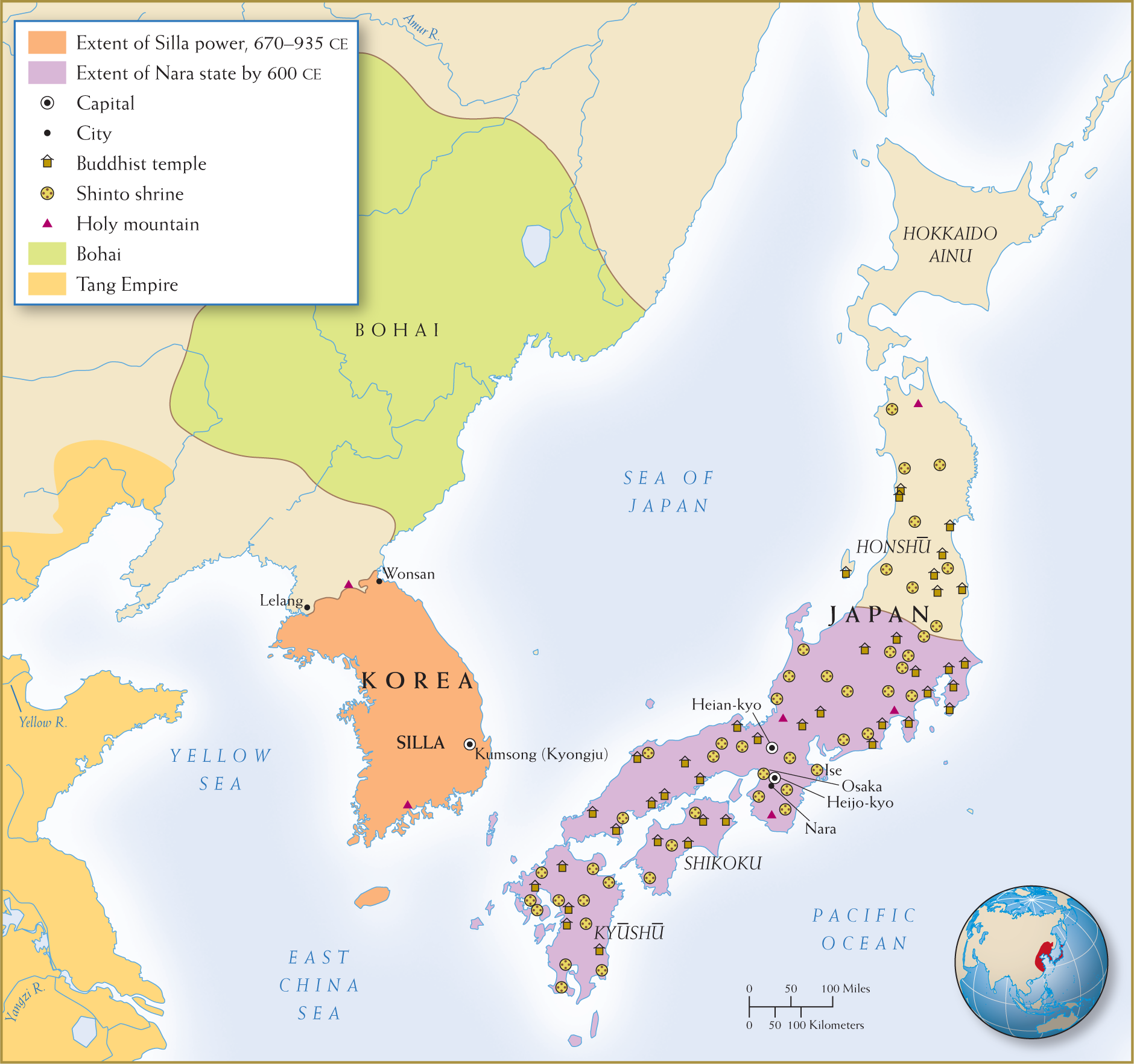
Map 2.6 Tang Borderlands: Korea and Japan, 600–1000 CE
The Tang dynasty held great power over emerging Korean and Japanese states, although it never directly ruled either region.
Early Japan Like Korea, Japan also felt influences emanating from China, and it responded by thwarting and accommodating them at the same time. But Japan enjoyed added autonomy: it was an archipelago of islands, separated from the mainland although internally fragmented. In the mid-third century CE, a warlike group had arrived by sea from Korea and imposed military and social control over southern Japan. These conquerors—known as the “Tomb Culture” because of their elevated burial sites—unified Japan by extolling their imperial ancestors and maintaining their social hierarchy. In time, the complex aristocratic society that had developed within the Tomb Culture gave rise to a Japanese state on the Yamato plain in the region now known as Nara. In becoming the ruling faction in this area, the Yamato clan incorporated native Japanese as well as Korean migrants.
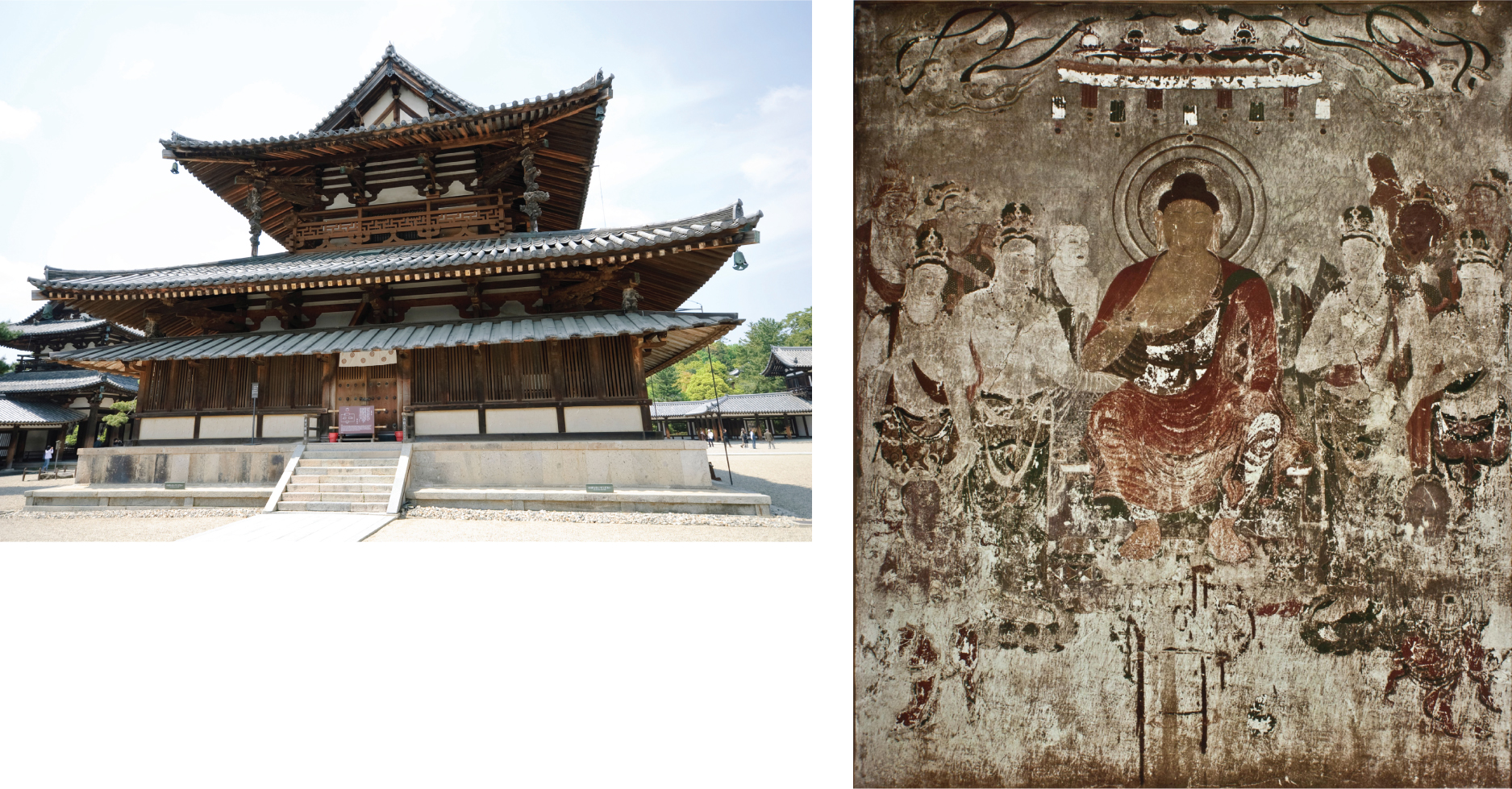
After 587 CE, the Soga kinship group—originally from Korea but by 500 CE a minor branch of the Yamato imperial family—became Japan’s leading family and controlled the Japanese court through intermarriage. Soon they were attributing their cultural innovations to their own Prince Shotoku (574–622 CE), of Soga and Yamato descent. Contemporary Japanese scribes claimed that Prince Shotoku, rather than Korean immigrants, introduced Buddhism to Japan and that his illustrious reign sparked Japan’s rise as an exceptional island kingdom. Shotoku promoted both Buddhism and Confucianism, thus enabling Japan, like its neighbor China, to accommodate numerous religions.
Indeed, religious influences flowed into Japan, contributing to spiritual diversity while bolstering the Yamato rulers. Although Prince Shotoku and later Japanese emperors turned to Confucian models for government, they also dabbled in occult arts and Daoist purification rituals. In addition, governmental edicts promoted Buddhism as the state religion of Japan. Association with Buddhism gave the Japanese state extra status by lending it the prestige of a universal religion whose appeal stretched to Korea, China, and India. State-sponsored spiritual diversity led native Shinto cults—which believed that after death a person’s soul (or spirit) became a Shinto kami, or local deity, provided that it was nourished and purified through proper rituals and festivals—to formalize a creed of their own. The introduction of Confucianism and Buddhism motivated Shinto adherents to assemble their diverse religious practices into a well-organized belief system. Shinto priests now collected ancient liturgies, and Shinto rituals (such as purification rites to ward off demons and impurities) gained recognition in the state’s official Department of Religion.
Political integration under Prince Shotoku did not mean political stability, however. In 645 CE, the Nakatomi kinship group seized the throne and eliminated the Soga and their allies. Via intermarriage with the imperial clan, the Nakatomi became the new spokesmen for the Yamato tradition. Thereafter, Nakatomi no Kamatari (614–669 CE) enacted a series of reforms that reflected Confucian principles of government allegedly enunciated by Shotoku. These reforms enhanced the power of the ruler, no longer portrayed simply as an ancestral kinship group leader but now depicted as an exalted “emperor” (tenno) who ruled by the mandate of heaven, as in China, and exercised absolute authority.
CAUSATION AND COMPARISON What caused the Tang Dynasty to collapse? How did it compare to the Abbasids?
At the eastern end of Afro-Eurasia, the Tang, as well as the Silla of Korea and the Yamato state of Japan, interacted with one another and blended both religious and political authority to maintain stability. The peak of Chinese power in East Asia occurred just as the Abbasids were expanding into Tang portions of central Asia. Yet, despite the Abbasid Empire’s spread, China in 750 CE was still the most powerful and best-administered empire in the world. When Muslim forces drove the Tang from Turkistan in 751 CE at the Battle of Talas River, however, their success emboldened groups such as the Sogdians and Tibetans to challenge the Tang and even take their capital. As a result, the Tang gradually retreated into the old heartlands along the Yellow and Yangzi Rivers. Thereafter, misrule, court intrigues, economic exploitation, and popular rebellions weakened the empire, but the dynasty held on for over a century until northern invaders toppled it in 907 CE.