Section 1.13 Objectives
You will be able to:
- Explain why functional groups are important.
- Identify functional groups within a molecular species and name the compound classes they characterize.
Section 1.13 Objectives
You will be able to:
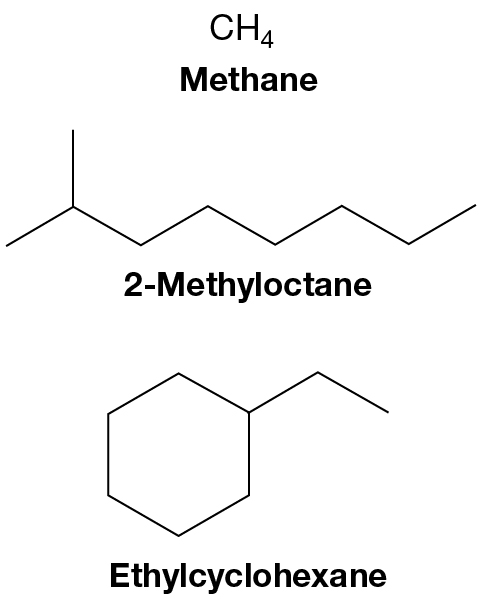
Condensed formula of methane and the skeletal structural formulas of 2-methyloctane, and ethylcyclohexane. The condensed formula of methane reads “C H 4.” The skeletal structural formula of 2-methyloctane shows a zigzag line with four crests and four troughs. A vertical line emerges from the first crest. The skeletal structural formula of ethylcyclohexane shows a hexagonal ring. A zigzag line with a crest and a trough emerges from one of the vertices in the hexagon. The caption reads, “Some alkanes: Alkanes consist entirely of carbon and hydrogen and have only single bonds.”
Certain types of bonds and arrangements of atoms appear especially frequently in organic chemistry. The most common types of bonds we encounter are C—C and C—H single bonds. Compounds consisting of only C—C and C—H single bonds are called alkanes. Examples include methane, 2-methyloctane, and ethylcyclohexane (Figure 1-40, next page).
Alkanes tend to be among the most unreactive organic compounds. For this reason, liquid alkanes (e.g., pentane and hexane) are often used as solvents in which to carry out organic reactions.
Alkanes are relatively unreactive in part because C—C and C—H bonds are so strong; for a reaction to occur, these bonds must break. In fact, as indicated in Table 1-2 (p. 10), C—C and C—H bonds are among the strongest single bonds we will encounter.
Alkanes also tend to be unreactive because C—C and C—H bonds are either nonpolar or are only very slightly polar. In Chapter 7, we explain that a large driving force behind many chemical reactions depends on the existence of substantial bond dipoles.
Organic molecules having atoms other than C and H, or bonds other than single bonds, tend to be more reactive than alkanes. In some cases, this may be due to the introduction of weaker bonds, and in other cases, to the presence of large bond dipoles.
As you will learn throughout this book, specific arrangements of atoms connected by specific types of bonds tend to react in characteristic ways. Even though such arrangements may consist of only two or three atoms, they dictate the function (i.e., the chemical behavior) of the entire molecule; thus these structural components are called functional groups. Consequently:
An organic molecule’s reactivity is governed by its functional groups.
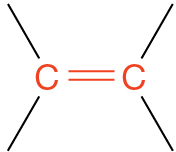
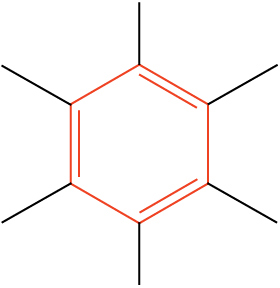
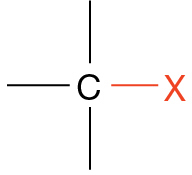
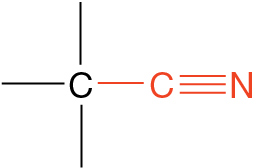
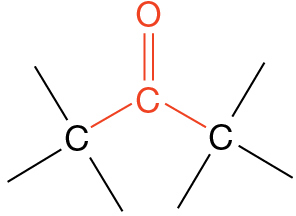
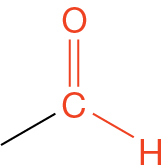
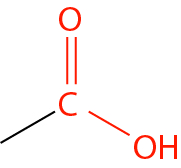
The most common functional groups are listed in Table 1-6, along with the compound classes in which they are found. Take the time to commit these functional groups and compound classes to memory and review them frequently. Note that the bonding arrangements of some functional groups, such as the hydroxyl group (O—Hs) and the carbonyl group (C═O), appear in the bonding arrangements for other functional groups.
Two conventions are used in Table 1-6 to represent generalized structures. One is the abbreviation “R,” the symbol used to represent an alkyl group, which is an attached group consisting of only carbon and hydrogen. Like alkanes, alkyl groups tend to be unreactive. The benefit of replacing large, unreactive alkyl groups with R is that it allows us to focus on just the reactive portion of the molecule (i.e., the functional group).
We will learn more about alkyl groups in the first nomenclature unit (Interchapter A), following this chapter, which pertains to the naming of molecules. For now, you just need to know that a bond to R specifically indicates a bond to a carbon atom.
CONNECTIONS 1.12
Cyclohexanone and nylon Cyclohexanone (Solved Problem 1.13, p. 36) is an important industrial compound because it is a precursor in the synthesis of nylon, the material used to make this parachute.

A photo shows a parachutist suspended in the air from a parachute.
The second convention used in Table 1-6 pertains to the absence of atoms at the ends of specific bonds. These bonds indicate that either an alkyl group (R) or a hydrogen atom can be attached.
CONNECTIONS 1.13
δ-Valerolactone, pentanoic acid, and their uses δ-Valerolactone (Solved Problem 1.13, Try It, p. 36) is used as a precursor in the industrial synthesis of polyesters, whereas pentanoic acid is used to produce esters that have pleasant odors or pleasant flavors. These esters are used in perfumes and cosmetics or as food additives.
|
Table 1-6 Common Functional Groupsa |
|
|
Functional Group (Red) |
Compound Class |
 |
Alkene |
 |
Alkyne |
 |
Arene or Aromatic compound |
 (X = F, Cl, Br, I) |
Alkyl halide |
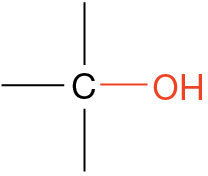 |
Alcohol |
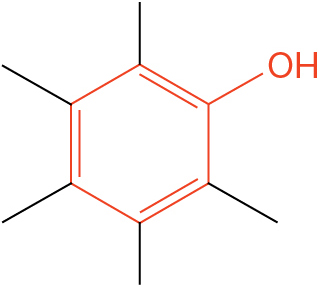 |
Phenol |
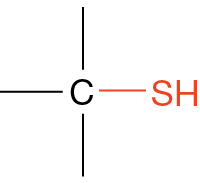 |
Thiol |
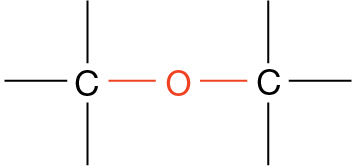 |
Ether |
 |
Acetal |
 |
Hemiacetal |
 |
Epoxide |
 |
Amine |
 |
Nitrile |
 |
Ketone |
 |
Aldehyde |
 |
Carboxylic acid |
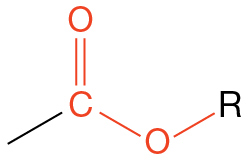 |
Ester |
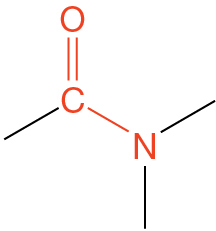 |
Amide |
|
aR indicates an alkyl group, and the absence of an atom at the end of a bond indicates that either R or H may be attached. |
|
With these conventions understood, the following conclusions can be drawn from Table 1-6:
General Conclusions about Functional Groups
YOUR TURN 1.13
Table 1-6 illustrates eight functional groups that contain the bonding arrangements of functional groups with fewer atoms. One of these is the carboxyl group (CO2H), as noted previously. What are the other seven functional groups, and what are the smaller functional groups that they appear to contain?
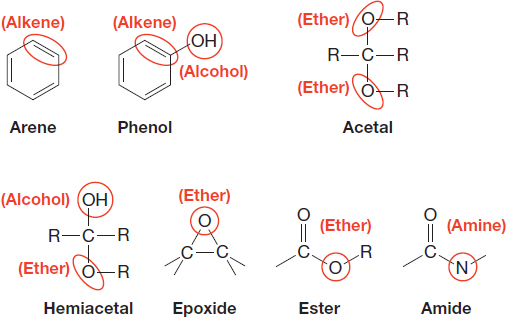
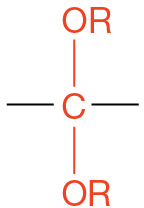
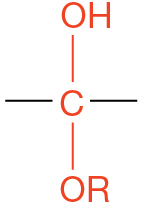
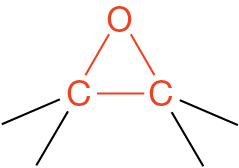
Seven different condensed structural formula. The first structure shows a benzene ring labeled as an arene, one of the double bonds is circled and labeled alkene. The second structure is a benzene ring bonded to a hydroxide group, it is labeled as a phenol. One of the double bonds is circled and labeled alkene and the hydroxide group is circled and labeled alcohol. The third structure is a central carbon bonded to two R groups on the left and right and two oxygens on the top and bottom, the oxygens are further bonded to R groups. The structure is labeled acetal. The two oxygens are circled and labeled ether. The fourth structure, labeled hemiacetal, is a central carbon bonded to R group on left and right, an oxygen on the bottom that is further bonded to a R group, and a hydroxide group on top. The oxygen is circled and labeled ether. The hydroxide group is circled and labeled alcohol. The fifth structure is labeled epoxide, there is a two carbon chain where each carbon is bonded to the same oxygen atom, both carbons are bonded to two methyl groups. The oxygen is circled and labeled ether. The sixth structure is labeled ester, it is a two carbon chain, the second carbon is double bonded to oxygen and single bonded to a different oxygen that is further bonded to an R group. The single bonded oxygen is circled and labeled ether. The seventh structure is labeled amide, it is a two carbon chain, the second carbon is double bonded to an oxygen and single bonded to a nitrogen atom that is further bonded to a methyl group. The nitrogen is circled and labeled amine.
SOLVED PROBLEM 1.13
How to use functional groups to evaluate similarities in reactivity of molecules
Break It Down Will the chemical reactivities of these compounds be similar or significantly different? Explain.
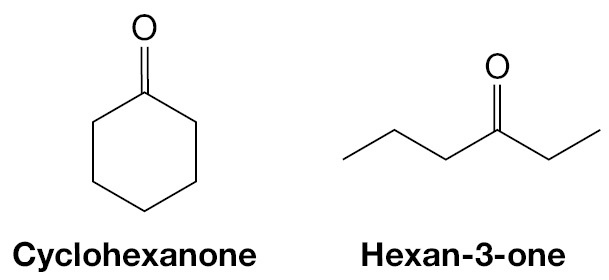
Two skeletal structural formulas show cyclohexanone and hexan-3-one. The skeletal structural formula of cyclohexanone shows a hexagonal ring with an oxygen atom double-bonded to one of the atoms in the ring. The structure of hexan-3-one shows a zigzag line with three crests and three troughs. An oxygen atom is double-bonded to the atom in the third position.
|
Think |
Solve |
|
|
Are the functional groups in these molecules the same or different? |
➤ |
Both compounds have a carbonyl group of the form C2C═O, characteristic of ketones. |
|
What impact will the ring have on the reactivity of cyclohexanone? |
➤ |
Although cyclohexanone’s carbonyl group is part of a ring, this should not significantly alter its reactivity relative to that of the open-chain hexan-3-one (see Conclusion 5, p. 35). As a result, both compounds should behave similarly. |
|
Try ItWill the chemical reactivity of δ-valerolactone and pentanoic acid be similar or significantly different? Explain. 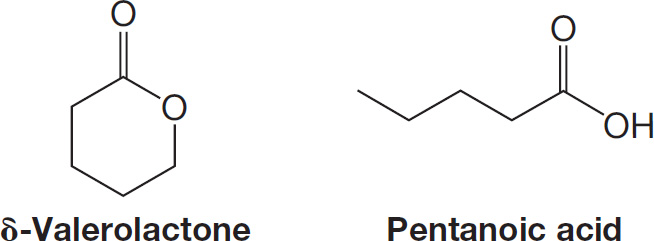
More informationTwo skeletal structural formulas show delta-Valerolactone and pentanoic acid. The skeletal structural formula of delta-Valerolactone shows a hexagonal ring with five carbon atoms and one oxygen atom. An oxygen atom is double-bonded to the carbon atom in the second position. The structure of pentanoic acid shows a zigzag line with three crests and three troughs. An oxygen atom is double-bonded to the carbon atom in the first position and a hydroxyl group occupies the position at the first trough. |
||
YOUR TURN 1.14
Circle the functional groups present in cyclohexanone and hexan-3-one in Solved Problem 1.13, and use Table 1-6 to verify that they are both ketones.
Each compound has a carbonyl (
C═O) functional group and is classified as a ketone.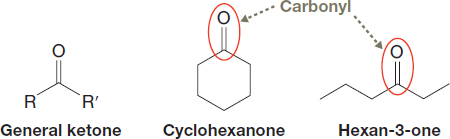
Condensed structural formula show three compounds with carbonyls. The first structure is labeled general ketone and shows a central carbon double bonded to oxygen, single bonded to an R group, and single bonded to an R prime group. The second structure is labeled cyclohexanone, it shows a cyclohexane ring double bonded to oxygen, the double bond to oxygen is labeled carbonyl. The third structure is labeled hexan-3-one, it is a six carbon chain where the third carbon is double bonded to an oxygen, the double bond to oxygen is labeled carbonyl.
SOLVED PROBLEM 1.14
How to identify functional groups in a large molecule
Break It Down Circle each of the functional groups present in ebalzotan, which was developed as an antidepressant and an antianxiety agent. Also, name the compound class that each functional group characterizes.
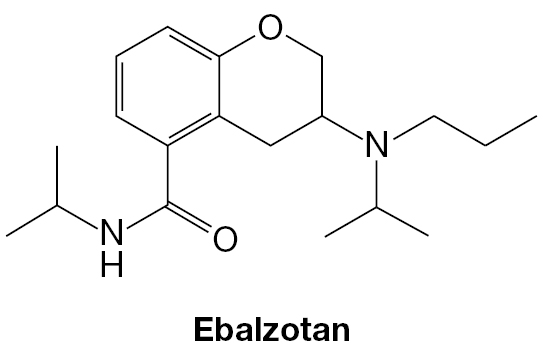
Condensed skeletal structural formula of ebalzotan. The structure shows two hexagonal six-membered rings fused together. The first is a benzene ring with alternating single and double bonds, and the second ring consists of five carbon atoms and an oxygen atom. Carbon 3 is bonded to a nitrogen atom, which is bonded to two methyl groups and a propyl chain. Carbon 5 is bonded to another carbon atom that is double-bonded to an oxygen atom and connected by single bonds to a nitrogen atom, which is further bonded to a hydrogen atom and two methyl groups.
|
Think |
Solve |
|
|
Are there any multiple bonds between carbon atoms? Are there any special rings present? |
➤ |
There are three C═C double bonds. These are not separate C═C groups that characterize alkenes, because they alternate with single bonds completely around the six-membered ring. The functional group is characteristic of an arene. |
|
Are any heteroatoms present? If so, in what kinds of bonds are they involved? Are there cases in which two heteroatoms belong to the same functional group? |
➤ |
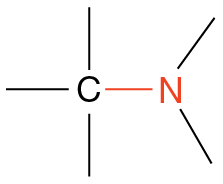
Recall that heteroatoms are atoms other than carbon or hydrogen. There are two O atoms and two N atoms present, each providing the potential for another functional group. The N atom at the right of the molecule is part of a N—C bond, characteristic of an amine. The O atom at the top of the molecule is part of a C—O—C functional group, characteristic of an ether. The O atom and the N atom at the bottom left of the molecule are part of the O═C—N functional group, characteristic of an amide. 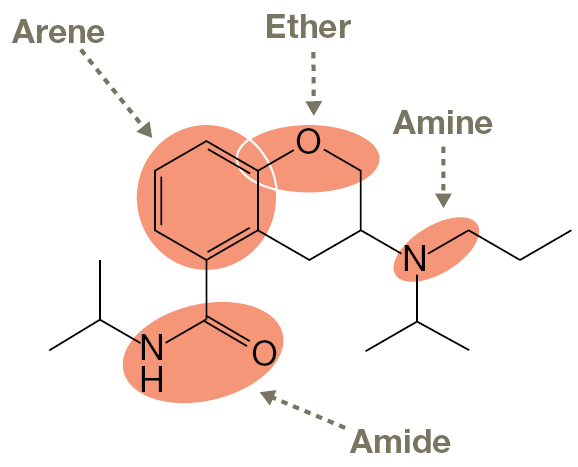
More informationCondensed skeletal structural formula of ebalzotan with the functional groups circled and highlighted. The structure shows two hexagonal six-membered rings fused together. The first is a benzene ring with alternating single and double bonds, and the second ring consists of five carbon atoms and an oxygen atom. Carbon 3 is bonded to a nitrogen atom, which is bonded to two methyl groups and a propyl chain. Carbon 5 is bonded to another carbon atom that is double-bonded to an oxygen atom and connected by single bonds to a nitrogen atom, which is further bonded to a hydrogen atom and two methyl groups. The benzene ring is highlighted in a circle labeled “arene.” The C-O-C bond in the second ring is highlighted in a circle labeled “ether.” The C-N bond between the propyl chain and the nitrogen bonded to carbon 3 is highlighted in a circle labeled “amine.” The carbon double-bonded to an oxygen atom single-bonded to a nitrogen, which is bonded to a hydrogen, is highlighted in a circle labeled “amide.” |
|
Try ItCircle each functional group present in this structure of ciprofloxacin, a powerful antibiotic commonly sold under the brand name Cipro. Also, name the compound class that each functional group characterizes. 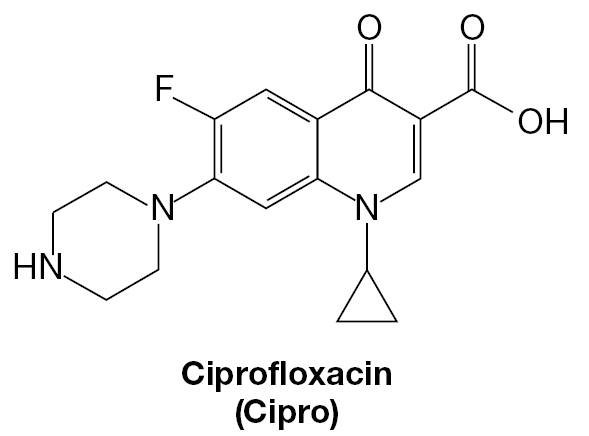
More informationSkeletal structural formula of ciprofloxacin. The structure shows two hexagonal six-membered rings fused together. The first is a benzene ring with alternating single and double bonds, and the second ring consists of five carbon atoms and a nitrogen atom in the first position. Double bonds exist between carbon atoms 2 and 3. The nitrogen atom is bonded by a single bond to a triangular ring of three carbon atoms. Carbon atom 3 is further bonded to another carbon atom, which is bonded to a hydroxyl group by a single bond and to an oxygen atom by a double bond. Carbon 4 is bonded to an oxygen atom by a double bond. Carbon 6 is bonded to a fluorine atom by a single bond. Carbon 7 is bonded by a single bond to a nitrogen atom, which is further bonded to a hexagonal ring with another nitrogen at the para position. |
||