3.2 How Does Sleep Affect Consciousness?
|
|
a. Remember the key terms about sleep. |
List all of the boldface words and write down their definitions. |
b. Analyze how brain activity reveals four stages of sleep. |
Compare brain activity during the four stages of sleep versus alert wakefulness. |
c. Apply the three reasons people need to sleep. |
Provide, in relation to your own life, three examples of why you need to sleep. |
d. Understand the five common sleep disorders. |
Describe each sleep disorder using your own words. |
 LEARNING GOALS
 READING ACTIVITIES
It’s midnight, and you’ve finally gotten into bed. But you’re so nervous about a job interview in the morning that you’re sure you’ll be up all night worrying. The next thing you know, the alarm is going off at 7:00 AM. Once again, your brain did that mysterious thing, and you fell asleep. What was your brain doing during those seven hours? Why do we sleep?
People commonly think that the brain shuts itself down during sleep. In fact, many brain regions are more active when we are asleep than when we are awake. And evidence indicates that some complex thinking, such as working on difficult problems, occurs in the brain even when we are sleeping (Walker & Stickgold, 2006). Given that brain activity is the basis for consciousness, what are our conscious experiences during sleep? Before we answer that question, let’s consider how sleep fits into life.
Sleep Is Part of the Normal Rhythm of Life
Brain activity and other physiological processes are regulated into daily patterns known as circadian rhythms (circadian roughly translates to “about a day”). Sleep/wake cycles operate according to circadian rhythms, as do body temperature and hormone levels. Circadian rhythms are influenced by the cycles of light and dark. Even when removed from light cues, however, we (and nonhuman animals as well) continue to show these rhythms.
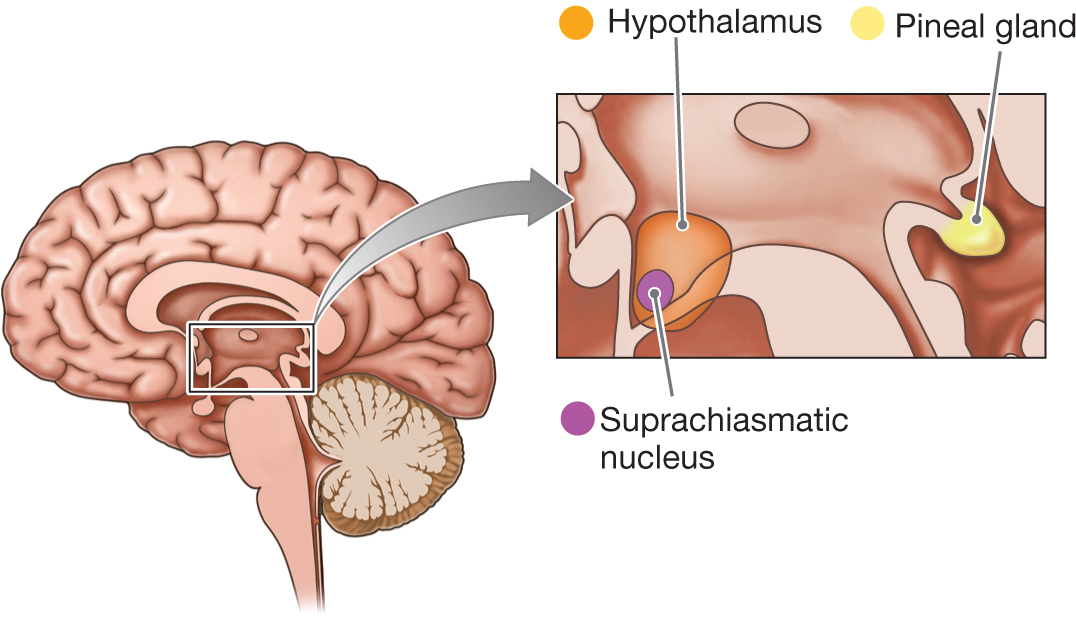
FIGURE 3.8
Pineal Gland and Sleep/Wake Cycles
Changes in light register in the suprachiasmatic nucleus of the hypothalamus. The hypothalamus then signals the pineal gland. The pineal gland influences the production of melatonin, which signals the body that it is time to sleep or wake up.
Multiple brain regions are involved in producing and maintaining circadian rhythms and our sleep/wake cycle. For instance, information about light detected by the eyes is sent to a small region of the hypothalamus called the suprachiasmatic nucleus. This region then sends signals to a tiny structure called the pineal gland (Figure 3.8). The pineal gland influences the release of melatonin, a hormone that travels through the bloodstream and affects various receptors in the body, including some receptors in the brain. Bright light suppresses the production of melatonin, whereas darkness triggers its release. It is believed that melatonin helps regulate the accuracy of our biological clock. Taking melatonin (sold as a dietary supplement) can help people cope with jet lag and shift work, both of which interfere with circadian rhythms. Taking melatonin also appears to help people fall asleep, although it is unclear why this happens.
Individuals differ tremendously in how much they sleep. Infants sleep much of the day. As adults, we spend about one-third of our time sleeping, an average of around 8 hours per night. Some adults report needing 9 or 10 hours of sleep a night to feel rested, whereas others report needing only a few hours. People tend to sleep less as they age. However, researchers were skeptical when a 70-year-old retired nurse, Miss M., reported sleeping only about an hour a night—that is, until she agreed to participate in a study. On her first two nights in a research laboratory, Miss M. was unable to sleep, apparently because of the excitement. But on her third night, she slept for only 99 minutes, then awoke refreshed, cheerful, and full of energy (Meddis, 1977). You might like the idea of sleeping so little and having all those extra hours of spare time. But bear in mind that most of us do not function well on so little sleep.
Consciousness Changes During Sleep
How is being awake different from being asleep? The difference has as much to do with conscious experience as with biological processes. When you sleep, your conscious experience of the outside world is largely turned off. To some extent, however, you remain aware of your surroundings and your brain still processes certain information. Your mind analyzes potential dangers, controls body movements, and shifts body parts to maximize comfort. This is why people who sleep next to children or pets tend not to roll over onto them and why, after infancy, most people do not fall out of bed while sleeping.
Before the development of objective methods to assess brain activity, most people believed the brain went to sleep along with the rest of the body. As we discussed in Chapter 2, invention of the electroencephalograph, or EEG, in the 1920s enabled researchers to measure the brain’s electrical activity. When you are awake and fully conscious, you experience many different sources of sensory activity. As a result, the neurons in your brain are extremely active. An EEG shows this brain activity as short, frequent, irregular electrical signals called beta waves (shown in Figure 3.9). When you really focus your attention on something, or when you close your eyes and relax, brain activity slows and becomes more regular, producing the electrical pattern known as alpha waves.
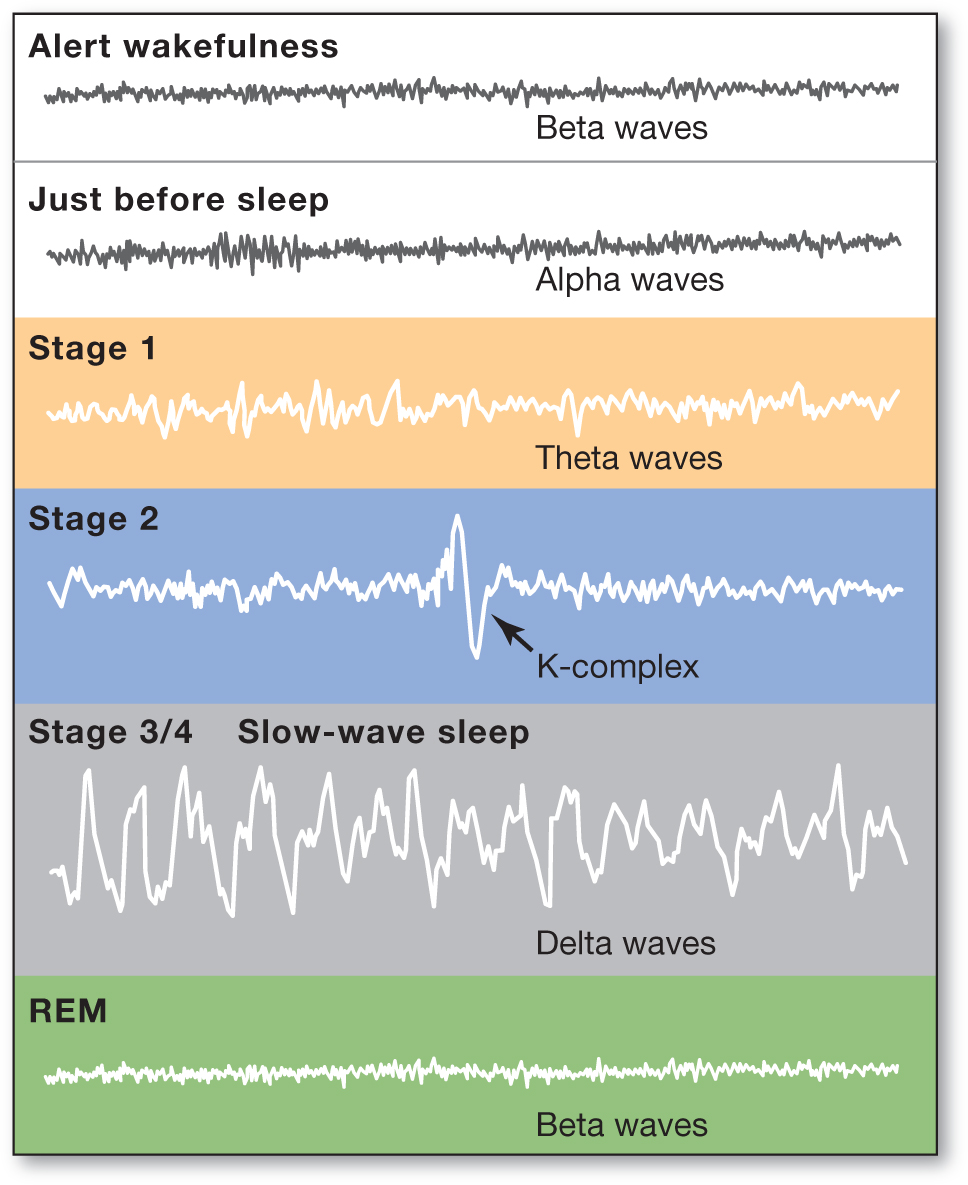
FIGURE 3.9
Brain Activity During Sleep
These EEG patterns are examples of electrical brain activity during different stages of normal sleep.
FOUR STAGES OF SLEEP As EEG readings indicate, sleep occurs in stages that are marked by changes in consciousness (see Figure 3.9; also see the Learning Tip on p. 90). When you drift off to sleep, you enter stage 1, shown on the EEG as theta waves. You can easily be aroused from stage 1, and if awakened, you will probably deny that you were sleeping. In this light sleep, you might see fantastical images or geometric shapes. Or you might have the sensation of falling or that your limbs are jerking.
HAS IT HAPPENED TO YOU?
The Hypnic Jerk
Have you ever been falling asleep when suddenly a part of your body twitched? Or maybe you were dozing off in class and your whole body jerked? Either way, you were most likely aware of your movement, which is called a hypnic jerk. Experts don’t know exactly what causes hypnic jerks, but many agree that they come from the muscles’ responding to brain activity that occurs at the start of stage 1 sleep. Because these jerks shift us briefly out of stage 1 sleep, we become aware that we just moved. This conscious awareness usually does not last long, though. It fades when we slip back into sleep for the night, or at least for the class period.
As you progress to stage 2, your breathing becomes more regular, and you become less sensitive to external stimulation. Now the EEG shows occasional bursts of activity called K-complexes. Sleep spindles may be associated with development of long-term memories (Fogel & Smith, 2011). By contrast, some researchers believe that K-complexes are signals from brain mechanisms involved with shutting out the external world and keeping people asleep (Halász, 2016).
The progression to deep sleep occurs through stages 3 and 4, which are seen as one stage because the brain activity is nearly identical (Silber et al., 2007). This period is marked by large, regular delta waves, and it is often referred to as slow-wave sleep. People in slow-wave sleep are very hard to wake and are often disoriented when they do wake up. People still process some information in slow-wave sleep, however, because the mind continues to evaluate the environment for potential danger. For example, parents in slow-wave sleep can be aroused by their children’s cries. Yet they can blissfully sleep through the sounds of sirens or traffic noise, which are louder than the crying children but are not necessarily relevant.
After about 90 minutes of sleep, the sleep cycle reverses, returning to stage 1. At this point, the EEG suddenly shows a flurry of beta wave activity that usually represents an awake, alert mind. The eyes dart back and forth rapidly beneath closed eyelids. Because of these rapid eye movements, this stage is called REM sleep. It is sometimes called paradoxical sleep because of the paradox of a sleeping body with an active brain. Indeed, some regions of the brain are more active during REM sleep than during wakefulness. But although the brain is active during REM episodes, most of the body’s muscles are paralyzed. At the same time, the body shows signs of genital arousal: Most males of all ages develop erections, and most females of all ages experience clitoral engorgement.
 LEARNING TIP: Understanding Brain Activity During Sleep
An EEG of the brain’s electrical activity can seem like just a bunch of chicken scratches. But to understand how these waveforms reveal the stages of sleep and consciousness, you need to focus on only two things: the height of the waveforms (amplitude) and the distance between the peaks (wavelength).
(a)EEG waveforms that are shorter in height (lower amplitude) and have a smaller distance between the peaks (shorter wavelength) indicate brain activity that is associated with awareness of information. That information can be in the external world, as in alert wakefulness. Or it can be in our own minds when we are dreaming, as occurs during REM sleep. |
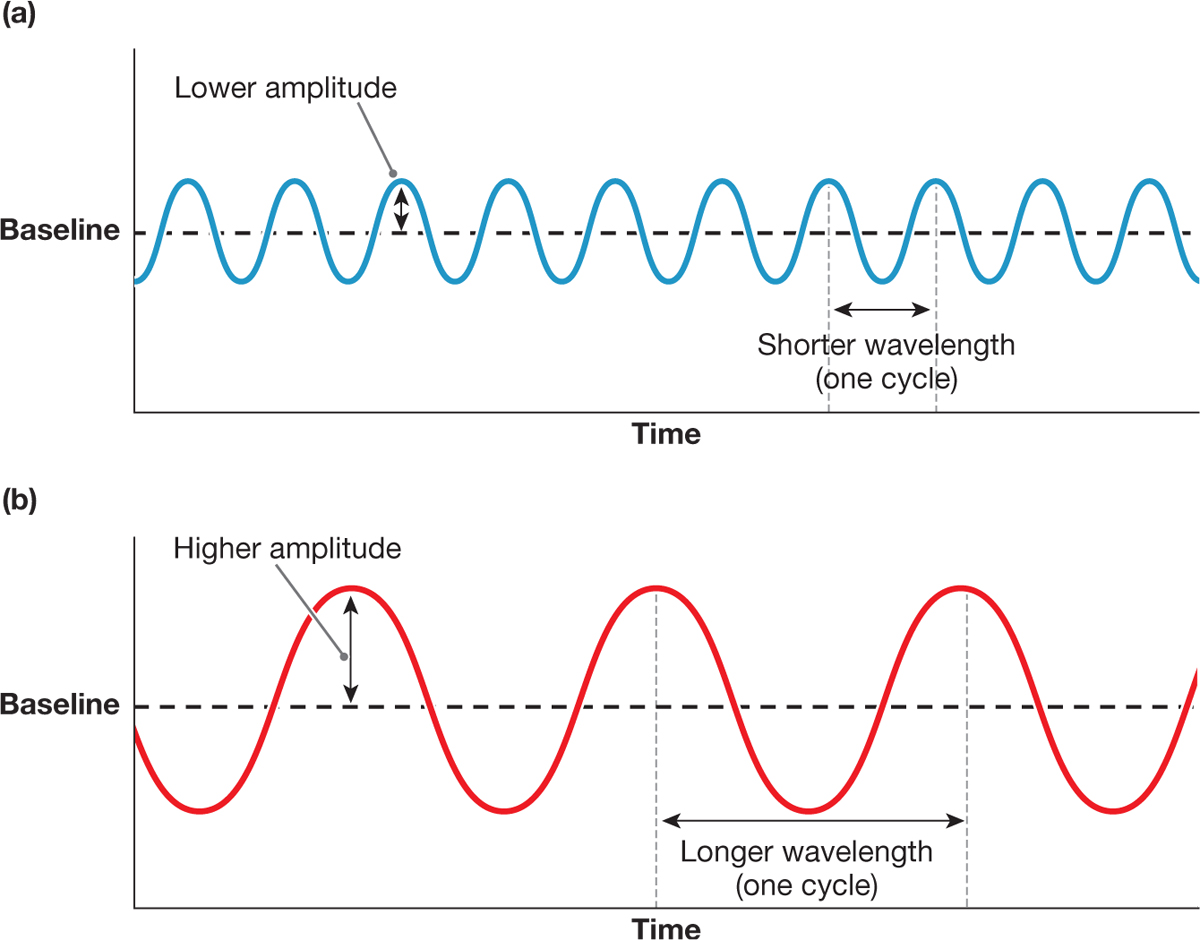 |
(b) By contrast, EEG waveforms that are relatively taller in height (higher amplitude) and have a longer distance between the peaks (longer wavelength) indicate brain activity that is associated with deep sleep. |
|
Notice that as we move through the stages of sleep, EEG waveforms always increase in height and in the distance between the peaks. This combined pattern indicates that we are falling more deeply asleep. |
|
REM sleep is psychologically significant because of its relation to dreaming. When people are awakened during REM sleep, about 80 percent of the time they report dreaming. By contrast, they report dreaming during non-REM sleep less than half the time (Solms, 2000). What’s more, as you will see later in the chapter, dreams differ in these two types of sleep.
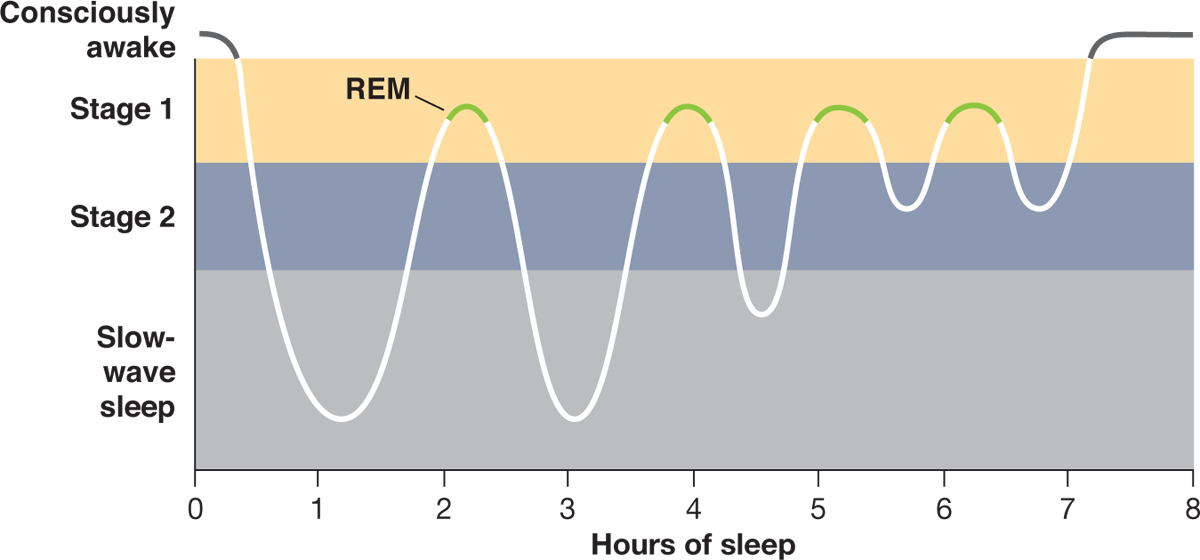
FIGURE 3.10
Stages of Sleep
This chart shows how the four stages of sleep progress over the course of the night.
THE REPEATING SLEEP CYCLE Over the course of a typical night, we cycle through the stages of sleep about five times. As shown in Figure 3.10, we progress from stage 1 sleep to slow-wave sleep, then to REM sleep. As morning approaches, the sleep cycle becomes shorter, and we spend relatively more time in REM sleep. You may say you slept like a log all night long, but it’s probably not quite true. People briefly awaken many times during the night, although they do not remember these awakenings in the morning. As people age, they sometimes have more difficulty going back to sleep after awakening.
 TRY IT YOURSELF: Keeping a Dream Journal
Do you want to remember your dreams better? Just keep a pen and paper, or your cell phone, next to your bed so you can record your dreams as you wake up. If you wait, you are likely to forget most of them. Keeping a dream journal can help you better understand your dreams as well your consciousness while you were dreaming.
People Dream While Sleeping
Dreams are one of life’s great mysteries. Why do our minds conjure up images, fantasies, stories that make little sense, and scenes that ignore physical laws and rules of both time and space? Why does the mind confuse these conjurings with reality? Although they sometimes incorporate external sounds or other sensory experiences that happen while we sleep, dreams are the products of our consciousness. Some people claim they do not dream, or never remember their dreams, but everyone dreams unless a brain injury or medication interferes. In fact, the average person spends 6 years of his or her life dreaming. Yet no one knows if dreaming serves any biological function.
REM DREAMS AND NON-REM DREAMS We dream during both REM and non-REM sleep. But in the two types of sleep, the content of our dreams differs. REM dreams are more likely to be bizarre. They may involve intense emotions, visual and auditory hallucinations (but rarely taste, smell, or pain), and an uncritical acceptance of illogical events. You fly, are chased by monsters, or tunnel through the center of the Earth. Non-REM dreams feel normal, like everyday life. They may concern ordinary activities such as deciding what clothes to wear or taking notes in class.
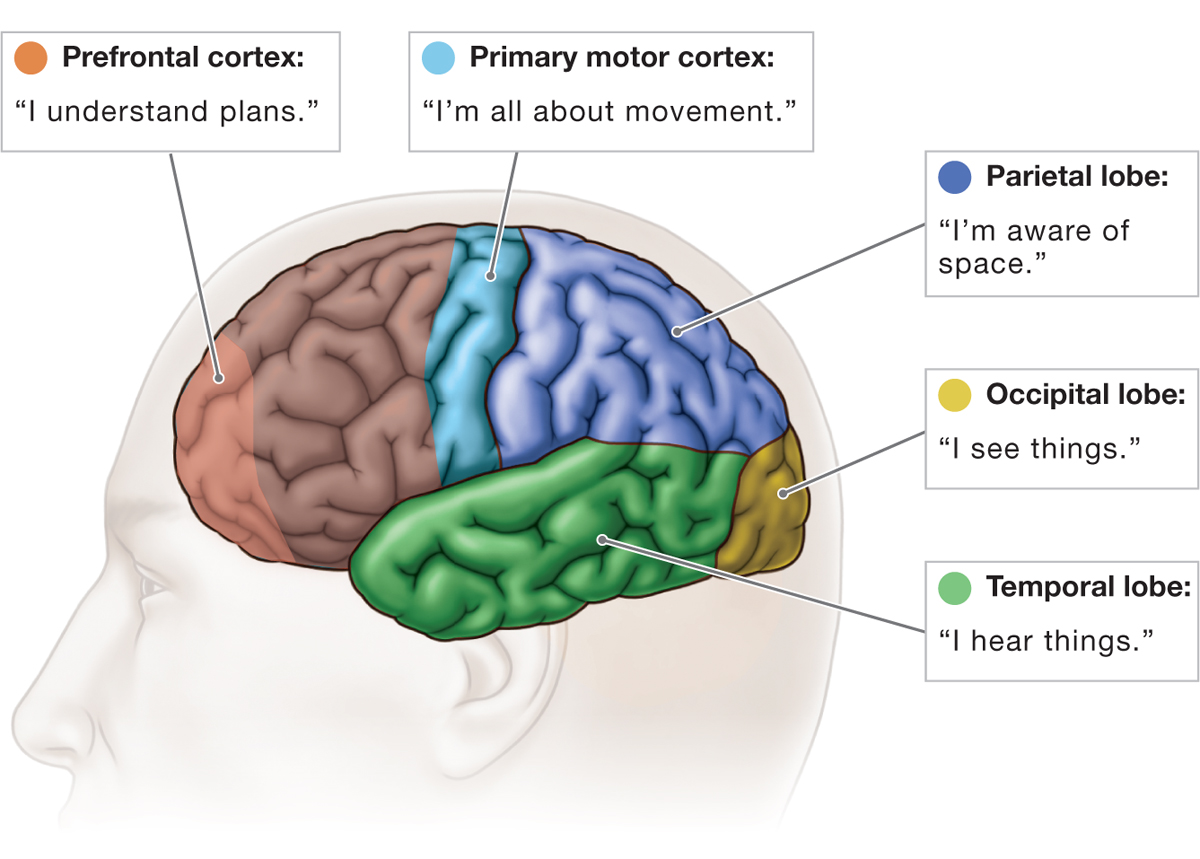
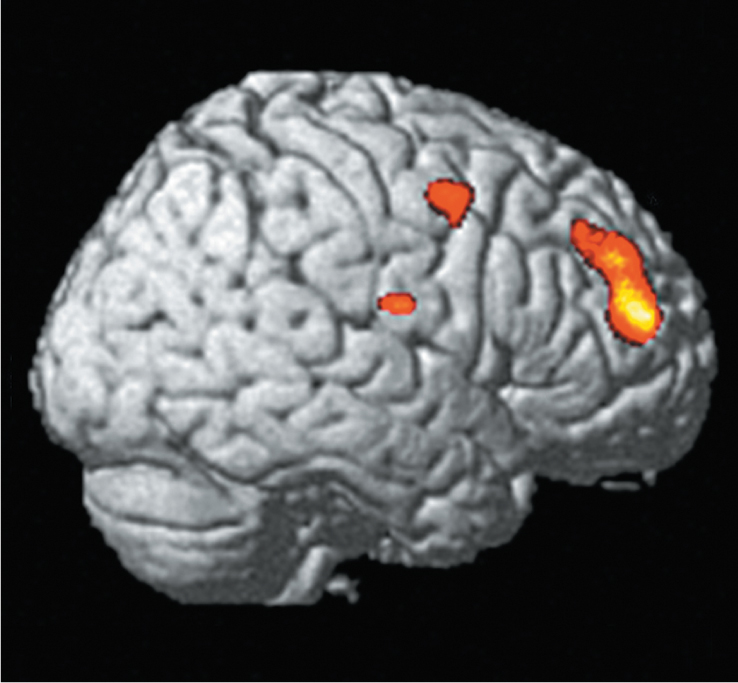
The activity of different brain regions during REM and non-REM sleep may be responsible for the different types of dreams and our experiences of them. During non-REM sleep, many brain regions are generally deactivated. In contrast, during REM sleep, some areas of the brain show increased activity, whereas others show decreased activity (Hobson, 2009; Figure 3.11). The content of REM dreams results from the activation of brain structures associated with motivation, emotion, and reward (e.g., the amygdala). The visual association areas are also activated. At the same time, the prefrontal cortex becomes less activated (Schwartz & Maquet, 2002). As we saw in Chapter 2, the prefrontal cortex is necessary for processing self-awareness, reflective thought, and conscious input from the external world. Because this brain region is less active during REM dreams, the brain’s emotion centers and visual association areas interact without rational thought. The disconnect between feelings and logic contributes to the wilder images in REM dreams.
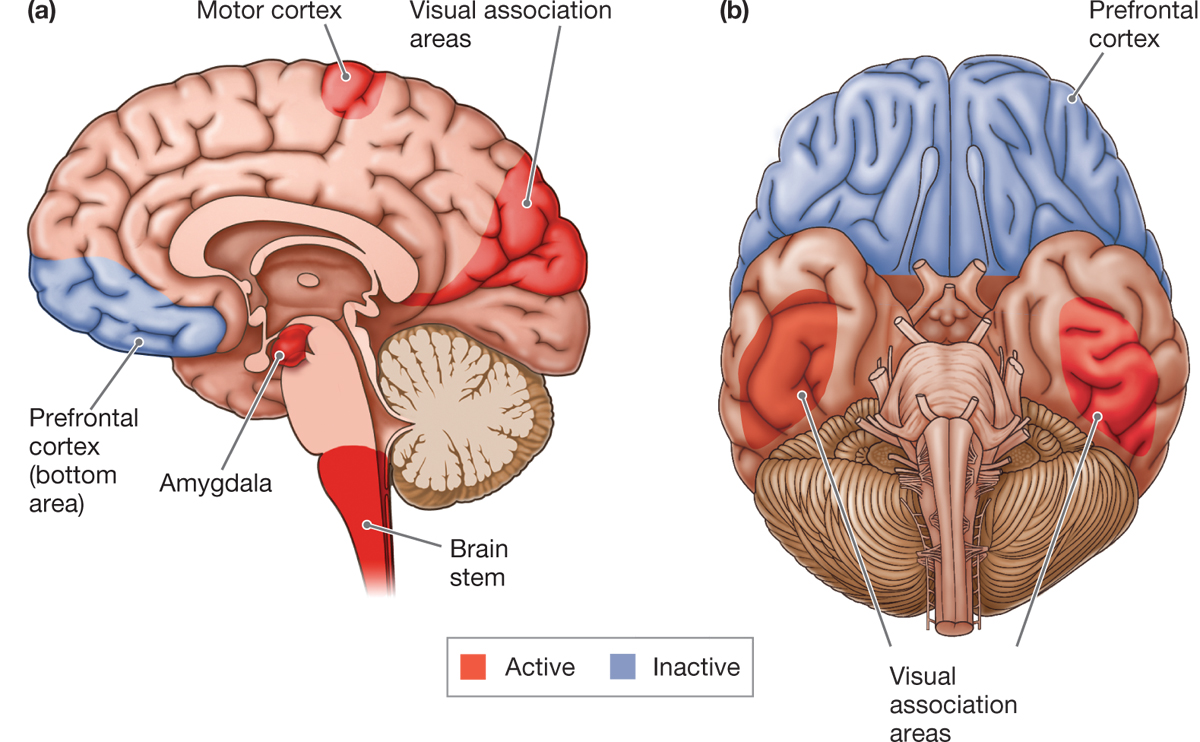
FIGURE 3.11
Brain Activity During REM Sleep
These two views of the brain show the regions that are active (red) and inactive (blue) during REM sleep. (a) As seen here from the side, the motor cortex, the brain stem, and visual association areas are active. So is the amygdala, which is involved in emotion. The prefrontal cortex is inactive. (b) This view from beneath the brain shows other visual association areas that are active. This view also reveals the bottom of the prefrontal cortex, which is inactive.
WHAT DO DREAMS MEAN? Perhaps we should ask, do dreams mean anything? Sigmund Freud presented one of the first major theories of dreams. According to Freud, dreams contain hidden content that represents unconscious conflicts in the mind of the dreamer. The manifest content is the way visual information is seen (manifested) in the dream and remembered by the dreamer. For example, you might see images in your dream that have you flying through the air, away from dark storm clouds. The latent content is the meaning behind what is being visually manifested. In this example, the meaning behind the visual images in the dream might be that you are trying to get away from a problem with your parents. Some theorists believe that the manifest content disguises the latent content to protect the dreamer from directly confronting a conflict.
Virtually no support exists for Freud’s ideas that dreams represent hidden conflicts and that objects in dreams have special symbolic meanings. Daily life experiences do, however, influence the content of dreams. For example, you may be especially likely to have dreams with anxiety-producing content while studying for exams.
Some dreams have thematic structures, unfolding as events or stories rather than as jumbles of disconnected images. Still, such structures apparently hold no secret meanings. Although your dreams may seem uniquely your own, many common themes occur in dreams. Have you ever dreamed about showing up for an exam and being unprepared or finding that you are taking the wrong test? Many people in college have dreams like these. Even after you finish school and no longer take exams routinely, you probably will have similar dreams about being unprepared. Retired professors sometimes dream about being unprepared to teach classes.
ACTIVATION-SYNTHESIS THEORY The sleep researchers John Alan Hobson and Robert McCarley proposed the activation-synthesis theory to explain dreaming (Hobson & McCarley, 1977). According to this theory, neurons in the brain fire randomly during sleep. This random firing can activate parts of the brain that normally process sensory input, such as sights, sounds, and smells. The sleeping mind tries to make sense of the resulting sensory activity by combining it with stored memories, and the result is our experience of having a dream. From this perspective, dreams are simply the side effects of mental processes produced by random neural firing.
In 2000, Hobson and his colleagues revised the activation-synthesis theory. They wanted to take into account recent findings in cognitive neuroscience. For instance, they suggested that activation of the limbic regions of the brain (such as the amygdala), which are associated with emotion and motivation, is the source of the emotional content of dreams. They also proposed that the deactivation of the frontal cortices contributes to the delusional and illogical aspects of dreams. Critics of Hobson’s theory argue that dreams are rarely as chaotic as we might expect if they were based on random brain activity (Domhoff, 2003). And indeed, most dreams are fairly similar to waking life—they just have some strange features. In sum, psychologists are still not sure what causes us to dream.
Sleep Is an Adaptive Behavior
In Chapter 1, we discussed how certain traits are adaptive for a species. That is, each species has traits that help it to survive and reproduce in a changing environment. At first glance, sleep hardly seems adaptive. Tuning out the external world for periods of time can be a threat to survival if a predator pounces or you drive your car into a tree. But we cannot avoid the need to sleep. Eventually our bodies shut down, and we sleep whether we want to or not.
But why do we sleep? Most animals sleep, even if they have peculiar sleeping styles. For instance, in some dolphin species the cerebral hemispheres take turns sleeping. So sleep must serve an important biological purpose. In other words, it must help us adapt and respond in our environment. Researchers have proposed three reasons that sleeping is adaptive and beneficial to us: restoration, preservation, and facilitation of learning.
THREE BENEFITS OF SLEEP Think about the last time you engaged in demanding physical activity—maybe spending the day helping a friend move or running a long race. Most likely you slept longer than usual afterward. According to the restorative theory, sleep allows the body, including the brain, to rest and repair itself. Growth hormone, released during deep sleep, helps bring about the repair of damaged tissue. Sleep apparently enables the brain to replenish energy stores and also strengthens the immune system (Hobson, 1999).

FIGURE 3.12
Sleeping Predator
After a fresh kill, a lion may sleep for days.
According to the circadian rhythm theory, sleep has evolved to preserve animals, including humans, from harm. Sleep keeps creatures quiet and inactive when the danger of attack is greatest—usually when it is dark. Each day, animals need only a limited amount of time to accomplish the necessities of survival, such as obtaining food. As a result, it is adaptive for animals to spend the rest of the time inactive, preferably hidden. So an animal’s typical amount of sleep depends on how much time that animal needs to obtain food, how easily it can hide, and how vulnerable it is to attack. Small animals tend to sleep a lot. Large animals that are vulnerable to attack, such as cows and deer, sleep little. Large predatory animals, which are generally not vulnerable, sleep a lot (Figure 3.12). We humans depend greatly on vision for survival. We are adapted to sleeping at night because our early ancestors were more at risk in the dark.
Scientists have also proposed that sleep is important because it is involved in strengthening neural connections that serve as the basis of learning. The general idea of this consolidation theory is that circuits wired together during the waking period are consolidated, or strengthened, during sleep (Wilson & McNaughton, 1994). When research participants in one study slept after learning word lists, their recall was better than in control conditions where participants remained awake after learning the lists (Drosopoulos, Schulze, Fischer, & Born, 2007).
Both slow-wave sleep and REM sleep appear to be important for learning to take place, but people may be especially likely to perform better if they dream about the task while sleeping. In one study, participants learned how to run a complex maze. Those who then slept for 90 minutes went on to perform better on the maze than participants who hadn’t slept. Those who dreamed about the maze performed the best of all (Wamsley, Tucker, Payne, Benavides, & Stickgold, 2010).
Indeed, there is some evidence that students experience more REM sleep during exam periods, when they might be consolidating a great deal of information (Smith & Lapp, 1991). Changes in sleep patterns over the life cycle also support the argument that sleep, especially REM sleep, promotes the development of brain circuits for learning. Infants and the very young, who learn an enormous amount in a few years, sleep the most and also spend the most time in REM sleep.

FIGURE 3.13
Sleep Deprivation
Students may try to avoid sleep. But sleep will catch up with them!
SLEEP DEPRIVATION CAN IMPAIR FUNCTION We’ve all gone through periods when we didn’t get enough sleep. Does the occasional lack of sleep harm us? Many laboratory studies have examined the effects of temporary sleep deprivation on physical and cognitive performance. Surprisingly, most studies find that two or three days of sleep deprivation have little effect on strength, athletic ability, or the performance of complex tasks. If you find yourself nodding off over your textbook after a night without sleep, however, you’re not alone (Figure 3.13). When deprived of sleep, people find it difficult to perform quiet tasks, such as reading, and nearly impossible to perform boring or mundane tasks.
By contrast, a long period of sleep deprivation does decrease cognitive performance. People who suffer from chronic sleep deprivation may experience attention lapses and reduced short-term memory. Studies with rats have found that extended sleep deprivation compromises the immune system and leads to death. Sleep deprivation is also dangerous and potentially disastrous because it makes people prone to microsleeps, in which they fall asleep during the day for a few seconds or even a minute (Coren, 1996).
If your main style of studying is the all-nighter, then findings that link sleep to learning should make you think twice. In one recent study, students who were sleep deprived for just one night showed reduced activity the next day in the hippocampus, a brain area essential for memory (Yoo, Hu, Gujar, Jolesz, & Walker, 2007). These sleep-deprived students also showed poorer memory at later testing. The researchers found substantial evidence that sleep does more than consolidate memories. Sleep also seems to prepare the brain for its memory needs for the next day.
Sleep deprivation also interferes with the body’s hunger signals, contributing to overeating and weight gain (late-night pizza run, anyone?). It impairs motor abilities, contributing to accidents and injuries. Sleep deprivation also increases anxiety, depression, and distress. And—to add insult to injury—others perceive us as less attractive when we are sleep deprived, compared with when we are well rested (Axelsson et al., 2010).
When you finally do sleep after a long period of deprivation, you will enter the REM stage more quickly and will have more REM dreams than usual. This REM rebound after deprivation implies that REM sleep is a particularly important part of the sleep process (Suchecki, Tiba, & Machado, 2012).  Video Demonstration: Sleep Disorders
Sleep Disorders Are Relatively Common Throughout Life
Nearly everyone occasionally has trouble falling asleep or going back to sleep after waking up during the night. When the continual inability to sleep causes significant problems in daily life, the problem has reached the point of being a sleep disorder.
INSOMNIA It’s 3:00 AM, and you’re turning over in bed for what seems like the 500th time. You’re exhausted, but your brain refuses to turn off, and you’re beginning to feel desperate. Now and then, each of us has a hard time sleeping. If you experience this problem chronically, you might have a sleep disorder. Insomnia is a sleep disorder in which a person’s mental health and ability to function are reduced by the chronic inability to sleep. Indeed, insomnia is associated with diminished psychological well-being, including feelings of depression (Bootzin & Epstein, 2011; Hamilton et al., 2007).
Researchers estimate that between 12 percent and 20 percent of adults have insomnia; it is more common in women than in men and in older adults than in younger adults (Espie, 2002; Ram, Seirawan, Kumar, & Clark, 2010). It is hard to estimate how many people truly have insomnia, however. One reason is that many people who believe they are poor sleepers overestimate how long it takes them to fall asleep and often underestimate how much sleep they get in a typical night. Some people even experience pseudoinsomnia, in which they basically dream they are not sleeping. Their EEGs would show they were sleeping. But if you woke them, they would claim they had been awake.
Ironically, a major cause of insomnia is worrying about sleep. When you experience this kind of insomnia, you may be tired enough to sleep. As you try to fall asleep, however, you worry about whether you will get to sleep and may even panic about how a lack of sleep will affect you. This anxiety leads to heightened arousal, which interferes with normal sleep patterns. It’s a vicious cycle.
If you look at the many TV ads and the pharmacy shelves filled with both prescription pills and over-the-counter sleep aids, it would seem that medication is a simple way to deal with insomnia. Sleeping pills may work in the short run, but they can cause significant problems down the road. People may come to depend on the pills to help them sleep. Then if they try to stop taking the pills, they may lie awake wondering whether they can get to sleep on their own. As a better alternative, you might try preventing or even curing insomnia by changing your habits. You can read about some techniques in this chapter’s Using Psychology in Your Life feature, on p. 96.
SLEEP APNEA Another fairly common sleep disorder is sleep apnea. While asleep, a person with this disorder stops breathing for short periods because his throat closes. In struggling to breathe, the person briefly awakens and gasps for air.
Sleep apnea is most common among middle-aged men and is often associated with obesity, although it is unclear if obesity causes sleep apnea or sleep apnea contributes to obesity (Pack & Pien, 2011; Spurr, Graven, & Gilbert, 2008). Sleep apnea causes people to sleep poorly, feel tired in the daytime, and even have problems such as an inability to concentrate while driving. What’s more, sleep apnea is associated with cardiovascular problems and stroke.
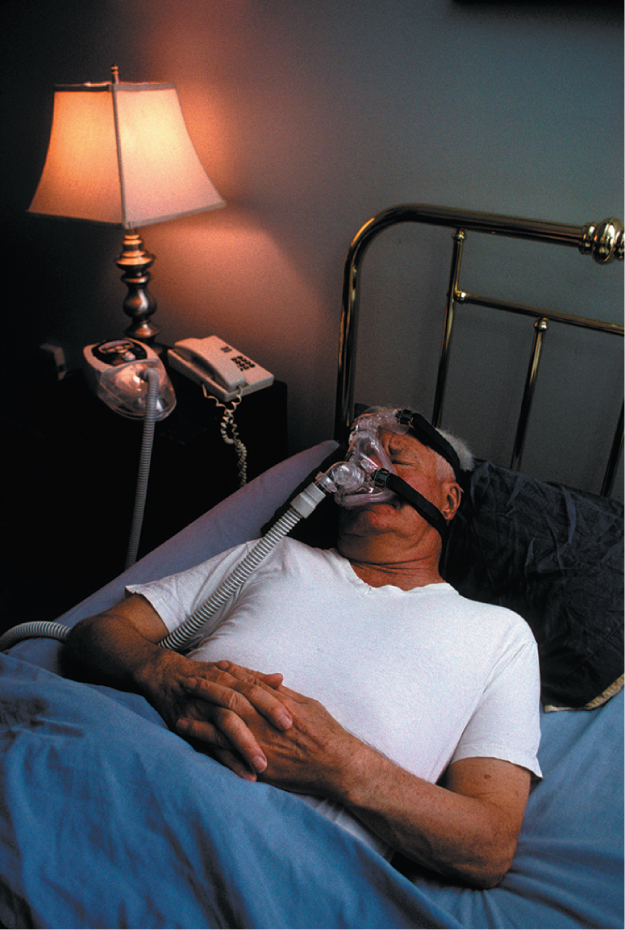
FIGURE 3.14
Sleep Apnea
This man has sleep apnea. While he sleeps, a continuous positive airway pressure device blows air into his nose or mouth to keep his throat open.
Because they do not remember awakening frequently during the night, people with sleep apnea are typically unaware of their condition. The main symptom that may bring it to their attention is loud snoring that disturbs a partner. For serious cases, physicians often prescribe a device that blows air into the nose or mouth while the person sleeps (Figure 3.14).
NARCOLEPSY A student who falls asleep during a lecture is likely sleep deprived, but a professor who falls asleep while lecturing is probably experiencing an episode of narcolepsy. In this rare disorder, extreme sleepiness occurs during normal waking hours. During an episode of narcolepsy, a person may experience the muscle paralysis that accompanies REM sleep, perhaps causing her to go limp and collapse. Obviously, people with narcolepsy have to be very careful about the activities they engage in. Unexpectedly falling asleep can be dangerous or fatal, depending on the situation. Evidence suggests that narcolepsy is a genetic condition that affects transmission of a specific neurotransmitter in the hypothalamus (Chabas, Taheri, Renier, & Mignot, 2003; Nishino, 2007). The most widely used treatments for this condition are drugs that act as stimulants.
USING PSYCHOLOGY IN YOUR LIFE:
How Can I Develop Better Sleep Habits?
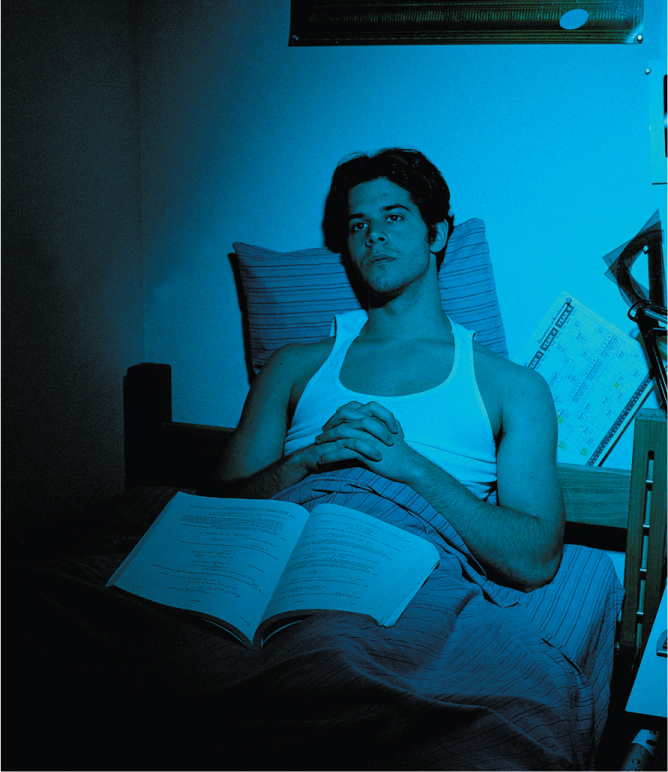
An Example of What Not to Do

An Example of What to Do
If you don’t get enough sleep, you are setting yourself up for poor mental health, poor physical health, and academic difficulties. You probably know this from personal experience as well as from what you’ve read. But even though you may have the best intentions, sleep may sometimes play hard to get. Anxiety, excitement, getting too tired, or having bad sleep habits may leave you lying in bed, dog-tired but wide awake. Here are some strategies that can help you develop better sleep:
1. Establish a routine to help set your biological clock. Every day, go to bed at the same time and wake up at the same time. Changing the time you go to bed or wake up each day alters your regular nightly sleep cycle and can disrupt other physiological systems.
2. Avoid alcohol and caffeine in the evening. Alcohol might help you get to sleep more quickly, but it will interfere with your sleep cycle and most likely make you wake up early the next day. Caffeine is a stimulant, so it will prevent you from falling asleep.
3. Exercise regularly. Regular exercise will help maintain your sleep cycle. However, exercising creates arousal that interferes with sleep, so do not exercise right before going to bed. Instead, do a little stretching before bedtime to help your mind and body relax.
4. Remember, your bed is for sleeping. Most of us do not sleep in our kitchens, nor should we eat in our beds. Or watch TV. Or study. Your mind needs to associate your bed with sleeping. The best way to make that association is to use your bed only for sleeping. And maybe a little cuddling.
5. Relax. Do not worry about the future (easier said than done, right?). Write down things to do or worries on a notepad and then put them aside until the next day. Have a warm bath or listen to soothing music. Download a couple of meditation and relaxation podcasts, and use the techniques to help you deal with stress and guide you to restfulness.
6. Get up. When you cannot fall asleep, get up and do something else. Do not lie there trying to force sleep (we all know how well that works, or rather does not work). If you start feeling sleepy a bit later, go back to bed and give sleep another chance.
7. Let bygones be bygones. When you have trouble falling asleep on a particular night, do not try to make up for the lost sleep by sleeping late the next morning or napping during the day. Those zzzz’s are gone. You want to be sleepy when you go to bed the next night. Sleeping late, napping, or both will make the next night’s sleep more difficult.
The sleep attitudes and habits you establish during college will be with you for the rest of your life. Set yourself up for academic success, and for physical and mental health, by making good sleep a priority and taking charge of your sleep.
For additional resources, visit the National Sleep Foundation’s Web site at www.sleepfoundation.org.
 |
BEING A CRITICAL CONSUMER: |
It’s only a month into the first semester, and I already feel behind, James thought. He was excited about starting college, but he hadn’t been quite prepared for the amount of studying that was required.
James had been especially interested when reading the section about sleep deprivation in his psychology textbook. Since starting college, he wasn’t sure he had gotten more than six hours of sleep in any night. He also was really surprised to learn that the brain is still so active even during sleep, especially during REM sleep. No wonder I’m always so tired—my brain never shuts down!
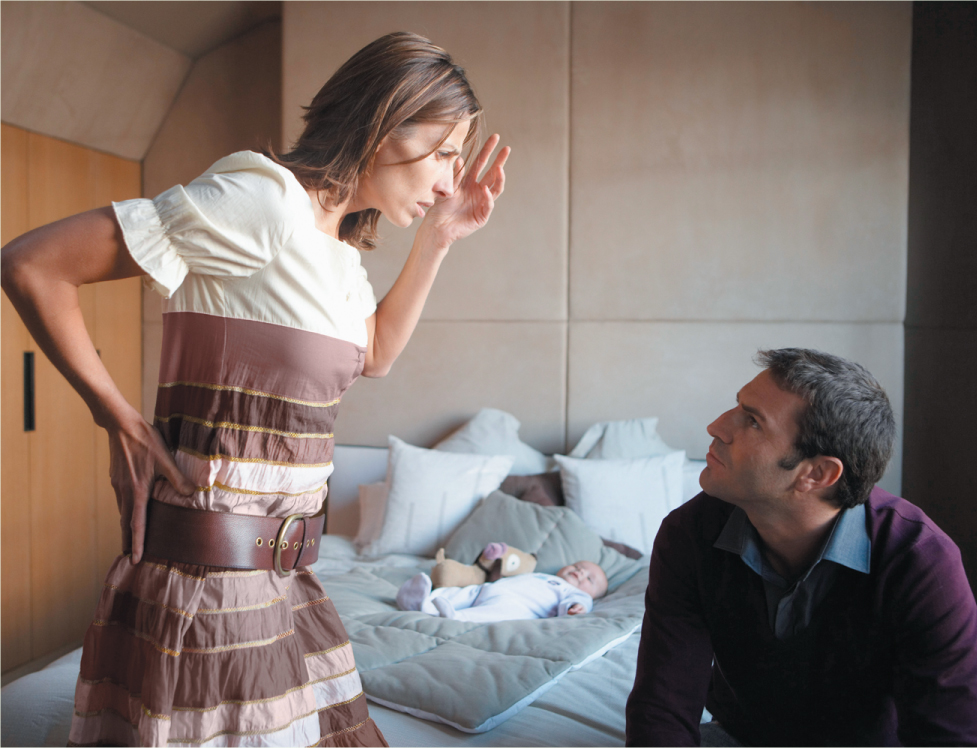
James decided to look online for additional information about sleep. At the Huffington Post, his attention was drawn to an interesting headline: “Sounds of Arguing Affect Babies’ Brains, Even While They’re Asleep.” James read the article and found out that, as part of a 2013 research study, 20 babies aged 6–12 months slept in an fMRI machine. As James knew from reading Chapter 2, fMRI measures blood flow in various areas of the brain. Blood flow indicates how active a particular region is. While the babies slept, half of them heard a male voice saying nonsense sentences in an angry tone of voice. The other half heard the same nonsense syllables said by the man in a neutral tone of voice. Some of the babies had parents who verbally fought a lot, whereas some of the babies had parents who seldom argued. By using fMRI, the researchers found that in the parts of the brain responsible for regulating stress and emotion, babies from high-conflict homes showed greater brain activity in response to the angry voice than to the neutral voice. That’s sort of sad, James thought, but also kind of cool—more evidence that the brain processes the environment even during sleep.
Intrigued, James looked for other stories covering this research. At FoxNews.com, he found the same article with a slightly different title: “Sounds of Arguing Affect Sleeping Babies’ Brains.” That seems like a fair headline, too—it just presents the basic facts of the study. But at Telegraph.co.uk, he found a much more shocking headline: “Arguing Parents Could Damage Their Baby for Life, Study Claims.” Is that really what they found? Did the other articles I read fail to mention that these infants were followed later in life? James read the Telegraph article more closely. He noticed that although the details of the study were not different, the journalist seemed to go a step further and speculate on what the findings of the study might mean even though the study’s main author was not saying such things.
QUESTIONS
James noticed that the study did not follow the children over time. How do you think infants might be affected by hearing arguing while sleeping? How might couples who argue a lot differ from those who do not argue? Is it possible that they differ in how they treat their children? How would such differences influence the child’s behaviors, including sleep patterns?
REM BEHAVIOR DISORDER AND SLEEPWALKING REM behavior disorder is roughly the opposite of narcolepsy. In this condition, the normal paralysis that accompanies REM sleep is disabled. People who experience REM behavior disorder act out their dreams while sleeping. Often, in acting out dreams, they strike their sleeping partners. No treatment exists for this rare sleep disorder. The condition is caused by a neurological deficit and is most often seen in elderly males.
By contrast, sleepwalking is most common among young children. Technically called somnambulism, this relatively common behavior occurs during slow-wave sleep, typically within the first hour or two after falling asleep. During an episode, the person is glassy-eyed and seems disconnected from other people and/or the surroundings. Contrary to popular belief, no harm is done if the sleepwalker is awakened during the episode. Being gently walked back to bed is safer for the sleepwalker than being left to wander around and potentially get hurt.
|
|
 3.2 CHECKPOINT:
■ We experience changes in consciousness when we sleep as we become less aware of the external world, yet we are still able to respond when necessary.
■ Sleep has four stages. Each stage is characterized by brain activity that is the basis for how we experience that stage of sleep.
■ We dream differently during REM sleep than during non-REM sleep.
■ Three theories have been proposed to explain why sleeping is beneficial.
■ Five disorders affect the experience of sleeping.