2.1 Not Just One
What are people’s various social characteristics, how do they influence an individual’s experience, and how do they connect to the matrix of domination?
An individual is not just shaped by their sex/gender. Identity also includes a person’s race/ethnicity, social class, sexual orientation, religion, nationality, and age as well as a variety of other characteristics. These categories form a social identity, a person’s sense of self, which is based on that individual’s affiliations with different social groups (Tajfel & Turner, 1979). Social identity is deeply personal because it ultimately determines how we experience and express ourselves (Shields, 2008). At the same time, our social identity is connected to other people. For example, we experience positive feelings of self-worth and belonging when a member of our group succeeds, and we worry that poor behavior on the part of a fellow group member might reflect poorly on us (Cohen & Garcia, 2005). Additionally, how we perceive ourselves and how others perceive us isn’t necessarily fixed—it can vary across time and from situation to situation. For example, Evelyn Alsultany, associate professor of American Studies and Ethnicity at the University of Southern California, reports that she is perceived to be Latine in some U.S. contexts; Arab in some other contexts; and not adequately Arab, Latine, or American in still others (Alsultany, 2002).
Power Hierarchies
What are the mechanisms by which those with a dominant status maintain their power, and why can they be difficult to see?
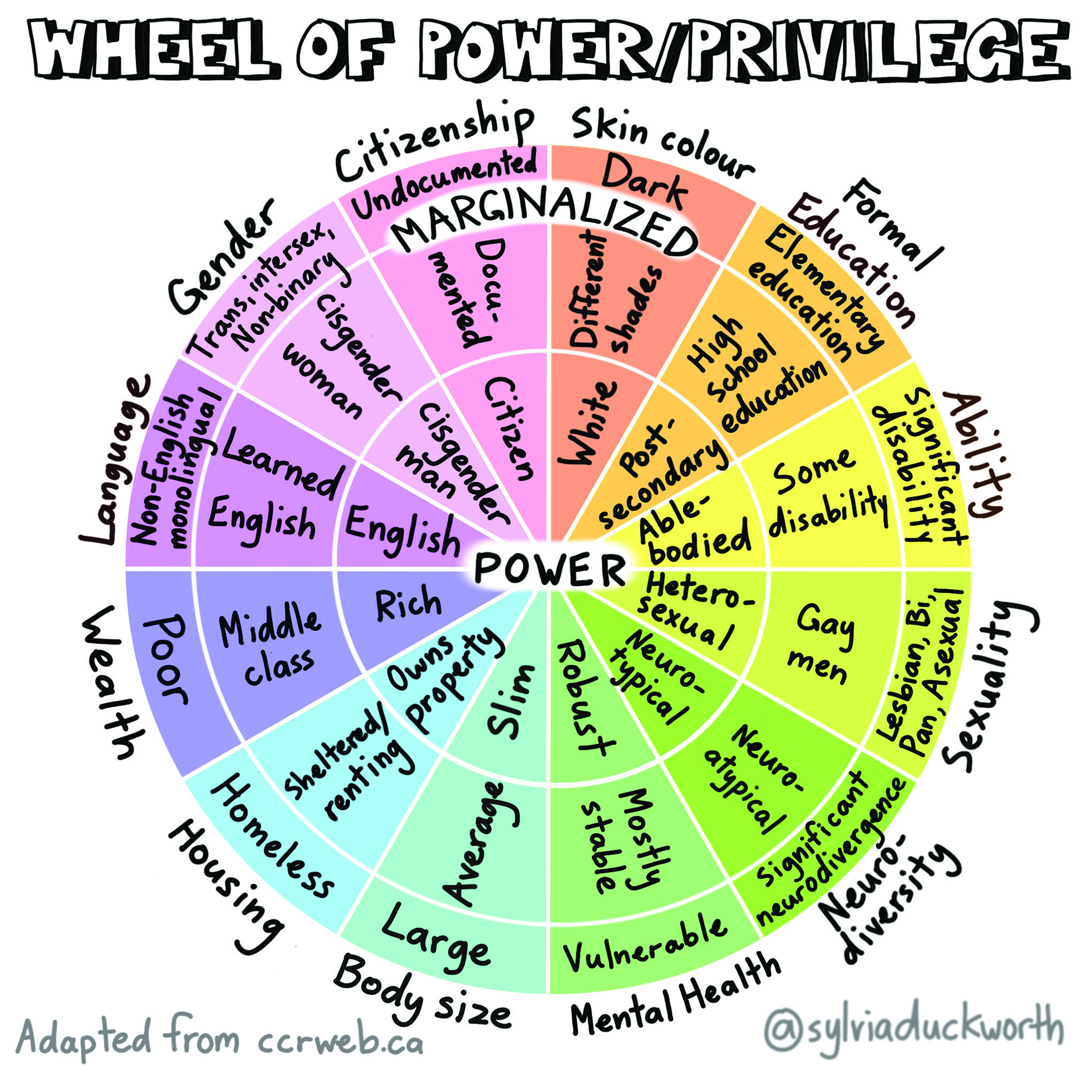
As discussed in Chapter 1, there is a widely held perception that merit is often the reason that some people have more than others. However, life’s playing field isn’t level, and some people have advantages simply because of aspects of their identity (Figure 2.1).
More information
A wheel illustrates dimensions of power. Each slice of the wheel is labeled with a different dimension and contains three sections from those most marginalized to those who hold power. The outermost section is labeled “marginalized” and the innermost section is labeled “power”. The following are the dimensions followed by the groups placed in the outer section, mid section and then center section - Skin color: dark, different shades, white; Formal education: elementary education, high school education, post-secondary education; Ability: significant disability, some disability, able-bodied; Sexuality: lesbian, bi, pan, or asexual, gay men, heterosexual; Neurodiversity: significant neurodivergence, neuroatypical, neurotypical; Mental health: vulnerable, mostly stable, robust; Body size: large, average, slim; Housing: homeless, sheltered/renting, owns property; Wealth: poor, middle class, rich; Language: non-English monolingual, learned English, English; Gender: trans, intersex, or nonbinary, cisgender woman, cisgender man; Citizenship: undocumented, documented, citizen.
Figure 2.1 The Wheel of Power and Privilege
This is a wheel illustrating dimensions of power and privilege that differ somewhat from those in the ADDRESSING model. What is included here that isn’t in the ADDRESSING model? If you were making a wheel like this, what other dimensions would you add?
Privilege is a term that describes the social, economic, and/or political advantages that people enjoy simply because they’re part of a certain group, rather than because of anything they did or failed to do (McIntosh, 1989). Privilege results in tangible benefits—such as increased security and money for housing, food, health care, and education—which almost always result in greater power (Case, 2013). Table 2.2 shows key characteristics associated with people who have either more privilege or less—that is, who are members of either socially dominant or subordinate groups.
|
TABLE 2.2 Characteristics Associated with Members of Socially Dominant and Subordinate Groups |
|
|
Dominant Group |
Subordinate Group |
|
Have access to power and resources |
Have reduced access to power and resources |
|
Establish norms and standards |
Are perceived as less than or deviant from dominant norms and standards |
|
Have limited awareness of or knowledge about subordinate groups |
Have greater awareness of and knowledge about dominant groups |
|
Are believed to be competent and credible—are given the benefit of the doubt |
Are viewed suspiciously—are not given the benefit of the doubt |
|
Create “truth” or “reality” |
Have their truth and experiences dismissed and/or invalidated |
|
Are seen as individuals |
Are seen as representing a group |
|
Have a sense of belonging |
Feel either invisible or hyper-visible |
|
Note: Content adapted from Goodman (2011). |
|
Unearned entitlements
Privilege gives people unearned entitlements, or things of value that ideally should be provided to everyone but aren’t (Johnson, 2006; McIntosh, 1989). Let’s consider high school sports events. Boys’ teams tend to receive more fanfare and publicity than girls’ teams. Girls’ sporting events are less likely to have halftime performances, cheerleaders, or a stadium full of spectators (Dusenbery & Lee, 2012). Also, teams from wealthy school districts generally have more access to nicely fitting uniforms and transportation to games. In fact, even the ability to have a high school sports team is more likely in wealthier districts (Wong, 2015). In other words, some athletes enjoy additional perks simply because they live in a wealthy school district (most likely indicating that they were born into an upper-class or upper-middle-class family) or because they play on male sports teams. In this sense, the perks are an unearned entitlement because they aren’t necessarily based on work ethic or performance.
More information
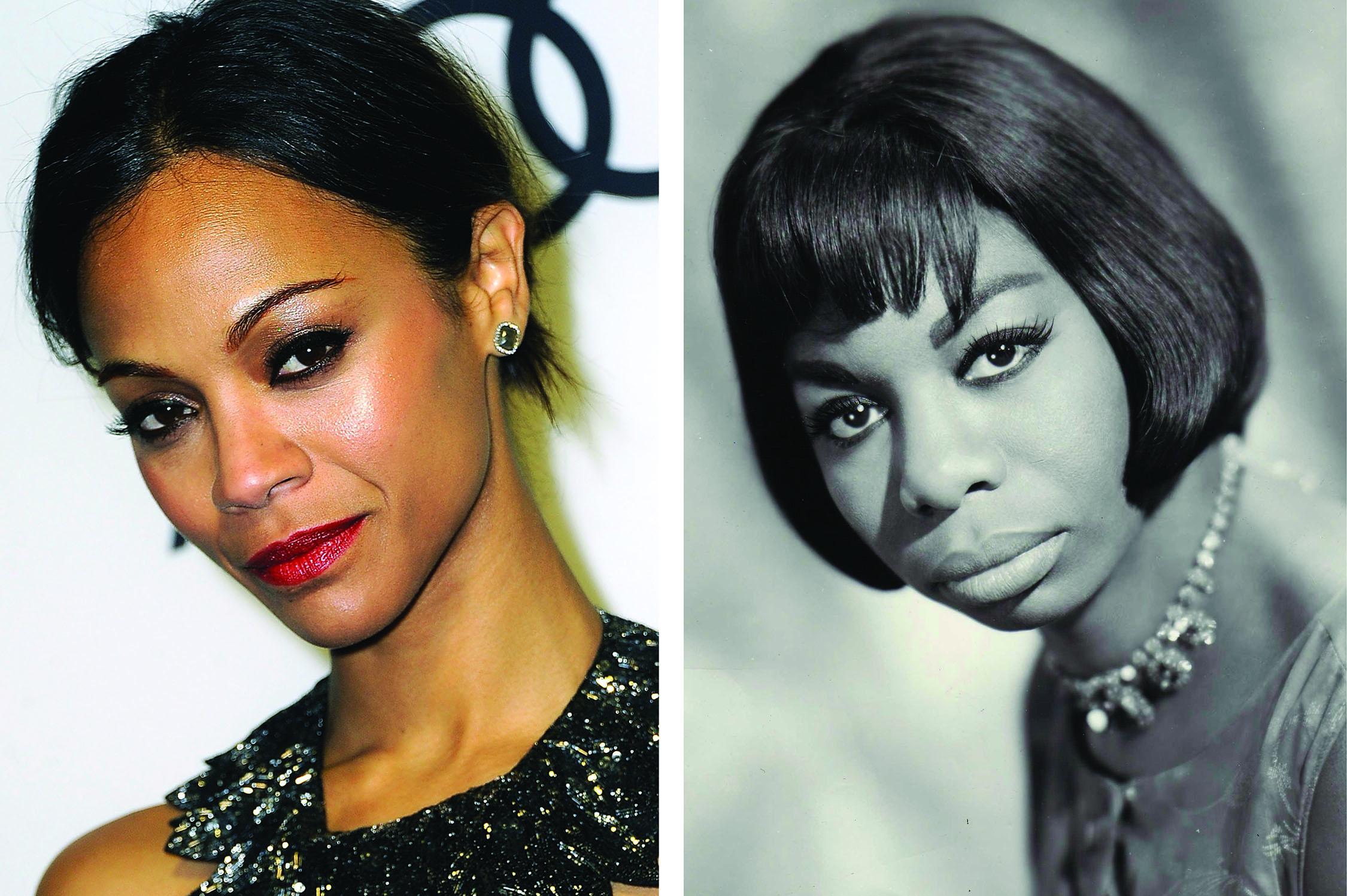
Two photos show Zoe Saldana and Nina Simone.
Figure 2.2 Whitewashing
In 2016, controversy erupted when an all-white team of directors and producers cast Zoe Saldana (left) to play Nina Simone (right) in the biopic about the singer. Although Saldana identifies as Black, some critics claimed that Saldana’s features are much whiter and more anglicized than Simone’s and that Simone was being whitewashed.
Another aspect of an unearned entitlement is that the characteristics of privileged groups are considered “normal” (or the default), and all others are compared to that group. For example, being male is considered the norm, and many institutions are organized around a male standard. As one feminist scholar pointed out, “Men’s physiology defines most sports, their health needs define insurance coverage, their social needs define biographies, workplace patterns and career expectations . . . their image defines god, and their genitals define sex” (MacKinnon, 1989, p. 224). The same dynamic occurs with whiteness. As we’ll discuss in Chapter 6, white beauty is considered the norm, and all women are held to that standard, even when reaching it is impossible. When celebrities of color are featured in beauty magazines, they’re often “whitewashed” or “anglicized” (Mitchell, 2020). And in theatrical contexts, lighter-skinned actors are often given the parts of darker-skinned characters, although the reverse is rarely true (Figure 2.2). For example, when the film adaptation of the popular Broadway show In the Heights was released in 2021, many people criticized the casting of mostly light-skinned or white-passing Latine actors (Garcia et al., 2021). This was especially problematic because Washington Heights, the New York neighborhood featured in the movie, is predominantly Afro-Dominican.
The idea that white is normative is also evident in what’s considered an appropriate hairstyle. Companies such as Air France, Six Flags, and FedEx faced—and lost—lawsuits when they created policies that banned people of color from wearing their hair natural and/or in dreadlocks (Afro-Europe, 2012; Cukan, 2001; Gandy, 2017; Gordon, 2006). The companies claimed that such hairstyles were not typical or “appropriate” for the workplace (Dossou, 2013). In one study, Black women reported more anxiety surrounding their hair and more pressure than white women to straighten their hair for work (Johnson et al., 2017). To combat such discrimination, women have posted pictures of their natural hair to the #naturalisprofessional campaign (Wells, 2016). As feminist scholars have noted, white people’s ability to wear their hair as it grows—and to have their hairstyle considered normal, professional, and “appropriate”—is an unearned entitlement. This is an entitlement that white women rarely think about. Many women of color, in contrast, must spend time, money, and effort managing their hair if they want to approximate the dominant norm. In fact, market research indicates that Black female consumers are the highest users of haircare products, resulting in a $2.29 billion industry in the United States (Attracting Black beauty consumers, 2022).
Invisibility
Another consequence of dominant groups being considered normative is that individuals with multiple marginalized social characteristics are often invisible. This is because their identity isn’t considered prototypical, or representative, in a particular social category (Purdie-Vaughns & Eiback, 2008). For example, in the category of race, the prototypical member is white, and in the category of gender, the prototypical member is male. As a result, Black women often go unnoticed or unheard because of their nonprototypical status in regard to both race (Black) and gender (female). This invisibility is reflected in the fact that the contributions of white women are more readily associated with second-wave feminist activism than those of Black women (Freedman, 2013) and in the fact that the contributions of Black men during the 1960s civil rights movement tend to overshadow those of Black women (hooks, 1989).
The tendency to render nonprototypical people less visible has been tested empirically, using scientific research. In one study, researchers provided white college students with a memory task and found that the participants were less likely to remember photos of Black women than those of white women or Black men (Sesko & Biernat, 2010). The same participants were also less likely to recall statements made by Black women than those made by white women or Black men. In another study, participants read about a pair of employees assigned to work together at a task in which they either succeeded or failed (Biernat & Sesko, 2013). Participants were then asked to rate the competence and deserved salary of each of the employees. Pairs were organized as mixed-sex/gender teams including white pairs, Black pairs, or mixed-race pairs (white woman/Black man; Black woman/white man). Researchers only found a pro-male gender bias in the white male/white female work pair. The researchers speculated that the Black women were buffered from the effects of gender bias by virtue of their nonprototypicality, or invisibility. These findings support the idea that both white women and Black men have the privilege of being seen as prototypical members of their groups (women and Black people, respectively) and that they are more likely than Black women to be noticed and remembered.
However, other research doesn’t support the notion that people with multiple subordinate statuses are less prototypical and experience invisibility (Wong & McCullough, 2021). Several studies demonstrate that Asian American women are more prototypical of the Asian American racial category than Asian American men (Galinksy et al., 2013; Johnson et al., 2012; Schug et al., 2015). In other words, Asian American women are more often recalled as typical Asian Americans. Once again, these findings demonstrate the need to consider how distinct social identities, connected to larger social and historical realities, might influence psychological processes. Research on identity prototypes has also been criticized for not adequately addressing social context or considering the influence of the social identities of participants (Lei et al., 2022; Purdie-Vaughns & Eibach, 2008).
Conferred dominance
A second component of privilege is conferred dominance, in which one group (e.g., men) is socially assumed to have more authority or power over another group (e.g., women, trans and/or gender nonbinary people; Johnson, 2006). There are many ways in which men are considered more dominant and therefore more capable than people with other gender identities. One way this assumption plays out is in the expectation that men are more effective leaders than women (Eagly & Sczesny, 2009; Schlehofer et al., 2011). Another example occurs among people with disabilities, who are often treated as if they are much younger than their actual age or not capable because of their disability (Johnson, 2006). For example, in the 1988 Winter Paralympic Games, Diana Golden Brosnihan won a gold medal skiing on one leg with regular ski poles. Although she wanted to be admired for her athleticism and skill, her capacity to “overcome” her disability became the sole focus of her success in media reports (Litsky, 2001; Lorber & Moore, 2007).
Why don’t people regularly challenge such expressions of privilege? Most people adhere to legitimizing myths (Chen & Tyler, 2001): attitudes, values, or beliefs that exist to justify social hierarchies. Many people believe that certain things are “just true”—for example, that men are natural leaders and that women are naturally better at doing care work (Koenig et al., 2011). Many legitimizing myths about sex/gender are based on assumptions about gender differences—a topic we’ll discuss in Chapter 3. Other legitimizing myths may involve race, class, or ability status. For example, researchers reviewed employment discrimination claims of older workers (55 and over) filed with the U.S. Equal Employment Opportunity Commission (EEOC) and found that the older adults, and individuals with disabilities in particular, experienced involuntary termination because they were perceived as being less competent than those who were not older or did not have disabilities (Cichy et al., 2015). To justify discrimination in the workforce, people may use the legitimizing myth that older people, particularly those with disabilities, are less competent. Another study showed that in business settings, participants judged people who speak English as a first language to be better representatives of the organization than those whose first language is not English (Lee & Rice, 2007).
The Invisibility of Privilege
Why is it often difficult to notice privilege, what does it mean to check your privilege, and how can having a subordinate status positively influence someone?
It’s difficult for people to see their privilege. Indeed, privilege is often invisible to those experiencing it, even among people who are socially conscious and trying to address inequality (McIntosh, 1989; Wildman, 1996). During the planning of the Women’s March, the white women who responded angrily and defensively in discussions about white privilege might have failed to recognize how much privilege they actually have. In fact, white people probably don’t spend a great deal of time contemplating their whiteness and what it means for their position in society. Likewise, heterosexual people probably don’t spend much time wondering if they’re heterosexual and why they are, or wondering when or if they should come out as heterosexual to friends or family. In the same vein, a Christian student probably wouldn’t notice that classes are cancelled for Christmas but not for Yom Kippur—but a Jewish student probably would. One study found that men, who tend to earn higher incomes, underestimated the reality of the income gap, thinking that there was more equality than there actually was (Mårtensson et al., 2019).
Because most people have both subordinate and dominant identity characteristics, people can be in one or more privileged groups but still not think they have a great deal of status or power overall (Wise & Case, 2013). For example, if a white man is living in poverty with little access to education and is underemployed, he may think he doesn’t have much power or status in society. In this case, the social class dimension may be more noticeable to him than the race or gender dimensions. However, he still benefits from privileges associated with being white and male. For example, this man would probably be perceived as more competent than a similarly educated woman, especially within a masculinized setting like a blue-collar job (Eagly & Carli, 2003). He would also be less likely than a man of color in his social class to be pulled over by police or harassed while shopping (Brunson & Weitzer, 2009).
However, it can be difficult to notice the rewards associated with being in a dominant group because people generally don’t notice when things are not happening to them. For example, the man described above may feel angry and resentful, especially when listening to upper-class people of color speaking about race or upper-class women speaking about feminism. In fact, he may object to people telling him that he’s privileged because he’s a white man, because he certainly does not feel privileged. The privileges he does have are invisible to him, and when people point them out, he may feel that he’s being criticized. This kind of response can be a barrier for creating positive change, because rather than directing anger at the power structure that causes his feeling of subordination, he may engage in scapegoating. In other words, he may blame a person or a group for a situation that is not their fault. Even though the real source of his perceived low social status is the social stratification that makes his social class subordinate, his resentment may be directed toward women or people of color.
Recognizing privilege can be difficult, but feminists and other activists recommend that everyone consider their own privileged identities when thinking about the challenge of eradicating oppressive systems, including sexism. We’ll return to these ideas in Chapter 14.
Having Less Power: Community, Perspectives, and Strengths
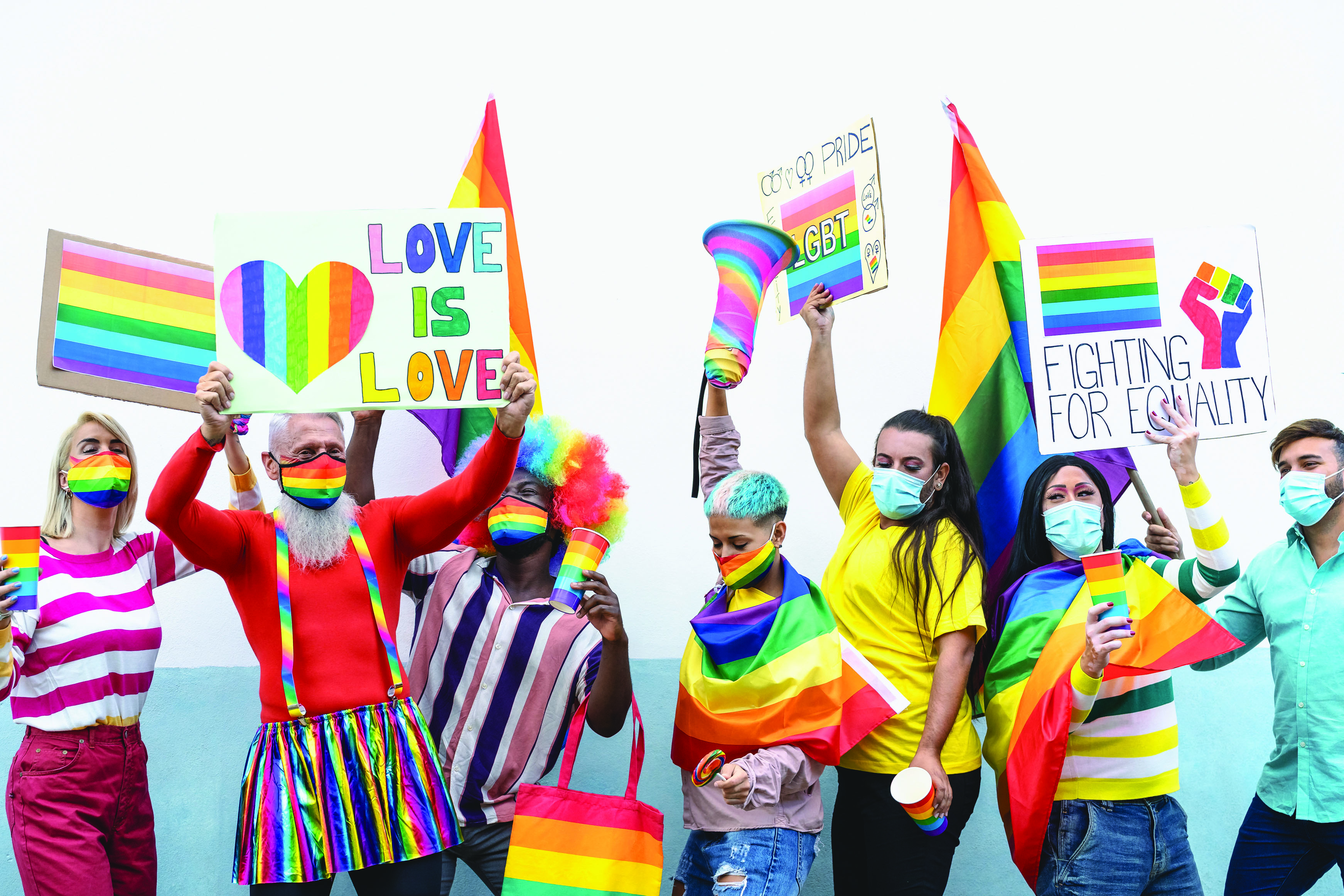
Unlike privilege, marginalized social identity categories are visible. In other words, people generally notice where they have less power, which can motivate them to seek community in order to create solidarity. For example, many individuals in the LGBTQ+ community receive love and support from friends who may be referred to as a chosen family. Research has consistently found that a supportive LGBTQ+ community is good for members’ mental health (Hall, 2018) (Figure 2.3).
More information
A photo shows a group of people in rainbow colored clothing, with rainbow signs, flags and masks. Signs with text read “LGBT pride,” “fighting for equality” and “love is love.”
Figure 2.3 Supportive Communities
The perceived support for the LGBTQ+ community and the feeling of pride and visibility this community generated was central to coping with the stresses of the COVID-19 pandemic among LGBTQ+-identified participants (Abreu et al., 2023).
In fact, research has shown that having a socially marginalized identity can be related to positive outcomes. For example, a series of studies demonstrated that upper-class individuals were more likely than lower-class individuals to exhibit unethical behavior such as cutting people off while driving or cheating in games (Piff et al., 2012). Furthermore, researchers exploring social class and emotions with a nationally representative sample of U.S. participants found that while upper-class individuals reported more contentment and pride, lower-class individuals reported higher levels of love, compassion, and awe (Piff & Moskowitz, 2018). In a study that explored altruism among Black adults in an urban, economically distressed housing community, participants reported a heightened sense of responsibility toward their fellow community members (Mattis et al., 2008). Those with slightly more resources shared food, clothing, housing, or childcare because they empathized with the challenges of others who were less well-off than they were.
Individuals who have multiple social characteristics associated with less power can develop unique perspectives that can help them be advocates for social change (Fiske, 2010a). In interviews with three Afro-Peruvian female leaders participating in the World Conference against Racism held in Durban, South Africa, in 2001, sociologist Sylvanna Falcón (2008) discovered that their approach to political action was unique because of their capacity to encompass race, gender, and nationality in their worldview. In other words, their multiple marginalized identities gave them unique insights and interpersonal skills to navigate between and among different social identity groups, and these advantages enhanced their skills as activists.
Being part of one or more groups that have less power is often an important and central aspect of someone’s social identity. Although there are many challenges that come with having less power, being a part of these groups can also be a source of strength.
Glossary
- matrix of domination
- The idea that all systems of bias (e.g., racism, heterosexism, sexism) stem from the same systems of social stratification.
- privilege
- The social, economic, and/or political advantages that some people enjoy simply because they’re part of a certain group, rather than because of anything they did or failed to do.
- legitimizing myths
- Attitudes, values, or beliefs that exist to justify social hierarchies.
- scapegoating
- Blaming a person or a group for things that are not their fault.
Social Identity
One way to think about social identity is through a model developed by psychologist Pamela Hays (1996; 2016) called the ADDRESSING model (Table 2.1). She outlined social characteristic variables with initial letters that spell the word addressing and noted that these characteristics are linked to power. Her model reflects social stratification, or the idea that people are ranked in a hierarchy such that some people and groups have more power and status than others. In contemporary society, being white, male, able-bodied, heterosexual, cisgender, well educated, and middle-aged are all social categories that are deemed powerful.
TABLE 2.1
The ADDRESSING Model for Exploring Social Identity with Examples from the United States
Social Characteristic
More Power
Less Power
Age and generational influences
Adults
Children, adolescents, elderly adults
Developmental or other Disability
Neurotypical and/or nondisabled people
Neurodivergent people and/or people with disabilities
Religion and spiritual orientation
Christians
Jews, Muslims, atheists, other non-Christians
Ethnic and racial identity
European Americans
People of color
Social class
Middle-class and educated people
Low-income and working-class people, people with less education
Sexual orientation
Heterosexual people
People with sexual minority identities
Indigenous heritage
Non-Native people
Native peoples
National origin
U.S.-born people
Immigrants and refugees
Gender
Men
Female, trans, nonbinary, and intersex people
Note: Content adapted from Hays (2016).
In Chapter 1, we discussed intersectionality, a concept that describes the ways in which different types of oppression (e.g., racism, classism, heterosexism, cissexism, ableism, sexism) are interconnected and can’t be examined as separate entities (Crenshaw, 1993). When an intersectional framework is applied to social identity, it’s best to think of the social characteristics outlined in the ADDRESSING model as a cake, rather than as a beaded necklace, which is how many people think of social identities. In the beaded necklace analogy, individual social characteristics (e.g., race, gender, religion) are seen as different-colored beads strung together to make up a single piece of jewelry (Spelman, 1990). This analogy is problematic because any bead can be removed or added without changing the substance of another bead (Ferber & O’Reilly Herrera, 2013). In the cake analogy, each social characteristic is seen as an ingredient in a cake (Ken, 2010). For example, gender could be sugar, and religion could be eggs. Once the cake is baked, the result is something fundamentally different from any and all of its ingredients (Bowleg, 2013). Each ingredient changes form and interacts with the others during the process of baking, with the result that, say, the sugar can no longer be separated from the eggs. The whole is greater than the sum of the parts, but the parts also change in relation to one another. It’s not truly possible to study sex/gender in isolation because it’s only one part of the overall cake (Ken, 2010).
Research provides support for the notion that individuals perceive inseparable links among their various social characteristics (Crocetti et al., 2018; Juan et al., 2016). For example, in one study of 89 Black women, all participants rated the combination of a Black-woman identity as more important than a singular identity of race (Black) or gender (woman; Settles, 2006). For these participants, race and gender couldn’t be separated, resulting in a unique racialized gendered identity. In another study, researchers found that across three biracial subgroups of women and men (Latine-white, Asian-white, and Black-white), socioeconomic status, religion, and gender determined how participants defined their racial identity (Davenport, 2016). For example, those who were upper class and had a Jewish religious affiliation were likely to identify as white, whereas those affiliated with religions that are usually associated with socially marginalized racial/ethnic groups were likely to identify as part of a socially marginalized group. Women, however, were more likely to identify as multiracial than were their male counterparts. Overall, then, how people see themselves on one dimension (e.g., race) may be affected by their status on another (e.g., class, religion, gender).
Your Turn
Using the characteristics in the ADDRESSING model, how do you understand your social identity? In what ways do these characteristics inform one another to make your social identity unique? On which characteristics do you have more power, and on which do you have less power? Which of these characteristics do you routinely think of as part of your identity, and which ones don’t you typically include in how you define yourself?
Our different identity characteristics can also influence how others see us. In a study conducted in the United Kingdom, researchers found that South Asian Muslim women were less likely to be employed than their similarly credentialed white Christian female counterparts (Tariq & Syed, 2017). This finding suggests that the combination of race, religion, and gender influenced and changed another social characteristic—class (because class is connected to social mobility and income, which are affected by employment status). Class intersected with other social characteristics in another study comparing working-class and upper-middle-class Chinese immigrant women (Zhou, 2000). After immigrating to the United States, participants reported a shift in gender roles within the family, but this outcome was based on class. Upper-middle-class participants experienced a decline in their power to make financial decisions for the family, and working-class participants reported increased power because they had begun to contribute financially to their families.
The various aspects of our social identities are intertwined and complex, and no universal experience can exist because access to power varies and some people may have more power due to one dimension of their identity but less power due to another (i.e., social stratification). When using an intersectional perspective, it’s not enough to examine bias based on sex/gender without also considering the ways in which other forms of oppression (e.g., racism, ageism, heterosexism) contribute to any given situation (Gunnarsson, 2017). The idea that these different systems of bias interconnect with and stem from social stratification is known as the matrix of domination (Collins, 1990). From this perspective, it’s impossible to eradicate sexism without also ending other interconnecting oppressions (e.g., racism, classism). Therefore, many feminist scholars argue that developing the capacity to work together—even with tensions and conflicts—is the best approach for undoing the overall structure of oppressive forces.