1 A Feminist Psychology

More information
A portrait of an Asian woman.
- 1.1 A Feminist Psychology
- 1.2 Feminism: Riding the Waves
- 1.3 The F-Word
- 1.4 Feminism Comes to Psychology
CONSIDER THE FOLLOWING EXAMPLES:
- Every June, in honor of the Stonewall Inn Riots that occurred in 1969, many LGBTQ+ people take to the streets for Pride, a monthlong celebration that is also a protest against discrimination and violence toward LGBTQ+ people. Increasingly, corporations have developed wide-scale rainbow marketing campaigns to signal support, and every June, storefronts become flooded with rainbow displays with statements like “Be yourself” and “Love wins all.” Known as rainbow capitalism, these gestures are met with a range of reactions. For some, they are encouraging, while for others, they feel shallow and exploitative (Cheung, 2021).
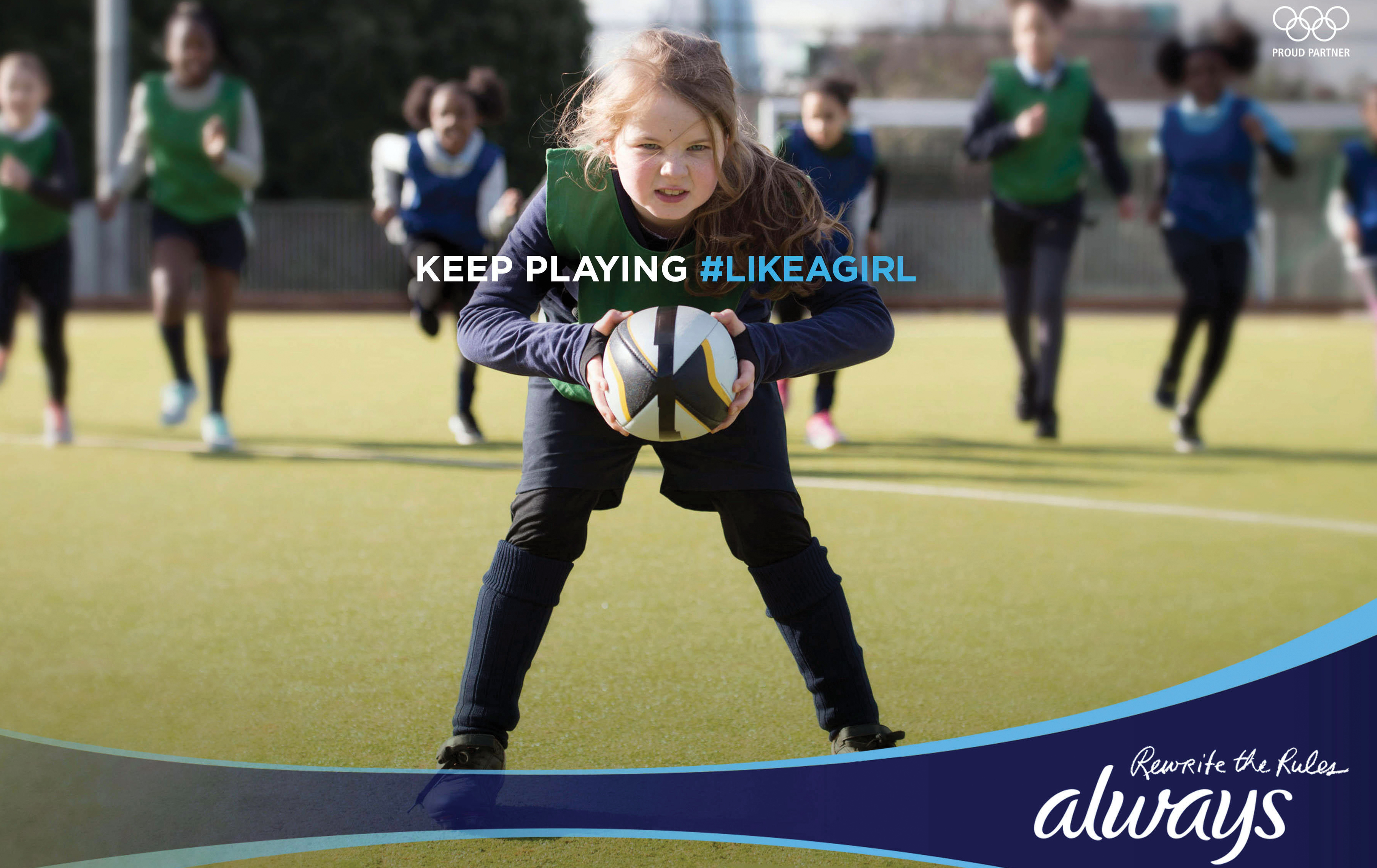
- In 2015, Always debuted their “Like a Girl” commercial (Figure 1.1). When they asked teens and young adults to throw, run, and fight “like a girl,” the participants all mimicked these actions in a weak, silly way. Then they asked pre-adolescent girls to do the same, and the girls ran fast and threw hard. The commercial ended by saying that girls’ confidence plummets during puberty and encouraged girls to “rewrite the rules.” This commercial never actually displayed the product it was selling, but the hashtag #LikeaGirl was immediately proclaimed as feminist, inspiring, and groundbreaking (Berman, 2015; Williams, 2015).
More information
A print ad features a photo of a young girl clutching a rugby ball and the caption “Keep Playing hashtag Like a Girl.” The background image shows several other girls sprinting forward. The logo of the brand “always” is at the bottom right corner with the tagline, “Rewrite the rules, always.” The top right corner shows the logo of the Olympics and the words Proud Partner below it.
Figure 1.1 “Rewrite the Rules”
The “Like a Girl” advertising campaign encouraged girls to “rewrite the rules.” What does it mean to “rewrite the rules,” and who has the power to do this?
- In 2014, Cover Girl launched their global #GirlsCan ad campaign aimed to “empower young women to overcome barriers, break boundaries and be the next generation to rock the world” (R. Robinson, 2015, para. 1). Stars like Queen Latifah, Geena Rocero, and Becky G appear in the ads, saying things like “Girls can do anything.” In one ad, Ellen DeGeneres proclaims that girls should make the world more “easy, breezy, and beautiful.”
- Following the worldwide success of the viral video Labels, featuring workplace discrimination experienced by Filipino women, Pantene launched #shinestrong (Pantene Philippines, 2013). In their “Sorry, not sorry” commercial, women in a variety of settings say “Sorry,” while a tagline states, “Don’t be sorry; shine and be strong.” It then shows women (with luscious locks) being confident and saying, “Sorry, not sorry.”
These commercial gestures bring up many complicated issues that aren’t easy to resolve. On a positive note, they acknowledge that unfair societal beliefs and expectations probably contribute to differential treatment among people. They also send messages of support and communicate a “can do” attitude indicating that women and girls should be able to transcend negative social messages and live the lives they want. But what does it mean to “be yourself,” “rewrite the rules,” or be “sorry, not sorry,” and who has the power to do this? Should girls and women simply ignore problematic experiences or messages of discrimination, as these corporate messages suggest? And why should the burden of societal change fall on the shoulders of people with the least amount of power?
This type of advertising that generates a strong emotional response—one that feels empowering but doesn’t offer solutions—has been called empowertising (Zeisler, 2014). These campaigns and commercials don’t offer realistic solutions. Although the ads have taken a positive step to address bias and might make viewers feel good, they don’t help people take steps toward social change. For one thing, these advertisements largely feature financially stable, able-bodied, cisgender, conventionally attractive women. Further, none of them call for changing policies. The Always ad didn’t challenge sex/gender segregation in sports or question why female professional athletes are paid less than their male counterparts. But these ads do succeed in raising awareness of social issues—issues that will be addressed throughout this textbook.
This chapter will introduce you to the field of psychology of women and gender. We begin by identifying several contemporary issues related to girls, women, and the study of gender more broadly. We then explore the history of feminism and several types of feminism before discussing how feminism has influenced the field of psychology.