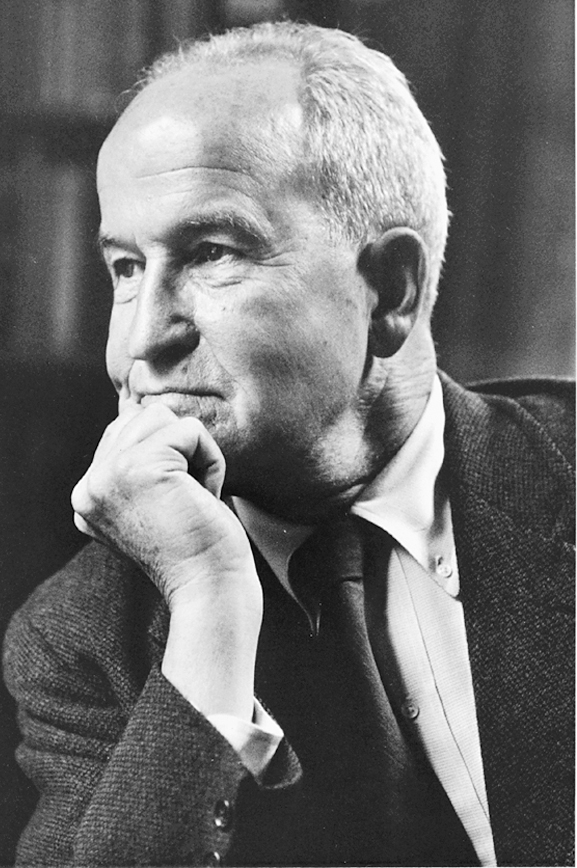
A black and white photograph shows Henry Murray. He wears a suit and rests his chin on his fist, looking off to the left.
Figure 2.1Henry Murray One of the founders of personality psychology, Henry Murray, commented that in order to understand personality, first you have to look at it.
Many years ago, the prominent personality psychologist Henry Murray (Figure 2.1) commented that in order to understand personality, first you have to look at it. This sounds obvious, but like many seemingly obvious statements, on second reading it raises an interesting question. To “look at” personality, what do you look at, exactly? Personality is complicated. It is manifested by all of the characteristic ways in which the individual thinks, feels, and behaves—the psychological triad introduced in Chapter 1. An individual might consistently look on the bright (or dark) side of life, or be attracted to (or repelled by) particular kinds of people, or be working toward highly personal or even idiosyncratic goals. But none of these important aspects of personality are immediately apparent, in fact they are, at best, only partially observable. The observable aspects of personality are best characterized as clues, which are always incomplete. The psychologist’s task is to piece these clues together, much like pieces of a puzzle, to form a clear and useful portrait of the individual’s personality.
The clues might include an individual’s behavior, test scores, degree of success in daily living, or responses to a laboratory procedure. The psychologist, like a detective trying to solve a mystery, needs to gather as many clues as possible and would be foolish to ignore any of them. Also like the detective, the psychologist should maintain a healthy skepticism about the possibility that some or all of the clues might be misleading.
This brings us to Funder’s Second Law: There are no perfect indicators of personality; there are only clues, and clues are always ambiguous.
But don’t let skepticism go too far. It is sometimes tempting to conclude that because a clue might be uninformative or misleading, it should be ignored. At different times, various psychologists have argued that self-report questionnaires, demographic data, peers’ descriptions of personality, projective personality tests, summaries of clinical cases, or certain laboratory assessment procedures should never be used. The reason given is that the method might produce misleading results.
More information
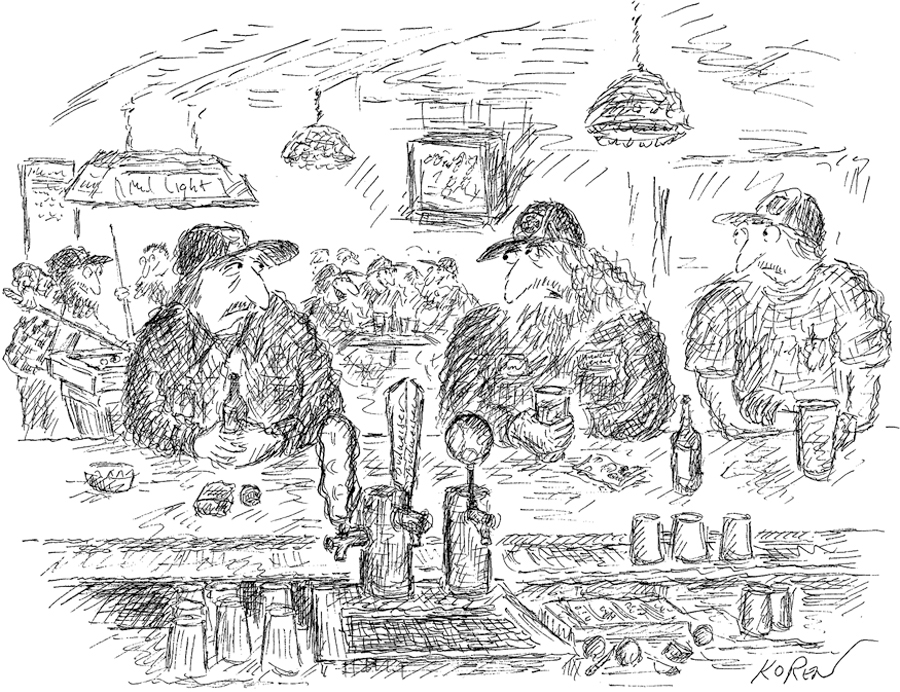
A comic shows a scene from behind a bar in a restaurant. There are three men in baseball caps sitting at the bar. Others are playing billiards or sitting around a table. The text for the comic reads, “Are you just pissing and moaning, or can you verify what you’re saying with data?”
“Are you just pissing and moaning, or can you verify what you’re saying with data?”
No competent detective would think this way. To ignore a source of data because it might be misleading would be like ignoring footprints at the crime scene because they might belong to an innocent gardener. A much better strategy is to gather all the clues you can with the resources you have. Any of these clues might be misleading; on a bad day, they all might be. But this is no excuse to not gather them. The only alternative to gathering information that might be misleading is to gather no information. That is not progress.
Funder’s Third Law, then, is this: Something beats nothing, two times out of three.
When trying to “look at” personality, as Murray advised, there are four possibilities. First, and perhaps most obviously, you can look at the person’s own self-description. Personality psychologists often do exactly this. Second, you can see how the person is described by close acquaintances and others. Third, you can see how the person is faring in life. And, finally, you can observe what the person does and try to measure this behavior as directly and objectively as possible. These four types of clue can be called S-, I-, L-, and B-data (which can be abbreviated BLIS). Each method has advantages and disadvantages; all are useful and none is perfect (Table 2.1).1
Table 2.1ADVANTAGES AND DISADVANTAGES OF THE MAIN SOURCES OF DATA FOR PERSONALITY
Advantages
Disadvantages
S-Data: Self-Reports
1. Large amount of information
2. Access to thoughts, feelings, and intentions
3. Some S-data are true by definition (e.g., self-esteem)
4. Causal force
5. Simple and easy
1. Bias
2. Error
3. Too simple and too easy
I-Data: Informants’ Reports
1. Large amount of information
2. Real-world basis
3. Common sense and context
4. Some I-data are true by definition (e.g., likeability)
5. Causal force
1. Limited behavioral information
2. Lack of access to private experience
3. Error
4. Bias
L-Data: Life Outcomes
1. Objective and verifiable
2. Intrinsic importance
3. Psychological relevance
1. Multidetermination
2. Possible lack of psychological relevance
B-Data: Behavioral Observations
1. Wide range of contexts (both real and contrived)
2. Appearance of objectivity
1. Difficult and expensive
2. Uncertain interpretation
S-Data: Just Ask
If you want to know what someone is like, why not just ask? S-data are self-judgments. Participants simply tell the psychologist (usually by answering a questionnaire) whether they are dominant, or friendly, or conscientious. They do a self-rating on a scale where they check a number from 1 (“I am not at all dominant”) to 9 (“I am very dominant”). Or the procedure might be even simpler: They read a statement, such as “I usually dominate the discussions I have with others,” and then respond True or False. According to most research, the way people describe themselves by and large matches the way they are described by others (Funder, 1999). But the principle behind the use of S-data is that the world’s best expert about your personality is very probably you.
Do we really know ourselves better than anybody else does? Our intuitions seem to say yes (Vazire & Mehl, 2008). But the truth of the matter is less simple. S-data have five advantages and three disadvantages.
ADVANTAGE 1: LARGE AMOUNT OF INFORMATION
While a few close acquaintances might be with you in many situations in your life, you are present in all of them. In the 1960s, a book called the Whole Earth Catalog captured the spirit of the age with cosmic-sounding aphorisms sprinkled through the margins. My favorite read, “Wherever you go, there you are.” This saying describes an important advantage of S-data. You live your life in many different settings; even your closest acquaintances are with you within one or, at most, a few of them. The only person on earth in a position to know how you act at home, and at school, and at work, and with your enemies, and with your friends, and with your parents is you.
ADVANTAGE 2: ACCESS TO THOUGHTS, FEELINGS, AND INTENTIONS
Much, though perhaps not all, of your inner mental life is visible to you, and only you. You know your own fantasies, hopes, dreams, fears, and intentions; other people can know about these things only if you reveal them somehow, on purpose or not (Spain et al., 2000).
ADVANTAGE 3: DEFINITIONAL TRUTH
Some kinds of S-data are true by definition—they have to be correct, because they are aspects of the self-view. If you think you have high self-esteem, for example, then you do—it doesn’t matter what anyone else thinks.
ADVANTAGE 4: CAUSAL FORCE
S-data have a way of creating their own reality. What you will attempt to do depends on what you think you are capable of. This idea—the role of what is sometimes called self-efficacy—is considered more fully in Chapter 14 People also try to bring others to see them as they see themselves, a phenomenon called self-verification (Swann & Ely, 1984). For example, if you see yourself as a friendly person, or intelligent, or ethical, you might make an extra effort to come across that way to others.
ADVANTAGE 5: SIMPLE AND EASY
This is a big one. For cost-effectiveness, S-data simply cannot be beat. As you will see later in this chapter, other kinds of data require the researcher to recruit acquaintances, look up information in public records, or find some way to observe the participant directly. But to obtain S-data, all the researcher has to do is administer a questionnaire that asks, for example, “How friendly are you?” or “How conscientious are you?” This simple procedure can obtain a great deal of interesting, important information about a lot of people quickly and at little cost.
If you think you have high self-esteem, then you do.
Psychological research operates on a low budget compared with research in the other sciences; the research of many psychologists is “funded” essentially by whatever they can cadge from the university’s supply closet. Even psychologists with government grants have much less money to spend than their counterparts in biology, chemistry, and physics.2 Sometimes S-data are all a psychologist can get, and remember what I said earlier: something beats nothing. Usually.
DISADVANTAGE 1: BIAS
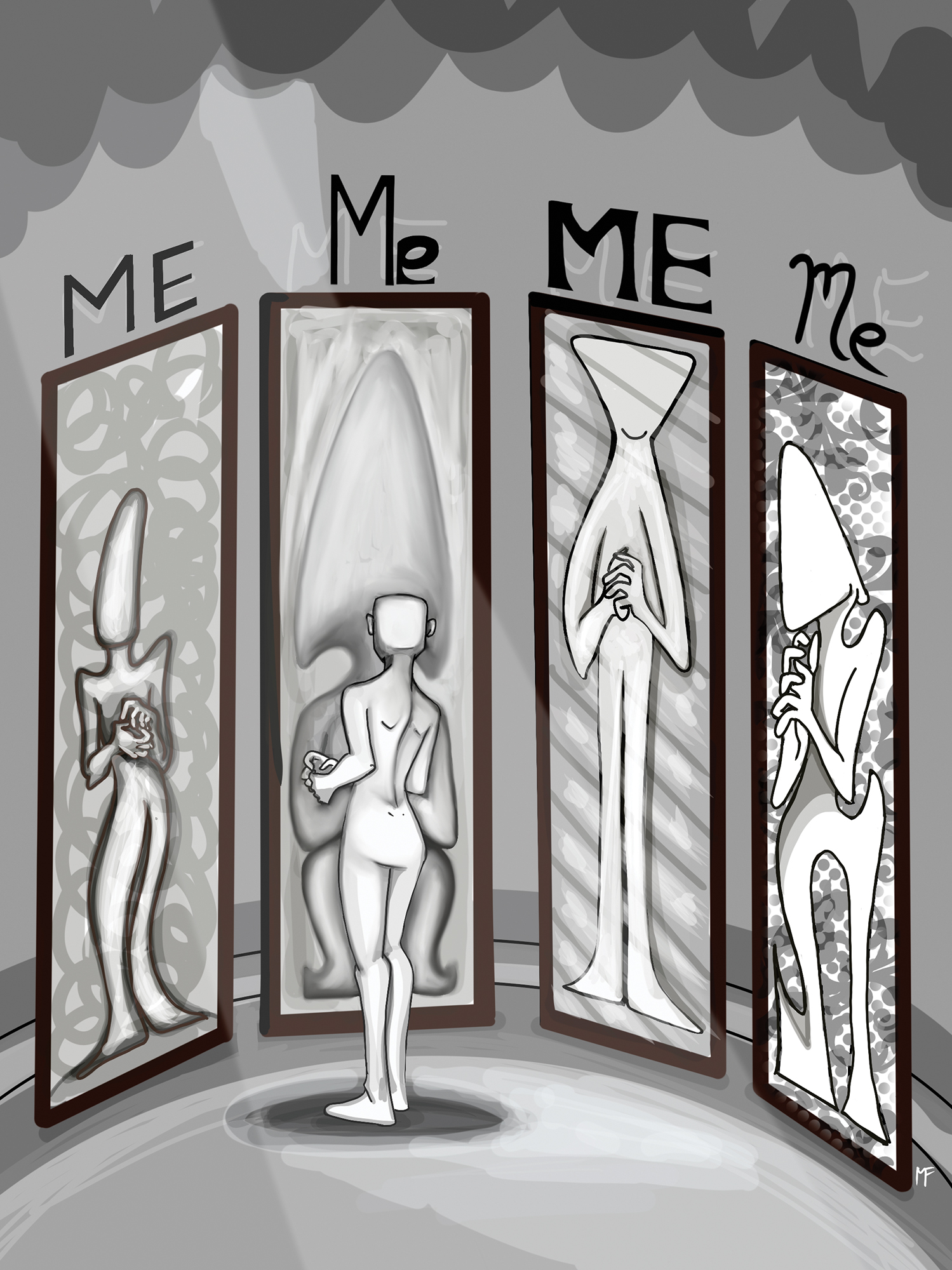
Even though people have unique knowledge of their intentions, and some self-views of personality are true by definition, what people choose to tell a researcher (or anybody else) about their intentions or self-views might be biased, in at least two ways. First, many of us like to think of ourselves, and tend to describe ourselves, as smarter, kinder, more honest, or more psychologically healthy than we really are, and this tendency to distort one’s self-view is particularly strong in certain individuals, such as narcissists (S. W. Park & Colvin, 2014). Others distort in the opposite direction and describe themselves more negatively than other people do. Interestingly, people actually seem to know whether they are positively or negatively biased about themselves, but this knowledge doesn’t get rid of the bias (Bollich et al., 2015).
More information
A drawing shows a person standing before four different portraits, all labeled “Me” in different fonts, each showing full body figures with distorted proportions.
A second potential bias is that a person always has the option of just clamming up. There is no way to prevent someone from withholding information because of a desire for privacy (in fact, one can sympathize with this desire), but if the person does, the S-data will be less than thoroughly accurate if not missing entirely.
DISADVANTAGE 2: ERROR
Even if an individual were to be completely unbiased, the S-data still could contain errors. For one thing, self-judgment can be especially difficult because of the fish-and-water effect, named after the (presumed) fact that fish do not notice they are wet (Kolar et al., 1996).3 Highly consistent aspects of your personality, which could include anything from universal kindness to persistent grouchiness, might be difficult for you to see because they are always present. Other aspects of personality might be painful to recognize, and some people just aren’t very interested in knowing about themselves. Do you know anybody like this?
DISADVANTAGE 3: TOO SIMPLE AND TOO EASY
I already mentioned that the single biggest advantage of S-data, the one that makes them the most widely used form of data in personality psychology, is that they are so cheap and easy. If you remember Funder’s First Law (about advantages being disadvantages), you can guess what is coming next: S-data are so cheap and easy that they are probably overused (Baumeister et al., 2007; Funder, 2001). According to one analysis, 70 percent of the articles in an important personality research journal were based on self-report (Vazire, 2006).
The point is not that there is anything especially wrong with S-data; the problem is that S-data have been used in so many studies, for so long, that it sometimes seems as if researchers have forgotten other kinds even exist. So, let’s look at some clues for personality that go beyond S-data.
I-Data: Find Somebody Who Knows
A second way to learn about an individual’s personality is to gather the views of others (Connelly & Ones, 2010). I-data are judgments by knowledgeable “informants.” Most of my research has focused on college students. To gather information about their personalities, I ask them to provide the names and emails of the two people on campus who know them the best. We then recruit these people to come to the lab to describe the student’s personality, where we ask questions such as, “On a 9-point scale, how dominant, sociable, aggressive, or shy is your acquaintance?”4 The numbers constitute I-data.
Informants might be the individual’s acquaintances from daily life (as in my research), or they could be coworkers, or even clinical psychologists. The key requirement is that they be well-acquainted with the individual they are describing, not that they necessarily have any formal expertise about psychology—usually they do not. Moreover, they may not need it. Close acquaintanceship paired with common sense can allow people to make impressively accurate judgments of each other (Connelly & Ones, 2010; Funder, 1993). You can compare your own self-views to that of an acquaintance with Try for Yourself 2.1.
TRY FOR YOURSELF 2.1
S-Data and I-Data Personality Ratings
Self-descriptions (S-data) and descriptions of a person by others (I-data) can both be valuable sources of information. But the points of view may be different. On the scales below, try rating yourself and then rating someone else you know quite well. Then, if you dare, have the other person do the same to you!
S-data
Instructions: Rate each of the following items according to how well it describes you. Use a scale of 1 to 9, where 1 = “highly uncharacteristic,” 5 = “neither characteristic nor uncharacteristic,” and 9 = “highly characteristic.”
1. Is critical, skeptical, not easily impressed1 2 3 4 5 6 7 8 9
2. Is a genuinely dependable and responsible person1 2 3 4 5 6 7 8 9
3. Has a wide range of interests1 2 3 4 5 6 7 8 9
4. Is a talkative individual1 2 3 4 5 6 7 8 9
5. Behaves in a giving way to others1 2 3 4 5 6 7 8 9
6. Is uncomfortable with uncertainty and complexities1 2 3 4 5 6 7 8 9
7. Is protective of family and close acquaintances1 2 3 4 5 6 7 8 9
8. Initiates humor1 2 3 4 5 6 7 8 9
9. Is calm, relaxed in manner1 2 3 4 5 6 7 8 9
10. Tends to ruminate and have persistent, preoccupying thoughts1 2 3 4 5 6 7 8 9
I-data
Instructions: Think of a person you feel you know quite well. Rate each of the following items according to how well it describes this person. Use a scale of 1 to 9, where 1 = “highly uncharacteristic,” 5 = “neither characteristic nor uncharacteristic,” and 9 = “highly characteristic.”
1. Is critical, skeptical, not easily impressed1 2 3 4 5 6 7 8 9
2. Is a genuinely dependable and responsible person1 2 3 4 5 6 7 8 9
3. Has a wide range of interests1 2 3 4 5 6 7 8 9
4. Is a talkative individual1 2 3 4 5 6 7 8 9
5. Behaves in a giving way to others1 2 3 4 5 6 7 8 9
6. Is uncomfortable with uncertainty and complexities1 2 3 4 5 6 7 8 9
7. Is protective of family and close acquaintances1 2 3 4 5 6 7 8 9
8. Initiates humor1 2 3 4 5 6 7 8 9
9. Is calm, relaxed in manner1 2 3 4 5 6 7 8 9
10. Tends to ruminate and have persistent, preoccupying thoughts1 2 3 4 5 6 7 8 9
Sources: The items are adapted from the California Q-set (J. Block, 1961/1978, 2008) as revised by Bem & Funder (1978). The complete set has 100 items.
In some cases informants may be more accurate than self-judgments, especially when the judgments concern traits that are extremely desirable or extremely undesirable. Other people sometimes see your biggest faults, or strongest virtues, better than you can (Vazire & Carlson, 2011). Only when the judgments are technical (e.g., the diagnosis of a mental disorder) does psychological education become relevant. Even then, ordinary acquaintances are generally well aware when someone has psychological problems (Kaurin et al., 2018; Oltmanns & Turkheimer, 2009).
I-data, or their equivalent, are often used in daily life. The ubiquitous “letter of recommendation” that employers and schools often require is intended to provide I-data—the writer’s opinion of the candidate.5 Ordinary gossip is filled with I-data because few topics of conversation are more interesting than our evaluations of other people.
As a source of information for understanding personality, I-data have five advantages and four disadvantages.
ADVANTAGE 1: A LARGE AMOUNT OF INFORMATION
A close acquaintance who describes someone’s personality is in a position, in principle, to base that description on hundreds of behaviors in dozens of situations. For example, the information available to a college roommate can include observations of working, relaxing, interacting with a romantic partner, reacting to an A grade, receiving medical school rejection letters, and so on.
The Informational advantage of I-data goes beyond the knowledge attained by any single observer. In my research program, we try to find at least two acquaintances, and then we combine their judgments into a single, averaged rating. (More would be even better, but two is generally all we can manage.) As explained later in this chapter, the average of several judgments is much more reliable than the ratings of any single judge, and this fact gives I-data a powerful advantage.
ADVANTAGE 2: REAL-WORLD BASIS
I-data come from observing behavior in the real world. If the people who know you well rate you as highly conscientious, for example, this is probably because they have seen you working hard and being a dependable person. Not surprisingly, then, people described as conscientious are relatively likely to enjoy academic achievement and career success (Connelly & Ones, 2010).
ADVANTAGE 3: COMMON SENSE AND CONTEXT
A third advantage of I-data is that an informant with ordinary common sense will (almost automatically) consider two kinds of context (Funder, 1991). The first is the immediate situation. The psychological meaning of an aggressive behavior can change radically as a function of the situation that prompted it. It makes a difference whether you screamed and yelled at somebody who accidentally bumped you in a crowded elevator or who deliberately rammed your car in a parking lot. And, if you see an acquaintance crying, you will appropriately draw different conclusions depending on whether the crying was caused by the death of a close friend or by the fact that it is raining and the Ultimate Frisbee game has been cancelled.
A second kind of context is provided by the person’s other behaviors. Imagine that you see an acquaintance give a lavish gift to someone they actually don’t know very well. Your interpretation of this behavior may (and should) depend on whether this acquaintance is someone who, in the past, has been consistently generous, or sneaky and conniving.
ADVANTAGE 4: DEFINITIONAL TRUTH
Like S-data, some kinds of I-data are true almost by definition. Take a moment and try to rate yourself on how “charming” you are. Can you? How? It isn’t by looking inside yourself—charm only exists in the eyes of other people, right? If a psychologist wanted to assess this attribute of your personality, it would make more sense to ask your acquaintances than to ask you. The same is true about other traits such as likeability, sense of humor, attractiveness, obnoxiousness, and other aspects of character that reside in the reactions of others. If other people think you are charming, then you are.
If other people think you are charming, then you are.
ADVANTAGE 5: CAUSAL FORCE
I-data reflect the opinions of people who interact with the person every day; they are the person’s reputation. And, as one of Shakespeare’s characters once noted, reputation is important. In Othello, Cassio laments,
Reputation, reputation, reputation! O, I have lost my reputation! I have lost the immortal part of myself, and what remains is bestial. My reputation, Iago, my reputation!6
Why is reputation so important? The opinions of others greatly affect both opportunities and expectancies (K. H. Craik, 2009). If a person who is considering hiring you believes you to be competent and conscientious, you are more likely to get the job than if that person thought you did not have those qualities. Moreover, there is evidence (considered in Chapter 5) that, to some degree, people become what others expect them to be. If others expect you to be sociable, aloof, or even intelligent, you may tend to become just that! This phenomenon is sometimes called the expectancy effect (Rosenthal & Rubin, 1978) and sometimes called behavioral confirmation (Snyder & Swann, 1978). By either name, it provides another reason to care about what others think.
Now consider some drawbacks of I-data.
More information
A drawing of four photographs and a class schedule taped up on a wall. In the top left, the photograph shows a young woman holding a book with an older man and woman standing on either side of her. In the top right, the photograph shows a woman wearing a dress posing on a balcony. In the bottom right, the photograph shows a woman performing on an electric guitar. In the bottom left, it shows two people waving and smiling at a concert. The class schedule reads, Intro to Psych, and Music Theory.
DISADVANTAGE 1: LIMITED BEHAVIORAL INFORMATION
There is a sense in which each person lives inside a series of separate compartments, and each compartment contains different people. Much of your life is probably spent at work or at school, and within each of those environments are numerous individuals whom you might see quite frequently there but no place else. When you go home, you see a different group of people; in a place of worship or in a club, you see still another group; and so forth. The interesting psychological fact is that, to some degree, you may be a different person in each of these different environments. As a result, I-data provided by any one person will, necessarily, have limited accuracy as a description of what you are like in general.
The behaviors most informative about personality are the mundane actions that an individual performs consistently, day in and day out.
DISADVANTAGE 2: LACK OF ACCESS TO PRIVATE EXPERIENCE
A related limitation is that I-data provide a view of personality solely from the outside. Inner psychology, such as fantasies, hopes, fears, and dreams, must be assessed in some other manner—perhaps via S-data (McCrae, 1994; Spain et al., 2000; Vazire, 2010)—and in some cases perhaps not at all. A psychologist is not a mind reader, after all.
DISADVANTAGE 3: ERROR
Because informants are only human, their judgments will sometimes be mistaken. I-data provided by a close acquaintance can be based on the observation of hundreds of behaviors in dozens of situational contexts. But that is just in principle. As in the case of S-data, where it simply is not possible to remember everything one has done, informants can’t remember everything they have observed, either. And (perhaps) making things worse, the behaviors that are most likely to stick in memory are those that are extreme, unusual, or emotionally arousing (Tversky & Kahneman, 1973). Extreme behaviors do deserve extra attention; if you detect even a few signs that a person is dangerous, for example, it is only rational to have this fact influence your relationship—including deciding to break it off (Lieder et al., 2018). However, in most cases, the behaviors most informative about personality are the more mundane actions that an individual performs consistently, day in and day out.
DISADVANTAGE 4: BIAS
Personality judgments can be unfair as well as mistaken. Perhaps the participant is a member of a group that commonly encounters prejudice and the informant is racist. Perhaps the informant is sexist, with strong ideas about what people of different genders are like. If you are studying psychology, you may have experienced another kind of bias. People sometimes have all sorts of ideas about what you must be like based on their knowledge that you are a “psych major.” Is there any truth to what they think?
A different possible source of bias arises from letting people choose their own informant, the usual practice in research, which might produce the “letter of recommendation effect” (Leising et al., 2010). Just as you would not ask for a letter of recommendation from a professor who thinks you are a poor student, research participants may try to nominate informants who think well of them, leading to I-data that paint an excessively positive picture.
L-Data: The Residue of Personality
Did you graduate from high school? Are you married? How many times have you been hospitalized? Are you employed? How many Facebook friends and Twitter followers do you have? The answers to questions like these constitute L-data, verifiable, concrete, real-life facts that may hold psychological significance. The L stands for “life.” Some examples of L-data that might be informative are offered in Try for Yourself 2.2.
TRY FOR YOURSELF 2.2
What Can L-Data Reveal About Personality?
Many kinds of L-data are gathered in psychological research. Below are a few examples. On a separate piece of paper, write down the following facts about yourself:
1. Your age.
2. Your gender.
3. The amount of money you earned last month.
4. The number of days of school or work you missed last year because of illness.
5. Your grade point average.
6. The number of miles you travel (driving or otherwise) in an average week.
7. Is your bedroom neat and tidy right now?
8. How much and what kind of food is currently in your kitchen?
9. Have you ever been fired from a job?
10. Are you or have you ever been married?
11. Do you hold a valid passport?
12. How much time do you spend on social media during an average day?
After you have written your answers, read them over, and answer (to yourself) the following questions:
1. Are any of these answers particularly revealing about the kind of person you are?
2. Are any of these answers completely uninformative about the kind of person you are?
3. Are you certain about your answer to the previous question?
4. If someone who didn’t know you read these answers, what conclusions would they draw about you?
5. In what ways would these conclusions be right or wrong?
L-data can be obtained from archival records such as school records, bank statements, medical files, and, of course, the Internet, but access can be challenging for both practical and ethical reasons. How would you feel about a psychologist snooping around in your bank account or medical file?
L-data can be thought of as the results, or “residue,” of personality. Just as a snail leaves a trail behind wherever it goes, your behavior also leaves traces of where you have been and what you have done. For example, L-data reflect how your exercise and work behaviors, over time, have affected important life outcomes, such as health or occupational success. Or even consider the condition of your bedroom. Its current state is determined by what you have done in it, which is, in turn, affected by the kind of person you are. One study sent observers into college students’ bedrooms to rate them on several dimensions. These ratings were then compared with personality assessments obtained separately. It turned out that people with tidy bedrooms were relatively conscientious, and people whose rooms contained a wide variety of books and magazines were open to new ideas (Gosling et al., 2002) (Figure 2.2). In other words, conscientious people make their beds. Curious people read a lot. But the rooms of extraverts and introverts look about the same.
More information
A photo shows a dorm room that is very messy and disorganized. There are clothes, books, and papers scattered across the bed and sleeping area. On the wall, images and posters cover most of the visible area. The floor has grocery bags full of items, and there are additional books scattered on the floor.
(a)More information
A photo shows a dorm room that is very organized and clutter free. The bed is made, and books are neatly placed where someone has read them. There are papers featuring lists and schedules organized on the wall. The desk area is clear, and the floor is spotless. There is a pair of shoes neatly arranged by the bed.
(b)
Figure 2.2What Your Personal Space Says About You These pictures are of actual dorm rooms at the University of Texas around the year 2000 and were part of the study by Gosling et al. (2002) cited in the text. One of the rooms belonged to someone high in the trait of “conscientiousness,” whereas the other belonged to someone low in this trait. Can you tell which is which? (It’s not difficult.)
No matter how L-data are gathered, as information about human personality, they have three advantages and one big disadvantage.
ADVANTAGE 1: OBJECTIVE AND VERIFIABLE
Measures of outcomes such as income, marital status, health, and the number of online followers one has generated can be admirably concrete and even be expressed in exact, numeric form.
ADVANTAGE 2: INTRINSIC IMPORTANCE
Often—when they concern outcomes more consequential than the neatness of one’s bedroom—L-data constitute exactly what the psychologist wants to know. The goal of every applied psychologist is to predict, and even have a positive effect on, real-life consequences such as employment status, success in school, accident-proneness, or health.
ADVANTAGE 3: PSYCHOLOGICAL RELEVANCE
L-data can be strongly affected by and uniquely informative about psychological variables. Some people have traits that promote career success, while others’ characteristic behaviors make automobile accidents more likely, which is why your rates go up after you file a claim. And, as will be described in Chapters 15 and 16, relationship satisfaction, occupational success, and health are all importantly affected by personality.
DISADVANTAGE 1: MULTIDETERMINATION
However, L-data have many causes, so trying to establish direct connections between specific attributes of personality and life outcomes is chancy.
During a recession, people lose their jobs for reasons that have nothing to do with their degree of conscientiousness or any other psychological attribute. Graduation from school may depend on finances rather than dedication. A messy room may come from inconsiderate guests, not the personality of the inhabitant. Health can be affected by behavior and mental outlook, but it is also a function of sanitation, exposure to toxins, and the availability of vaccines, among other factors. And sometimes an accident is just an accident.
This disadvantage has an important implication: If your business is to predict L-data from personality, no matter how good you are at it, your chances of success are limited. The possibility of predicting employment status, academic success, health, accidents, marriage, or anything else is constrained by the degree to which any of these outcomes was determined by personality in the first place.
This fact needs to be kept in mind more often. Psychologists who have the difficult job of trying to predict L-data are often criticized for their limited success, and they are sometimes even harsher in their criticism of themselves. But, in fact, a psychologist who attains any degree of success at predicting employment, school performance, health, marriage, or any other important outcome has accomplished something rather remarkable.
B-Data: See What the Person Does
As the saying goes, actions speak louder than words. Observations of behavior in daily life or in a laboratory produce B-data (Furr, 2009); the B, as you probably already figured out, stands for “behavior.”
NATURAL B-DATA
The ideal way to collect B-data would be to hire a private detective, armed with state-of-the-art surveillance devices and a complete lack of respect for privacy, secretly to follow the participant around night and day. The detective’s report would specify in exact detail everything the participant said and did, and with whom. Ideal, but impossible—and probably unethical, too. So, psychologists have to compromise.
One compromise is provided by diary and experience-sampling methods. Research in my lab has used both. Participants fill out daily diaries that detail what they did that day: how many people they talked to, how many times they told a joke, how much time they spent studying or sleeping, and so on (Spain, 1994). Or they might report how talkative, confident, or insecure they acted in a situation they experienced the previous day (Funder et al., 2021; D. I. Lee et al., 2020; Sherman et al., 2010). In a sense, these data are self-reports (S-data), but they are not self-judgments; they are reasonably direct indications of what the participant did, described in specific terms close to the time the behavior was performed. But they are a compromise kind of B-data because the participant, rather than the psychologist, is the one who made and reported the behavioral observations.
Experience-sampling methods try to get more directly at what people are doing and feeling moment by moment (Tennen et al., 2005). One early technique used pagers7 that beeped several times a day (Csikszentmihalyi & Larson, 1992; Spain, 1994). The participants then wrote down what they were doing. Technological innovations updated this procedure; participants might carry around handheld computers and enter their reports directly into a database (Feldman-Barrett & Barrett, 2001).
More information
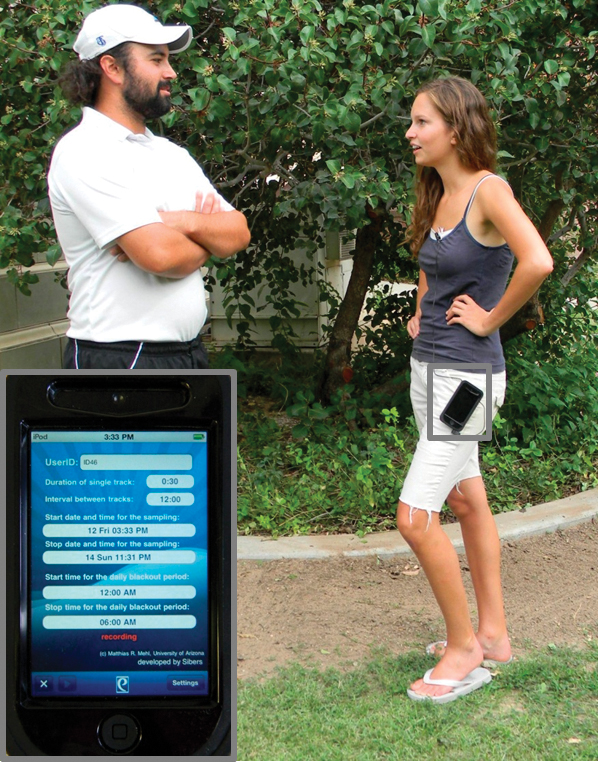
A photo shows a man and woman talking outside. The woman is wearing a rectangular device on her hip, attached by a cord to a microphone clipped to her shirt. An insert image shows the device transcribing conversation into text.
Figure 2.3Gathering Natural B-Data The person on the right is wearing an electronically activated recorder (EAR) device that samples conversations throughout the day.
One useful technique for direct behavioral assessments in real life is the electronically activated recorder (EAR), developed by psychologist Matthias Mehl and his colleagues (Mehl, 2017; Mehl et al., 2001) (Figure 2.3). The EAR is a digital audio recorder, carried in a research participant’s pocket or strapped onto a belt, which samples sounds at preset intervals such as, in one study, for 30 seconds at a time, every 12.5 minutes (Vazire & Mehl, 2008). Afterward, research assistants listen to the recordings and note what the person was doing during each segment, using categories such as “on the phone,” “talking one-on-one,” “laughing,” “singing,” “watching TV,” “attending class,” and so forth. This technique has some limitations, two of which are that the record is audio only (no pictures) and that for practical reasons the recorder can sample only intermittently during the research participant’s day.
According to data collected from smartphones, extraverts have longer conversations and move around more.
Technology is changing rapidly. Small wearable cameras—only a little larger than lapel pins—are starting to be used. One study with 298 participants used cameras that took images every 30 seconds, all day long, producing 254,208 images of 5,280 situations (N. A. Brown et al., 2017). The latest frontier in real-life B-data is the ubiquitous cellphone. The psychologist Gabriella Harari (Figure 2.4) is one of the pioneers in exploring the many kinds of B-data that cellphones automatically generate, such as length of conversations and amount of physical activity. The cellphone data she examined showed, for example, that extraverts have longer conversations and move around more (Harari et al., 2020). The potential uses—and ethical challenges—of this kind of data are just beginning to be appreciated.
More information
A photograph shows Gabriella Harari. She is smiling and wearing a dark collared shirt.
Figure 2.4Gabriella Harari Stanford University psychologist Gabriella Harari is pioneering the use of data from smartphones to understand personality.
Another rich source of real-life B-data is social media, such as Facebook, Twitter, TikTok, and other platforms (Kern et al., 2016). Many people enact a good proportion of their social lives online, and the records of these interactions (which, on the Internet, never go away) can provide a window into their personalities (Gosling et al., 2011). One study found it was possible to judge traits such as extraversion and conscientious—but not anxiety and depression—just from looking at Facebook profiles (Back, Stopfer, et al., 2010). Another study found that when a Facebook page reflected a large amount of social interaction and prominently displayed an attractive photo of the page’s owner, viewers of the page tended to infer that the page owner was relatively narcissistic. And they were usually right (Buffardi & Campbell, 2008). Still another study found that friends and romantic partners tend to use and express themselves on Facebook in similar ways (Youyou et al., 2017), so this might be one gauge of compatibility. There is more to come. As social media platforms continue to change and proliferate—who uses Facebook anymore?8—research will have to follow where the users go, and it surely will.
LABORATORY B-DATA
Psychology has a long tradition of observing behavior in the laboratory (Figure 2.5). Such observations come in two varieties.
More information
A photograph shows a researcher seated across from and observing a participant completing a puzzle at a table. In the background, other researchers and participants are doing the same at other tables in the room.
Figure 2.5Psychology Lab Gathering B-Data B-data, direct observations of behavior, can be as simple as timing how long it takes a person to complete a puzzle.
Behavioral Experiments
A participant is put into a room, something is made to happen, and the psychologist directly observes what the participant then does. The “something” that is made to happen can be dramatic or mundane. The participant might be given a form to fill out, and then suddenly there is a crisis; smoke is pouring under the door. The psychologist, sitting just outside holding a stopwatch, intends to measure how long it will take before the participant goes for help, if that ever happens. (Some participants sit until the smoke is too thick to see through.) If a researcher wanted to assess the participant’s latency of response to smoke from naturalistic B-data, it would probably take a long time, if ever, before the appropriate situation came along. In an experiment, the psychologist can just make it happen.
Other examples are more mundane but still interesting. One study asked participants to flip a coin and report the number of times it came up heads, for which they were paid a small amount of money each time. Suspiciously, people who scored highly on separate measures of deceptiveness and ruthlessness reported that their coins came up heads more often (D. N. Jones & Paulhus, 2017).
In my own research, I have often have had participants sit down with randomly assigned partners and engage in a video-recorded conversation (Funder & Colvin, 1991; Funder et al., 2000; Furr & Funder, 2004, 2007). The purpose is to directly observe aspects of interpersonal behavior and personal style. For example, one study saw that happy people were more likely to smile and act playfully, whereas unhappy people were more prone to criticize their partners or appear irritated (Gardiner et al., 2022).
Physiological Measures
Physiological measures provide another, increasingly important source of laboratory-based B-data. These include measures of blood pressure, galvanic skin response (which varies according to moisture on the skin, that is, sweating), hormonal responses, heart rate, and even highly complex measures of brain function, such as pictures derived from CT scans or PET scans (see Chapter 7). All of these can be classified as B-data because they are things the participant does—albeit involuntarily via the nervous system—and are measured directly.
B-data have two advantages and two disadvantages.
ADVANTAGE 1: RANGE OF CONTEXTS
Some aspects of personality are regularly manifested in people’s ordinary, daily lives. Your sociability is probably evident during many hours every day. But other aspects are hidden or, in a sense, latent. How could you know how you would respond to being alone in a room with smoke pouring under the door unless you were actually confronted with that situation? One important advantage of laboratory B-data is that the psychologist does not have to sit around waiting for a situation like this; if people can be enticed into an experiment, the psychologist can make it happen. The variety of B-data that can be gathered is limited only by the psychologist’s resources, imagination, and ethics.
ADVANTAGE 2: APPEARANCE OF OBJECTIVITY
Probably the most important advantage of B-data, and the basis of most of their appeal to scientifically minded psychologists, is this: To the extent that B-data are based on direct observation, the psychologist is gathering the information about personality and does not have to take anyone else’s word for it.
Still, B-data are not quite as objective as they might appear because many subjective judgments must be made on the way to deciding which behaviors to observe and how to rate them (Sherman et al., 2009). Is “arguing with someone” a single behavior? Is “raising one’s left arm 2 inches” also a single behavior? How about “completing a painting”? However one chooses to answer these questions, B-data have two important, powerful disadvantages.
DISADVANTAGE 1: DIFFICULT AND EXPENSIVE
Whether in real-life settings or in the laboratory, B-data are expensive. Experience-sampling methods require major efforts to recruit, instruct, and motivate research participants, and may also need special equipment. They also raise thorny ethical issues, as technology intrudes more and more into our daily lives (Robbins, 2017). Laboratory studies require the researcher to set up the testing situation, to recruit participants (and induce them to show up on time), and to code the observational data. This is probably the main reason B-data are not used very often compared to the other types (Baumeister et al., 2007).
DISADVANTAGE 2: UNCERTAIN INTERPRETATION
No matter how it is gathered, a bit of B-data is usually a number, and numbers do not interpret themselves. Worse, when it comes to B-data, appearances are often ambiguous or even misleading. If you make a lot of long calls on your smartphone, does this really mean you are extraverted? If you become annoyed during a laboratory experiment, does this really mean you are unhappy? Research shows usually yes, but certainly not necessarily.
To interpret B-data, they must be triangulated with other information. For example, the only reason we know that behavior recorded by smartphones is psychologically informative is that it varies according to the personalities (measured via S-data and I-data) of the people who use the phones. B-data in the absence of S- and I-data are psychologically uninterpretable.
Mixed Types of Data
It is easy to come up with simple and obvious examples of the four kinds of data. With a little thought, it is almost as easy to come up with confusing or mixed cases.9 For example, a self-report of your own behaviors during the day is what kind of data? It seems to be a hybrid of B-data and S-data. Another hybrid between B-data and S-data is called behavioroid, in which participants report what they think they would do. For example, if your neighbor’s house suddenly caught on fire, what would you do? The answer can be interesting, but what people think they would do and what they actually do are not always the same (Sweeney & Moyer, 2015).
The point of the four-way classification offered in this chapter is not to place every kind of data neatly into one and only one category. Rather, the point is to illustrate the types of data that are relevant to personality and to show how they all have both advantages and disadvantages. S-, I-, L-, and B-data—and all their possible combinations and mixtures—each provide information missed by the other types, and each raises its own distinctive possibilities for error.
Behavioral data, or direct observations of another’s behavior that are translated directly or nearly directly into numerical form. B-data can be gathered in natural or contrived (experimental) settings.
Endnotes
If you have read the writing of other psychologists or even earlier editions of this book, you may notice that these labels keep changing, as do, in subtle ways, the kinds of data to which they refer. Jack Block (J. H. Block & Block, 1980) also propounded four types of data, calling them L, O, S, and T. Raymond Cattell (Cattell, 1950, 1965) propounded three types called L, Q, and T. Terri Moffitt (Caspi, 1998; Moffitt, 1991) proposed five types, called S, T, O, R, and I (or STORI). In most respects, Block’s L-, O-, S-, and T-data match my L-, I-, S-, and B-data; Cattell’s L-, Q-, and T-data match my L- (and I-), S-, and B-data; and Moffitt’s T and O match my B, and her R, S, and I match my L, S, and I, respectively. But the definitions are not exactly equivalent across systems. For a detailed typology of B-data, see Furr (2009).
This imbalance might make sense if (a) people were easier to understand than cells, chemicals, or particles or (b) it were less important to understand people than cells, chemicals, or particles. Do you think either of these presumptions is true?Return to reference 2
I don’t actually know if this is true. There is very little research on the self-perception of fishes.Return to reference 3
For obvious reasons, we don’t show their answers to the acquaintance.Return to reference 4
As someone who has written many letters of recommendation, I can tell you that, often, the writer is also supposed to give numerical ratings of attributes such as ability, integrity, and motivation. I hate doing this.Return to reference 5
Iago was unimpressed. He replied, in part, “Reputation is an idle and most false imposition, oft got without merit and lost without deserving” (Othello, act 2, scene 3).Return to reference 6
 Self-descriptions (S-data) and descriptions of a person by others (I-data) can both be valuable sources of information. But the points of view may be different. On the scales below, try rating yourself and then rating someone else you know quite well. Then, if you dare, have the other person do the same to you!