1Americans And Their Political Values
More information
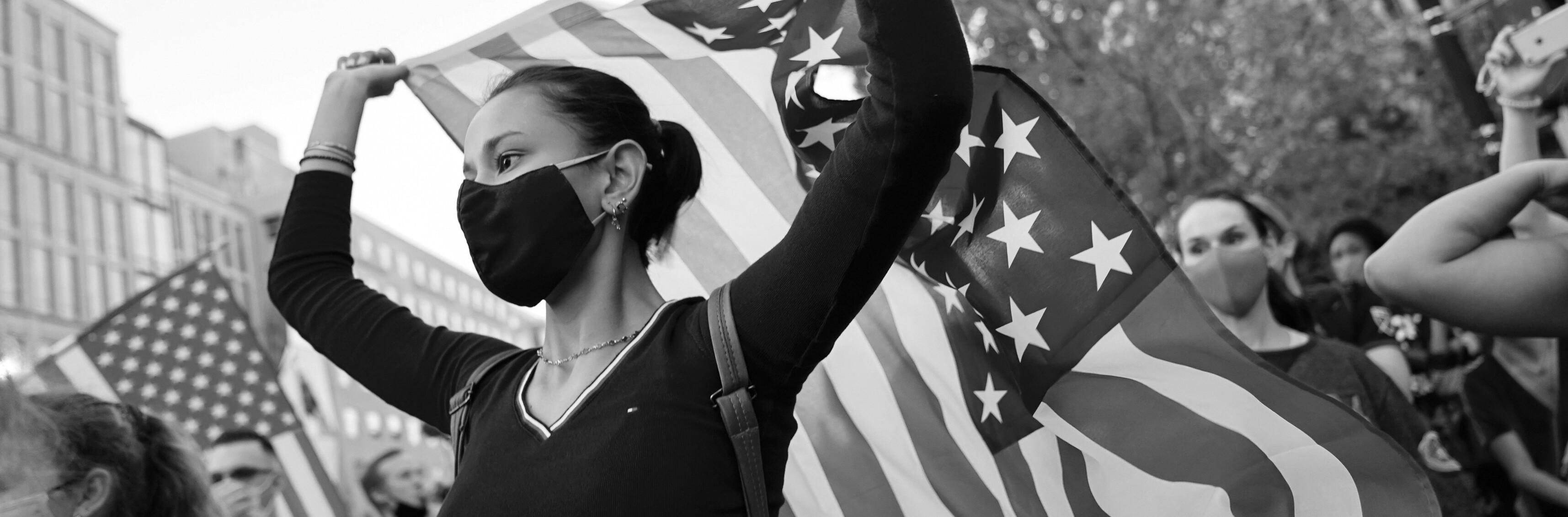
A young woman and several others wave flags at an outdoor gathering. The young woman is wearing a face mask.
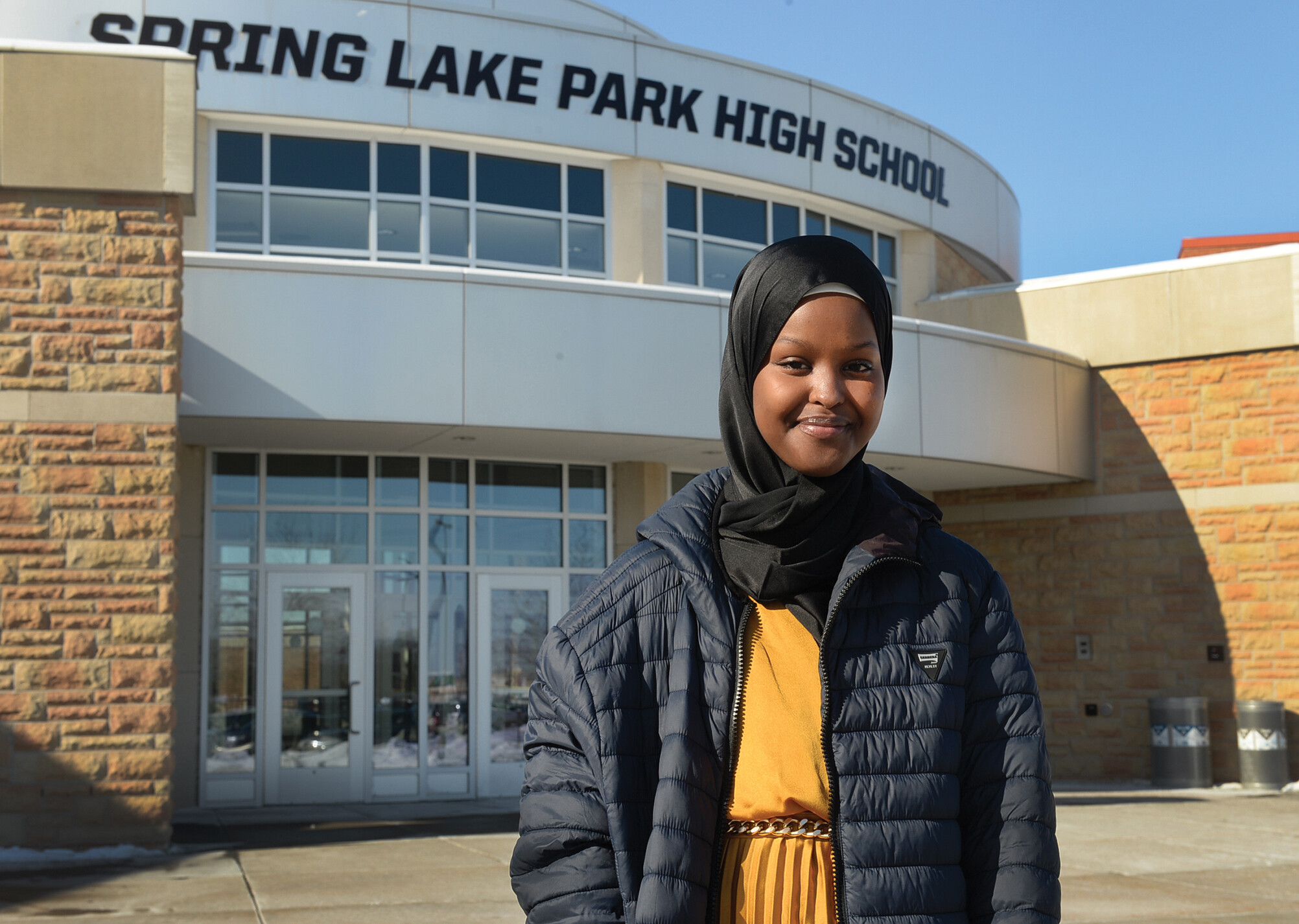
WHAT GOVERNMENT DOES AND WHY IT MATTERS High school student Hayat Muse worked 15 to 20 hours per week at a coffee shop near her home in Minnesota to help her mother with the bills for their family of nine children plus a grandmother. When the Covid-19 pandemic hit, it shut down both her high school and her job. Expenses were up at home—with Hayat and her siblings attending school remotely, the grocery bill rose, as did internet usage—and Hayat followed the path of millions of American adults during the pandemic: she filed for unemployment benefits. At first she received aid, both from the state of Minnesota and from a supplemental federal program Congress passed during the pandemic’s early months. But the state soon informed her that it had made a mistake: under a 1939 law, Hayat was not eligible for unemployment benefits. Minnesota was one of a few states that bars high school students from receiving benefits (even though their employers have paid into the program on the workers’ behalf). The state wanted its money back. And because the state had applied the same rule to the federal pandemic unemployment aid, it wanted Hayat to repay that as well.
Hayat felt the law was unfair but repaid the state money. When it came time to repay the federal funds, she appealed and got the repayment waived. But she also worked with a local nonprofit, Youthprise, which spent a year organizing on social media, linking students with others in the same predicament and partnering with other organizations such as Project for Pride in Living and the Children’s Defense Fund Minnesota to overturn the law. The students even testified before state lawmakers. Perhaps Minnesota’s law made sense back when high school workers were earning pocket money, the students argued. But with many young people now working to supplement their families’ incomes, the law was outdated. When efforts to pass a new bill stalled, Youthprise and the students sued the Minnesota Department of Employment and Economic Development for prohibiting the federal aid to high school students. In December 2020, they won. The state had to pay them the federal unemployment benefits. Cole Stevens, who had been supporting his family with a food service job that dried up with the pandemic and who had spent months making phone calls and organizing with other high school students, was shocked by the decision. “I think the number one thing I learned is that it’s possible for someone like myself, 18 years old, no assets, family has no assets. No social capital, nothing at all. When I went into this, I was literally just a kid who was broke, lost his job and didn’t like what the government did to me.”1
More information
Hayat Muse stands in front of her high school. She wears a hijab and a warm jacket.
Every day, government affects our lives and those of our family members, friends, and community. Sometimes those efforts are welcome, as when the federal government disbursed federal aid to states to help with their pandemic responses. Sometimes people disagree with government activity, like the high school students who felt they should receive unemployment insurance just like other laid-off workers—and the people who feel that the government should not spend as much money on unemployment benefits or pandemic relief in the first place.
Because the United States is a democracy, ordinary people play a significant role in government and politics. Individuals can act alone through voting, writing letters to elected officials, participating at local community meetings, and signing petitions. But often, participation is more effective when people work together, as these students did in joining with others to press for a change in government policy.
Thus, government affects us all in ways big and small. The purpose of this book is to show what government does, how, and why—and what you can do about it.
CHAPTER GOALS
Endnotes
- Erin Hinrichs, “Denied Unemployment Benefits, Minnesota High Schoolers Push for Reforms,” MinnPost, October 1, 2020, www.minnpost.com/education/2020/10/denied-unemployment-benefits-minnesota-high-schoolers-push-for-reforms/; Zoe Jackson, “Minnesota Court Finds Jobless High School Students Can Access Pandemic Unemployment Benefits,” Star Tribune, December 2, 2020, www.startribune.com/minn-court-jobless-high-school-students-can-access-pandemic-unemployment-aid/573267141/ (accessed 10/17/21).Return to reference 1