Federalism can be defined as the division of powers between the national government and the state governments. As we saw in Chapter 2, the 13 original states were individual colonies before independence, and for nearly 13 years each of them functioned as virtually a self-governing unit under the Articles of Confederation. Under the Articles, disorder within states was beyond the reach of the national government, and conflicts of interest between states were not manageable. For example, states made their own trade agreements with foreign countries and companies, which might then play one state against another for special advantages. Some states adopted barriers to foreign commerce that were contrary to the interests of another state.1 Taxes and other barriers were also erected between states, inhibiting the movement of goods and persons across state borders.2
The need for a more effective national government to help solve such problems led directly to the Annapolis Convention in 1786 and the Constitutional Convention in 1787. Even after ratification of the Constitution, however, the states remained more important than the national government. For nearly a century and a half, virtually all of the fundamental policies governing Americans’ lives were made by the state legislatures, not by Congress.
Federalism in the Constitution
The United States was the first nation to adopt federalism as its governing framework. With federalism, the framers sought to limit the national government by creating a second layer of sovereignty, or independent political authority, in the state governments. The American Constitution recognized the sovereignty of both the national government and the states, and the Bill of Rights reinforced this principle by granting a few expressed (specified) powers to the national government and reserving all the rest to the states. A federal system also allows geographically concentrated groups to wield more power than they can wield in a central system.
The Powers of the National Government.
As we saw in Chapter 2, the expressed powers granted to the national government are found in Article I, Section 8, of the Constitution. These 17 powers include the power to collect taxes, to establish a currency, to declare war, and to regulate commerce. Article I, Section 8, also contains another important source of power for the national government: the implied powers that enable Congress “to make all Laws which shall be necessary and proper for carrying into Execution the foregoing Powers.” Not until several decades after the Founding did the Supreme Court allow Congress to exercise the power granted in this necessary and proper clause, but ultimately the doctrine allowed the national government to expand the scope of its authority. In addition to expressed and implied powers, the Constitution affirmed the national government’s power in the supremacy clause (Article VI), which made all national laws and treaties “the supreme Law of the Land.”
The Powers of State Governments.
One way in which the framers ensured a strong role for the states was through the Tenth Amendment, which says that any powers that the Constitution does not delegate to the national government or deny to the states are “reserved to the States respectively, or to the people.” The Antifederalists, who feared that a strong central government would encroach on individual liberty, pressed for such an amendment as a way of limiting national power. Federalists agreed to it because they did not think it would do much harm, given the powers that the Constitution already granted to the national government. The Tenth Amendment is also called the reserved powers amendment.
The most fundamental power that is retained by the states is that of coercion—the power to develop and enforce criminal codes, to administer health and safety rules, and to regulate the family via marriage and divorce laws. The states have the power to regulate individuals’ livelihoods; if you’re a doctor, lawyer, plumber, or barber, you must be licensed by the state. Even more important, the states have the power to define private property, which exists because state laws against trespassing define who is and is not entitled to use a piece of property. If you own a car, your ownership isn’t worth much unless the state is willing to enforce your right to possession by making it a crime for anyone else to take your car. Similarly, your “ownership” of a house or piece of land means that the state will enforce your possession by prohibiting others from occupying the property against your will. At the same time, however, under its power of eminent domain, the state may seize your property (and compensate you) for anything it considers a public purpose.
Protesters in Cleveland express their frustration with Governor DeWine’s state shutdown during the COVID-19 pandemic. The past 90 years, since Franklin Delano Roosevelt’s New Deal, have seen an increase in national government power. But the state-by-state variations in COVID precautions during the pandemic demonstrate the coercive powers of the states in action.
The coercive power of the states was demonstrated in 2020 during the coronavirus crisis. After many citizens ignored recommendations aimed at social distancing, state governors issued executive orders requiring citizens to comply with new public health rules or risk fines. On Sunday, March 15, Ohio governor Mike DeWine was the first state executive to order all restaurants and bars in the state closed. The next day, the governors of Connecticut, New Jersey, and New York ordered the closing of all restaurants, bars, gyms, movie theaters, and casinos in their states to slow the virus’s spread. At the same time, DeWine and Governor Larry Hogan of Maryland ordered their states’ schools to be closed indefinitely—a decision soon copied by most other states. These state measures produced massive business closings and unemployment, but the governors deemed these consequences to be unavoidable in light of the public health emergency. Analyzing the Evidence on pp. 62–63 discusses another issue regarding federalism in action: states’ different voter identification laws and whether or not these differences suppress the votes of historically marginalized people.
In some policy areas, the states share concurrent powers with the national government. The two levels both have some power to regulate commerce and to affect the currency—for example, by being able to establish banks, incorporate businesses, and regulate the quality of products or the conditions of labor. Whenever there has been a direct conflict of laws between national and state levels, the issue has generally been resolved in favor of the national government. However, when the federal government does not set a strong policy in an area of concurrent powers, states can each decide their own policies.
All told, America’s federal system leaves a great deal of power in the hands of the individual states. Each year, the states collectively adopt nearly 20,000 new laws, an average of 400 per state, while the U.S. Congress in recent years has on average enacted slightly more than 150 new statutes. The states are especially important in the realms of education, health care, environmental policy, and transportation. In all these areas, to be sure, the states share power with the federal government but still possess considerable discretionary authority.
States’ Obligations to One Another.
The Constitution also creates obligations among the states. These obligations, spelled out in Article IV, were intended to promote national unity. By requiring the states to recognize actions and decisions taken in other states as legal and proper, the framers aimed to make the states less like independent countries and more like parts of a single nation. Article IV, Section 1, calls for “Full Faith and Credit” among states, meaning that each state is expected to honor the “public Acts, Records, and judicial Proceedings” that take place in any other state. So, for example, if a couple is married in Texas—marriage being regulated by state law—Missouri must also recognize that marriage, even though they were not married under Missouri state law.
This full faith and credit clause recently became an important factor in a case involving adoption by a same-sex parent. The state of Alabama had refused to recognize the legal validity of a Georgia adoption involving the same-sex partner of a woman who had conceived a child through artificial insemination. The woman’s same-sex partner had legally adopted the child in Georgia but was denied joint custody and visitation when the couple moved to Alabama and then separated. In the 2016 case of V.L. v. E.L., however, the Supreme Court held that the full faith and credit clause required Alabama courts to recognize the Georgia adoption.3
Article IV, Section 2, known as the comity clause, also promotes national unity. It provides that citizens enjoying the “privileges and immunities” of one state should be entitled to similar treatment in other states; that is, a state cannot discriminate against someone from another state or give special privileges to its own residents. For example, when Alaska passed a law in the 1970s that gave residents preference over nonresidents in obtaining work on the state’s oil and gas pipelines, the Supreme Court ruled the law illegal because it discriminated against citizens of other states.4
analyzing the evidence
Do Voter ID Laws Affect Turnout?
Contributed by Nazita Lajevardi, Michigan State University
Voter identification laws have proliferated across the United States. Voter ID laws require voters to present some form of identification before they cast a ballot. No state required voter ID prior to 2006, but as of 2022, 35 states have laws in force requesting or requiring voters to show some form of identification at the polls.1 Despite no two voter ID laws being the same, and state laws regulating identification at times changing from year-to-year, the National Conference of State Legislatures groups them into five categories: (1) strict, photo identification; (2) strict, non-photo identification; (3) non-strict, photo identification; (4) non-strict, non-photo identification; and (5) no voter identification law. See Figure A to find the type of voter ID law in your state.2
figure AVoter Identification Laws, 2022
SOURCE: National Conference of State Legislatures, “Voter ID Laws,” January 7, 2022, https://www.ncsl.org/research/elections-andcampaigns/voter-id.aspx (accessed 5/18/22). (accessed 4/21/22).
Today, these statutes are at the center of the nation’s debate on voting rights. Advocates insist these laws reduce voter fraud, do not reduce the voter participation of citizens, and impose few—if any—costs on legitimate voters. Opponents, meanwhile, argue that these laws are unnecessary and intrusive voter restrictions that effectively limit the legitimate participation of disadvantaged groups and skew the partisan makeup of legislative bodies across the nation.
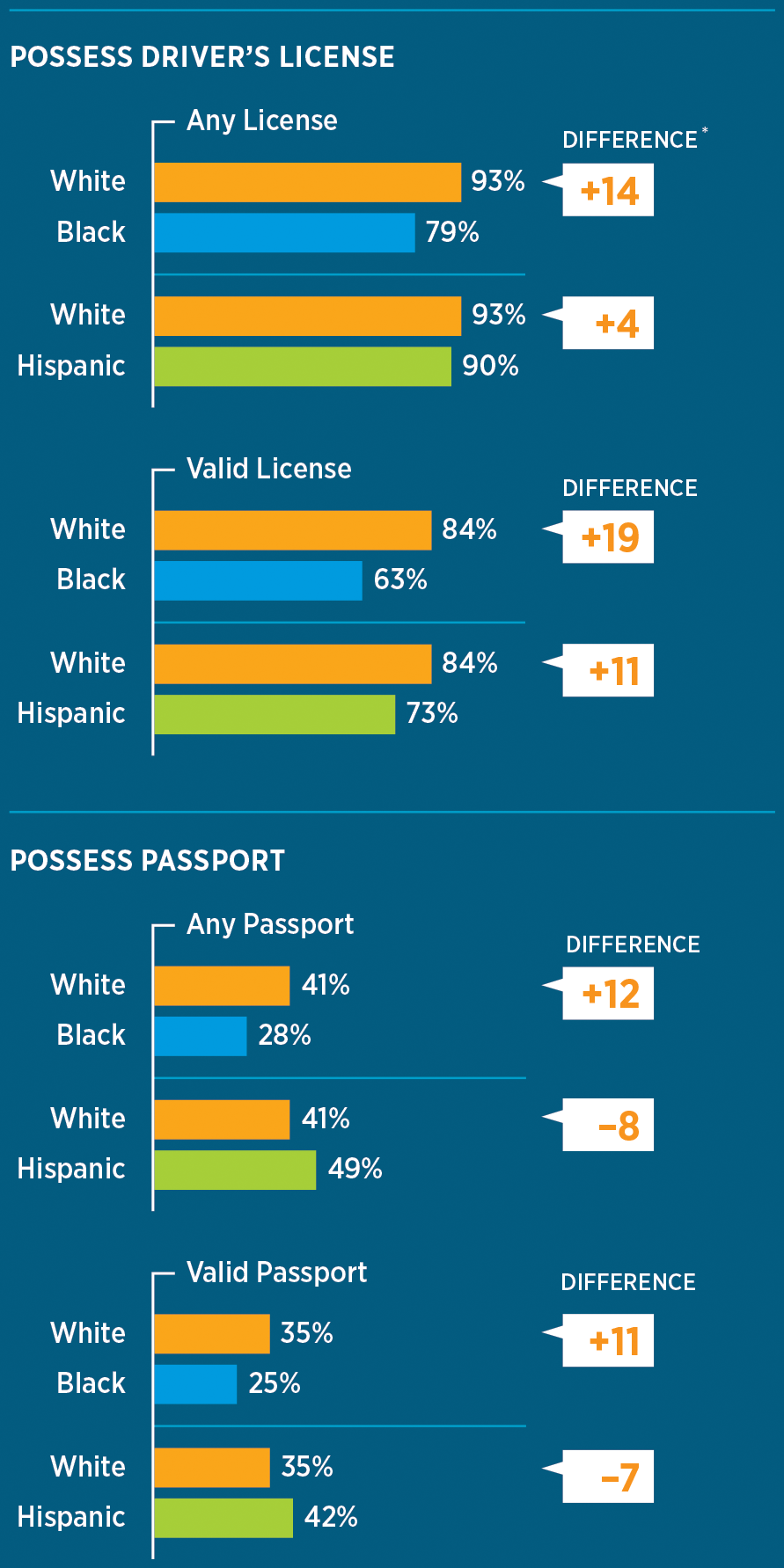
Nonetheless, not all registrants have this type of government-issued photo identification document. In fact, historically marginalized communities are less likely to possess the valid forms of identification necessary to comply with these voter ID statutes.3 As such, the material burdens of casting a ballot in states with these mandates fall harder on historically marginalized voters than on White Americans.4 Notable differences in identification possession rates exist by race and ethnicity;5 for example, a 2013 study found that while 7 percent of White Americans and 10 percent of Hispanics reported not having a driver’s license, 21 percent of Black Americans reported not having one (Figure B).6
If White Americans are more likely to report possessing a valid form of ID to comply with voter ID mandates than other racial groups, one important question is whether the voter turnout of members of historically marginalized groups in states with these laws is lower than that of White Americans.7 Research shows that voter identification laws do in fact suppress the vote of these groups. For example, my own research with collaborators assessed whether strict photo identification laws reduced turnout among registered survey respondents in the Cooperative Congressional Election Study (CCES) from 2006 to 2014, and found that strict voter ID laws depressed Latino turnout by 9.3 percentage points, Black turnout by 8.6 points, and Asian American turnout by 12.5 points in primary elections.8 In general elections, this one study found that Latinos in that survey were 10 percent less likely to turn out in states with strict identification laws than in states without these regulations, other things being equal.
figure B Who Possesses Driver’s Licenses and Passports?
* Racial differences do not appear to exactly correspond to values reported at left only due to rounding.
SOURCE: Charles Stewart III, “Voter ID: Who Has Them? Who Shows Them?,” Oklahoma Law Review 66, no. 1 (2013): 21–52. (accessed 4/21/22).
Other scholarship confirms these findings. Using panel data on 10 million individual voter registrants, political scientist Bernard Fraga found some evidence that the implementation of strict voter identification laws was related to lower Latino and Asian turnout from 2008 to 2012.9 My work with a team of political scientists addressed the issues in question by using official turnout data rather than surveys to examine turnout changes in each U.S. county across the 2012 and 2016 presidential elections when Alabama, Mississippi, Virginia, and Wisconsin all implemented strict photo ID laws; we found that turnout declined significantly more in racially diverse counties relative to less diverse counties in states that enacted strict identification laws over this period than it did in other states.10 And finally, Bernard Fraga and Michael Miller conducted a clever case study in Texas, which had implemented a strict voter identification law in the 2014 election, though a last-minute federal court decision allowed Texans without qualifying identification to vote in the 2016 election. They found that more than 16,000 Texans would have been disenfranchised for lack of compliant identification in 2016, and that these registrants were significantly more likely to be Black and Latino than the population voting with identification.11
While researchers continue to study this question, scholarship largely suggests that voter ID laws—especially the strictest types—represent a major burden that disproportionately affects historically marginalized voters. Given the already low turnout of historically marginalized groups across the country, declines as a result of voter ID laws are all the more noteworthy.
Notes for this feature appear on page C–1.
Looking at the data in Figure B, what implications might lower voter turnout of historically marginalized groups have on representation and governance? If these trends continue, would you expect to see policy priorities of historically marginalized groups enacted? What effect might these trends have on the diversity of elected official in office?
The comity clause also regulates criminal justice among the states by requiring states to return fugitives to the states from which they have fled. For example, in 1952, when an inmate escaped from an Alabama prison and sought to avoid being returned on the grounds that he was subject to “cruel and unusual punishment” there, the Supreme Court ruled that he must be returned according to Article IV, Section 2.5 There are many exceptions to the comity clause. For example, states may charge out-of-state students a higher tuition rate at state colleges and universities.
The case of the Alabama inmate highlights the difference between the obligations among states and those among different countries. For example, despite the resumption of diplomatic relations between Cuba and the United States, Cuba declared in 2017 that it would not return several American fugitives, including convicted murderer Joanne Chesimard, who had been granted asylum by the Cuban government. The Constitution clearly forbids states to do something similar.
States’ relationships to one another are also governed by the interstate compact clause (Article I, Section 10), which states, “No State shall, without the Consent of Congress . . . enter into any Agreement or Compact with another State.” The Supreme Court has interpreted this clause to mean that two or more states may enter into legally binding agreements with one another, subject to congressional approval, to solve a problem that crosses state lines. In the early years of the Republic, states turned to compacts primarily to settle border disputes. Today, compacts are used for a wide range of issues but are especially important in regulating the distribution of river water, addressing environmental concerns, and operating transportation systems that cross state lines.6
Local Government and the Constitution.
Local government, including counties, cities, and towns, occupies a peculiar but very important place in the American system. In fact, local government has no status in the American Constitution. State legislatures created local governments, and state constitutions and laws permit local governments to take on some of the responsibilities of the state governments. Most states amended their own constitutions to give their larger cities home rule—a guarantee of noninterference in various areas of local affairs. But local governments enjoy no such recognition in the national Constitution. They have always been mere conveniences of the states. The boundaries of cities and counties can be altered by state governments, and cities and towns can be created or eliminated by state legislatures.7
Local governments became important in the early Republic because the states had little administrative capability or bureaucracy, so they relied on cities and counties to implement state laws. Today, like the national and state governments, the state and local governments within each state both cooperate and compete with one another, as shown, for example, in the mix of cooperation and rivalry between their police forces.
The Slow Growth of the National Government’s Power
Before the 1930s, America’s federal system was one of dual federalism, a two-layered system—national and state—in which the states and their local governments did most of the governing. We call it the traditional system because almost nothing about it changed during two-thirds of American history. The only exception was the four years of the Civil War, after which the traditional system resumed.
But there was more to dual federalism than merely the existence of two levels of government. As we have seen, the Constitution delegated specific powers to the national government and reserved all the rest to the states. That arrangement left a lot of room for interpretation, however, because of the final “elastic” clause of Article I, Section 8. The three words necessary and proper amounted to an invitation to struggle over the distribution of powers between national and state governments. We confront this struggle throughout the book. However, it is noteworthy that federalism remained dual for nearly two-thirds of American history, with the national government remaining steadfastly within a “strict construction” of Article I, Section 8.
The Supreme Court has, at times, weighed in on the debate over the distribution of powers between national and state governments, starting in 1819 with a decision favoring national power, McCulloch v. Maryland.8 The issue was whether Congress had the power to charter a bank—in particular the Bank of the United States (created by Congress in 1791 over Thomas Jefferson’s constitutional opposition)—because no power to create banks is mentioned in Article I, Section 8. Chief Justice John Marshall stated that such a power could be “implied” from other powers authorized in Article I, Section 8.
Specifically, Marshall cited the commerce clause, which gives Congress the power “to regulate Commerce with foreign nations, and among the several States and with Indian tribes,” plus the final necessary and proper clause. Because the power to regulate commerce was expressly granted to Congress by the Constitution and chartering a bank was reasonably related to regulating commerce and not prohibited by the Constitution, Congress’s action was deemed constitutionally permissible. Thus, the Court created the potential for significant increases in national governmental power.
The same case raised a second question of national power: whether Maryland’s attempt to tax the bank was constitutional. Once again, Marshall and the Supreme Court sided with the national government, arguing that a bank created by a legislature representing all the American people (Congress) could not be taxed out of business by a state legislature (Maryland) representing only a small portion of the people. Here also the Supreme Court reinforced the supremacy clause: whenever a state law conflicts with a federal law, the state law is invalid because “the Laws of the United States . . . shall be the supreme Law of the Land.” (For more on federal supremacy, see Chapters 2 and 8.)
This nationalistic interpretation of the Constitution was reinforced by Gibbons v. Ogden in 1824. At issue was whether the state of New York could grant a monopoly to a steamboat company to operate an exclusive service between New York and New Jersey. Aaron Ogden had obtained his license from the state, whereas Thomas Gibbons, a former partner of Ogden’s, had obtained a competing license from the U.S. government. Chief Justice Marshall ruled that Gibbons could not be kept from competing, because with the commerce clause giving Congress the power “to regulate Commerce . . . among the several States,” the state of New York did not have the power to grant this particular monopoly, which affected other states’ interests. In his decision, Marshall insisted that the definition of commerce was “comprehensive” but added that the comprehensiveness was limited to “that commerce which concerns more states than one.” This opinion gave rise to the legal concept that later came to be called interstate commerce.9
Despite the Court’s broad interpretation of national power in the Republic’s early years, between the 1820s and the 1930s federal power grew only slowly. Toward the end of the nineteenth century, to be sure, a small number of important federal regulatory agencies, such as the Federal Trade Commission and the Interstate Commerce Commission, were built to establish the groundwork for federal economic management.
However, efforts to expand the national government’s power were bitterly contested. During the Jacksonian period, a states’ rights coalition developed in Congress. Among its most important members were state party leaders, who often had themselves appointed to the Senate, where they jealously guarded the powers of the states they ruled. Of course, members of Congress from the southern states had a particular reason to support states’ rights: as long as the states were powerful and the federal government weak, the South’s institution of slavery could not be threatened.
Aside from the interruption by the Civil War, the states’ rights coalition dominated Congress and influenced presidential nominations (which were also controlled by the state party leaders) and judicial appointments (which required Senate confirmation) as well. Indeed, the Supreme Court turned away from John Marshall’s nationalistic interpretation of the Constitution in favor of a states’ rights interpretation—particularly in cases concerning the commerce clause. For many years, any federal effort to regulate commerce so as to discourage such things as fraud, the production of impure goods, the use of child labor, and dangerous working conditions or long hours was declared unconstitutional by the Supreme Court. The factory and the workplace, the Court ruled, were areas inherently local because the goods produced there had not yet passed into commerce and crossed state lines. Therefore, regulation of them constituted police power—a power reserved to the states.
No one questioned the power of the national government to regulate certain kinds of businesses, such as railroads, gas pipelines, and waterway transportation, because by their nature, they involved interstate commerce.10 But well into the twentieth century, most other efforts by Congress to regulate commerce were blocked by the Supreme Court’s interpretation of federalism.
For example, in the 1918 case of Hammer v. Dagenhart, the Court struck down a law prohibiting the interstate shipment of goods manufactured with the use of child labor. Congress had been careful to avoid outlawing the production of such goods within states and to prohibit only their interstate shipment. The Court, however, declared that the intent had been to outlaw their manufacture and that the law’s language was merely a ruse.11
After his election in 1932, President Franklin Delano Roosevelt was eager to expand the power of the national government. His “New Deal” depended on governmental power to regulate the economy and to intervene in every aspect of American society, and it provoked sharp conflicts between the president and the federal courts. After appointing a host of new judges and threatening to expand the size of the Supreme Court, Roosevelt managed to bend the judiciary to his will. Beginning in 1937, the Court issued a series of decisions that once again made the commerce clause a great engine of national power.
One key case was National Labor Relations Board v. Jones & Laughlin Steel Corporation.12 At issue was the National Labor Relations Act, which prohibited corporations from interfering with the efforts of employees to organize into unions, to bargain collectively over wages and working conditions, and to go on strike and engage in picketing. The newly formed National Labor Relations Board (NLRB) had ordered Jones & Laughlin to reinstate workers fired because of their union activities. The appeal reached the Supreme Court because the steel company had made a constitutional issue over the argument that its manufacturing activities, being local, were beyond the government’s reach. But the Court ruled that a large corporation with subsidiaries and suppliers in many states was inherently involved in interstate commerce and hence subject to congressional regulation. In other decisions, the Court upheld minimum-wage laws, the Social Security Act, and federal rules controlling how much of any given commodity local farmers might grow.13 These decisions and other New Deal programs were the beginning of a significant shift toward national government power. As the Timeplot shows, spending on federal programs surpassed spending by state and local governments after the 1940s and has increased over the past 80 years.
*TIMEPLOT NOTE: GDP, or gross domestic product, is a measure of the economy as a whole based on the total value of goods and services produced within the country. In 2020, the GDP was $20.94 trillion.TIMEPLOT SOURCE: Michael Shuyler, “A Short History of Government Taxing and Spending in the United States,” https://taxfoundation.org/short-history-government-taxing-and-spending-united-states/; Federal Reserve Economic Data, “Federal Net Outlays as Percent of Gross Domestic Product,” https://fred.stlouisfed.org/series/FYONGDA188S, and “State and Local Government Current Expenditures,” https://fred.stlouisfed.org/series/SLEXPND (accessed 3/11/22).
Cooperative Federalism and Grants-in-Aid
Roosevelt was able to overcome judicial resistance to expansive New Deal programs. Congress, however, forced him to recognize the continuing importance of the states. It did so by crafting some programs in such a way as to encourage states to pursue nationally set goals while leaving them some leeway to administer programs according to local values and needs. If we apply the term dual federalism to the traditional system of two independent sources of political authority (the national and the state governments) performing highly different functions, the system that prevailed after the 1930s could be called cooperative federalism, which generally refers to mutually supportive relations, sometimes partnerships, between national government and the state and local governments. Cooperative federalism takes the form of federal subsidies for specific state and local programs; these funds are called grants-in-aid. In fact, many state and local programs would not exist without the federal grants-in-aid, which are therefore also an important form of federal influence on states and localities. (Another form of federal influence, the mandate, will be covered below.)
A grant-in-aid is really a kind of incentive by which Congress gives money to state and local governments with the condition that it be spent for a particular purpose. Congress uses grants-in-aid because it does not usually have the direct political or constitutional power to command these governments to do its bidding. For example, after passage of the Affordable Care Act (popularly known as Obamacare) in 2010, 26 states challenged its constitutionality. Though the Supreme Court upheld other provisions of the act, it did rule that each state’s government had the option to reject the new federal funding for and regulations of Medicaid mandated by the act. Eighteen states subsequently chose to opt out of the expansion of Medicaid eligibility.
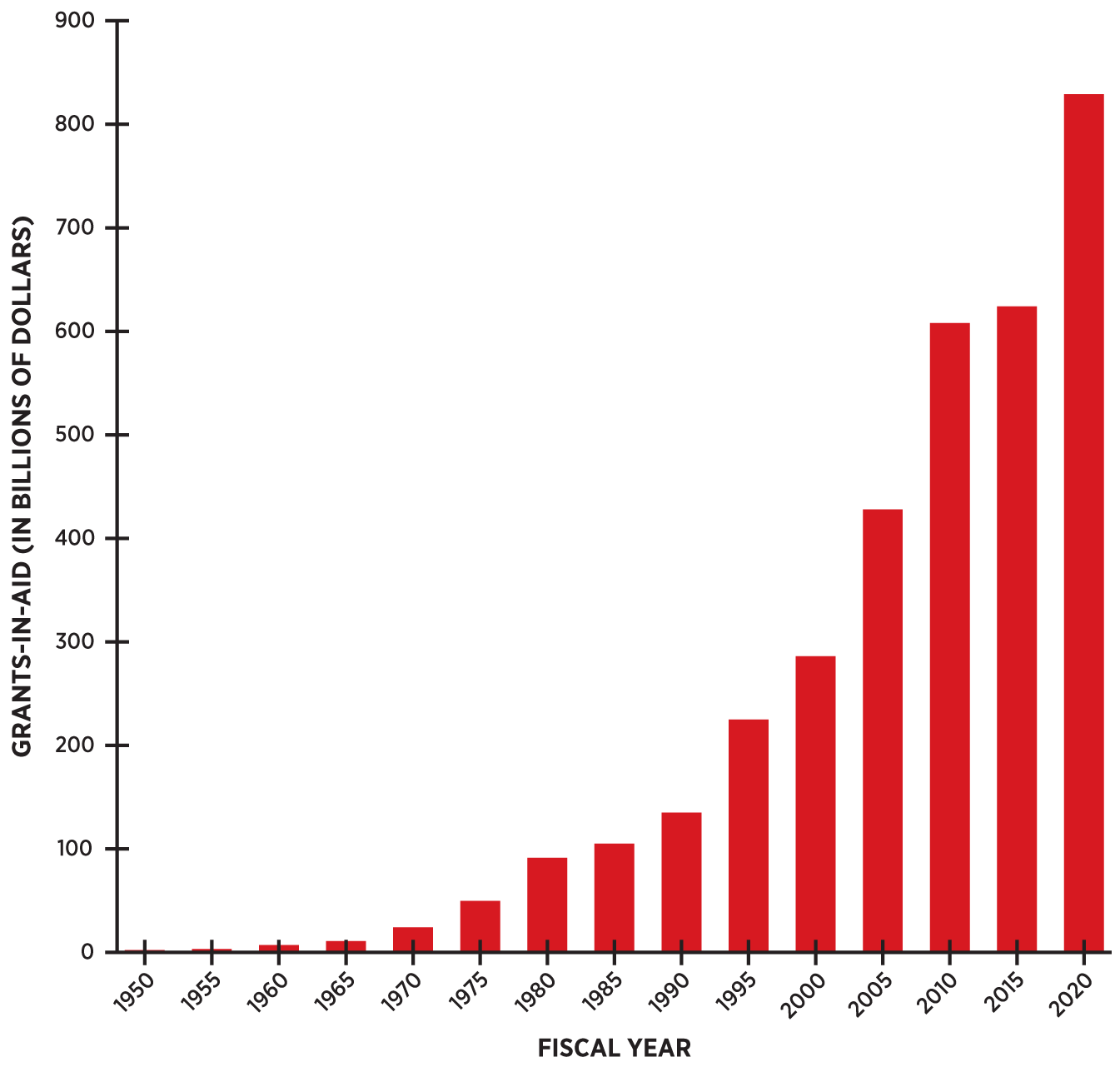
Beginning in the late 1930s, Congress set national goals in specific policy categories, such as public housing and assistance to the unemployed, and provided grants-in-aid to meet these goals. The range of categories has expanded greatly over the decades, and the value of categorical grants-in-aid increased from $2.3 billion in 1950 to $830 billion in 2020 (Figure 3.1). Sometimes Congress requires the state or local government to match the national contribution dollar for dollar, but for some programs, such as the interstate highway system, the grant-in-aid provides 90 percent of the cost of the program.
For the most part, the categorical grants created before the 1960s simply helped the states perform their traditional functions, such as education and policing.14 In the 1960s, however, the national role expanded dramatically. For example, during the 89th Congress (1965–66) alone, the number of categorical grant-in-aid programs grew from 221 to 379.15 The grants authorized during the 1960s announced national purposes much more strongly than did earlier grants, and central among them was to provide opportunities to the poor.
FIGURE 3.1
The Historical Trend of Categorical Grants-In-Aid, 1950–2020
NOTE: Excludes outlays for national defense, international affairs, and net interest.
SOURCE: Office of Management and Budget, Table 12.1, https://www.whitehouse.gov/omb/historical-tables/ (accessed 10/19/21).
analyzing the evidence
Grants-in-aid began to expand dramatically during the 1960s. What political trends might explain this expansion? What are the ramifications of this trend for individuals and for states?
Many of the categorical grants enacted during the 1960s were project grants, which require state and local governments to submit proposals to federal agencies. In contrast to the older formula grants, which used a formula (composed of such elements as need and state and local capacities) to distribute funds, project grants provided funding on a competitive basis to the proposals that agencies judged to be the best. In this way, the national government gained substantial control over which state and local governments got money, how much they got, and how they spent it. Examples include the Asbestos Hazard Emergency Act of 1986, which requires school districts to inspect for asbestos hazards and remove them from school buildings when necessary, and the Americans with Disabilities Act of 1990, which requires all state and local governments to promote access for the disabled to all government buildings.
A number of judicially developed rules govern federal mandates. In the 1987 Supreme Court decision in the case of South Dakota v. Dole, the Court held that mandates must be unambiguous, must not be “coercive,” and must not force states to violate the U.S. Constitution.16
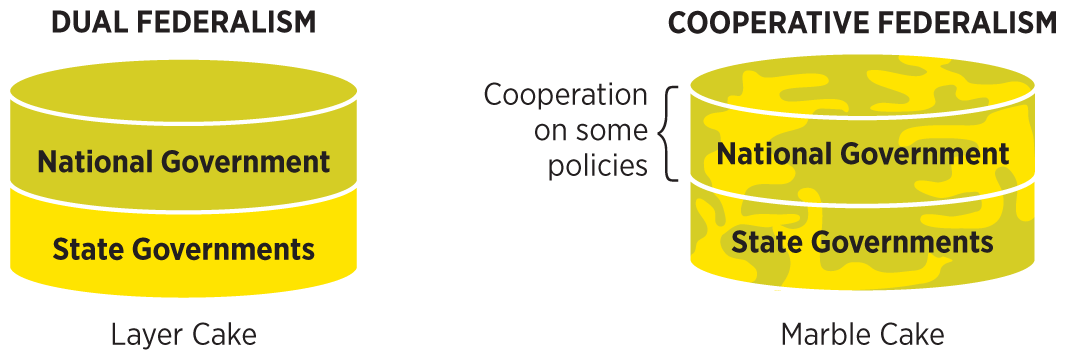
The political scientist Morton Grodzins characterized the shift to post–New Deal cooperative federalism as a move from “layer cake federalism” to “marble cake federalism,” in which intergovernmental cooperation and sharing have blurred the line between where the national government ends and the state and local governments begin.17 Figure 3.2 demonstrates the basis of the marble cake idea.
FIGURE 3.2
Two Historic Views of Federalism
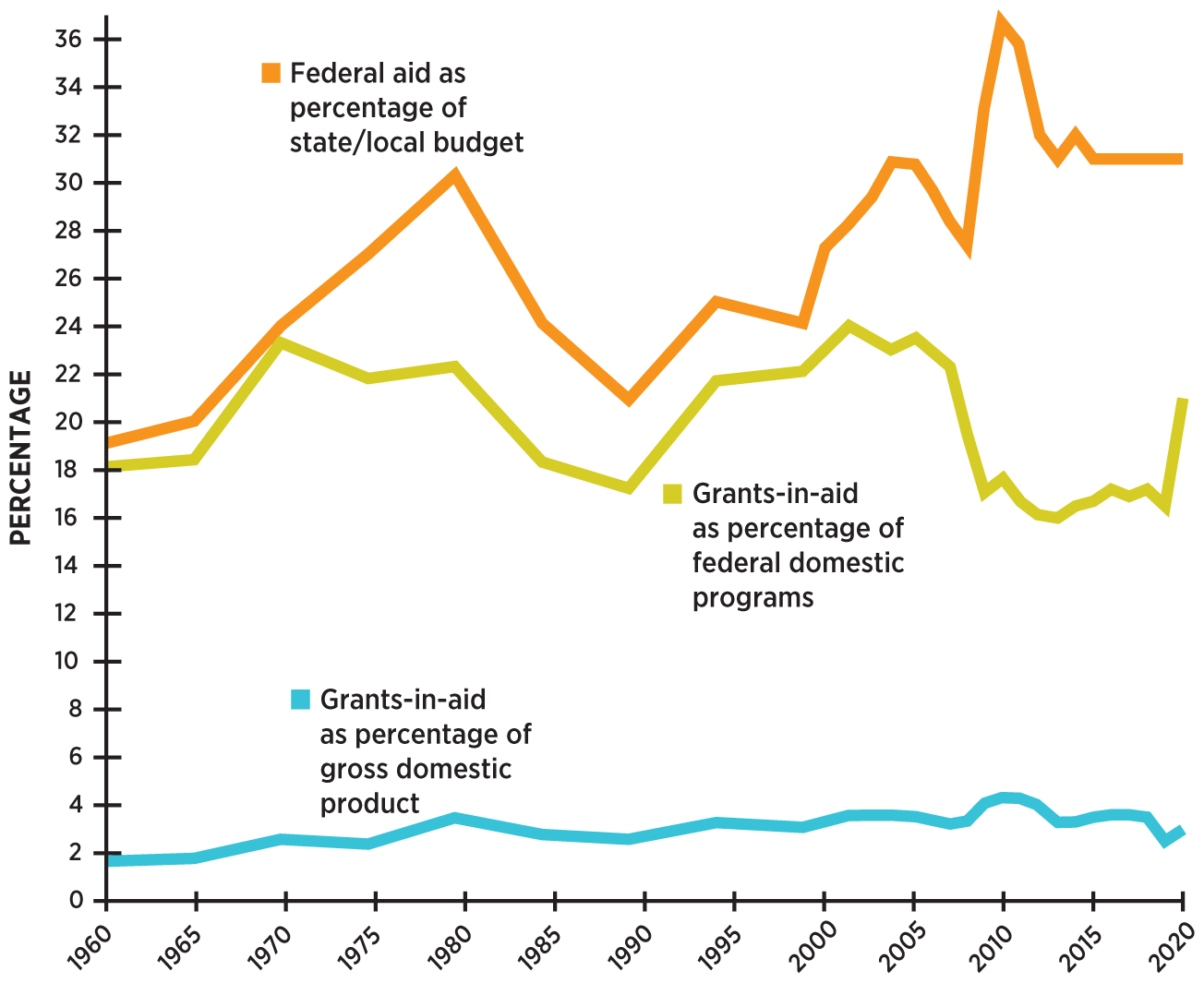
At the high point of grant-in-aid policies in the late 1970s, federal aid contributed about 25–30 percent of the operating budgets of all the state and local governments in the country (Figure 3.3). In 2010, federal aid accounted for more than 35 percent of these budgets. This increase was temporary, resulting from the $787 billion stimulus package designed to help state and local governments weather the 2007–9 recession; today, the figure is 31 percent. Briefly, however, federal aid became the single largest source of state revenue, exceeding sales and property tax revenues for the first time in U.S. history.
Regulated Federalism and National Standards.
Developments from the 1960s to the present have moved well beyond marble cake federalism to what might be called regulated federalism.18 In some areas—especially civil rights, poverty programs, and environmental protection—the national government offers grant-in-aid financing to state and local governments for particular policies but threatens to withhold or withdraw it unless their versions of the policies conform to national standards. Such efforts to “set national standards” are also often made in interstate highway use, social services, and education.
The net effect of enforcing standards in this way is that state and local policies are more uniform from coast to coast. In addition, in other programs, the national government imposes obligations on the states without providing any funding at all. These obligations have come to be called unfunded mandates.19
These burdens became a major part of the rallying cry that produced the Republican Congress elected in 1994 and its Contract with America. One of that Congress’s first measures was the Unfunded Mandates Reform Act (UMRA). A triumph of lobbying by state and local governments, UMRA was “hailed as both symbol and substance of a renewed congressional commitment to federalism.”20 Under this law, a point of order raised on the House or Senate floor can stop any mandate with an uncompensated state and local cost that the Congressional Budget Office estimates will exceed a certain amount.
FIGURE 3.3
The Rise, Decline, and Recovery of Federal Aid, 1960–2019
SOURCE: Robert J. Dilger, “Federal Grants to State and Local Governments,” Congressional Research Service, 2019; Budget of the U.S. Government Fiscal Year 2020, www.whitehouse.gov/wp-content/uploads/2019/03/spec-fy2020.pdf (accessed 2/14/20).
analyzing the evidence
The extent to which state and local governments rely on federal funding has varied a great deal over time. What difference does it make if the states depend fiscally on the federal government?
This “stop, look, and listen” requirement forced Congress to own up to any mandate and its potential costs. UMRA does not prevent members of Congress from passing unfunded mandates; it only makes them think twice before they do. Moreover, it exempts several areas from coverage, and states must still enforce antidiscrimination laws and meet other requirements to receive federal assistance. Still, UMRA is a serious effort to shift power a bit further toward the state side.
The Supreme Court as Federalism’s Referee
Federalism in the United States is partly a tug-of-war between those seeking more uniform national standards and those seeking more variability from state to state. Even before UMRA, Presidents Richard Nixon and Ronald Reagan called their efforts to reverse the trend toward national standards and reestablish traditional policy making and implementation the “new federalism.” They helped craft national policies that would return more discretion to the states. Examples include Nixon’s revenue sharing and Reagan’s block grants, which consolidated a number of categorical grants into one larger category, leaving the state (or local) government more discretion to decide how to use the money.
President Barack Obama, in contrast, seemed to believe firmly in regulated federalism, with the national government viewing the states more as administrative arms than as independent laboratories. For example, under the Obama administration’s health care reform law, every state was encouraged to establish an insurance exchange where individuals in need of health insurance could shop for the best rate. Citizens purchasing insurance through these exchanges would receive federal tax subsidies. Some states did not establish exchanges, but the Supreme Court ruled that their citizens could receive tax benefits for the policies they purchased through the federal government’s exchange.21 The law also required states to expand their Medicaid programs, which would have added as many as 15 million Americans to the Medicaid rolls. Several states were concerned that the costs of the new program would fall on their strained budgets, and 12 state attorneys general brought suit, charging that the program’s mandates violated the Tenth Amendment. Ultimately, the Supreme Court upheld major provisions of the legislation, although the Court ruled that the federal government could not require that Medicaid rolls be expanded. As of January 2020, 36 states and Washington, D.C., had decided to expand their rolls.
President Donald Trump, for his part, seemed to commit neither to new federalism nor to regulated federalism. Instead, Trump chose whichever approach served his political goals. For example, in 2017 Trump issued an executive order reducing federal control over K–12 education. As he issued the order, Trump declared, “For too long the government has imposed its will on state and local governments. . . . My administration has been working to reverse this federal power grab.”22 Trump also gave the states more flexibility in implementing the Affordable Care Act in an effort to water down provisions he was unable to convince Congress to repeal. At the same time, however, in the realm of immigration Trump seemed to be a champion of regulated federalism and endeavored to prevent states from opposing his policies by threatening to withhold funds from those that did. Some states responded by resisting federal directives; pundits dubbed this action “uncooperative federalism.” For its part, the Biden administration's effort to relax immigration restrictions were opposed by states like Texas that imposed their own, more stringent programs to block migrants.
The Supreme Court as Referee.
For much of the nineteenth century, federal power remained limited. The Tenth Amendment was often cited to support the idea of states’ rights. Some proponents of this idea claimed that the states did not have to submit to national laws when they believed the national government had exceeded its authority. These arguments in favor of states’ rights were voiced less often after the Civil War. But the Supreme Court continued to use the Tenth Amendment to strike down laws that it thought exceeded constitutional limits on national power, including a Civil Rights Act passed in 1875.
in brief
Evolution of the Federal System
1789–1834Nationalization: The Marshall Court interprets the Constitution broadly so as to expand and consolidate national power.
1835–1930sDual federalism: The functions of the national government are very specifically defined. States do much of the fundamental governing that affects citizens’ day-to-day lives. There is tension between the two levels of government, and the power of the national government begins to increase.
1930s–1970sCooperative federalism: The national government uses grants-in-aid to encourage states and localities to pursue nationally defined goals.
1970s–Regulated federalism: The national government sets conditions that states and localities must meet in order to receive certain grants. The national government also sets national standards in policy areas without providing states and localities with funding to meet them.
1980s–presentNew federalism: The national government attempts to return more power to the states through block grants to them.
In the early twentieth century, however, the Tenth Amendment appeared to lose its force. Reformers began to press for national regulations to limit the power of large corporations and to preserve the health and welfare of citizens, and the Supreme Court began to uphold many of these laws. By the late 1930s, the Court had approved such an expansion of federal power that the Tenth Amendment appeared irrelevant.
Recent decades have seen a revival of interest in the Tenth Amendment and important Supreme Court decisions limiting federal power. Much of the interest stems from conservatives who believe that a strong federal government threatens individual liberties, and thus power should be returned or “devolved” to the states.
One of the most important Supreme Court rulings in this area came in the 1995 case of United States v. Lopez. Stating that Congress had exceeded its authority under the commerce clause, the Court struck down a federal law that barred handguns near schools.23 Another significant Tenth Amendment decision came in the 1997 case Printz v. United States (joined with Mack v. United States),24 in which the Court struck down a key provision of the Brady Bill, enacted in 1993 to regulate gun sales. Under the act, state and local law enforcement officers were required to conduct background checks on prospective gun purchasers. The Court held that the federal government cannot require states to administer or enforce federal regulatory programs. This trend continued with the 2006 Gonzales v. Oregon case, in which the Court ruled that the federal government could not use federal drug laws to interfere with Oregon’s assisted-suicide law.25 These rulings signaled a move toward greater independence for the states.
By 2012, however, the Court once again seemed to favor national power in the national-state tug-of-war. In addition to the Obamacare decision cited earlier, the Court struck down portions of an Arizona immigration law, declaring that immigration was a federal, not a state, matter.26 And in a 2013 decision, it struck down an Arizona law requiring individuals to show documentation of citizenship when registering to vote. The Court ruled that this requirement was preempted by the federal National Voter Registration Act, which requires states to use the official federal registration form.27 In two other cases, the Court ruled against state legislatures on questions involving congressional-district boundaries.28
In 2019, the Supreme Court ruled that the federal courts could not weigh in on the drawing of legislative district boundaries, even if state legislatures engaged in partisan gerrymandering. Thus, the court left it up to states and state courts to decide how to handle political questions like gerrymandering. In 2021, after the release of the 2020 census data, states had the opportunity to redraw their district maps.
At the same time, the Court has revived the Eleventh Amendment concept of state sovereign immunity. This legal doctrine holds that states are immune from lawsuits by private individuals claiming that the state violated a law enacted by Congress. In a 1996 ruling that prevented Seminole Indians from suing the state of Florida in federal court, the Supreme Court used the Eleventh Amendment to limit the federal government’s power over the states. A 1988 law had given tribes the right to sue a state in federal court if the state did not in good faith negotiate issues related to gambling casinos on tribal land. The Court’s ruling appeared to signal a much broader limitation on national power by raising new questions about whether individuals can sue a state if it fails to uphold federal law.29
The Court, however, shifted direction again in 2018. In the case of Murphy v. NCAA, the Court held that a federal law prohibiting the states from authorizing sports gambling constituted a violation of its previous edicts prohibiting the federal government from “commandeering” state executive or legislative authority.30 And in a widely discussed 2019 decision, the Supreme Court ruled that the federal courts could not impose their own judgments upon the states when it came to the drawing of legislative district boundaries.31 Thus, even if state legislatures engaged in partisan gerrymandering, this was beyond the constitutional power of the federal courts to address. The opinion addressed only the issue of partisan gerrymandering designed to help one or the other political party; presumably, racial gerrymandering would still not be allowed. Moreover, partisan gerrymandering complaints could still be brought in the state courts.
Of course, shifting interpretations of the Constitution often reflect underlying struggles for political power, and the political forces controlling the national government generally advocate a jurisprudence of nationalism. Those uncertain of their ability to control Capitol Hill and the White House, but more sure of their hold on some states, support respect for state power. Until recently, Republicans, who have controlled a majority of the states, have expressed respect for states’ rights, while Democrats have sought to increase the power of the federal government. During Donald Trump’s presidency, however, Democrats manifested a newfound respect for the states, supporting, for example, the idea that states and even localities can refuse to enforce federal immigration policies and declare themselves to be “sanctuaries” for undocumented immigrants. Democrats also supported the right of states like California to continue to abide by the Paris Agreement on climate change even though President Trump pulled the federal government out of the agreement in 2017. This idea, in effect, supported the rights of states to conduct their own foreign policies, though the issue of the Paris Agreement became moot after President Biden announced that the U.S. would rejoin the accord. Debates over federalism will continue as states and the national government tangle over issues like COVID restrictions, sanctuary cities, and Medicaid (see the Policy Principle box on p. 77). As recently as 2021, state officials in New York, California, New Jersey, North Carolina, Massachusetts, and Virginia declined to follow federal advice on relaxing mask guidelines.
Powers derived from the necessary and proper clause (Article I, Section 8) of the Constitution. Such powers are not specifically expressed in the Constitution but are implied through the interpretation of delegated powers.
Powers that are not specifically delegated to the national government or denied to the states by the Constitution. Under the Tenth Amendment, these powers are reserved to the states.
The provision in Article IV, Section 1, of the Constitution, requiring that each state normally honor the governmental actions and judicial decisions that take place in another state.
Article IV, Section 2, of the Constitution, which prohibits states from enacting laws that treat the citizens of other states in a discriminatory manner.
The system of government that prevailed in the United States from 1789 to 1937, in which most fundamental governmental powers were shared between the federal and state governments, with the states exercising the most important powers.
The clause, found in Article I, Section 8, of the Constitution, that delegates to Congress the power “to regulate Commerce with foreign Nations, and among the several States and with the Indian Tribes.”
The system of government that has prevailed in the United States since the New Deal era (beginning in the 1930s), in which grants-in-aid have been used strategically to encourage states and localities to pursue nationally defined goals. Also called intergovernmental cooperation.
A legal doctrine holding that states cannot be sued for violating an act of Congress.
Endnotes
For a good treatment of these conflicts of interests between states, see Forrest McDonald, E Pluribus Unum: The Formation of the American Republic, 1776–1790 (Boston: Houghton Mifflin, 1965), chap. 7, esp. pp. 319–38.Return to reference 1
See David O’Brien, Constitutional Law and Politics (New York: Norton, 1997), vol. 1, pp. 602–3.Return to reference 2
National Conference of State Legislatures, “Voter ID Laws,” January 6, 2022, https://www.ncsl.org/research/elections-and-campaigns/voter-id.aspx (accessed 1/7/22).Return to reference 1
Benjamin Highton, “Voter Identification Laws and Turnout in the United States,” Annual Review of Political Science 20 (2017): 149–67.Return to reference 2
National Commission on Federal Election Reform, To Assure Pride and Confidence in the Electoral Process, report (Charlottesville, VA, and New York: Miller Center of Public Affairs and the Century Foundation, August 2001); Matt A. Barreto, Stephen A. Nuno, and Gabriel R. Sanchez, “The Disproportionate Impact of Voter-ID Requirements on the Electorate: New Evidence from Indiana,” PS: Political Science and Politics 42, no. 1 (2009): 111–16; Charles Stewart III, “Voter ID: Who Has Them? Who Shows Them?,” Oklahoma Law Review 66, no. 1 (2013): 21–52.
Jennifer Darrah-Okike, Nathalie Rita, and John R. Logan, “The Suppressive Impacts of Voter Identification Requirements,” Sociological Perspectives 64 (2020): 0731121420966620.Return to reference 4
Matt A. Barreto, Stephen Nuno, Gabriel R. Sanchez, and Hannah L. Walker, “The Racial Implications of Voter Identification Laws in America,” American Politics Research 47, no. 2 (2019): 238–49.Return to reference 5
Highton, “Voter Identification Laws and Turnout in the United States.”Return to reference 7
Zoltan Hajnal, John Kuk, and Nazita Lajevardi, “We All Agree: Strict Voter ID Laws Disproportionately Burden Minorities,” Journal of Politics 80, no. 3 (2018): 1052–59.Return to reference 8
Bernard L. Fraga, The Turnout Gap: Race, Ethnicity, and Political Inequality in a Diversifying America (Cambridge: Cambridge University Press, 2018).Return to reference 9
John Kuk, Zoltan Hajnal, and Nazita Lajevardi, “A Disproportionate Burden: Strict Voter Identification Laws and Minority Turnout,” Politics, Groups, and Identities 10, no. 1 (2022): 126–34.Return to reference 10
Bernard Fraga and Michael G. Miller, “Who Does Voter ID Keep from Voting?,” Journal of Politics, forthcoming.Return to reference 11
Patricia S. Florestano, “Past and Present Utilization of Interstate Compacts in the United States,” Publius 24 (Fall 1994): 13–26.Return to reference 6
A good discussion of the constitutional position of local governments is in York Y. Willbern, The Withering Away of the City (Bloomington: Indiana University Press, 1971). For more on the structure and theory of federalism, see Thomas R. Dye, American Federalism: Competition among Governments (Lexington, MA: Lexington Books, 1990), chap. 1; and Martha Derthick, “Up-to-Date in Kansas City: Reflections on American Federalism,” PS: Political Science & Politics 25 (December 1992): 671–75.Return to reference 7
In Wabash, St. Louis, and Pacific Railway Company v. Illinois, 118 U.S. 557 (1886), the Supreme Court struck down a state law prohibiting rate discrimination by a railroad. In response, Congress passed the Interstate Commerce Act of 1887, creating the Interstate Commerce Commission (ICC), the first federal regulatory agency.Return to reference 10
Kenneth T. Palmer, “The Evolution of Grant Policies,” in The Changing Politics of Federal Grants, by Lawrence D. Brown, James W. Fossett, and Kenneth T. Palmer (Washington, DC: Brookings Institution, 1984), p. 15.Return to reference 14
South Dakota v. Dole, 483 U.S. 203; Brian T. Yeh, “The Federal Government’s Authority to Impose Conditions on Grant Funds,” Congressional Research Service, 2017.Return to reference 16
Morton Grodzins, “The Federal System,” in Goals for Americans: The President’s Commission on National Goals (Englewood Cliffs, NJ: Prentice Hall, 1960), p. 265.Return to reference 17
The concept and the best discussion of this modern phenomenon can be found in Donald F. Kettl, The Regulation of American Federalism (Baltimore: Johns Hopkins University Press, 1987), esp. pp. 33–41.Return to reference 18
See John Dilulio, Jr., and Donald F. Kettl, Fine Print: The Contract with America, Devolution, and the Administrative Realities of American Federalism (Washington, DC: Brookings Institution, 1995), p. 41.Return to reference 19
Paul Posner, “Unfunded Mandate Reform: How Is It Working?,” Rockefeller Institute Bulletin, 1998, p. 35.Return to reference 20
S. A. Miller, “Trump to Pull Feds out of K–12 Education,” Washington Times, April 26, 2017, https://www.washingtontimes.com/news/2017/apr/26/donald-trump-pull-feds-out-k-12-education/ (accessed 12/17/21).Return to reference 22
Arizona et al. v. Inter Tribal Council of Arizona, Inc., 570 U.S. 1 (2013).Return to reference 27
Alabama Legislative Black Caucus v. Alabama, 575 U.S. __ (2015); Arizona State Legislature v. Arizona Independent Redistricting Commission, 576 U.S. __ (2015).Return to reference 28

 Looking at the data in Figure B, what implications might lower voter turnout of historically marginalized groups have on representation and governance? If these trends continue, would you expect to see policy priorities of historically marginalized groups enacted? What effect might these trends have on the diversity of elected official in office?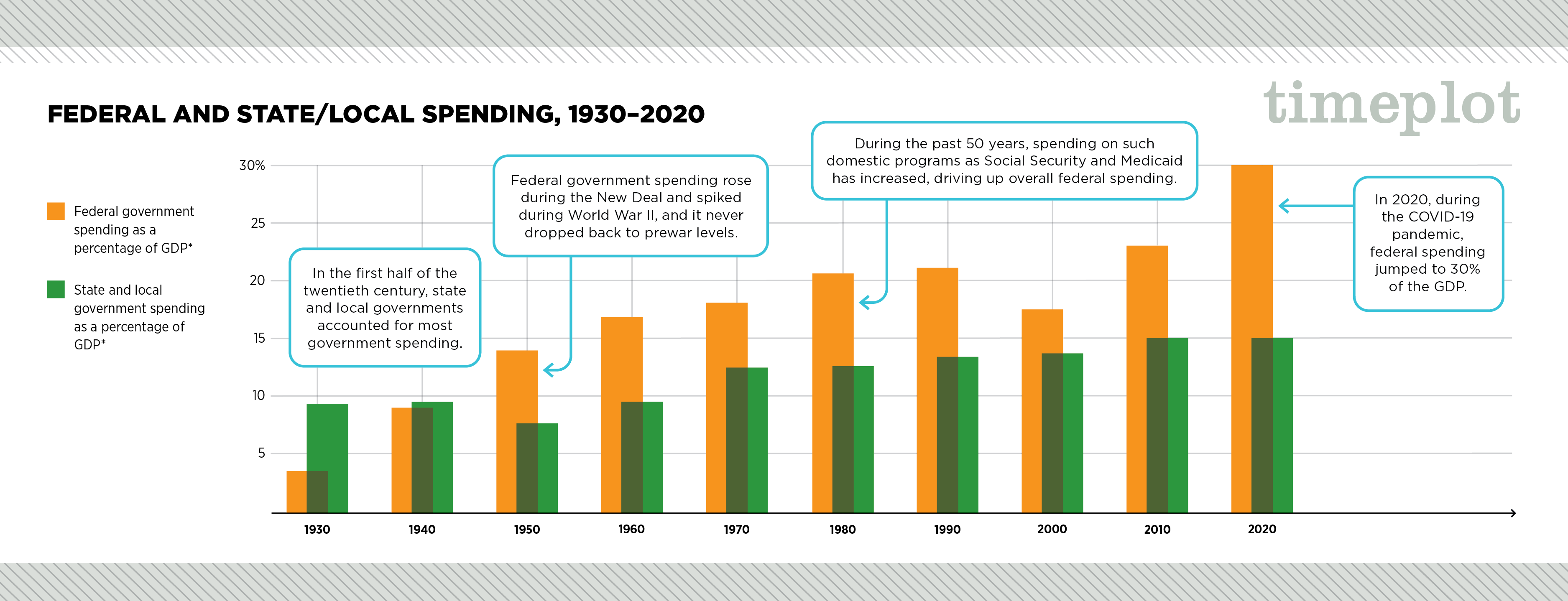
 analyzing the evidence