More information
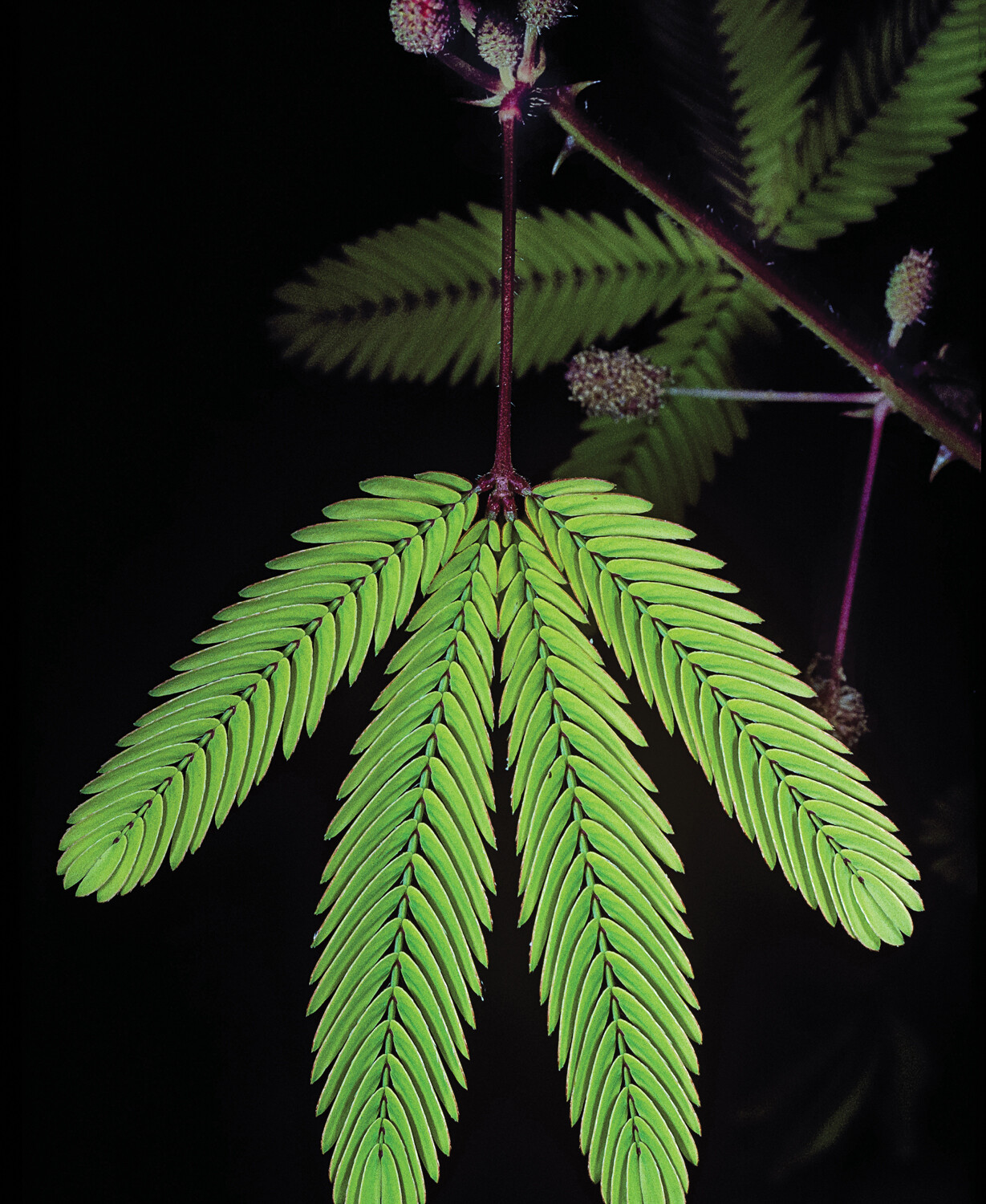
A sensitive plant with small compound green leaves. Smaller leaflets form four larger lobes.
The delicate compound leaves of the “sensitive plant” Mimosa pudica fold and droop when touched.
Major scientific advances change the world irrevocably. In his classic book, The Structure of Scientific Revolutions, philosopher and historian of science Thomas Kuhn argues that true scientific revolutions involve not simply the accumulation of new facts and theories but fundamental changes in the way we think (Kuhn 1962). Once such a revolution takes place, the world is now seen or understood in an entirely new way. When early astronomers and physicists demonstrated that Earth was not at the center of the universe, what Kuhn described as a paradigm shift occurred. The very way we thought of Earth and our place in nature fundamentally changed. A similarly dramatic paradigm shift occurred when Charles Darwin laid out his theory of evolution.
In On the Origin of Species, published in 1859, Darwin presented two revolutionary ideas. Each had been suggested independently by others before, but never had they been brought together with the conceptual brilliance and the keen naturalist’s eye of Charles Darwin (Chapter 2). Darwin spent decades observing the natural world, collecting data from near and far, reading incessantly, and synthesizing and resynthesizing theories from many different disciplines. First, Darwin recognized that the diversity of life we see around us has descended from previously existing species, which share a common ancestor from further back in time. The idea of common descent of all life on Earth is at the heart of the field of phylogenetics, in which patterns of descent are pieced together using a wide array of tools. Second, Darwin realized that the often exquisite fit of organisms to their environments is primarily a result of natural selection, a gradual process in which forms that are better suited to their environments increase in frequency in a population over sufficiently long periods of time. Together, these two ideas proposed by Darwin suggest that the entire organic world—much of everything we see, feel, smell, taste, and touch—is the result of evolutionary changes that have taken place over time.
The theory of evolution by natural selection provided scientists with a natural—as opposed to a supernatural—explanation for the diversity of life on the planet. They had an explanation for why the vast majority of most life-forms that have ever existed are now extinct. And they had a theory that could be used to explain both the similarities and differences among all the creatures on Earth—those alive presently, as well as those that lived in the past—and why organisms are usually so well suited to the environments in which they live.
Thomas Kuhn observed that paradigm shifts have wide-ranging effects, and that was certainly the case for Darwin’s theory—so much so that the renowned geneticist Theodosius Dobzhansky wrote, “nothing in biology makes sense except in the light of evolution” (Dobzhansky 1973, p. 125). Without evolutionary theory, biology is composed of a large number of important but disparate subdisciplines. With evolution as its theoretical and conceptual foundation, the biological sciences share a common framework that allows us to understand the commonalities and differences among living forms. It allows us to make sense of the way that living things function now and to understand how they came to be.
As you will see as you work your way through this book, the characteristics of the organisms you are reading about have been shaped by evolutionary processes. Whether you are interested in anatomy, physiology, behavior, molecular biology, genetics, development, medicine, or any other area of biology, a solid understanding of evolution is indispensable.
In this chapter, we will
- Offer a brief introduction to the core ideas in evolutionary biology: phylogenetics and natural selection.
- Provide an overview of different approaches to the study of evolution.
- Explain how humans play a central role in driving evolutionary change during this, the so-called Anthropocene Era.
Glossary
- evolution
- Broadly defined as any instance of change over time. More specifically, in a biological context, it is the process of descent with modification that is responsible for the origin, maintenance, and diversity of life.
- natural selection
- The evolutionary process by which beneficial alleles increase in frequency over time in a population because of increased survival and reproductive success of individuals carrying those alleles. Natural selection is the consequence of variation, inheritance, and differential survival.