 1.1 Innate Recognition of Pathogens
Principles of innate immunity.
In this part of the chapter we will outline the principles of innate immunity and describe the molecules and cells that provide continuous defense against invasion by pathogens. Although a subset of white blood cells, known as lymphocytes, possesses the most powerful ability to recognize and target pathogenic microorganisms, these cells need the participation of the innate immune system to initiate and mount their offensive. Indeed, the adaptive immune response and the innate immune response use many of the same destructive mechanisms to eliminate invading microorganisms.
1-1 Commensal organisms cause little host damage while pathogens damage host tissues by a variety of mechanisms.
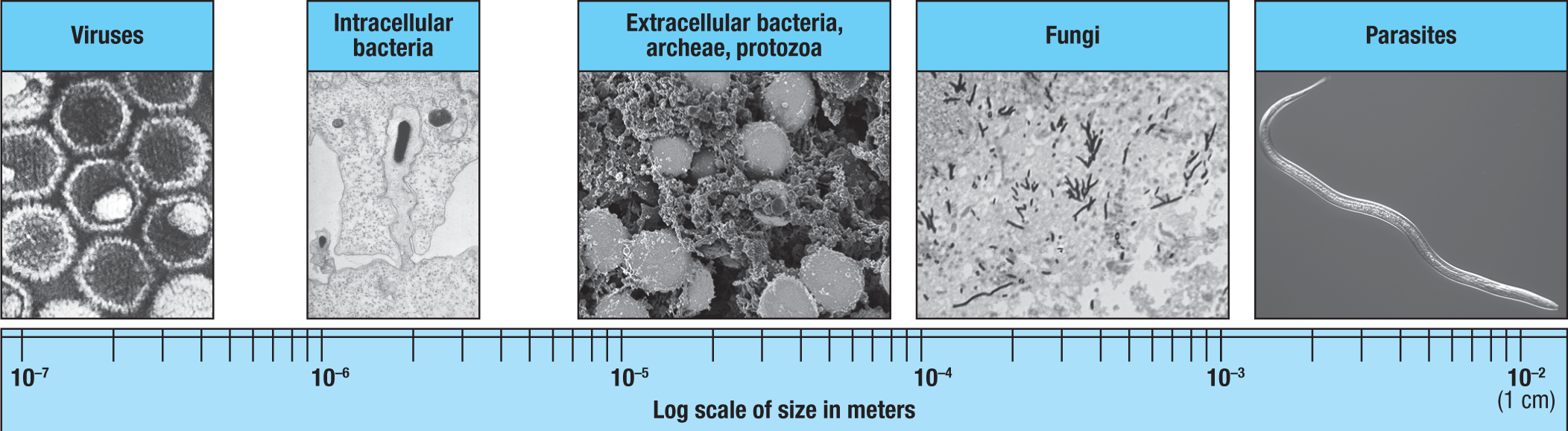
We recognize four broad categories of disease-causing microorganisms, or pathogens: viruses, bacteria and archaea, fungi, and the unicellular and multicellular eukaryotic organisms collectively termed parasites (Fig. 1.4). These microorganisms vary tremendously in size and in how they damage host tissues. The smallest are viruses, which range from five to a few hundred nanometers in size and are obligate intracellular pathogens. Viruses can kill cells directly by inducing lysis during viral replication. Somewhat larger are intracellular bacteria and mycobacteria. These can kill cells directly or damage cells by producing toxins. Many single-celled intracellular parasites, such as members of the Plasmodium genus that cause malaria, also directly kill infected cells. Pathogenic bacteria and fungi growing in extracellular spaces can induce shock and sepsis by releasing toxins into the blood or tissues. The largest pathogens—parasitic worms, or helminths—are too large to infect host cells but can injure tissues by forming cysts that induce damaging cellular responses in the tissues into which the worms migrate.
Not all microbes are pathogens. Many tissues, especially those at the barriers of the body, such as the skin, oral mucosa, conjunctiva, and gastrointestinal tract, are constantly colonized by microbial communities—called the microbiome—that consist of archaea, bacteria, and fungi but cause no damage to the host. These are also called commensal microorganisms, because they can have a symbiotic relationship with the host. Indeed, some commensal organisms perform important functions, as in the case of the bacteria that aid in cellulose digestion in the stomachs of ruminants. The difference between commensal organisms and pathogens lies in whether they induce damage. Even enormous numbers of microbes in the intestinal microbiome normally cause no damage and are confined within the intestinal lumen by a protective layer of mucus, whereas pathogenic bacteria can penetrate this barrier, injure intestinal epithelial cells, and spread into the underlying tissues.
1-2 Anatomic and chemical barriers are the first defense against pathogens.
The host can adopt three strategies to deal with the threat posed by microbes: avoidance, resistance, and tolerance. Avoidance mechanisms prevent exposure to microbes and include both anatomic barriers and behavior modifications. If an infection is established, resistance is aimed at reducing or eliminating pathogens. To defend against the great variety of microbes, the immune system has numerous molecular and cellular functions, collectively called mediators, or effector mechanisms, suited to resist different categories of pathogens. Their description is a major aspect of this book. Finally, tolerance involves responses that enhance a tissue’s capacity to resist damage induced by microbes. This meaning of the term ‘tolerance’ has been used extensively in the context of disease susceptibility in plants rather than animal immunity. For example, increasing growth by activating dormant meristems, the undifferentiated cells that generate new parts of the plant, is a common tolerance mechanism in response to damage. This should be distinguished from the term immunological tolerance, which refers to mechanisms that prevent an immune response from being mounted against the host’s own tissues.
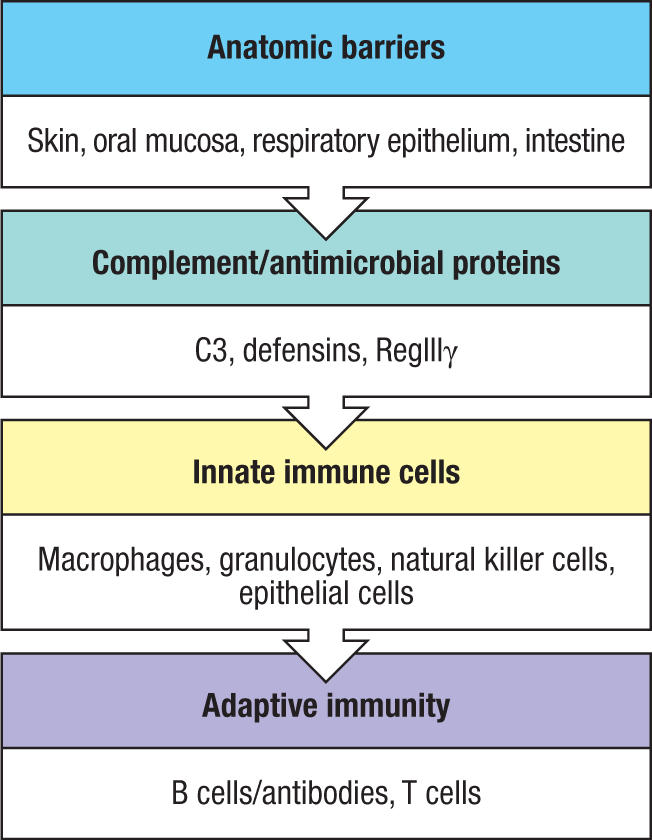
Anatomic and chemical barriers are the initial defenses against infection (Fig. 1.5). The skin and mucosal surfaces represent a kind of avoidance strategy that prevents exposure of internal tissues to microbes. At most anatomic barriers, additional resistance mechanisms further strengthen host defenses. For example, mucosal surfaces produce a variety of antimicrobial proteins that act as natural antibiotics to prevent microbes from entering the body.
If these barriers are breached or evaded, other components of the innate immune system can immediately come into play. We mentioned earlier the discovery by Jules Bordet of complement, which acts with antibodies to lyse bacteria. Complement is a group of around 30 different plasma proteins that act together and are one of the most important effector mechanisms in serum and interstitial tissues. Complement not only acts in conjunction with antibodies but can also target foreign organisms in the absence of a specific antibody; thus it contributes to both innate and adaptive responses. We will examine anatomic barriers, the antimicrobial proteins, and complement in greater detail in Chapter 2.
1-3 The immune system is activated by inflammatory inducers that indicate the presence of pathogens or tissue damage.
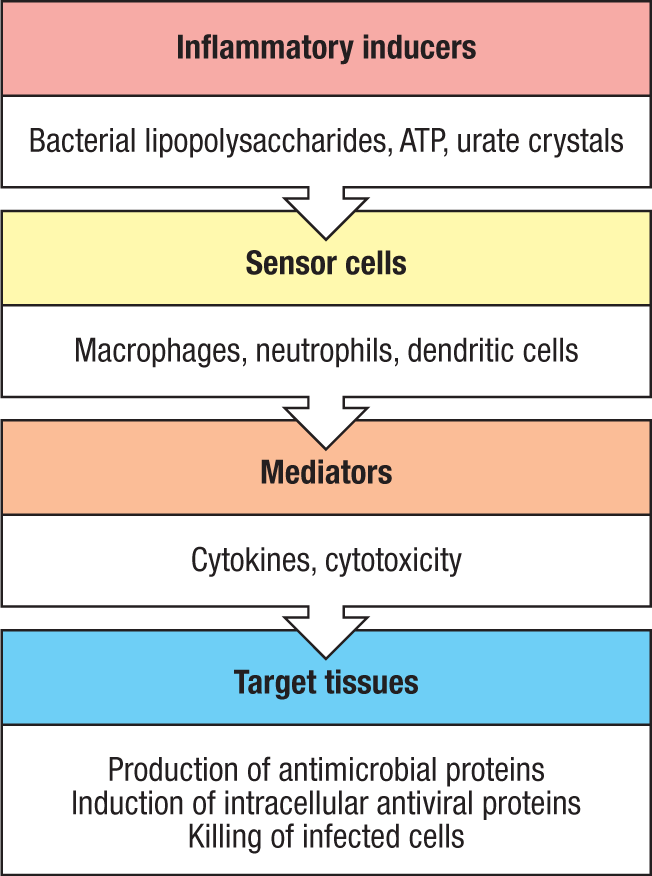
A pathogen that breaches the host’s anatomic and chemical barriers will encounter the cellular defenses of innate immunity. Cellular immune responses are initiated when various types of sensor cells detect inflammatory inducers (Fig. 1.6) through their many innate recognition receptors, which are encoded by a relatively small number of genes that remain constant over an individual’s lifetime. Inflammatory inducers that trigger these receptors include molecular components unique to bacteria or viruses, such as bacterial lipopolysaccharides, or molecules such as ATP, which is not normally found in the extracellular space. Triggering these receptors can activate the innate immune sensor cells to produce various inflammatory mediators that either act directly to destroy invading microbes or act on other cells to propagate the immune response. For example, macrophages can ingest microbes and produce toxic chemical mediators, such as degradative enzymes or reactive oxygen intermediates, to kill them. Dendritic cells may produce cytokine mediators, including many cytokines that activate target tissues, such as epithelial or other immune cells, to resist or kill invading microbes more efficiently. We will discuss these receptors and mediators briefly below and in much greater detail in Chapter 3.
Innate immune responses occur rapidly on exposure to an infectious organism (Fig. 1.7). In contrast, responses by the adaptive immune system take days rather than hours to develop. However, the adaptive immune system is capable of eliminating infections more efficiently because of the exquisite specificity of antigen recognition by its lymphocytes. In contrast to a limited repertoire of receptors expressed by innate immune cells, lymphocytes express highly specialized antigen receptors that collectively possess a vast repertoire of specificity. This enables the adaptive immune system to respond to virtually any pathogen and effectively focus resources to eliminate pathogens that have evaded or overwhelmed innate immunity. But the adaptive immune system interacts with, and relies on, cells of the innate immune system for many of its functions. The next several sections will introduce the major components of the innate immune system and prepare us to consider adaptive immunity later in the chapter.
|
Phases of the immune response |
|||
|
Response |
Typical time after infection to start of response |
Duration of response |
|
|
Innate immune response |
Inflammation, complement activation, phagocytosis, and destruction of pathogen |
Minutes |
Days |
|
Adaptive immune response |
Interaction between antigen-presenting dendritic cells and antigen-specific T cells: recognition of antigen, adhesion, costimulation, T-cell proliferation and differentiation |
Hours |
Days |
|
Activation of antigen-specific B cells |
Hours |
Days |
|
|
Formation of effector and memory T cells |
Days |
Weeks |
|
|
Interaction of T cells with B cells, formation of germinal centers. Formation of effector B cells (plasma cells) and memory B cells. Production of antibody |
Days |
Weeks |
|
|
Emigration of effector lymphocytes from peripheral lymphoid organs |
A few days |
Weeks |
|
|
Elimination of pathogen by effector cells and antibody |
A few days |
Weeks |
|
|
Immunological memory |
Maintenance of memory B cells and T cells and high serum or mucosal antibody levels. Protection against reinfection |
Days to weeks |
Can be lifelong |
Fig. 1.7 Phases of the immune response.
1-4 The myeloid lineage comprises most of the cells of the innate immune system.
The common myeloid progenitor (CMP) is the precursor of the macrophages, granulocytes (the collective term for the white blood cells called neutrophils, eosinophils, and basophils), mast cells, and dendritic cells of the innate immune system. Macrophages, granulocytes, and dendritic cells make up the three classes of phagocytes in the immune system. The CMP also generates megakaryocytes and red blood cells, which will not concern us here. The cells of the myeloid lineage are shown in Fig. 1.8.
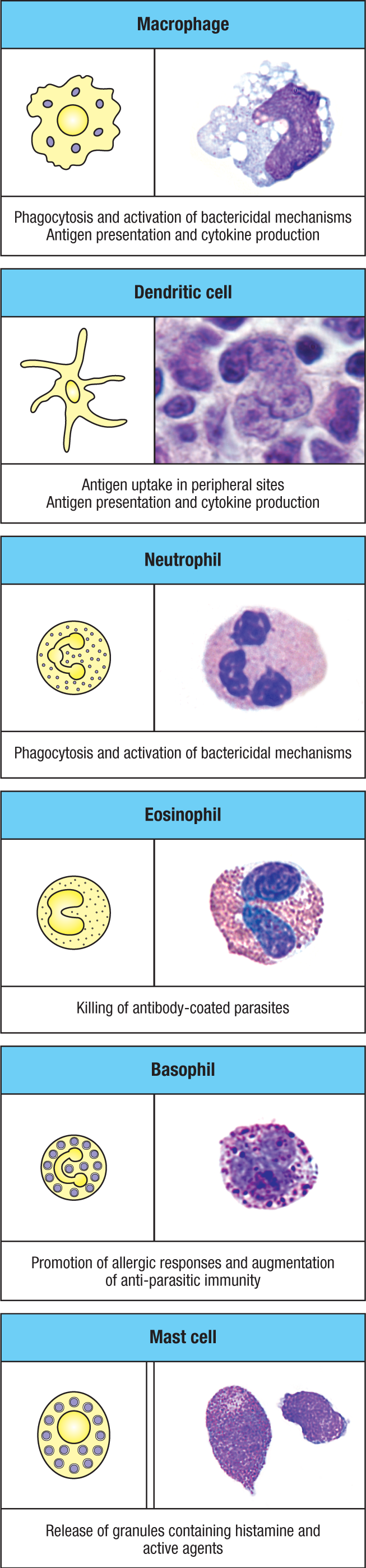
Macrophages are resident in almost all tissues. Many tissue-resident macrophages arise during embryonic development, but some macrophages that arise from the bone marrow in the adult animal are the mature form of monocytes, which circulate in the blood and continually migrate into tissues, where they differentiate. Macrophages are relatively long-lived cells and perform several different functions throughout the innate immune response and the subsequent adaptive immune response. One is to engulf and kill invading microorganisms. This phagocytic function provides a first defense in innate immunity. Macrophages also dispose of pathogens and infected cells targeted by an adaptive immune response. Both monocytes and macrophages are phagocytic, but most infections occur in the tissues, and so it is primarily macrophages that perform this important protective function. An additional and crucial role of macrophages is to orchestrate immune responses: they help induce inflammation, which, as we shall see, is a prerequisite to a successful immune response, and they produce many inflammatory mediators that activate other immune-system cells and recruit them into an immune response.
Local inflammation and the phagocytosis of invading bacteria can also be triggered by the activation of complement. Bacterial surfaces can activate the complement system, inducing a cascade of proteolytic reactions that coat the microbes with fragments of specific proteins of the complement system. Microbes coated in this way are recognized by specific complement receptors on macrophages and neutrophils, taken up by phagocytosis, and destroyed. In addition to their specialized role in the immune system, macrophages act as general scavenger cells in the body, clearing it of dead cells and cell debris.
The granulocytes are named for the densely staining granules in their cytoplasm; they are also called polymorphonuclear leukocytes because of their oddly shaped nuclei. The three types of granulocytes—neutrophils, eosinophils, and basophils—are distinguished by the different staining properties of their granules, which serve distinct functions. Granulocytes are generally relatively short-lived, surviving for only a few days. They mature in the bone marrow, and their production increases during immune responses, when they migrate to sites of infection or inflammation. The phagocytic neutrophils are the most numerous and important cells in innate immune responses: they take up a variety of microorganisms by phagocytosis and efficiently destroy them in intracellular vesicles by using degradative enzymes and other antimicrobial substances stored in their cytoplasmic granules. Hereditary deficiencies in neutrophil function open the way to overwhelming bacterial infection, which is fatal if untreated. Their role is discussed further in Chapter 3.
Eosinophils and basophils are less abundant than neutrophils, but like neutrophils, they have granules containing a variety of enzymes and toxic proteins, which are released when these cells are activated. Eosinophils and basophils are thought to be important chiefly in defense against parasites, which are too large to be ingested by macrophages or neutrophils. They can also contribute to allergic inflammatory reactions, in which their effects are damaging rather than protective.
Mast cells begin development in the bone marrow but migrate as immature precursors that mature in peripheral tissues, especially skin, intestines, and airway mucosa. Their granules contain many inflammatory mediators, such as histamine and various proteases, which play a role in protecting the internal surfaces from pathogens, including parasitic worms. Because of their localization in barrier tissues, mast cells also function as early sensors of infection or injury and, in this role, contribute to the initiation of inflammation. We cover eosinophils, basophils, and mast cells and their role in allergic inflammation further in Chapters 10 and 14.
Dendritic cells were discovered in the 1970s by Ralph Steinman, a finding for which he shared the 2011 Nobel Prize. These cells form the third class of phagocytic cells of the immune system and include several related lineages whose distinct functions are still being clarified. Most dendritic cells have elaborate membranous processes, like the dendrites of nerve cells. Immature dendritic cells migrate through the bloodstream from the bone marrow to enter tissues. They take up particulate matter by phagocytosis and also continually ingest large amounts of the extracellular fluid and its contents by a process known as macropinocytosis. They degrade the pathogens that they take up, but their main role in the immune system is not the clearance of microorganisms. Instead, dendritic cells are a major class of sensor cells whose encounter with pathogens triggers them to produce mediators that activate other immune cells. Dendritic cells were discovered because of their role in activating a particular class of lymphocytes—T lymphocytes—of the adaptive immune system, and we will return to this activity when we discuss T-cell activation in Section 1-15. But dendritic cells and the mediators they produce also play a critical role in controlling responses of cells of the innate immune system.
1-5 Sensor cells express pattern-recognition receptors that provide an initial discrimination between self and nonself.
Long before the mechanisms of innate recognition were discovered, it was recognized that purified antigens such as proteins often did not evoke an immune response in an experimental immunization; that is, they were not immunogenic. Rather, the induction of strong immune responses against purified proteins required the inclusion of microbial constituents, such as killed bacteria or bacterial extracts, famously called the immunologist’s ‘dirty little secret’ by Charles Janeway (see Appendix I, Section A-1). This additional material was termed an adjuvant, because it helped intensify the response to the immunizing antigen (adjuvare is Latin for ‘to help’). We know now that adjuvants are needed, at least in part, to activate innate receptors on various types of sensor cells to help activate T cells in the absence of an infection.
Macrophages, neutrophils, and dendritic cells are important classes of sensor cells that detect infection and initiate immune responses by producing inflammatory mediators, although other cells, even cells of the adaptive immune system, can serve this function. As mentioned in Section 1-3, these cells express a limited number of invariant innate recognition receptors as a means of detecting pathogens or the damage induced by them. Also called pattern-recognition receptors (PRRs), they recognize simple molecules and regular patterns of molecular structure known as pathogen-associated molecular patterns (PAMPs) that are part of many microorganisms but not of the host body’s own cells. Such structures include mannose-rich oligosaccharides, peptidoglycans, and lipopolysaccharides of the bacterial cell wall, as well as unmethylated CpG DNA (unmethylated cytosine–guanine dinucleotide in DNA), which is common to many pathogens. All of these microbial elements have been conserved during evolution, making them excellent targets for recognition because they do not change (Fig. 1.9).
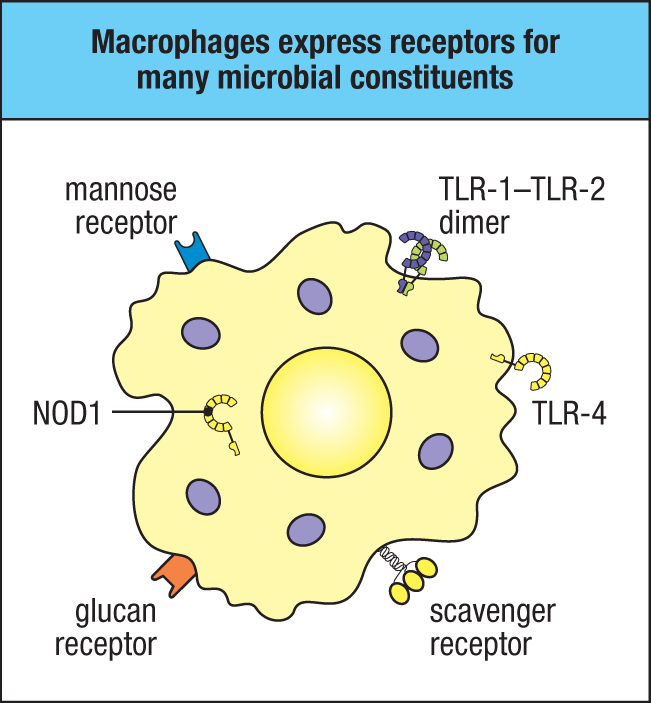
Some PRRs are transmembrane proteins, such as the Toll-like receptors (TLRs) that detect PAMPs derived from extracellular bacteria or bacteria taken into vesicular pathways by phagocytosis. The role of the Toll receptor in immunity was discovered first in Drosophila melanogaster by Jules Hoffmann and later extended to homologous TLRs in mice by Charles Janeway and Bruce Beutler. (Hoffmann and Beutler shared the 2011 Nobel Prize along with Ralph Steinman—see Section 1-4—for their work in the activation of innate immunity.) Other PRRs are cytoplasmic proteins, such as the NOD-like receptors (NLRs) that sense intracellular bacterial invasion. Yet other cytoplasmic receptors detect viral infection on the basis of differences in the structures and locations of the host mRNA and virally derived RNA species and the differences between host and microbial DNA. Some receptors expressed by sensor cells detect cellular damage induced by pathogens, rather than the pathogens themselves. Much of our knowledge of innate recognition has emerged only within the past two decades and is still an active area of discovery. We describe these innate recognition systems further in Chapter 3 and discuss how adjuvants are used as a component of vaccines in Chapter 16.
1-6 Sensor cells induce an inflammatory response by producing mediators such as chemokines and cytokines.
Activation of PRRs on sensor cells such as macrophages and neutrophils can directly induce effector functions in these cells, such as the phagocytosis and degradation of bacteria they encounter. But sensor cells serve to amplify the immune response by the production of inflammatory mediators. Two important categories of inflammatory mediators are the secreted proteins called cytokines and chemokines, which act in a manner similar to hormones to convey important signals to other immune cells.
3.5 Pattern-Recognition Receptors
‘Cytokine’ is a term for any protein secreted by immune cells that affects the behavior of nearby cells bearing appropriate receptors. There are more than 60 different cytokines; some are produced by many different cell types, and others are produced by only a few specific cell types. Some cytokines influence many types of cells, while others influence only a few, this through the expression pattern of each cytokine’s specific receptor. The response that a cytokine induces in a target cell is typically related to amplification of an effector mechanism of the target cell, as illustrated in the remaining sections of this chapter.
Instead of presenting all the cytokines together all at once, we introduce each cytokine as it arises during our description of cellular and functional responses. We list the cytokines, their producer and target cells, and their general functions in eAppendix III, found in the ebook and on the Digital Landing Page for this book.
Chemokines are a specialized subgroup of secreted proteins that act as chemoattractants, attracting cells bearing chemokine receptors, such as neutrophils and monocytes, out of the bloodstream and into infected tissue (Fig. 1.10). Beyond this role, chemokines also help organize the various cells in lymphoid tissues into discrete regions where specialized responses can take place. There are about 50 different chemokines. eAppendix IV, found in the ebook and on the Digital Landing Page for this book, lists the chemokines, their target cells, and their general functions. We will discuss chemokines as the need arises during our descriptions of particular cellular immune processes.
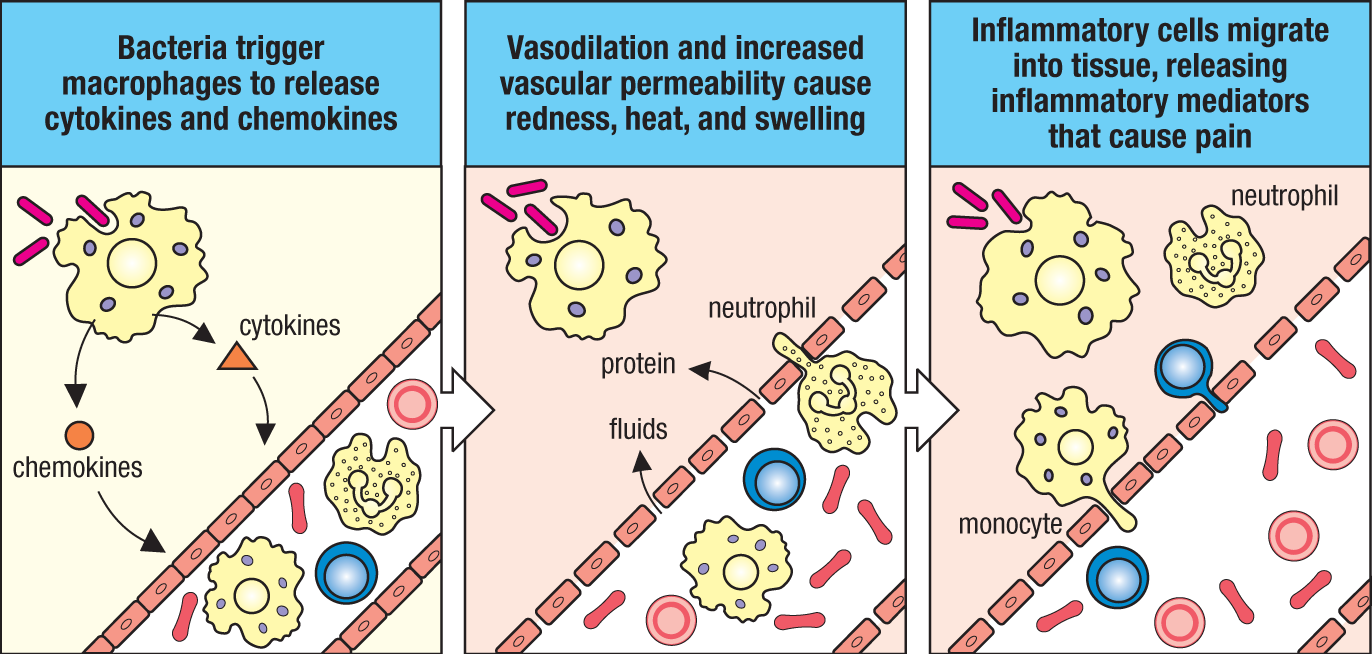
The cytokines and chemokines released by activated macrophages act to recruit cells from the blood into infected tissues, a process known as inflammation, which helps to destroy the pathogen. Inflammation increases the flow of lymph, which carries microbes or cells bearing their antigens from the infected tissue to nearby lymphoid tissues, where the adaptive immune response is initiated. Once adaptive immunity has been generated, inflammation also recruits these effector components to the site of infection.
Inflammation is described clinically by the Latin words calor, dolor, rubor, and tumor, meaning heat, pain, redness, and swelling. Each of these features reflects an effect of cytokines or other inflammatory mediators on the local blood vessels. Heat, redness, and swelling result from the dilation and increased permeability of blood vessels during inflammation, leading to increased local blood flow and leakage of fluid and blood proteins into the tissues. Cytokines and complement fragments have important effects on the endothelium that lines blood vessels; the endothelial cells themselves also produce cytokines in response to infection. These alter the adhesive properties of the endothelial cells and cause circulating leukocytes to stick to the endothelial cells and migrate between them into the site of infection, to which they are attracted by chemokines. The migration of cells into the tissue and their local actions account for the pain.
The main cell types seen in the initial phase of an inflammatory response are macrophages and neutrophils, the latter being recruited into the inflamed, infected tissue in large numbers. Macrophages and neutrophils are thus also known as inflammatory cells. The influx of neutrophils is followed a short time later by the increased entry of monocytes, which rapidly differentiate into macrophages, thus reinforcing and sustaining the innate immune response. Later, if the inflammation continues, eosinophils also migrate into inflamed tissues and contribute to the destruction of the invading microorganisms.
1-7 Innate lymphoid cells and natural killer cells are effector cells that share similarities with lymphoid lineages of the adaptive immune system.
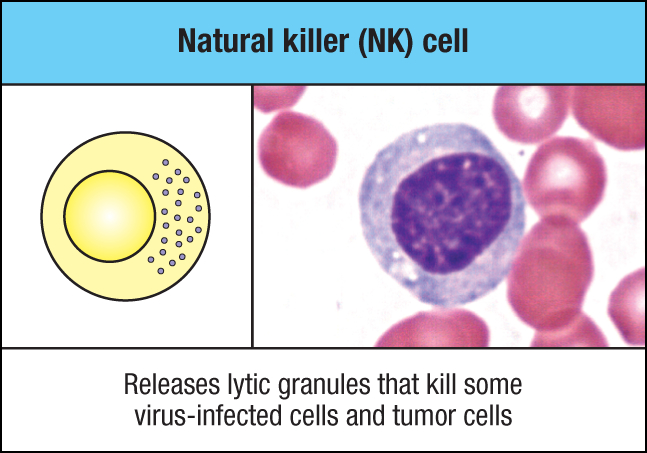
The common lymphoid progenitor (CLP) in the bone marrow gives rise both to antigen-specific lymphocytes of the adaptive immune system and to several innate lineages that lack antigen-specific receptors. Although the B and T lymphocytes of the adaptive immune system were recognized in the 1960s, the natural killer (NK) cells (Fig. 1.11) of the innate immune system were not discovered until the 1970s. NK cells are large lymphocyte-like cells with a distinctive granular cytoplasm that were identified because of their ability to recognize and kill certain tumor cells and cells infected with herpesviruses. Initially, the distinction between these cells and T lymphocytes was unclear, but we now recognize that NK cells are a distinct lineage of cells that arise from the CLP in the bone marrow. They lack the antigen-specific receptors of the adaptive immune system cells but express members of various families of innate receptors that can respond to cellular stress and to infections by very specific viruses. NK cells play an important role in the early innate response to viral infections, before the adaptive immune response has developed.
More recently, additional lineages of cells related to NK cells have been identified. Collectively, these cells are called innate lymphoid cells (ILCs). Arising from the CLP, ILCs reside in peripheral tissues, such as the intestine, where they function as the sources of mediators of inflammatory responses. The functions of NK cells and ILCs are discussed in Chapter 3.
Summary.
Strategies of avoidance, resistance, and tolerance represent different ways to deal with pathogens. Anatomic barriers and various chemical barriers, such as complement and antimicrobial proteins, may be considered a primitive form of avoidance, and they are the first line of defense against entry of both commensal organisms and pathogens into host tissues. If these barriers are breached, the vertebrate immune response becomes largely focused on resistance. Inflammatory inducers, which may be either chemical structures unique to microbes (PAMPs) or the chemical signals of tissue damage, act on receptors expressed by sensor cells to inform the immune system of infection. Sensor cells are typically innate immune cells such as macrophages or dendritic cells. Sensor cells can either directly respond with effector activity or produce inflammatory mediators, typically cytokines and chemokines that act on other immune cells, such as the innate NK cells and ILCs. These cells then are recruited into target tissues to provide specific types of immune-response effector activities, such as cell killing or production of cytokines that have direct antiviral activity, all aimed to reduce or eliminate infection by pathogens. Inflammatory mediators released in target tissues can recruit and activate several types of inflammatory cells that are specially suited for eliminating viruses, intracellular bacteria, extracellular pathogens, or parasites.
Glossary
- lymphocyte
- A class of white blood cells that bear variable cell-surface receptors for antigen and are responsible for adaptive immune responses. There are two main types—B lymphocytes (B cells) and T lymphocytes (T cells)—which mediate humoral and cell-mediated immunity, respectively. On antigen recognition, a lymphocyte enlarges to form a lymphoblast and then proliferates and differentiates into an antigen-specific effector cell.
- pathogen
- Microorganism that typically causes disease when it infects a host.
- virus
- Pathogen composed of a nucleic acid genome enclosed in a protein coat. Viruses can replicate only in a living cell, because they do not possess the metabolic machinery for independent life.
- bacteria
- A vast kingdom of unicellular prokaryotic microorganisms, some species of which cause infectious diseases in humans and animals, while others make up most of the body’s commensal microbiota. Disease-causing bacteria may live in the extracellular spaces or inside cells in vesicles or in the cytosol.
- fungi
- A kingdom of single-celled and multicellular eukaryotic organisms, including the yeasts and molds, that can cause a variety of diseases. Immunity to fungi is complex and involves both humoral and cell-mediated responses.
- parasites
- Organisms that obtain sustenance from a live host. In immunology, it refers to worms and protozoa, the subject matter of parasitology.
- microbiome
- The collection of genomes from all the microorganisms in an environment, such as the commensal microorganisms of the gut or skin. The term is to be contrasted with ‘microbiota,’ which refers to the collection of microorganisms themselves. See commensal microorganisms.
- symbiotic
- Relationship between two agents, typically diverse species, that confers benefits to both.
- avoidance
- Mechanisms that prevent a host’s exposure to microbes, such as anatomic barriers or particular behaviors.
- resistance
- A general immune strategy aimed at reducing or eliminating pathogens. Cf. avoidance and tolerance.
- tolerance
- The failure to respond to an antigen. Tolerance to self antigens is an essential feature of the immune system; when tolerance is lost, the immune system can destroy self tissues, as happens in autoimmune disease.
- effector mechanisms
- Those processes by which pathogens are destroyed and cleared from the body. Innate and adaptive immune responses use most of the same effector mechanisms to eliminate pathogens.
- immunological tolerance
- The failure to respond to an antigen. Tolerance to self antigens is an essential feature of the immune system; when tolerance is lost, the immune system can destroy self tissues, as happens in autoimmune disease.
- sensor cells
- Cells of the innate immune system that detect the presence of pathogens using their innate recognition receptors. In response to triggering of their innate recognition receptors, sensor cells produce inflammatory mediators that promote pathogen clearance and recruit additional cells into the immune response.
- inflammatory inducers
- Chemical structures that indicate the presence of invading microbes or cellular damage, such as bacterial lipopolysaccharides, extracellular ATP, or urate crystals.
- innate recognition receptors
- General term for a large group of proteins that recognize many different inflammatory inducers and that are encoded in the germline and do not need gene rearrangement in somatic cells to be expressed.
- inflammatory mediators
- Chemicals such as cytokines produced by immune cells that act on target cells to promote defense against microbes.
- antigen receptor
- The cell-surface receptor by which lymphocytes recognize antigen. Each individual lymphocyte bears receptors of a single antigen specificity.
- common myeloid progenitor (CMP)
- Stem cell that can give rise to the myeloid cells of the immune system (the macrophages, granulocytes, mast cells, and dendritic cells of the innate immune system). This stem cell also gives rise to megakaryocytes and red blood cells.
- macrophages
- Large mononuclear phagocytic cells present in most tissues that have many functions; for example, scavenger cells, pathogen-recognition cells, and production of pro-inflammatory cytokines. Macrophages arise both embryonically and from bone marrow precursors throughout life.
- monocyte
- Type of white blood cell with a bean-shaped nucleus; it is a precursor of tissue macrophages.
- complement receptors (CRs)
- Cell-surface proteins of various types that recognize and bind complement proteins that have become bound to an antigen such as a pathogen. Complement receptors on phagocytes enable them to identify and bind pathogens coated with complement proteins and to ingest and destroy them. See CR1, CR2, CR3, CR4, CRIg, and the C1 complex.
- granulocytes
- White blood cells with multilobed nuclei and cytoplasmic granules. They comprise the neutrophils, eosinophils, and basophils. Also known as polymorphonuclear leukocytes.
- polymorphonuclear leukocytes
- White blood cells with multilobed nuclei and cytoplasmic granules. They comprise the neutrophils, eosinophils, and basophils. Also known as granulocytes.
- neutrophil
- The most numerous type of white blood cell in human peripheral blood. Neutrophils are phagocytic cells with a multilobed nucleus and granules that stain with neutral stains. They enter infected tissues and engulf and kill extracellular pathogens.
- eosinophil
- A type of white blood cell containing granules that stain with eosin. It is thought to be important chiefly in defense against parasitic infections but is also medically important as an effector cell in allergic reactions.
- basophil
- Type of white blood cell containing granules that stain with basic dyes. It is thought to have a function similar to that of mast cells.
- mast cell
- A large granule-rich cell found in connective tissues throughout the body, most abundantly in the submucosal tissues and the dermis. The granules store bioactive molecules including the vasoactive amine histamine, which are released on mast-cell activation. Mast cells are thought to be involved in defenses against parasites, and they have a crucial role in allergic reactions.
- dendritic cells
-
Bone marrow–derived cells found in most tissues, including lymphoid tissues. There are two main functional subsets. Conventional dendritic cells take up antigen in peripheral tissues, are activated by contact with pathogens, and travel to the peripheral lymphoid organs, where they are the most potent stimulators of T-cell responses. Plasmacytoid dendritic cells can also take up and present antigen, but their main function in an infection is to produce large amounts of the antiviral interferons as a result of pathogen recognition through receptors such as TLRs. Both these types of dendritic cells are distinct from the follicular dendritic cell that presents antigen to B cells in lymphoid follicles.
- macropinocytosis
- A process in which large amounts of extracellular fluid are taken up into an intracellular vesicle. This is one way in which dendritic cells can take up a wide variety of antigens from their surroundings.
- immunogenic
- Elicitation of an adaptive immune response.
- adjuvant
- Any substance that enhances the immune response to an antigen with which it is mixed.
- pattern-recognition receptors (PRRs)
- Receptors of the innate immune system that recognize common molecular patterns on pathogen surfaces.
- pathogen-associated molecular patterns (PAMPs)
- Molecules specifically associated with groups of pathogens that are recognized by cells of the innate immune system.
- Toll-like receptors (TLRs)
- Innate receptors on macrophages, dendritic cells, and some other cells that recognize pathogens and their products, such as bacterial lipopolysaccharide. Recognition stimulates the receptor-bearing cells to produce cytokines that help initiate immune responses.
- NOD-like receptors (NLRs)
- Large family of proteins containing a nucleotide-binding and oligomerization domain (NOD) associated with various other domains, and whose general function is the detection of microbes and of cellular stress.
- cytokines
- Proteins made by a cell that affect the behavior of other cells, particularly immune cells. Cytokines made by lymphocytes are often called interleukins (abbreviated ILs). Cytokines and their receptors are listed in eAppendix III. Cf. chemokines.
- chemokines
- Small chemoattractant proteins that stimulate the migration and activation of cells, especially phagocytic cells and lymphocytes. Chemokines have a central role in inflammatory responses. Properties of individual chemokines are listed in eAppendix IV.
- inflammation
- General term for the local accumulation of fluid, plasma proteins, and white blood cells that is initiated by physical injury, infection, or a local immune response.
- endothelium
- The epithelium that forms the walls of blood capillaries and the lining of larger blood vessels.
- endothelial cell
- Cell type that forms the endothelium, the epithelium of a blood vessel wall.
- inflammatory cells
- Cells such as macrophages, neutrophils, and effector TH1 lymphocytes that invade inflamed tissues and contribute to the inflammation.
- common lymphoid progenitor (CLP)
- Stem cell that can give rise to all the types of lymphocytes but is biased toward producing B cells.
- natural killer (NK) cell
- A type of ILC that is important in innate immunity to viruses and other intracellular pathogens and in antibody-dependent cell-mediated cytotoxicity (ADCC). NK cells express activating and inhibitory receptors but not the antigen-specific receptors of T or B cells.
- innate lymphoid cells (ILCs)
- These are a class of innate immune cells having overlapping characteristics with T cells but lacking an antigen receptor. They arise in several groups, ILC1, ILC2, ILC3, and NK cells, which exhibit properties roughly similar to TH1, TH2, TH17, and CD8 T cells.
- commensal microbiota, commensal microorganisms
- Microorganisms (predominantly bacteria) that normally live harmlessly in symbiosis with their host (e.g., the gut bacteria in humans and other animals). Many commensals confer a positive benefit on their host in some way.
- antimicrobial peptides, antimicrobial proteins
- Amphipathic peptides or proteins secreted by epithelial cells and phagocytes that kill a variety of microbes nonspecifically, mainly by disrupting cell membranes. Antimicrobial peptides in humans include the defensins, the cathelicidins, the histatins, and RegIIIγ.