Problems
Sections 3.1–3.5 Valence Bond Theory
- 3.1Draw the VB picture for butane, CH3CH2CH2CH3, similar to Figures 3-7, 3-9, 3-15, 3-16, and 3-20. Identify all regions of σ overlap and π overlap.
- 3.2Draw the VB picture for diethyl ether, CH3CH2OCH2CH3, similar to Figures 3-7, 3-9, 3-15, 3-16, and 3-20. Identify all regions of σ overlap and π overlap.
- 3.3Draw the VB picture for acetone, (CH3)2C═O, similar to Figures 3-7, 3-9, 3-15, 3-16, and 3-20. Identify all regions of σ overlap and π overlap.
- 3.4Draw the VB picture for :C≡O:, similar to Figures 3-7, 3-9, 3-15, 3-16, and 3-20. Identify all regions of σ overlap and π overlap.
- 3.5Draw the VB picture for propa-1,2-diene, H2C═C═CH2, similar to Figures 3-7, 3-9, 3-15, 3-16, and 3-20. Identify all regions of σ overlap and π overlap. Hint: The three-dimensional geometry of propa-1,2-diene is shown in the chapter.
- 3.6Draw the VB picture for buta-1,2,3-triene, H2C═C═C═CH2, similar to Figures 3-7, 3-9, 3-15, 3-16, and 3-20. Identify all regions of σ overlap and π overlap. Hint: See Your Turn 3.13.
- 3.7Draw the VB picture for CH+3, similar to Figures 3-7, 3-9, 3-15, 3-16, and 3-20. Identify all regions of σ overlap and π overlap.
Section 3.6 Quickly Identifying Hybridization and the Number of σ and π Bonds From a Lewis Structure
- 3.8For each of the following species, determine both the electron geometry and the hybridization for all non-hydrogen atoms.
- CH3NH2
- CH3N═O
- CH2Cl2
- BrCN
- 3.9For each of the following species, determine both the electron geometry and the hybridization for all non-hydrogen atoms.
- C2H+5
- C2H−5
- H2C═OH+
- CH3NH+3
- CH3OH+2
- C3H−3 (all hydrogens are on the same carbon)
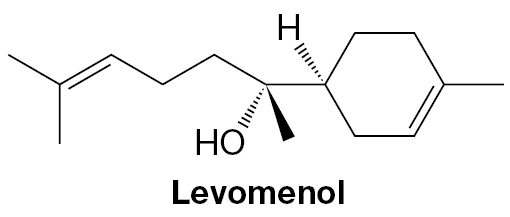
- 3.10Levomenol, a naturally occurring sesquiterpene alcohol, has a sweet-smelling aroma and has been used as a component in fragrances. It also is known to have antimicrobial and anti-inflammatory properties. Determine the electron geometry, hybridization, and molecular geometry for each non-hydrogen atom in levomenol.
More information
An illustration shows a skeletal structural formula of levomenol. The structure shows a seven-carbon chain with a double bond between carbon atoms 5 and 6. Carbon atom 6 is bonded to a methyl group. Carbon atom 2 is bonded to a hydroxyl group by a dashed wedge and to carbon 1 by a solid wedge. Carbon 2 is also bonded to a cyclohexene ring with a double bond between carbons in the third and fourth positions in the ring. The first carbon in the ring is bonded to a hydrogen atom by a dashed wedge and the fourth carbon in the ring is bonded to a methyl group.
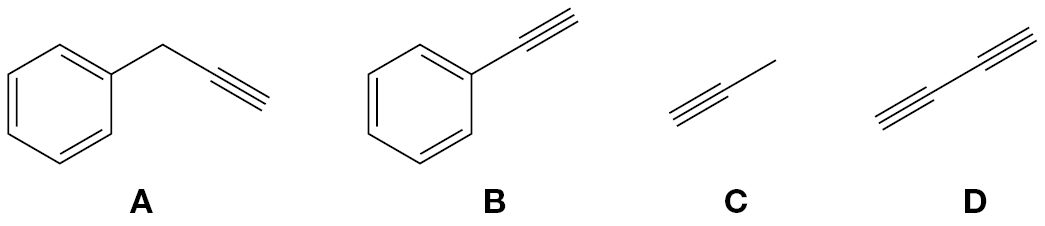
- 3.11Which of the following molecules has a single bond connecting an sp-hybridized atom to an sp2-hybridized atom?
More information
Four illustrations show the skeletal structural formulas of different molecules. The first illustration shows a benzene ring with carbon 1 bonded to a three-carbon chain which has a triple bond between carbon atoms in the first and second position. The second illustration shows a benzene ring with carbon 1 bonded to a two-carbon chain which has a triple bond between carbon atoms in the first and second position. The third illustration shows a three-carbon chain with a triple bond between carbons 1 and 2. The fourth illustration shows a four-carbon chain with a triple bond between carbon atoms 1 and 2, and carbon atoms 3 and 4.
- 3.12Determine the total number of σ bonds and the total number of π bonds in levomenol (Problem 3.10).
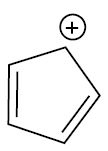
- 3.13According to VB theory, how many total electrons reside in MOs of π symmetry in this cation?
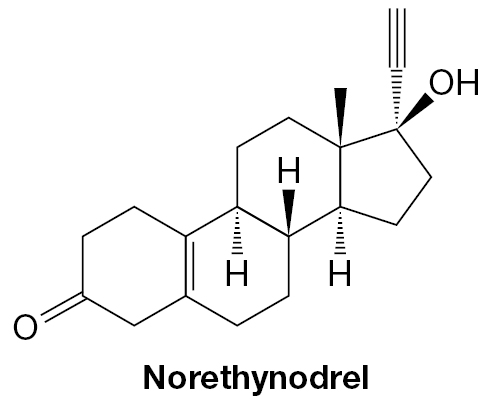
- 3.14Norethynodrel is a synthetic hormone used in Enovid, the first oral contraceptive. (a) Determine the hybridization of each non-hydrogen atom. (b) How many total σ bonds and π bonds does norethynodrel have?
More information
An illustration shows the skeletal structural formula of norethynodrel. The structure shows a six-carbon ring A with carbon atoms numbered 1, 2, 3, 4, 5, and 10. Ring A is fused with another six-carbon ring B, with carbon atoms numbered from 5 to 10. Ring B is fused with another six-carbon ring C, with carbon atoms numbered 8, 9, 11, 12, 13, and 14. Ring C is fused with a five-carbon ring D, with carbon atoms numbered from 13 to 17. Carbon 3 is bonded to an oxygen atom by a double bond, and carbon 5 is bonded to carbon 10 by a double bond. Carbon 9 and carbon 14 are each bonded to a hydrogen atom by a dashed wedge. Carbon 8 is bonded to a hydrogen atom by a solid wedge, and carbon 13 is bonded to a methyl group by a solid wedge. Carbon 17 is bonded by a solid wedge to a hydroxyl group, and by a dashed wedge to another carbon atom, which is bonded by a triple bond to another carbon atom.
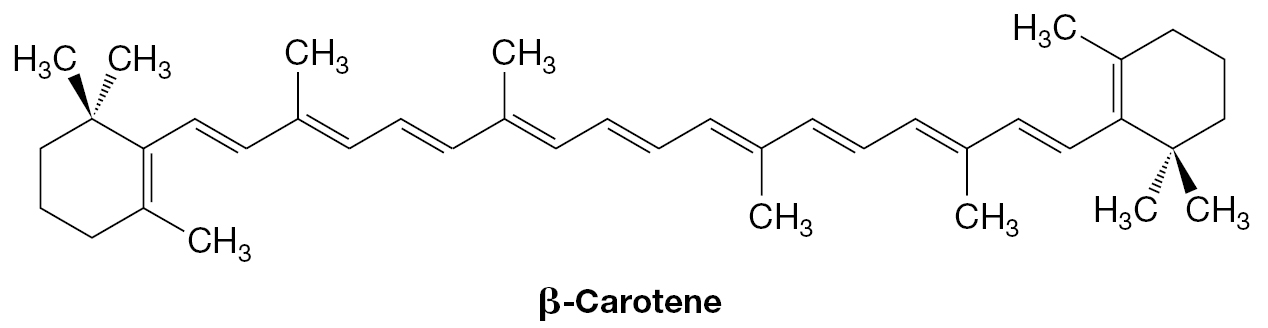
- 3.15β-Carotene is the compound responsible for the orange color of carrots and is the precursor to vitamin A. Judging from the Lewis structure shown here, how many π bonds does β-carotene have?
More information
An illustration shows the skeletal structural formula of beta-carotene. The structure shows two similar units, one of which has been flipped and fused with the other. Each unit shows a six-carbon ring where carbon 6 is bonded to a chain of nine carbon atoms numbered from 7 to 15. Double bonds exist between carbons 5 and 6, carbons 7 and 8, carbons 9 and 10, carbons 11 and 12, and carbons 13 and 14. Carbon 1 is bonded to two methyl groups, one by a solid wedge and one by a dashed wedge. Carbon atoms 5, 9, and 13 are each bonded to a methyl group. Carbon 15 in the first unit is bonded to carbon 15 in the second unit by a double bond.
Section 3.7 Bond Rotations about Single and Double Bonds: Cis and Trans Configurations
- 3.16Bombykol is a pheromone produced by silkworm moths. Label each C═C double bond’s configuration as cis or trans.

More information
An illustration shows the skeletal structural formula of bombykol. The structure shows a sixteen-carbon chain, where carbon 1 is bonded to a hydroxyl group. A trans double bond exists between carbon atoms 10 and 11, and a cis double bond exists between carbon atoms 12 and 13.
- 3.17For which of the following molecules are two configurations about the double bond possible? Explain. (a) (CH3)2C═CHCl; (b) H2C═CHCH2CH3; (c) ClHC═CHBr; (d) HC≡CCH═CHCl
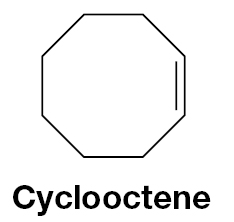
- 3.18Does cyclooctene have two possible configurations about its C═C bond? Hint: Consider using a model kit.
More information
An illustration shows the skeletal structural formula of cyclooctene, which is an eight-carbon ring with a double bond between carbons 1 and 2.
- 3.19Draw the form of α-linolenic acid (Fig. 3-25, p. 131) in which all three double bonds are trans. How many unique structures can be made by changing the cis/trans configurations about the double bonds in α-linolenic acid?
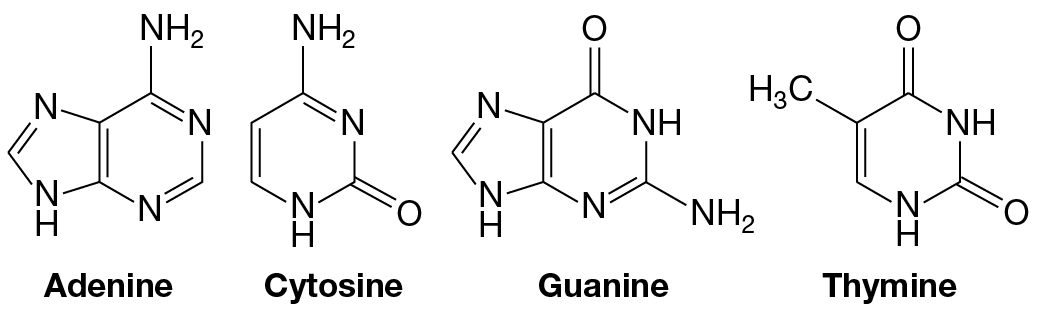
- 3.20Adenine, cytosine, guanine, and thymine are the four nitrogenous bases found in DNA. For each molecule, identify all of the non-hydrogen atoms that are required to be in the same plane.
More information
Skeletal structural formulas of adenine, cytosine, guanine, and thymine. The structure of adenine shows a hexagonal ring with nitrogen atoms in the first and third positions, fused with a pentagonal ring with nitrogen atoms in the seventh and ninth positions. Double bonds exist between carbon 2 and nitrogen 3, carbons 4 and 5, carbon 6 and nitrogen 1, and nitrogen 7 and carbon 8. Carbon 6 is bonded to an amine group. The nitrogen atom in the ninth position is bonded to a hydrogen atom. The structure of cytosine consists of a hexagonal ring with nitrogen atoms in the first and third positions. Double bonds exist between nitrogen 3 and carbon 4, and carbons 5 and 6. Carbon 2 is bonded to an oxygen atom by a double bond and carbon 4 is bonded to an amine group. The nitrogen in the first position is bonded to a hydrogen atom. The structure of guanine shows a hexagonal ring with nitrogen atoms in the first and third positions, fused with a pentagonal ring with nitrogen atoms in the seventh and ninth positions. Double bonds exist between carbon 2 and nitrogen 3, carbons 4 and 5, and nitrogen 7 and carbon 8. Carbon 2 is bonded to an amine group and carbon 6 is bonded to an oxygen atom by a double bond. The nitrogen atoms in the first and ninth positions are each bonded to a hydrogen atom. The structure of thymine shows a hexagonal ring with nitrogen atoms in the first and third positions. Double bonds exist between carbons 5 and 6. Carbon 2 and carbon 4 are each bonded to an oxygen atom by a double bond. The nitrogen atoms are each bonded to a hydrogen atom. Carbon 5 is bonded to a methyl group.
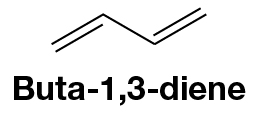
- 3.21Do all of the atoms in buta-1,3-diene have to reside in the same plane? Why or why not?
More information
Skeletal structural formula of buta-1,3-diene. Shown is a four-carbon chain with double bonds between carbons 1 and 2, and carbons 3 and 4.
Section 3.9 Hybridization, Bond Characteristics, and Effective Electronegativity
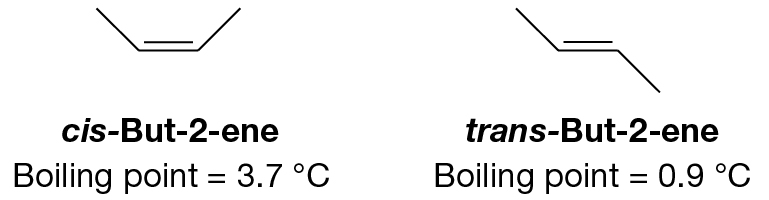
- 3.22The boiling point of cis-but-2-ene is 3.7 °C, whereas that of trans-but-2-ene is 0.9 °C. Explain. Hint: Identify which intermolecular interaction is responsible for the difference in boiling points.
More information
Skeletal structural formulas and boiling points of cis-But-2-ene and trans-But-2-ene. Each structure shows a four-carbon chain with double bonds between carbons 2 and 3. In the first structure, carbons 1 and 4 lie on the same side of the double bond. Text below the structure reads, “cis-But-2-ene: Boiling point equals 3.7 degrees Celsius.” In the second structure, carbons 1 and 4 lie on the opposite sides of the double bond. Text below the structure reads, “trans-But-2-ene: Boiling point equals 0.9 degrees Celsius.”
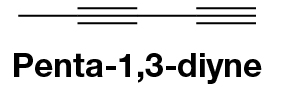
- 3.23There are two C—C single bonds in penta-1,3-diyne. (a) Which of those bonds would you expect to be stronger? (b) Which of those bonds would you expect to be shorter? (c) The molecule is moderately polar, with a dipole moment of 1.37 D. In which direction would you expect the dipole moment to point? Explain.
More information
Skeletal structural formula of penta-1,3-diyne, which shows a five-carbon chain with triple bonds between carbons 1 and 2, and carbons 3 and 4.
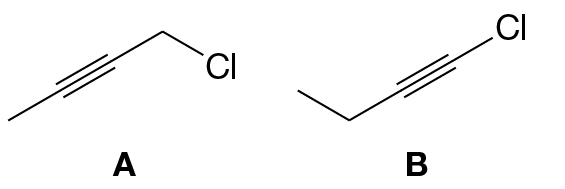
- 3.24Consider molecules A and B. (a) In which molecule would you expect the C—Cl bond to be stronger? (b) In which molecule would you expect the C—Cl bond to be shorter? (c) In which molecule would you expect there to be a greater concentration of negative charge on the Cl atom? Explain.
More information
An illustration shows the skeletal structural formulas of two molecules labeled A and B. The first structure shows a four-carbon chain, with a triple bond between carbon atoms 2 and 3. Carbon 1 is bonded to a chlorine atom. The second structure shows a four-carbon chain, with a triple bond between carbon atoms 1 and 2. Carbon 1 is bonded to a chlorine atom.
Sections 3.10 and 3.11 A Deeper Look: Molecular Orbital Theory, Hybrid Atomic Orbitals, and a Combined Molecular Orbital–Valence Bond Model
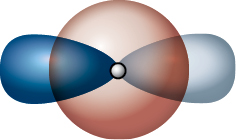
- 3.25Derive the hybrid orbital that would result from the interaction illustrated here, in which the phases of the s and px orbitals are opposite those in Figure 3-38a (p. 141). Is the resulting orbital different from the ones in Figure 3-38a and 3-38b? Explain.
More information
An illustration of pure atomic orbitals. The illustration shows a large spherical orbital, lightly shaded, overlapping with a dumbbell shaped orbital. The left lobe of the dumbbell shaped orbital is shaded darker than the other, and both lobes are of the same size.
- 3.26Derive the hybrid orbital that would result from the interaction illustrated here, in which the phases of the s and px orbitals are opposite those in Figure 3-38b (p. 141). Is the resulting orbital different from the ones in Figure 3-38a and 3-38b? Explain.
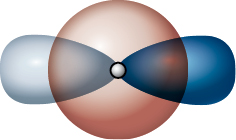
More information
An illustration of pure atomic orbitals. The illustration shows a large spherical orbital, lightly shaded, overlapping with a dumbbell shaped orbital. The right lobe of the dumbbell shaped orbital is shaded lighter than the other, and both lobes are of the same size.
- 3.27As we saw in Solved Problem 3.1 (p. 115), the bond in H—Cl can be explained by the overlap between an s orbital from hydrogen and a p orbital from chlorine, as shown in this diagram. Draw the bonding and antibonding MOs that would result from the mixing of these two AOs.
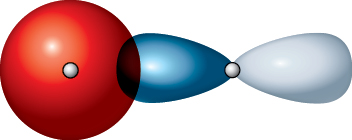
More information
An illustration shows two orbitals beside each other. The first orbital is spherical shaped, and the second orbital is dumbbell shaped with the lobe on the left shaded darker than the lobe on the right. The lobe on the left and the spherical orbital overlap.
- 3.28As we saw in Solved Problem 3.1, Try It (p. 115), the bond in Cl2 can be explained by the end-on overlap between two p AOs, as shown in this diagram. Draw the bonding and antibonding MOs that would result from the mixing of these two AOs.

More information
An illustration shows two dumbbell shaped orbitals beside each other. In the first orbital, the lobe on the left is shaded lighter than the lobe on the right. In the second orbital, the lobe on the left is shaded darker than the lobe on the right. The two darker lobes overlap.
- 3.29One of the orbital interactions we did not consider in this chapter is that between an s AO from one atom and a p AO from another atom in the fashion shown here. These orbitals will not interact while in this orientation. Explain why.
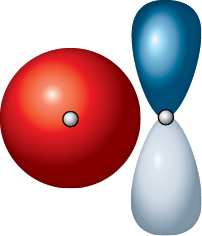
More information
An illustration shows two orbitals beside each other. The first orbital is spherical shaped, and the second orbital is dumbbell shaped with the upper lobe shaded darker than the lower lobe.
- 3.30In Chapter 16, we will learn that light can promote an electron to a higher-energy MO. Suppose that light is used to promote one of the two electrons in the H2 molecule from the σ MO to the σ* MO, as illustrated here. What is the HOMO? Is this state more stable, less stable, or about the same stability as the two separated hydrogen atoms?
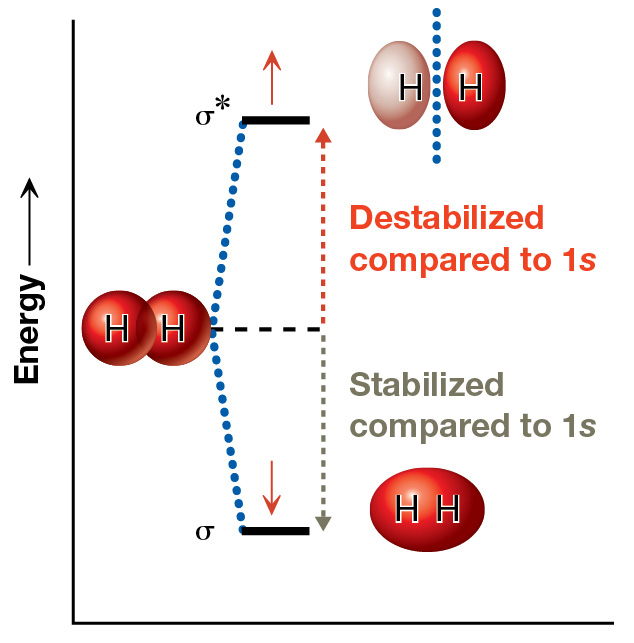
More information
An energy diagram shows the energy levels of the bonding and antibonding orbitals in the M Os of a hydrogen molecule. A vertical line shows increasing energy levels. In a region midway on the scale are two overlapping spherical orbitals that each represent the 1 s atomic orbitals in two separate hydrogen atoms. A horizontal dashed line extends from these overlapping orbitals, dividing the energy plane into two halves. To the right of the atomic orbitals, on the lower end of the energy scale is a short horizontal line labeled “sigma,” with a downward-facing arrow on it. A diagonal dotted line extends from the atomic orbitals to this short line, and a downward arrow connects the horizontal dashed line at the center to this short line. Beside this line is an elliptical orbital containing the two hydrogen nuclei. Text above this orbital reads, “Stabilized compared to 1 s.” To the right of the atomic orbitals, on the upper end of the energy scale is a short horizontal line labeled “sigma star,” with an upward-facing arrow on it. A diagonal dotted line extends from the atomic orbitals to this short line, and a downward arrow connects the horizontal dashed line at the center to this short line. Beside this line are two elliptical lobes separated by a dotted vertical line. The nucleus in each lobe lies toward this line. The lobe on the right is shaded darker than the lobe on the left. Text above this orbital reads, “Destabilized compared to 1 s.”
- 3.31Suppose a linear molecule were constructed from three atoms, all of which are found in the second row of the periodic table. How many valence shell AOs would these three atoms contribute toward the production of MOs? How many MOs would be produced by the mixing of these valence shell AOs? Hint: The answer is independent of which orbitals overlap.
- 3.32(a) Draw the MO–VB energy diagram for butane, CH3CH2CH2CH3, similar to Figures 3-40, 3-41, 3-43, and 3-44. (b) Identify the HOMO and LUMO.
- 3.33(a) Draw the MO–VB energy diagram for diethyl ether, CH3CH2OCH2CH3, similar to Figures 3-40, 3-41, 3-43, and 3-44. (b) Identify the HOMO and LUMO.
- 3.34(a) Draw the MO–VB energy diagram for acetone, (CH3)2C═O, similar to Figures 3-40, 3-41 3-43, and 3-44. (b) Identify the HOMO and LUMO.
- 3.35(a) Draw the MO–VB energy diagram for :C≡O:, similar to Figures 3-40, 3-41, 3-43, and 3-44. (b) Identify the HOMO and LUMO.
- 3.36(a) Draw the MO–VB energy diagram for propa-1,2-diene, H2C═C═CH2. Hint: The three-dimensional geometry is shown in the chapter. (b) What is the HOMO? What is the LUMO?
- 3.37(a) Draw the MO–VB energy diagram for buta-1,2,3-triene, H2C═C═C═CH2. (b) What is the HOMO? What is the LUMO? Hint: See Your Turn 3.13.
- 3.38(a) Draw the MO–VB energy diagram for CH+3. (b) What is the HOMO? What is the LUMO?
- 3.39Suppose that an electron were added to CH+3, the species in Problem 3.38, yielding uncharged CH3. What is the HOMO? What is the LUMO?
Integrated Problems
- 3.40Suppose a linear molecule were constructed from three atoms, all of which are found in the second row of the periodic table. Suppose that two orbitals from the first atom were to mix with two orbitals from the second atom and that two other orbitals from the second atom were to mix with two orbitals from the third atom. In the resulting molecule, how many bonding MOs would there be in total? How many antibonding MOs? How many nonbonding MOs?
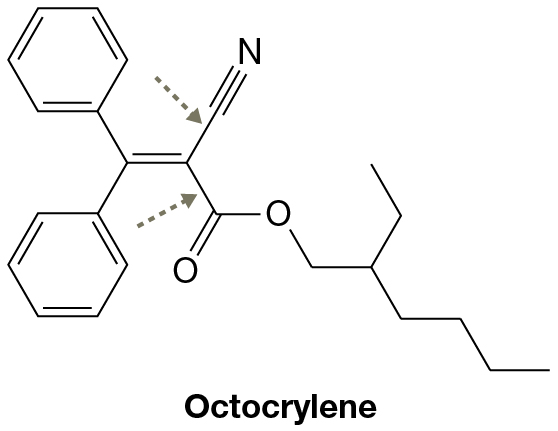
- 3.41Octocrylene is an ingredient found in topical sunscreens. It is a water-resistant molecule that helps protect skin against harmful UVA and UVB radiation. (a) What is the hybridization of each non-hydrogen atom? (b) Circle all atoms bonded to the acyclic C═C double bond that are required to be in the same plane. (c) Are there two unique configurations possible about the acyclic C═C double bond? Explain. (d) Which of the two C—C single bonds indicated by arrows would you expect to be shorter? Explain.
More information
An illustration shows the skeletal structural formula of octocrylene. The structure shows a seven-carbon chain, where carbon 3 is bonded to another carbon atom 8, which is bonded to an oxygen atom by a single bond. This oxygen atom is bonded to a carbonyl group. The carbon atom in the carbonyl group is bonded to a two-carbon chain where a double bond connects the carbon atoms. One of these carbon atoms is bonded to a nitrile group and the other carbon atom is bonded to two phenyl groups. An arrow points to the bond between the carbon atom in the carbonyl group and the carbon atom in the two-carbon chain. Another arrow points to the bond between the carbon atom in the nitrile group and the carbon atom in the two-carbon chain.
- 3.42In the chapter, we mentioned that ethene (H2C═CH2) does not undergo free rotation about the C═C double bond because the π bond must be broken to achieve the twisted ethene configuration in which the two CH2 groups are perpendicular to each other (Fig. 3-22b, p. 129). (a) Draw the MO–VB energy diagram for the twisted ethene and identify the HOMO and LUMO. (b) By comparing the diagram for this molecule to that in Figure 3-41 (p. 143), explain why the molecule is more stable when it is all planar.
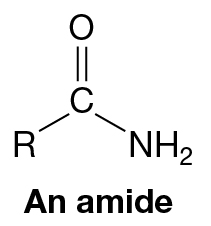
- 3.43An amide is typically drawn with a single bond connecting the carbonyl C atom to the N atom. If this representation were accurate, we would expect the N atom to be pyramidal, and we would also expect C—N to undergo free rotation. In actuality, however, the N atom is rather planar, and the rotation is quite hindered: properties that give rise to important secondary structures of proteins, such as α-helices and β-sheets (Chapter 28). Explain these properties of the amide.
More information
An illustration shows the condensed structural formula of an amide. The structure shows a carbon atom bonded to an amine group and an R group by single bonds, and to an oxygen group by double bonds.