CHAPTER 2
Pioneering Philosophers of Mind: Descartes, Locke, and Leibniz

René Descartes and the Mind-Body Distinction
John Locke and the Empiricist Tradition
Gottfried Leibniz and Continental Nativism
Around the year 1615, a troubled young man named René Descartes took up solitary residence in the quiet Paris suburb of St. Germain. The wealthy son of a minor aristocrat, René had been the best student at the best school in the country. Yet now, in the midst of what today we might call an identity crisis, he felt his elite education didn’t count for much and belittled the value of his academic subjects. The classics were occasionally interesting, but they overvalued the past at the expense of the present. Literature, he complained, “makes us imagine a number of events as possible which are really impossible.” He dismissed mathematics because, despite the pleasing certainty of its results, in Descartes’s jaded view it had never yet been applied to the solution of important practical problems. Philosophy, despite centuries of study, had never “produced anything which is not in dispute and consequently doubtful and uncertain.” He lamented that “from my childhood I lived in a world of books, [believing] that by their help I could gain a clear and assured understanding of everything useful in life.” But now, having finished his formal studies, “I found myself so saddled with doubts and errors that I seemed to have gained nothing in trying to educate myself unless it was to discover more and more fully how ignorant I was.”1
Besides this self-report we know one more thing about Descartes’s sojourn in St. Germain. While there he noted with interest a series of intricate mechanical statues, similar to the one in Figure 2.1, that had been constructed by the queen’s fountaineers in grottoes in the banks of the River Seine. When visitors stepped on plates hidden in the floor, water flowed through pipes and valves in the statues and caused them to move. As one approached a statue of the goddess Diana bathing, for example, she retreated modestly into the depths of the grotto; upon further approach, a statue of the god Neptune came forward waving his trident protectively.
Several years later, after Descartes had resolved his crisis and become an enthusiastic philosopher himself, he offered the statues as simplified but accurate models of the way living bodies sense, react to, and move about in their environments. In doing so he became one of the first influential thinkers to suggest fully mechanistic explanations for the traditional functions of the Aristotelian sensitive psyche or soul. As we have seen, the traditional view held that living things sensed, reacted, and moved because they had sensitive souls, and the analysis went no further. Now, the psychic functions themselves became things to be explained, in terms of more fundamental mechanistic processes.
Descartes set an important limit to this kind of explanation, exempting from it the highest functions of the Aristotelian rational soul. He described the human mind and body as two interacting but distinctly different entities, each requiring its own kind of analysis and explanation. His speculations about this mind-body distinction reignited debates dating back to Plato and Aristotle about the relative virtues of empiricism, nativism, and rationalism.
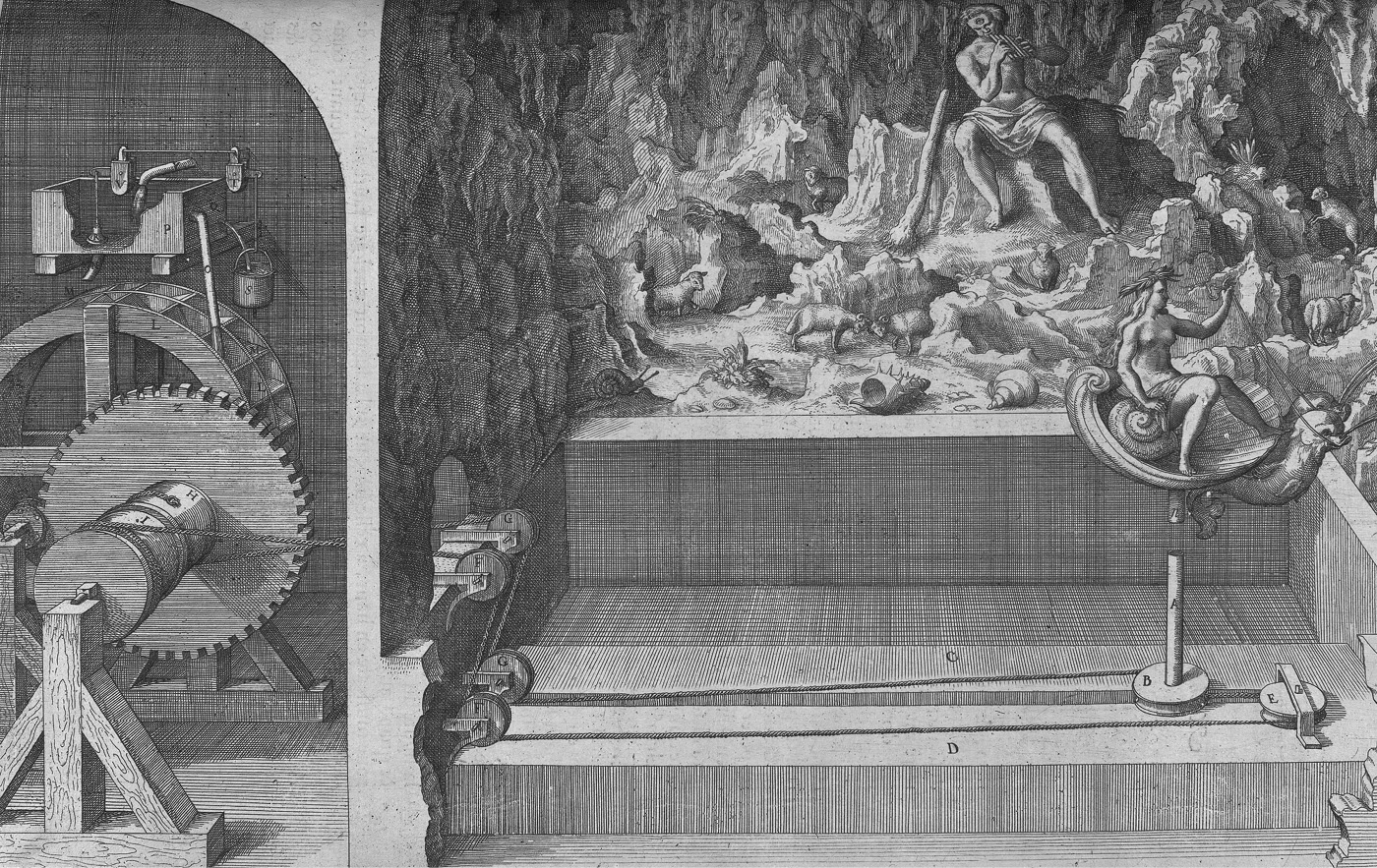
Figure 2.1 A water driven mechanical statue in St. Germain, Paris.
After his death, different aspects of Descartes’s thought were further developed by two important successors, the Englishman John Locke and the German Gottfried Wilhelm Leibniz. Collectively these three men promoted crucial ideas in mental philosophy that ultimately combined and coalesced in the nineteenth century as the foundations for a modern discipline of scientific psychology.