THE ESSENTIAL-TRAIT APPROACH
The 100 personality characteristics in the Q-set are a lot by themselves, and a thorough survey of the literature of personality and clinical psychology would find many, probably thousands more. Several efforts have been made over the years to dismantle this Tower of Babel by discovering which traits are truly essential.
Reducing the Many to a Few: Theoretical Approaches
More than half a century ago, psychologist Henry Murray (inventor of the Thematic Apperception Test described in Chapter 2) theorized that 20 traits—he called them needs—were central to understanding personality (H. A. Murray, 1938). His list included needs for aggression, autonomy, exhibition, order, play, sex, and so on. Murray came up with this list theoretically—that is, by thinking about it.
Later, psychologists Jack and Jeanne Block, whose work on childhood antecedents of political beliefs was summarized a few pages back, proposed just two essential characteristics of personality, called “ego resilience” (or psychological adjustment) and “ego control” (or impulse control) (J. Block, 2002; J. H. Block & Block, 1980; Letzring et al., 2005). A fundamental idea behind these constructs is the psychoanalytic or Freudian (see Chapters 9 and 10) concept that people constantly experience needs and impulses ranging from sexual drives to the desire to eat doughnuts. Overcontrolled people (those high in the ego-control dimension) inhibit these impulses, while undercontrolled individuals (low in ego control) are more prone to act on them immediately.
Is it better to be undercontrolled or overcontrolled? It depends: If nice things are safely available, you may as well take advantage of them, but if gratification is risky under the circumstances, self-control might be a better course. People high in the Blocks’ other personality dimension, ego resilience, can adjust their level of control from high to low and back again as circumstances warrant. For example, an ego-resilient student might study hard all week (and thus be temporarily overcontrolled) and then cut loose on the weekends (and become temporarily, but appropriately, undercontrolled). As Jack Block remarked in a conversation with me, years ago, “Undercontrol gets you into trouble, but resilience gets you out.”
Reducing the Many to a Few: Factor Analytic Approaches
Other psychologists have tried to identify the essential traits of personality using factor analysis. The most significant early proponent was Raymond Cattell, who pioneered the development of this statistical technique prior to the computer age. As you may recall from Chapter 2, factor analysis involves correlating every measured variable with every other variable. The result is a correlation matrix. Correlation matrices can quickly get very large. Consider that a test with only 60 items would develop a correlation matrix with 1,770 non-redundant entries. According to legend, to factor analyze hundreds of items Cattell had to borrow the basketball court at the University of Illinois, the only place on campus with a floor large enough to lay out all of his calculations.10 Beginning with a large number of traits that he considered important, Cattell concluded that 16 traits were essential. These included “friendliness,” “intelligence,” “stability,” “sensitivity,” and “dominance,” among others (Cattell & Eber, 1961). However, in later years many psychologists concluded that Cattell’s work “was characterized by an overextraction of factors” (Wiggins & Trapnell, 1997, p. 743)—that is, 16 is probably too many. Moreover, while Cattell’s many statistical contributions continue to be admired, one psychologist wrote, “It is difficult to avoid the conclusion that Cattell’s lists of variables and factors primarily represent those traits that he himself considered the most important” (John, 1990, p. 71).
An alternative early factor analytic proposal for the essential traits of personality identified only 3, rather than 16. According to Hans Eysenck, these were extraversion, neuroticism (or “unstable emotionality”), and a trait he (rather confusingly) labeled psychoticism, which he saw as a blend of aggressiveness, creativity, and impulsiveness (H. J. Eysenck, 1947; S. B. G. Eysenck & Long, 1986). Psychologist Auke Tellegen updated this system with the Multidimensional Personality Questionnaire (Tellegen, 1982; for a shorter version see Donnellan, Conger, et al., 2005), organized around three “superfactors” called positive emotionality, negative emotionality, and constraint. These factors are roughly parallel to, but definitely better labeled than, Eysenck’s three.
The Big Five and Beyond

More information
A photo shows a front view of a Big 5 Sporting Goods retail store.
DISCOVERY OF THE BIG FIVE
At present, the most widely accepted factor analytic solution to the problem of reducing the trait lexicon is also the one that has the deepest historical roots. The search began with a simple but profound idea: If something is important, then people will have invented a word for it. For example, over the course of history people have observed water falling from the sky and found it useful to be able to talk about it; the word rain (and its equivalents in every other language) was invented. But that’s not all: Water from the sky is so important that people also developed words for different forms, including sleet, drizzle, hail, and snow. The Indigenous Peoples of northern Canada are famous for having come up with an exceptional number of words to describe snow. The lexical hypothesis (Goldberg, 1981) is that the important aspects of human life will be labeled, and that if something is truly important and universal, many words for it will exist in all languages.
This hypothesis provides a unique route for identifying the most important personality traits. Which ones have the largest number of relevant words, and which ones are the most universal across languages? In principle, answering this question might seem straightforward, but psychologists have been struggling with it for more almost 100 years (John & Srivastava, 1999). In the 1930s, after cataloging (with Henry Odbert’s help) almost 18,000 personality-descriptive words, Gordon Allport predicted finding the essential needles in that haystack could be the work of a lifetime. He was right. Allport started the project by identifying about 4,500 words (still a lot) that he thought were particularly good descriptors of personality traits. Raymond Cattell (who was mentioned above) selected from that list 35 traits he thought were especially important and focused his analyses on those. Donald Fiske (1949) chose 22 traits from Cattell’s list and used them to analyze self-ratings along with ratings by peers and by psychologists. Fiske’s analyses found five factors that may have been the first emergence of what is now known as the Big Five.11 Later, a team of two psychologists examined data from eight different samples, including graduate students and Air Force personnel; they, too, found the same five basic factors (Tupes & Christal, 1961). Since then, the Big Five have been found again and again, using many different lists of traits and a wide range of samples of people (Saucier & Goldberg, 1996).12
Work on the Big Five has become a major focus of personality research. One reason is that when personality tests—not just words in the dictionary—are factor analyzed, a common finding is that they, too, tend to fall into groups defined by the Big Five (McCrae & Costa, 1987). These include the other lists of basic traits discussed earlier; Cattell’s 16 traits and Tellegen’s 3, among others, can be described in terms of one or more of the Big Five (John et al., 2008). As a result, the Big Five can be viewed as an integration rather than an opponent of these other systems (Saucier & Goldberg, 2003).
IMPLICATIONS OF THE BIG FIVE
Although some early researchers suggested that the Big Five be referred to by Roman numerals I–V (John, 1990), that never really caught on. Instead, the most common labels are neuroticism, extraversion, agreeableness, conscientiousness, and openness (or intellect) (the labels vary somewhat from one investigator to the next). However, these commonplace labels hide a good deal of complexity.
For one thing, the Big Five are related to each other (Digman, 1997). Agreeableness, conscientiousness, and neuroticism (reversed, often called “emotional stability”) go together to form one factor sometimes labeled stability, and extraversion and openness form a factor called plasticity. Psychologist Colin DeYoung suggests that these factors might have a biological basis (DeYoung, 2006, 2010); more will be said about this possibility in Chapter 7. DeYoung’s two broader traits look a lot like the two essential traits posited years ago by Jack and Jeanne Block (and discussed earlier in this chapter): Plasticity resembles ego resilience, and stability resembles ego control. And if you want to go even broader, some psychologists have argued that there is really just one underlying trait, which they call the General Factor of Personality (van der Linden et al., 2017). The general factor combines all five in the (traditionally) desirable direction: high extraversion, agreeableness, conscientiousness and openness, and low neuroticism. The core of this general factor, these psychologists suggest, is emotional intelligence, the ability to understand and regulate your own emotions and to be able to understand the feelings of others.
Going in the reverse direction, toward more specific traits, each of the Big Five is divided into six “facets” by some researchers (Costa & McCrae, 1995), into three facets by other researchers (Soto & John, 2017), and into two “aspects” by still other researchers (DeYoung et al., 2007) (Table 5.3).13 As researchers Gerard Saucier and Lewis Goldberg have written, “a broad factor [like one of the Big Five] is not so much one thing as a collection of many things that have something in common” (2003, p. 14). So, although the labels are useful, they are also necessarily oversimplified and potentially misleading (which is precisely why some psychologists have suggested using Roman numerals instead). With that in mind, let’s give each of the Big Five a look under the hood.
Table 5.3 FACETS AND ASPECTS OF THE BIG FIVE
|
Big Five Trait |
Facets (Costa & McCrae, 1995) |
Facets (Soto & John, 2017) |
Aspects (DeYoung et al., 2007) |
|
Extraversion |
Warmth Gregariousness Assertiveness Activity Excitement seeking Positive emotion |
Sociability Assertiveness Energy level |
Enthusiasm Assertiveness |
|
Neuroticism |
Anxiety Hostility Depression Self-consciousness Impulsiveness Vulnerability to stress |
Anxiety Depression Emotional volatility |
Volatility Withdrawal |
|
Agreeableness |
Trust Straightforwardness Altruism Compliance Modesty Tender-mindedness |
Compassion Respectfulness Trust |
Compassion Politeness |
|
Conscientiousness |
Competence Order Dutifulness Achievement striving Self-discipline Deliberation |
Organization Productiveness Responsibility |
Industriousness Orderliness |
|
Openness to experience |
Fantasy Aesthetics Feelings Actions Ideas Values |
Intellectual curiosity Aesthetic sensitivity Creative imagination |
Intellect Openness |
Note: Soto and John (2017) relabeled “Neuroticism” as “Negative emotionality” and “Openness to experience” as “Open-mindedness.”
Extraversion
EYSENCK’S VIEW OF EXTRAVERSION The historically important personality psychologist Hans Eysenck was one of the first to theorize about how extraverts might be different from introverts. His theory seems counterintuitive at first. He proposed that introverts react more strongly and often more negatively to bright lights, loud noises, strong tastes, and other kinds of sensory stimulation than do extraverts—a general idea that can be traced back to early work by Ivan Pavlov (1927). In a famous experiment, Eysenck showed that if you squirted lemon juice into the mouths of introverts, they salivated more than extroverts (S. B. G. Eysenck & Eysenck, 1967; G. D. Wilson, 1978).14
In daily life, according to Eysenck, extraverts and introverts are about equally stimulated when the environment is quiet and calm. But introverts react more quickly and more strongly to loud, bright, or exciting stimuli or, even, as we just learned, sour tastes (Zuckerman, 1998). These reactions lead them to withdraw—the crowds, noise, excitement, and mouth-puckering lemony tastes are just too much—and exhibit the pattern of behavior we identify as introverted.
But extreme levels of stimulation are exactly what extraverts crave and need (Geen, 1984), and this need can, according to one writer, even lead to a life of crime. “The vandal is a failed creative artist,” who is bored, needs to be constantly stimulated, and “does not have the intellectual or other skills and capacities to amuse or occupy himself” (Apter, 1992, p. 198; Mealey, 1995). Eysenck also argued that a nervous system requiring extra stimulation can make a person dangerous. According to the “general arousal theory of criminality” (H. J. Eysenck & Gudjonsson, 1989, p. 118), such a person seeks out high-risk activities such as crime, drug use, gambling, and promiscuous sex. To prevent these people from becoming dangerous, according to another psychologist, perhaps they should be encouraged to enter stimulating but harmless professions such as stunt person, explorer, skydiving exhibitionist, or radio talk-show host (Mealey, 1995). Personally, I question this advice. Are radio talk-show hosts really harmless?
THE BIG FIVE VIEW OF EXTRAVERSION
The Big Five version of extraversion is somewhat different from Eysenck’s version and definitely less dangerous-sounding. It encompasses traits such as “active,” “outspoken,” “dominant,” “forceful,” “adventurous,” and even “spunky” (John & Srivastava, 1999). Some Big Five researchers describe extraverts as cheerful, upbeat, and optimistic (Costa & McCrae, 1985). Still others characterize them as ambitious, hardworking, and achievement oriented (Hogan, 1983; Tellegen, 1985; Watson & Clark, 1997, p. 769). These characteristics overlap, as you can see, and even though exact interpretations differ, the trait or something much like it shows up in just about every broad-based personality inventory, including Cattell’s 16PF, Tellegen’s MPQ, Douglas Jackson’s Personality Research Form (PRF), Gough’s CPI, and the MMPI (Watson & Clark, 1997).
Extraversion has a powerful influence on behavior. It actually takes effort for an extravert to act any other way—when forced to act like an introvert, extraverts get tired and revert, when allowed, to acting even more extraverted (Gallagher et al., 2011). They walk more quickly than introverts and, as they get older, this difference only increases: Elderly extraverts walk much more quickly than elderly introverts (Stephan et al., 2018). Extraverts are prone to make moral judgments that hold people responsible for the effects of their actions, even if the effects were unintentional (Cokely & Feltz, 2009). Both men and women extraverts achieve higher social status than introverts (C. Anderson et al., 2001), and they prefer to meet each other in person rather than through a dating app (Danielsbacka et al., 2019). Extraverts are consistently rated as more popular (Jensen-Campbell et al., 2002) and more physically attractive than introverts (they also exercise more); this may be why they attend more parties, where they drink more alcohol (Paunonen, 2003). But they had better be careful, because research also shows that extraverts are more likely to be on the receiving end of attempts to steal them away from their steady romantic partners (Schmitt & Buss, 2001). Some of these attempts at “mate poaching” (as the researchers call it) occur at parties, where drinking has been known to occur.
Extraverts may be especially sensitive to rewards (Denissen & Penke, 2008) or simply tend to experience positive emotions more than others (Watson & Clark, 1997). This might be because extraverted behavior itself feels good. One study showed that when introverts are asked to act like an extraverted person, they feel an increase in positive emotions such as “excited” and “alert” (Fleeson et al., 2002). In daily speech they are more likely to use upbeat words like “adorable” than downbeat words such as “dreadful” (Augustine et al., 2011). They like uncomplicated and relaxing music, especially performed by folksingers who write their own songs (G. Nave et al., 2018). Extraverts tend to be happier than introverts. Part of the reason is extraverts are more sociable and their social activity makes them happy (Eaton & Funder, 2003; Wilt et al., 2011). They are also more likely to spend their money, when they have it, on experiences such as food, travel, and other positive experiences, rather than on material things—a priority that has been shown to increase happiness (R. T. Howell et al., 2011).

More information
A photo shows a headshot of psychologist Kelci Harris.
But in addition to that, extraversion may have a direct, perhaps even biological, connection with positive emotions. Even when the amount of social activity was (statistically) held constant, extraversion still correlated with happiness (Lucas et al., 2008). A careful study by psychologist Kelci Harris (Figure 5.8) and her colleagues tracked changes in happiness over the course of the college careers of two samples of participants. The results showed that while better social experiences contribute to extraverts’ relative happiness, that’s not the only reason (K. Harris et al., 2017).
All this shouldn’t be taken to mean that introverts can’t be just as happy as extraverts. They just might need to make a little extra effort to project a positive attitude, be with people, and build social contacts, all of which seem to underlie the happiness of extraverted people.
Have you ever sat next to an extremely extraverted stranger on a long plane flight? Then you see the potential problem.
Moreover, Funder’s First Law applies here, yet again: Extraversion has its downside and introversion definitely has more than one upside. Introverts can be easier to get along with because they avoid getting into arguments and don’t insist on taking control, and they use their time more effectively (Boudreaux et al., 2011). Introverts are also for some reason at less risk for becoming overweight15 (Sutin et al., 2011). While extraverts can be good salespeople, that’s true only to a point. Potential customers find overly extraverted salespeople annoying (A. M. Grant, 2013), and have you ever sat next to an extremely extraverted stranger on a long plane flight? Then you see the potential problem here.
Neuroticism
Neuroticism is another Big Five trait with wide implications. Persons who score high on this trait tend to deal ineffectively with problems in their lives and react more negatively to stressful events (Bolger & Zuckerman, 1995; E. Ferguson, 2001). They are particularly sensitive to social threats, such as indications that other people do not accept or support them (Denissen & Penke, 2008).
It turns out that numerous questionnaires intended to assess happiness, well-being, and physical health correlate strongly (and negatively) with neuroticism (sometimes, and less pejoratively, called negative emotionality). The higher the level of neuroticism, the more likely people are to report being unhappy, anxious, and even physically sick (McCrae & Costa, 1991; Watson & Clark, 1984). This finding implies that many of these instruments, despite their different intentions and titles, may be, to some degree, measuring the same underlying tendency. Some people (those scoring high on neuroticism) complain a lot, about a lot; others (those scoring low in neuroticism) complain less.
Because it correlates with so many other measures of unhappiness, anxiety, and other indicators of psychological difficulty, neuroticism appears to capture a general tendency toward psychopathology (Barlow et al., 2014). In the long run, this tendency may put someone scoring high on neuroticism at higher risk for developing a serious mental illness. In the short run, it can make a person vulnerable in other ways. For example, people scoring high on neuroticism are not especially likely to have people try to “poach” them away from their romantic partners. But if someone does make a move, they are less likely to resist (Schmitt & Buss, 2001). People high on neuroticism also report feeling stressed, taking things too seriously, being unable to handle criticism, and even feeling oppressed by life (Boudreaux et al., 2011).
Not surprisingly, neuroticism is associated with several undesirable life outcomes (Ozer & Benet-Martínez, 2006, Soto, 2019). People who score high on this trait are more likely to be unhappy, to have problems in their family relationships, to be dissatisfied with their jobs, and even to engage in criminal behavior. This last finding requires a caution concerning how to interpret correlations such as those summarized in this chapter: Most neurotics are not criminals! In fact, I’d venture to say very few of them are. However, people who score high on measures of neuroticism are more likely to engage in criminal behavior than people who score lower. It is this kind of relative likelihood that is reflected by correlations between traits and life outcomes.
Conscientiousness
The trait of conscientiousness comprises being dutiful, careful, rule-abiding, and, some evidence shows, ambitious. The trait has even been measured in animals. Surprisingly many studies (876!) have examined facets of this trait in a large number of non-human species. What does a conscientious animal do? According to a major review, conscientiousness in animals reveals itself through behaviors including speed in foraging, care in nest building, careful decision making (in guppies), and willingness (of bees) to do their job to protect the hive (Delgado & Sulloway, 2017).
Returning to what conscientious humans do, evidence to be reviewed in Chapter 15 consistently shows that people who score high in conscientiousness are usually valued employees who can be trusted to show up on time, do as they are told, and not steal anything. But that’s not all. Conscientiousness has many implications beyond job performance. For example, people who score high in conscientiousness are careful and considerate drivers, and so get in fewer accidents. Yet they are more likely to carry a lot of car insurance, a behavior that economists consider paradoxical. From a strictly economic point of view, it actually makes more sense for high-risk people to do so. After all, who needs car insurance more than a reckless driver? Perhaps all is explained by conscientiousness: Highly conscientious people both avoid risks and seek to protect themselves just in case, so they are the ones who drive carefully and carry lots of insurance (Caplan, 2003).
Moreover, conscientious people live longer, and not just because they drive more carefully though that surely helps (H. S. Friedman et al., 1993). A major analysis of 194 studies found that highly conscientious people are more likely to avoid many kinds of risky behavior as well as to engage in activities that are good for their health (Bogg & Roberts, 2004). They frequently check the weather apps on their smartphones (Stachl et al., 2020).16 They are less likely to smoke, overeat, or use alcohol to excess. They avoid violence, risky sex, and drug abuse. They are more likely to exercise regularly. More will be said about the implications of conscientiousness for health in Chapter 15.
Despite all these advantages, this trait like all the others does have a few downsides: Highly conscientious people are prone to feel guilty when they don’t live up to expectations (Fayard et al., 2012) and are especially likely to suffer psychologically if they become unemployed—for example, their satisfaction with life decreases 120 percent more than less conscientious people (Boyce et al., 2010). Moreover, conscientious people are not necessarily popular (van der Linden et al., 2010) and, when they try to work together in a group, their output might not be very creative (Robert & Cheung, 2010). They also tend to be conforming and not rebellious; they can generally be trusted to follow orders. That is not always a good thing, is it?
Agreeableness
This dimension of the Big Five has carried several labels over the years including conformity, friendly compliance, likeability, warmth, and even love (Graziano & Eisenberg, 1997). And some research has separated agreeableness out into facets called compassion, morality, trust, affability, and modesty (Crowe et al., 2018). The different aspects of agreeableness sometimes have different implications. People high in compassion tend to be politically liberal and egalitarian, whereas people high in the other aspect of agreeableness, politeness, are more likely to be conservative and traditional (Hirsh et al., 2010).
Acquaintances pay attention to who is and is not agreeable and generally reach consensus about who can be described in this way (Graziano & Eisenberg, 1997). For their part, agreeable people rate other people more positively than disagreeable people do (D. Wood, Harms, & Vazire, 2010), say nice things more often than mean things (Augustine et al., 2011), smoke less (why do you think that might be?), and women tend to score higher than men (Paunonen, 2003).
Agreeableness predicts many life outcomes (Ozer & Benet-Martínez, 2006, Soto, 2019). People high in this trait are more likely to be involved in religious activities, have a good sense of humor, and be psychologically well adjusted. They go out of their way to look at pleasant rather than unpleasant things (Bresin & Robinson, 2015). Agreeable people recover more quickly from disabling accidents or illnesses (Boyce & Wood, 2011). They enjoy more peer acceptance and dating satisfaction, have a large number of social interests, and are unlikely to engage in criminal behavior. Newlywed heterosexual couples where the wife is high in agreeableness have more frequent sex (Meltzer & McNulty, 2016). Clearly, it is important and usually beneficial to be easy to get along with.
Even agreeable people don’t agree to everything.
Agreeableness can also make children less vulnerable. One study examined children who had “internalizing problems,” which meant that other children described them using phrases such as “on the playground, she/he just stands around,” “she/he is afraid to do things,” “she/he seems unhappy and looks sad often,” and “when other kids are playing, she/he watches them but doesn’t join in” (Jensen-Campbell et al., 2002, p. 236). In general, this pattern described children who tended to be victims of bullying, but not if they were also agreeable. Similarly, children who were physically weak or otherwise lacked social skills managed to avoid being bullied if they were high in agreeableness. Apparently, a friendly and nonconfrontational outlook can help protect you from abuse, but it won’t win you social status. For that, extraversion is necessary, too (C. Anderson et al., 2001). Research has not yet addressed whether these findings apply to college students or working adults. Do you think they would?
Agreeableness has its limits. When agreeable people who are married or in committed relationships are approached by somebody attempting to entice them into an affair, they are more likely to tell them to get lost (Schmitt & Buss, 2001). In other words, even agreeable people don’t agree to everything.
Openness to Experience/Culture/Intellect
Opennness to experience, also sometimes called culture or intellect, is the most controversial of the Big Five, as is perhaps revealed by the fact that I felt obligated to label this section with three different terms. People scoring high on openness are viewed by others as creative, imaginative, open-minded, and clever. They are relatively likely to be politically liberal, to use drugs, and to play a musical instrument (Ozer & Benet-Martínez, 2006; Paunonen, 2003). They like opera, jazz, classical, and other kinds of so-called sophisticated music (G. Nave et al., 2018). They appreciate nature, so they are active in environmental causes (Markowitz et al., 2012). People who score high on Openness are also tend to score higher on tests of general intelligence.17
More information
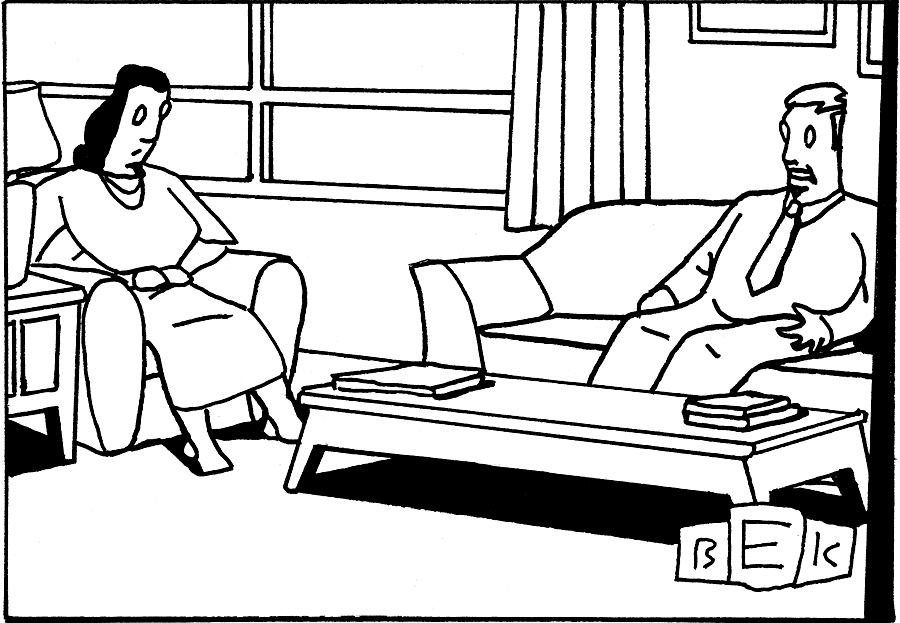
A cartoon shows a couple sitting in a living room. The text reads, “Let’s go somewhere fun and not really experience it.”
“Let’s go somewhere fun and not really experience it.”
But, as the prominent Big Five researchers Robert McCrae and Paul Costa have written, “the concept of Openness18 appears to be unusually difficult to grasp” (1997, p. 826). The difficulty arises in part because some researchers view the trait as reflecting a person’s approach to intellectual matters or even one’s basic level of intelligence, while others see it as a result of having been taught to value aspects of culture such as literature, art, and music. Still others see openness to experience as a basic dimension of personality that underlies creativity and perceptiveness. Another reason this dimension is controversial is that, among the Big Five, it has the spottiest record of replication across different samples and different cultures (John et al., 2008).
Still, it is interesting. McCrae and Costa (1997) argue that people can score high on openness to experience without necessarily being “cultured” in their education and background, and even without being particularly intelligent. Being open-minded does not make you right and can sometimes imply the reverse. College students higher in openness to experience are more likely to believe in UFOs, astrology, and the existence of ghosts19 (Epstein & Meier, 1989). At the same time, they are described as imaginative, intelligent, original, curious, artistic, inventive, and witty, and they are unlikely to be viewed as simple, shallow, or unintelligent. Their curious and exploring approach to life leads people high in openness to know many things in many domains, but that tendency may actually mislead them into thinking they know more than they really do. People high in openness are prone to “overclaim,” that is, to state that they are familiar with facts they don’t know or even pictures that they actually have not seen (P. D. Dunlop et al., 2017). This might be why they sometimes admit to having an overactive imagination and “being too smart for my own good” (Boudreaux et al., 2011). Finally, people high in openness report more frequent substance abuse and a tendency to feel “inspired,” but I won’t comment on any possible connection between these last two findings.
Beyond the Big Five
Although the Big Five have proved useful, they have also long been controversial (J. Block, 1995, 2010). A central objection is that there is more to personality than just five traits. Even advocates acknowledge that the list may not encompass attributes such as sensuality, frugality, humor, and cunning (Saucier & Goldberg, 1998). Psychologists Sampo Paunonen and Douglas Jackson performed factor analyses aimed at the part of personality missed by the Big Five and found 10 additional factors, including seductiveness, manipulativeness, integrity, and religiosity (Paunonen & Jackson, 2000). Studies conducted in several languages suggest that a sixth factor called “honesty-humility” should be added (Ashton & Lee, 2005), and further analyses suggest that several traits Paunonen and Jackson identified as missing from the Big Five can be included under this label (K. Lee et al., 2005). For example, highly religious people tend to score high on honesty-humility, whereas manipulative people score low. On the other hand, the honesty-humility dimension correlates with the agreeableness factor of the Big Five (honest and humble people are more agreeable), so we can look forward to many more years of debate as to whether the Big Five has to be expanded to a Big Six.20 Actually, the proposed label is not Big Six but rather HEXACO, which stands for honesty-humility (H), emotionality (E), extraversion (X), agreeableness (A), conscientiousness (C), and openness (O) (K. Lee & Ashton, 2004).
A further issue concerns the degree to which broad traits at the level of the Big Five (or six) are sufficient for really understanding people. For example, one could summarize narcissism, discussed earlier in this chapter, as a combination of high extraversion, low conscientiousness, low openness, and low agreeableness (and/or low humility), but that summary seems to miss the essence of the construct. Similarly, self-monitoring could be recast as a combination of high extraversion and high agreeableness, but that summary also seems insufficient. And, for one more example, the trait of “ambition” seems to not map neatly onto the Big Five, since it seems to be a combination of parts (but not all of) high conscientiousness and high extraversion, along with a strong desire to lead and be successful, and a high amount of self-control (A. B. Jones et al., 2016). This is the reason the Big Five are frequently broken down into “facets” or “aspects,” as we have seen, but it remains doubtful that even such smaller pieces of the Big Five can be added up to yield all the ways in which personality can differ.
Glossary
- lexical hypothesis
- The idea that, if people find something is important, they will develop a word for it, and therefore the major personality traits will have synonymous terms in many different languages.
Endnotes
- This cumbersome method appears to have led to some serious computational errors that were not detected until computers came along years later (Digman & Takemoto-Chock, 1981).Return to reference 10
- Yes, “Big Five” is traditionally capitalized. They’re that big.Return to reference 11
- You can take one of the most widely used measures, the revised Big Five Inventory (BFI-2) online, for free, at www.outofservice.com/bigfive.Return to reference 12
- Please don’t ask me to explain the difference between a “facet” and an “aspect.”Return to reference 13
- I guess it’s OK to try this experiment with your introverted roommate, but keep a towel nearby.Return to reference 14
- Even though, as mentioned earlier, extraverts tend to exercise more. Go figure.Return to reference 15
- Maybe they’re being careful to avoid being struck by lightning.Return to reference 16
- A meta-analysis that included more than 100,000 participants estimated the correlation to be r = .17, which is large enough to be interesting but not so large as to imply that openness and intelligence are the same thing (Anglim et al., 2022; see Chapter 3 for a discussion of how to evaluate correlations).Return to reference 17
- Hard-core adherents of the Big Five, such as McCrae and Costa, often capitalize the names of the traits. But I don’t.Return to reference 18
- I’m fairly but not 100 percent certain these beliefs are false.Return to reference 19
- Won’t that be fun.Return to reference 20