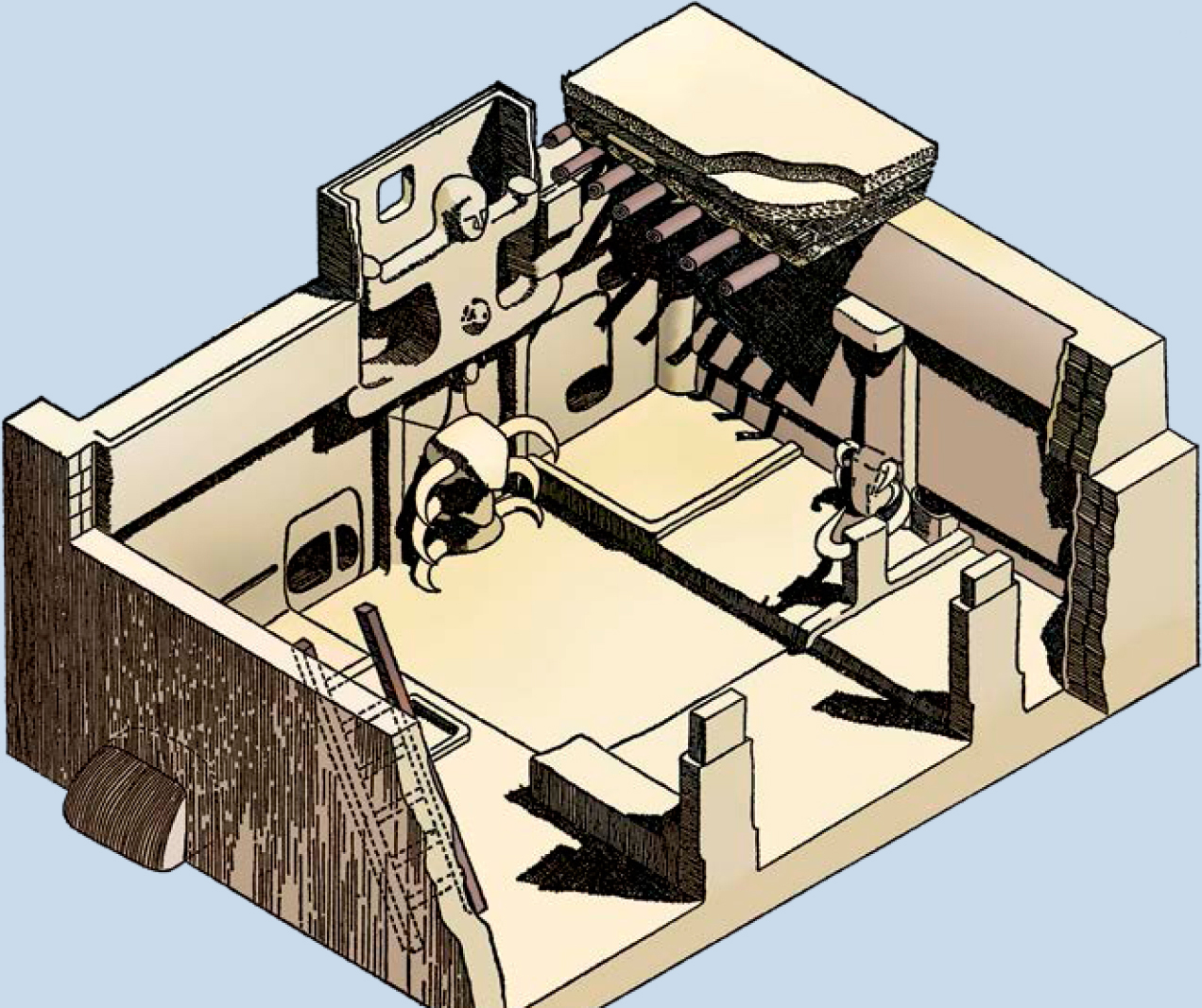
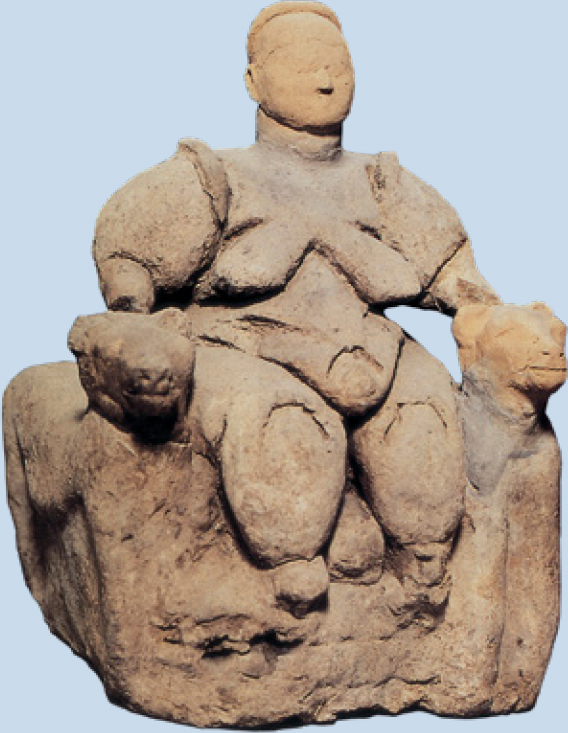
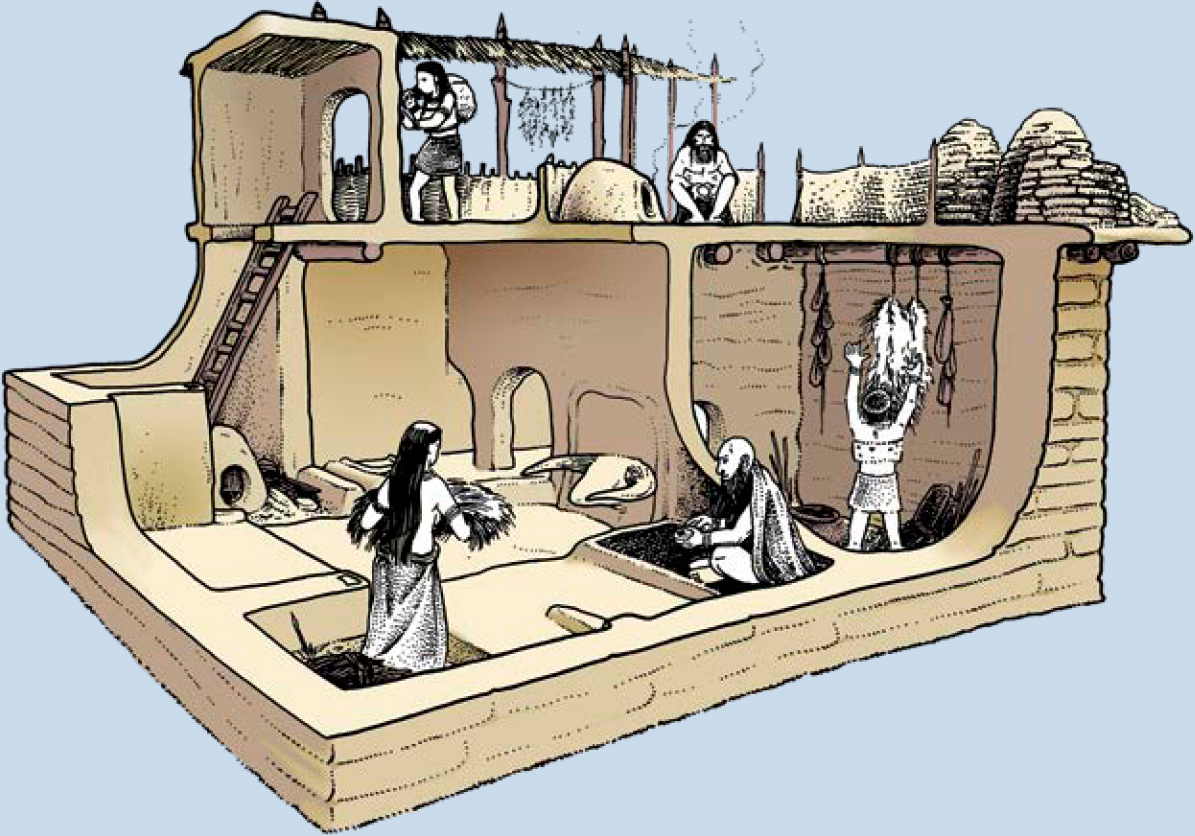
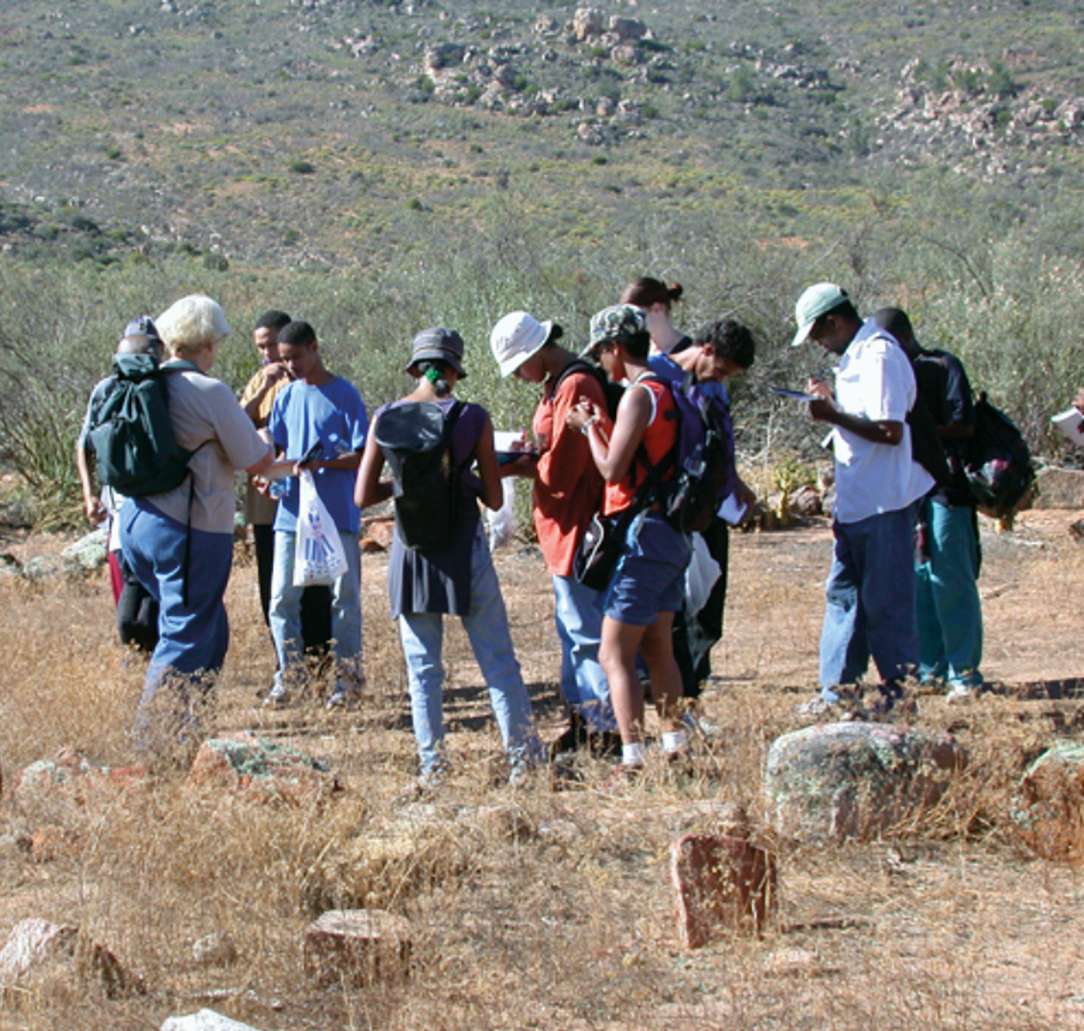
The history of archaeology may often be seen only as the history of great discoveries: the tomb of Tutankhamun in Egypt, the Maya cities of Mexico, the painted caves of Lascaux in France, or the remains of our ancestors buried deep in the Olduvai Gorge in Tanzania. But even more than that it is the story of how we have come to look with fresh eyes at the material evidence for the human past. In this chapter we examine the development of the questions and ideas that archaeology has asked and tested, and the application of new research methods. The main thing to remember is that every view of the past is a product of its own time: ideas and theories are constantly evolving, and so are methods. When we describe the archaeological research methods of today we are simply speaking of one point on a trajectory of our own history. Understanding the history of archaeology allows us to be aware of how politics, social expectations, and scientific developments today can influence our interpretations of the past. In a few decades, or even a few years’ time, these methods and approaches will certainly look old-fashioned and out of date. That is the dynamic nature of archaeology as a discipline.
It is important to remember that just a century and a half ago most well-read people in the Western world—where archaeology as we know it today was first developed—believed that the earth had been created only a few thousand years earlier and that all that could be known of the remote past had to be gleaned from the surviving pages of the earliest historians, notably those of the ancient Near East, Egypt, and Greece. There was no awareness that any kind of coherent history of the periods before the development of writing was possible at all. In the words of the Danish scholar Rasmus Nyerup (1759–1829):
Everything which has come down to us from heathendom is wrapped in a thick fog; it belongs to a space of time which we cannot measure. We know that it is older than Christendom, but whether by a couple of years or a couple of centuries, or even by more than a millennium, we can do no more than guess.
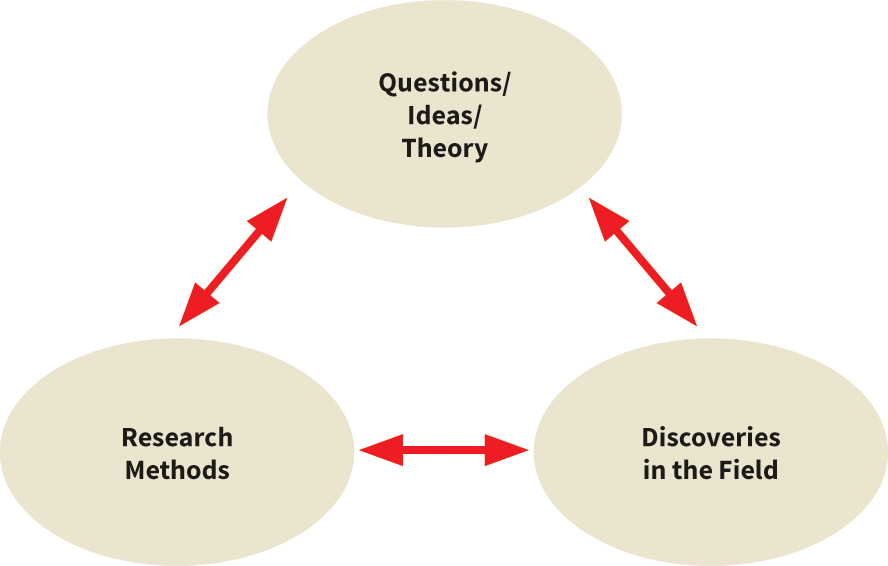
Today we can penetrate that “thick fog” of the remote past. This is not simply because new discoveries are being made all the time. It is because we have learned to ask some of the right questions, and have developed some of the right methods for answering them. The material evidence of the archaeological record has been lying around for a long time. What is new is our awareness that the methods of archaeology can give us information about the past, even the prehistoric past (before the invention of writing). The history of archaeology is therefore in the first instance a history of ideas, of theory, of ways of looking at the past. Next it is a history of developing research methods, employing those ideas and investigating those questions. And only third is it a history of actual discoveries.
We can illustrate the relationship between these aspects of our knowledge of the past with a simple diagram:
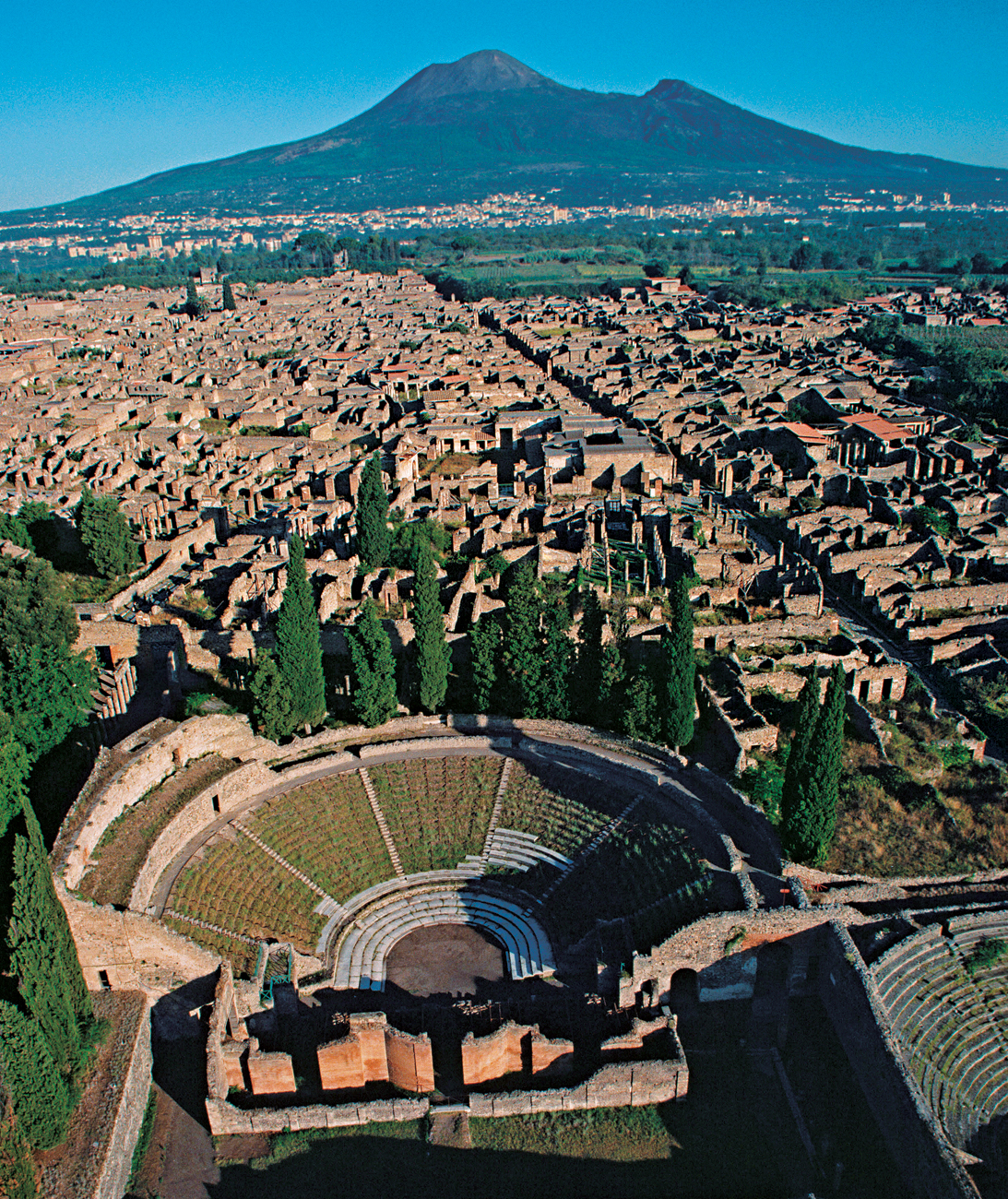
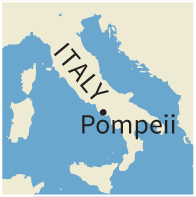
1.11.2 The Roman city of Pompeii lies in the shadow of Mount Vesuvius in Italy. When the volcano erupted in 79 CE, the entire city was buried, all but forgotten until excavations began in the mid-eighteenth century. Spectacular discoveries generated huge interest in the past, and greatly influenced the arts (see box, pp. 24–25).
The Speculative Phase
Humans have always speculated about their past, and most cultures have their own foundation myths to explain why society is how it is. The Greek writer Hesiod, for instance, who lived in the eighth century BCE, in his epic poem Works and Days envisaged the human past as falling into five stages: the Age of Gold and the Immortals, who “dwelt in ease and peace upon their lands with many good things”; the Age of Silver, when humans were less noble; the Age of Bronze; the Age of Epic Heroes; and lastly his own time, the Age of Iron and Dread Sorrow, when “men never rest from labor and sorrow by day and from perishing by night.”
Most cultures, too, have been fascinated by the societies that preceded them. The Aztecs exaggerated their Toltec ancestry, and were so interested in Teotihuacán, the huge city in Mexico abandoned hundreds of years earlier which they mistakenly linked with the Toltecs, that they incorporated ceremonial stone masks from that site in the foundation deposits of their own Great Temple (see box, pp. 570–71). A rather more detached curiosity about the relics of bygone ages developed in several early civilizations, where scholars and even rulers collected and studied objects from the past. Nabonidus, last native king of Babylon (reigned 555–539 BCE), took a keen interest in antiquities. In one important temple he dug down and discovered the foundation stone which had been laid some 2,200 years before. He housed many of his finds in a kind of museum at Babylon.
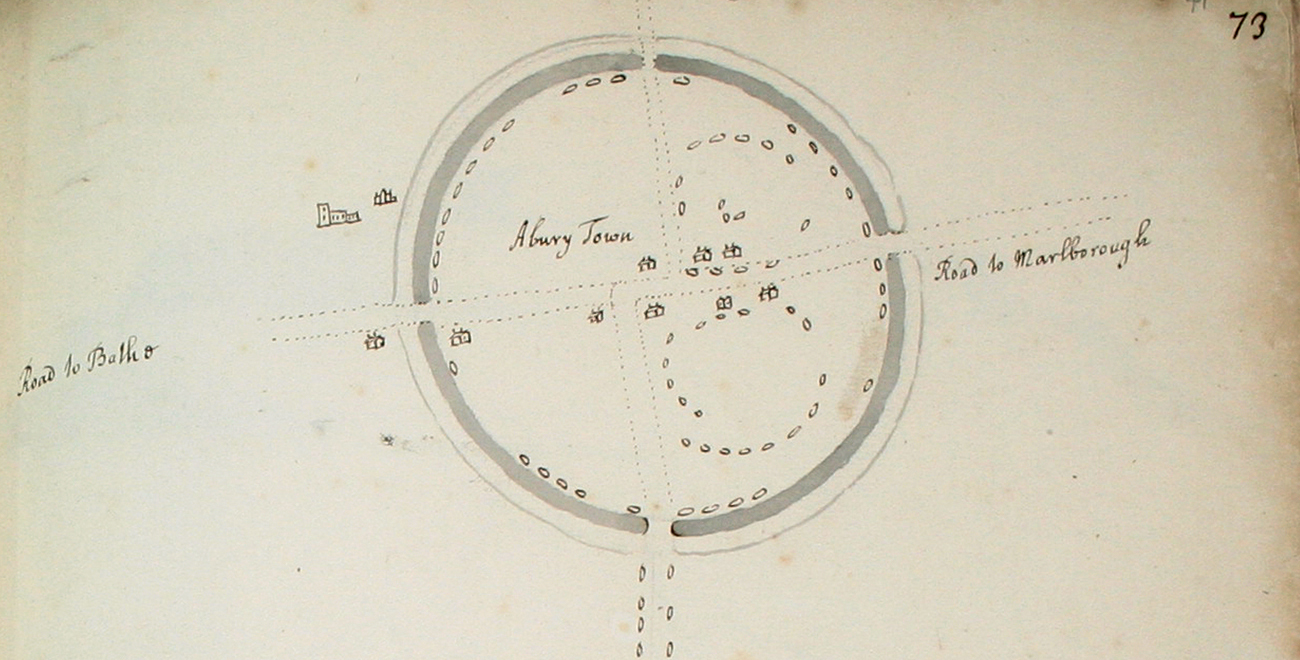
1.3 A page from the commonplace book of William Stukeley, with a sketch plan of standing stones at Avebury, southern England.
Arguably one of the earliest precursors to archaeology as we would define it was the search for holy objects. The Roman empress—and later saint—Helena (third–fourth centuries CE) journeyed east in search of Christian relics, and actively excavated for them. Later, during the revival of learning in Europe known as the Renaissance (fourteenth–seventeenth centuries), royalty and people of refinement began to form “cabinets of curiosities” in which curios and ancient artifacts were displayed with exotic minerals and all manner of specimens illustrative of what was called “natural history.” During the Renaissance, scholars also began to study and collect the relics of Classical antiquity. And they began too in more northern lands, far from the “civilized” centers of ancient Greece and Rome, to study the local relics of their own remote past. At this time these were mainly the field monuments—those conspicuous sites, often made of stone, which immediately attracted attention, such as the great stone tombs of northwestern Europe, and such impressive sites as Stonehenge, or Carnac in Brittany. In the Netherlands the poet and scholar Titia Brongersma (c. 1650–1700) was intrigued by these structures, also called “dolmens,” and initiated and funded one of the first recorded excavations of these monuments in Europe. She discovered that, contrary to the popular belief that the monuments had been constructed by giants, they were indeed graves. She included an ode to the excavated dolmen in her only published book of poetry. Later, William Stukeley (1687–1765) made systematic studies of some of these monuments in England, with accurate plans that are still useful today. Stukeley and his colleagues similarly demonstrated that these monuments had not been constructed by giants or devils, as suggested by local names such as the Devil’s Arrows, but by people in antiquity. He was also successful in phasing field monuments, showing that, since Roman roads cut barrows, the former must be later than the latter. Around 1675, the first archaeological excavation of the New World—a tunnel dug into Teotihuacán’s Pyramid of the Moon—was carried out by Carlos de Sigüenza y Góngora (1645–1700).
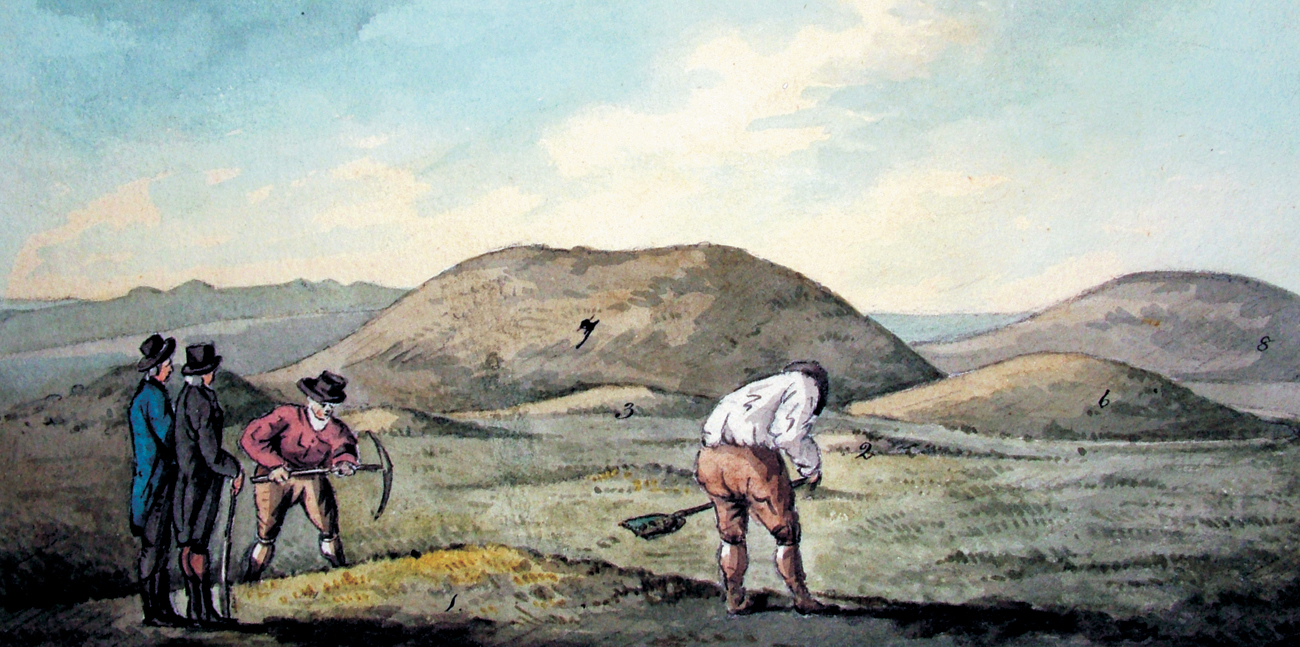
1.4 Early excavations: Richard Colt Hoare and William Cunnington direct a dig north of Stonehenge in 1805.
The First Excavations
In the eighteenth century more adventurous researchers initiated excavation of some of the most prominent sites. Pompeii in Italy was one of the first of these, with its striking Roman finds, although proper excavation did not begin there until the nineteenth century (see box overleaf). And in 1765, at the Huaca de Tantalluc on the coast of Peru, a mound was excavated and an offering discovered in a hollow; the mound’s stratigraphy was well described. Nevertheless, the credit for conducting what has been called “the first scientific excavation in the history of archaeology” traditionally goes to Thomas Jefferson (1743–1826), later in his career third President of the United States, who in 1784 dug a trench or section across a burial mound on his property in Virginia. Jefferson’s work marks the beginning of the end of the Speculative Phase.
In Jefferson’s time people were speculating that the hundreds of unexplained mounds known east of the Mississippi River had been built not by the indigenous Native Americans, but by a mythical and vanished race of Moundbuilders. Jefferson adopted what today we should call a scientific approach, that is, he tested ideas about the mounds against hard evidence—by excavating one of them. His methods were careful enough to allow him to recognize different layers in his trench, and to see that the many human bones present were less well preserved in the lower layers. From this he deduced that the mound had been reused as a place of burial on many separate occasions. Although Jefferson admitted, rightly, that more evidence was needed to resolve the Moundbuilder question, he saw no reason why ancestors of the present-day Native Americans themselves could not have raised the mounds.
Jefferson was ahead of his time. His sound approach—logical deduction from carefully excavated evidence, in many ways the basis of modern archaeology—was not taken up by any of his immediate successors in North America. In Europe, meanwhile, extensive excavations were being conducted, for instance by the Englishman Richard Colt Hoare (1758–1838), who dug into hundreds of burial mounds in southern Britain during the first decade of the nineteenth century. He successfully divided field monuments into different categories, such as “bell barrow,” which are still in use today. Toward the end of the nineteenth century Christian Maclagan (1811–1901) carried out the first scientific excavations of prehistoric sites in Scotland, including the distinctive type of Iron Age round tower known as a “broch” at Coldoch, though she did not receive credit for much of her work and was denied full membership of the Society of Antiquaries of Scotland. None of these excavations did much to advance the cause of knowledge about the distant past, since their interpretation was still within the biblical framework, which insisted on a short span for human existence.
Digging Pompeii: Past and Present
In the history of archaeology, the sites of Pompeii and Herculaneum, lying at the foot of Mount Vesuvius in the Bay of Naples, Italy, hold a very special place. Even today, when so many major sites have been systematically excavated, it is a moving experience to visit these wonderfully preserved Roman cities.
Pompeii’s fate was sealed on the momentous day in August 79 CE when Vesuvius erupted, a cataclysmic event described by Pliny the Younger, a Roman writer. The city was buried under several meters of volcanic ash, many of the inhabitants being asphyxiated as they tried to flee. Herculaneum was buried to an even greater depth. There the complete cities lay, known only from occasional chance discoveries, until antiquarian curiosity grew in the early eighteenth century.
In 1709 the Prince of Elboeuf, learning of the discovery of worked marble in the vicinity, proceeded to investigate by shafts and tunnels what we now know to be the site of Herculaneum. He had the good luck to discover the ancient theater—the first complete Roman example ever found—but he was mainly interested in works of art for his collection. These he removed without any kind of record of their location.
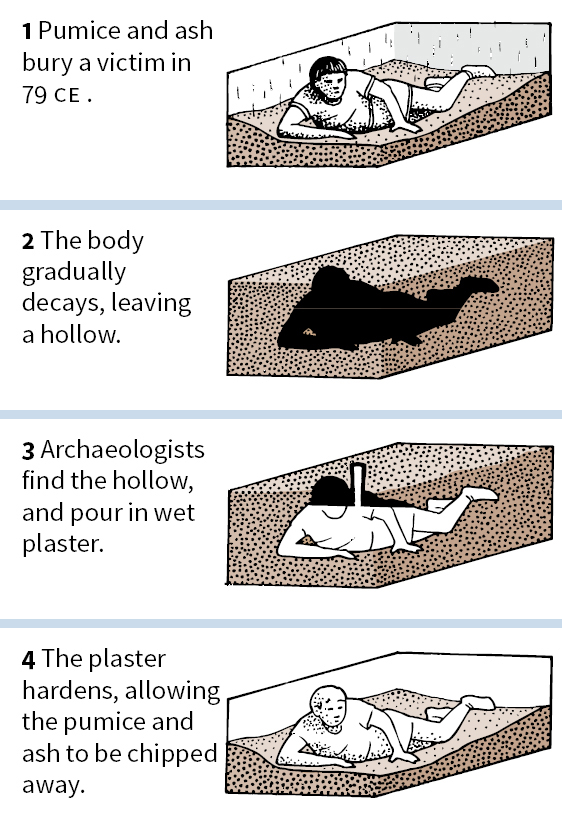
1.5 How a body shape is retrieved.
Following Elboeuf, clearance resumed in a slightly more systematic way in 1738 at Herculaneum, and in 1748 Pompeii was discovered. Work proceeded under the patronage of the king and queen of Naples, but they did little more than quarry ancient masterpieces to embellish their royal palace. Shortly afterward, on the outskirts of Herculaneum, the remains of a splendid villa were revealed, with statues and an entire library of carbonized papyri that have given the complex its name: the Villa of the Papyri. The villa’s dimensions were closely followed by J. Paul Getty in the construction of his museum at Malibu, California.
The first catalogue of the royal collection was published in 1757. Five years later the German scholar Johann Joachim Winckelmann (1717–1768), often regarded as the father of Classical archaeology, published his first Letter on the discoveries at Herculaneum. From that time onward the finds from both cities attracted enormous international attention, influencing styles of furniture and interior decoration, and inspiring several pieces of Romantic fiction.
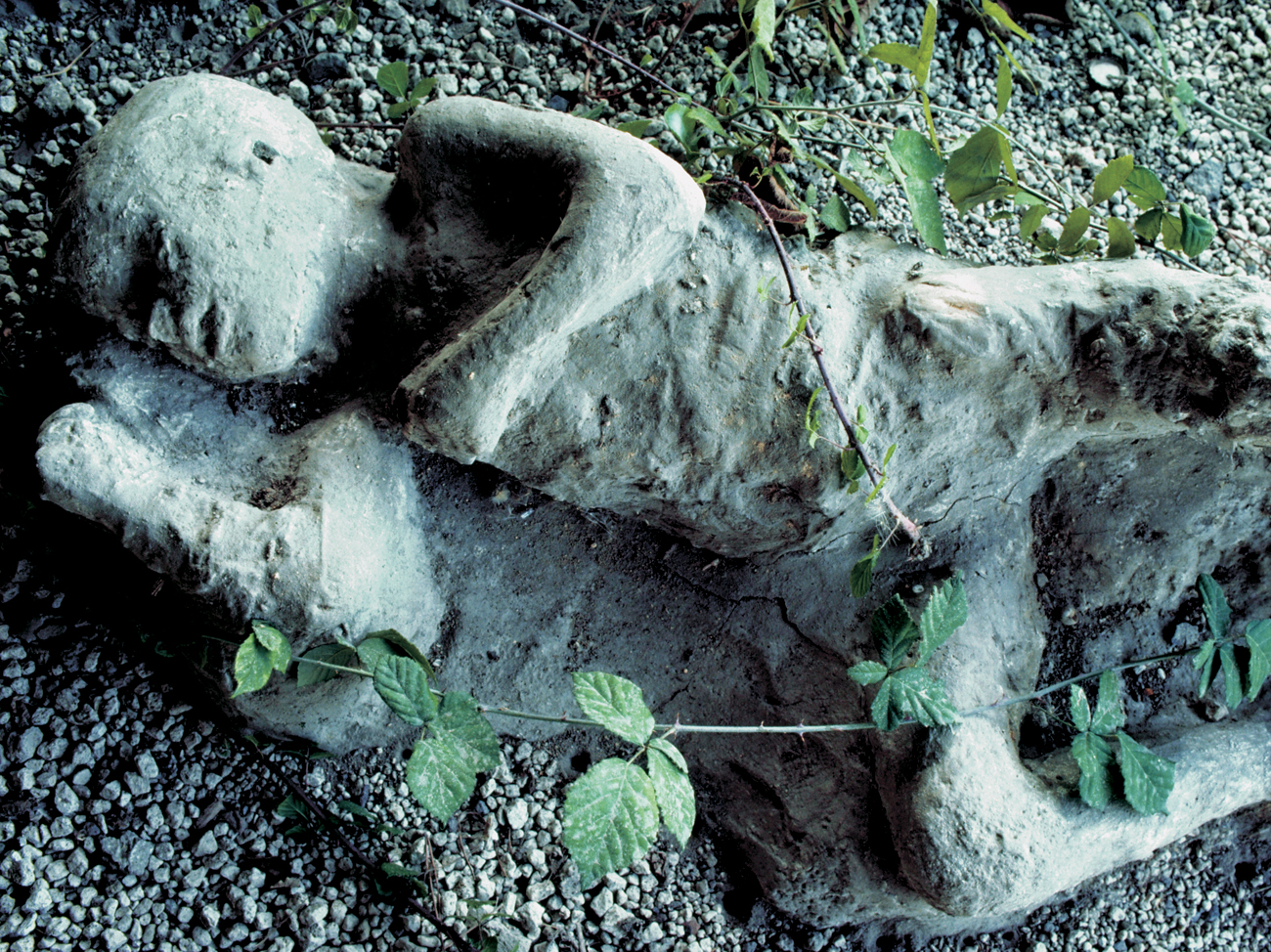
1.6 Plaster, poured into the cavity left by the body, re-creates the shape of a Pompeian struck down in flight.
Not until 1860, however, when Giuseppe Fiorelli (1823–1896) was put in charge of the work at Pompeii, did well-recorded excavations begin. In 1864 Fiorelli devised a brilliant way of dealing with the cavities in the ash within which skeletons were found: he simply filled them with plaster of Paris. The ash around the cavity acted as a mold, and the plaster took the accurate shape of the decayed body. (In a more recent technique, the excavators pour in transparent glass fiber. This allows bones and artifacts to be visible.)
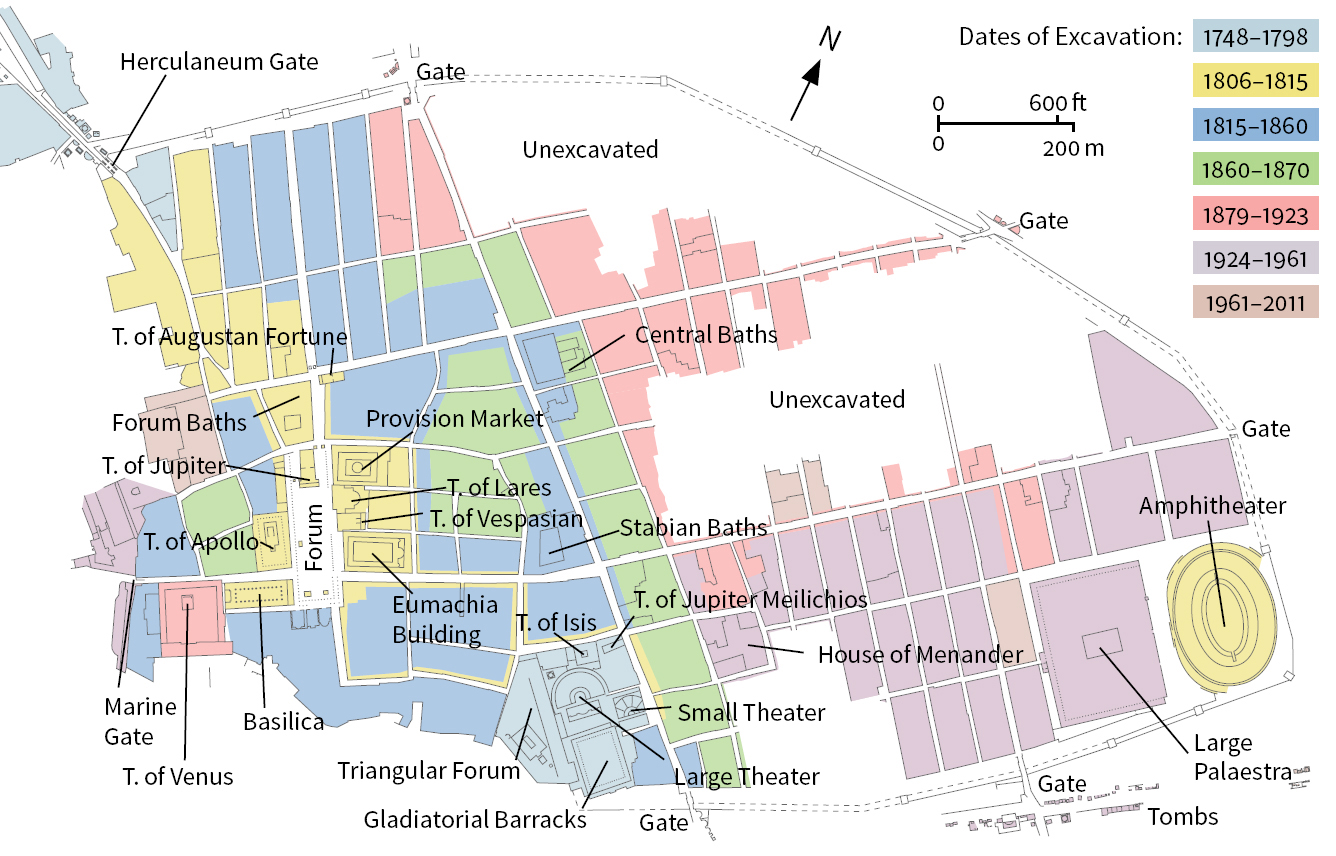
During the twentieth century, Amedeo Maiuri excavated at Pompeii between 1924 and 1961, and for the first time systematic excavations were carried out beneath the 79 CE ground level, revealing remains of earlier phases of the town. Around the same time, Tatiana Warsher (1880–1960) compiled her massive forty-volume “Codex Topographicus Pompeianus,” in which photography, accurate measurements, and the relationship of artifacts and paintings with specific types of architecture were used to create a detailed picture of the cityscape of Pompeii. Warsher’s dedication to detail was meticulous—even her guidebook Pompeii in Three Hours included a hundred illustrations and plans. In more recent years, such work has been supplemented by targeted excavations by many international teams of scholars. They have uncovered a complex history of changing property boundaries and land use, revealing how Pompeii grew from a small rural settlement into a sophisticated Roman town and throwing much new light on its social and economic development.
1.7 Preservation conditions at Pompeii are remarkable: carbonized eggs are among the survivors.
Pompeii remains the most complete urban excavation ever undertaken. The town plan is clear in its essentials; most of the public buildings have been investigated, along with innumerable shops and private houses. Yet the potential for further study and interpretation is enormous.
1.8 Sketch plan of Pompeii, showing the excavated areas.
Today it is not difficult for the visitor to Pompeii to echo the words of Shelley in his Ode to Naples, written almost two centuries ago:
“I stood within the City disinterred;/And heard the autumnal leaves like light footfalls/Of spirits passing through the streets; and heard/The Mountain’s slumberous voice at intervals/Thrill through those roofless halls.”
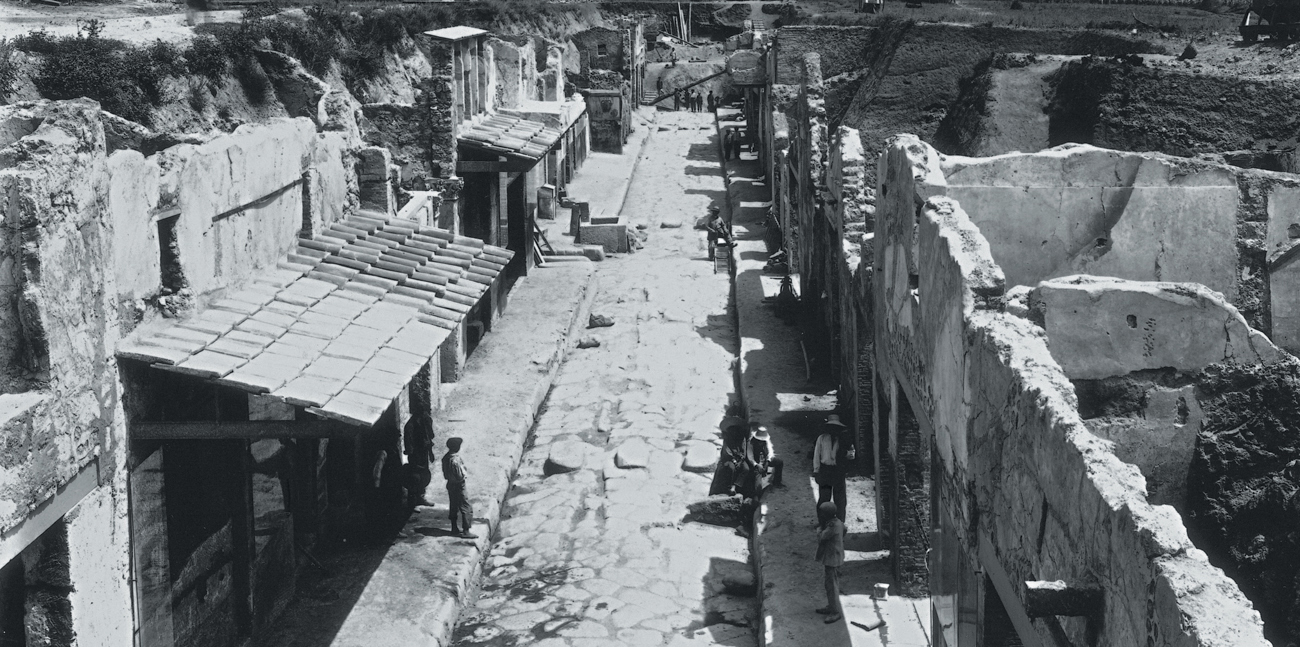
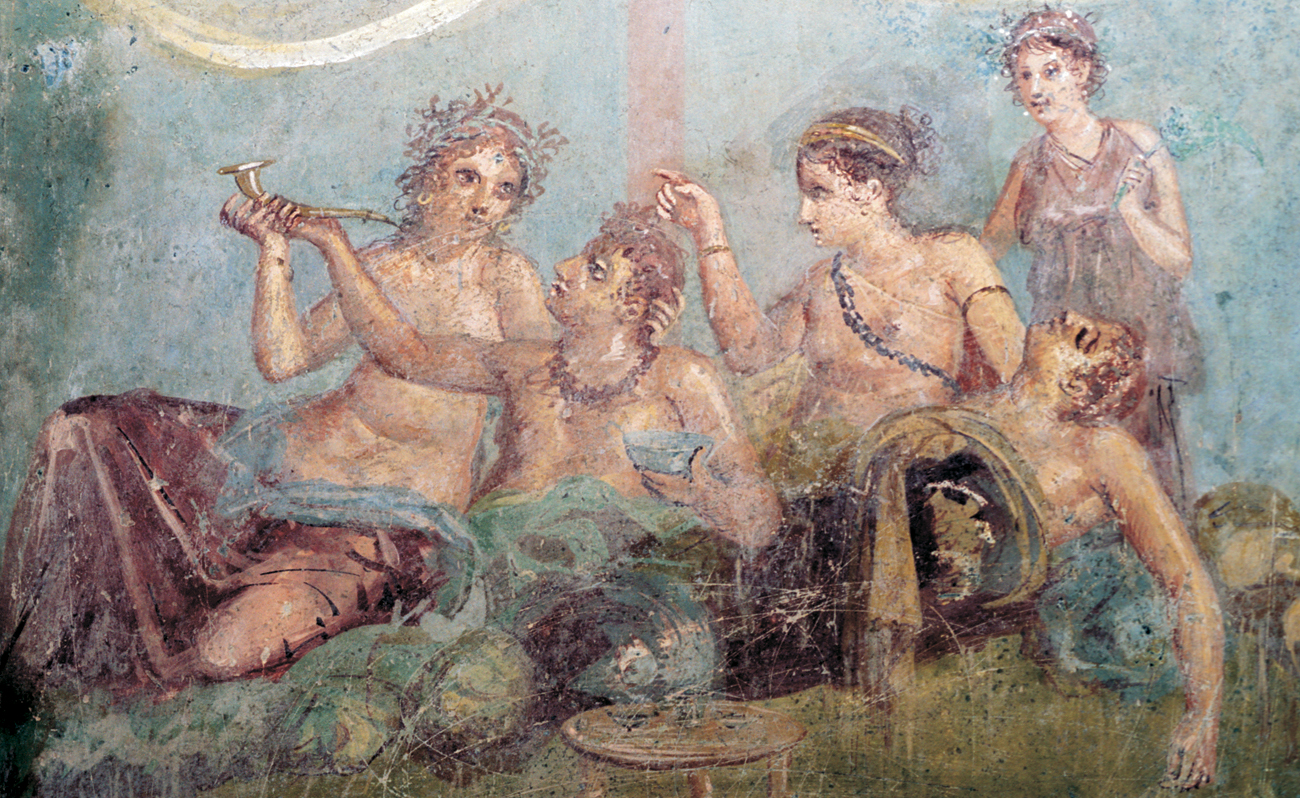
1.9 Early twentieth-century excavations of the Via dell’ Abbondanza, Pompeii’s main thoroughfare.1.10 Wall painting from the House of the Chaste Lovers; a slave-girl watches two couples enjoying a banquet.
The Beginnings of Modern Archaeology
It was not until the mid-nineteenth century that the discipline of archaeology became truly established. Already in the background were significant achievements in the newly developed science of geology. The hundreds of fossils recovered and described by the English amateur paleontologist Mary Anning (1799–1847) supported the argument that the earth was older than just a few thousand years. The Scottish geologist James Hutton (1726–1797), in his Theory of the Earth (1785), had studied the stratification of rocks (their arrangement in superimposed layers or strata), establishing principles that were to be the basis of archaeological excavation, as foreshadowed by Jefferson. Hutton showed that the stratification of rocks was due to processes still ongoing in seas, rivers, and lakes. This was the principle of uniformitarianism. Charles Lyell (1797–1875) also argued, in his Principles of Geology (1833), that geologically ancient conditions were in essence similar to, or “uniform with,” those of our own time. This idea could be applied to the human past also, and marks one of the fundamental notions of modern archaeology: that in many ways the processes of the past much resembled the present.
The Antiquity of Humankind
These ideas did much to lay the groundwork for what was one of the significant events in the intellectual history of the nineteenth century (and an indispensable one for the discipline of archaeology): the establishment of the antiquity of humankind. It was a French customs inspector, Jacques Boucher de Perthes (1788–1868), working in the gravel quarries of the Somme River, who in 1841 published convincing evidence for the association there of human artifacts (of chipped stone, what we would today call hand-axes or “bifaces”) and the bones of extinct animals. Boucher de Perthes argued that this indicated human existence for a long time before the biblical Flood. His view did not at first win wide acceptance, but in 1859 two leading British scholars, John Evans (1823–1908) and Joseph Prestwich (1812–1896), visited him in France and were persuaded of the validity of his findings.
It was now widely agreed that human origins extended far back into a remote past, so that the biblical notion of the creation of the world just a few thousand years before our own time could no longer be accepted. The possibility of a prehistory of humankind, indeed the need for one, was established; the term itself came into general use after the publication by John Lubbock (1834–1913) of his book Prehistoric Times in 1865, which went on to become a bestseller.
The Concept of Evolution
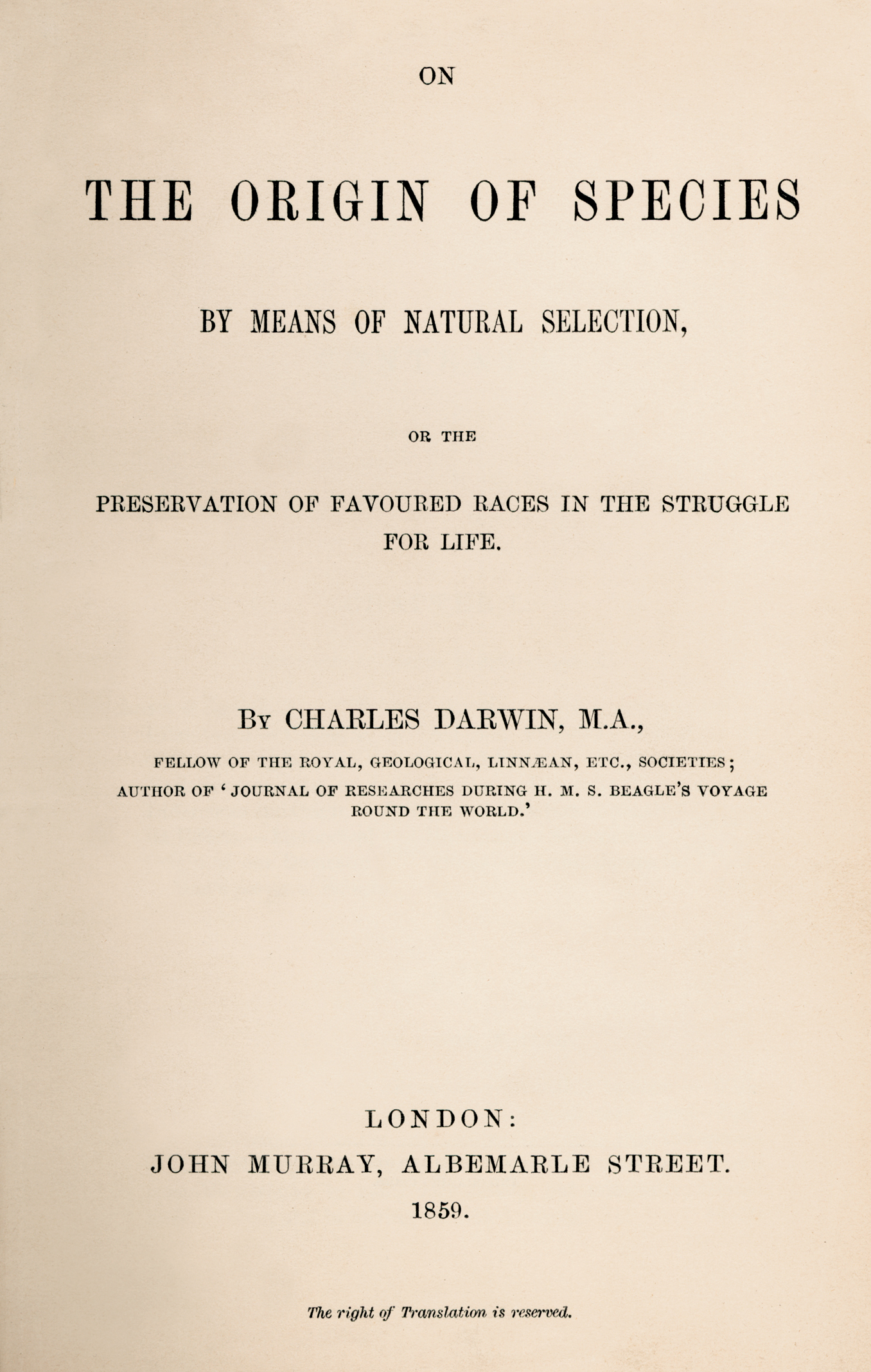
These ideas harmonized well with the findings of Charles Darwin (1809–1882), whose fundamental work, On the Origin of Species, published in 1859, established the concept of evolution by natural selection as the best explanation for the origin and development of all plants and animals. The idea of evolution itself was not new—earlier scholars had suggested that living things must have changed or evolved through the ages. What Darwin demonstrated was how this change occurred. In the struggle for existence, environmentally better-adapted individuals of a particular species would survive (or be “naturally selected”), whereas less well-adapted ones would die. The surviving individuals would pass on their advantageous traits by heredity to their offspring and gradually the characteristics of a species would change to such an extent that a new species emerged. This was the process of evolution. Darwin’s other great work, The Descent of Man, was not published until 1871, but already the implications were clear: that the human species had emerged as part of this same process. The search for human origins in the material record, by the techniques of archaeology, could begin.
1.11 The title page of Darwin’s book; his ideas about evolution proved highly influential, not least in archaeology.
Evolution: Darwin’s Great Idea
The idea of evolution has been of central significance in the development of archaeological thinking. In the first place it is associated with the name of Charles Darwin, whose On the Origin of Species (1859) effectively explained the problem of the origin and development of plant and animal species, including humankind. It did so by insisting that within a species there is variation (one individual differs from another), that the transmission of physical traits is by heredity alone, and that natural selection determines survival. Darwin certainly had precursors, among whom Thomas Malthus (1766–1834) was influential with his notion of competition through population pressure, and the geologist Charles Lyell with his insistence upon gradual change.
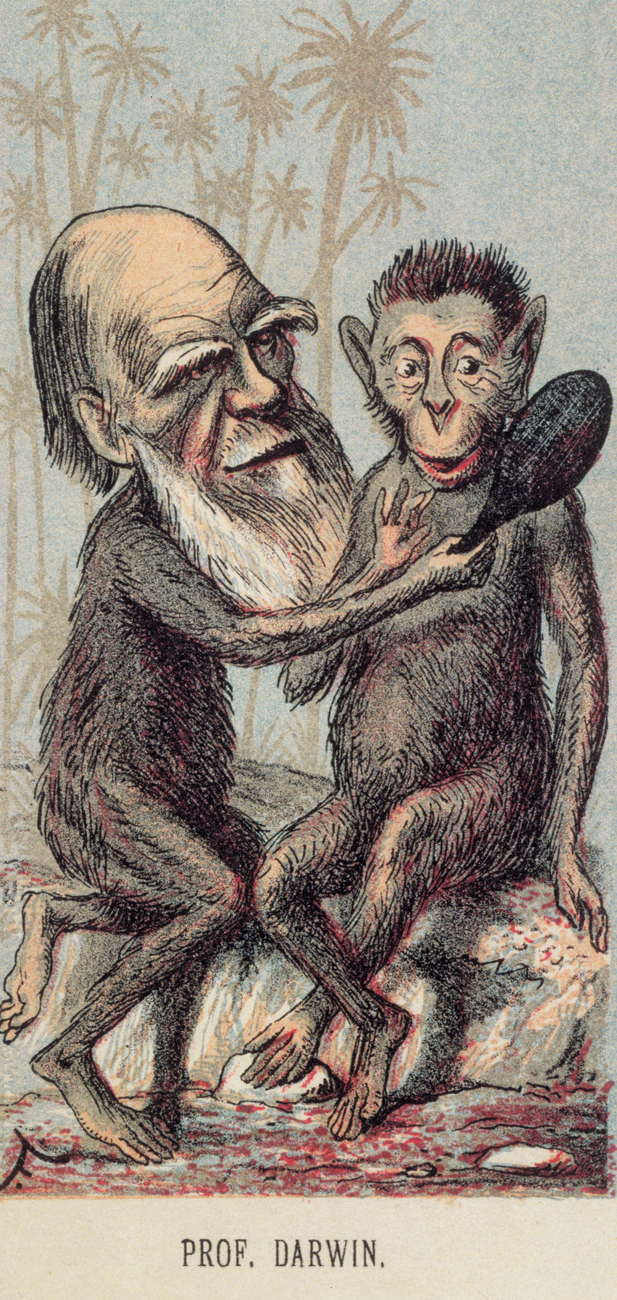
1.12 Charles Darwin caricatured as an ape, published in 1874. The drawing was captioned with a line from William Shakespeare’s Love’s Labour’s Lost: “This is the ape of form.”
The Impact on Archaeology
Darwin’s work had an immediate effect on archaeologists such as General Pitt-Rivers, John Evans, and Oscar Montelius, laying the foundations for the study of the typology of artifacts. His influence on social thinkers and anthropologists was even more significant: among them was Karl Marx (Marx was also influenced by the American anthropologist Lewis Henry Morgan—see p. 29).
The application of the principles of evolution to social organization does not always follow the detailed mechanisms of hereditary transmission which apply to the biologically defined species. For culture can be learned, and passed on between generations more widely than between parents and their children. Often, indeed, the term “evolutionary” applied to an argument or an explanation simply means “generalizing.” Here it is important to be aware of the great swing in anthropology at the end of the nineteenth century away from the broad generalizations of Lewis Henry Morgan and Edward Tylor in favor of a much more detailed, descriptive approach, often termed historical particularism, and associated with the anthropologist Franz Boas. In the years before and after World War II American anthropologists, such as Leslie White and Julian Steward, were therefore innovators in rejecting Boas and seeking to generalize, to find explanations for long-term change. White was for many years the only protagonist of what may be termed cultural evolutionism, with books such as The Evolution of Culture (1959). White and Steward strongly influenced the New Archaeologists of the 1960s and 1970s, in particular Sally Binford, Lewis Binford, Kent Flannery, and David L. Clarke.
Recent Approaches
Evolutionary thinking has continued to play a major role in the consideration of human origins. The theory of genetic drift was an important factor in biological evolution, explaining how random genetic fluctuations in a population can lead to the loss of rare variants of particular genes. This is a process separate from natural selection. It has also been appreciated that the process of evolution does not need to be gradual; the concept of punctuated equilibrium has come into play, where a species may show no signs of evolutionary change for long periods, until a moment in time when change is sudden. Nor need evolution be simple: see Chapter 12 for further discussion. The debate, dominant in the United States, on “intelligent design” is no more than an update of traditional arguments for the existence of God, modified to avoid the identity of the designer—it is not science. But increasingly it is realized that Darwinian evolutionary thought has not yet produced mechanisms which adequately describe the processes involved in human cultural development. The notion of the “meme,” supposedly a specific and transmissable agent for change based on the concept of the “gene,” has not proved useful in practice; nor has evolutionary psychology. There is no suggestion here that the application of Darwinian evolutionary theory is incorrect or inappropriate; in fact there are indications now that computer-aided simulations, modeling, and other approaches to diversification such as phylogenetic studies can be applied to linguistics and material culture as well as to molecular genetics.
1.13 C. J. Thomsen shows visitors around the Danish National Museum, arranged according to his Three Age System.
The Three Age System
As we have seen, some archaeological techniques, notably in the field of excavation, were already being developed. So too was another conceptual device which proved very useful for the progress of European prehistory: the Three Age System. As early as 1808, Colt Hoare had recognized a sequence of stone, brass, and iron artifacts within the barrows he excavated, but this was first systematically studied when, in 1836, the Danish scholar C. J. Thomsen (1788–1865) published his guidebook to the National Museum of Copenhagen. This appeared in English in 1848 as the Guide to Northern Archaeology. Thomsen proposed that the collections could be divided into those coming from a Stone Age, a Bronze Age, and an Iron Age. This system was soon found useful by scholars throughout Europe. A division in the Stone Age was later established between the Paleolithic (“Old Stone Age”) and the Neolithic (“New Stone Age”). These terms were less applicable to Africa, where bronze was not used south of the Sahara, or to the Americas, where bronze was less important and iron was not used before the European conquest. But it was conceptually significant. The Three Age System established the principle that by studying and classifying prehistoric artifacts one could produce a chronological ordering, and say something of the periods in question. Archaeology was moving beyond mere speculation about the past, becoming instead a discipline involving careful excavation and systematic study of the artifacts unearthed. Although superseded by chronometric dating methods (see Chapter 4), the Three Age System remains one of the fundamental divisions of archaeological materials today.
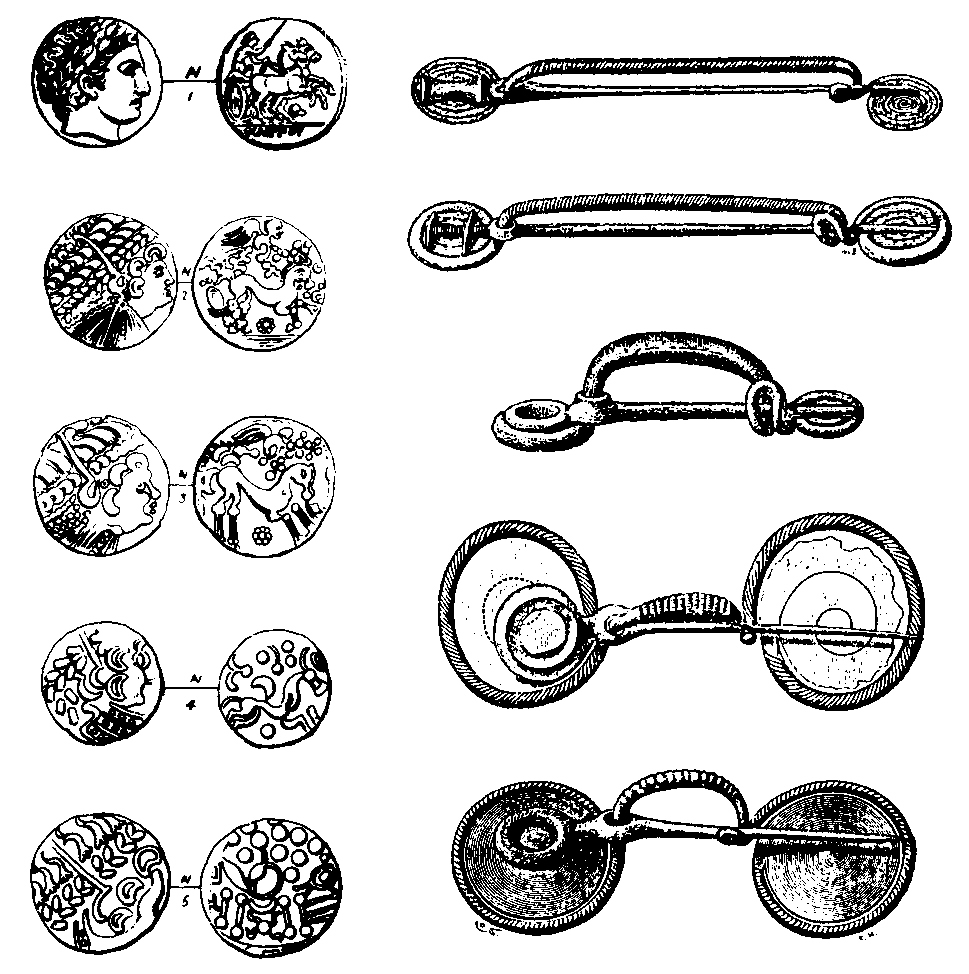
1.14 The influence of Darwin is evident in these early typologies. (Left) John Evans sought to derive the Celtic British coinage, bottom, from the gold stater of Philip of Macedon, top. (Right) Montelius’ arrangement of Iron Age fibulae (cloak pins), showing their evolution.
These three great conceptual advances—the antiquity of humankind, Darwin’s principle of evolution, and the Three Age System—offered a framework for studying the past, and for asking intelligent questions about it. Darwin’s ideas were influential also in another way. They suggested that human cultures might have evolved in a manner analogous to plant and animal species. Soon after 1859, British scholars such as General Pitt-Rivers (whom we shall meet again) and John Evans were devising schemes for the evolution of artifact forms which gave rise to the method of “typology”—the arrangement of artifacts in chronological or developmental sequence—later greatly elaborated by the Swedish scholar Oscar Montelius (1843–1921).
Ethnography and Archaeology
Another important strand in the thought of the time was the realization that the study by ethnographers of living communities in different parts of the world could be a useful starting point for archaeologists seeking to understand something of the lifestyles of their own early native inhabitants who clearly had comparably simple tools and crafts. For example, colonialist thinking meant that contact with indigenous communities in North America provided antiquarians and historians with models for tattooed images of Celts and Britons.
And at the same time ethnographers and anthropologists were themselves producing schemes of human progress. Strongly influenced by Darwin’s ideas about evolution, the British anthropologist Edward Tylor (1832–1917) and his American counterpart Lewis Henry Morgan (1818–1881) both published important works in the 1870s arguing that human societies had evolved from a state of savagery (primitive hunting) through barbarism (simple farming) to civilization (the highest form of society). The ideas in Morgan’s book Ancient Society (1877)—particularly the notion that people had once lived in a state of primitive communism, sharing resources equally—strongly influenced Karl Marx and Friedrich Engels, who drew on them in their writings about pre-capitalist societies, thus influencing many later Marxist archaeologists. The paradigm of social progression was couched in colonialism, assuming Western civilization as the apex of the human story, and is a legacy that many archaeologists continue to struggle with in their interpretations of past societies.
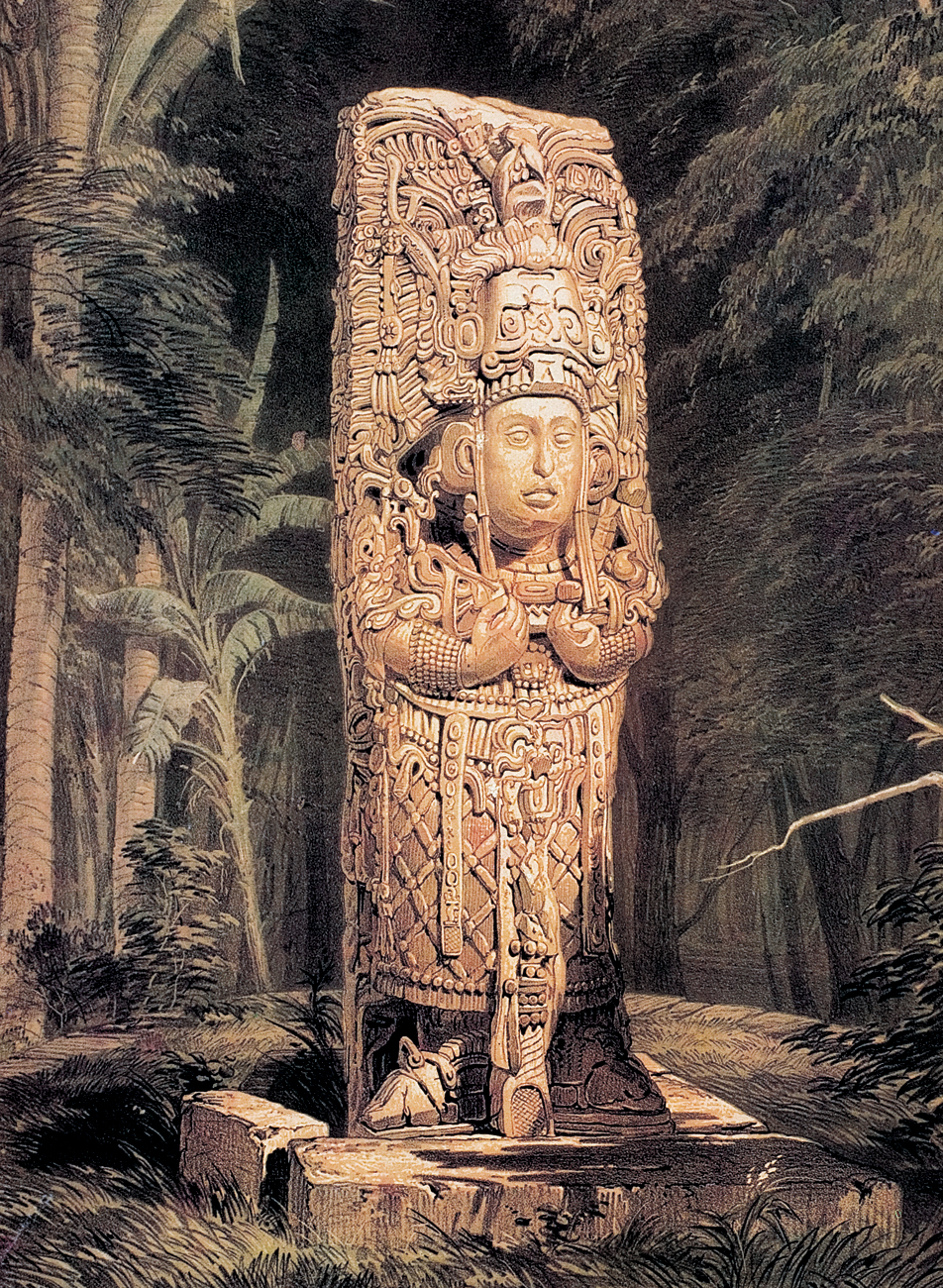
1.15 Frederick Catherwood’s accurate, if somewhat romantic, drawing of a stela at Copán; at the time of his visit to the site in 1840 Maya glyphs had not yet been deciphered.
Discovering the Early Civilizations
By the 1880s, then, many of the ideas underlying modern archaeology had been developed. But these ideas themselves took shape against a background of major nineteenth-century discoveries of ancient civilizations in the Old World and the New World.
The splendors of ancient Egyptian civilization had already been brought to the attention of an avid public after Napoleon’s military expedition of 1798–99. It was the discovery by one of his soldiers of the Rosetta Stone that eventually provided the key to understanding Egyptian hieroglyphic writing. Inscribed on the stone are identical texts written in both Egyptian and Greek scripts. The Frenchman Jean-François Champollion (1790–1832) used this bilingual inscription to decipher the hieroglyphs in 1822, after fourteen years’ work. A similar piece of brilliant scholarly detection helped unlock the secrets of cuneiform writing, the script used for many languages in ancient Mesopotamia. It was deciphered by Henry Rawlinson (1810–1895), who spent twenty years studying a sixth-century BCE trilingual inscription located on an inaccessible cliff-face between Baghdad and Tehran before cracking the cuneiform code. Other ancient scripts would only be deciphered well into the twentieth century: for example, Linear B was only deciphered in 1952, after more than two decades’ work on the Mycenaean Greek script by Alice Kober (1906–1950), Michael Ventris (1922–1956), and John Chadwick (1920–1998). Meanwhile, the ancient Indus, or Harappan, script has yet to be deciphered.
Egypt and the Near East also held a fascination for the American lawyer and diplomat John Lloyd Stephens (1805–1852), but it was in the New World that he was to make his name. His travels in Yucatán, Mexico, with the English artist Frederick Catherwood (1799–1854), and the superbly illustrated books they produced together in the early 1840s, revealed for the first time to an enthusiastic public the ruined cities of the ancient Maya. Unlike contemporary researchers in North America, who continued to argue for a vanished white race of Moundbuilders as the architects of the earthworks there, Stephens rightly believed that the Maya monuments were created by the ancestors of the indigenous Maya still living in the area. Stephens also noted that there were similar hieroglyphic inscriptions at the different sites, which led him to argue for Maya cultural unity—but the glyphs would not be deciphered until the 1960s, by Tatiana Proskouriakoff (1909–1985).
If readings of the Bible inspired the search for lost civilizations in Egypt and the Near East, it was readings of Homer’s account of the Trojan Wars in his narrative poem the Iliad that fired the imagination of the German banker Heinrich Schliemann (1822–1890), and sent him on a quest for the city of Troy. With remarkable luck and good judgment he successfully identified it in a series of field campaigns at Hissarlik, western Turkey, in the 1870s and 1880s. Not content with that achievement, he then also dug at Mycenae in Greece and revealed—as at Troy—a hitherto unknown prehistoric civilization. Schliemann’s methods of excavation have been criticized as crude and cavalier, but few were rigorous in his day, and he demonstrated how interpretation of the stratigraphy of a mound site could be used to reconstruct the remote past. Nevertheless, it fell to the next generation of archaeologists, led by General Pitt-Rivers and William Flinders Petrie, to establish the true basis of modern field techniques (see box, pp. 30–33).
The Development of Field Techniques
It was only in the late nineteenth century that a sound methodology of scientific excavation began to be generally adopted. From that time, and over the twentieth century, major figures stand out who in their various ways helped to create modern field methods.
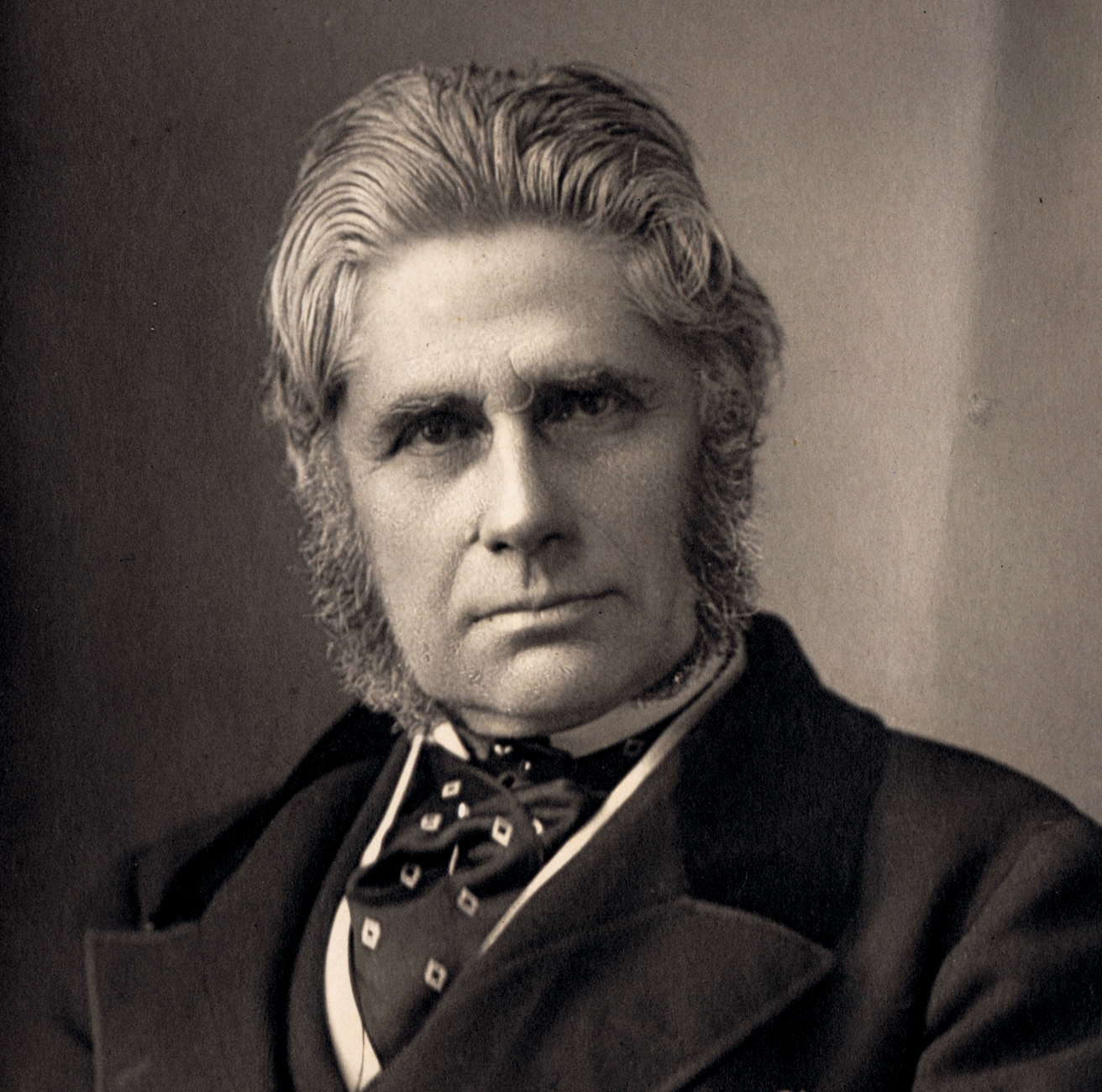
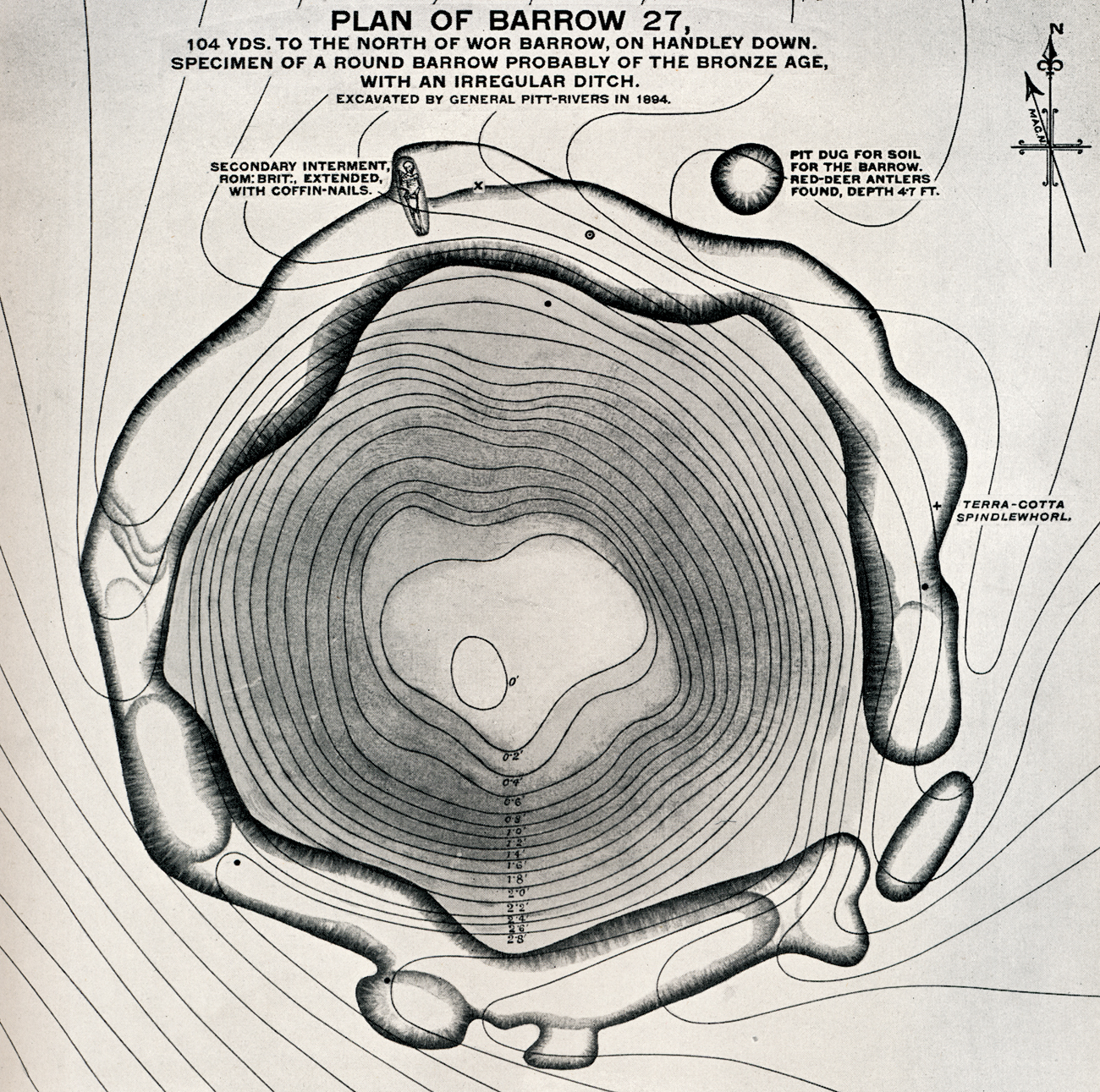
1.16 General Pitt-Rivers.1.17 An example of Pitt-Rivers’s meticulous records: his plan of Barrow 27 on Cranborne Chase.
General Augustus Lane-Fox Pitt-Rivers (1827–1900)
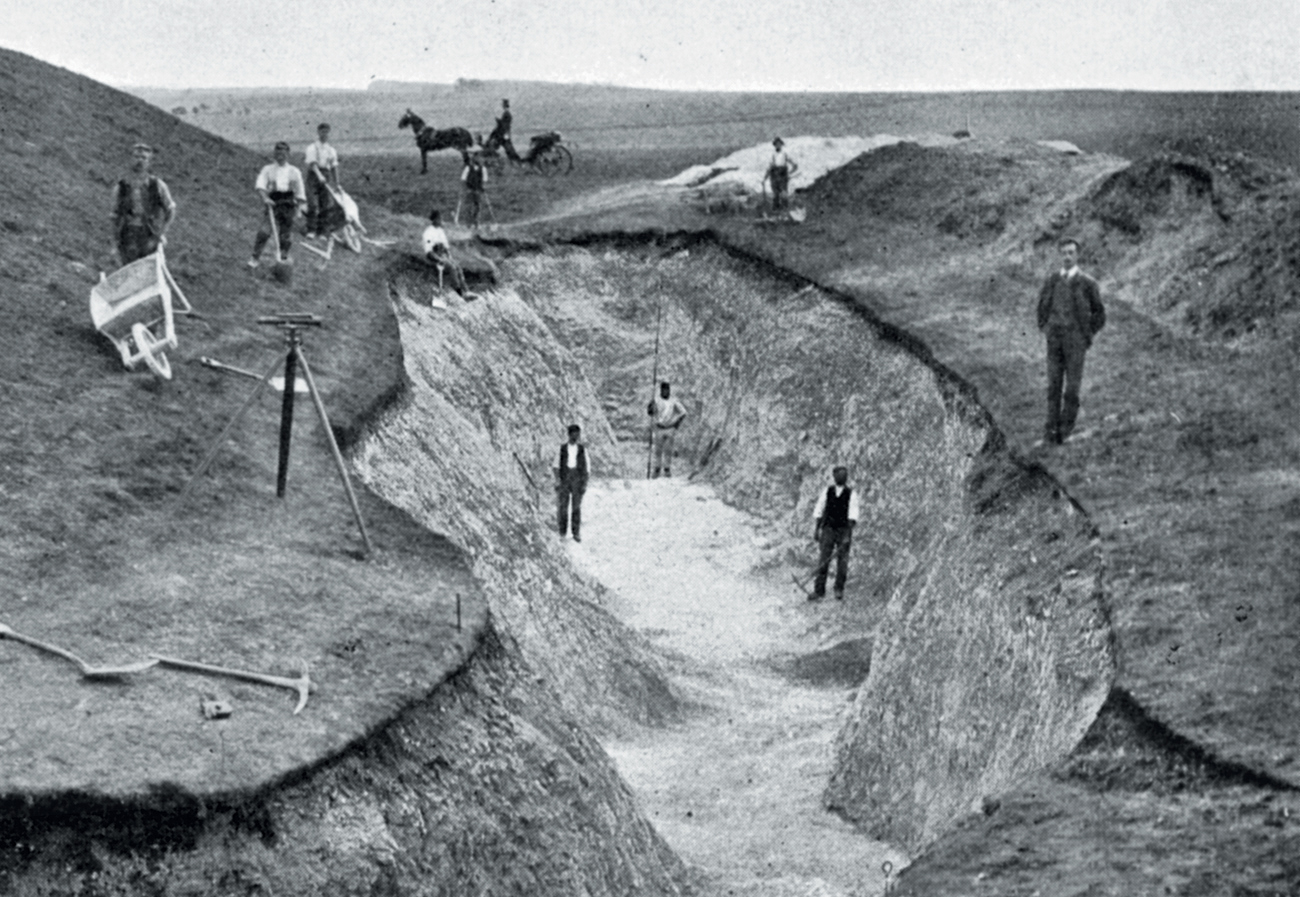
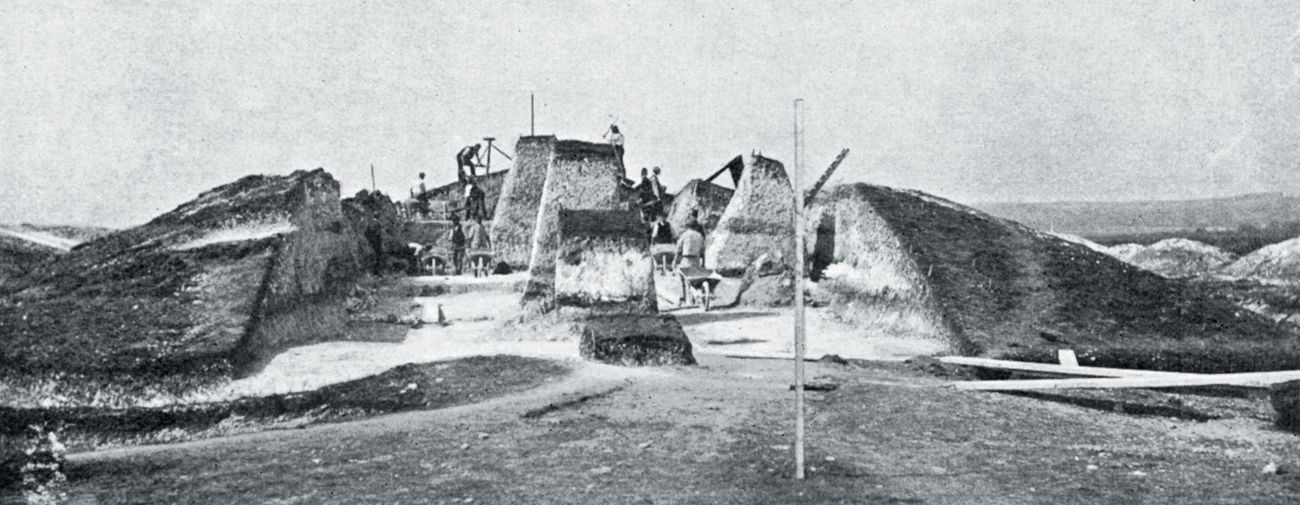
For much of his life a professional soldier, Pitt-Rivers brought long experience of military methods, survey, and precision to impeccably organized excavations on his estates in southern England. Plans, sections, and even models were made, and the exact position of every object was recorded. He was not concerned with retrieving beautiful treasures, but with recovering all objects, no matter how mundane. Pitt-Rivers was a pioneer in his insistence on total recording, and his four privately printed volumes, describing his excavations on Cranborne Chase from 1887 to 1898, represent the highest standards of archaeological publication; in fact, his recording was so thorough that the site continues to be reinterpreted through these monographs today.
1.18 A view of the Wor Barrow ditch during Pitt-Rivers’s excavation at the site in the mid-1890s.1.19 Excavation in progress at Wor Barrow, Cranborne Chase. The barrow was eventually removed.
Sir William Flinders Petrie (1853–1942) and Hilda Petrie (1871–1956)
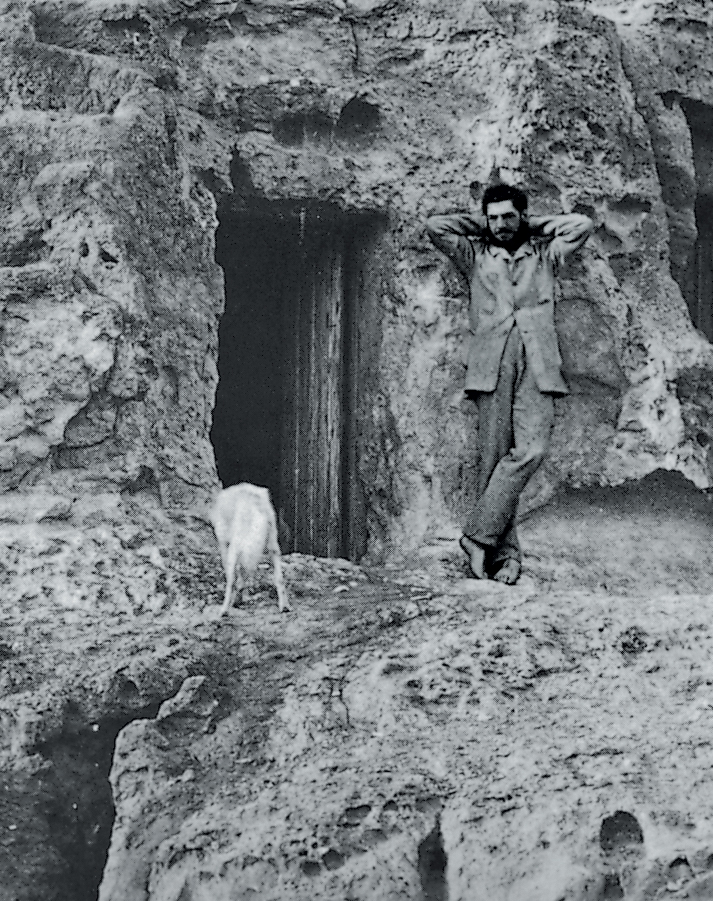
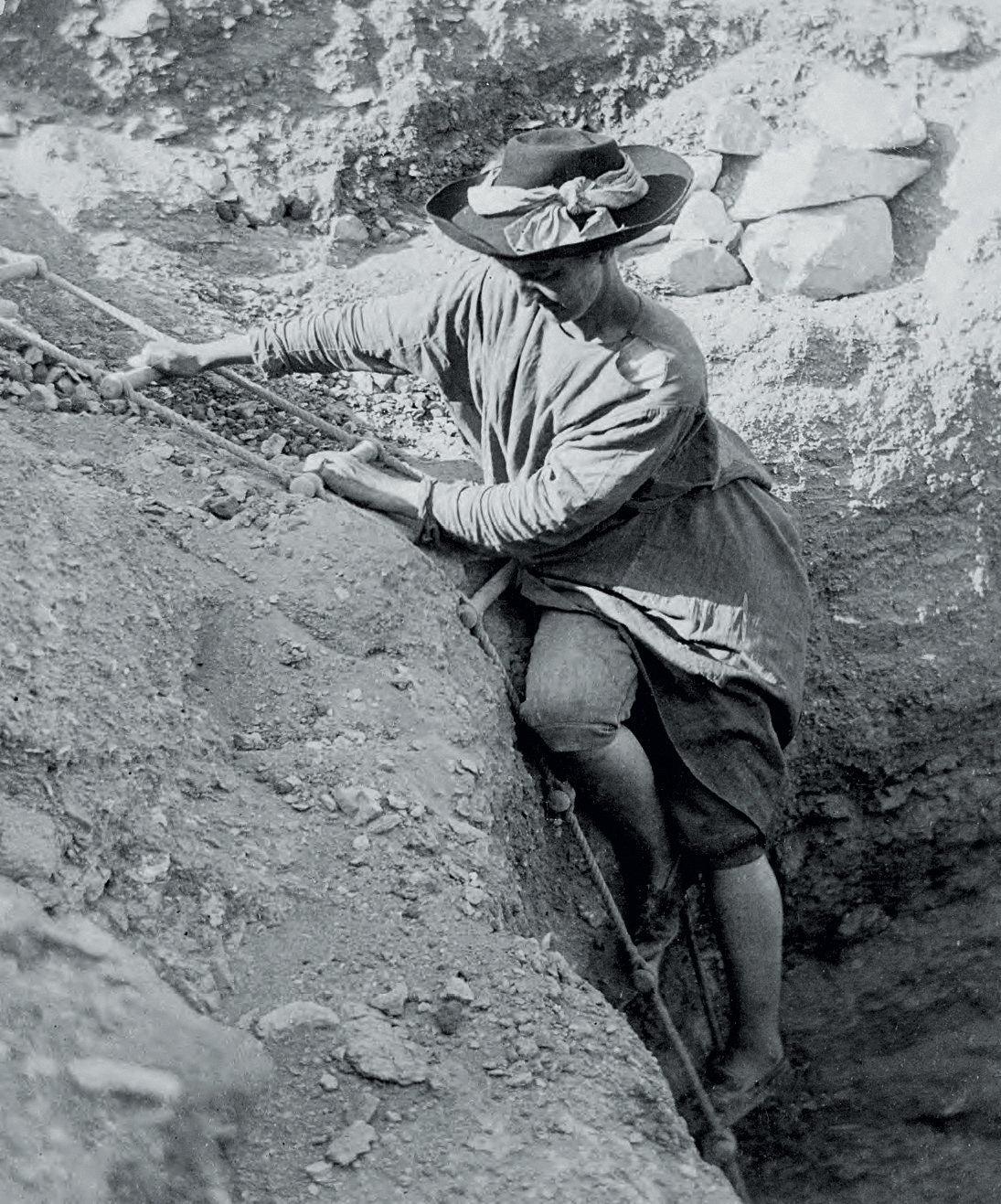
A younger contemporary of Pitt-Rivers, Petrie was likewise noted for his meticulous excavations and his insistence on the collection and description of everything found, as well as on full publication. He employed these methods in his exemplary excavations in Egypt, and later in Palestine, from the 1880s until his death. Petrie also devised his own technique of seriation or “sequence dating,” which he used to bring chronological order to the 2,200 pit graves of the Naqada cemetery in Upper Egypt (see Chapter 4 for more about seriation). Hilda Petrie contributed to many different projects in Egypt, including Saqqara, Abydos, and Al-Amarnt. Her most important contribution was as a fundraiser, improving and maintaining the visibility of Flinders’s excavations so that the projects remained financed.
1.20 Flinders Petrie outside the tomb in which he lived in Giza, Egypt, in the 1880s.1.21 Hilda Petrie descending into a tomb, 1897–98.
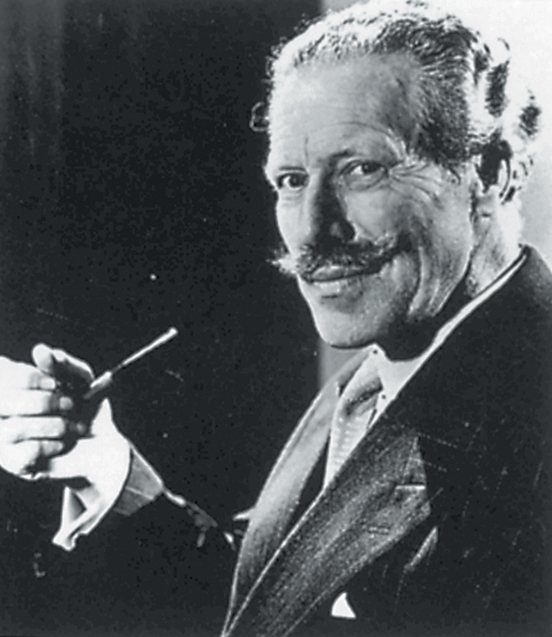
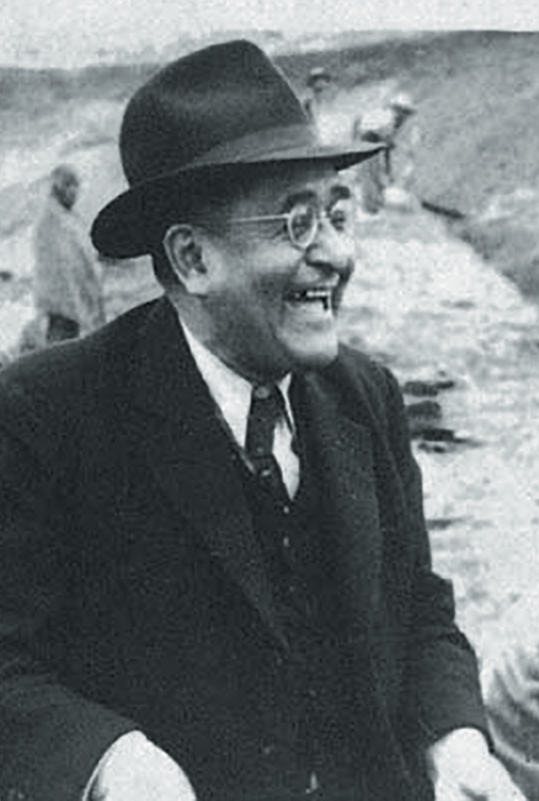
Sir Mortimer Wheeler (1890–1976) and Tessa Verney Wheeler (1893–1936)
Wheeler fought in the British army in both World Wars and, in the same way as Pitt-Rivers, brought military precision to his excavations, notably through techniques such as the grid-square method (known now as the Wheeler box-grid, Chapter 3). He is particularly well known for his work at British hillforts, notably Maiden Castle.
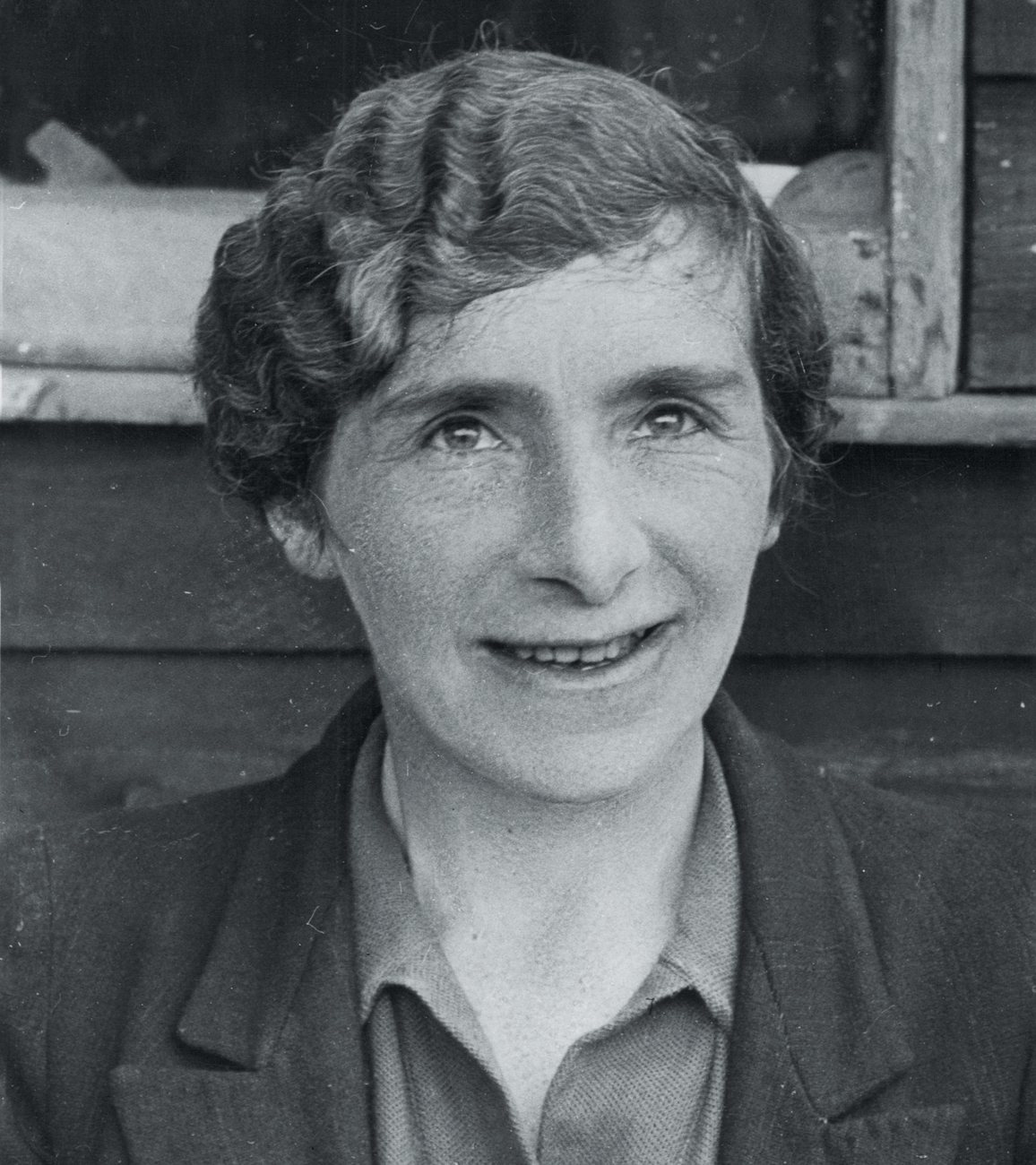
1.22 Sir Mortimer Wheeler.1.23 Tessa Wheeler.
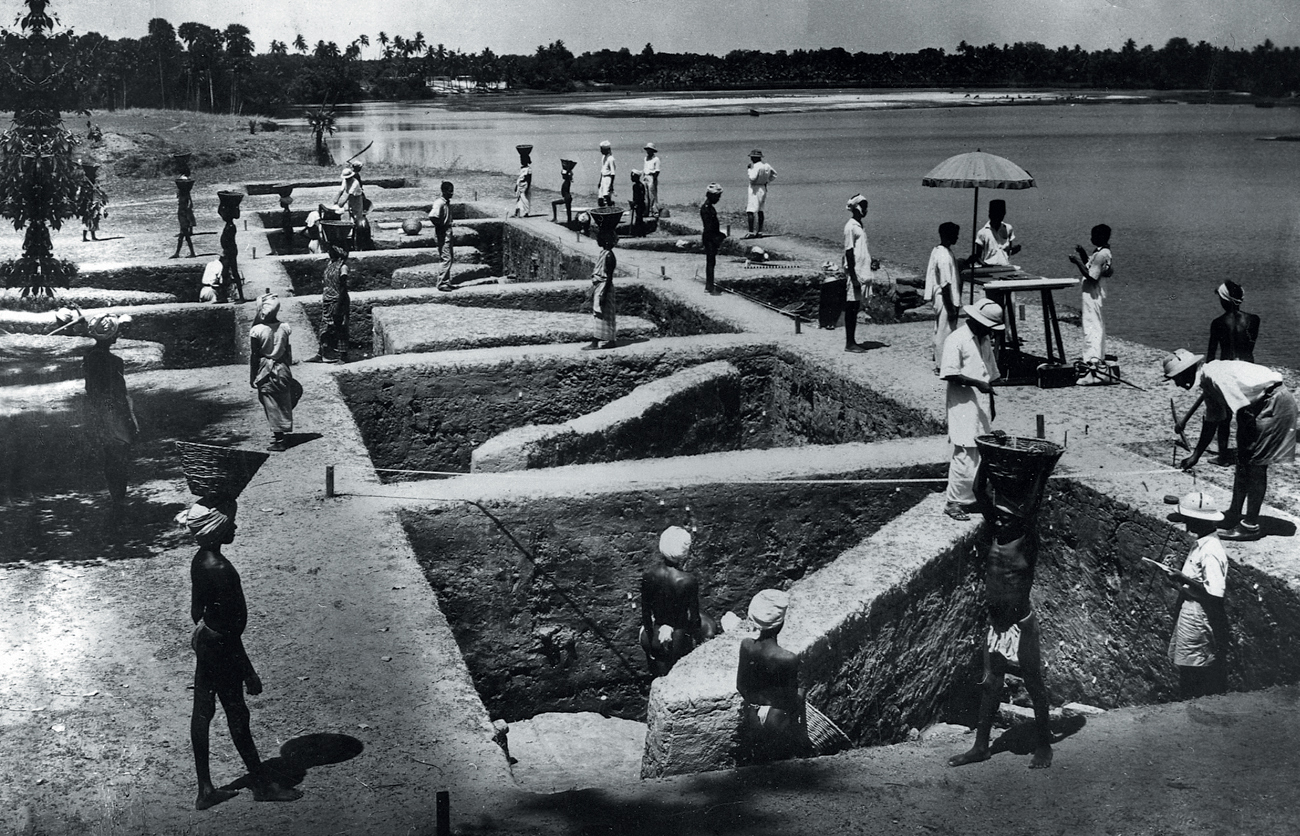
Equally outstanding, however, was his achievement from 1944 to 1948 as Director General of Archaeology in India, where he held training schools in modern field methods, and excavated at the important sites of Harappa, Taxila, Charsadda, and Arikamedu, one of his most famous excavations. However, subsequent excavations at Maiden Castle, Arikamedu, and Charsadda have inevitably caused many of his fundamental assumptions to be refuted. The key role of Mortimer’s wife Tessa Wheeler in many UK excavations was properly acknowledged only later in the 1930s, when publications for the work at Caerleon, Lydney, and St. Albans were published under their joint names.
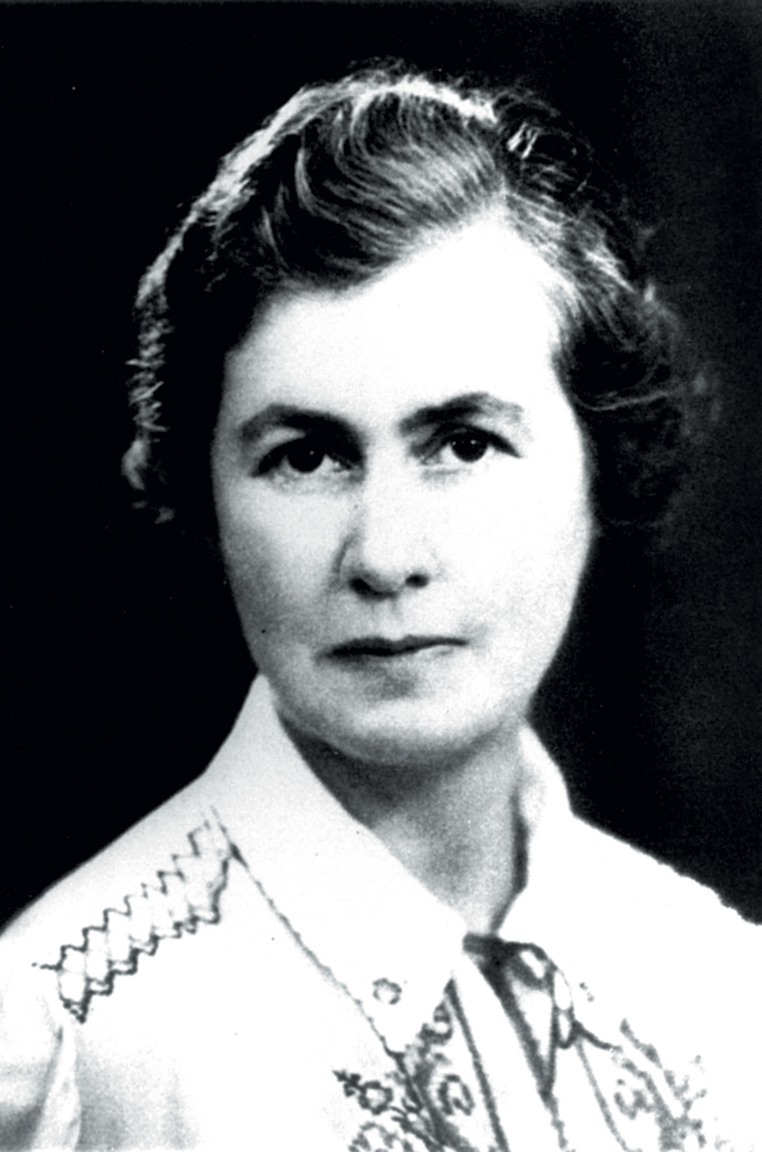
1.24 Sir Mortimer Wheeler’s 1945 excavation at Arikamedu.1.25 Gertrude Caton-Thompson.
Gertrude Caton-Thompson (1888–1985)
A wealthy British researcher who studied prehistory and anthropology at Cambridge, Caton-Thompson subsequently became known for her pioneering interdisciplinary projects of survey and excavation in the Faiyum of Egypt and, perhaps most famously, at Great Zimbabwe. Here, her excavations in 1929 unearthed datable artifacts from a stratified context, and confirmed that the site represented a major culture of African origin (see box, pp. 482–83). The violent reaction from the white community in Southern Rhodesia (as Zimbabwe was then called) to her findings so upset her that she refused to undertake further work in southern Africa, concentrating once more on sites in Egypt and Arabia.
1.26 Dorothy Garrod, one of the first to study the prehistoric Near East systematically.
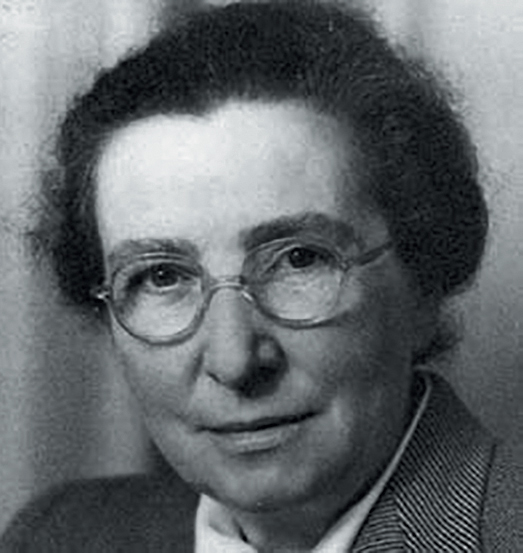
Dorothy Garrod (1892–1968)
In 1937 Dorothy Garrod became the first female professor in any subject at Cambridge University, and probably the first woman prehistorian to achieve professorial status anywhere in the world. Her excavations at Zarzi in Iraq and Mount Carmel in Palestine provided the key to a large section of the Near East, from the Middle Paleolithic to the Mesolithic (Middle Stone Age), and found human remains crucial to our knowledge of the relationship between Neanderthals and Homo sapiens. With her discovery of the Natufian culture, predecessor of the world’s first farming societies, she posed a series of problems still not fully resolved today.
1.27 Julio Tello, arguably the greatest Native American social scientist of the twentieth century and the father of Peruvian archaeology.
Julio Tello (1880–1947)
Tello, who was Quechua, was born and worked in Peru. “America’s first indigenous archaeologist,” began his career with studies in Peruvian linguistics, and qualified as a medical doctor before taking up anthropology. He did much to awaken an awareness of the archaeological heritage of Peru, and was the first to recognize the importance not only of the key site of Chavín de Huantar but also of such other major sites as Sechín Alto, Cerro Sechín, and Wari. He was one of the first to stress the autonomous rise of civilization in Peru, and he also founded the Peruvian National Museum of Archaeology.
1.28 Kathleen Kenyon.
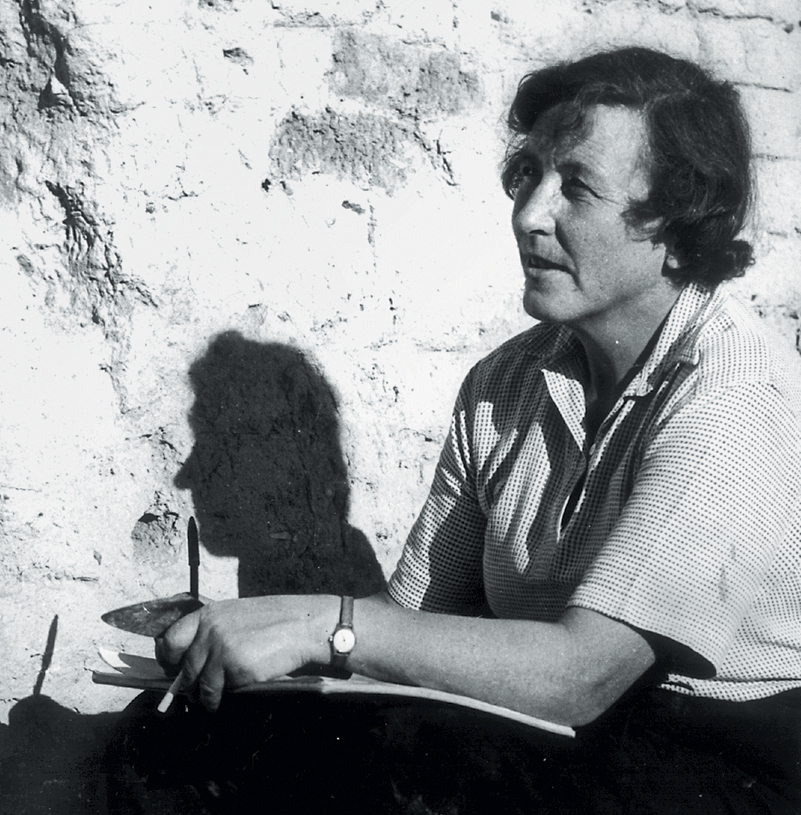
Kathleen Kenyon (1906–1978)
The daughter of a director of the British Museum, Kenyon was a formidable archaeologist. She trained on Roman sites in Britain under Mortimer Wheeler (see box, p. 31) and adopted his method. She subsequently applied this approach in the Near East at two of the most complex and most excavated sites in Palestine: Jericho and Jerusalem. At Jericho, in 1952–58, she found evidence that pushed back the date of occupation to the end of the Ice Age (Chapter 7), and uncovered the walled village of the Neolithic farming community, commonly referred to as “the earliest town in the world.”
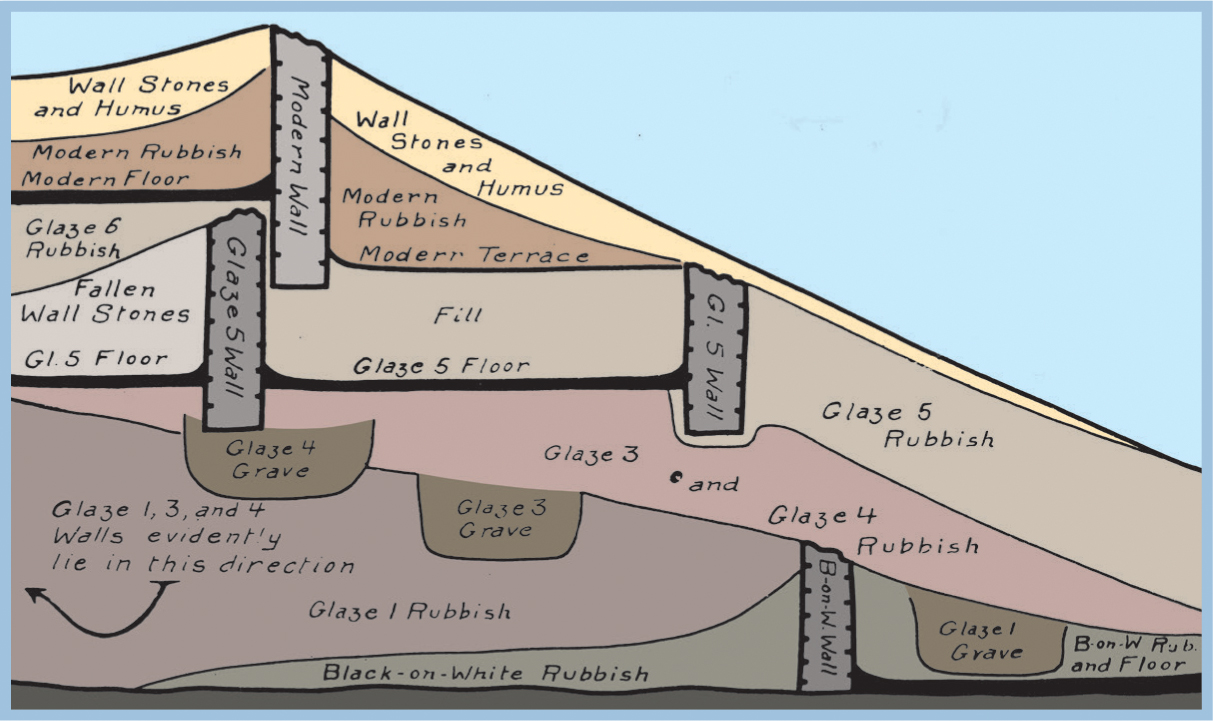
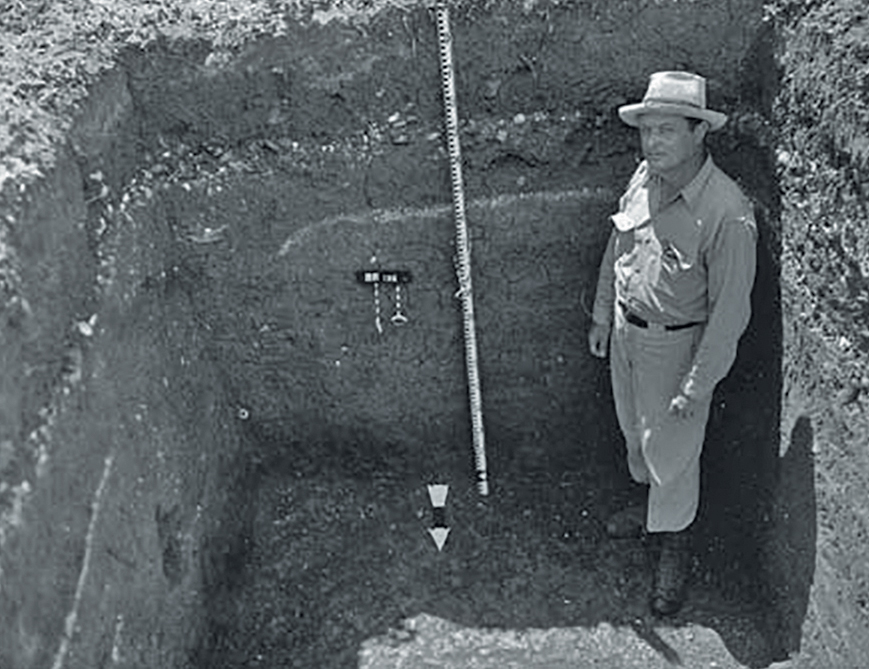
1.29 Alfred Kidder drawing of the stratigraphy at Pecos Pueblo.1.30 Alfred Kidder.
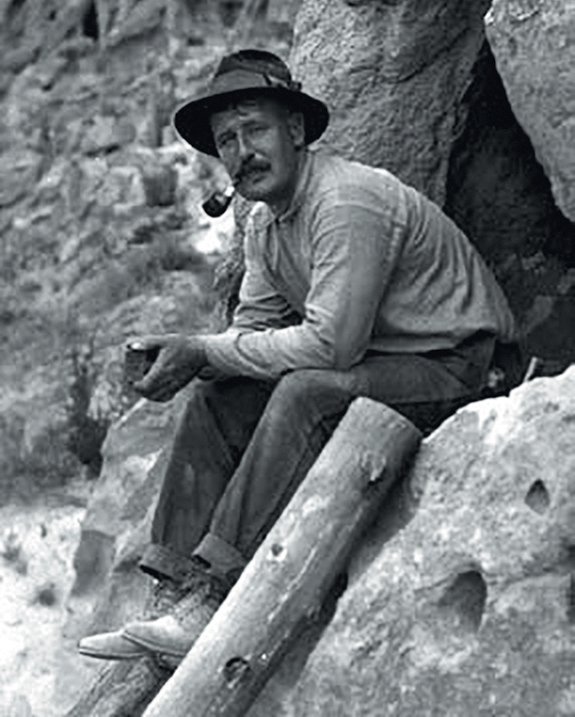
Alfred Kidder (1885–1963)
Kidder was the leading Americanist of his time. As well as being a major figure in Maya archaeology, he was largely responsible for putting the Southwest on the archaeological map with his excavations at the Pecos ruins, a large pueblo in northern New Mexico, from 1915 to 1929. His survey of the region, An Introduction to the Study of Southwestern Archaeology (1924), has become a classic.
Kidder was one of the first archaeologists to employ a team of specialists to analyze artifacts and human remains. He also developed a “blueprint” for a regional strategy: (1) reconnaissance; (2) selection of criteria for ranking the remains of sites chronologically; (3) seriation into a probable sequence; (4) stratigraphic excavation to elucidate specific problems; followed by (5) more detailed regional survey and dating.
1.31 Harriet Boyd Hawes.
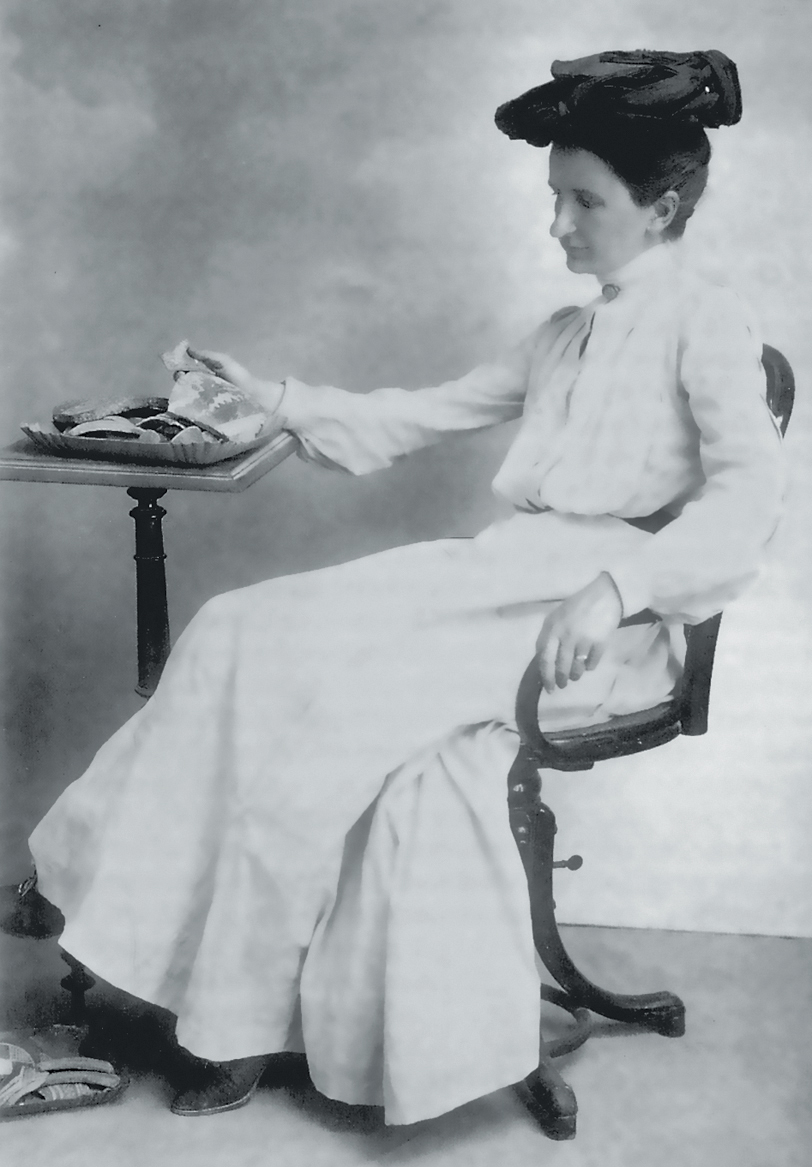
Harriet Boyd Hawes (1871–1945)
This well-educated American majored in Classics and was fluent in Greek. Shortly after graduating, she spent several seasons in Crete, riding around often dangerous territory, alone or in the company of another woman, looking for prehistoric sites. In 1901 she discovered the Bronze Age site of Gournia—the first Minoan town site ever unearthed—which she excavated for the next three years, supervising a hundred local workmen. She published her findings in exemplary fashion in a lavishly illustrated report that is still consulted today. It is noteworthy for its classification of artifacts according to potential function, drawing on ethnographic parallels from Cretan rural life of the time.
1.32 Honor Frost.
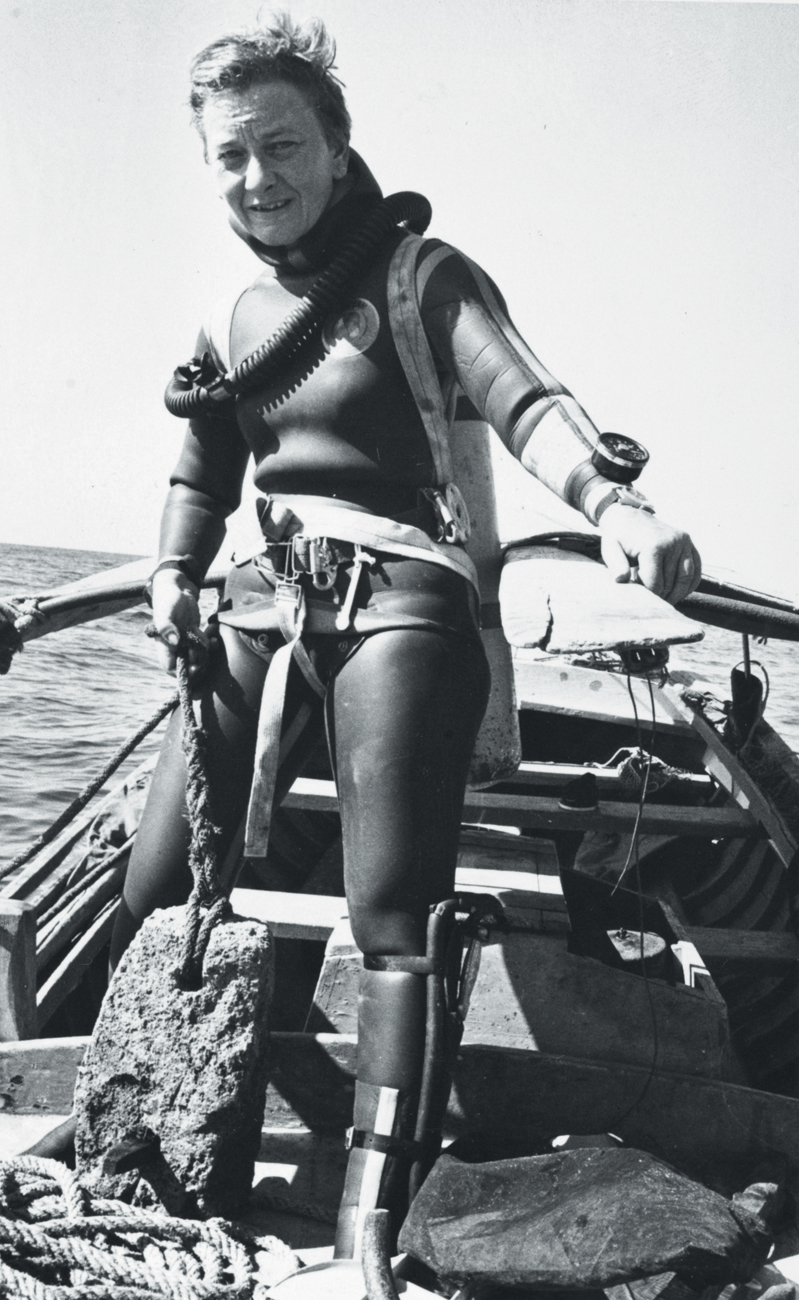
Honor Frost (1917–2010)
Since 1980, archaeological fieldwork has developed in several new directions. One of these is underwater archaeology, which was introduced to Britain by Honor Frost after she was taught how to free dive, while convalescing on the French Riviera, by divers who had helped with the development of the aqualung during World War II. Its value as a serious scientific discipline was first demonstrated in 1960 during the excavation of the Bronze Age shipwreck at Gelidonya, off Turkey, by Frost, along with the Turkish diver Mustafa Kapkin and the American photojournalist Peter Throckmorton. Since then, it has come to be regarded as the benchmark and outstanding achievement of underwater archaeology.
It is somewhat ironic that the piecemeal approach toward the investigation of the past in Europe was to be surpassed by the creation of the Archaeological Survey of India in 1862, funded by the Government of India because, in the words of Lord Canning, the Governor General, “It will not be to our credit, as an enlightened ruling power, if we continue to allow such fields of investigation … to remain without more examination.” In 1922 Sir John Marshall, the Director General of the Survey, was to uncover the Indus civilization. Such was the quality of his enormous excavations at both Bronze Age Mohenjodaro (where 8 ha, or 2 acres, of the city were exposed) and historic Taxila that his reports are still used today for spatial reanalyses at these sites. Around the same time, in 1929, Gertrude Caton-Thompson, a student of the eccentric Egyptologist Margaret Murray (1863–1963), led all-female excavations in Zimbabwe (then Southern Rhodesia) at the impressive site of Great Zimbabwe. Her systematic approach and meticulous stratigraphy allowed her to posit an earlier date for the site and prove that it had been built by the ancestors of the current indigenous population, not a vanished “superior race” as had been previously suggested.
Classification and Consolidation
So, well before the end of the nineteenth century, many of the principal features of modern archaeology had been established and many of the early civilizations had been discovered. There now ensued a period, which lasted until about 1960, which Gordon Willey (1913–2002) and Jeremy Sabloff in their A History of American Archaeology have described as the “classificatory-historical period.” Its central concern, as they rightly characterize it, was chronology. Much effort went into the establishment of regional chronological systems, and the description of the development of culture in each area.
In regions where early civilizations had flourished, new research and discoveries filled out the chronological sequences. Alfred Maudslay (1850–1931) laid the real scientific foundations of Maya archaeology, while the German scholar Max Uhle (1856–1944) began to establish a sound chronology for Peruvian civilization with his excavation in the 1890s at the coastal site of Pachacamac, Peru. The meticulous work of Flinders Petrie (1853–1942) in Egypt was followed up by the spectacular discovery in the 1920s of Tutankhamun’s tomb by Howard Carter (1874–1939) (see box, pp. 64–65). In the Aegean area, Arthur Evans (1851–1941) revealed a previously unknown civilization, which he called “Minoan,” on the island of Crete; the Minoans proved to be even earlier than Schliemann’s Mycenaeans. And in Mesopotamia, Leonard Woolley (1880–1960) and Katharine Woolley (1888–1945) excavated at Ur, the biblical city of Abraham’s birth, and put the Sumerians on the map of the ancient world.
It was, however, scholars studying primarily the prehistoric societies of Europe and North America who made some of the most significant contributions during the first half of the twentieth century. Gordon Childe (1892–1957), a brilliant Australian archaeologist based in Britain, was the leading thinker and writer about European prehistory and Old World history in general. In the United States there was a close link between anthropologists and archaeologists studying the Native Americans. The anthropologist Franz Boas (1858–1942) reacted against the broad evolutionary schemes of his predecessors Morgan and Tylor and demanded much greater attention to the collection and classification of information in the field. Huge inventories of cultural traits, such as pot and basket designs or types of moccasins, were built up. This tied in with the so-called “direct historical approach” of the archaeologists, who attempted to trace modern Native American pottery and other styles “directly” back into the distant past. The work of Cyrus Thomas (1825–1910) and later W. H. Holmes (1846–1933) in the east was complemented by that of Alfred Kidder (1885–1963), whose excavations at Pecos Pueblo in the Southwest from 1915 to 1929 established a chronological framework for that region (see box, p. 33). James A. Ford (1911–1968) later developed the first major framework for the Southeast. By the 1930s the number of separate regional sequences was so great that a group of scholars led by W. C. McKern devised what became known as the Midwestern Taxonomic System, which correlated sequences in the Midwest by identifying similarities between artifact collections. This was applied to other areas.
Gordon Childe, meanwhile, had been making comparisons of the same sort between prehistoric sequences in Europe, almost single-handedly. His methods and the Midwestern Taxonomic System were both designed to order the material so as to answer two questions: To what period do these artifacts date? And with which other materials do they belong? This latter question usually carried with it an assumption which Gordon Childe made explicit: that a constantly recurring collection or assemblage of artifacts (a “culture” in his terminology, or an “aspect” in that of McKern) could be taken as the material equipment of a particular group of people. This approach therefore offered the hope of answering, in a very general sense, the question: Who did these artifacts belong to? The answer would be in terms of a named people, even if the name for a prehistoric people was a modern one, not its original name. (There are now seen to be dangers in this approach, as we shall discuss in Chapter 12.)
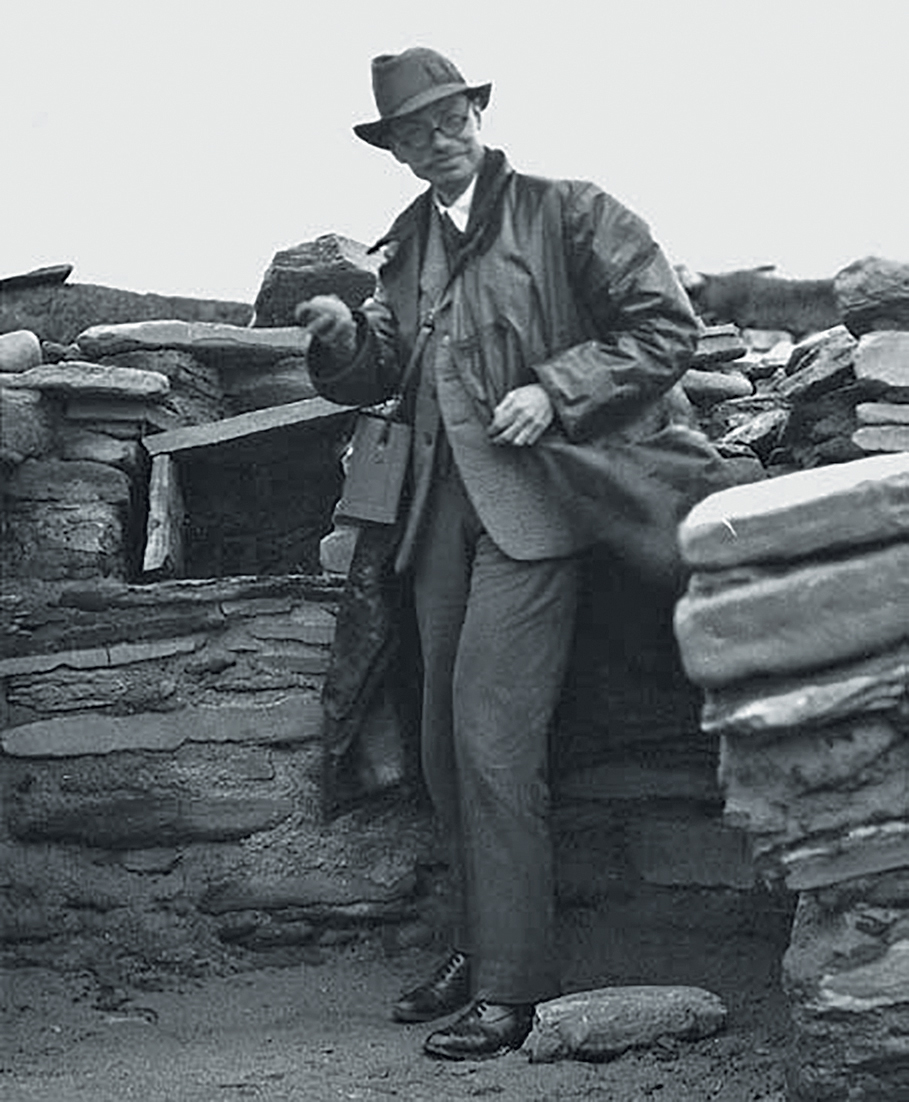
1.33 Professor Gordon Childe at the site of the Neolithic settlement at Skara Brae, Orkney, in 1930.
But in his great works of synthesis, such as The Dawn of European Civilization (1925) and The Danube in Prehistory (1929), Childe went beyond merely describing and correlating the culture sequences and attempted to account for their origin. In the late nineteenth century, scholars such as Montelius had looked at the richness of the early civilizations then being uncovered in the Near East and argued that all the attributes of civilization, from stone architecture to metal weapons, had spread or “diffused” to Europe from the Near East by trade or migration of people. With the much greater range of evidence available to him, Childe modified this extreme diffusionist approach and argued that Europe had undergone some indigenous development—but he nevertheless attributed the major cultural changes to Near Eastern influences.
In his later books, such as Man Makes Himself (1936), Childe went on to try and answer the much more difficult question: Why had civilization arisen in the Near East? Himself influenced by Marxist ideas and the relatively recent revolution in Russia, he proposed that there had been a Neolithic Revolution that gave rise to the development of farming, and later an “urban revolution” that led to the first towns and cities. Childe was one of the few archaeologists of his generation bold enough to address this whole broad issue of why things happened or changed in the past. Most of his contemporaries were more concerned with establishing chronologies and cultural sequences. But after World War II scholars with new ideas began to challenge conventional approaches.
The Ecological Approach
From the 1940s and 1950s, one of the most influential new thinkers in North America was the anthropologist Julian Steward (1902–1972). Similarly to Childe, he was interested in explaining cultural change, but he brought to the question an anthropologist’s understanding of how living cultures work. He highlighted the fact that cultures interact not only with one another but with the environment as well. The study of ways in which adaptation to the environment could cause cultural change Steward christened cultural ecology. Perhaps the most direct archaeological impact of these ideas can be seen in the work of Gordon Willey (1913–2002), one of Steward’s graduate associates, who carried out a pioneering investigation in the Virú Valley, Peru, in the late 1940s. This study of 1,500 years of pre-Columbian occupation involved a combination of observation from detailed maps and aerial photographs (see box, pp. 84–85), survey at ground level, and excavation and surface potsherd collection to establish dates for the hundreds of prehistoric sites identified. Willey then plotted the geographical distribution of these sites in the valley at different periods—one of the first settlement-pattern studies in archaeology (see Chapter 3)—and set them against the changing local environment.
1.34 Gordon Willey in a test pit at Barton Ramie during the Belize Valley project studying Maya settlement patterns, 1953–60.
Independently of Steward, the British archaeologist Grahame Clark (1907–1995) developed an ecological approach with even more direct relevance for archaeological fieldwork. Breaking away from the artifact-dominated culture-historical approach of his contemporaries, he argued that by studying how human populations adapted to their environments we can understand many aspects of ancient society. Collaboration with new kinds of specialists was essential: specialists who could identify animal bones or plant remains in the archaeological record could help build up a picture not only of what prehistoric environments were like but also of what foods prehistoric peoples ate. Clark’s landmark excavation at Star Carr in northeast England in 1949–51 demonstrated just how much information could be gleaned from what appeared to be an unpromising site without stone structures, dating to just after the end of the Ice Age. Careful environmental analysis and recovery of organic remains showed that this had been a camp on the edge of a lake, where people had hunted red deer and eaten a wide variety of wild plant foods. The insights from an ecological approach need not be confined to individual sites or groups of sites: in a remarkable work of synthesis, Prehistoric Europe: The Economic Basis (1952), Clark provided a panoramic view of the varying human adaptations to the European landscape over thousands of years.
Out of this early ecological research has grown the whole field of environmental and dietary reconstruction discussed in Chapters 6 and 7.
The Rise of Archaeological Science
The other striking development of the period immediately after World War II was the rapid development of scientific aids for archaeology. We have already seen how pioneers of the ecological approach forged an alliance with specialists from the environmental sciences. Even more important, however, was the application to archaeology of the physical and chemical sciences.
The greatest breakthrough came in the field of dating. In 1949 the American chemist Willard Libby (1908–1980) announced his invention of radiocarbon (14C) dating. It was not until well over a decade later that the full impact of this momentous technical achievement began to be felt (see below), but the implications were clear: here at last archaeologists might have a means of directly determining the age of undated sites and finds anywhere in the world without recourse to complicated cross-cultural comparisons with areas already dated by historical methods (usually written records).
Traditionally, prehistoric Europe had been dated by virtue of supposed contacts with early Greece and hence (indirectly) with ancient Egypt, which could itself be dated historically. The radiocarbon method now held the prospect of providing a completely independent chronology for ancient Europe. Chapter 4 discusses radiocarbon in detail, alongside dating methods in general.
The growth in archaeological applications for scientific techniques was such that by 1963 a volume entitled Science in Archaeology, edited by Don Brothwell (1933–2016) and Eric Higgs (1908–1976), could be published which ran to nearly 600 pages, with contributions from fifty-five experts, not merely on dating techniques and plant and animal studies, but also on methods for analyzing human remains (see Chapter 11) and artifacts (Chapters 8 and 9).
Artifact studies, for instance, could contribute to an understanding of early trade: it proved possible to identify the raw materials of certain artifacts and the sources from which they had come through the technique of trace-element analysis (the measurement of elements present in the material only in very small amounts; see pp. 366–70). As with many of the new methods, research in this field stretched back to the 1930s, when the Austrian archaeologist Richard Pittioni (1906–1985) had begun to apply trace-element analysis to early copper and bronze artifacts. Nevertheless, it was not until the post-war years that this and a number of other newly developed scientific techniques really began to make an impact on archaeology; and the increasing power of computers and software has made them indispensable for many aspects of data handling.
Over recent decades developments in biochemistry and molecular genetics have led to the emergence of the major disciplines of molecular archaeology and archaeogenetics. Sensitive techniques in the field of organic chemistry are allowing the precise identification of organic residues, while isotopic studies are giving fresh insights into diet and nutrition. The first sequencing of ancient DNA was of a museum specimen of the quagga, an extinct subspecies of Zebra, and was published in 1984 by a team led by Allan Wilson from the University of California, Berkeley. Archaeogenetics captured the public eye in 1997, when Svante Pääbo and his colleagues reported the first successful sequencing of Neanderthal mitochondrial DNA (DNA found in mitochrondria, outside the nucleus; also called mtDNA), originating from a specimen found in Germany’s Neander Valley. This was followed by the publishing of the full sequence of the Neanderthal genome in 2010, where Pääbo and his team concluded there was probably interbreeding between Neanderthals and Eurasian humans.
The study of DNA, both modern and ancient, has offered exciting and promising approaches to the study of human evolution, and is now also contributing to the study of plant and animal domestication on a systematic, molecular basis. Ancient DNA studies have recently helped address the question of whether changes in material culture are due to innovations within a society, or the migration of new populations (see Chapter 12).
A Turning Point in Archaeology
The 1960s marked a turning point in the development of archaeology. By this time various dissatisfactions were being expressed with the way research in the subject was conducted. These dissatisfactions were not so much with excavation techniques, or with the newly developed scientific aids, but with the way conclusions were drawn from them. The first point concerned the role of dating. With the advent of radiocarbon dating, dates could in many cases be assigned rapidly, and without the long and laborious framework of cross-cultural comparisons needed previously. To establish a date was no longer one of the main end products of research. It was still important, but it could now be done much more efficiently, allowing the archaeologist to go on to ask more challenging questions than merely chronological ones.
The second and more fundamental cause for dissatisfaction was that traditional archaeology never seemed to explain anything, other than in terms of migrations of peoples and supposed “influences.” In 1958 Gordon Willey and Philip Phillips (1900–1994), in their Method and Theory in American Archaeology, had argued for a greater emphasis on the social aspect, for a broader “processual interpretation” or study of the general processes at work in culture history. They also spoke of “an eventual synthesis in a common search for sociocultural causality and law.”
That was all very well, but what would it mean in practice?
The Birth of the New Archaeology
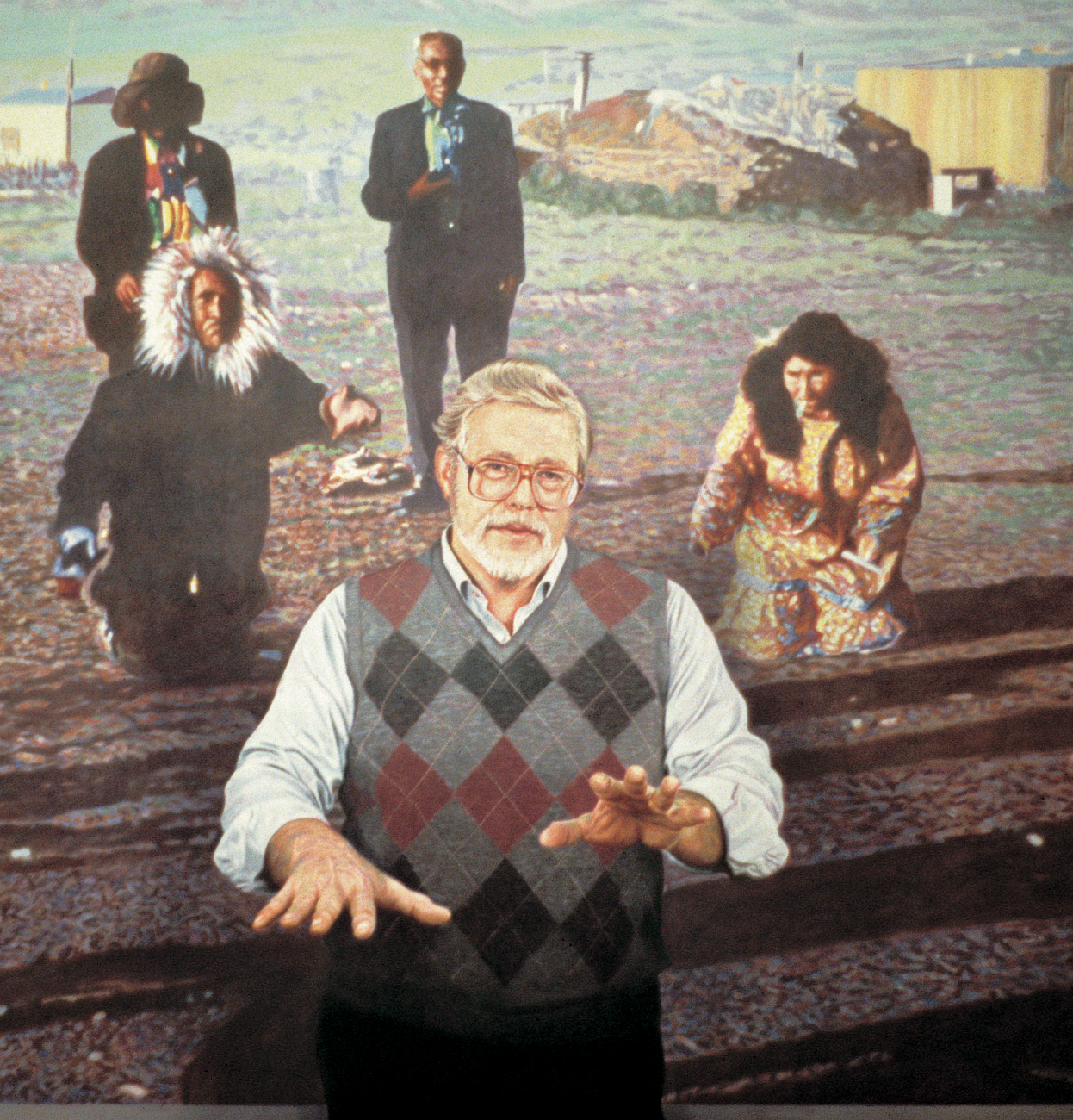
In the United States the answer was provided, at least in part, by a group of younger archaeologists led by Lewis Binford (1931–2011). They set out to offer a new approach to the problems of archaeological interpretation, which was soon dubbed by its critics and then by its supporters the New Archaeology. In a series of articles, and later in an edited volume, New Perspectives in Archaeology (1968), Lewis Binford, Sally Binford, and their colleagues argued against the approach that tried to use archaeological data to write a kind of “counterfeit history.” They maintained that the potential of the archaeological evidence was much greater than had been realized for the investigation of social and economic aspects of past societies. Their view of archaeology was more optimistic than that of many of their predecessors.
They also argued that archaeological reasoning should be made explicit. Conclusions should be based not simply on the personal authority of the scholar making the interpretation, but on an explicit framework of logical argument. In this they relied on current ideas within the philosophy of science, where conclusions, if they are to be considered valid, must be open to testing.
Within the spirit of processual archaeology advocated by Willey and Phillips, they sought to explain rather than simply to describe, and to do so, as in all sciences, by seeking to make valid generalizations.
In doing this they sought to avoid the rather vague talk of the “influences” of one culture upon another, and instead to analyze a culture as a system that could be broken down into subsystems. This led them to study subsistence in its own right, and technology, and the social subsystem, and the ideological subsystem, and trade and demography, and so forth, with much less emphasis on artifact typology and classification. In this way they had been partly anticipated by the ecological approach of the 1950s, which was already studying what one might call “the subsistence subsystem” in very much these terms.
1.35 Lewis Binford, the founder of the New Archaeology, lecturing on his work among the Nunamiut hunters of Alaska.
Processual Archaeology
In the early days of the New Archaeology, its principal exponents were very conscious of the limitations of the older, traditional archaeology. The following contrasts were among those which they often emphasized:
The Nature of Archaeology: Explanatoryvs. Descriptive
Archaeology’s role was now to explain past change, not simply to reconstruct the past and how people had lived. This involved the use of explicit theory.
Explanation: Culture processvs. Culture history
Traditional archaeology was seen to rely on historical explanation: the New Archaeology, drawing on the philosophy of science, would think in terms of culture process, of how changes in economic and social systems take place. This implies generalization.
Reasoning: Deductivevs. Inductive
Traditional archaeologists saw archaeology as resembling a jigsaw puzzle: the task was “piecing together the past.” Instead, the appropriate procedure was now seen as formulating hypotheses, constructing models, and deducing their consequences.
Validation: Testingvs. Authority
Hypotheses were to be tested, and conclusions should not be accepted on the basis of the authority or standing of the research worker.
Research Focus: Project designvs. Data accumulation
Research should be designed to answer specific questions economically, not simply to generate more information which might not be relevant.
Choice of Approach: Quantitativevs. Simply qualitative
The benefits were seen of quantitative data, allowing computerized statistical treatment, with the possibility of sampling and significance testing. This was often preferred to the purely verbal traditional approach.
Scope: Optimismvs. Pessimism
Traditional archaeologists stressed that archaeological data were not well suited to the reconstruction of social organization or cognitive systems. The New Archaeologists argued that one would never know how hard these problems were until one tried to solve them.
In order to fulfill these aims, the New Archaeologists to a large extent turned away from the approaches of history toward those of the sciences. Very similar developments were under way in Britain at the same time, exemplified by the work of David L. Clarke (1937–1976), particularly in his book Analytical Archaeology (1968), which reflected the great willingness of the New Archaeologists to employ more sophisticated quantitative techniques, computer-aided where possible (computers were first used for the storage, organization, and analysis of data in the 1960s), and to draw on ideas from other disciplines, notably geography.
It must be admitted that, in their enthusiasm to seize on and utilize a battery of new techniques, the New Archaeologists drew also on a range of previously unfamiliar vocabularies (drawn from systems theory, cybernetics, etc.), which their critics tended to dismiss as jargon. Indeed, in recent years, several critics have reacted against some of those aspirations to be scientific, which they have categorized as “scientistic” or “functionalist.” Much of the emphasis of early processual archaeology was indeed upon functional or ecological explanation, and it is now possible to regard its first decade as representing a functional-processual phase, which has been followed by a cognitive-processual phase, which seeks more actively to include the consideration of symbolic and cognitive aspects of early societies into the program of research. Many of these points are considered in Chapter 12. But there can be no doubt that archaeology will never be the same again. Most workers today, even the critics of the early New Archaeology, implicitly recognize its influence when they agree that it is indeed the goal of archaeology to explain what happened in the past as well as to describe it. Most of them agree too that in order to do good archaeology it is necessary to make explicit, and then to examine, our underlying assumptions. That was what David Clarke meant when he wrote in a 1973 article of “the loss of innocence” in archaeology.
World Archaeology
The questioning approach of the New Archaeology and the demand for explicit and quantitative procedures led to new developments in field research, many of which built on or coincided with the programs of fieldwork already being conducted by archaeologists who would not necessarily have thought of themselves as followers of the new school of thought.
In the first place, there was a much greater emphasis on field projects with well-defined research objectives—projects that set out to answer specific questions about the past. Second, the new insights yielded by the ecological approach made it clear that satisfactory answers to many major questions would only be forthcoming if whole regions and their environments were studied, rather than single sites in isolation. And the third development, very much linked to the first and second, was the realization that, in order to carry out these objectives effectively, new techniques needed to be introduced of intensive field survey and selective excavation, coupled with statistically based sampling procedures and improved recovery methods, including screening (sieving) of excavated material.
These are the key elements of modern field research, discussed in detail in Chapter 3. Their widespread application began to create for the first time a truly global discipline: an archaeology with worldwide reach, and an archaeology that reaches back in time to the beginnings of human existence and right up to the modern period.
The Search for Origins
Among the pioneers of well-focused project design was Robert J. Braidwood (1907–2003), of the University of Chicago, whose multidisciplinary team, led with Linda Braidwood (1909–2003), in the 1940s and 1950s systematically sought out sites in the Iraqi Kurdistan region that would provide evidence for the origins of agriculture in the Near East (see Chapter 7). Another American project, headed by Richard MacNeish (1918–2001), did the same for the New World: his research in the Tehuacán Valley of Mexico moved our understanding of the gradual development of maize farming an immense step forward.
The 1950s also saw large-scale projects that combined linguistics and archaeology. In 1956 Marija Gimbutas (1921–1994) introduced her “kurgan hypothesis,” which combined archaeological study of the distinctive “kurgan” burial mounds with linguistics. Gimbutas worked primarily on the Neolithic and Bronze Ages of central and eastern Europe and the Balkans. She argued for a major migration, from north of the Black Sea westward into central Europe at the beginning of the Bronze Age, of patriarchal Proto-Indo-European-speaking people whom she associated with their characteristic kurgan burial mounds. This kurgan hypothesis has recently been strongly supported by ancient DNA analysis.
The credit for the most determined pursuit of a project with a clear archaeological objective in the whole history of archaeology should perhaps go to Louis Leakey (1903–1972) and Mary Leakey (1913–1996), who between them pushed back the known dates for our immediate ancestors by several million years. As long ago as 1931 they began their search in the Olduvai Gorge, East Africa, for fossil human bones, but it was not until 1959 that their extraordinary perseverance was rewarded and Mary Leakey (see pp. 443–44) made the first of many fossil hominin (early human) finds in the Gorge.
The Archaeologies of Continents
Research in Africa exemplifies the pushing back of archaeology’s frontiers in both time and space. The quest for human origins has been one success story, but so too has been the rediscovery through archaeology of the achievements and history of the Iron Age peoples of Africa, including the building of Great Zimbabwe (see box, pp. 482–83). By 1970 archaeological knowledge of the whole continent was sufficiently advanced for J. Desmond Clark (1916–2002), one of the leading researchers, to produce the first synthesis, The Prehistory of Africa. Meanwhile, in Australia in the 1960s, the work of Isabel McBryde in New South Wales and the excavations of John Mulvaney (1925–2016) in South Queensland established Australasia as a fruitful region for new archaeological research. Work in Australia highlights two further important trends in modern archaeology: the rise of ethnoarchaeology and the intensifying global debate about who should control or “own” monuments and ideas about the past, as much of the foundations of archaeology are rooted in colonial regimes. Here, as elsewhere, DNA studies are having a major impact, and it has become possible to write a genomic history of early Australia.
Over the past thirty years in the People’s Republic of China, the Chinese Academy of Social Sciences has encouraged strong local initiatives in archaeology, some led by the Institute of Archaeology in Beijing. The Shanghai Forum, a biennial gathering since 2013, has taken on the role as a leading meeting for world archaeology. It now ranks with the World Archaeological Congress (see p. 46), and the longer-established Union Internationale des Sciences Préhistoriques et Protohistoriques as a major meeting ground, and one that is no longer dominated by European scholars. In some countries, notably those with Marxist traditions, work is centrally organized and directed, so that publications are not signed by individuals but by a collective. This is standard practice in China, where, for example, excavations at the early city of Liangzhu in Zhejiang Province are published in articles credited not to named authors but to the Zhejiang Provincial Institute of Cultural Relics and Archaeology.
The Living Past
From its beginnings the New Archaeology placed great emphasis on explanation—explaining how the archaeological record was formed, and what excavated structures and artifacts might mean in terms of human behavior. It came to be realized that one of the most effective ways of addressing such questions would be to study the material culture and behavior of living societies. Ethnographic observation itself was nothing new—anthropologists had studied the Native Americans and Australian Aborigines since the nineteenth century. What was new was the archaeological focus: the new name, “ethnoarchaeology,” or “living archaeology,” emphasized this. The work of Isabel McBryde and Richard Gould among the Aborigines in Australia, Jean Sassoon among the Pokot in Kenya and Richard Lee among the !Kung San of southern Africa, Bridget Allchin (1927–2017) in India, Ralph and Rose Solecki in Iraq, and Lewis Binford among the Nunamiut has established ethnoarchaeology—discussed in more detail in Chapter 5—as one of the most significant developments in the whole discipline.
A History of Japanese Archaeology
Just as archaeology in Europe and North America reflected political developments in those continents, the history of Japanese archaeology can be understood within the context of East Asian history and Japan’s role in the world.
In late nineteenth-century Japan, archaeology was introduced as one way to modernize the nation, in reaction to the expansion of Western colonial influence. During this formative phase one of the most enthusiastically pursued subjects was the origin of the Japanese nation, especially the replacement of the aboriginal inhabitants by an incoming population of rice-farmers. It was argued that this ancestral population, which was regarded as the direct progenitor of the Japanese imperial family, originated in the Korean peninsula. The belief that the Japanese and Korean peoples shared a common ancestry also led to the idea that it would be natural for them to form “one nation”—a typical piece of colonialist logic that helped legitimize the Japanese expansion into Korea, which culminated in complete annexation in 1910.
The emphasis on population movements and racial identity continued up to the end of World War II in 1945, when Japan’s defeat led to a period of critical reflection on the political manipulation of archaeology and to the rise of Marxist archaeology. This led to the investigation of the ancient origins of social inequality in Japan and the despotism that laid the foundations of the imperial system, which was regarded as the fundamental cause of devastation to Japan and to the neighboring countries that it had colonized. From the 1960s, Japan’s economy boomed, and the wholesale destruction of sites that ensued resulted in the systematization of local government-based rescue archaeology and heritage protection. But since economic development started to slow down in the 1990s, Japanese archaeology began to change once again. The decline of the Marxist archaeological paradigm created a vacuum in the theoretical framework of archaeology, leading to the proliferation of new, tentative approaches increasingly aware of the social responsibility of archaeological practice. The House of Councillors, the upper house of the National Diet, unanimously approved the motion to recognize the Ainu as an indigenous population of Japan in June 2008. With such socially driven movements, Japanese archaeology has opened itself up more to international dialogues, and will certainly continue to do so.
The increasing involvement of archaeologists with living societies, and the simultaneous rise among such societies of an awareness of their own heritage and their claims to it, has raised the question of who should have access to, or ownership of, the past. It is clear, for example, that the only inhabitants of Australia before European settlement were the Aborigines. To what extent should Aboriginal people control archaeological work on their forebears, even those dating back 20,000 years or more? This important issue is explored further in Chapter 14.
Such archaeologists as Isabel McBryde, John Mulvaney, and Rhys Jones (1941–2001) have stood shoulder to shoulder with the Aborigines in the fight to prevent destruction by developers of parts of Australia’s precious ancient heritage, for instance in Tasmania. Increasing tensions resulted in the Swedish-born Australian archaeologist Laila Haglund becoming a leader in the establishment of commercial archaeology in Australia. As the pace of worldwide economic development has quickened, archaeologists everywhere have had to adapt and learn to salvage what they can about the past in advance of the bulldozer or plow. Indeed, the massive upsurge of this salvage or rescue archaeology, much of it government-funded, has given a new impetus to the archaeology of our towns and cities—to what in Europe is known as “medieval or postmedieval archaeology,” and what in the United States and elsewhere is called “historical archaeology.”
Interpretive Approaches in the 1980s and 1990s
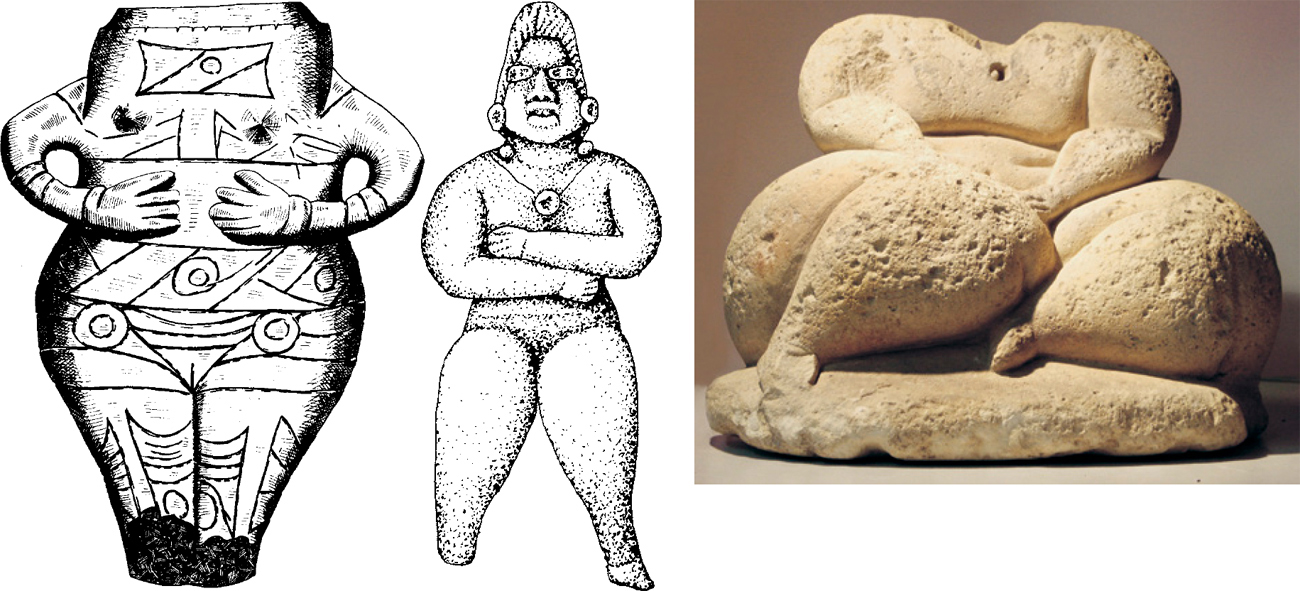
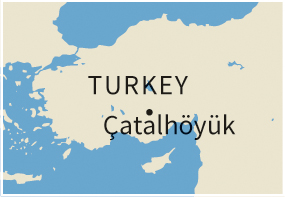
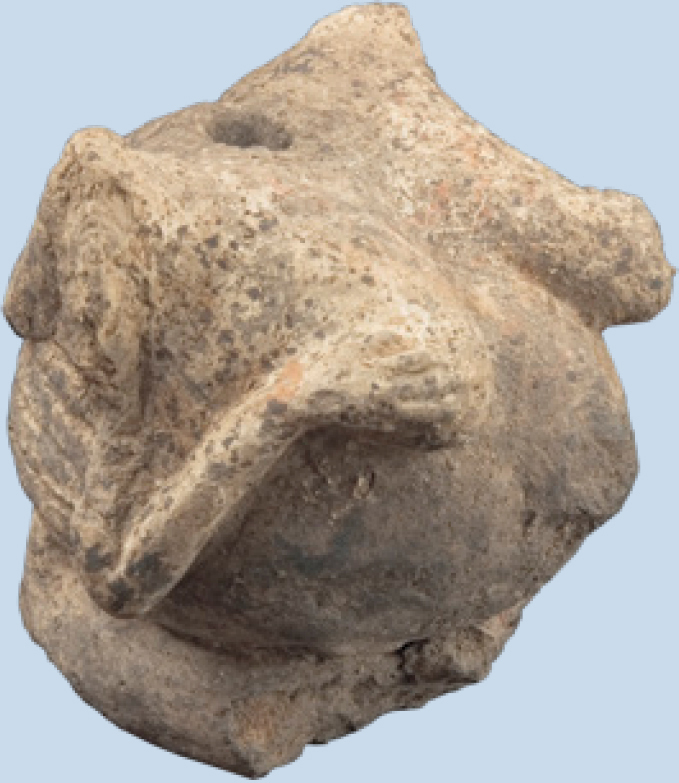
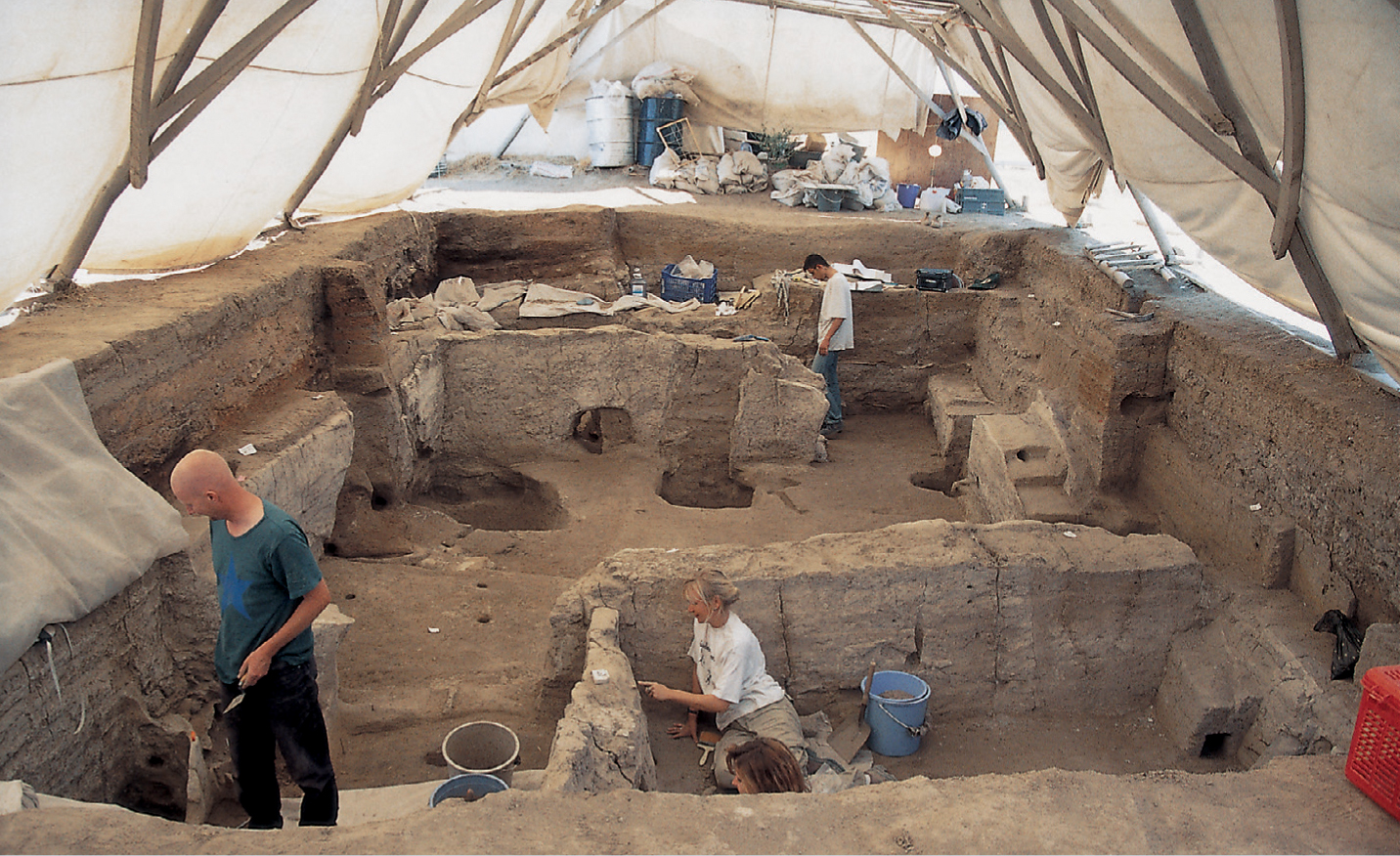
While the New Archaeology rolled on, in the 1980s and 1990s a diverse range of new approaches to the past was developed and pursued. Collectively termed postprocessual, these approaches dealt with interesting and difficult questions on the objectivity of archaeological interpretations, and the possible pluralities of voices and pasts. Influential arguments, some first advanced by Ian Hodder (excavator at Çatalhöyük; see box on pp. 44–45), have stressed that there is no single, correct way to undertake archaeological inference, and that the goal of objectivity is unattainable. Even the archaeological data are “theory laden,” and many interpretations are possible. The various interpretive archaeologies often reject the tendency toward cross-cultural comparison and the modes of explanation relying upon generalization characteristic of processual archaeology. These approaches challenged archaeologists to be more aware of their own assumptions, especially their own political and social biases which they bring to any research question or design.
In their more extreme forms, these arguments led to charges of “relativism,” or a research style where “anything goes,” and where the borders between archaeological research and fiction may be difficult to define. One of the strengths of the interpretive approach is to bring into central focus the actions and thoughts of individuals in the past, which is also the goal of cognitive archaeology (see Chapter 12). But it goes beyond the methodological individualism of the latter, arguing that in order to understand and interpret the past it is necessary to employ empathy, to “get inside the minds” and think the thoughts of ancient people. This might seem a logical goal when examining symbolic systems such as figurative works (e.g. paintings) employing a complex iconography, but it presents problems when no iconographic data exist.
The earlier writings of Michael Shanks and Christopher Tilley initially provoked reactions of this kind (see Chapter 12). But in their later writings they, and indeed the majority of postprocessual archaeologists, have taken a less aggressively anti-scientific tone, and the emphasis has instead been upon the use of a variety of personal and often humanistic insights to develop a range of different fields and interests, recognizing the varied perspectives of different social groups, and accepting the consequent “multivocality” of the postmodern world. These are old debates now, and in recent years there has been some convergence of views, where the distinction between processual and postprocessual is no longer clear, or even useful. New terms, such as “processual plus,” coined by Michelle Hegmon in 2003, have helped to bridge this divide. Currently, archaeological research commonly includes a tendency toward a more holistic approach where different perspectives can be brought together.
Interpretive or Postprocessual Archaeologies
Postprocessualism is a collective term for a number of approaches to the past, all of which have roots in the postmodernist current of thought that developed in the 1980s and 1990s:
The neo-Marxist element has a strong commitment to social awareness: that it is the duty of the archaeologist not only to describe the past but also to use such insights to change the present world. This contrasts quite strikingly with the aspirations toward objectivity of many processual archaeologists.
The hermeneutic (or interpretive) view rejects generalization. Emphasis is laid, rather, upon the uniqueness of each society and culture and on the need to study the full context of each in all its diversity. A related view is that there can be no single correct interpretation: each observer or analyst is entitled to their own opinion about the past. There will therefore be a wide range of perspectives—which is why the emphasis is on interpretive archaeologies (plural).
The post-positivist approach challenges the focus on the systematic procedures of scientific method central to processual archaeology, arguing that the scientific method must be understood within the social and political context of the scientists themselves and the institution within which they work.
The phenomenological approach stresses the personal experiences of the individual and the way in which encounters with the material environment and the objects in it shape our understanding of the world. In landscape archaeology, for example, the archaeologist sets out to understand how human experience was shaped by the landscape as it has been modified and formed by human activities.
The agency and practice approach stresses the central role of the human “agent” in maintaining and changing society or social structure. Many social norms and social structures are established and shaped by unconscious, habitual experiences, which are often cued by a person’s physical surroundings. Human actions can change these social structures by misinterpreting the cues or by choices becoming less habitual and more visible. The approach emphasizes the innate connection between the action of an individual and the social context within which choices can be made.
Archaeology and Gender
The archaeology of gender originated in feminist archaeology, which often had the explicit objective of exposing and correcting the androcentrism (male bias) of archaeology. There is no doubt that in the modern world the role of women professionals, including archaeologists, has often been a difficult one. For instance, Dorothy Garrod, the first woman professor of archaeology in Britain (see p. 32), was appointed to a chair in 1937, at a time when female undergraduates in her university (Cambridge) were not allowed to take a degree at the end of their course, but only a diploma. There was—and still is—an imbalance to be rectified in the academic world, and that was one of the early objectives of feminist archaeology. A second was to illuminate the roles of women in the past more clearly, where often they had been overlooked, and to rectify the male bias in so much archaeological writing. In an article published in 1984, Margaret Conkey and Janet Spector (1944–2011) drew attention to the androcentrism of the discipline of archaeology. As Margaret Conkey pointed out, there existed a need “to reclaim women’s experience as valid, to theorize this experience, and to use this to build a program of political action.” The questions they raised, however, were not widely explored until the 1990s because it was not until then that a suitable critical climate existed in archaeology. In Britain this was provided by the theoretical development of postprocessual archaeology and much feminist research has been conducted within this framework.
A central idea of feminist archaeology soon became the distinction between sex and gender. It was argued that sex—female or male—may be regarded as biologically determined and can be established archaeologically from skeletal remains. But gender—at its simplest, woman or man—is a social construct, involving the sex-related roles of individuals in society. Gender roles vary greatly both from place to place and through time. Systems of kinship, of marriage (including polygamy, polyandry, etc.), inheritance, and the division of labor are all related to biological sex but not determined by it (see box, pp. 194–95).
In addition to her contribution to the history of migration in Eurasia (Chapter 12), Marija Gimbutas is also well known for her study of female figurines in southeastern Europe and Anatolia, for instance in her Goddesses and Gods of Old Europe (1974). She argued that the principally female figurines seen in the Neolithic and Copper Age of those regions demonstrate the important status of women. She argued for an old Europe influenced by feminine values that disappeared under the dominance of an eastern Indo-European male warrior hierarchy in the ensuing Bronze Age.
Marija Gimbutas supported the concept of a great fertility “Mother Goddess,” embraced by some public enthusiasts. Current excavations at Early Neolithic Çatalhöyük in Turkey, where female figurines of baked clay have indeed been found (see box, pp. 44–45), are now visited regularly by Goddess devotees whose views are respectfully entertained by the excavators, even though they do not share them. But there are skeptical voices. Ian Hodder has argued instead that “the elaborate female symbolism in the earlier Neolithic expressed the objectification and subordination of women.…Perhaps women rather than men were shown as objects because they, unlike men, had become objects of ownership and male desires.” The careful study by Peter Ucko (1938–2007) of comparable material from the Aegean showed that many of these figurines lacked features diagnostic of sex or gender, a view supported by more recent Maltese evidence. Studies of comparable baked clay figurines from the Formative period in Oaxaca, Mexico (c. 1800–500 BCE), have reached very different conclusions, suggesting that the figurines were made by women for use in rituals where they often represented ancestors not deities. And Lynn Meskell, in an avowedly feminist critique, has written of “pseudo-feminism” in relation to the “Mother Goddess,” seeing the work of Gimbutas as:
steeped within the ‘establishment’ epistemological framework of polar opposites, rigid gender roles, barbarian invaders and culture stages which are now regarded as outmoded. It is unfortunate that many archaeologists interested in gender are drawn to historical fiction and emotional narratives.…At this juncture sound feminist scholarship needs to be divorced from methodological shortcomings, reverse sexism, conflated data and pure fantasy. (Meskell 1995, 83)
In her seminal book Gender Archaeology (2000), Marie Louise Stig Sørensen explores the relationships between social roles and gender, and goes beyond theory to put these ideas into practice. More recently, in 2013, the organization TrowelBlazers was founded by archaeologists and earth scientists in order to highlight the contributions of women in archaeology. It has made strides in improving the recognition of women in the history of the discipline, and in particular has emphasized the importance of networks between women through time in furthering archaeological discovery.
1.36–38 Different images symbolizing female power? Left to right: Neolithic anthropomorphic female vase, from Vidra, Romania; Zapotec figurine from San José Mogote, Oaxaca, Mexico; Late Neolithic seated stone figure from Hagar Qim, Malta, originally with a removable head that could be manipulated with strings (23.5 cm (9 in.) high).
Recent Currents of Thought
From the 1990s onward, the fading theoretical conflict between processual and interpretive standpoints allowed space for other approaches in archaeology. Some archaeologists explored ways to include both the individual and social structures in interpretations. A notable example of this is “agency and practice theory,” which stems from the work of Anthony Giddens and Pierre Bourdieu (1930–2002) and has greatly influenced archaeological thinking. Giddens argued that human agents act with intentionality and both structure and are structured by social institutions and their material surroundings. Human agents may choose either to maintain a social convention by following the understood rules or to act against it. Large-scale social systems and structures are therefore created by human intention and have the potential to change. According to Bourdieu, however, the behavior of the actors arises from what practice theorists refer to as habitus—unthinking, tacit acts and basic knowledge. People often act by following social cues (for example, material objects, the built environment, gestures from other people), and this is often done with very little conscious effort. When these social cues are challenged or misinterpreted, the conventions and culture can change. The individual is therefore understood by comprehending the connections that make action possible and change achievable.
One of the most influential theories in current archaeology is around identity and the body. Archaeologists had been exploring issues of identity at least since the emergence of Marxist archaeologies, but more intense discussions began in the 1970s as gender archaeology became more influential. Archaeologists drew from theorists such as Judith Butler, whose work challenges modern assumptions of how genders, gender roles, and sexualities are natural or universal. Butler argues that many identities are not inherent in an individual but performed, through ritual, dress, and actions of everyday life. Such perspectives now inform the work of many archaeologists: for example, Rosemary Joyce has investigated how ceremonial activities gendered children in ancient Mesoamerica, and Anthony Harding has explored how bronze razors in Bronze Age Scandinavia were used to construct male identity. Research into the ways that identity has been constructed in the past has also led to innovative examinations of the human body and the ways it has been viewed, conceptualized, and represented by different societies.
Another important development is the increased appreciation of the role played by artifacts themselves—material things—in the development of human relationships and the promotion of social and technological change. Central to this perspective is the term materiality, which can refer to the general quality of an object as well as to the relationships between things and humans. Anthropologists such as Daniel Miller explore how objects can have person-like qualities in the ways that they can generate human responses, extend a person’s influence, or define an identity. The notion that specific objects have active roles in social life makes it appropriate to speak of the “agency” of things. That is one of the innovations of “actor network theory” (see Chapter 5), which examines how the relationships between humans and objects create a network, the connections of which constitute society.
A final recent development in archaeology involves the challenge of Western conceptions and “commonsense” categories when interpreting the past. For instance, some anthropologists—such as Martin Holbraad—argue that, while exploring the active role of objects is useful for widening the range of possible interpretations of how people lived in the world, these analyses still tend to work within the debates and assumptions of the Western intellectual tradition. Archaeologists and anthropologists now propose an ontological turn, whereby any interpretation should be alert to the fact that the people whose lives are being studied, their relationships and activities, might exceed Western categories and realities in all sorts of ways. Ontologists attempt to understand this otherness on its own terms, rather than assume a Western perspective is superior or more ‘real’ than the people studied. This conceptual shift is part of a wider endeavor to “decolonize” the past, reversing the tendency to simplify and trivialize forms of activity that do not align with Western values.
Çatalhöyük: Interpretive Archaeologies in Action
The history of research at this important early farming site in Turkey illustrates the changing approaches to archaeology in the past six decades.
Original Excavations
The site was discovered by the archaeologist James Mellaart (1925–2012) in 1958, in the course of a survey of the fertile Konya Plain in south-central Turkey which began in 1951. He started excavating the site in 1961, and the dramatic nature of his discovery soon became clear. The 21-m (65-ft.) high mound cloaked the remains of an Early Neolithic (early farming) town 13 ha (32 acres) in extent with an “agglomerate” plan (see p. 409) and with deeply stratified levels going back to at least 7200 BCE. The well-preserved rooms had plastered walls, some with wall paintings and plaster decorations incorporating bull skulls, and the finds included terracotta figures, several of them female, suggesting to certain scholars a “Mother Goddess” cult. Remains of textiles, plants, and animals were recovered, and the obsidian of which the abundant tools were made proved on trace-element analysis (see pp. 363–69) to derive from local sources. In 1965 the excavation was interrupted, leaving many questions unanswered. In particular it was not clear whether Mellaart’s excavations at the southwest part of the site had revealed a “shrine quarter,” or whether the high frequency of rooms with painted walls and other symbolic materials would be repeated in other parts of the mound.
1.39 A reconstruction from Mellaart’s publication of “Shrine VI.A.10”; note the bulls’ skulls and plaster relief on the wall.
Aims of the Succeeding Researches
Ian Hodder, one of the most influential figures in the postprocessual movement of the 1980s and 1990s, has taken up the challenge offered by the site, beginning surface research in 1993 and excavation in 1995. One aim of the project was to use modern field techniques to investigate the structure of the site and the functioning of its buildings in order to answer some of the central questions left unresolved by Mellaart. A falling water table in the area made urgent the investigation of the lower, unexcavated parts of the site, which were known to have well-preserved organic remains, such as wood, baskets, and perhaps unfired clay tablets, necessitating a six-month excavation season in 1999.
1.40 A large clay figurine of a “Mother Goddess” supported by two felines, found by Mellaart.
But Hodder also set himself two yet more ambitious objectives appropriate to the “interpretive” approach arising from the postprocessual debate. The first was to develop a more flexible and open approach to stratigraphic excavation. This has involved encouraging interpretation “at the trowel’s edge.” The moment of excavation is surrounded with discussion between the excavator and a wide range of specialists. The different specialists then process material from the trench quickly so that they can feed information back to the excavator. The excavator is also asked to keep video records and to make diary entries about their interpretations as they dig, and all the data are made available on an interactive database.
The second objective was similarly to allow more open-ended and multivocal approaches to the interpretation of the site as a whole, allowing not only different specialists to have a voice but also the local inhabitants, and indeed visitors, not least those considering (with Marija Gimbutas) the site to be important for the emergence of a cult of the “Mother Goddess” (see pp. 42–43, and 419).
The decision to make data from the excavation available on the project’s website therefore goes beyond a simple intention to publish the findings promptly: it furthers the postprocessual wish for multiple and alternative interpretations by all those choosing to take part. While the excavators have a duty to use their specialist knowledge of the site to put forward interpretations, an inclusive approach is sought.
1.41 Skeletal figurine discovered at Çatalhöyük.
The accompanying anthropological project focuses on the community living in the surrounding villages (some of whom are hired at the site), on domestic and foreign tourists visiting the site, on Goddess groups and worshipers, on local and central government officials, and on artists and fashion designers interested in the site. This “multi-sited” ethnography is seen as an integral part of the “reflexive methodology” used at Çatalhöyük.
In the same spirit, several semi-independent excavation teams work in different areas of the site, including a team of Berkeley archaeologists, a team from Poznań in Poland, and three Turkish excavation teams. In the early 1990s Shahina Farid became the field director at Çatalhöyük, a position she held for nearly twenty years, managing more than 200 researchers and students, and constructing the stratigraphic sequence of the site.
Results
The “new” excavations have been underway now for more than twenty years and it is possible to assess the extent to which the use of a reflexive methodology gives insights that differ from those of over fifty years ago. Certainly a large number of publications have appeared, including a volume written by Sadrettin Dural, the site guard.
New insights from detailed micro-residue, and chemical studies of deposits on floors have shown that buildings such as Mellaart’s “Shrine VI.A.10” were houses used for a wide range of daily functions. The complex symbolism at Çatalhöyük was an integral part of daily life. The figurines of women, along with men and animals, have depositional contexts in middens which do not suggest gods and goddesses. Hodder’s approach at Çatalhöyük has its critics, yet it is an influential project where a coherent, alternative theoretical approach will have a significant impact on archaeological practice.
1.42 Excavations directed by Ian Hodder.
In fact, the experiment of Çatalhöyük builds on a strong tradition of archaeology in Turkey. In the mid-twentieth century, the archaeologist, activist, and former Olympic fencer Halet Çambel (1916–2014) excavated the Hittite fortress of Karatepe, where she uncovered a sort of Hittite “Rosetta Stone” with both Hittite and Phoenician scripts. Her student Ufuk Esin went on to lead excavations at Aşıklı Höyük, where she instituted the sort of multidisciplinary excavation practices that are now very well known from world-famous sites such as nearby Çatalhöyük itself. Mihriban Özbaşaran, who also once led an excavation team at Çatalhöyük and is now Director of the Aşıklı Höyük Research Project, has carried on the revolutionary legacy of that project, which also brought in modern theoretical approaches and analyses despite criticism.
1.43 A reconstruction based on the discoveries in Building 1.
Pluralizing Pasts and Indigenous Archaeology
Archaeologists are now more likely than ever to question the implicit assumptions and traditional histories that have determined the presentation of the past. Nowhere is this more prevalent than in indigenous archaeology, which is fundamental to the archaeological discipline today (Chapters 14 and 15). Groups that have been historically marginalized by colonialism, such as Native American and Australian Aboriginal peoples, often found their interests in relation to the treatment of objects and remains, and the ownership and use of cultural and intellectual property, overlooked and misunderstood. Now these groups are seeking to gain greater influence over the definition, interpretation, and management of their heritage. Such archaeologists as Claire Smith and H. Martin Wobst argue that practitioners have a responsibility to facilitate indigenous voices and to ensure indigenous peoples are involved when asking such questions as who benefits from archaeological research, do archaeologists have a right to control the past of others, and is the Western archaeological theory and method necessarily the best way of interpreting the past in any specific context.
Many archaeological projects across the world now work in collaboration with indigenous groups right from the initial shaping of the research design. In South Africa, the Clanwilliam Living Landscape Project is an example of a successful collaboration between archaeologists and local people. Launched in the 1990s, the community-based heritage and education project uses archaeology and the local landscape as a framework for learning and for reconnecting the descendants of indigenous people with a past from which colonialism has largely severed them.
1.44 Clanwilliam Living Landscape Project.
Central to the increasing visibility of these issues has been the quadrennial World Archaeological Congress (WAC), founded in 1986 by the British archaeologist Peter Ucko. Having served as the Principal of the Australian Institute of Aboriginal Studies, Ucko perceived the need both to create a platform for indigenous voices and to heed what they had to say. Although the 1994 meeting in New Delhi was marred by internal Indian disagreements, and intending participants from Arab and developing countries were refused US entry visas for the 2003 congress in Washington, D.C., the WAC has succeeded in creating a forum where the archaeologies of different ethnic groups are respected and encouraged.
Questions have also arisen about the nature of “globalization,” itself the outcome of technological advances developed in the West. In particular, the Western-conceived notion of “cultural heritage management” has been seen by postcolonial thinkers as an imposition of Western values, with officially endorsed notions of “heritage” perhaps leading to homogenization and the undervaluation of cultural diversity. Even the UNESCO-sponsored listing of World Heritage Sites (Chapter 15), from the standpoint of this critique, is dominated by Western-formulated ideas of “heritage.”
Such questions are also raised by Western archaeologists much nearer to home. There is an increasing interest in the archaeology of recent centuries, right down to the present, to the point that “heritage” becomes a term the precise meanings of which are frequently contested. While some aspects of archaeology at the beginning of the new millennium were inevitably controversial, in many ways they were also very positive. They emphasized the value of the past to the contemporary world, and led to the realization that cultural heritage is an important part of the human environment and can be as fragile as the natural environment. This implies that the archaeologist has a crucial role to play in achieving a balanced view of our present world, which is inescapably the product of the worlds that have preceded it. The task of interpretation is now recognized as being much more complex than it once seemed—a “loss of innocence” that is perhaps the most lasting legacy of the New Archaeology.
Summary
The history of archaeology is both the history of ideas and ways of looking at the past, and the history of employing those ideas and investigating questions.
Humans have always speculated about their past, but it was not until 1784 that Thomas Jefferson undertook the first scientific excavation in the history of archaeology. The discipline of archaeology became firmly established in the nineteenth century when three great advances, namely the acceptance of the antiquity of humankind, the concept of evolution, and the development of the Three Age System, offered a framework for studying and asking intelligent questions about the past.
The classificatory-historical period of archaeology lasted from the mid-nineteenth century until around 1960, and its chief concern was the development and study of chronologies. During this time there were rapid advances in scientific aids for archaeology, particularly in the field of dating.
The 1960s marked a turning point in archaeology, and dissatisfaction with the classificatory-historical approach led to the birth of the New Archaeology, also known as processual archaeology. Its advocates sought to explain the past rather than simply describe it. To do this, New Archaeologists largely turned away from historical approaches in favor of science.
New thinking in the 1980s and 1990s, some of it postmodernist, led to the development of interpretive or postprocessual archaeology. Its proponents believed that there is no single correct way to undertake archaeological inference and that objectivity in research is impossible. Interpretive archaeologies place emphasis on the varied perspectives of different social groups, arguing that not everyone experiences the past in the same way.
In the postcolonial world, archaeology plays a significant role in the establishment of national and ethnic identity, and heritage tourism is a profitable business.
Further Reading
Good introductions to the history of archaeology include:
Bahn, P. G. (ed.). 1996. The Cambridge Illustrated History of Archaeology. Cambridge University Press: Cambridge & New York.
Bahn, P. G. (ed.). 2014. The History of Archaeology: An Introduction. Routledge: London.
Browman, D. L. & Williams, S. (eds.). 2002. New Perspectives on the Origins of Americanist Archaeology. University of Alabama Press: Tuscaloosa.
Cohen, G. M. & Joukowsky, M. S. 2004. Breaking Ground: Pioneering Women Archaeologists. The University of Michigan Press: Ann Arbor.
Daniel, G. & Renfrew, C. 1988. The Idea of Prehistory. (Rev. edn) Edinburgh University Press: Edinburgh; Columbia University Press: New York.
Fagan, B. M. 1996. Eyewitness to Discovery. Oxford University Press: Oxford & New York.
Fagan, B. M. 2018. A Little History of Archaeology. Yale University Press: New Haven.
Freeman, M. 2004. Victorians and the Prehistoric: Tracks to a Lost World. Yale University Press: New Haven.
Harris, O. J. T. & Cipola, C. N. 2017. Archaeological Theory in the New Millennium: Introducing Current Perspectives. Routledge: London & New York.
Hodder, I. & Hutson, S. 2003. Reading the Past: Current Approaches to Interpretation in Archaeology. (3rd edn) Cambridge University Press: Cambridge & New York.
Johnson, M. 2010. Archaeological Theory: An Introduction. (2nd edn) Blackwell: Oxford & Malden, MA.
Preucel, R. W. & Hodder, I. (eds.). 1996. Contemporary Archaeology in Theory: A Reader. Blackwell: Oxford & Malden, MA.
Reich, D. 2017. Who We Are and How We Got Here. Oxford University Press: Oxford.
Renfrew, C. 2007. Prehistory: The Making of the Human Mind. Weidenfeld & Nicolson: London; Modern Library: New York.
Renfrew, C. & Bahn, P. (eds.). 2004. Key Concepts in Archaeology. Routledge: London & New York.
Rowley-Conwy, P. 2007. From Genesis to Prehistory: The Archaeological Three Age System and Its Contested Reception in Denmark, Britain, and Ireland. Oxford University Press: Oxford.
Schnapp, A. 1996. The Discovery of the Past. British Museum Press: London; Abrams: New York.
Sørensen, M. L. S. 2000. Gender Archaeology. Polity Press: Cambridge.
Trigger, B. G. 2006. A History of Archaeological Thought. (2nd edn) Cambridge University Press: Cambridge & New York.
Watkins, J. 2000. Indigenous Archaeology: American Indian Values and Scientific Practice. AltaMira Press: Walnut Creek, CA.
Willey, G. R. & Sabloff, J. A. 1993. A History of American Archaeology. (3rd edn) W. H. Freeman: New York.
The study and validation of stratification; the analysis in the vertical, time dimension, of a series of layers in the horizontal, space dimension. It is often used as a relative dating technique to assess the temporal sequence of artifact deposition.
The laying down or depositing of “strata,” or layers (also called “deposits”), one above the other. A succession of layers should provide a relative chronological sequence, with the earliest at the bottom and the latest at the top (see relative dating).
The principle that the stratification of rocks is due to processes still going on in seas, rivers, and lakes, i.e. that geologically ancient conditions were in essence similar to or “uniform with” those of our time.
The process of growth and development generally accompanied by increasing complexity. In biology this change is tied to Charles Darwin’s (1809–1882) concept of natural selection as the basis of species survival. Darwin’s work laid the foundations for the study of typology of artifacts, pioneered by such scholars as Augustus Lane-Fox Pitt-Rivers (1827–1900) and Oscar Montelius (1843–1921).
A classification system devised by C. J. Thomsen (1788–1865) for the sequence of technological periods (stone, bronze, and iron) in Old World prehistory. It established the principle that by classifying artifacts, one could produce a chronological ordering.
An Old World chronological period following the Mesolithic, characterized by the development of agriculture (see the Neolithic Revolution) and, hence, an increasing emphasis on settled village life.
A framework devised by W. C. McKern (1892–1988) in 1939 to systematize sequences in the Great Plains area of the United States, using the general principle of similarities between assemblages of artifacts.
The theory popularized by Gordon Childe (1892–1957) that all the attributes of civilization, from architecture to metalworking, had diffused from the Near East to Europe.
A term coined by Gordon Childe (1892–1957) in the mid-1930s to describe the origin and consequences of farming (i.e. the development of stock raising and agriculture) in the Neolithic period, which allowed the widespread development of settled village life.
A term devised by Julian Steward (1902–1972) to account for the dynamic relationship between human society and its environment, in which culture is viewed as the primary adaptive mechanism.
A broad range of techniques involved in the location of archaeological sites, e.g. the recording of surface artifacts and features, and the sampling of natural and mineral resources.
An approach to archaeological interpretation which uses the procedure of the traditional historian (including emphasis on specific circumstances elaborated with rich detail, and processes of inductive reasoning).
The use of chemical techniques, such as neutron activation analysis, or X-ray fluorescence spectrometry, for determining the incidence of trace elements in rocks. These methods are widely used in the identification of raw-material sources for the production of stone tools.
DNA, present in the mitochondria—organelles in the cell engaged in energy production. MtDNA has a circular structure involving some 16,000 base pairs and is distinct from nuclearDNA; mtDNA is not formed by recombination, but is passed on exclusively in the female line.
A new approach advocated in the 1960s which argued for an explicitly scientific framework of archaeological method and theory, with hypotheses rigorously tested, as the proper basis for explanation rather than simply description. See also processual archaeology.
An approach that stresses the dynamic relationship between social and economic aspects of culture and the environment as the basis for understanding the processes of culture change. Uses the scientific methodology of problem statement, hypothesis formulation, and subsequent testing. The earlier functional-processual archaeology has been contrasted with cognitive-processual archaeology, where emphasis is on integrating ideological and symbolic aspects.
An approach to the study of prehistoric cultures that tries to understand social and cultural systems from the inside by determining how different parts of these systems are interrelated and how these parts interact with one another (see processual archaeology).
An alternative to the materialist orientation of the functional-processual approach, it is concerned with (1) the integration of the cognitive and symbolic with other aspects of early societies; (2) the role of ideology as an active organizational force. It employs the theoretical approach of methodological individualism.
The reconstructed common ancestor of a widespread family of languages including the majority of European language groups; Italic, Germanic, Celtic, Baltic, Slavonic, Greek, and Indo-Iranian.
The location and recording (usually through excavation) of archaeological sites in advance of highway construction, drainage projects, or urban development.
Explanation formulated in reaction to the perceived limitations of functional-processual archaeology. It eschews generalization in favor of an “individualizing” approach that is influenced by structuralism, Critical Theory, and neo-Marxist thought.
Approach to the study of societies which assumes that individual thoughts and decisions do have agency, and that “collective” actions and shared institutions can be interpreted as the products of the decisions and actions of individuals.
An important component of cognitive archaeology, this involves the study of artistic representations which often have an overt religious or ceremonial significance; e.g. individual deities may be distinguished by particular symbols or characteristics, such as corn with a corn god, the sun with a sun goddess, or a lightning bolt with a storm god, etc.
A detailed descriptive approach to anthropology associated with Franz Boas (1858–1942) and his students, and designed as an alternative to the broad generalizing approach favored by anthropologists such as Lewis Henry Morgan (1818–1881) and Edward Tylor (1832–1917).
Principal feature of the evolutionary theory propounded by Niles Eldredge and Stephen J. Gould (1941–2002), in which species change is represented as a form of Darwinian gradualism, “punctuated” by periods of rapid evolutionary change.
The formulation and computer implementation of dynamic models, i.e. models concerned with change through time. Simulation is a useful explanatory device, and can be of considerable help in the development of explanation.
A relative dating technique based on the chronological ordering of a group of artifacts or assemblages, where the most similar are placed adjacent to each other in the series. Two types of seriation can be recognized, frequency seriation and “contextual seriation” (see context).
An excavation technique developed by Mortimer Wheeler (1890–1976) and based on the work of Augustus Lane-Fox Pitt-Rivers (1827–1900). It involves retaining intact balks of earth between excavation grid squares, so that different layers can be correlated across the site in the vertical profiles.
An artifact’s context usually consists of its immediate matrix (the material around it, e.g. gravel, clay, or sand), its provenience (its horizontal and vertical position in the matrix), and its association with other artifacts (its occurrence with other archaeological remains, usually in the same matrix).
(Middle Stone Age) An Old World chronological period beginning around 10,000 years ago, between the Paleolithic and the Neolithic, and associated with the rise to dominance of microliths over other tools in the archaeological record.
Based principally on the writings of Karl Marx (1818–1883) and Friedrich Engels (1820–1895), this posits a materialist model of societal change. Change within a society is seen as the result of contradictions arising between the forces of production (the physical means and techniques laborers use to produce) and the relations of production (mainly the social relations around the forces of production). Such contradictions are seen to emerge as a struggle between distinct social classes.
The study of individual features, including settlements, seen as single components within the broader perspective of the patterning of human activity over a wide area.
A concept of Pierre Bourdieu describing the ingrained habits and dispositions people possess and unthinkingly act upon. It can be understood as a variant of culture that is anchored within the body.
The accumulation of debris and domestic waste resulting from human use. The long-term disposal of refuse can result in stratified deposits (see stratification), which are useful for relative dating.