The remains of past human activity are all around us. Some of these remains were deliberately built to last, such as the pyramids of Egypt, the Great Wall of China, or the Maya irrigation systems of Mexico and Belize. Other remains were simply discarded, and survived because of the particulars of their surrounding environment. While great burials and structures are part of archaeology, most archaeological remains are the discarded refuse from the daily activities of human existence: the food scraps, the bits of broken pottery, the fractured stone tools, the debris that everywhere is formed as people go about their daily lives. These more modest forms of evidence offer us valuable information into how people lived in the past. In this chapter, we discuss what we mean by “the archaeological record”; why context is so crucial, what range of evidence archaeologists use to understand the past, and how traces of past human activity can sometimes survive for thousands of years. Understanding how an object has been preserved, and reconstructing how it came to be buried, is very important in building a clearer picture of how the object was used in the past, and how to best conserve the objects for the future.
Types of Archaeological Evidence
Archaeologists draw on a wide range of evidence to address questions about the past. One of the main concerns of the archaeologist is the study of artifacts. Artifacts are humanly made or modified portable objects, such as tools, pottery, and weapons. Artifacts help us answer key questions in this book. A single clay vessel or pot can be the subject of several lines of inquiry. The clay may be tested to produce a date for the vessel, and therefore perhaps a date for the location where it was found (Chapter 4), and it may be tested to find the source of the clay, giving evidence for the range and contacts of the group that made the vessel (Chapters 5 and 9). Decoration on the pot’s surface may be used in a typological sequence (Chapter 3), and tell us something about ancient beliefs (Chapter 10). And analysis of the vessel’s shape and any residues found in it can yield information about the pot’s use (in cooking, for example) as well as about ancient diet (Chapter 7).
As the work of Grahame Clark and other pioneers of the ecological approach has demonstrated (Chapter 1), there is also a whole category of non-artifactual organic and environmental remains—ecofacts—that can be highly revealing about many aspects of past human activity. These ecofacts include human skeletons, animal bones, and plant remains, but also soils and sediments—all of which shed light on past human activities. They are important because they can indicate what people ate or the environmental conditions under which they lived (Chapters 6 and 7).
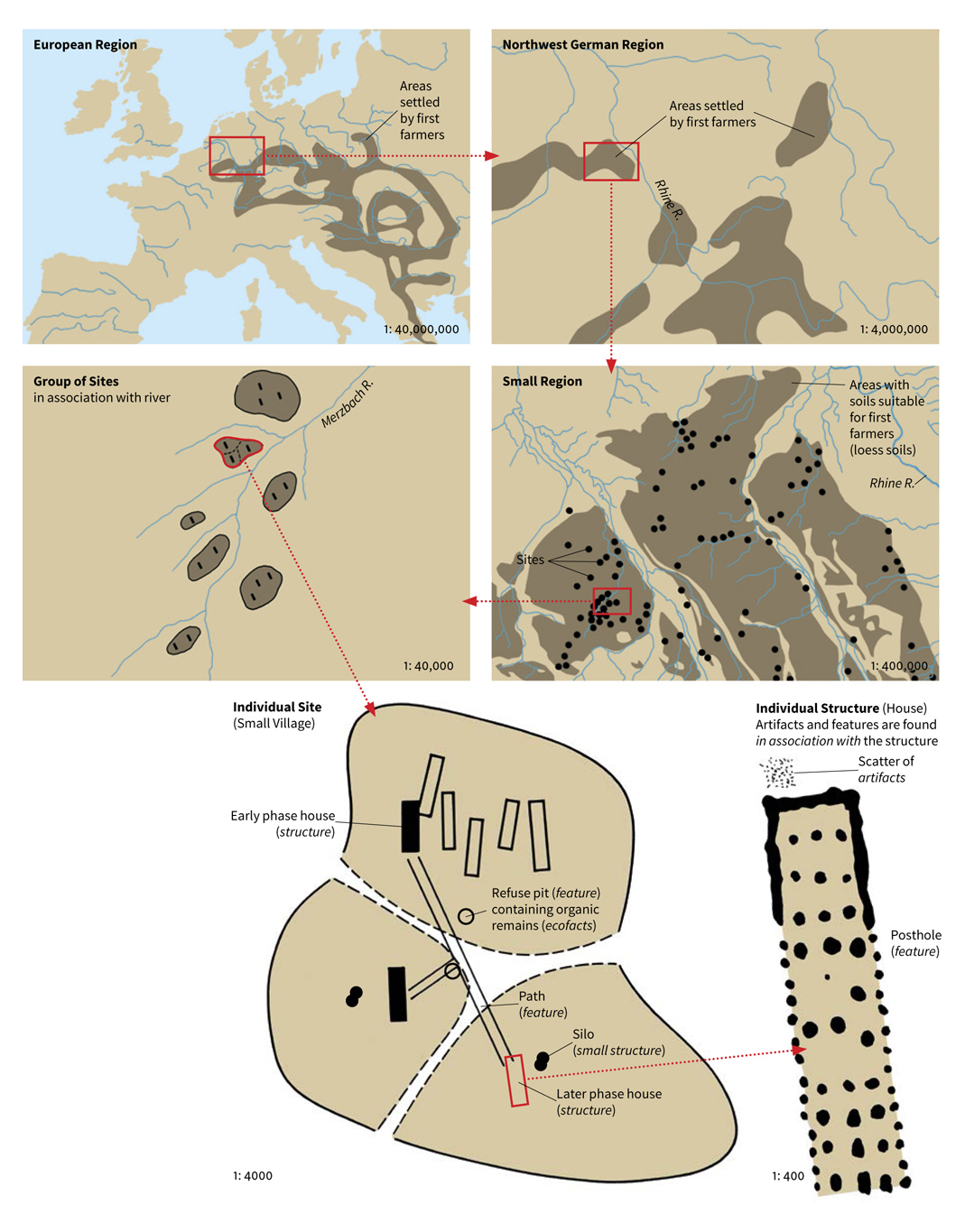
Much archaeological research has to do with the analysis of artifacts and the organic and environmental remains that are found together on archaeological sites. Sites may be thought of as places where artifacts, features, structures, and organic and environmental remains are found together in distinct distributions. For working purposes, one can simplify this still further and define sites as places where significant traces of human activity are identified. Thus a village or town is a site, and so too are such isolated monuments as Serpent Mound in Ohio or Stonehenge in England. Equally, a surface scatter of stone tools or potsherds may represent a site occupied for no more than a few hours, whereas a Near Eastern tell is a site indicating human occupation over perhaps thousands of years. In Chapter 5 we consider the great variety of sites in more detail and look at the ways in which archaeologists classify them and study them regionally as part of the investigation of settlement patterns. Here, we are more concerned with the nature of individual sites and how they are formed. When studied together with their surrounding landscapes, sites are grouped into regions.
Some researchers broaden the meaning of the term “artifact” to include all humanly modified components of a site or landscape, such as hearths and storage pits—but these are more usefully described as “features,” defined as, in essence, non-portable artifacts. Simple features, such as the remains of hearths, floors, ditches, etc., give evidence for complex features or structures, defined as buildings of all kinds, from houses and granaries to palaces and temples.
2.1 Different scales and terminology used in archaeology, from the continental region to the individual structure. In this representation of the pattern of settlement of Europe’s first farmers (fifth millennium BCE), the archaeologist might study—at the broader scale—the interesting association between sites and light, easily worked soils near rivers (see Chapter 7). At the smaller scale, the association—established by excavation (Chapter 3)—of houses with other houses and with structures such as silos for grain storage might raise questions about social organization and permanence of occupation at this period.
The Importance of Context
In order to reconstruct past human activity at a site it is crucially important to understand the archaeological context of any find, whether artifact, feature, structure, or organic remain. This allows an archaeologist to form more numerous and more reliable associations with other artifacts and ecofacts, and to begin to build a wider and clearer reconstruction. For example, in the nineteenth century, Jacques Boucher de Perthes demonstrated that stone tools associated with the bones of extinct animals in sealed deposits confirmed the idea that humanity was much older than had traditionally been believed (Chapter 1). If the stone tools had been found in a private collection, removed from their context and association with extinct animals, Boucher de Perthes would have been unable to prove his important argument.
A find’s context consists of the material surrounding it, usually some sort of sediment such as gravel, sand, or clay, called its matrix. It also includes its horizontal and vertical position within the matrix (its provenience), its occurrence together with other archaeological remains, and its association with other finds. Increasingly, since the days of Boucher de Perthes, archaeologists have recognized the importance of identifying and accurately recording associations between remains on sites. This is why it is such a tragedy when looters dig up sites indiscriminately looking for rich finds, without recording matrix, provenience, or associations. All the contextual information is lost. A looted vase may be an attractive object for a collector, but far more could have been learned about the society that produced it had archaeologists been able to record where it was found and in association with what other artifacts or organic remains. Much information about the Mimbres people of the American Southwest, for example, has been lost forever because looters ransacked their sites, hunting for the superbly painted—and highly sought after—bowls made by the Mimbres 1,000 years ago (see box, p. 559).
An object may be described as being in its primary context when it has remained undisturbed since its initial burial. If a site has been disturbed, archaeologists call this a secondary context. It is important for archaeologists to distinguish between the two. This may be straightforward for a recently looted Mimbres site, but it is much more difficult for a site disturbed in antiquity. Nor is disturbance confined to human activity: archaeologists dealing with the tens of thousands of years of the Paleolithic period know well that the forces of nature—encroaching seas or ice sheets, say, or wind and water action—invariably destroy primary context. A great many of the Stone Age tools found in European river gravels are in a secondary context, transported by water action far from their original primary context.
Formation Processes
Much can happen in the time between the burial of an artifact or ecofact and its discovery. In deciding whether an object has been disturbed since burial, or in interpreting a find, it is important for archaeologists to reconstruct as far as possible what happened during this time. The ways in which finds came to be buried and enter the archaeological record are called formation processes.
In reconstructing how an object entered the archaeological record, one can make a useful distinction between cultural formation processes and natural formation processes. Cultural processes involve the deliberate or accidental activities of human beings as they make or use artifacts, build or abandon buildings, plow fields, and so on. Natural formation processes are environmental events that govern the burial and survival of the archaeological record. The sudden fall of volcanic ash that covered Pompeii (see box, pp. 24–25) is an exceptional natural process. More common is the gradual burial of artifacts or features by windborne sand or soil. The transporting of stone tools by river action is another natural process, as is the activity of animals on a site—burrowing into it or chewing bones and pieces of wood.
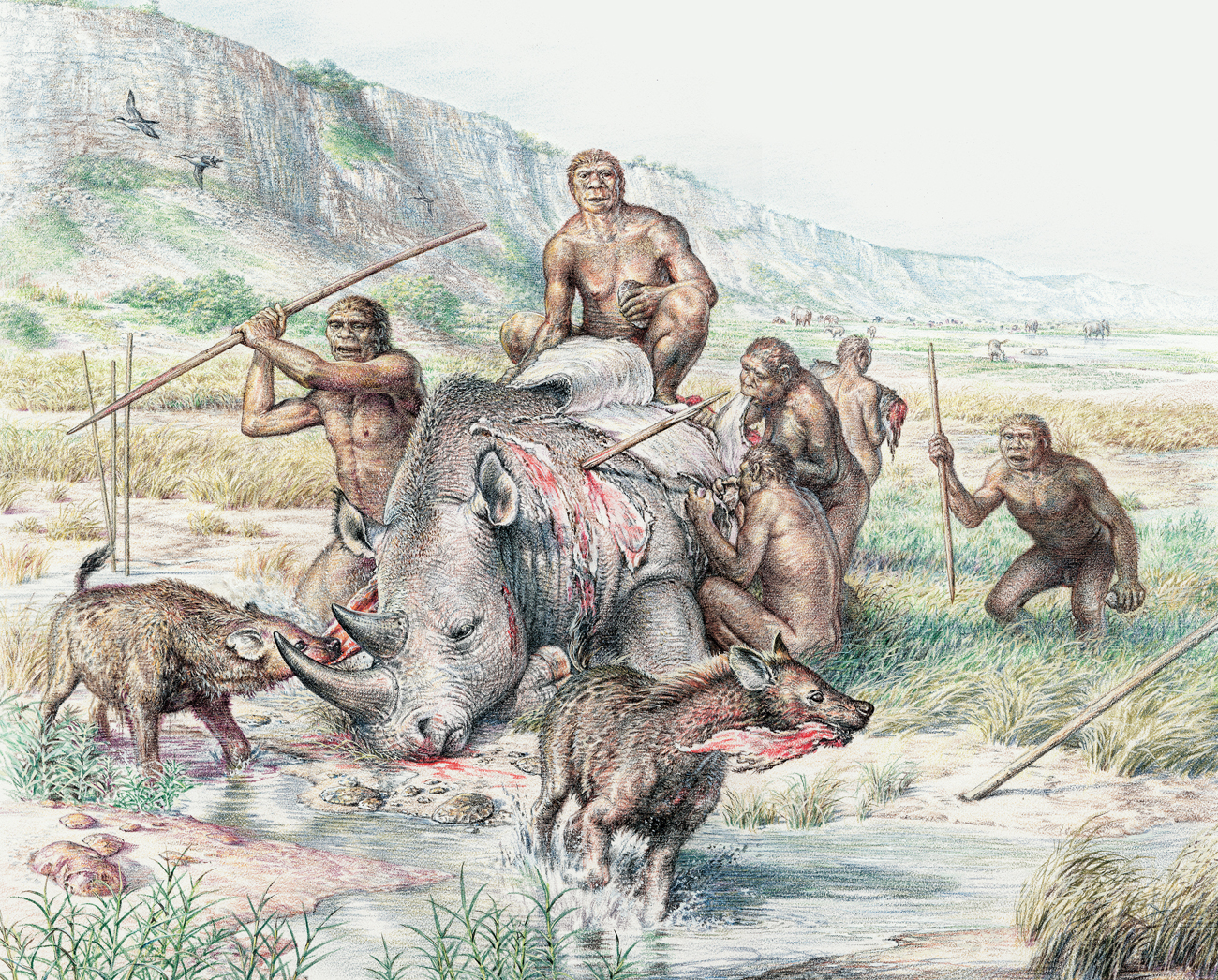
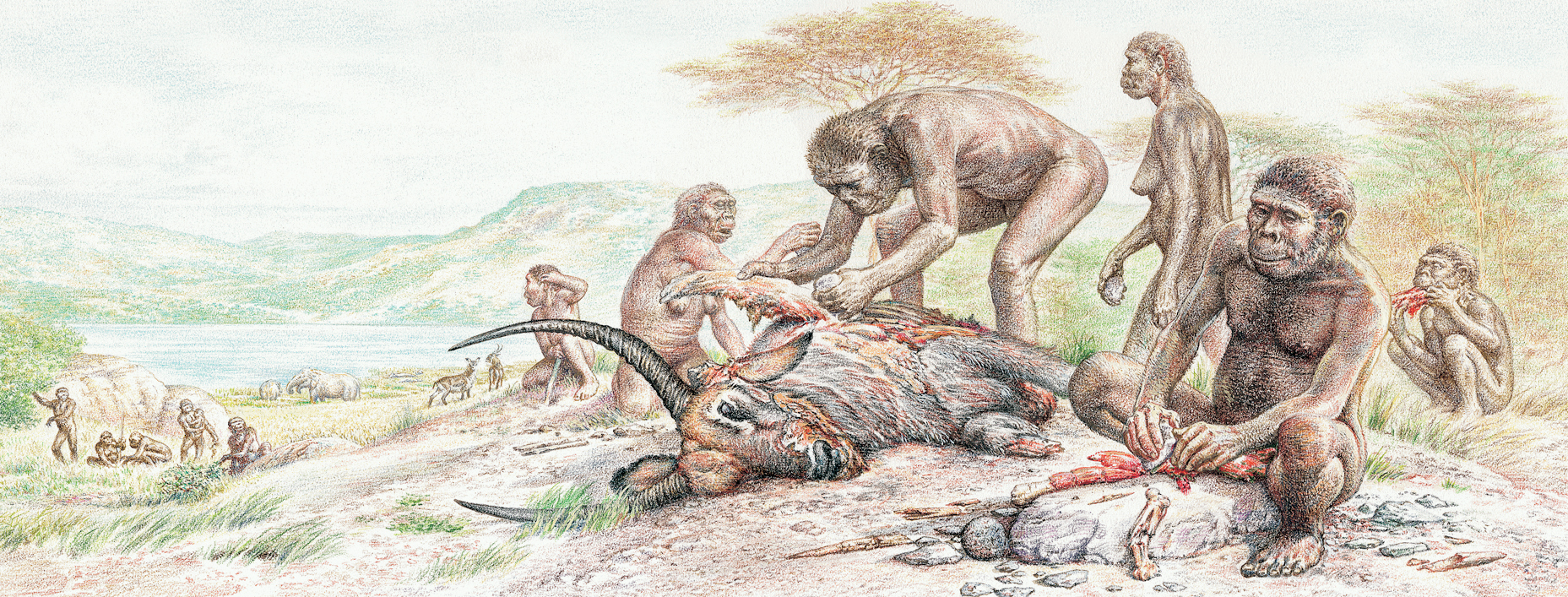
2.2–3 Early humans as mighty hunters or mere scavengers? Our understanding of formation processes governs the way in which we interpret associations of human tools with animal bones from the fossil record in Africa.
At first sight these distinctions may seem of little interest to the archaeologist. In fact they are vital to the accurate reconstruction of past human activities. It may be important, for instance, to know whether certain archaeological evidence is the product of human or non-human activity. If you are trying to reconstruct human woodworking activities by studying cutmarks on timber, then you should learn to recognize certain kinds of marks made by beavers using their teeth and to distinguish these from cutmarks made by humans using stone or metal tools (Chapter 8).
Let us take an even more significant example. For the earliest phases of human existence in Africa, at the beginning of the Paleolithic period, great theoretical schemes about our primitive hunting ability have been based on the association between stone tools and animal bones found at archaeological sites. The bones were assumed to be those of animals hunted and slaughtered by the early humans who made the tools. But studies of animal behavior and cutmarks on animal bones by C. K. Brain, Lewis Binford, and others suggest that in many cases the excavated bones are the remains of animals hunted by other predator animals and largely eaten by these. The humans with their stone tools would have come upon the scene as mere scavengers, at the bottom of a pecking order of different animal species. By no means everyone agrees with this scavenging hypothesis. The point to emphasize here is that the issue can best be resolved by improving our techniques for distinguishing between cultural and natural formation processes—between human and non-human activity. Many studies focus on the need to clarify how one differentiates cutmarks on bones made by stone tools from those made by the teeth of animal predators (Chapter 7). Modern experiments using replica stone tools to cut meat off bones are one helpful approach. Other kinds of experimental archaeology can be most instructive about some of the formation processes that affect physical preservation of archaeological material (see box p. 53).
The remainder of this chapter is devoted to a more detailed discussion of the different cultural and natural formation processes.
Cultural Formation Processes—How People Have Affected What Survives in the Archaeological Record
One may separate cultural formation processes rather crudely into two kinds: those that reflect the original human behavior and activity before a find or site became buried; and those processes that came after burial, such as looting or modern plowing of a field. Of course most major archaeological sites are formed as the result of a complex sequence of use, burial, and reuse repeated many times over, so that a simple twofold division of cultural formation processes may not be so simple to apply in practice. Nevertheless, since one of our main aims is to reconstruct original human behavior and activity, we must make the attempt.
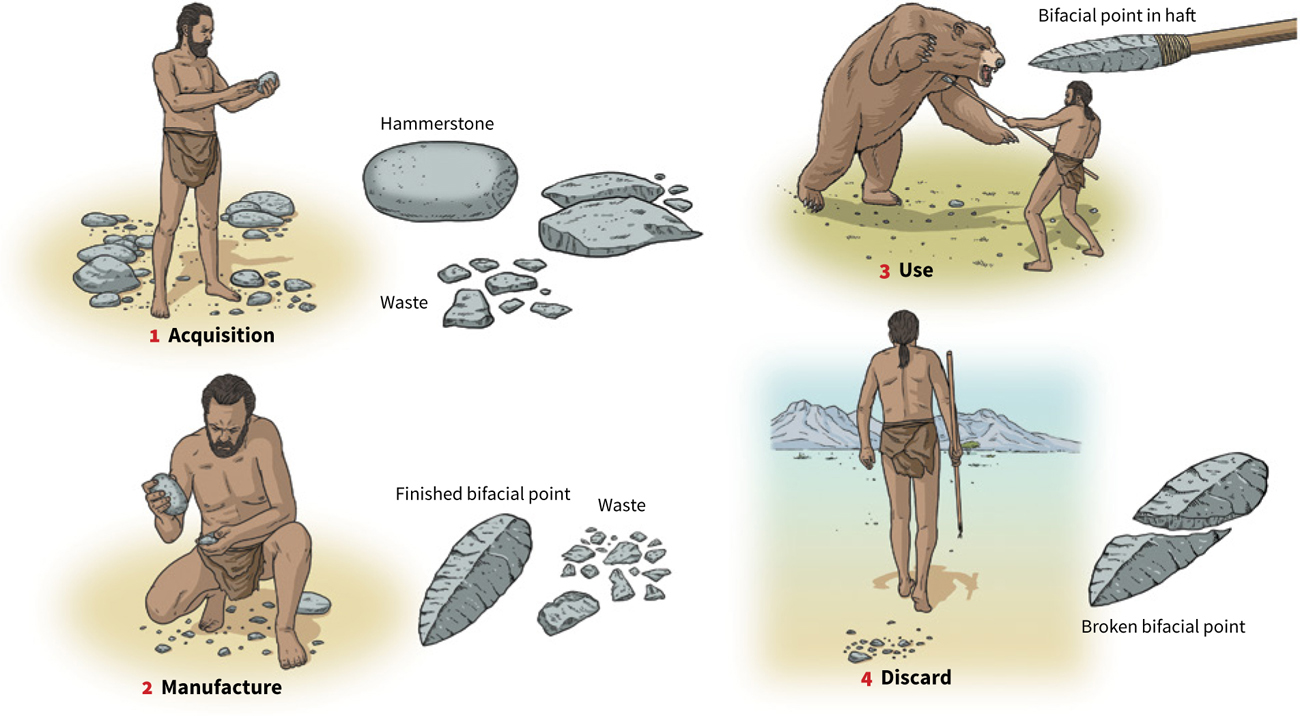
Original human behavior is commonly reflected archaeologically in at least four major activities. In the case of a tool, for example, there may be
acquisition of the raw material
manufacture
use (and distribution)
disposal or discard when the tool is worn out or broken. (The tool may of course be reworked and recycled, repeating stages 2 and 3.)
2.4 An artifact may have entered the archaeological record at any one of these four stages in its life cycle. The archaeologist’s task is to determine which stage is represented by the find in question.
Similarly, a food crop such as wheat will be acquired (harvested), manufactured (processed), used (eaten), and discarded (digested and the waste products excreted)—here one might add a common intermediate stage of storage before use. From the archaeologist’s point of view, the critical factor is that remains can enter the archaeological record at any one of these stages—a tool may be lost or thrown out as inferior quality during manufacture, a crop may be accidentally burned and therefore preserved during processing. In order to reconstruct the original activity accurately it is crucial to try to understand which of the stages one is looking at. Some stages are more visible to the archaeologist than others. It may be quite easy to identify, say, the first stage for stone tools, because stone quarries can often be recognized by deep holes in the ground with piles of associated waste stone pieces which survive well. But it is much more difficult to know beyond reasonable doubt whether a sample of charred plant remains represents the moment a plant is initially processed, cooked or discarded, and this may also make it difficult to reconstruct the true plant diet. In the descriptions below, we explore some of the most common cultural formation processes that archaeologists are confronted with.
Deliberate burial of valuables is a major aspect of original human behavior, which has left its mark on the archaeological record (it is one manifestation of the fourth process in the list above). In times of conflict or war, people often deposit prized possessions in the ground, intending to reclaim them at a later date but sometimes failing to do so. These hoards are a prime source of evidence for certain periods, such as the European Bronze Age, for which hoards of metal goods are common, or later Roman Britain, which has yielded buried treasures of silver and other precious metals. One difficulty, however, is in distinguishing between hoards originally intended to be reclaimed and valuables buried perhaps to placate supernatural powers (placed, for example, at a particularly dangerous part of a crossing over a bog) with no reclamation intended.
How archaeologists set about trying to demonstrate belief in supernatural powers and an afterlife is the subject of Chapter 10. Here we may note that, in addition to hoards, the major source of evidence comes from the burial of the dead, whether in modest graves, elaborate burial mounds, or giant pyramids, usually with grave-goods such as ceramic vessels or weapons, and sometimes with painted tomb-chamber walls, as in ancient Mexico or Egypt. The Egyptians even went so far as to mummify their dead (see below)—to preserve them, they hoped, for eternity—as did the Incas of Peru, whose kings were kept in the Temple of the Sun at Cuzco and brought outside for special ceremonies.
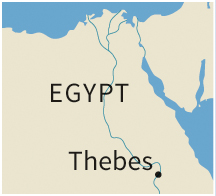
Human destruction of the archaeological record is a cultural formation process familiar to archaeologists. It might be caused by burials, of the kind just described, being dug into earlier deposits; but people in the past also deliberately or accidentally obliterated traces of their predecessors in innumerable other ways. Rulers, for instance, often destroyed monuments or erased inscriptions belonging to previous chiefs or monarchs. A classic example of this occurred in ancient Egypt, where the heretic pharaoh Akhenaten, who tried to introduce a new religion in the fourteenth century BCE, was reviled by his successors and his major buildings were torn down for reuse in other monuments. A Canadian team led by Donald Redford has spent many years recording some of these reused stone blocks at Thebes and has successfully matched them with the help of a computerized database in order to reconstruct, in the manner of a giant jigsaw, part of one of Akhenaten’s temples.
Some human destruction meant to obliterate has inadvertently preserved material for the archaeologist to find. Burning, for example, may not always destroy. It can often improve the chances of survival of a variety of remains, such as those of plants: the conversion into carbon greatly increases the powers of resistance to the ravages of time. Clay daubing and adobe usually decay, but if a structure has been fired, the mud is baked to the consistency of a brick. In the same way, thousands of clay writing tablets from the Near East have been baked accidentally or deliberately in fires and thus preserved. Timbers too may char and survive in structures, or at least leave a clear impression in the hardened mud. Today, human destruction of the archaeological record continues at a frightening pace, through land drainage, plowing, building work, looting, etc. In Chapter 14 we discuss how this affects archaeology generally and what the potential implications are for the future.
Often the most common or obvious cultural formation process, therefore, consists of the last stages of an object, its disposal, preservation, or evidence of its destruction. It is only through careful analysis of the object and its context that we can begin to reconstruct the earlier stages of the human activity related to it, such as its manufacture and use. We explore these forms of analysis in later chapters.
Experimental Archaeology
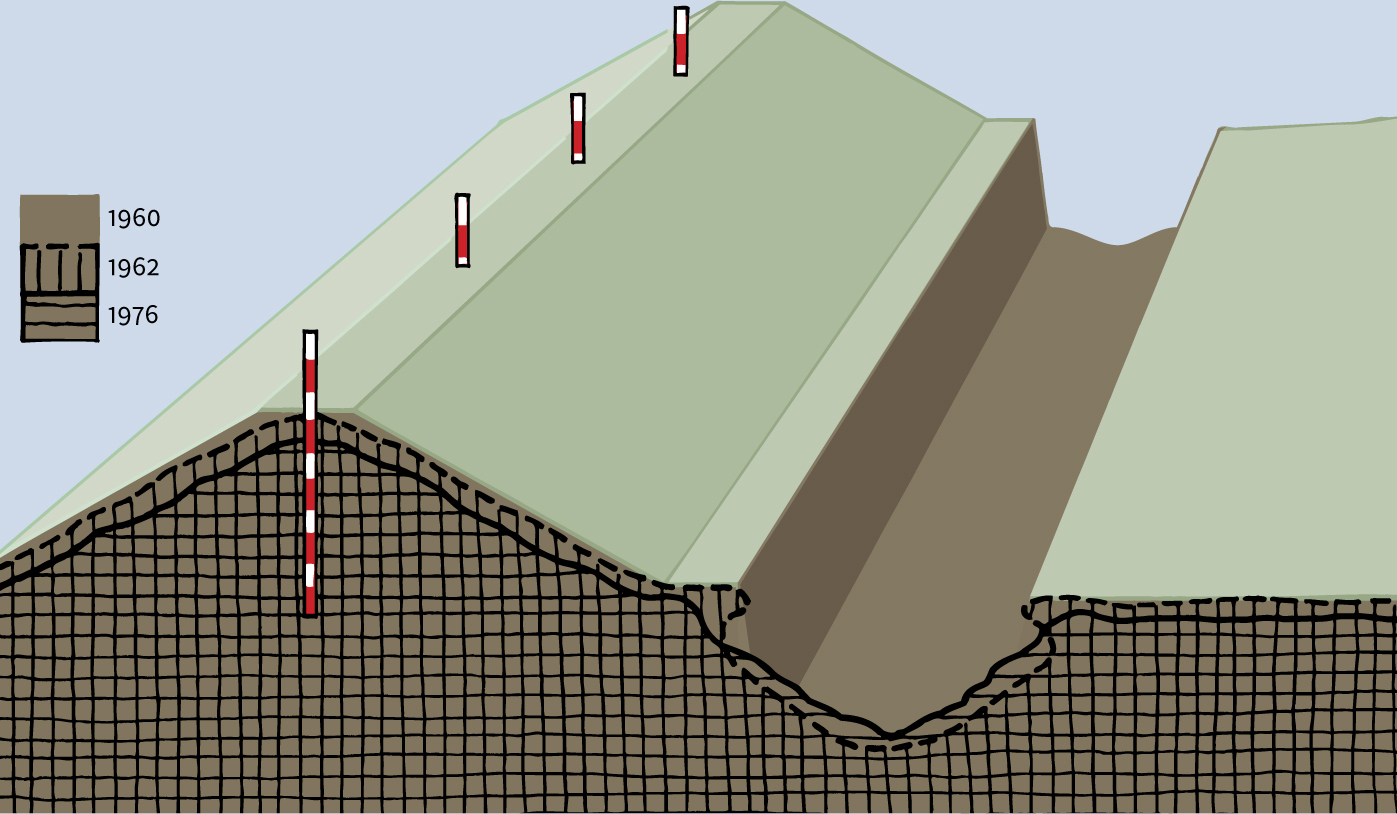
One effective way to study formation processes is through long-term experimental archaeology. Experimental archaeology is a way to test archaeological hypotheses, usually by replicating processes from the past, be they natural or cultural. An excellent example is the experimental earthwork constructed on Overton Down, southern England, in 1960.
Archaeologists built a modern earthwork, with a chalk and turf bank 21 m (69 ft.) long, 7 m (25 ft.) wide, and 2 m (6 ft. 7 in.) high, and a ditch cut parallel to it. The aim of the experiment has been to assess not only how the bank and ditch alter through time, but also what happens to such materials as pottery, leather, and textiles, which were buried in the earthwork in 1960. This experiment is still ongoing. So far, sections (trenches) have been cut across the bank and ditch at intervals of two, four, eight, sixteen, and thirty-two years (that is, in 1962, 1964, 1968, 1976, and 1992), with plans to cut further sections after sixty-four and 128 years (that is, in 2024 and 2088).
On this timescale, the project is nearing halfway complete. The results yielded so far are interesting. In the 1960s the bank dropped some 25 cm (10 in.) in height and the ditch silted up quite rapidly. Since the mid-1970s, however, the structure has stabilized. As for the buried materials, tests after four years showed that pottery was unchanged and leather little affected, but textiles were already becoming weakened and discolored. The 1992 excavations revealed that preservation was better in the chalk bank, which is less biologically active, than in the turf core, where textiles and some wood had completely disappeared. The structure itself had changed little since 1976, though there was considerable reworking and transport of fine sediment by earthworms.
2.5 The bank and ditch as cut in 1960, together with the changes revealed by sections cut across the earthwork in 1962 and 1976.
The experiment has offered valuable insight in the possible natural formation processes of archaeological material. It has already shown that many of the changes that interest archaeologists occur within decades of burial, and that the extent of these changes can be far greater than had previously been suspected.
Natural Formation Processes—How Nature Affects What Survives in the Archaeological Record
Natural formation processes include any form of environmental or non-human process that cause decay or enable preservation. Practically any archaeological material, from plant remains to metals, can survive in exceptional circumstances. Under normal conditions, however, inorganic materials (materials that have never been alive) survive far better than organic ones.
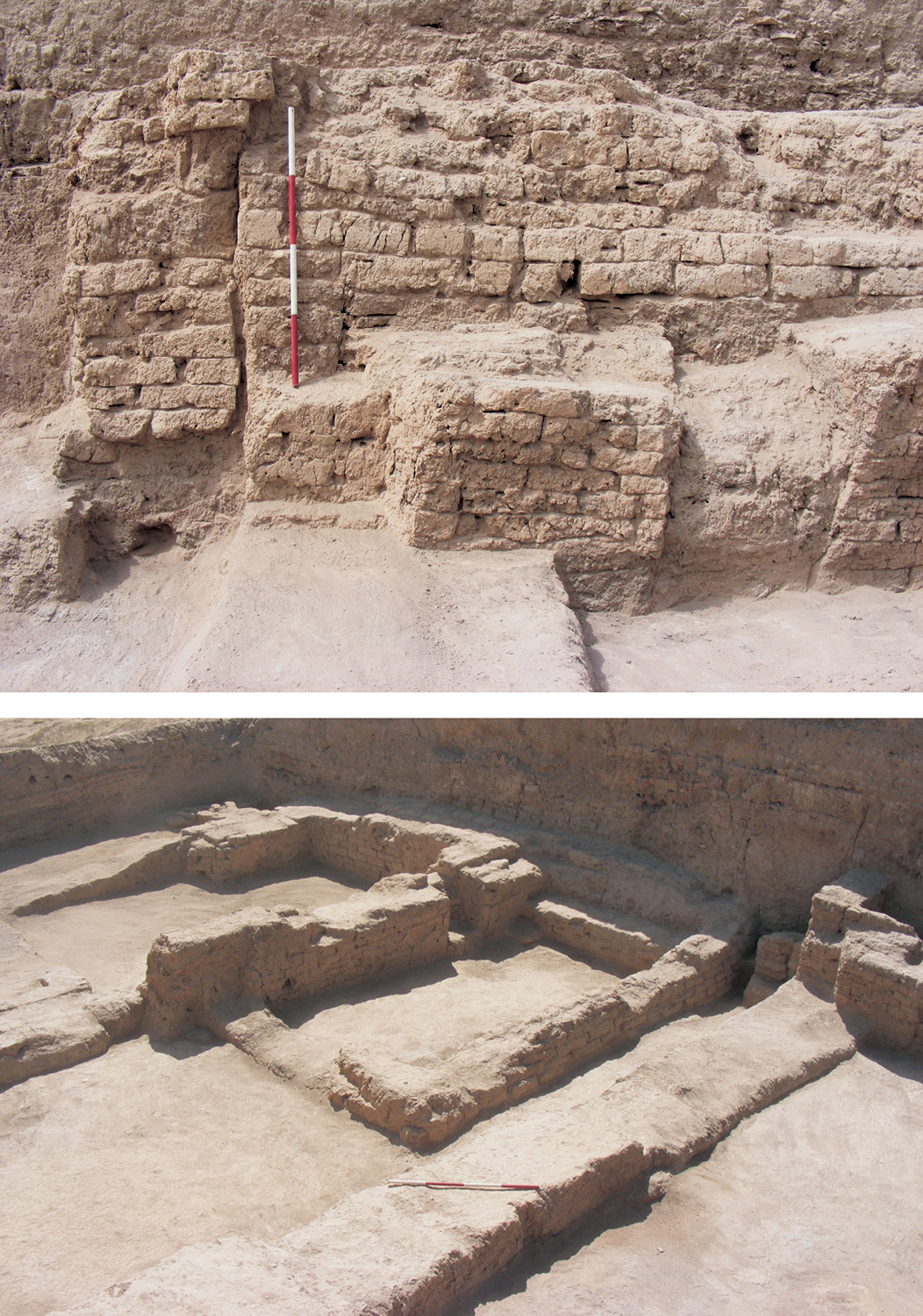
2.6–7 Mud brick survives well in the dry conditions of the Near East. Here, at Tell Brak, Syria, excavations have exposed the remains of walls dating back more than 3,000 years. The modern building in the background is also constructed with mud bricks.
Inorganic Materials
The most common inorganic materials to survive archaeologically are stone, clay, and metals.
Stone tools survive extraordinarily well—some are more than 2 million years old. Not surprisingly, they have always been our main source of evidence for human activities during the Paleolithic period, even though wooden and bone tools (which are less likely to be preserved) may originally have equaled stone ones in importance. Stone tools sometimes come down to us so little damaged or altered from their primary state that archaeologists can examine microscopic patterns of wear on their cutting edges and learn, for example, whether the tools were used to cut wood or animal hides.
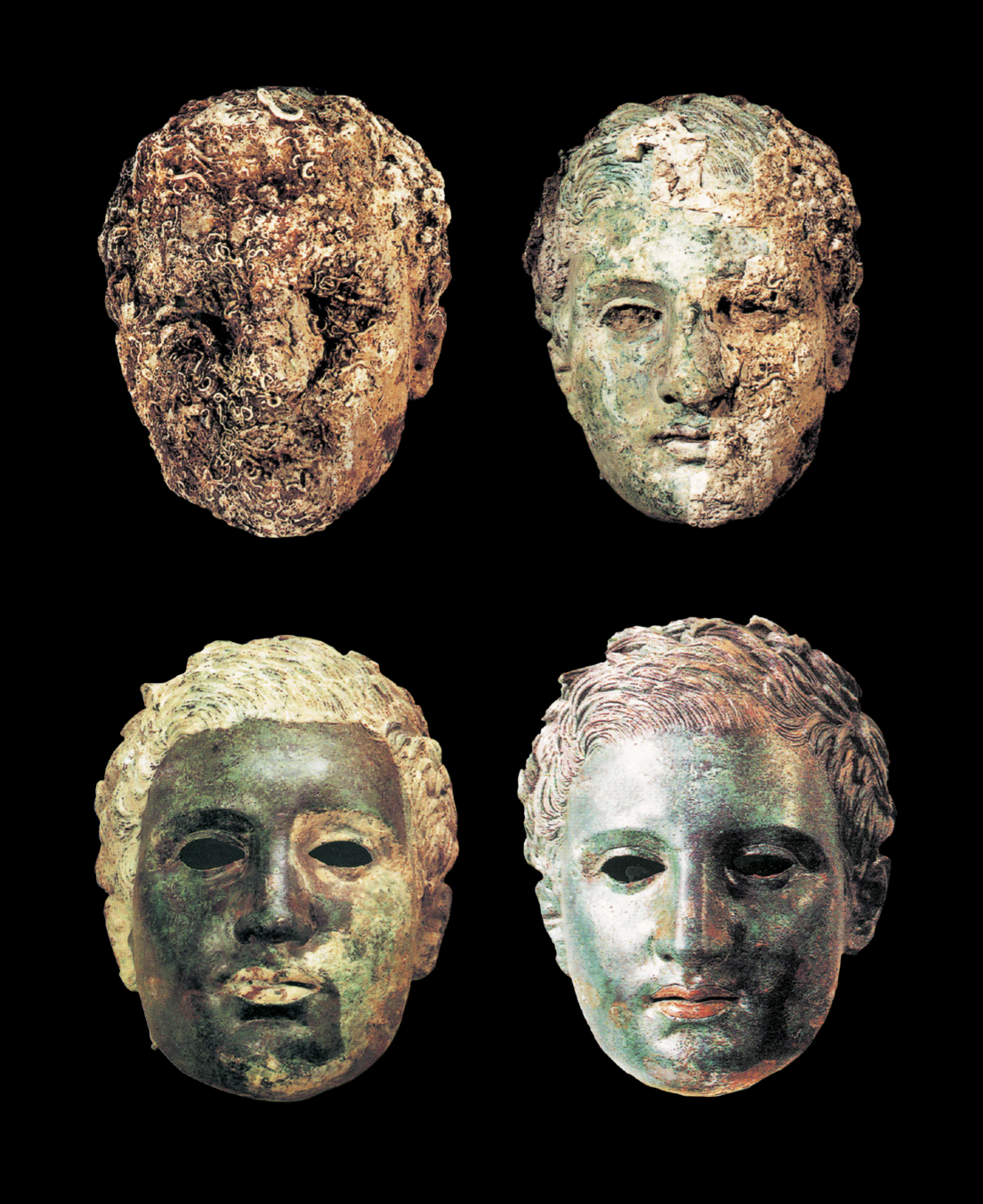
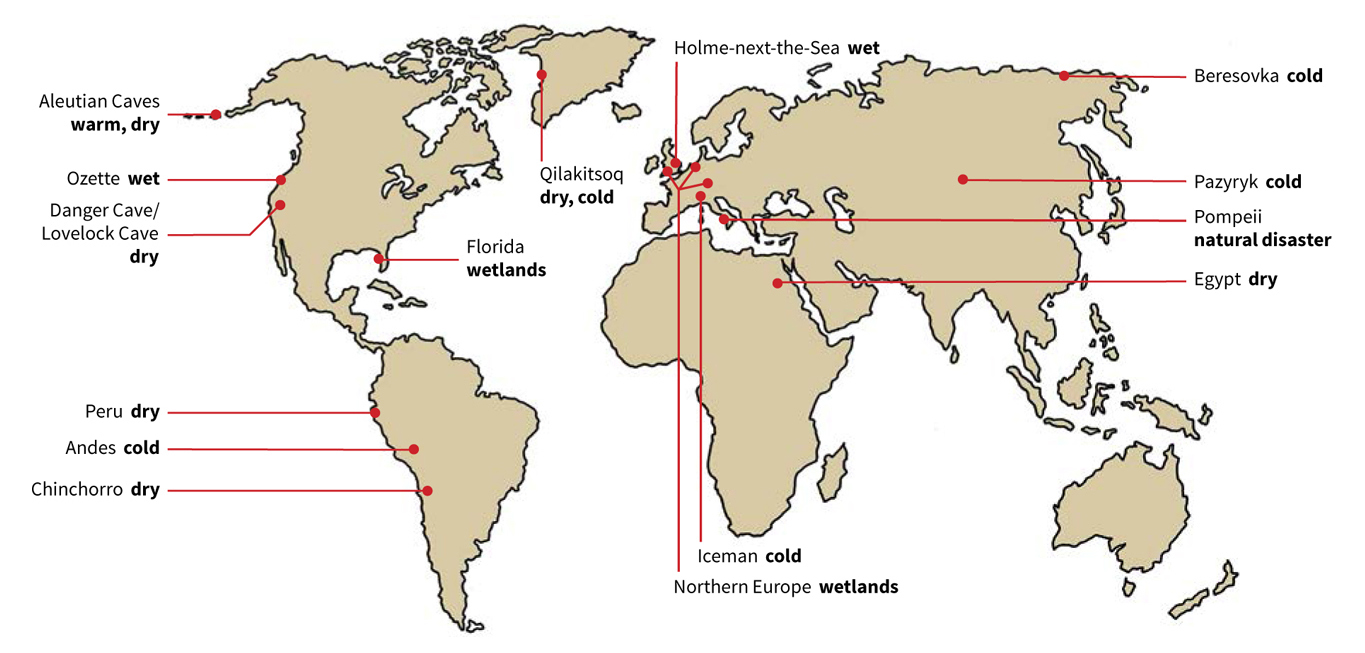
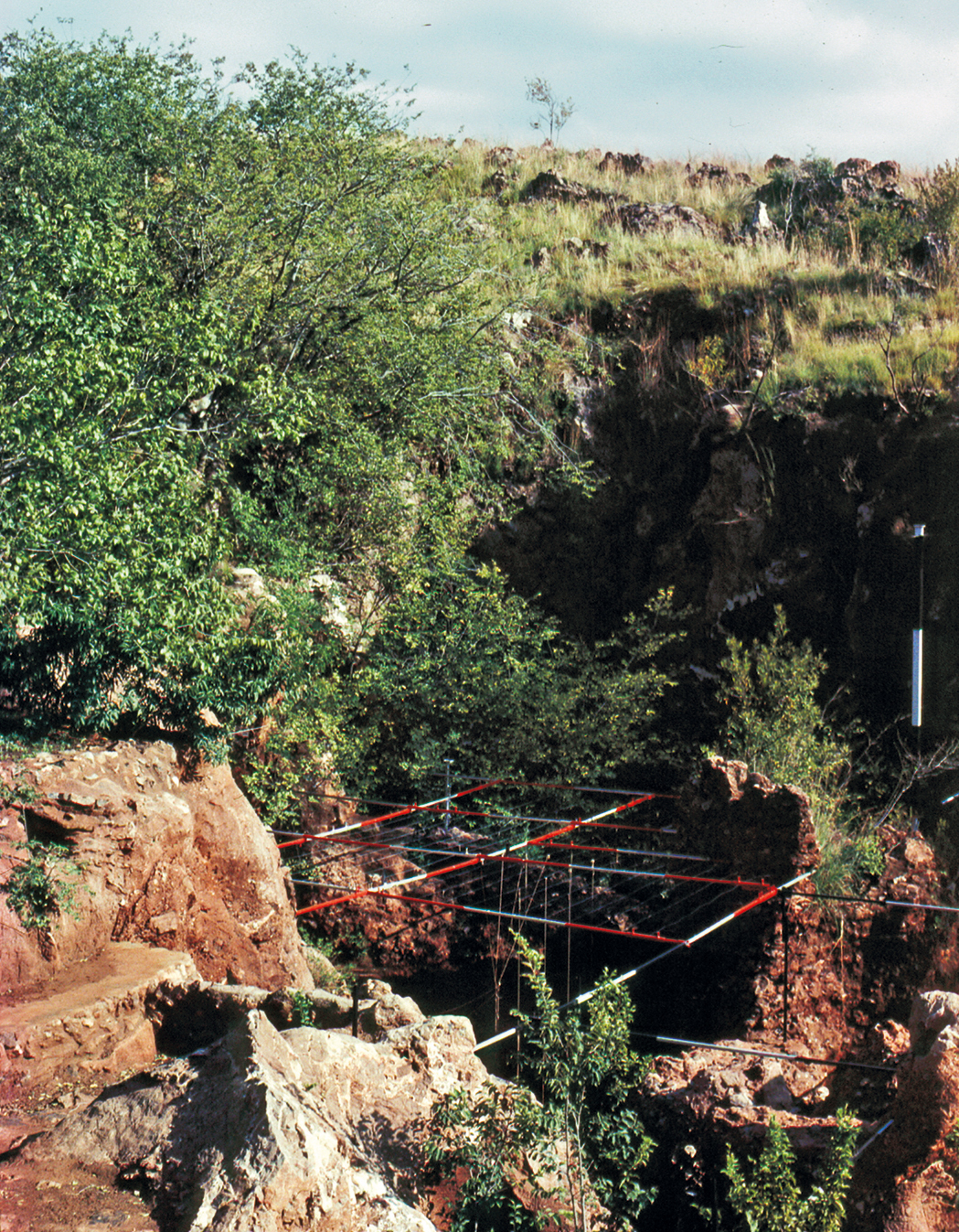
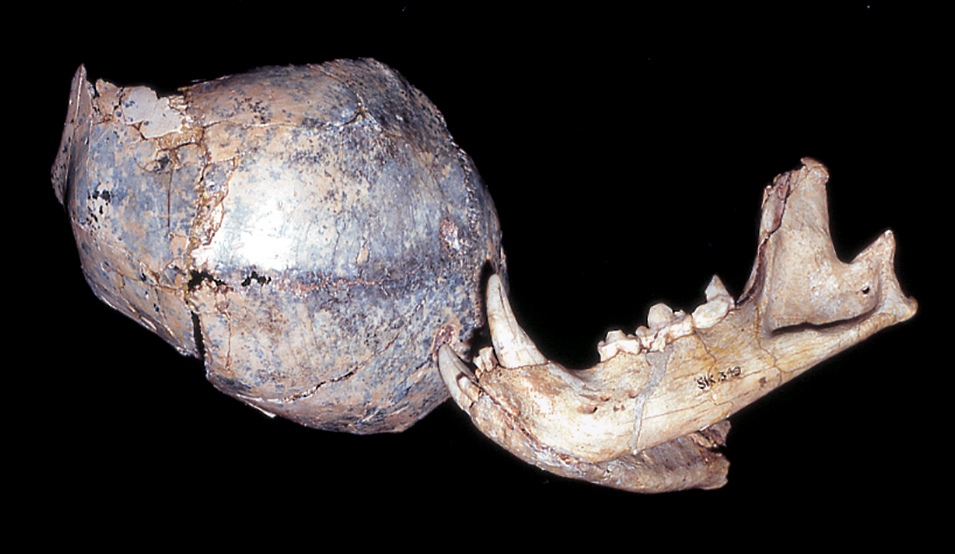
2.8 This bronze head from a statue of a Greek male athlete was found off the coast of Croatia in 2001. Bronze survives well in seawater, but some 2,000 years of concretions had to be painstakingly removed by restorers.2.9 The major sites and regions discussed in this chapter where natural formation processes—from wet to very dry or cold conditions—have led to exceptionally good preservation of archaeological remains.2.10–11 Early hominins as hunters or the hunted? Excavation of the cave complex at Swartkrans, South Africa (left), has yielded the remains of more than 130 australopithecine individuals, together with those of carnivores and herbivores. Originally, it was thought that the hominins had preyed on the other animals. But C. K. Brain matched the lower canines of a leopard jaw found in the cave to the holes in an incomplete australopithecine juvenile cranium. This hominin, at any rate, had been more prey than predator. Brain discovered that modern leopards drag their victims into trees, out of reach of hyenas. Perhaps the remains of the unlucky hominin, once its flesh had been consumed, fell from a tree into the cave.
Fired clay, such as pottery and baked mud brick or adobe, is virtually indestructible if well fired. Consequently, for the periods after the introduction of pottery-making (some 20,000 years ago in China, and 9,000 years ago in the Near East and parts of South America), ceramics have traditionally been the archaeologist’s main source of evidence. Pots can be studied for their shape, surface decoration, mineral content, and even the food or other residues left inside them. Acid soils can damage the surface of fired clay, and porous or badly fired clay vessels or mud brick can become fragile in humid conditions. Even disintegrated mud brick, though, can help to assess rebuilding phases in, for instance, Peruvian villages or Near Eastern tells (see ills. 2.6–7).
Metals such as gold, silver, and lead survive well. Copper and some low-quality bronze (an alloy of copper and tin) are attacked by acid soils, and can become so oxidized that only a green deposit or stain is left. Oxidation is also a rapid and powerful agent of destruction of iron, which rusts and may likewise leave only a discoloration in the soil. However, as will be seen in Chapter 8, it is sometimes possible to retrieve vanished iron objects by making a cast of the hollow they have left within the soil or within a mass of corrosion.
The sea is potentially very destructive, with underwater remains being broken and scattered by currents, waves, or tidal action. It can, on the other hand, cause metals to be coated with a thick, hard casing of metallic salts (such as chlorides, sulfides, and carbonates), which helps to preserve the artifacts within. If the remains are simply taken out of the water and not treated, the salts react with air and give off acid, which destroys the remaining metal. But the use of electrolysis—placing the object in a chemical solution and passing a weak current between it and a surrounding metal grill—leaves the metal artifact clean and safe. This is a standard procedure in underwater archaeology and is used on all types of objects from cannon to the finds recovered from the Titanic.
Organic Materials
Organic materials in the archaeological record include animal and plant remains, and worked animal and plant materials such as leather, textiles, and food. Bones and teeth are the most abundant kinds of animal remains found on archaeological sites, and careful studies of how they entered the archaeological record can offer valuable information about such matters as ancient diet, the domestication of plants and animals, and environmental change. When examining organic materials, it is important to study what has happened to them between their deposition and their discovery. This line of inquiry is called taphonomy.
Taphonomy
Taphonomy involves assessing how the remains of an organism—most often the bone of an animal—came to be preserved, and whether that deposition was influenced by humans, animals, and/or the environment. Any such analysis has to assume that taphonomic events in the past were the same as those observed today.
Much work has been carried out on the accumulation and fragmentation of bones by carnivores, in the hope that criteria can be found to differentiate bone assemblages produced by humans from those produced by non-humans. This involves ethnoarchaeological observation of different human groups and carnivores, the excavation of animal dens (to study the bones that animals such as hyenas accumulate), and experimental breakage of bones with and without stone tools.
The pioneer of studies of this kind is C. K. Brain, whose work in South Africa has shown not only the effects of carnivores such as leopards and hyenas on animal carcasses, but also that bone fractures previously attributed to early “killer man-apes” were in fact caused by the pressure of overlying rocks and earth in limestone caves. Indeed, Brain has demonstrated that early hominins, such as australopithecines, far from being hunters, were probably themselves the victims of carnivores at cave sites such as Swartkrans in South Africa. Some hominin skulls, such as the child from Taung (see p. 434), bear cuts and traces of talons that indicate they were probably killed by large birds of prey.
Such studies are not confined to Africa. Lewis Binford, for example, made observations in Alaska and the American Southwest involving the effects of wolves and dogs on bones. He sought to differentiate human and carnivore interference by means of the relation between the number of bone splinters and the number of intact articular ends. Gnawing animals attack the articular ends first, leaving only bone cylinders and a number of splinters. A bone collection consisting of a high number of bone cylinders and a low number of bones with articular ends intact is therefore probably the result of activity by carnivores or scavengers. John Speth applied these criteria to the bones from the Garnsey site, a fifteenth-century CE bison-kill complex in New Mexico. The extreme rarity of bone cylinders indicated that there had been minimal destruction by scavengers, and that the bone assemblage could be assumed to be wholly the result of human activity.
One has to be cautious about comparisons of living carnivore behavior with prehistoric assemblages that may have been produced by a different carnivore perhaps now extinct. Since wide variations exist among living species, the behavior patterns of extinct species are far from easy to ascertain. Moreover, animals such as hyenas can produce faunal assemblages similar to those made by human beings, displaying consistent patterning in breakage, and forming similarly shaped fragments. This is not surprising, because the ways in which a bone can break are limited.
These factors may seem discouraging, but they are helping to establish a much sounder basis for the accurate interpretation of bone assemblages.
Preservation of Organic Materials
Survival of organic materials is determined largely by the matrix of surrounding material and by both local and regional climate—with the occasional influence of natural disasters such as volcanic eruptions. Organic material usually survives in environments that are inhospitable to microorganisms; environments that are anaerobic (lacking oxygen), such as waterlogged sites; environments without water, such as deserts; and environments of intense cold, such as regions of high altitude. These conditions are explored further below.
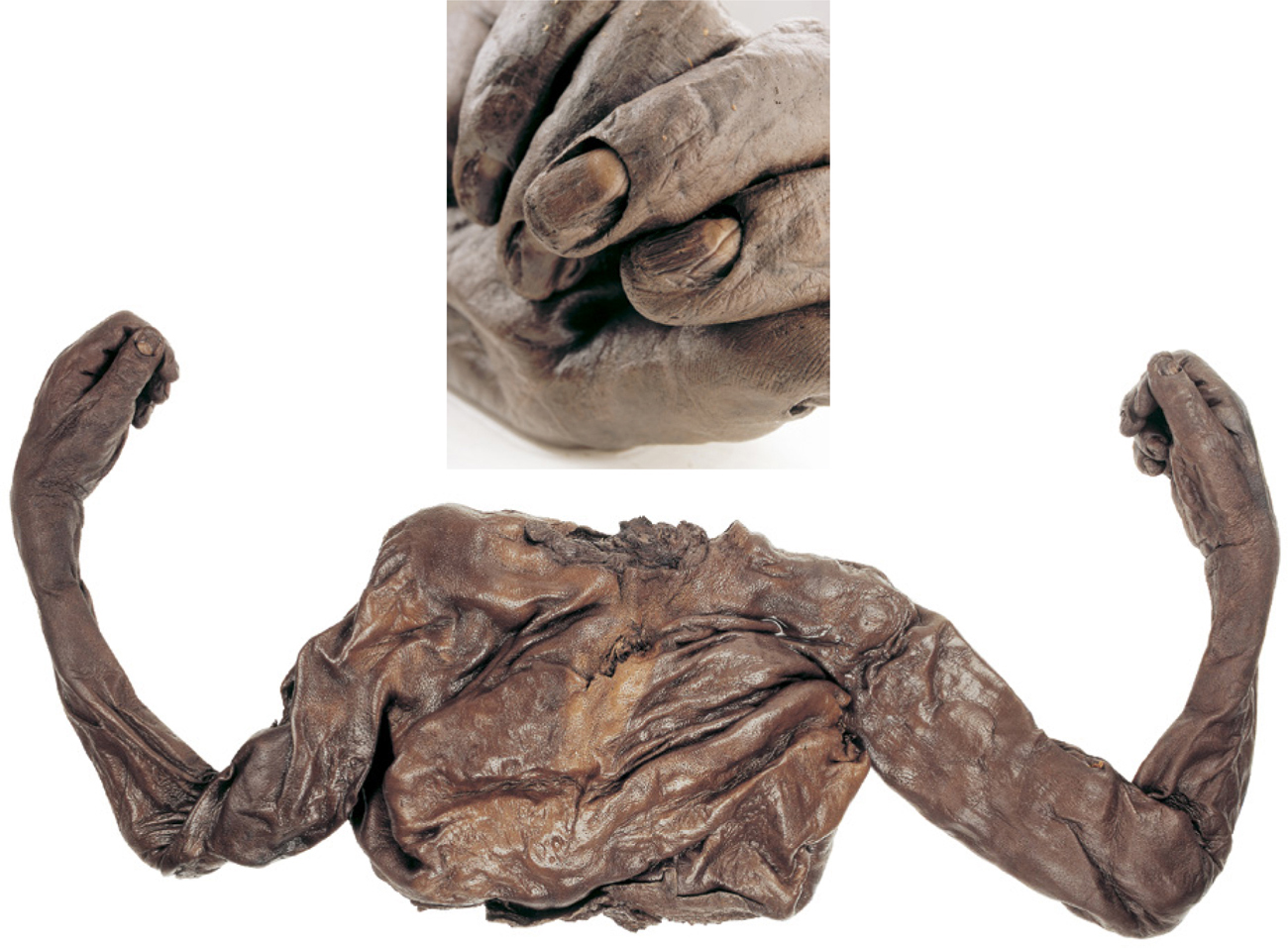
2.12–13 The surviving parts of Old Croghan Man’s body are superbly preserved, particularly his hands: the well-kept fingernails and absence of calluses suggest that he may have been an individual of relatively high status. Analysis of his stomach contents revealed a final meal of cereals and buttermilk.
Other conditions include the chemistry of the soil or matrix. The inclusion of chalk in a matrix, for example, preserves human and animal bone well, in addition to metals. Acid soils destroy bones and wood within a few years, but will leave telltale discolorations where hut foundations once stood. Similar brown or black marks survive in sandy soils, as do dark silhouettes that used to be skeletons (see Chapter 11). The matrix may in exceptional circumstances include an additional component, such as metal ore, salt, or oil. Copper in soil can favor the preservation of organic remains, perhaps by preventing the activity of destructive microorganisms. The prehistoric copper mines of southeast and central Europe have many remains of wood, leather, and textiles. Organic packing material found between copper ingots on the fourteenth-century BCE Uluburun shipwreck, off the coast of southern Turkey (see box, pp. 374–75), also survived for the same reason.
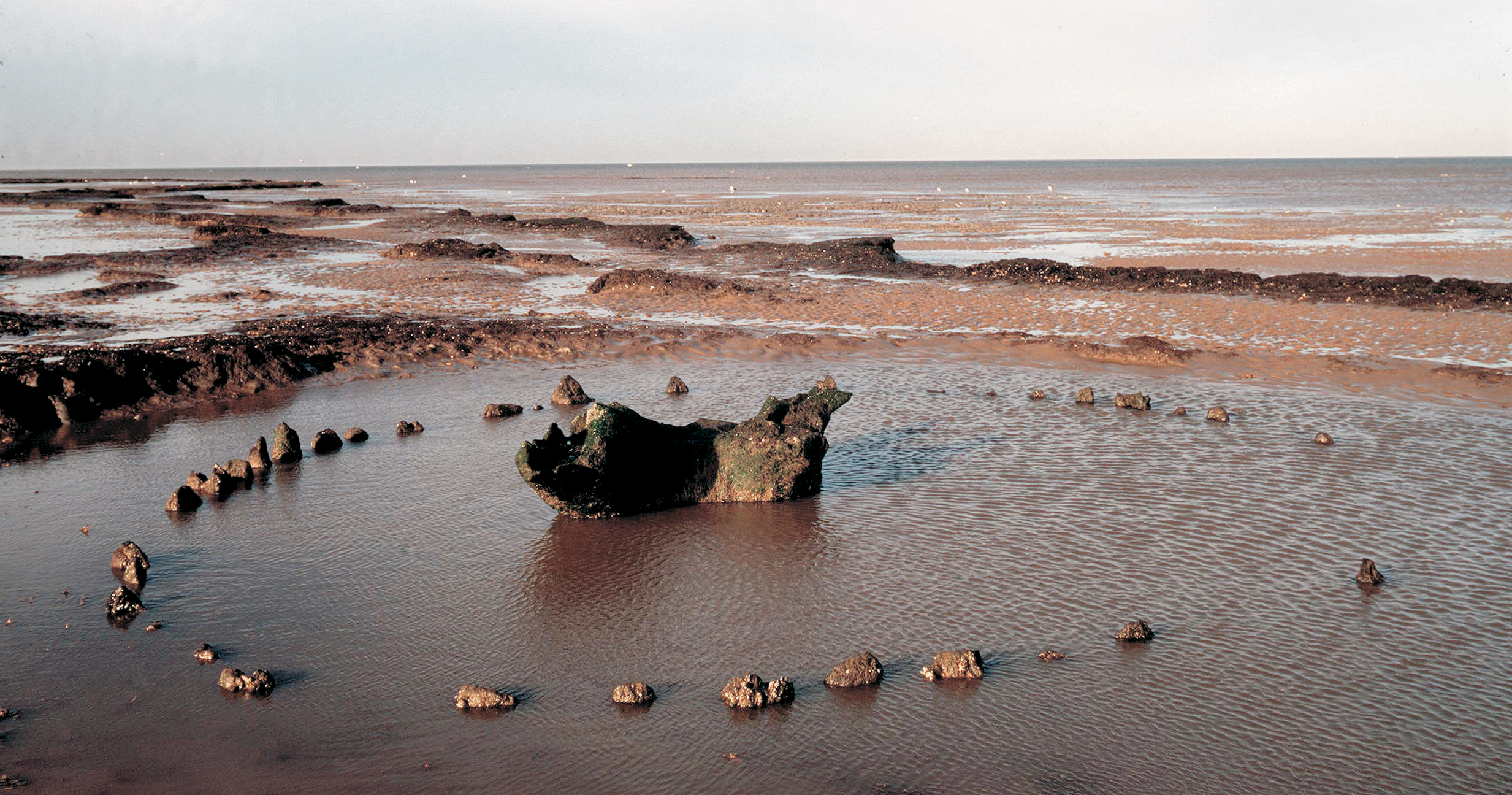
2.14 In 1998 erosion exposed this monument, known as “Seahenge,” in levels dating to the Bronze Age at Holme-next-the-Sea on England’s Norfolk coast. An inverted oak tree, pushed into the ground with roots upward, is surrounded by an oval ring of fifty-four close-set timber posts, mostly split oaks. Preserved by burial under sand and brine, it is thought to be a ritual structure, perhaps an “altar” for exposing corpses which would then be taken away by the sea. It has been tree-ring dated to c. 2050/2049 BCE.
Salt mines such as those of Iron Age Hallstatt, Austria, have helped preserve organic finds. Even more remarkably, a combination of salt and oil ensured the preservation of a woolly rhinoceros at Starunia, Poland, with skin intact, and the leaves and fruits of tundra vegetation around it. The animal had been carried by a strong current into a pool saturated with crude oil and salt from a natural oil seep, which prevented decomposition: bacteria could not operate in these conditions, while salt had permeated the skin and preserved it. Similarly, the asphalt pits of La Brea, Los Angeles, are world famous for the prodigious quantities and fine condition of the skeletons of a wide range of prehistoric animals and birds recovered from them.
Climate plays an important role too in the preservation of organic remains. Tropical climates are the most destructive, with their combination of heavy rains, acid soils, warm temperatures, high humidity, erosion, and wealth of vegetation and insect life. Tropical rainforest flora can overwhelm a site remarkably quickly, with roots that dislodge masonry and tear buildings apart, while torrential downpours gradually destroy paint and plasterwork, and woodwork rots away completely. Archaeologists in southern Mexico, for example, constantly have to battle to keep back the jungle (see box, p. 88). On the other hand, one can also look on jungle conditions as benign, in that they hinder looters from easily reaching even more sites than they do already.
Temperate climates, as in much of Europe and North America, are also not beneficial, as a rule, to organic materials; their relatively warm but variable temperatures and fluctuating precipitation combine to accelerate the processes of decay. In some circumstances, however, local conditions can counteract these processes. At the Roman fort of Vindolanda, near Hadrian’s Wall in northern England, more than 1,300 letters and documents, written in ink on wafer-thin sheets of birch and alderwood, have been found. The fragments, dating to about 100 CE, have survived because of the soil’s unusual chemical condition: clay compacted between layers in the site created oxygen-free pockets, while chemicals produced by bracken, bone, and other remains effectively made the land sterile in that locality, therefore preventing disturbance by vegetation and other forms of life.
Occasionally, one can speak of the local climate of an environment such as a cave. Caves are natural “conservatories” because their interiors are protected from outside climatic effects, and (in the case of limestone caves) their alkaline conditions permit excellent preservation. If undisturbed by floods or the trampling feet of animals and people, they can preserve bones and such fragile remains as footprints—and sometimes even fibers, such as the short length of rope found in the Upper Paleolithic (c. 40,000 years ago) decorated cave of Lascaux in France.
Natural disasters sometimes preserve sites, including organic remains, for the archaeologist. The most common are violent storms, such as that which covered with sand the coastal Neolithic village of Skara Brae on the Orkney Islands, the mudslide that engulfed the prehistoric village of Ozette on America’s Northwest Coast (see box, pp. 60–61), or volcanic eruptions such as that of Vesuvius, which buried and preserved Roman Pompeii under a blanket of ash (see box, pp. 24–25). Another volcanic eruption, this time in El Salvador in about 595 CE, deposited a thick and widespread layer of ash over a densely populated area of Maya settlement. Work here by Payson Sheets and his associates has uncovered a variety of organic remains at the site of Cerén, including palm and grass roofing, mats, baskets, stored grain, and even preserved agricultural furrows. As will be seen in Chapter 6, volcanic ash has also preserved part of a prehistoric forest at Miesenheim, in Germany. Apart from these special circumstances, the survival of organic materials is limited to cases involving extremes of moisture: that is, waterlogged, arid, or frozen conditions that are inhospitable to most microorganisms associated with decay.
Wet Preservation 1: The Ozette Site
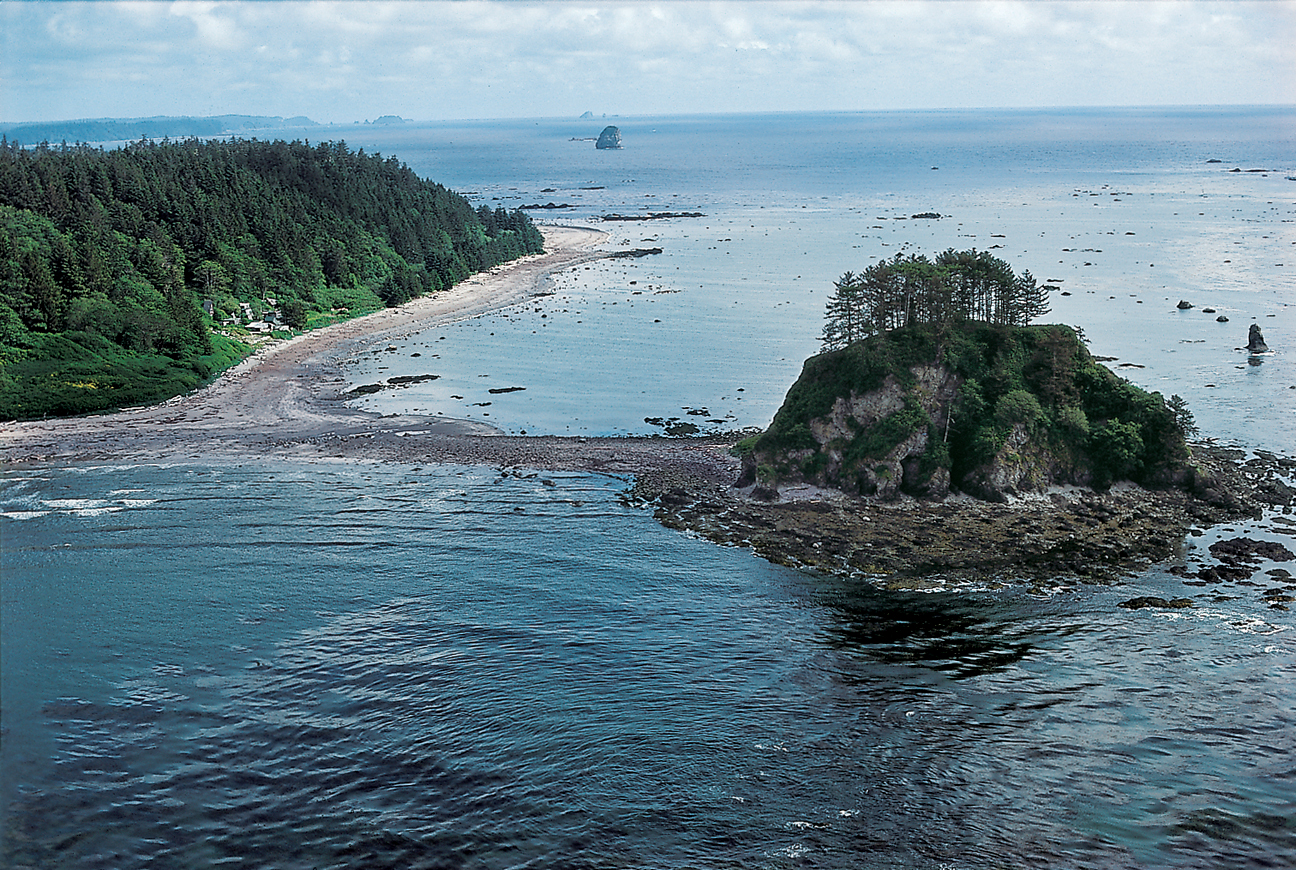
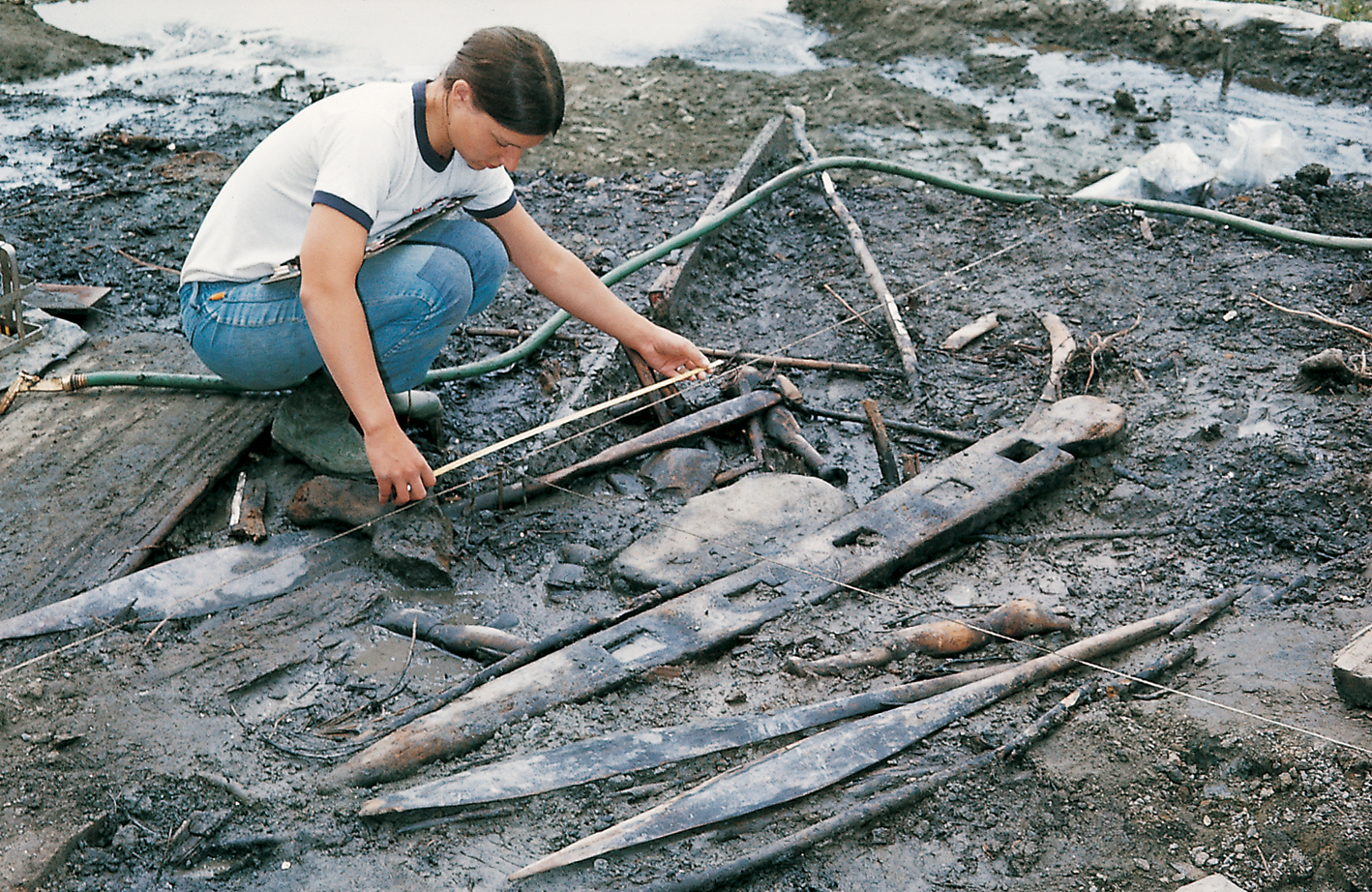
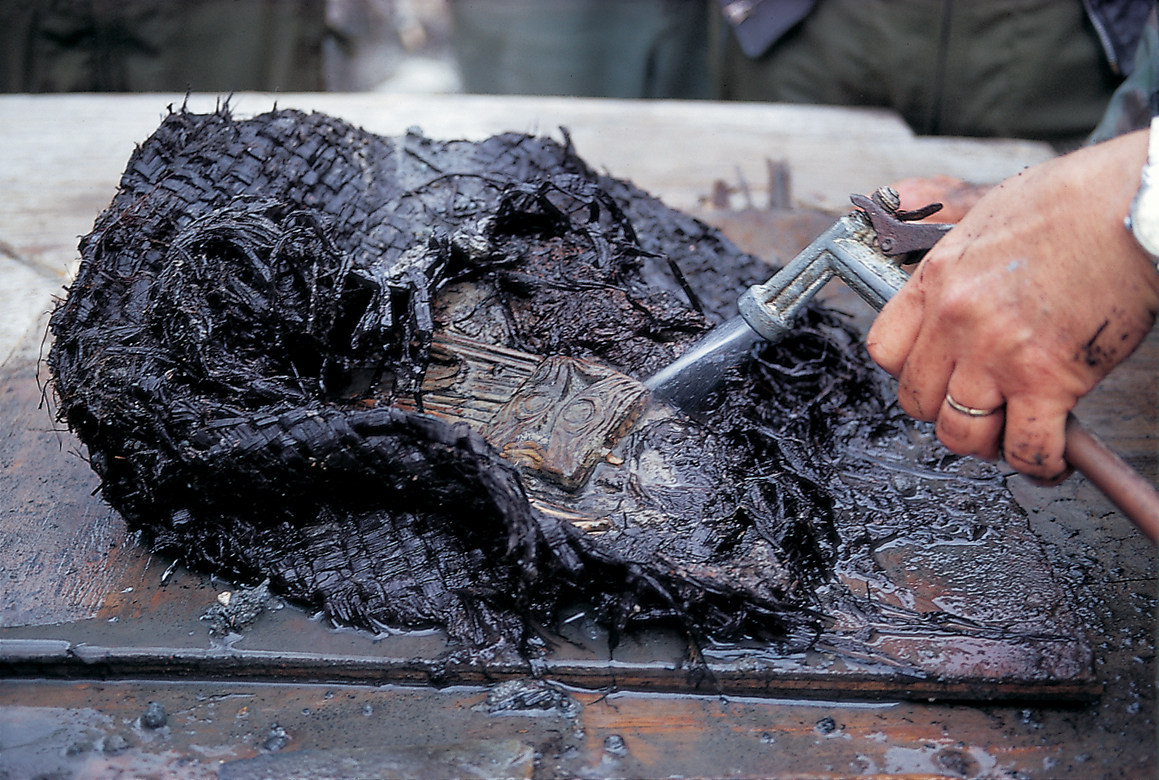
A special kind of waterlogging occurred at the Ozette site, Washington State, on the US Northwest Coast. In about 1700 CE, a huge mudslide buried part of a whale-hunting village of the Makah people. Ruins of huge cedar-plank houses lay protected by the mud for three centuries—but not forgotten, for the descendants kept the memory of their ancestors’ home alive. Then the sea began to strip away the mud, and it seemed that the site might fall prey to looters. The Makah tribal chairman asked Washington State University archaeologist Richard Daugherty to excavate the site and salvage its remains. Clearing the mud with water pumped from the ocean and sprayed through hoses brought a wealth of wood and fiber objects into view.
The houses, where several related families would have lived, were up to 21 m (68 ft. 3 in.) in length and 14 m (45 ft. 6 in.) wide. They had adzed and carved panels (with designs including wolves and thunderbirds), roof-support posts, and low partition walls. There were also hearths, sleeping platforms, storage boxes, mats, and baskets.
2.15 General view from the north of the Ozette site (at left).
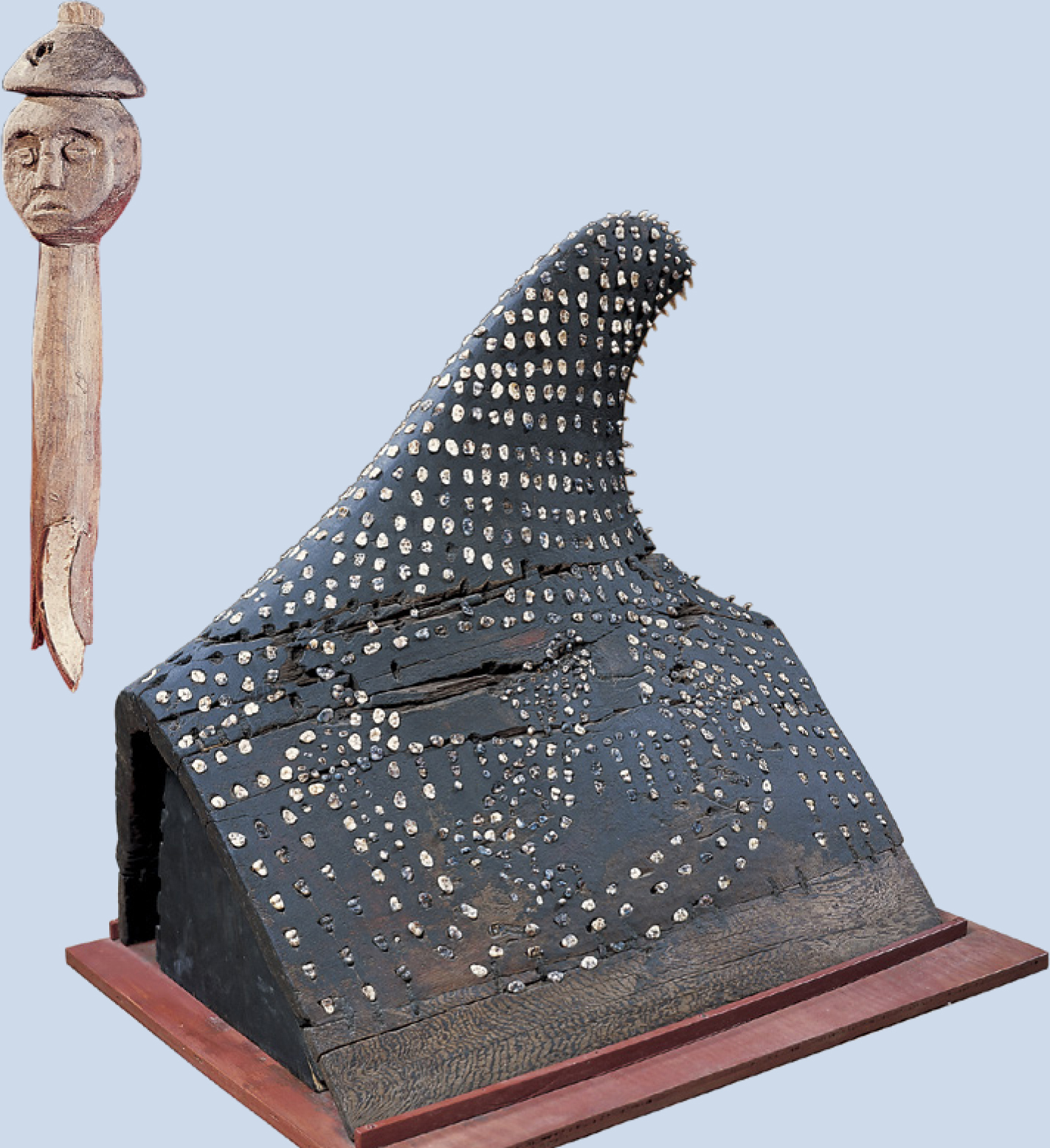
More than 55,000 artifacts—mostly wooden—were recovered. They had been preserved by the wet mud, which excluded oxygen. The most spectacular was a block of red cedar, a meter (3 ft. 3 in.) high, carved in the form of a whale’s dorsal fin. Even leaves—still green—survived, together with an abundance of whale bones.
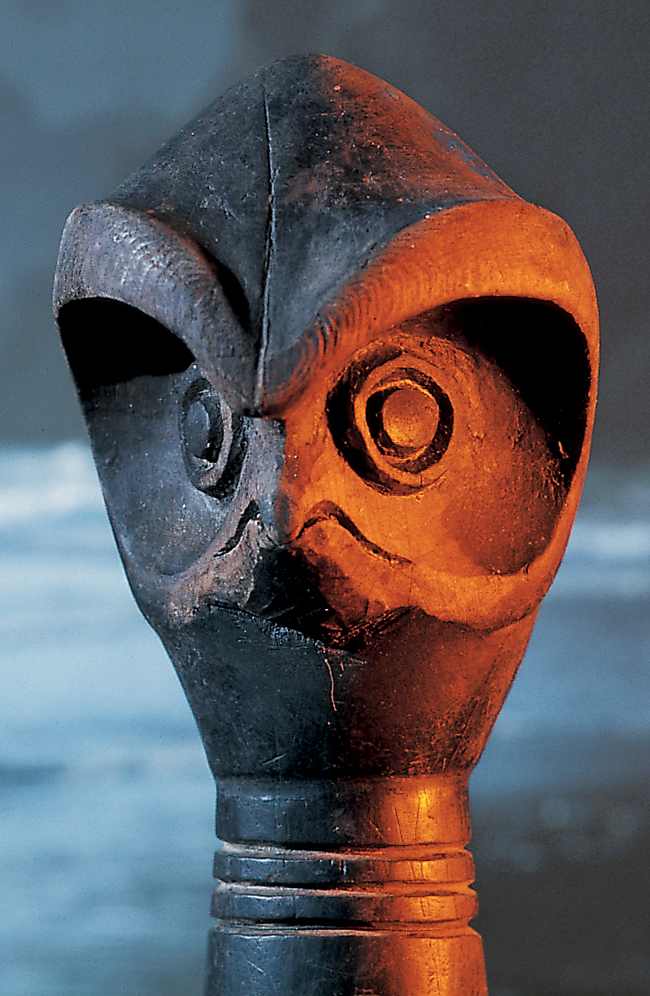
2.16 An owl head on a shaman’s club.
Field excavation and laboratory preservation continued non-stop for eleven years, an outstanding example of cooperation between archaeologists and indigenous people. Makah elders helped to identify artifacts; young Makah helped to excavate; and a museum now displays the results.
2.17 A Makah crew member measures a piece of wood in one of the houses.2.18 Cleaning a basket holding a comb and a spindle whorl.2.19–20 Artifacts from Ozette. A wooden carving tool with a beaver-tooth blade. A red cedar carving in the shape of a whale’s dorsal fin, inlaid with 700 sea-otter teeth (some forming the shape of a thunderbird holding a serpent, which would stun the whale so that the thunderbird could pick it up in its claws).
1 carved effigy of a whale fin inlaid with sea-otter teeth
Wet Preservation 2: Must Farm
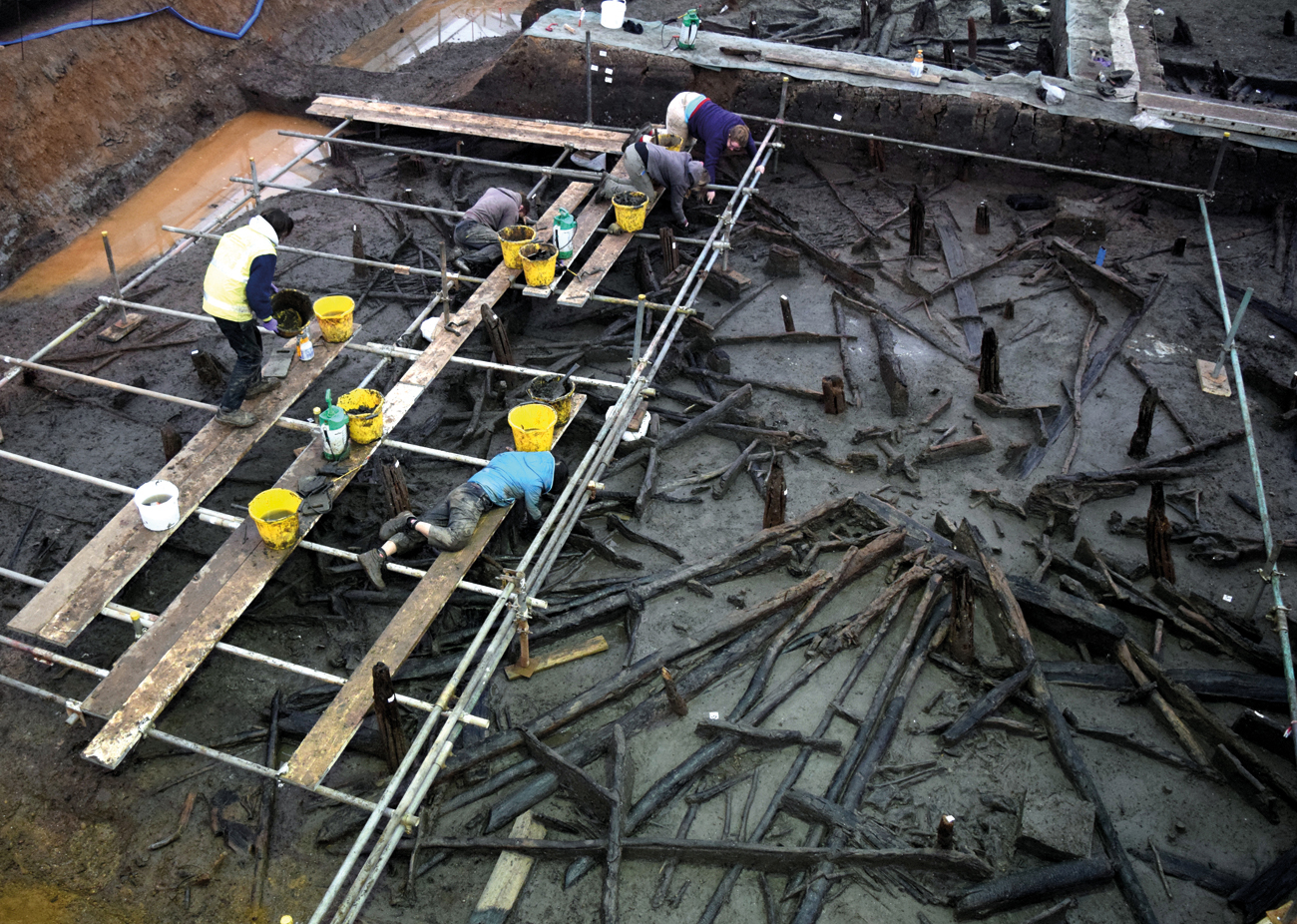
The Must Farm settlement in Cambridgeshire, England, comprises a group of Late Bronze Age wooden circular houses built on top of a small river that flowed across the southern, peaty margins of the Flag Fen Basin. It was destroyed by fire shortly after its construction, in around 850 BCE; but due to its unprecedented level of wet preservation, it has transformed archaeological understanding of life in Bronze Age Europe.
2.21 Archaeologists at Must Farm uncover the remains of a pile dwelling from above, using scaffolding. The circular pattern of the dwelling is clearly visible.
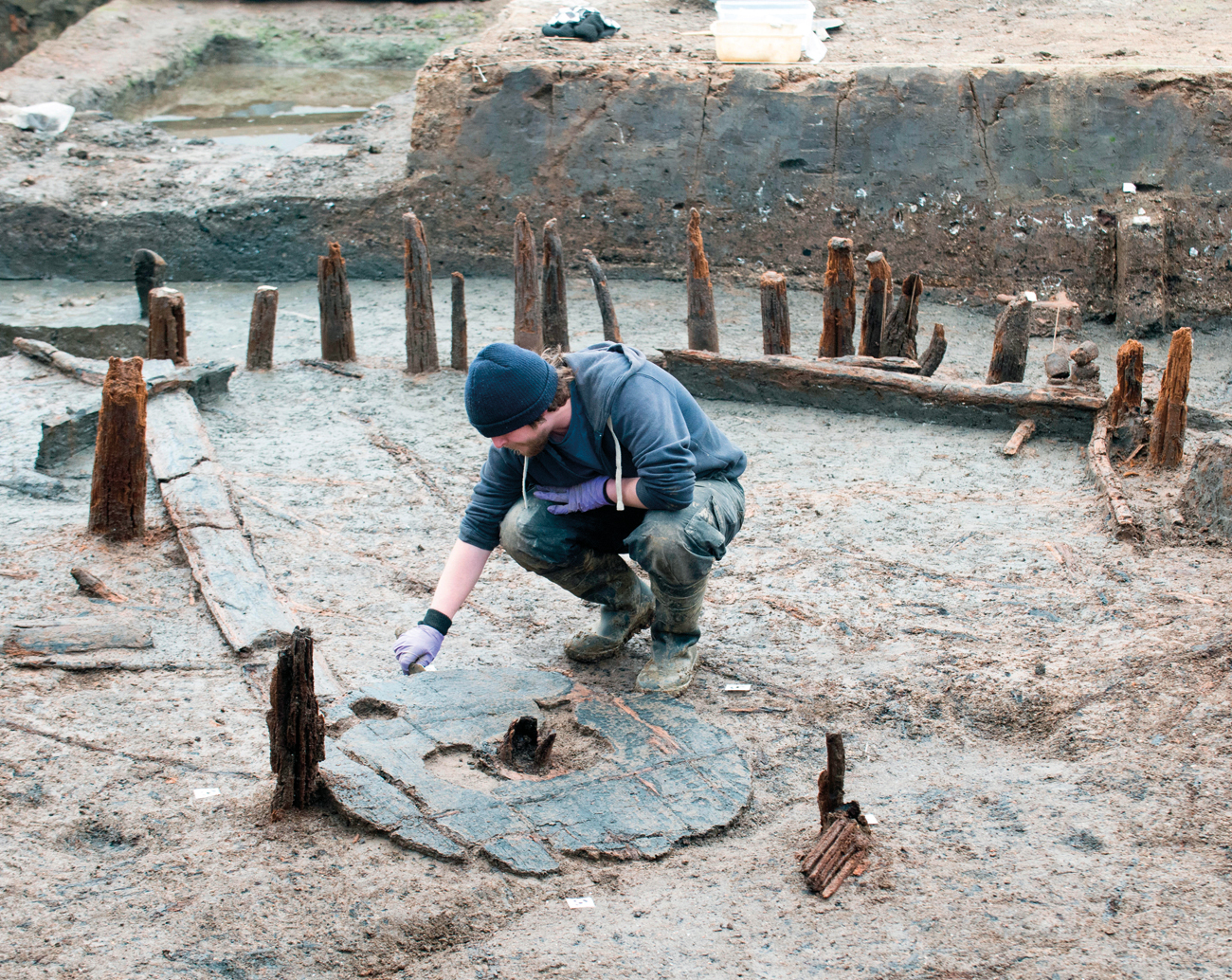
Excavation and analysis of the Must Farm site have been underway since 2015. Archaeologists have recovered the charred, tumbled remains of five closely spaced roundhouses built on piles, with robust turf-covered roofs and lightweight wickerwork walls and floors, the settlement held within a protective palisade. It seems the intensity and nature of the fire caused the heavy roofs to fall, more or less intact, trapping the contents of entire households beneath them and then sinking into the wetland’s anaerobic environment. As a result, the submerged footprint of each building (about 8m (26 ft.) in diameter) preserved an almost intact inventory of original contents: animal carcasses, textiles, loom weights, glass beads, bronze tools, saddle querns, caches of grain, and cups, bowls, storage jars, and wooden artifacts, all recovered in their approximate positions. In 2016 a large wooden wheel about 1 m (3 ft. 3 in.) in diameter was uncovered, the earliest and most complete of its type found in Britain.
2.22 Many organic artifacts have been uncovered at Must Farm, including one of the earliest-known European Bronze Age wooden wheels.
Dendrochronological analysis of the remains has revealed that the settlement was built at one time, using woods of a similar age. The same analysis also suggested that the settlement lasted as little as one year. This was corroborated by the relative absence of deposits that would be expected from long-term occupation. The bulk of the material culture found at the site had been in use at the time of the fire. This discovery, that the site represented a year’s worth of stuff and therefore a year’s worth of settlement practice, has itself been immensely valuable. Must Farm therefore offers an exceptional opportunity to reconstruct and to explore life as lived in Late Bronze Age Britain.
Preservation of Organic Materials: Extreme Conditions
Waterlogged Environments.
Wetlands include swamps, lakes, marshes, fens, and peat bogs and are environments where organic materials are effectively sealed in wet and anaerobic conditions that favor their preservation, as long as the waterlogging is more or less permanent up to the time of excavation. (If a wet site dries out, even only seasonally, decomposition of the organic materials can occur.) They also vary a great deal in their preservative qualities: acidic peat bogs, for example, are kind to wood and plant remains, but may destroy bone, iron, and even pottery.
Wetland archaeology is distinct from other forms of land archaeology because of the unique opportunities and requirements involved in excavating a site where a large proportion of organic material has survived. One of the pioneers of wetland archaeology in Britain, John Coles, estimates that on a wet site often 75–90 percent, sometimes 100 percent, of the finds are organic. Little or none of this material—wood, leather, textiles, basketry, or plant remains of all kinds—would survive on most dryland sites. It is for this reason that archaeologists are turning their attention more and more to the rich sources of evidence about past human activities to be found on wet sites. Wetlands form only about 6 percent of the world’s total land area, and growing threats from peatcutting and from drainage for building development give this work added urgency.
Peat bogs, nearly all of which occur in northern latitudes, are some of the most important environments for wetland archaeology. The Somerset Levels in southwestern England, for example, have been the scene not only of excavations early in the twentieth century to recover the well-preserved Iron Age lake villages of Glastonbury and Meare, but also of a much wider campaign in the last decades of the century that has unearthed numerous wooden trackways (including the world’s “oldest road,” a 6,000-year-old 1.6-km (1-mile) stretch of track; see box, pp. 332–33) as well as much information about early woodworking skills (Chapter 8), and the ancient environment (Chapter 6). On the continent of Europe, and in Ireland, peat bogs have likewise preserved many trackways—sometimes with evidence for the wooden carts that ran along them—and other fragile remains. Other types of European wetlands, such as coastal marshes, have yielded dugout logboats, paddles, and even fish-nets and fish-weirs.
Bog bodies, however, are undoubtedly the best-known finds from the peat bogs of northwest Europe. Most of them date from the Iron Age. The degree of preservation varies widely, and depends on the particular conditions in which the corpses were deposited. Most individuals met a violent death and were probably either executed as criminals or killed as a sacrifice before being thrown into the bog. For example, in 2003 two partial Iron Age bodies were recovered from peat bogs in Ireland: Clonycavan Man had been killed with ax blows, and possibly disemboweled, while the huge (1.91-m (6-ft-3-in.) tall) Old Croghan Man was stabbed, decapitated, mutilated, and tied to the bottom of a bog pool. The best-preserved specimens, such as Denmark’s Grauballe Man (see box, pp. 454–55), were found in a truly remarkable state, with only the staining caused by bogwater and tannic acid as an indication that they were ancient rather than modern. Within the skin, the bones have often disappeared, as have most of the internal organs, although the stomach and its contents may survive (Chapter 7). In Florida, even prehistoric human brains have been recovered (Chapter 11).
Occasionally, waterlogged conditions can occur inside burial mounds. The oak-coffin burials of Bronze Age northern Europe, and most notably those of Denmark dating to about 1000 BCE, had an inner core of stones packed round the tree-trunk coffin, with a round barrow built above. Water infiltrated inside the mound, and by combining with tannin exuding from the tree trunk produced acidic conditions that destroyed the skeleton of the body inside the coffin but preserved the skin (discolored, as with the bog bodies), hair, and ligaments, as well as the clothing and objects such as birchbark pails.
A somewhat similar phenomenon occurred with the ships that the Vikings used as coffins. The Oseberg ship in Norway, for example, which dates to about 800 CE and held the body of a queen, was buried in clay and covered by a packing of stones and a layer of peat, all of which sealed it in and ensured its preservation.
Lake-dwellings have rivaled bog bodies in popular interest ever since the discovery of wooden piles or house supports in Swiss lakes well over a century ago. At first, archaeologists and the public formed the romantic notion of whole villages built on stilts over the water. Thanks to detailed research since the 1940s, this has given way to the idea of predominantly lake-edge settlements. The range of preserved material is astonishing, including not simply wooden structures, artifacts, and textiles but—at Neolithic Charavines in France, for example—even nuts, berries, and other fruits. An important recent example of wet preservation is the Must Farm settlement in eastern England, where some of the best-preserved Bronze Age dwellings in Britain have been excavated (see box, pp. 62).
Another rich source of waterlogged and preserved timbers in land archaeology can be found in the old waterfronts of towns and cities. Archaeologists have been particularly successful in uncovering parts of London’s Roman and medieval waterfront, but such discoveries are not restricted to Europe. In the early 1980s archaeologists in New York City excavated a well-preserved eighteenth-century ship that had been sunk to support the East River waterfront there. Unsurprisingly, underwater archaeology in rivers and lakes and especially beneath the sea is the richest source of all for waterlogged finds (see p. 114). Coastal erosion can also reveal once-submerged structures, such as “Seahenge,” the prehistoric timber circle discovered on the eastern coast of England in 1998 (see ill. 2.14).
Perhaps the greatest contribution to archaeology that lake-dwellings and other European wetland sites have made in recent years is to provide abundant well-preserved timber for the study of tree-rings, the annual growth rings in trees, for dating purposes. In Chapter 4 we explore the breakthrough this has brought about in the establishment of an accurate tree-ring chronology for parts of northern Europe stretching back thousands of years.
The major problem with waterlogged finds, and particularly wood, is that they deteriorate rapidly when they are uncovered, beginning to dry and crack almost at once. They therefore need to be kept wet until they can be treated or freeze-dried at a laboratory. Conservation measures of this kind help to explain the cost of both wetland and underwater archaeology. It has been estimated that “wet archaeology” costs four times as much as “dry archaeology.” But the rewards, as we have seen above, are enormous.
The rewards in the future, too, will be very great. Florida, for example, has about 1.2 million ha (3 million acres) of peat deposits, and on present evidence these probably contain more organic artifacts than anywhere else in the world. So far, the wetlands here have yielded the largest number of prehistoric watercraft from any one region, together with totems, masks, and figurines dating as far back as 5000 BCE. In the Okeechobee Basin, for instance, a first-millennium BCE burial platform has been found, decorated with a series of large carved wooden totem posts, representing an array of animals and birds. It was preserved because it collapsed into a pond after a fire. Yet it is only recently that wet finds in Florida have come to us from careful excavation rather than through the drainage that is destroying large areas of peat deposits and, with them, untold quantities of the richest kinds of archaeological evidence (see the case study on the Calusa of Florida, pp. 516–20).
Dry Environments.
Great aridity or dryness prevents decay as the shortage of water ensures that many destructive microorganisms are unable to flourish. Archaeologists first became aware of the phenomenon in Egypt, where much of the Nile Valley has such a dry atmosphere that many bodies buried in the desert have survived intact, with skin, hair, and nails, without any artificial mummification or coffins. This is the case with human remains from the Predynastic period (before 3100 BCE)—the corpses were simply placed in shallow graves in the sand, but rapid drying out or desiccation, plus the draining qualities of the sand, produced such spectacular preservative effects that the preserved bodies probably inspired the practice of mummification by the later Egyptians of the Dynastic period.
Dry Preservation: The Tomb of Tutankhamun
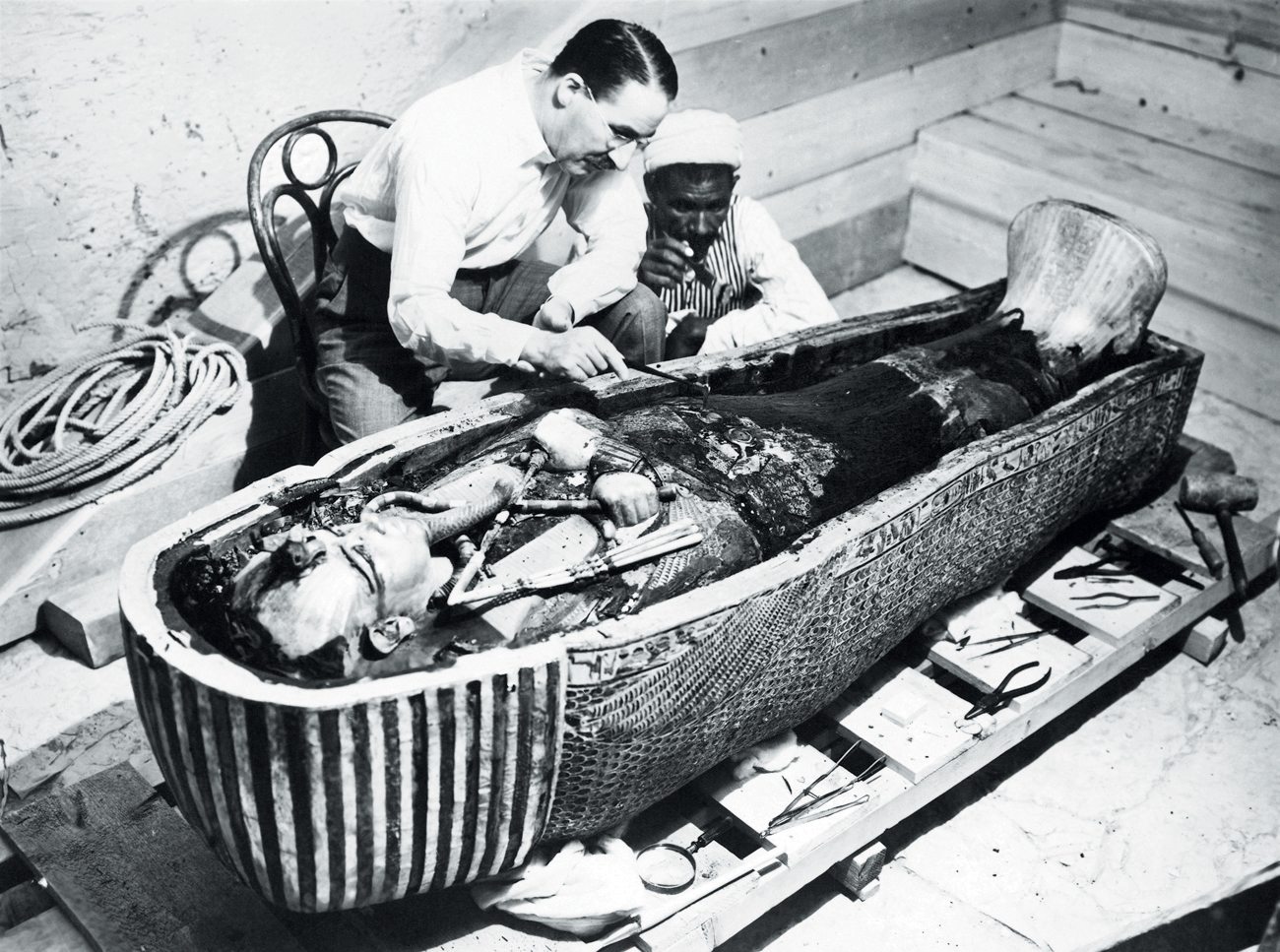
The arid conditions that prevail in Egypt have helped preserve a wide range of ancient materials, ranging from numerous written documents on papyrus (made of the pith of a Nile water plant) to two full-size wooden boats buried beside the Great Pyramid at Giza. But the best-known and most spectacular array of objects was that discovered in 1922 by Howard Carter and Lord Carnarvon in the tomb at Thebes of the pharaoh Tutankhamun, dating to the fourteenth century BCE.
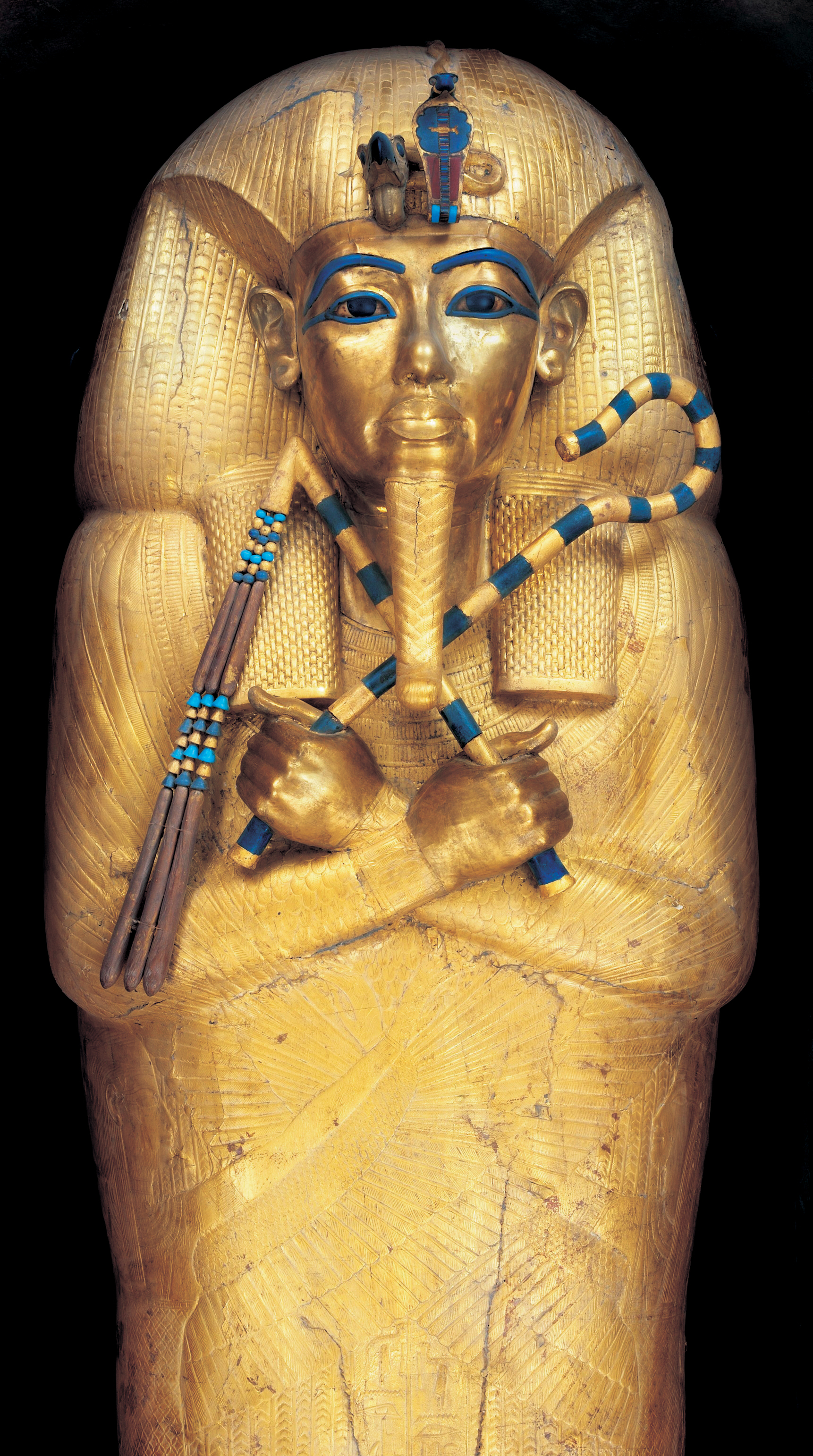
2.23 The outermost of Tutankhamun’s three coffins was made of cypress wood, overlaid with gold foil.
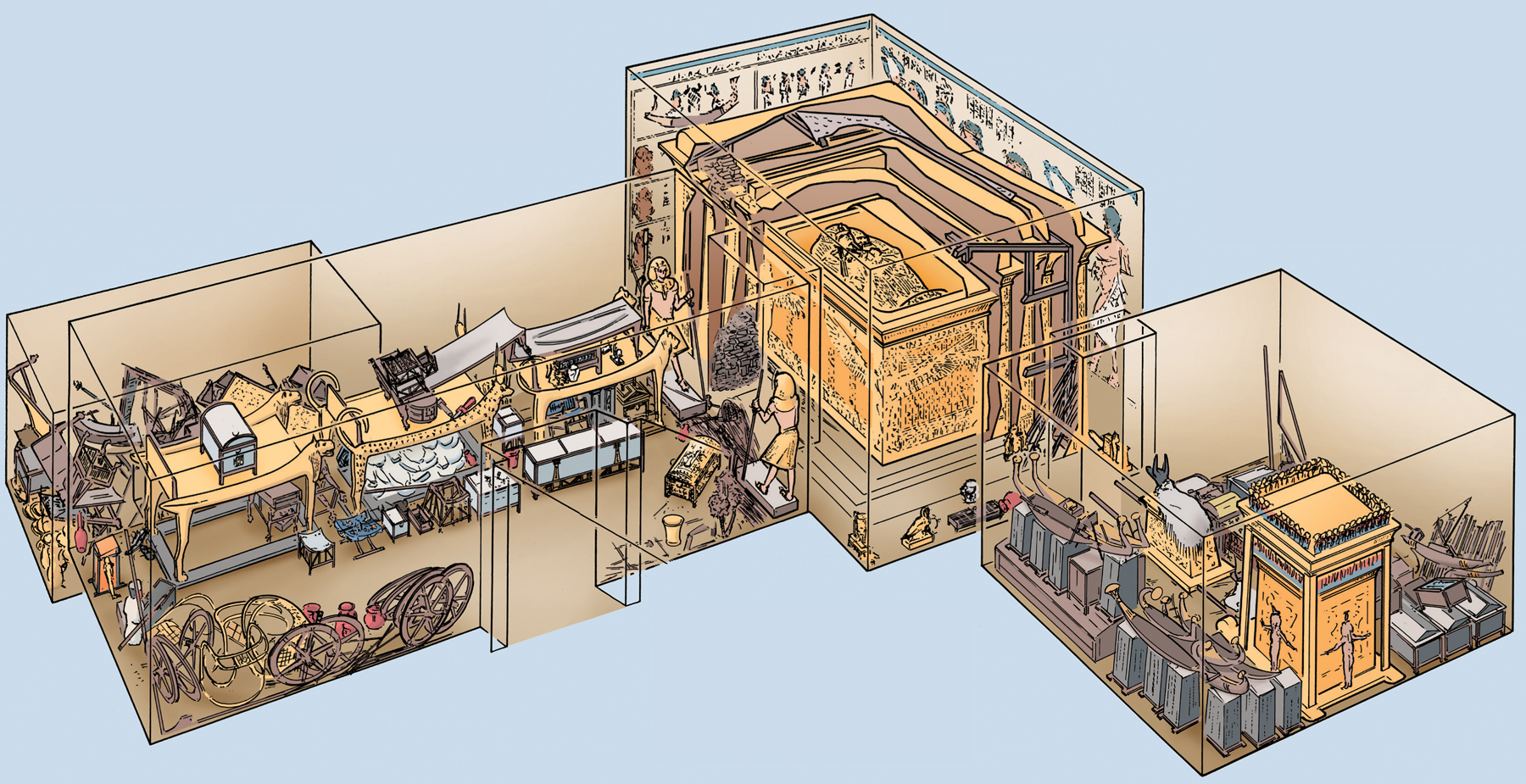
Tutankhamun had a short reign and was relatively insignificant in Egyptian history, a fact reflected in his burial, a poor one by pharaonic standards. But within the small tomb, originally built for someone else, was a wealth of treasure. For Tutankhamun was buried with everything he might need in the next life. The entrance corridor and the four chambers were crammed with thousands of individual grave-goods. They include objects of precious metal, such as the jewelry and famous gold mask, and food and clothing. But wooden objects, including statues, chests, shrines, and two of his three coffins, make up a large part of the tomb’s contents. The human remains—the mummies of the king and his two stillborn children—have been the subject of repeated scientific analysis. A lock of hair found separately among the grave-goods has been analyzed and is thought to come from a mummy in another tomb believed to be Tiye, the young king’s grandmother.
2.24 Tutankhamun’s sarcophagus lay within four nested shrines. Within the sarcophagus lay three further coffins, the final one preserving the king’s mummy.
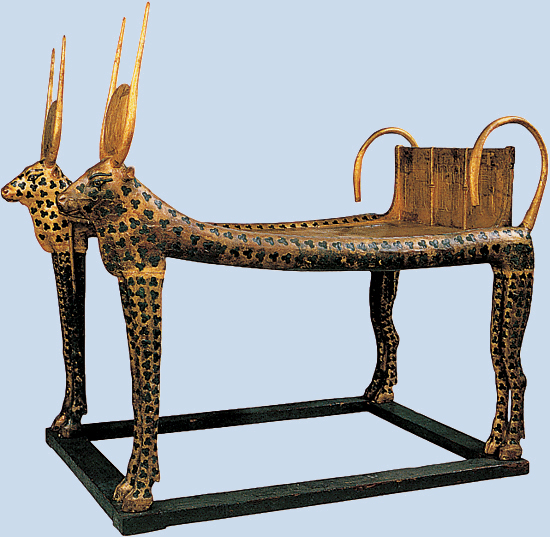
The grave furniture was not all originally intended for Tutankhamun. Some of it had been made for other members of his family, and then hastily adopted when the young king died unexpectedly. There were also touching items, such as a chair the king had used as a child, and a simple reed stick mounted in gold and labeled as “A reed which His Majesty cut with his own hand.” Even the wreaths and funerary bouquets left on the second and third coffins by mourners had survived in the dry conditions.
2.25 A cutaway view of the tomb and its treasures, as found in 1922. The entrance room was not fully cleared of its hundreds of grave-goods until February 1923; it was only then that Carter and his team could explore the tomb’s other chambers.2.26 A gilded ritual couch found remarkably well preserved among the contents of the tomb of Tutankhamun.
The Pueblo dwellers of the American Southwest (c. 700–1400 CE) buried their dead in dry caves and rockshelters where natural desiccation took place: these are not true, humanly created mummies, therefore, although they are often referred to as such. The bodies survive, sometimes wrapped in fur blankets or tanned animal skins, in such good condition that it has been possible to study hairstyles. Clothing (from fiber sandals to string aprons) also remains, together with a wide range of goods such as basketry, feathered ornaments, and leather. Some far earlier sites in the same region also contain organic remains: Danger Cave, Utah (occupied from 9000 BCE onward), yielded trap springs, knife handles, and other wooden tools; Lovelock Cave, Nevada, had nets; while caves near Durango, Colorado, had preserved maize cobs, squashes, and sunflower and mustard seeds. Finds of this type have been crucial in helping to reconstruct ancient diets (Chapter 7).
The coastal dwellers of central and southern Peru lived—and died—in a similarly dry environment, so it is possible today to see the tattoos on their desiccated bodies, and admire the huge and dazzlingly colorful textiles from cemeteries at Ica and Nazca, as well as basketry, featherwork, and maize cobs and other food items. In Chile, the oldest deliberately made mummies have been found at Chinchorro, preserved again by the aridity of the desert environment.
A slightly different phenomenon occurred in the Aleutian Islands, off the west coast of Alaska, where the dead were kept and naturally preserved in extremely dry, volcanically warmed caves. The islanders seem to have enhanced the natural desiccation by periodically drying the bodies by wiping or by suspension over a fire; in some cases they removed the internal organs and placed dry grass in the cavity.
Cold Environments.
Natural refrigeration can hold the processes of decay in check for thousands of years. Perhaps the first frozen finds to be discovered were the numerous remains of mammoths encountered in the permafrost (permanently frozen soil) of Siberia, a few with their flesh, hair, and stomach contents intact. The unlucky creatures probably fell into crevices in snow, and were buried by silt in what became a giant deepfreeze. The best known are Beresovka, recovered in 1901, and baby Dima, found in 1977. Preservation can still be so good that dogs find the meat quite palatable and they have to be kept well away from the carcasses.
Cold Preservation 1: Mountain “Mummies”
Since the 1950s, sporadic discoveries have been made of frozen bodies high in the Andes mountain range of South America—these finds have become known as mummies, even though they were preserved only by the cold, not by any process of artificial mummification. The Incas of the fifteenth–sixteenth centuries CE built more than a hundred ceremonial centers on many of the highest peaks in their empire, since they worshiped the snow-capped mountains, believing that they provided the water for irrigating their fields, and hence controlled the fertility of crops and animals.
Among the offerings left for the mountain gods were food, alcoholic drinks, textiles, pottery, and figurines—and also human sacrifices, often young children. In the 1990s, American archaeologist Johan Reinhard carried out a series of expeditions to high peaks in the Andes, and discovered some of the best-preserved ancient bodies ever found, thanks to this “extreme archaeology.”
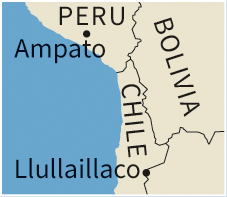
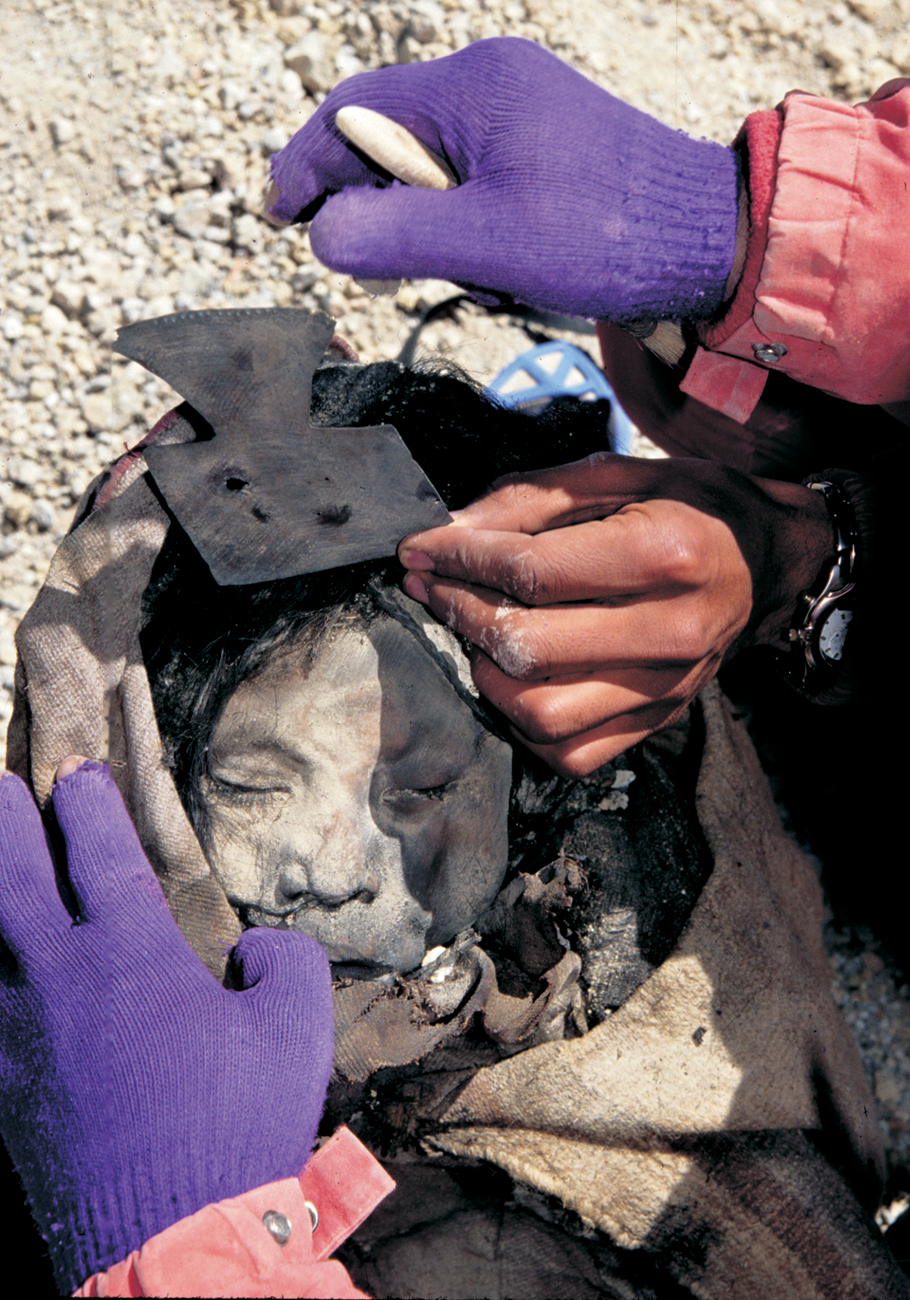
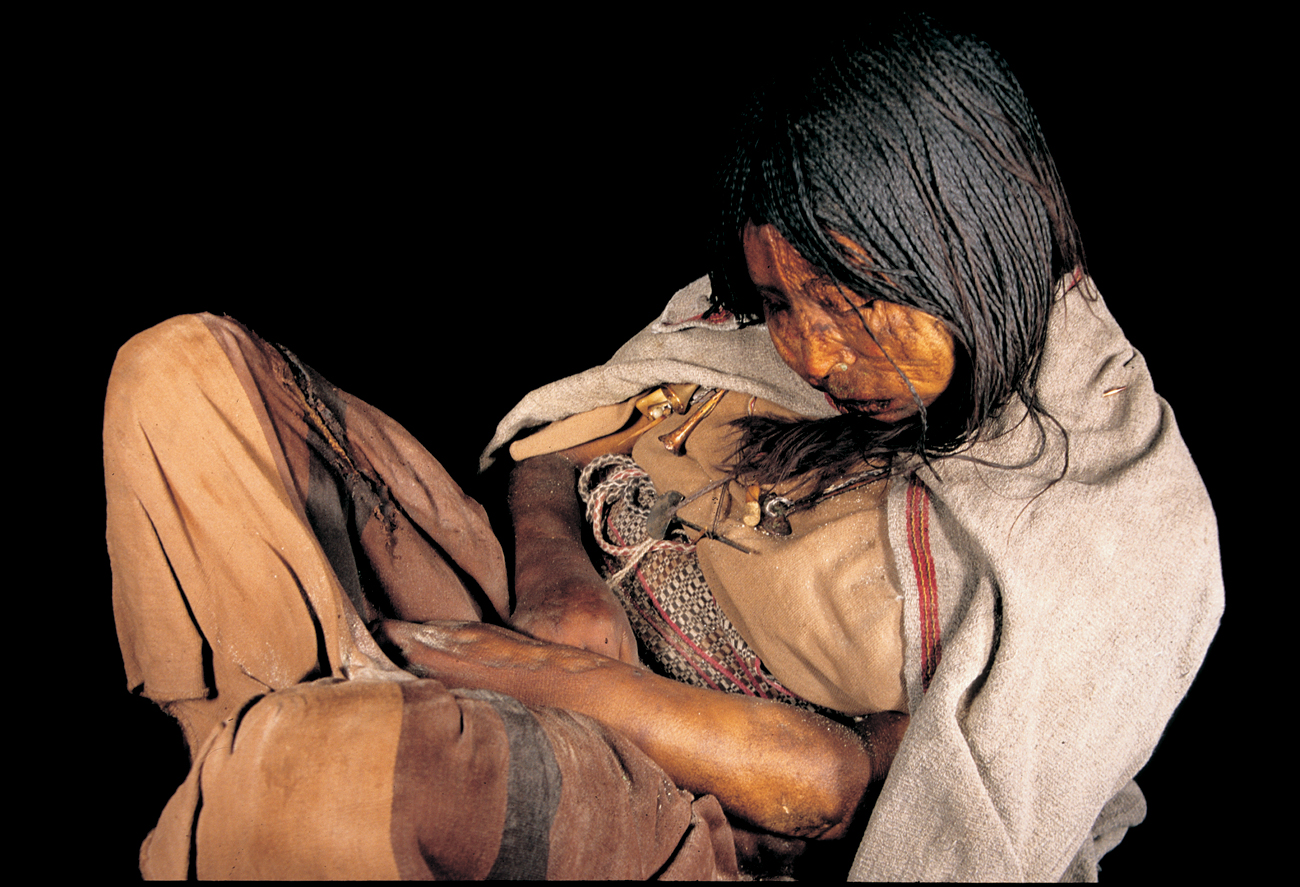
On the Ampato volcano, at 6,312 m (20,708 ft.), he found a bundle lying on the ice that contained an Inca girl—dubbed the “Ice Maiden” or “Juanita” (see p. 15)—who had been ritually sacrificed (by a blow to the head) at the age of about fourteen, and buried with figurines, food, textiles, and pottery. The buried bodies of a boy and a second girl were later excavated at 5,850 m (19,193 ft.). In 1999, on the peak of Llullaillaco—at 6,739 m (22,109 ft.)—Reinhard encountered a seven-year-old boy, and two girls of fifteen and six, all with figurines and textiles.
2.27-28 The younger Llullaillaco girl was found wearing a silver plaque. The older, better-preserved girl had neatly braided hair and wore a selection of ornaments.
So perfect is the preservation of these bodies that detailed analyses can be carried out on their internal organs, their DNA, and their hair. For example, isotopes in the hair suggest that they chewed coca leaves, a common practice in the region even today.
Cold Preservation 2: Snow-Patch Archaeology
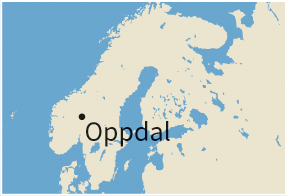
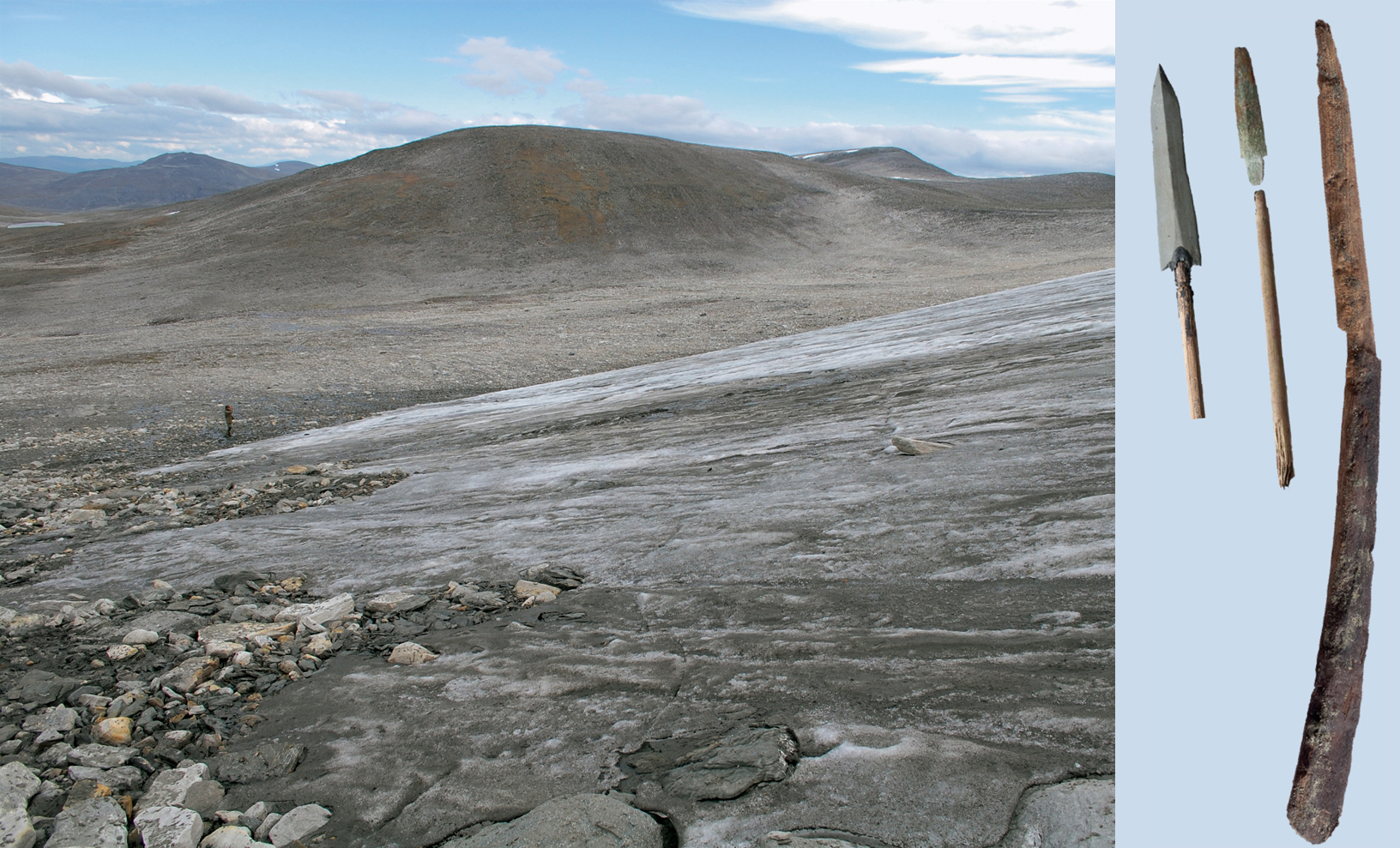
Snow patches are perennial accumulations of snow and ice found at high altitudes or in high-latitude regions, such as Alaska, the Rockies, Norway, and the Alps. Organic objects that have been lost or discarded by human visitors are often well preserved in these conditions, and may be discovered at the edges of the snow patches when they melt and recede. The oldest snow-patch artifacts known from Scandinavia are dated to between 8000 and 4000 BCE. In 2010 and 2011 fragments of five Neolithic arrows and a Neolithic bow were found at two mountain sites near Oppdal in central Norway. Some of the arrowshafts were found with their small slate points and, in one case, the adhesive joining them survived. Another still had two rings of sinew thread attached. Such preservation offered new insight into how Neolithic people joined stone arrowheads to wooden shafts.
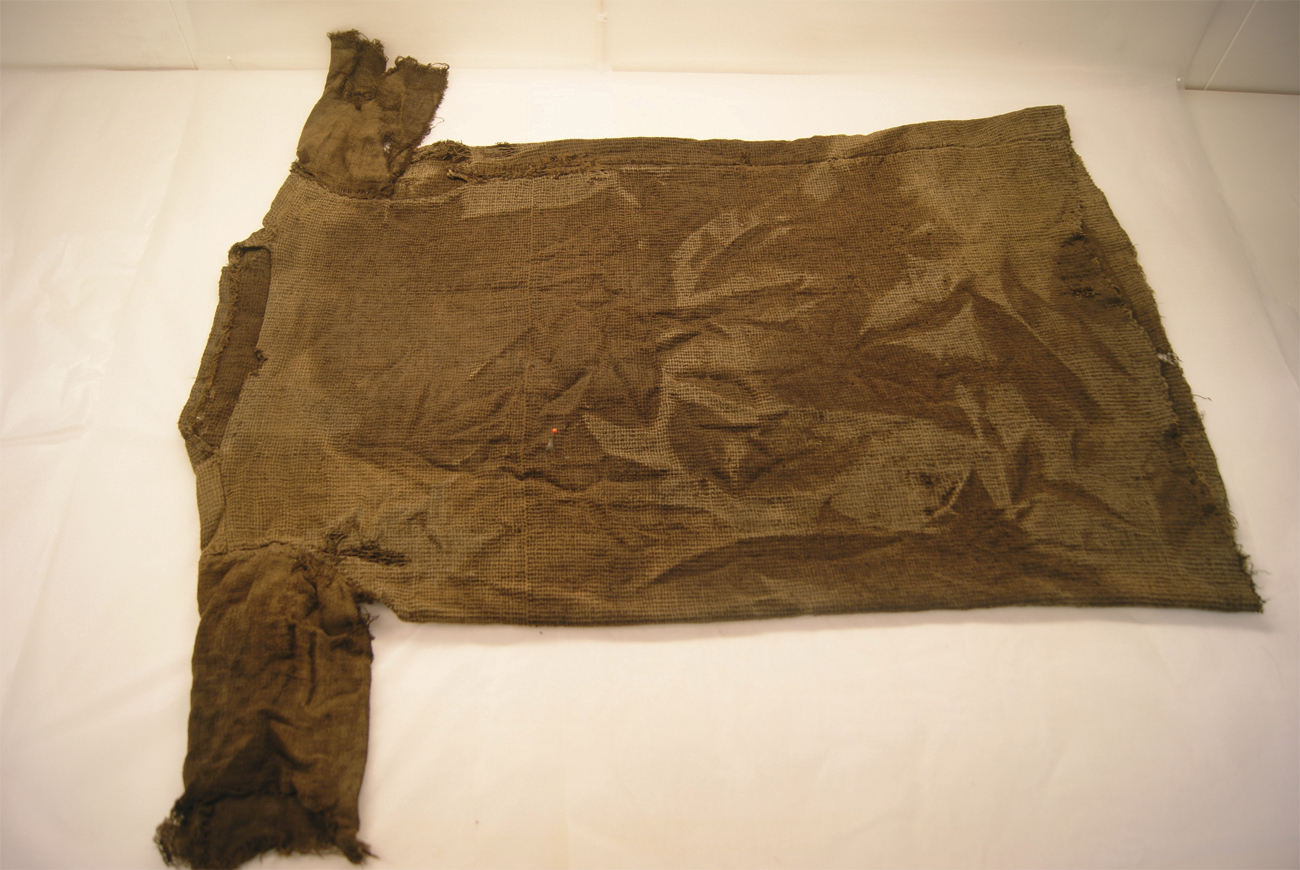
Similarly, a very well-preserved Iron Age tunic was found in Norway in 2011. It has been radiocarbon dated to 230–390 CE. Made of fine lamb’s wool, it has no buttons or fastenings, and would have been drawn over the head in the manner of a sweater. It would fit a slender man about 1.7 m (5 ft. 7 in.) in height. Mostly intact, it is very worn in places.
Not only do these objects provide data on Neolithic archery technology and on prehistoric clothing, but the repeated recovery of organic artifacts from melting snow patches also warns of the modifications—rising temperatures and changing climates—that are taking place in these landscapes. Recent years have seen more frequent instances of advanced melting at such sites, and increasing numbers of finds are being recovered both at long-known sites and at new ones. There is clearly a link with ongoing weather and climate processes: in central Norway, ancient ice is melting, and alpine permafrost is retreating and becoming shallower. The volume and antiquity of the artifacts being recovered today are unprecedented in the century-long history of regular snow-patch surveying in the region.
2.29-30 A bow and two arrows with slate points lost by Neolithic reindeer-hunters on a snow patch in Oppdal, central Norway. The ice and snow have preserved the wood, sinew, and adhesive on these objects for more than 5,000 years.
Snow-patch archaeology is at the frontline of this issue, and is becoming ever more crucial as it is clear that fragile and precious organic finds, already rare, are being exposed and lost, succumbing to the modern environmental conditions that accelerate decay. Indeed, some climate experts think that all the ice in the Norwegian high mountains will be gone by the end of this century, increasing the urgency of this important work.
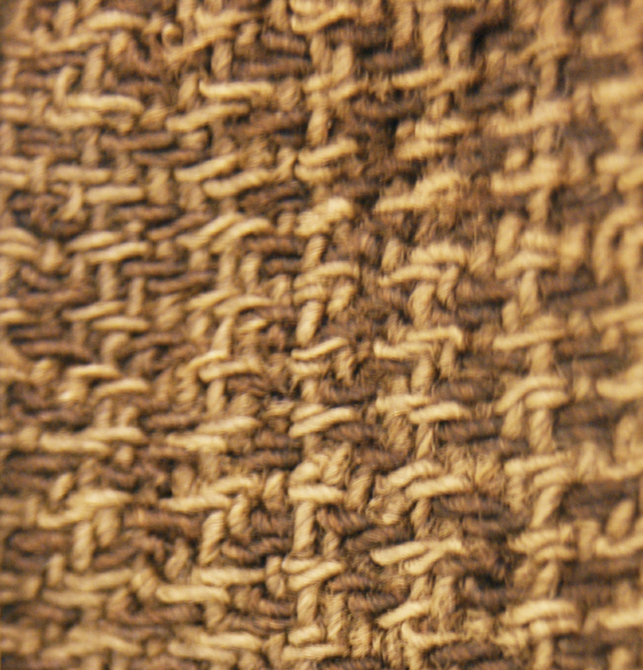
2.31–32 This tunic was found as a crumpled-up piece at about 1,900 m (6,200 ft.) on the Lendbreen glacier in Norway. Due to sun exposure, the fabric has been unevenly bleached. To preserve the textile, the tunic has been washed carefully in clean water and then freeze-dried at the Museum of Cultural History in Oslo. The fabric is a good example of past exploitation and use of wool. The tunic is woven in a technique called “diamond twill,” with carefully sorted wool in shades of light beige and dark brown.
Among the most famous frozen archaeological remains are those from the burial mounds of steppe nomads at Pazyryk in the Altai, southern Siberia, dating to the Iron Age, about 400 BCE. They consist of pits dug deep into the ground, lined with logs, and covered with a low cairn of stones. They could only have been dug in the warm season, before the ground froze solid. Any warm air in the graves rose and deposited its moisture on the stones of the cairn; moisture also gradually infiltrated down into the burial chambers, and froze so hard there during the harsh winter that it never thawed during subsequent summers, since the cairns were poor conductors of heat and shielded the pits from the warming and drying effects of wind and sun. Consequently, even the most fragile materials have survived intact—despite the boiling water that had to be used by the Soviet excavator, Sergei Rudenko, to recover them.
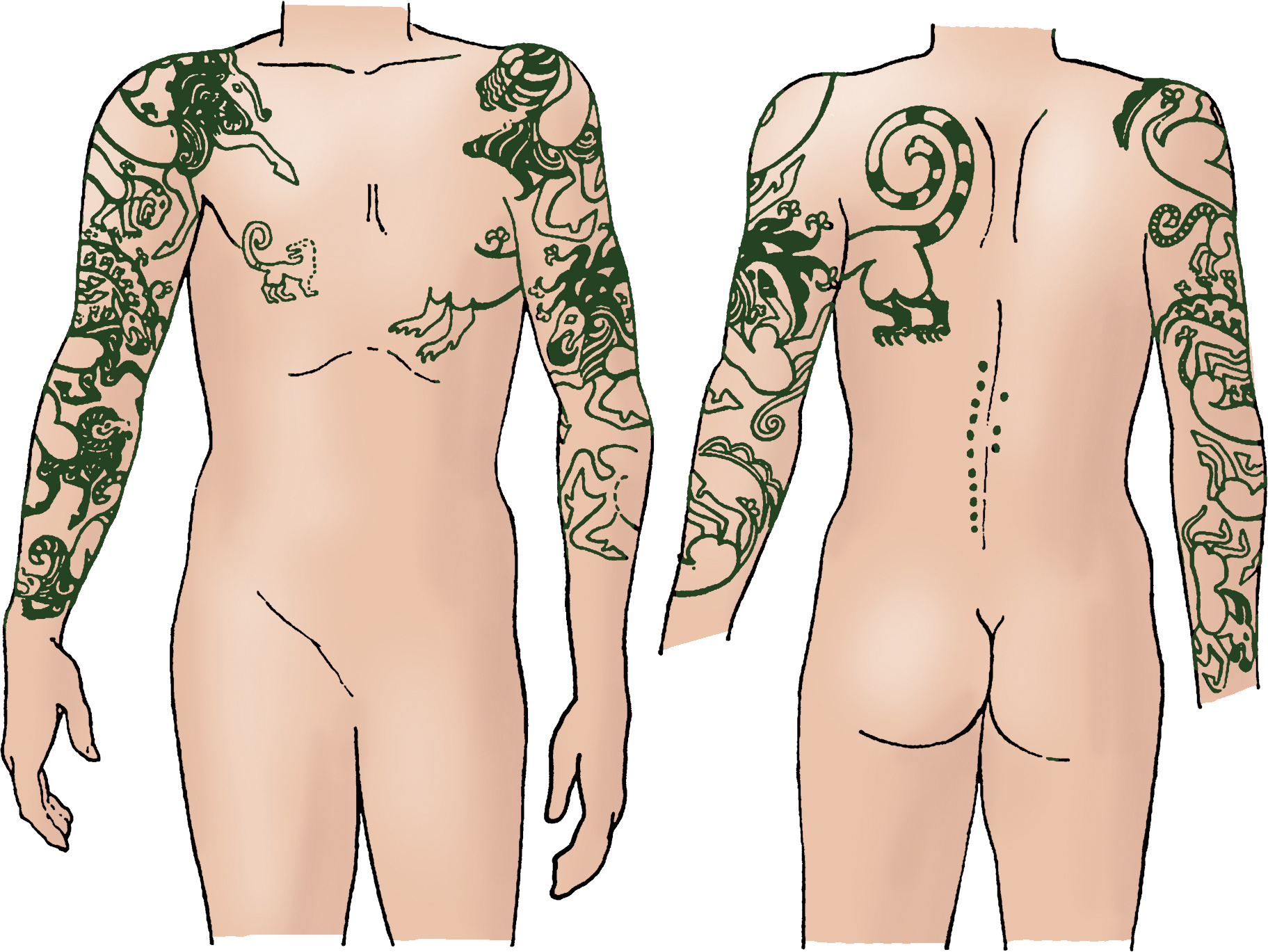
The Pazyryk bodies had been placed inside log coffins, with wooden pillows, and survived so well that their spectacular tattoos can still be seen (see ills. 2.36–37). Clothing included linen shirts, decorated kaftans, aprons, stockings, and headdresses of felt and leather. There were also rugs, wall-coverings, tables laden with food, and horse carcasses complete with elaborate bridles, saddles, and other trappings.
Similar standards of preservation have also been encountered in other circumpolar regions such as Greenland and Alaska. The permafrost of St. Lawrence Island, Alaska, has yielded the body of an Inuit woman with tattooed arms dating to the early centuries CE. Another example is the well-preserved driftwood-and-sod house found at Utqiagvik, modern Barrow, on Alaska’s north coast, which not only contained the intact bodies of two 500-year-old Inupiat women and three children, but also wood, bone, ivory, feathers, hair, and eggshell. More southerly regions can produce the same effect at high altitude, for instance the Inca “mummies” found in the Andes (see box, p. 67); or the 5,300-year-old “Iceman” found preserved in the ice in the Alps near the border between Italy and Austria (see box overleaf).
Cold Preservation 3: The Iceman
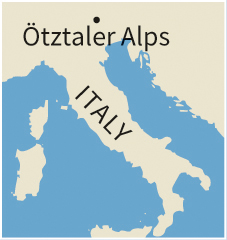
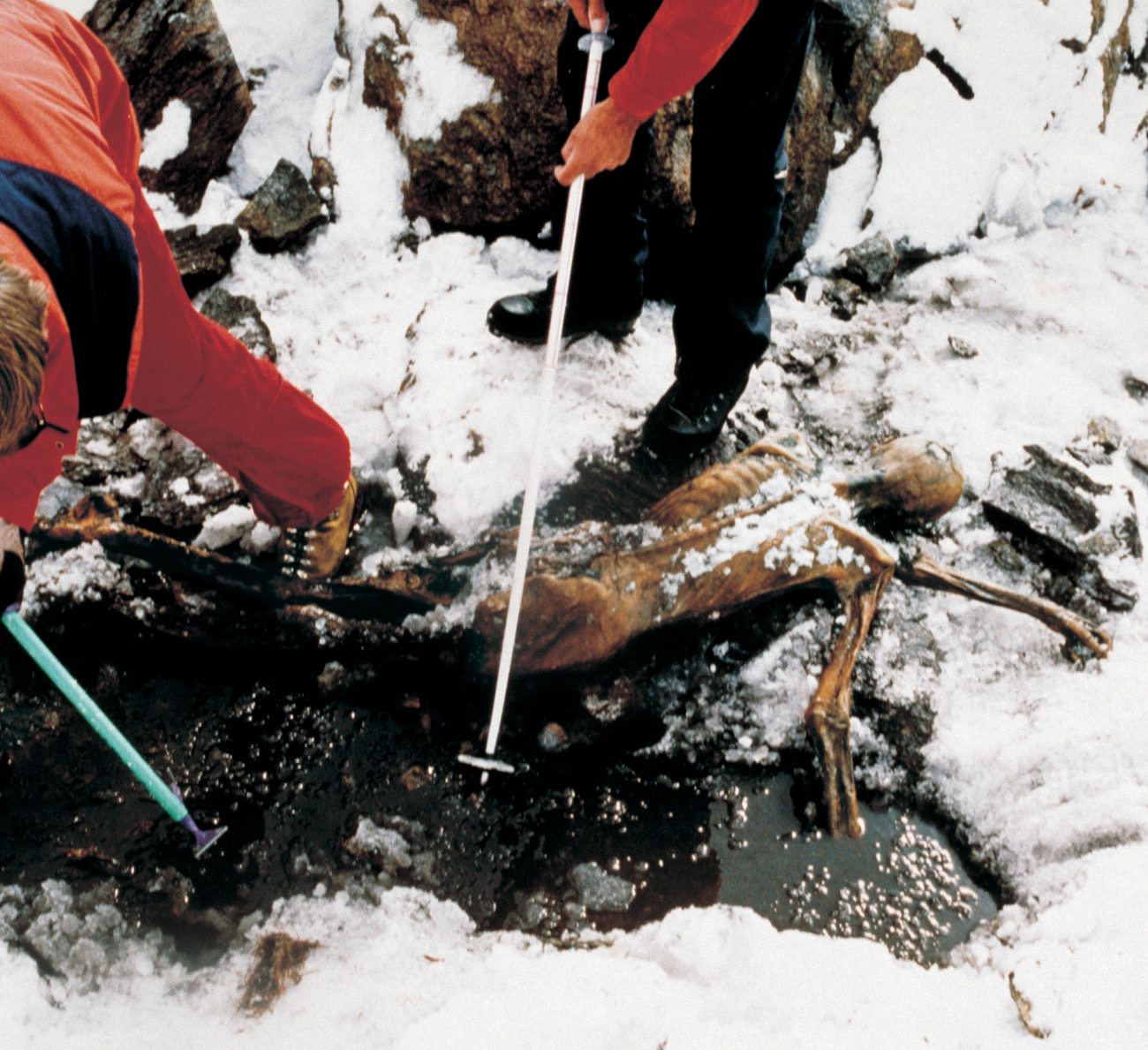
The world’s oldest fully preserved human body was found in September 1991 by German hikers in the Alps, near the Similaun glacier, in South Tyrol. The hikers spotted a human body, its skin yellowish-brown and desiccated, at an altitude of 3,200 m (10,500 ft.). It was four days before the body and its accompanying objects were removed by the Austrian authorities and taken to Innsbruck University. There were already suspicions that the corpse might be old, but nobody had any idea just how ancient.
The Iceman is the first prehistoric human ever found with his everyday clothing and equipment, and possibly going about his normal business; other similarly preserved bodies from prehistory have been either carefully buried or sacrificed. He truly brings us face-to-face with the remote past.
The body was handed to the Innsbruck Anatomy Department for treatment, after which it was placed in a freezer at −6 °C (21 °F) and 98 percent humidity. Subsequent investigation determined that the corpse—called “Similaun Man,” “Ötzi,” or simply “the Iceman”—had lain about 90 m (300 ft.) inside Italy, and he was returned there, to a museum in Bolzano, in 1998. Considerable work has been carried out on the objects that accompanied the Iceman and a range of scientific techniques, including scans, X-rays, and radiocarbon dating, have been used to study the corpse itself. Fifteen radiocarbon dates have been obtained from the body, the artifacts, and the grass in the boots: they are all in rough agreement, falling in a range of 3365–2940 BCE, averaging at 3300 BCE.
2.33 The Iceman, the oldest fully preserved human, as found in 1991, emerging from the melting ice that had preserved him for more than 5,000 years.
The first investigators believed the Iceman was overcome by exhaustion on the mountain, perhaps caught in a fog or a blizzard. After death, he was dried out by a warm autumn wind, before becoming encased in ice. Since the body lay in a depression, it was protected from the movement of the glacier above for 5,300 years, until a storm from the Sahara laid a layer of dust on the ice that absorbed sunlight, finally thawing it out.
What Did He Look Like?
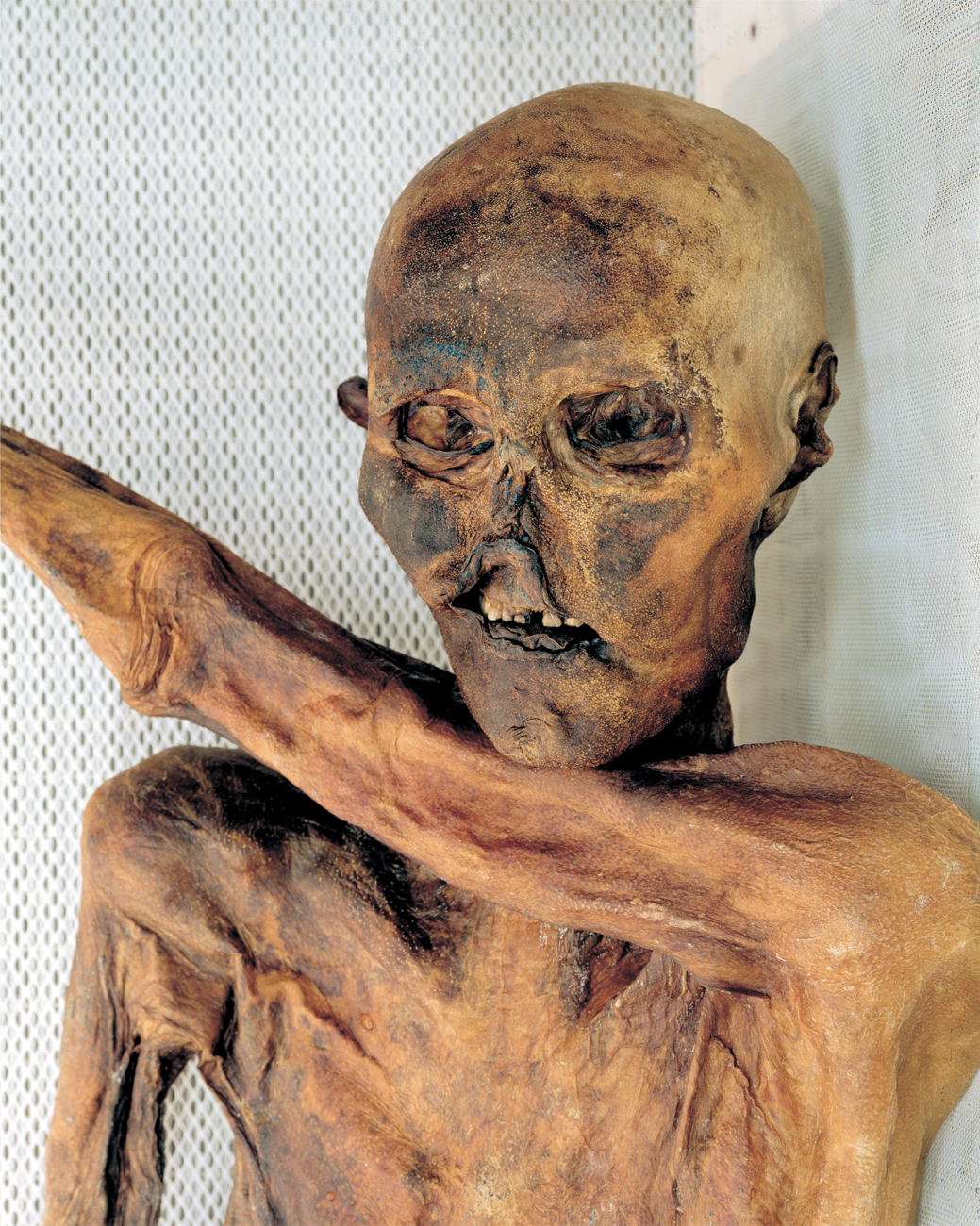
He was a dark-skinned male, aged in his mid- to late forties. Only about 1.56–1.60 m (5 ft. 1.5 in. to 5 ft. 3 in.) tall, his stature and morphology fit well within the measurement ranges of Late Neolithic populations of Italy and Switzerland. DNA analysis shows that he had brown hair and brown eyes, was probably lactose intolerant, and that his closest living relatives are on Sardinia and Corsica.
The corpse currently weighs only about 54 kg (120 lb). He had severe gum disease, and his teeth are very worn, especially the front incisors, suggesting that he ate coarse-ground grain or regularly used them as a tool. There are no wisdom teeth, which is typical for the period, and a marked gap between the upper front teeth.
When first discovered, the Iceman was bald, but hundreds of curly brownish-black human hairs, about 9 cm (3.5 in.) long, which had fallen out after death, were recovered from the vicinity of the body and on the clothing fragments, confirming the DNA analysis. It is possible he had a beard. His right earlobe retains traces of a sharp-edged rectangular depression, where he may have had an ornamental stone fitted.
2.34 The Iceman’s body has now been scientifically examined using a variety of techniques.
A body scan has shown that his brain, muscle tissues, lungs, heart, liver, and digestive organs were in excellent condition, though the lungs are blackened by smoke, most likely from open fires, and he had hardening of the arteries and blood vessels. Isotopic analysis of his hair suggested that he had been a vegetarian for the last few months of his life, his diet consisting mainly of bread and cereal porridge, but later examination of his stomach contents showed that his last meal was a heavy, greasy mix of ibex meat, wheat bran, and plums.
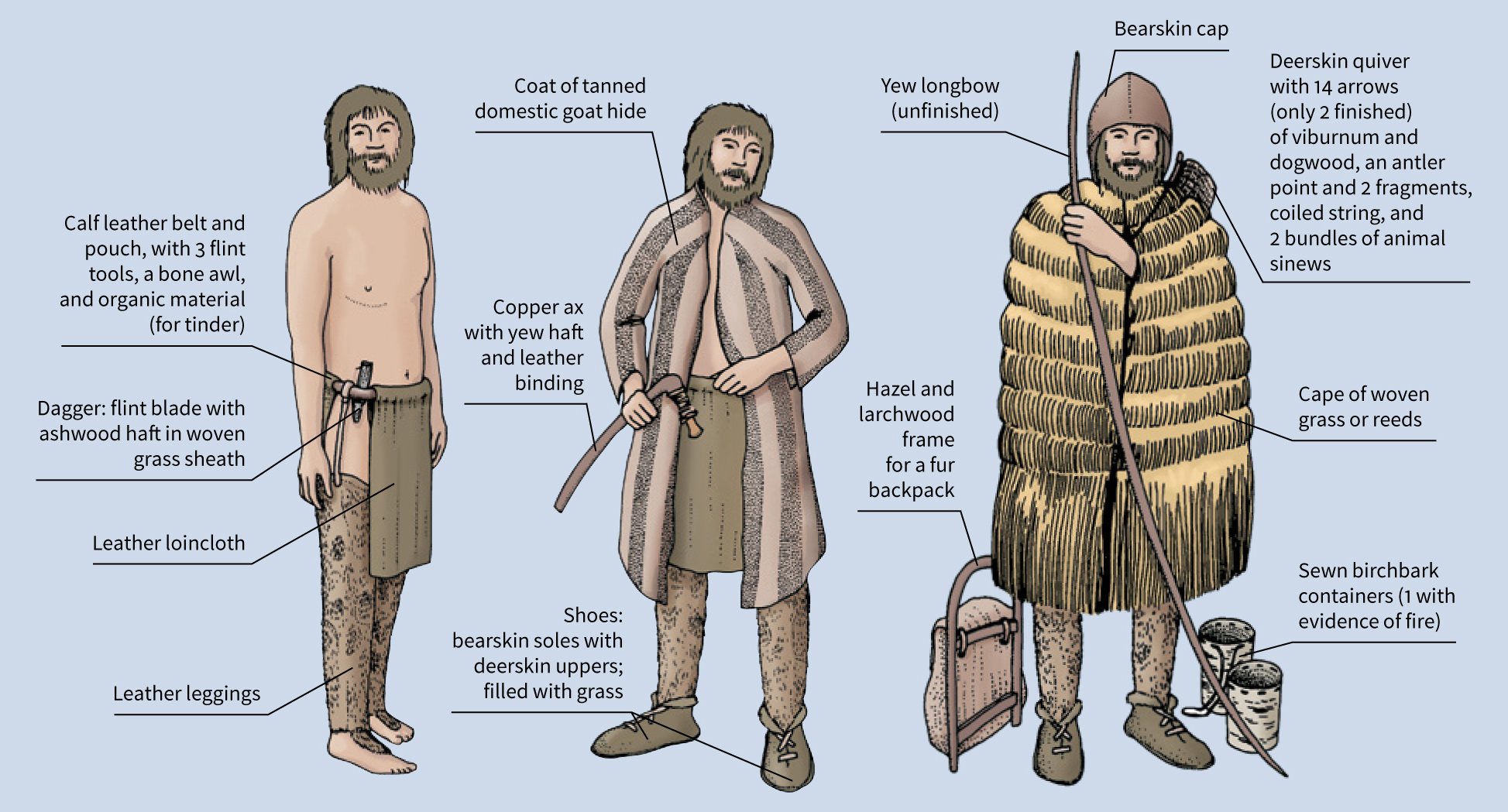
2.35 The equipment and clothing of the Iceman resemble a time capsule of everyday life—more than seventy objects were found associated with him.
Traces of chronic frostbite were noted in one little toe and eight of his ribs were fractured, though these were healed or healing when he died. A fracture to his left arm and severe damage to the left pelvic area occurred during his recovery from the ice.
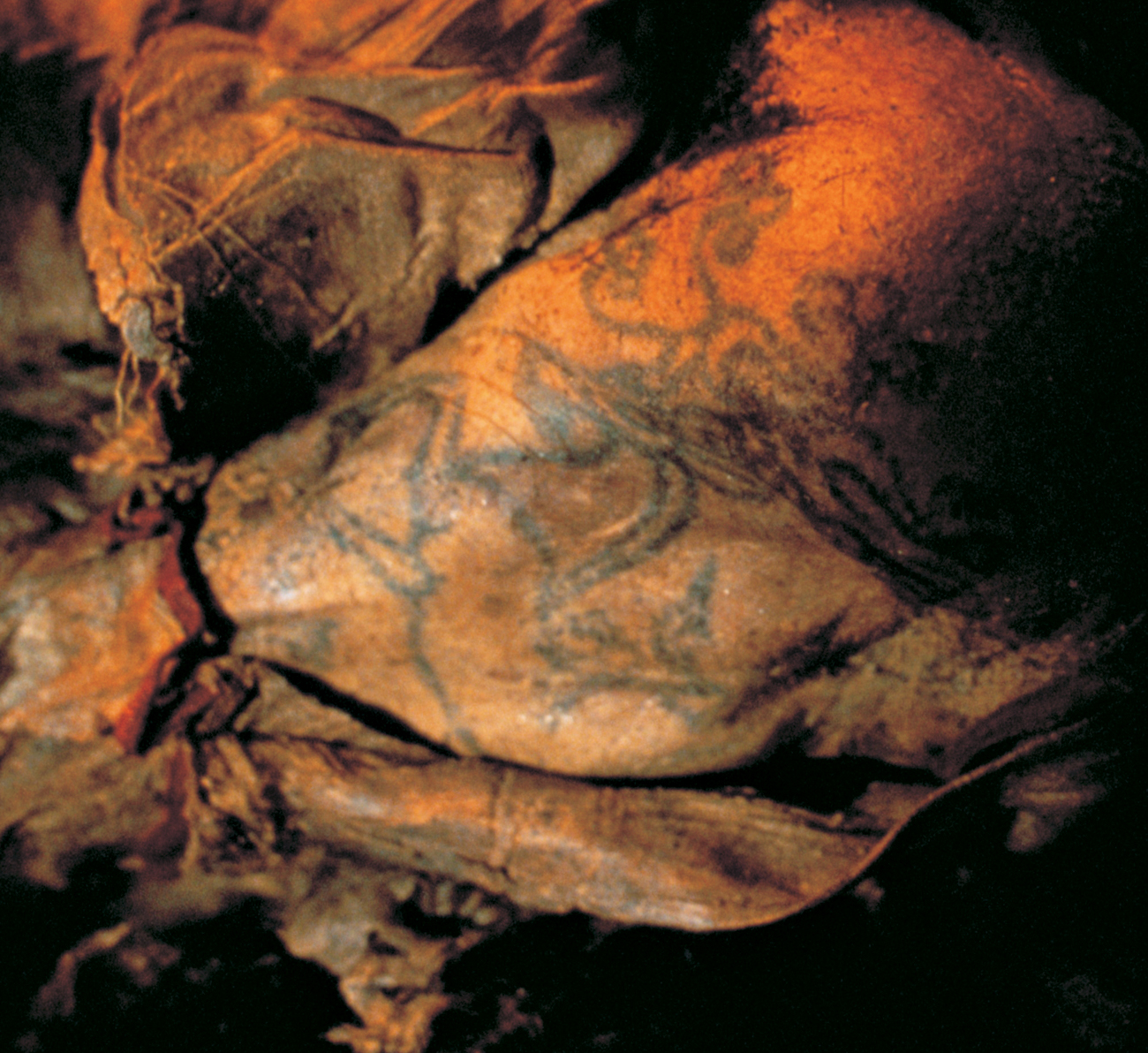
Groups of tattoos, mostly short parallel vertical blue lines, were discovered on both sides of his lower spine, his left calf and right ankle, and his wrists, and he had a blue cross on the inside of his right knee. These marks, probably made with soot, may be therapeutic, aimed at relieving the arthritis which he had in his neck, lower back, and right hip.
His nails had dropped off, but one fingernail was recovered. Its analysis revealed not only that he undertook manual labor, but also that he experienced periods of reduced nail-growth corresponding to episodes of serious illness (bacteria show infection by Lyme disease) four, three, and two months before he died. The fact that he was prone to periodic crippling disease supported the view that he fell prey to adverse weather and froze to death. Eventually, it was discovered that an arrowhead in his left shoulder had pierced a major artery, causing a fatal hemorrhage. There were also cuts on his hands, wrists, and ribcage, and a blow to the head—either from being struck or a fall—which is probably what finally killed him. It has been claimed that the Iceman was buried on a platform, but some specialists dispute this.
Isotopic analyses of the Iceman’s teeth and bones, which helped provide evidence of his diet (see pp. 305–8), have also been compared with the results found in the water and soil of the region. This study allowed scientists to conclude that he had spent his whole life within about 60 km (37 miles) of the spot where he died.
The items found with him, many made of organic materials preserved by the cold, constitute a unique “time capsule” of everyday life. A variety of woods and a range of sophisticated techniques of working with leather and grasses were used to create the seventy objects, which add a new dimension to our knowledge of the period.
In Greenland, the Inuit bodies of Qilakitsoq, dating to the fifteenth century CE, had also undergone natural freeze-drying in their rock-overhang graves protected from the elements; their tissue had shrunk and become discolored, but tattoos were visible (see box, pp. 458–59), and their clothes were in particularly fine condition.
2.36 Frozen conditions in southern Siberia helped to preserve the remarkable finds from burial mounds of steppe nomads at Pazyryk dating from about 400 BCE, including the tattooed remains of people.2.37 Tattoo patterns on the torso and arms of a chieftain from Pazyryk.
A more modern example of natural refrigeration can be found in the Arctic graves of three British sailors who died in 1846 on the expedition of Sir John Franklin. The bodies were perfectly preserved in the ice of northern Canada’s Beechey Island. In 1984 a team led by the Canadian anthropologist Owen Beattie removed samples of bone and tissue for an autopsy, before reburying the corpses.
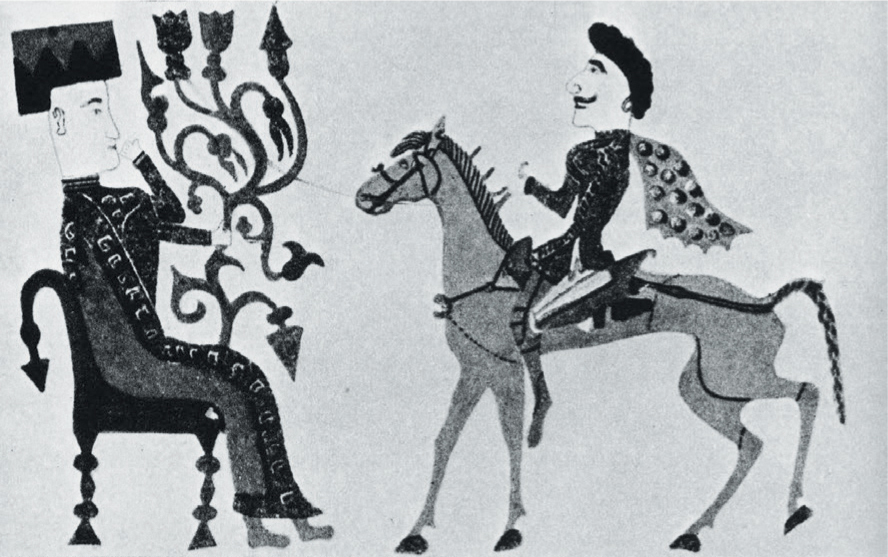
2.38 Drawing of part of a Pazyryk wall-hanging in appliquéd felt, preserved by waterlogging and freezing of the organic material, showing a horseman approaching an enthroned figure.
The Archaeological Record and Context
In this chapter, we have examined the diversity of materials studied by archaeologists, and the different conditions and processes that affect the preservation of these materials. When archaeologists recover artifacts or ecofacts, or uncover features or structures, they study how these objects came to be buried and how they were preserved; this is the starting point for understanding how these objects and places were created and used, and what they tell us about life in the past. Such study relies on an object’s archaeological context, most especially its primary context.
In archaeology, “context” may also have a wider meaning. The distinguished American archaeologist Michael Schiffer draws a distinction between archaeological context and systemic context. This chapter has mostly been concerned with archaeological context: the matrix, provenience, and associations of any archaeological material. When an archaeologist moves from this to begin reconstructing how that recovered material might inform us about wider questions in archaeology, they are working to understand its systemic context, or the way in which artifacts and ecofacts are involved in the lives of people in the past and part of a wider system of manufacture, use, discard. The great variety of methods and theories that archaeology encompasses all work to build a clearer and more reliable picture of this broader, systemic context.
Summary
One of the main concerns of archaeology is the study of artifacts, portable objects made by humans, which provide evidence to help us answer questions about the past. Non-portable artifacts such as hearths and postholes are called features. Locations that show significant traces of human activity, essentially where artifacts and features are found together, are known as archaeological sites.
Context is essential to the understanding of past human activity. The context of an artifact consists of its matrix (the material, such as particular layer of soil, surrounding it), its provenience (horizontal and vertical position within the matrix), and its association with other artifacts found nearby. Artifacts found where they were originally deposited in the past are said to be in a primary context. Objects that have been moved since their original abandonment through either natural forces or human activity are said to be in a secondary context.
Archaeological sites are created through formation processes. Both the deliberate and accidental activities of human beings such as the building of a structure or the plowing of a field are called cultural formation processes. Natural events that affect archaeological sites, such as volcanic ash covering an ancient city or windborne sand burying artifacts, are called natural formation processes.
Given the correct environmental conditions, an artifact made of any material can survive. Usually inorganic materials, such as stone, clay, and metal, survive better than organic materials, such as bone, wood, or textiles, which tend to decay in all but extreme conditions.
The survival of organic materials depends on the matrix that surrounds them and the climate they were deposited in. The acidic soils of tropical climates are the most destructive to organic materials, while dry, desert environments and extremely cold or waterlogged environments are most likely to preserve them.
Further Reading
Good introductions to the problems of differential preservation of archaeological materials can be found in:
Aldhouse-Green, M. 2015. Bog Bodies Uncovered: Solving Europe’s Ancient Mystery. Thames & Hudson: London & New York.
Binford, L. R. 2002. In Pursuit of the Past: Decoding the Archaeological Record. (New edn) University of California Press: Berkeley, CA & London.
Hunter, J. Roberts, C. & Martin, A. (eds.) 1996. Studies in Crime: An Introduction to Forensic Archaeology. Routledge: London & New York.
Lillie, M. C. & Ellis, S. (eds.). 2007. Wetland Archaeology and Environments: Regional Issues, Global Perspectives. Oxbow Books: Oxford.
Menotti, F. & O’Sullivan, A. 2012. The Oxford Handbook of Wetland Archaeology. Oxford University Press: Oxford.
Nash, D. T. & Petraglia, M. D. (eds.). 1987. Natural Formation Processes and the Archaeological Record. British Archaeological Reports, International Series 352: Oxford.
Purdy, B. A. (ed.). 2001. Enduring Records: The Environmental and Cultural Heritage of Wetlands. Oxbow Books: Oxford.
Schiffer, M. B. 2002. Formation Processes of the Archaeological Record. University of Utah Press: Salt Lake City.
Sheets, P. D. 2006. The Ceren Site: An Ancient Village Buried by Volcanic Ash in Central America. (2nd edn) Thomson: Belmont, CA.
The place of origin or (earliest) known history of something; also the horizontal and vertical position of an artifact, ecofact, or feature within a matrix.
The location of archaeological material that has moved from its original position of discard or deposition by subsequent human activity or natural phenomena.
An assemblage of valuables or prized possessions that has been deliberately buried (often in a time of conflict or war) and that, for one reason or another, has not been reclaimed. Hoards of metal are a primary source of evidence for the European Bronze Age.
A standard cleaning process in archaeological conservation. Artifacts are placed in a chemical solution, and by passing a weak current between them and a surrounding metal grill, the corrosive salts move from the cathode (object) to the anode (grill), removing any accumulated deposit and leaving the artifact clean.
The study of processes which have affected organic materials such as bone after death; it also involves the microscopic analysis of toothmarks or cutmarks to assess the effects of butchery or scavenging activities.
The study of tree-ring patterns; annual variations in climatic conditions produce differential growth, which can be used both as a measure of environmental change and as the basis for a chronology.
Atoms of the same element with the same atomic number but with a different number of neutrons (i.e. a greater or lesser atomic mass) than the standard for the element.
An important source of information on the reconstruction of prehistoric diets, this technique analyzes the ratios of the principal isotopes preserved in human bone; in effect, the method reads the chemical signatures left in the body by different foods. Isotopic analysis is also used in characterization studies, in which the characteristic properties of the constituent material of traded goods can be identified, and thus their source of origin.