| 1 | The Nature of Science and the Characteristics of Life |


ARSENIC BACTERIA. Geomicrobiologist Felisa Wolfe-Simon collects mud from the bottom of Mono Lake, California. Bacteria from the lake tolerate high concentrations of salt and arsenic.
Earthbound Extraterrestrial? Or Just Another Microbe in the Mud?
A few years ago, NASA made an announcement that put the national science news media on a roller-coaster ride of excitement. The press release launched a debate that spilled from the sedate pages of scientific journals to the world of social media. NASA-funded researchers had discovered a bacterium that could grow in high concentrations of poisonous arsenic. Not only that, but this bizarre bacterium builds arsenic right into its DNA, according to the researchers. The chemical building blocks of DNA are the same in all organisms, as far as anyone knew. But NASA’s announcement suggested that this one bacterium was replacing the phosphorus in DNA with arsenic. It was comparable, they said, to something you’d find on another planet.
The news media ran with the story. The Huffington Post wrote, “In a bombshell that upends long-held assumptions about the basic building blocks of life, scientists have discovered a whole new type of creature: a microbe that lives on arsenic.” And NASA’s breathless press release—titled “Get Your Biology Textbook . . . and an Eraser!”—said that the discovery “begs a rewrite of biology textbooks by changing our understanding of how life is formed from its most basic elemental building blocks.” But wait. Don’t start erasing just yet.
Does this bizarre bacterium really build arsenic into its DNA? Why was NASA’s announcement met with both excitement and skepticism? |
|

We will return to this story toward the end of the chapter. We will see that back-and-forth arguments are common at the cutting edge of science. Radical scientific claims invite intense scrutiny and vigorous debate—as they should. Far from being a weakness, skeptical inquiry—and the insistence on sound evidence—is the greatest strength of science.
We begin this chapter with a focus on what science is and what it is not. As we proceed, you’ll see that the process of science—also known as the scientific method—is what distinguishes science from other ways of understanding the world around us. Next, we’ll turn our attention to the subject that is at the heart of the rest of the book: biology, the scientific study of the living world.
| MAIN MESSAGE |
The scientific method is an evidence-based system for understanding our world, including living organisms. Because of their common evolutionary origin, all living organisms share certain key characteristics. |
KEY CONCEPTS
● Science is a body of knowledge about the natural world and an evidence-based process for generating that knowledge. Biology is the scientific study of the living world.
● Scientific inquiry begins with observations of nature. The scientific method involves generating and testing hypotheses about those observations.
● Hypotheses can be tested with observational studies, experiments, or both.
● In an experiment, investigators manipulate one aspect of nature (independent variable) and study how that action affects another aspect of nature (dependent variable).
● A scientific fact is a direct and repeatable observation of a particular aspect of the natural world.
● A scientific theory is a major explanation about the natural world that has been repeatedly confirmed in diverse ways and is accepted as part of scientific knowledge.
● All living organisms are composed of one or more cells, reproduce using DNA, acquire energy from their environment, sense and respond to their environment, maintain their internal state, and evolve.
● Biological evolution is a change in the overall genetic characteristics of a group of organisms over successive generations.
● Life on Earth can be studied on many levels, from atom to biosphere.
THIS BOOK IS ABOUT YOU, the rest of the living world around you, and the intricate web that connects living beings to one another and to their surroundings. As you explore the story of life, you will develop an appreciation of how science works and a deeper understanding of how life works.
Science is at the heart of many of the big issues we face as a society. A few examples are genetic testing and the confidentiality of personal genetic data, research on embryonic stem cells, and what to do about climate change. Then there are issues that are not as urgent but that also stir up controversy; for example, should we use DNA technology to bring back prehistoric beasts that became extinct many thousands of years ago (FIGURE 1.1)? What do you think?
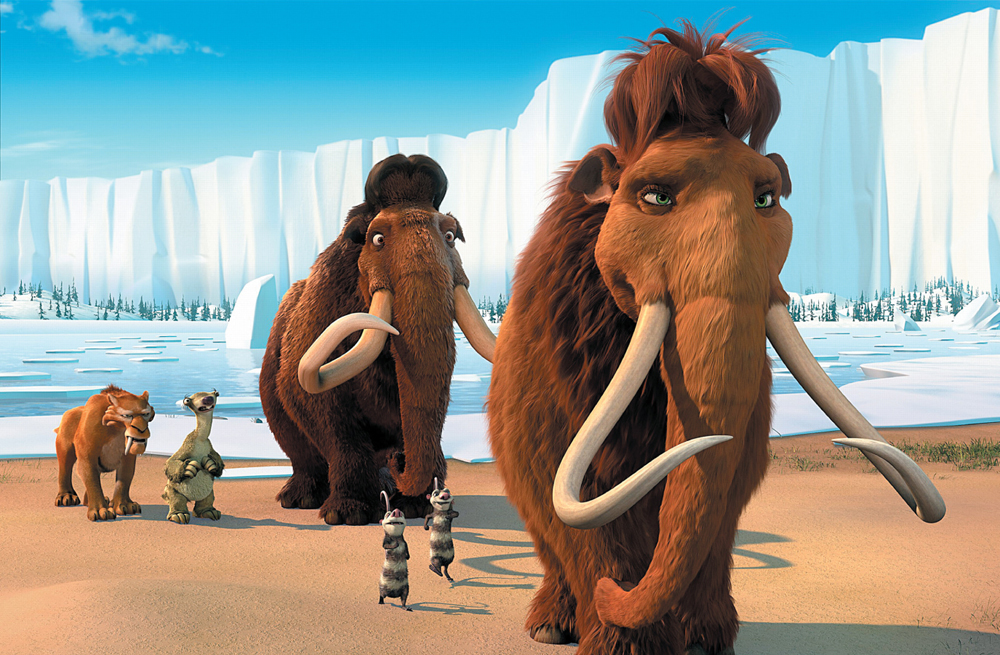
FIGURE 1.1 Is De-Extinction a Good Idea?
Woolly mammoths, like these characters from the film Ice Age: Continental Drift, were hunted to extinction toward the end of the last ice age. The last of them survived until about 3,000 years ago on an island off Siberia. It is theoretically possible to take DNA from cells preserved in the permafrost and bring these ancient behemoths back to life. Is “resurrection” of extinct life-forms a good idea? Should public funds be spent on these projects? Come back to this figure toward the end of your biology class and see if you want to revise your answers.
Opinions on these issues are often influenced by personal values and individual concerns. Commercial and political interests also have an impact on the application of scientific knowledge. But a shared understanding of the underlying science offers the hope of rational debate and constructive social action on these complex issues.
We begin this chapter with a look at science as a way of knowing and as a body of knowledge about the natural world. Next we turn our attention to biology, the scientific study of life, by asking what, exactly, is meant by that powerful word: “life.” As you will see, all living things, diverse though they are, are related and have certain characteristics in common. Furthermore, all living organisms are part of an interlinked pattern we call the hierarchy of life.