17 Disruption AFRICA, THE AMERICAS, SIBERIA, AND OCEANIA 1492 to 1850
CHRONOLOGYOPENCLOSE
-
1441Portuguese begin selling Africans as slaves
-
1462Portuguese mariners establish Elmina in West Africa
-
1519Hernán Cortés attacks Tenochtitlán
1519–ca. 1860The transatlantic slave trade -
1524Waves of epidemics begin in the Andes
-
1532Francisco Pizarro overthrows Inka emperor
-
1580sYermak spearheads fur trade in Siberia
-
ca. 1600–1694Palmares maroon community in Brazil
-
1652Dutch East India Company founds outpost at Cape of Good Hope
-
1680Pueblo kill or expel all Spanish from what is now New Mexico
-
1689Russian and Chinese Empires sign treaty dividing Siberian and East Asian spaces
-
1713Smallpox epidemic kills up to 90 percent of Khoi
-
ca. 1780–1810King Hamehamea unites Hawaii
-
1788–1868Britain sends convict settlers to Australia
-
1807–1845Musket Wars in New Zealand
-
1840Treaty of Waitangi
-
1845–1872Intermittent land wars between Maori and pakeha
-
1876Trucanini dies
-
1898United States annexes Hawaii
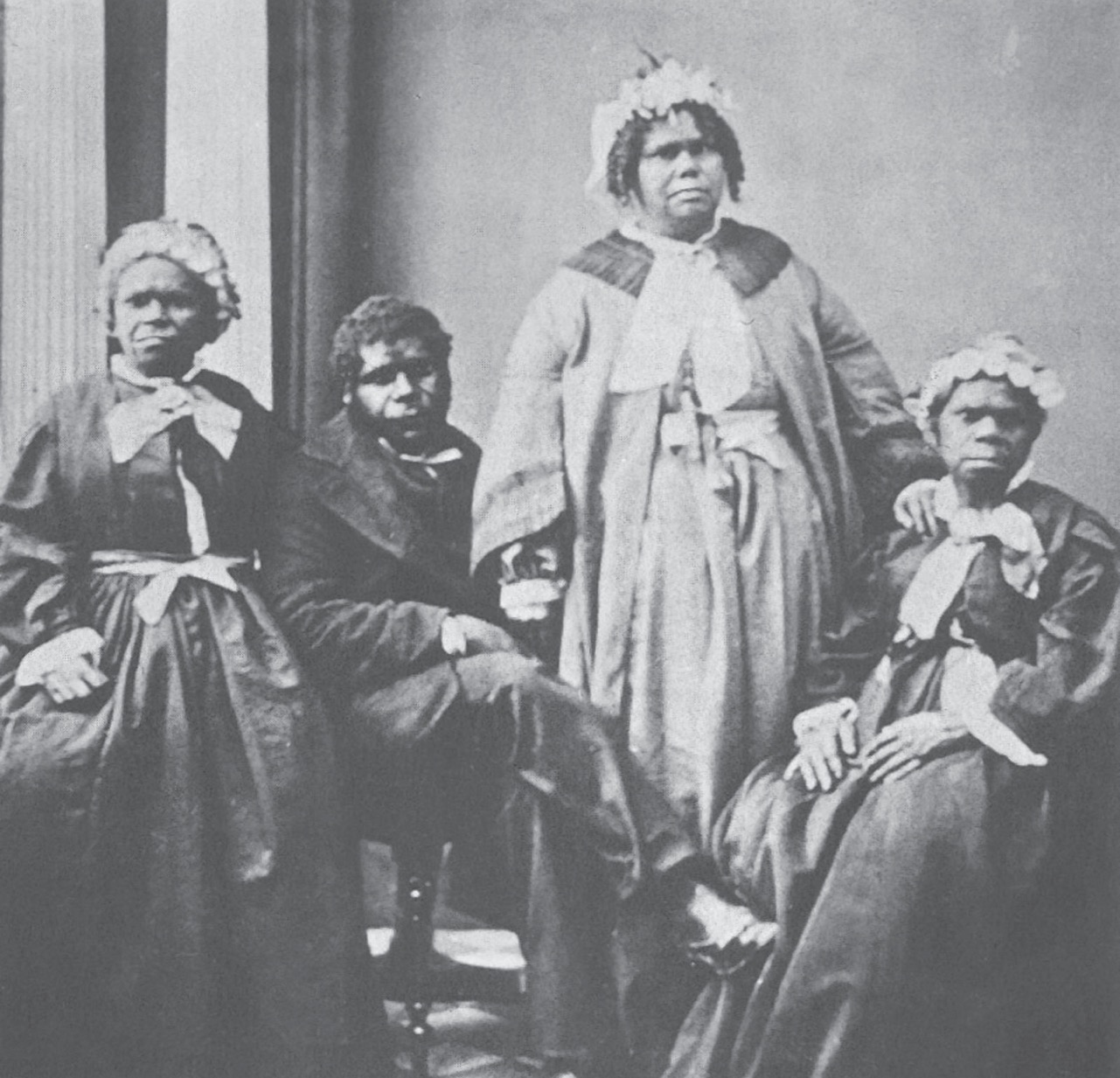
Trucanini, who died in 1876, was one of the last of the Tasmanians. She was witness to a grim and frequent process in world history.
Tasmania is an island 150 miles (240 km) off the southern coast of Australia. People first arrived there about 40,000 years ago, when lower sea levels allowed them to walk from Australia. When rising sea levels divided Tasmania from the Australian mainland around 6000 bce, the Tasmanians were cut off. For nearly 8,000 years, until a few centuries ago, they had no known contacts with the rest of humankind. They gradually lost the skills to catch fish, make bone tools, and even to make fire. Their technological decay is striking evidence of the costs of isolation in small groups.
In 1642, a Dutch sea captain, Abel Tasman, sighted the island that bears his name but did not disembark. British whalers began to use it as a base in 1798, ending the long isolation of Tasmania, and in 1803 British authorities decided to locate a penal colony there. At that time, there were about 5,000 to 15,000 Tasmanians in existence. By 1830, only some 300 remained. The British prisoners and their keepers had brought new diseases, casual attitudes to murderous violence, and weaponry far superior to what the Tasmanians could muster. Most of Trucanini’s family was abducted, enslaved, or killed. She became an outlaw in her 20s, was shot in the head and imprisoned, but lived into her 60s. Meanwhile, British officials gathered the last of the Tasmanians together with the stated intent of protecting them, but influenza and other infections continued to wreak deadly havoc. With the death of Trucanini, a 40,000-year-old language and culture died as well, after a mere three-quarters of a century of contact with the outside world.
This chapter presents the ways in which peoples previously outside the Old World web found themselves rapidly enmeshed in the Global web in its formative centuries. The processes behind these new connections were simultaneously political and military, economic and technological, religious and cultural, biological and demographic. In most cases, they involved episodes of great brutality. The focus here is on sub-Saharan Africa, the Americas, Siberia, and Oceania and Australia. Later chapters will take up the story of how this globalizing, web-expanding process played out within the former Old World web itself—that is, within Eurasia and North Africa.
Entry into the expanding global web for peoples long isolated was always hard, and sometimes fully as disastrous as for Tasmanians. Most peoples suffered demographic losses due to disease disasters, violence, and declines in fertility. Most also experienced wrenching cultural and political changes, and yet somehow made the adjustments necessary to survive in their new worlds as participants in the Global web. They had a lot to learn about operating in new and larger economic and political contexts, and the people who knew most about global contexts often preferred to kill or enslave them rather than instruct them.
The opening of the oceans to navigation, and the sudden spread of information, diseases, migrants, and much else, reshuffled fortunes dramatically. Just about everyone sought to take advantage of the new situation, including the peoples of Africa, the Americas, Oceania, and Siberia, although they were rarely well placed to do so. The people best positioned to seize the opportunities of the globalizing world were those who had the fullest information about routes, goods, prices, technologies, languages, and religions. These were the people who traveled the seas for themselves—mainly but not exclusively Atlantic Europeans.
European sailors, soldiers, settlers, merchants, and missionaries often knew, or knew how to find out, roughly how much a pound of pepper would fetch in Lisbon markets or whether customers in Calicut preferred pearls over ponies. This enabled them to trade more profitably than others could. They also knew, or could make educated guesses, whether or not their weapons would give them an edge against peoples around the world, and thus whether attacking them might be foolish or not. There was of course much they did not know, and they made many miscalculations. But on average they had a more global perspective than anyone else, and they took advantage of that where they could.
Atlantic Europeans were only the latest example of people in position to exploit the information advantages of web connections. Ancient Carthaginians usually knew more about distant markets and new technologies than anyone in Spain, and they too took advantage of that when they could. The same was true of the Chola merchants and kings in south India in their relations with landlocked neighbors, or of Arabs with respect to East Africans living inland from the Swahili coast. The difference here is one of scale: the Atlantic Europeans enjoyed information advantages over many peoples around the world and could harvest information from every continent.
And information advantages were only part of their edge. Atlantic European mariners were in effect the Mongols of the sea. Like horse nomads, they didn’t always have military advantages over potential rivals, but thanks to their mobility they could choose when and where they might wish to fight, when and where they preferred to flee. With their big shipboard cannon, they could attack enemies from a safe distance, as horse nomads could with their bows. Like the mobile Mongols, they could, when it suited them, engage in acts of unspeakable cruelty, knowing they could get away safely, never to return and face the consequences. This is not to suggest that either Mongols or sea-going Europeans were by nature crueler than anyone else; only that they could indulge in cruelty and escape retribution more easily than others who lacked superior mobility. And, like the Mongols, Atlantic Europeans’ conquests, massacres, co-optations, and absorptions of other peoples helped prepare the way for unprecedented consolidation of webs of economic, cultural, and biological interaction.
It is important to recognize that this process of globalization, even if on balance it led to European domination of large parts of the world, reshuffled fortunes in complicated ways. In Africa and the Americas especially, some rulers, clans, and peoples found ways to turn the linkages presented by European seafaring to their advantage. Some, for example, monopolized European trade goods and got rich. Others managed to control access to firearms and became more powerful. Still others translated support from Christian missionaries into prestige and power. And some, such as the kings of Kongo in West Central Africa, did all of the above, if only for a while. Trucanini and the Tasmanians, mainly because of the penalties of isolation in small groups, did none of the above.

Glossary
- disease disasters
- As a result of entry into the expanding Global web, the introduction of deadly diseases to previously isolated areas of the world that had no experience with them. In combination with violence and declining fertility, these diseases led to devastating demographic collapses in the Americas, Siberia, many Pacific Islands, and parts of southern Africa.