11 Eukaryotic Microbes and Invertebrate Infectious Agents
More information
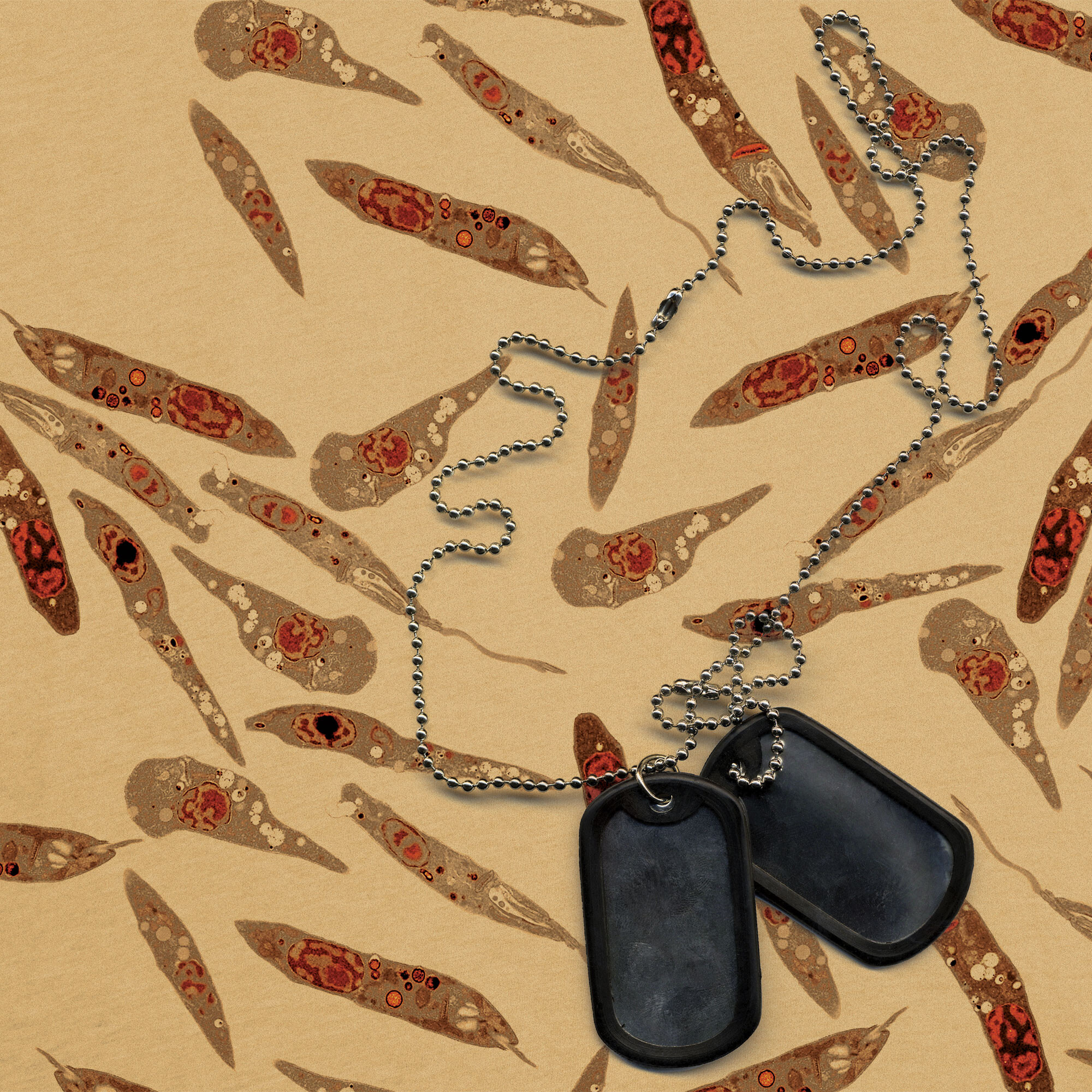
A page titled, A Desert Sand Fly Parasite, showing various features of the disease Leishmaniasis. There is an illustrated background of the Leishmania parasites. A photo of military dog tags is overlayed on the illustration. An infographic showing an illustrated soldier and several photos describes Leishmaniasis in greater detail. The text in the infographic reads, Scenario. Mario, a 29 year old pizza delivery worker in Indianapolis, had an open sore on his arm that would not heal. The sore developed a red depression in the middle, surrounded by a raised border. It was not painful and Mario postponed seeking treatment because he was busy working two jobs and managing his family of three children. Signs and Symptoms. The sore began to heal, but after two months, additional sores formed on Mario’s skin and within his mouth. He now experienced fever, swollen lymph nodes, and weight loss. Testing and Diagnosis. Mario finally went to a clinic and reported his symptoms to a physician assistant. The physician assistant asked whether he had traveled out of the country. Mario reported that six months before the onset of symptoms, he had returned from a tour in Iraq as a sergeant in the U S Army. The physician assistant observed that the appearance of the sores was typical of cutaneous Leishmaniasis. Microscopy and P C R confirmed the presence of the protozoan Leishmania donovani, a parasite commonly acquired by soldiers in Iraq, where it is transmitted by sand flies. Treatment. The physician assistant prescribed amphotericin B, an antimicrobial agent that kills the parasite. The drug was delivered daily by I V infusion. The sores healed, but Mario was told that he could not be sure the parasite was completely eradicated, months later, symptoms might recur and require further treatment.
A Desert Sand Fly Parasite
More information
An illustrated silhouette of a soldier. The soldier is saluting. From the outline, it is clear that the soldier is wearing combat boots and fatigues.
SCENARIO Mario, a 29-year-old pizza delivery worker in Indianapolis, had an open sore on his arm that would not heal. The sore developed a red depression in the middle, surrounded by a raised border. It was not painful, and Mario postponed seeking treatment because he was busy working two jobs and managing his family of three children.
More information
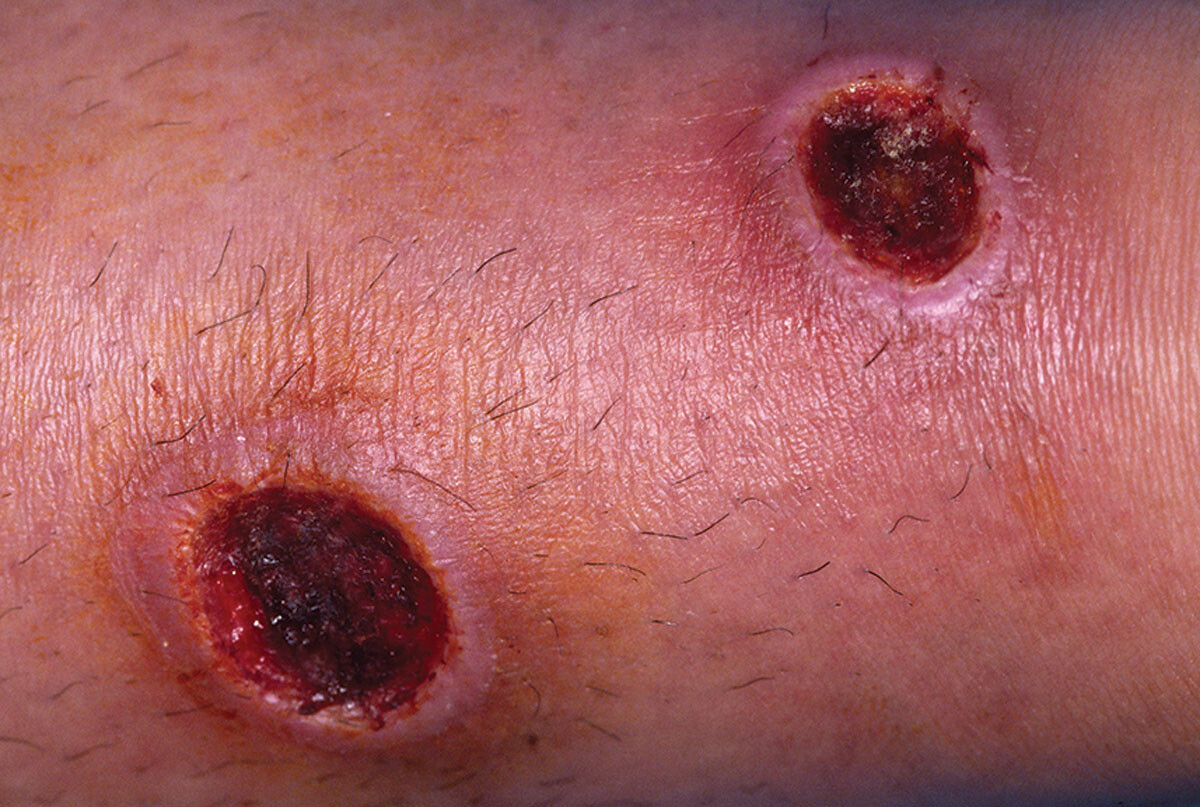
A photo of skin lesions typical of Leishmaniasis. The lesions are circular dark red depressions with raised borders. The skin surrounding the lesions is red and irritated.
Skin Lesion Typical of Leishmaniasis
SIGNS AND SYMPTOMS The sore began to heal, but after 2 months additional sores formed on Mario’s skin and within his mouth. He now experienced fever, swollen lymph nodes, and weight loss.
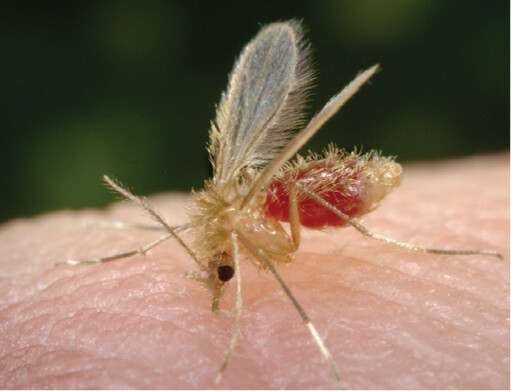
TESTING AND DIAGNOSIS Mario finally went to a clinic and reported his symptoms to a physician assistant. The physician assistant asked whether he had traveled out of the country. Mario reported that 6 months before onset of symptoms, he had returned from a tour in Iraq as a sergeant in the US Army. The physician assistant observed that the appearance of the sores was typical of cutaneous leishmaniasis. Microscopy and PCR confirmed the presence of the protozoan Leishmania donovani, a parasite commonly acquired by soldiers in Iraq, where it is transmitted by sand flies.
More information
A photo of a sand fly feeding on the blood of a human host. The tiny fly has spindly legs, a bulbous body, and translucent white wings. Its body is filled with blood. The caption reads, Sand fly, the vector that transmits Leishmania parasites.
Sand Fly, the Vector that Transmits Leishmania Parasites
TREATMENT The physician assistant prescribed amphotericin B, an antimicrobial agent that kills the parasite. The drug was delivered daily by IV infusion. The sores healed, but Mario was told that he could not be sure the parasite was completely eradicated; months later, symptoms might recur and require further treatment.
More information
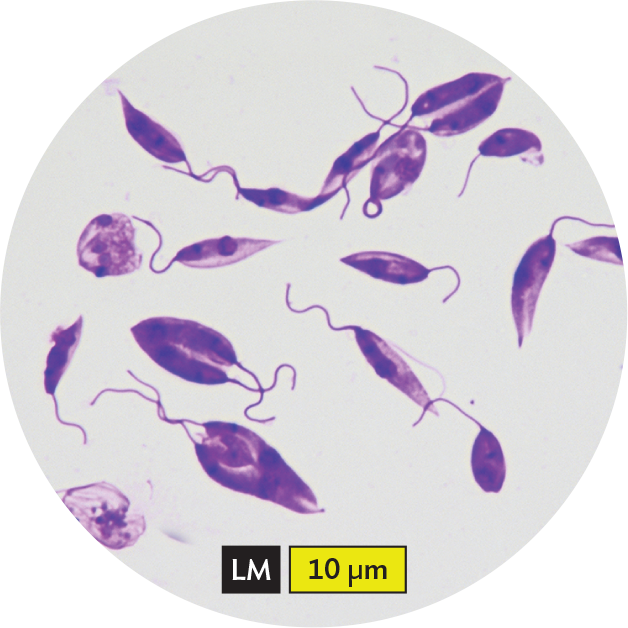
A light micrograph of Leishmania parasites. The micrograph shows the elongated oval shaped structures of the parasite. They are pointier on one side than the other and their broader side has one or two flagella. They have some darker circular parts inside. One organism is about 8 to 10 micrometers long. The caption reads, Leishmania, single celled parasite. Giemsa stain reveals the nucleus and whiplike flagellum.
Leishmania, Single-Celled ParasiteGiemsa stain reveals the nucleus and whiplike flagellum.
CHAPTER OBJECTIVES
After reading this chapter, you will be able to:
Define the major categories of eukaryotic microbes and invertebrate parasites.
Describe the role of fungi in the environment and in human disease.
Describe the role of protists in the environment and in human disease.
Outline the infection cycles of several eukaryotic parasites.
The infectious agent that Mario acquired in the opening case history, Leishmania donovani, is a protozoan, a single-celled eukaryotic parasite. Leishmania is commonly found in tropical and subtropical regions of South America and Asia. With global climate change, sand flies have reached the United States, and there is now community transmission of Leishmania in this country. The protozoan causes the disease leishmaniasis, which shows three different forms: (1) cutaneous leishmaniasis, or skin infection; (2) mucocutaneous leishmaniasis, in which infection invades the mucous membranes (mouth and nostrils), as well as the skin; and (3) visceral leishmaniasis, or kala-azar, infection of internal organs, including the liver and spleen. The mucocutaneous and visceral forms are serious and can be fatal.
As discussed in Chapter 5, eukaryotic cells are very different from bacteria. The eukaryotic cell of Leishmania possesses a nucleus (see photo in the chapter-opening case history) and a whiplike flagellum powered by ATP, unlike bacterial rotary flagella. Because the cell structure of eukaryotic microbes is so similar to that of human cells, far fewer antimicrobials are available against eukaryotes than against bacteria. In addition, the treatment agents tend to have worse side effects on the host tissues.